For live availability and current prices, start with our RV Rental France - Complete Guide 2026 guide.
In This Guide
- Is it worth taking a motorhome to France?
- How do I plan an RV trip to France?
- What to know before your first RV rental in France: A first-timer's checklist
- Where to Camp in France - Top Options
- Campground Types in France (National, Private, Wild)
- Featured RV Park or Campground in France
- Hookups & Amenities - What to Expect
- Booking Windows & Reservations in France
- Is it easy to find RV parks in France?
- Nearby Supermarkets & Resupply Points
- How to Save on Campgrounds in France
- What is the best RV class for camping in France?
- How difficult is it to drive a motorhome in France?
- Do you need a special license to drive an RV in France?
- What do I need to know about wild camping in France?
- Traveling with pets in an RV in France?
- What to do in an RV emergency in France?
- How much does an RV trip to France cost?
Is it worth taking a motorhome to France?
Taking a motorhome to France is highly rewarding for beginners, offering unparalleled freedom and flexibility to explore diverse landscapes, from the lavender fields of Provence to the historic châteaux of the Loire Valley, at your own pace. The extensive network of campgrounds and 'aires de camping-car' makes France exceptionally RV-friendly, providing convenient and often scenic overnight stops that cater to various budgets and preferences. An RV trip allows for a deep dive into local immersion, facilitating visits to off-the-beaten-path locations, regional festivals, and direct access to local markets for authentic culinary experiences, making it a valuable way to experience France. You can truly connect to the culture, the food, and the scenery when you travel slowly, averaging 100-150 km per day.
Many travelers find that the flexibility of a rented motorhome enhances their journey, allowing them to linger longer in places they love or pivot to new discoveries. For live availability and current prices, start with our RV Rental France - Complete Guide 2024 guide, which provides comprehensive insights for your French adventure. Whether it's a week-long trip through Normandy or an extended road trip along the Côte d'Azur, France by RV rental promises unforgettable memories.
How do I plan an RV trip to France?
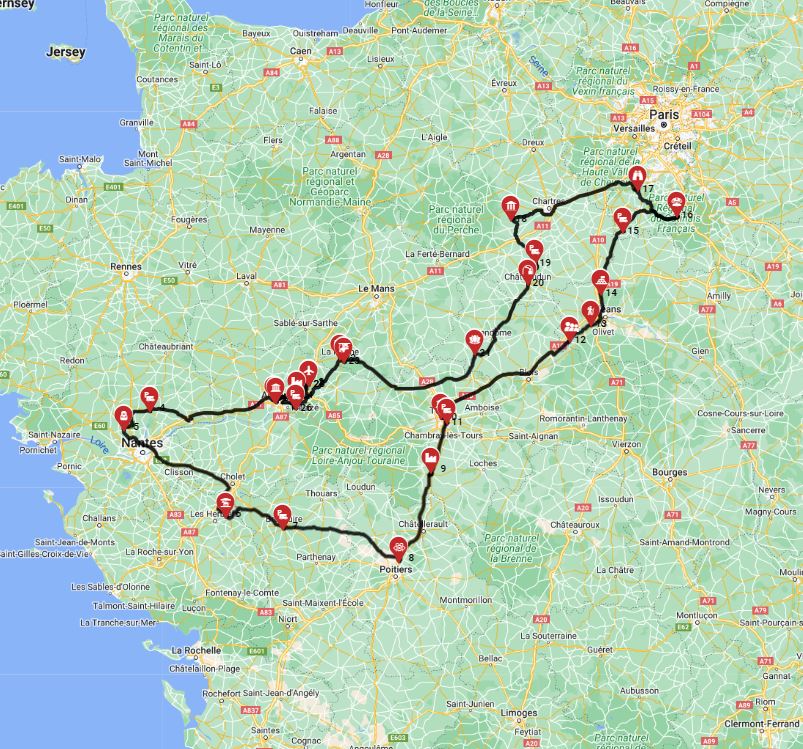
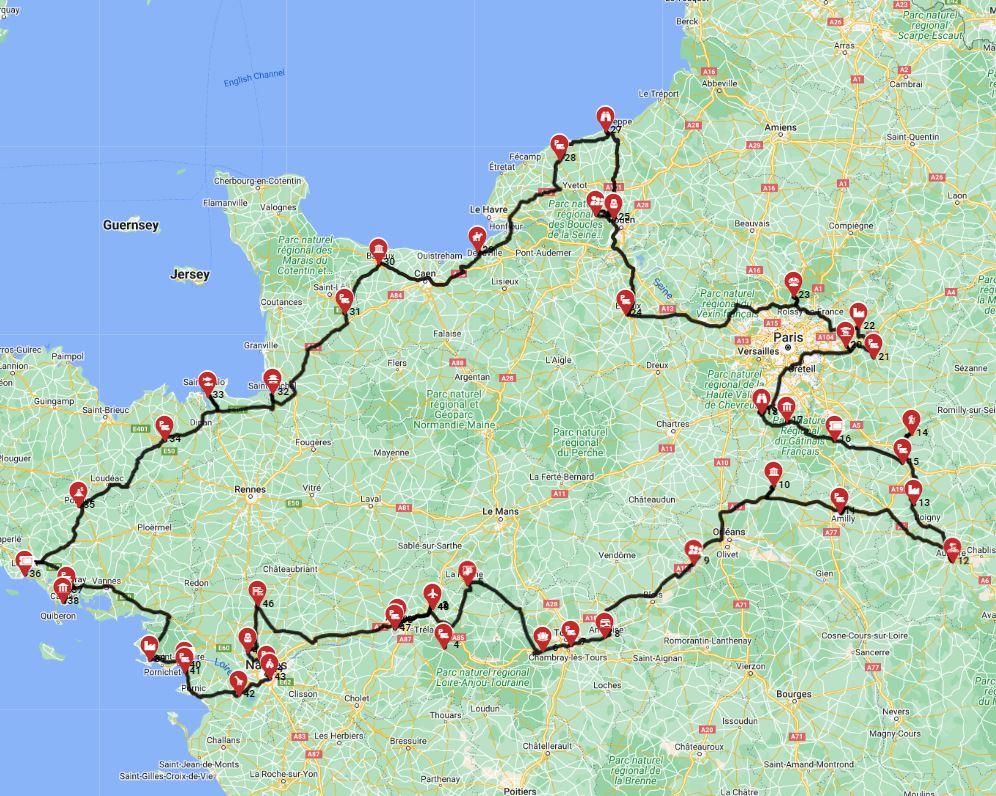
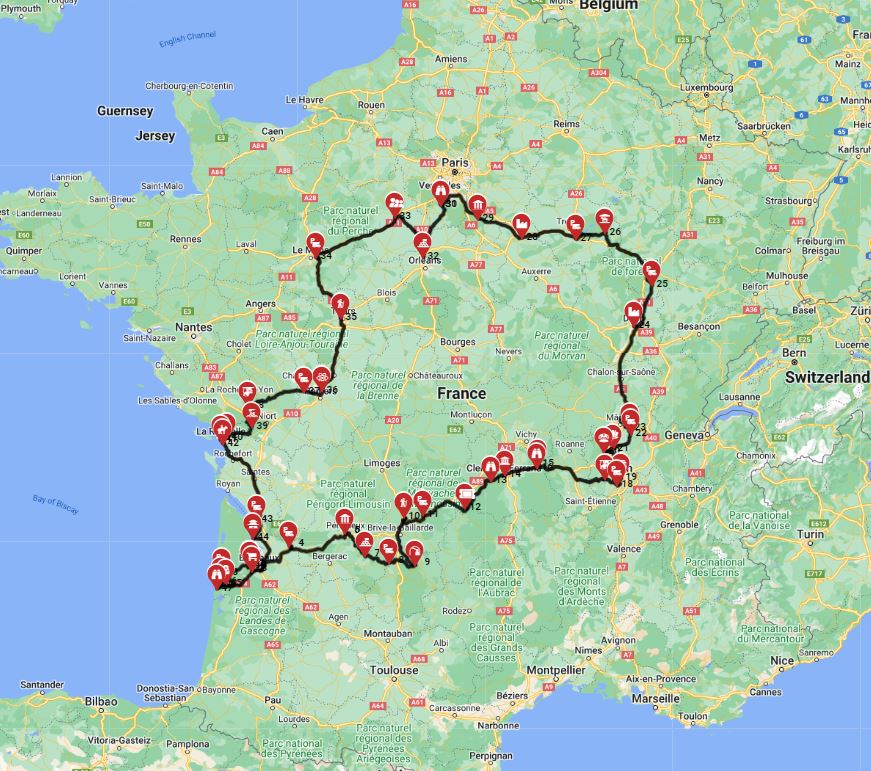
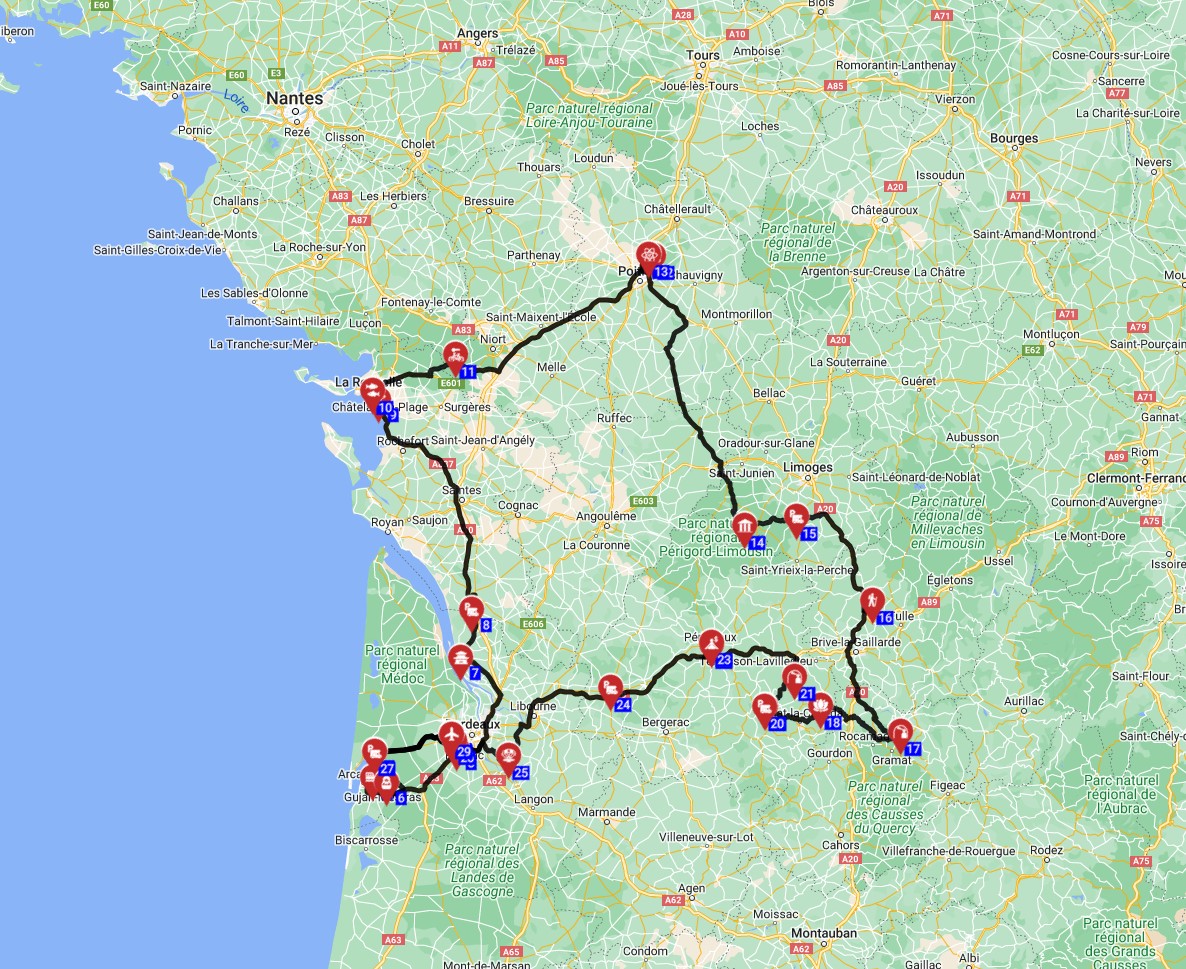
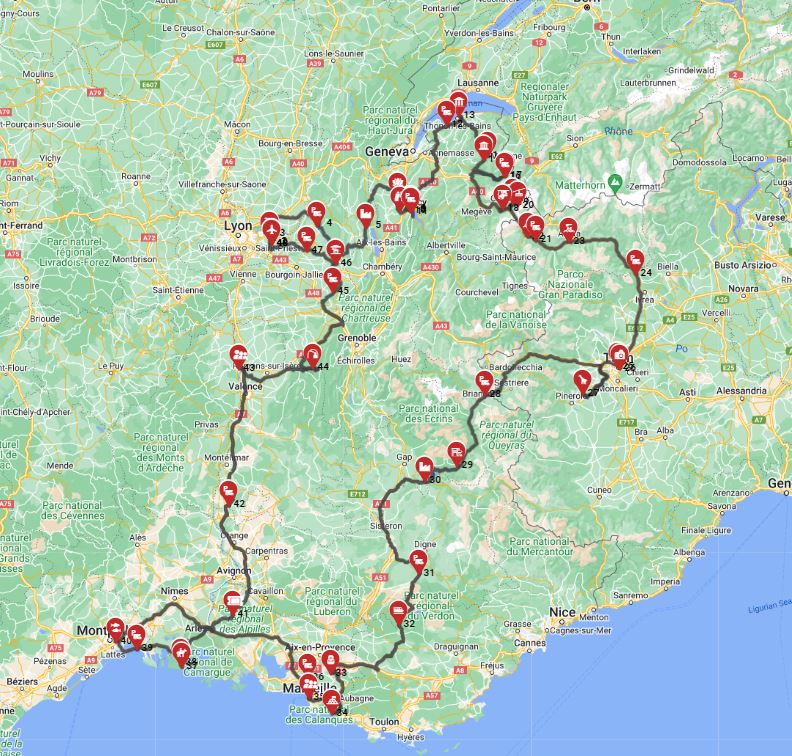
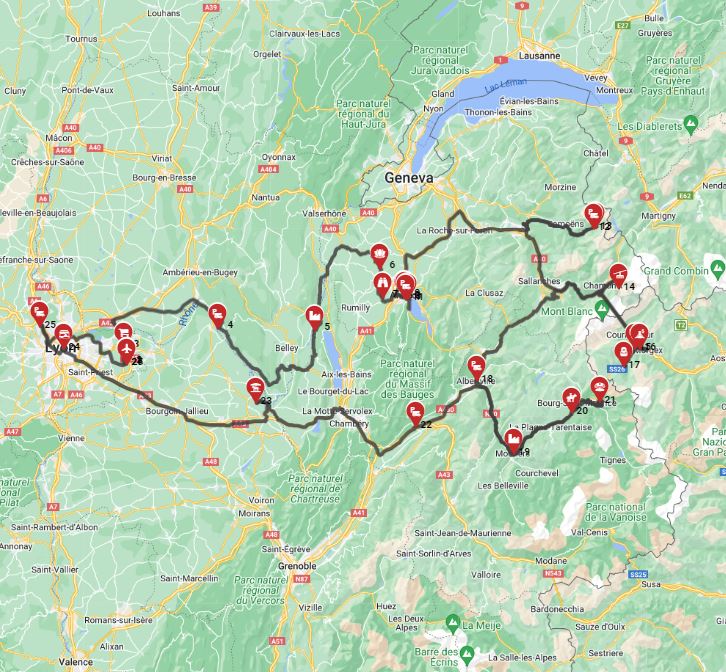
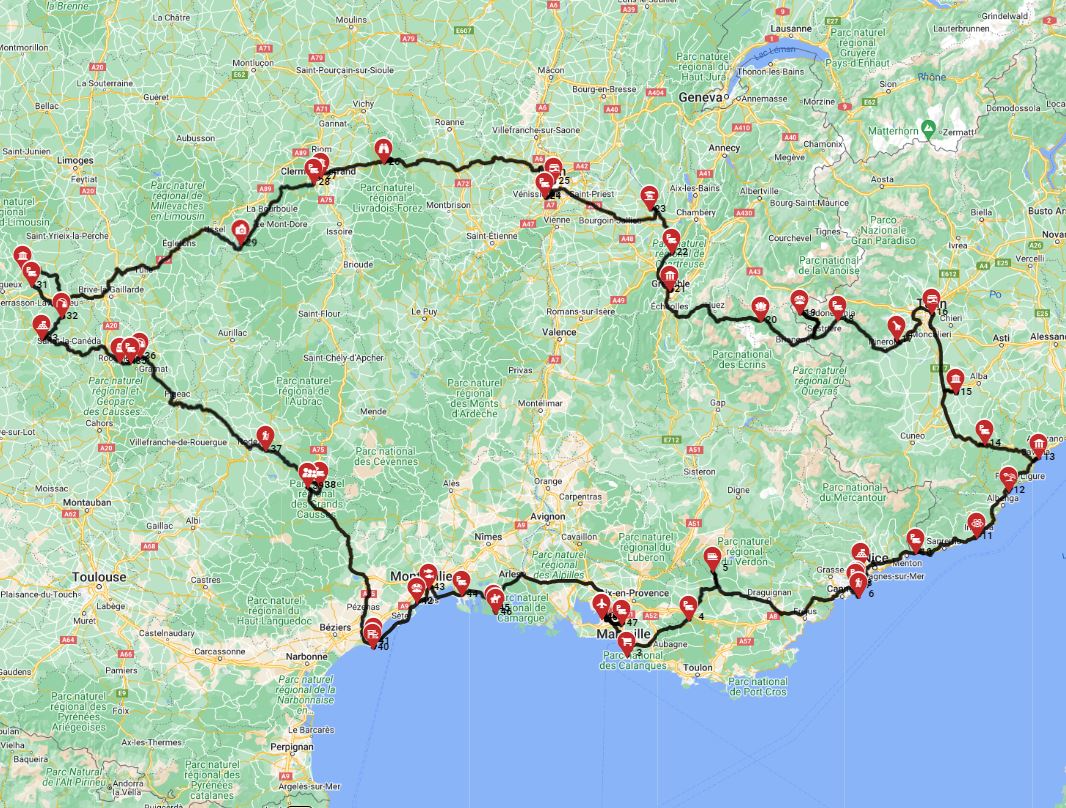
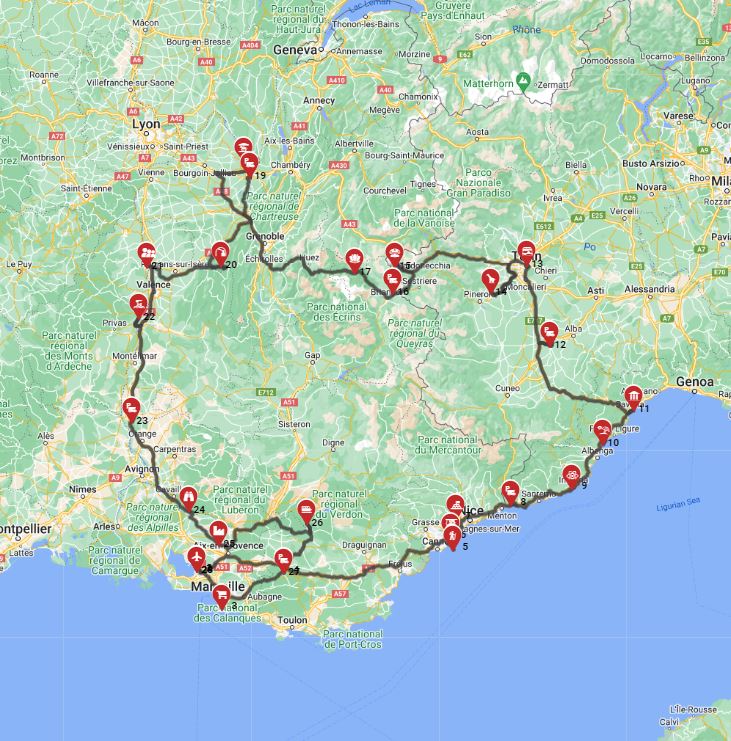
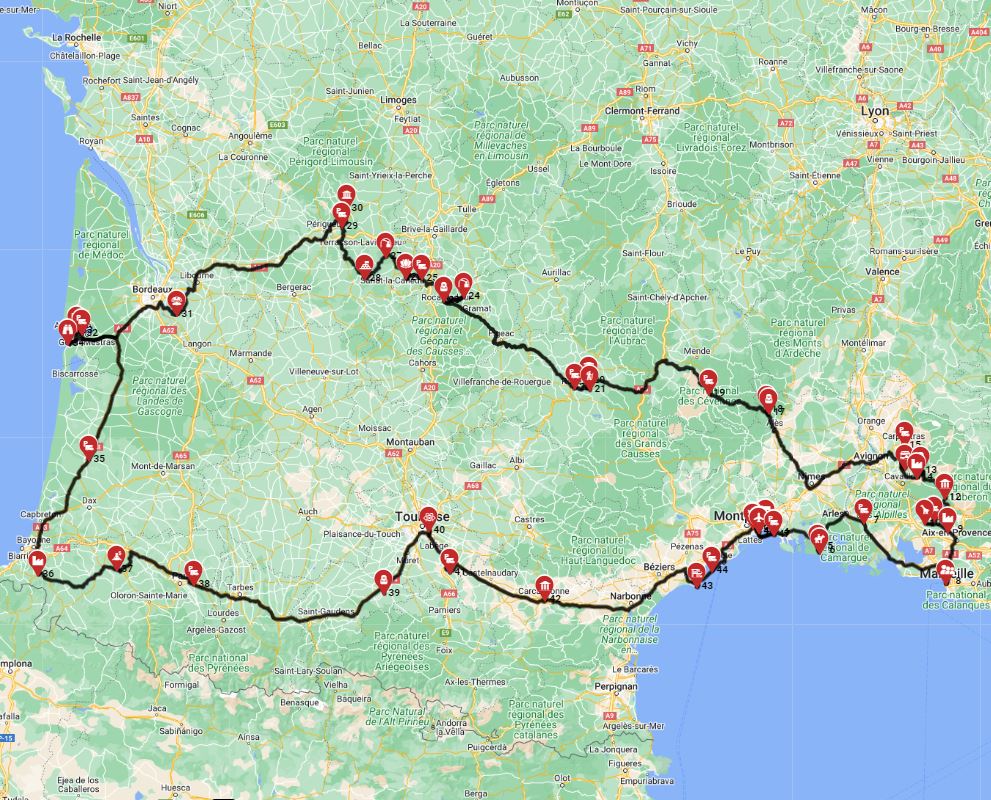
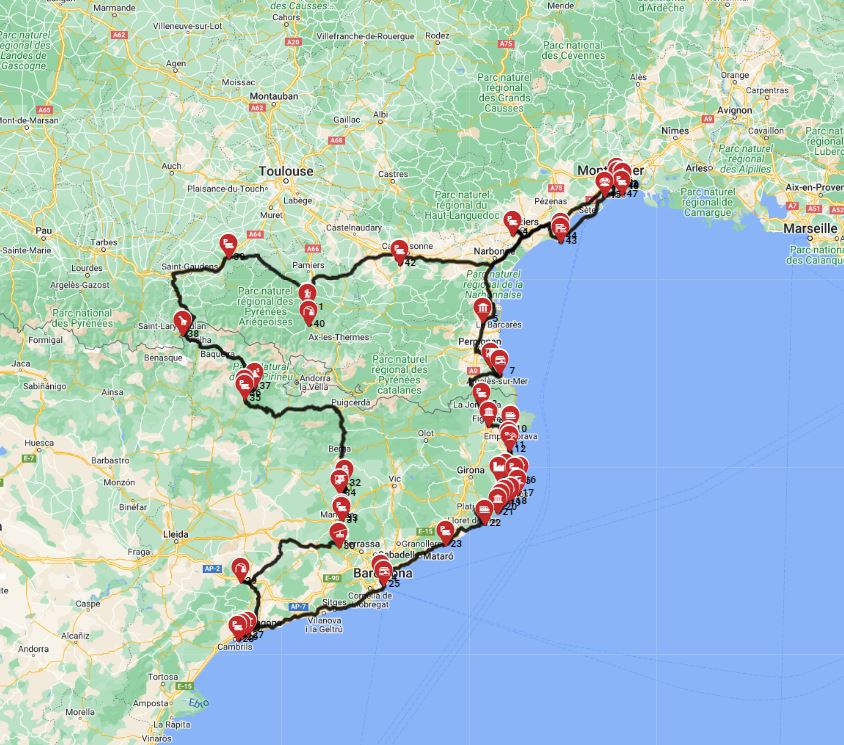
Planning an RV trip to France involves selecting your desired regions (e.g., Loire Valley, Provence, Normandy) and researching local attractions, festivals, and unique culinary experiences to craft a thematic itinerary beyond typical tourist spots. Consider the duration of your trip (e.g., how many days do you need for an RV trip to France?), allowing ample time for both travel and relaxation, and integrate options for staying connected such as local eSIMs or portable Wi-Fi devices. Beginners should map out a flexible route, pre-book popular campgrounds during peak season, and familiarize themselves with French road rules and potential toll roads to ensure a smooth journey. Our specialists have crafted numerous route plans, and you can explore 1,300+ pre-planned routes across 5 continents via RV PLANET (rvplan.net), our sister company, to get inspired. On the routes offered through RV PLANET routes, you can itemize and track every expense along the way for easy budgeting.
To maximize your experience, we recommend focusing on slow travel, spending several days in each region rather than rushing from one place to the next. This allows for deeper immersion into local life, from browsing regional markets to enjoying leisurely meals. Don't forget to look into our "RV Rental in France for Couples - Pricing 2024" if you're planning a romantic getaway, or "RV Rental Deals in France - Latest Offers 2024" for budget-friendly options.
🎬 Video coming soon
What to know before your first RV rental in France: A first-timer's checklist
Before your first RV rental in France, it's essential to check several key items to ensure a smooth journey. Confirm that your driver's license is valid for driving in France, and consider obtaining an International Driving Permit (IDP) as a supplementary translation, though it's not always mandatory for all nationalities. Understand the vehicle's dimensions, particularly its height and width, to navigate narrow village streets and avoid low bridges; typically, smaller Class B Camper Vans are around 5.8 meters long, while Class C motorhomes can reach over 7 meters. Prepare for French road rules, including speed limits (e.g., 130 km/h on autoroutes, 80 km/h on rural roads) and the prevalence of roundabouts.
Pack light but strategically, focusing on versatile clothing, a good first-aid kit, and a European electrical adapter (CEE 7/7 plug) for campground hookups. While most rentals come with basic kitchenware and bedding, verify what's included to avoid surprises. Familiarize yourself with how to operate the RV's water, waste, and electrical systems, and always carry essential emergency equipment such as a reflective safety vest and a warning triangle. For more specialized trips, like colder weather adventures, you might check out our "Winter RV Rental in France - Pricing Guide 2024".
Where to Camp in France - Top Options
France offers diverse camping experiences from coastal sites like Camping les Mimosas near Nice to picturesque spots in the Dordogne Valley and châteaux-adjacent campgrounds in the Loire Valley. Beginners can choose between bustling resort-style campgrounds with extensive amenities and quieter municipal sites offering a more local experience. Look for campgrounds near popular attractions or charming villages to enhance your local immersion, offering unique culinary interactions and regional festival access. Whether you prefer the sun-drenched beaches of the French Riviera or the historic charm of Alsace, you'll find a wide range of camping options to suit your preferences.
Some of the top cities for RV rentals in France, which also serve as excellent bases for camping, include Agen, Ajaccio - Corsica, Alès, Angers, Annecy, and Auteuil. Each offers a unique gateway to different French regions, from the vineyards of Bordeaux to the Alps' stunning vistas.
Campground Types in France (National, Private, Wild)
France features a variety of campground types, including private sites, municipal campgrounds, and designated 'aires de camping-car,' with strict regulations regarding wild camping. Private campgrounds often offer extensive amenities such as swimming pools, restaurants, and entertainment, typically at a higher price point (e.g., €30-€60+ per night). Municipal sites, run by local councils, are generally more basic and budget-friendly (e.g., €15-€30 per night), often located close to villages or town centers, providing easy access to local shops and services. Designated 'aires de camping-car' are specific areas, often free or low-cost, designed for motorhome overnight parking and usually include basic services like water and waste disposal points.
Wild camping (boondocking) is generally illegal on public land in France, but it is sometimes tolerated in some remote areas with explicit permission from landowners or within specific, clearly marked 'aires' for overnight parking, provided you adhere to local etiquette and leave no trace. Always check local signage and regulations, as rules can vary greatly by municipality and region.
Featured RV Park or Campground in France
When selecting an RV park in France, beginners should look for establishments that clearly list amenities, provide multi-lingual staff, and offer pitches suitable for various RV sizes. A good featured campground would offer essential hookups (electricity, water, waste), a secure environment, and proximity to local attractions or public transport for deeper local exploration. For example, Camping Les Coudoulets in Ardèche offers pitches with 10-amp electricity and water, modern sanitary facilities, a swimming complex, and direct access to the Ardèche River, ideal for families. Look for parks with good reviews regarding cleanliness, safety, and helpfulness, especially for those new to RV travel in France.
Many campgrounds are family-friendly, offering activities for children and communal spaces that foster a welcoming atmosphere. Remember to confirm pet policies and any additional fees if you plan on bringing your furry friends along for the adventure.
Hookups & Amenities - What to Expect
In French campgrounds, you can typically expect electrical hookups (2 or 6 amps, sometimes 10 amps with a standard European 2-pin CEE 7/7 plug), fresh water access, and grey/black water dump stations ('vidange'). Many sites offer additional amenities such as Wi-Fi (often for a fee), laundry facilities, hot showers, and toilet blocks, which are generally clean and well-maintained. For beginners, ensure your RV is equipped with the correct European electrical adapter and be aware that water hoses may need specific connectors, often available at the campsite shop. It's always a good idea to arrive with a full fresh water tank and an empty waste tank, especially if you plan to use smaller, more basic sites.
Modern RV rentals, such as the "cruise america rv rental example Explorer" (7.1m length, 4 sleeping places, with gas stove and refrigerator) from Bandana's fleet, often come fully equipped with a kitchen for preparing meals. You can find plenty of inspiration for cooking on the road by checking out our RV-friendly recipes playlist.
Booking Windows & Reservations in France
For peak season travel (July-August) in popular regions of France like Provence or the Côte d'Azur, booking RV campground spots several months in advance is highly recommended to secure your preferred location. Many popular private campgrounds can be fully booked by April or May for summer dates. Spontaneous travelers, however, can often find availability in the shoulder seasons (May-June, September-October) or by calling ahead on the day, as many national/state parks reserve only 25-30% of spots for advance reservations, keeping the rest for first-come, first-served arrivals. You'll find a spot; if not at the first campground, then the next one. Just call ahead before driving.
Bandana RV recommends that if you are a pre-planner and like everything organized, booking 3-6 months out can also result in better rates. If you are a spontaneous traveler, don't stress; last-minute availability is always a possibility due to dynamic pricing and cancellations. Be sure to check our "RV Rental in France - Prices and Best Deals 2024" for up-to-date information.
Is it easy to find RV parks in France?
It is generally easy to find RV parks and campgrounds in France, thanks to a well-developed infrastructure that caters to motorhome travelers, offering a wide range of options from simple municipal sites to full-service holiday parks. Dedicated mobile applications and online resources such as Park4Night and France Passion (for members) are invaluable tools for locating available sites, including 'aires de camping-car,' wild camping spots (where permitted), and formal campgrounds, often with real-time availability. While finding a spot is usually straightforward, especially outside of peak season, beginners should note that popular coastal or scenic areas can fill up quickly in July and August, making advance booking for these periods a prudent strategy.
Using platforms like rvplan.net can simplify your search, allowing you to filter by amenities, location, and price. This ensures you find the perfect spot, whether it's a bustling family-friendly resort or a quiet, scenic retreat.
Nearby Supermarkets & Resupply Points
Resupplying your RV in France is convenient, with major supermarket chains like Carrefour, Auchan, Leclerc, and Lidl widely available, even in smaller towns and near popular tourist routes. These supermarkets typically offer extensive selections of fresh produce, regional specialties, and essential groceries at competitive prices, making them ideal for managing daily expenses effectively. For unique culinary interactions and fresh local ingredients, beginners should explore local markets ('marchés') often held weekly in town centers, providing an authentic taste of French life and potential cost savings. Imagine preparing a delicious meal with local cheese, fresh baguettes, and seasonal fruits right in your rented campervan!
Look for supermarkets on the outskirts of towns, as they often have larger parking lots suitable for RVs. This helps you stock up efficiently and continue your journey without hassle. When planning your route, keep an eye out for these resupply points, particularly for longer trips or when venturing into more remote areas.
How to Save on Campgrounds in France
To save money on campgrounds in France, consider utilizing discount cards like ACSI or CampingKey Europe, which offer reduced rates, often up to 30%, during shoulder seasons. Opt for municipal or regional campgrounds over larger private resorts, as they are typically more affordable, with prices starting from as low as €15 per night compared to €50+ for resort-style parks. Inquire about weekly rates, which often provide a significant discount for stays of three or more nights, saving you up to 20%. Further savings can be achieved by traveling during the shoulder season (May-June, September-October) when prices are lower and sites less crowded, and by utilizing free 'aires de camping-car' for overnight stops, though amenities might be minimal.
Another effective strategy is to cook most of your meals in your rented motorhome, leveraging fresh ingredients from local markets, which can be significantly cheaper than dining out. For easy budgeting and tracking of all ancillary trip costs (fuel, campground fees, tolls, groceries), remember that RV PLANET routes allow travelers to itemize every expense along the way.
What is the best RV class for camping in France?
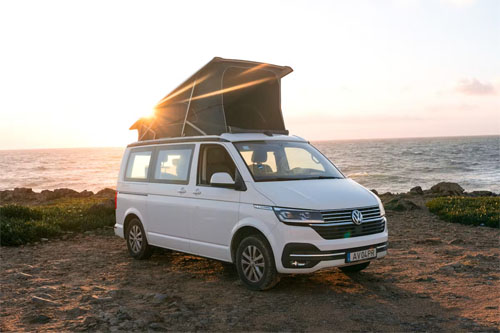
For RV rental beginners in France, a Class B Camper Van or Class SI Semi-integrated motorhome is often the most suitable choice, balancing comfort with ease of navigation on narrower French roads. Bandana's global fleet offers various options; for example, Class B Camper Vans, averaging 5.8 meters in length and sleeping 3-4 people, are highly maneuverable, making them ideal for navigating charming village streets and parking in more compact areas. These smaller campervans like the "V2L" (5.99m long, 2 sleeping places, 100-liter fresh water tank) offer a cozy yet functional space, perfect for couples or small families.
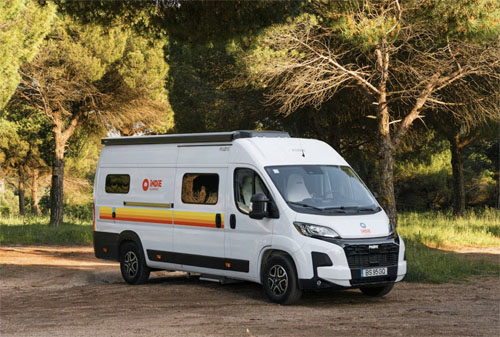
Class SI Semi-integrated models, averaging 6.9 meters in length and sleeping 3-5 people, offer more living space and amenities while still being manageable for new drivers. These include models like the "K3E" which is a Class SI Semi-integrated. Fuel consumption for both Class B and SI models is typically efficient, ranging from 10-12 Liters/100 km, helping manage costs on your journey through France. Drive slowly and carefully, and you can drive almost anywhere without issues. No need to stress - just use common sense and pay attention.
How difficult is it to drive a motorhome in France?
Driving a motorhome in France is generally manageable for beginners, especially with smaller Class B Camper Vans or Class SI Semi-integrated models, but requires awareness of road signs, traffic laws, and specific considerations for different RV sizes. French roads are well-maintained, but rural areas and older towns can feature narrow streets, which require careful navigation for wider vehicles. Always plan your routes using RV-specific GPS that considers vehicle dimensions, and utilize parking strategies such as parking on the outskirts and walking into town.
Toll roads (autoroutes) are common and well-maintained, providing quick transit between major cities, but be prepared for automated barriers and consider a 'badge Liber-t' for easier payment. Driving on secondary roads ('routes nationales' and 'départementales') allows for a slower pace and more scenic views, and generally incurs no tolls. Remember, French driving is on the right-hand side of the road, and speed limits are clearly posted. Drive slowly and carefully, and you can drive almost anywhere without issues. No need to stress - just use common common sense and pay attention.
Do you need a special license to drive an RV in France?
For most standard RVs available for rent in France, you typically only need a valid Class B (standard car) driver's license from your home country, provided the RV's Gross Vehicle Weight (GVW) is under 3,500 kg. This applies to all Class A, Class B, and Class C motorhomes that Bandana Caravan rents. If your RV's GVW were to exceed 3,500 kg, you might require a higher category license (e.g., C1 in Europe or equivalent), so it is crucial to verify the specific requirements based on the RV's specifications and your license type, although this is rare for rental models.
An International Driving Permit (IDP) is highly recommended, even if not strictly required for all nationalities, as it provides a certified translation of your license, which is invaluable for police checks or rental situations, particularly for visitors from non-English-speaking countries. The minimum rental age for RVs in France is 21, and Bandana applies no young driver surcharges or vehicle class restrictions based on age, making RV travel accessible to a wider audience.
What do I need to know about wild camping in France?
Wild camping, or 'boondocking,' is generally prohibited in France on public land, including beaches, protected natural areas, and within 500 meters of a water source or historical monument, making it difficult to 'leave your motorhome anywhere in France' without explicit permission. Designated 'Aires de Camping-Car' (motorhome service areas), often found in or near towns, offer legal and safe spots for overnight parking, sometimes with basic services like water and waste disposal, providing a legal alternative to 'can you park an RV overnight in France' in undesignated areas. France Passion is a popular scheme offering free overnight stays at farms, vineyards, and artisan producers for registered motorhome owners.
Responsible wild camping, where tolerated on private land with the owner's consent or in truly remote, unposted locations, requires adhering to a 'leave no trace' policy, minimizing your impact, and ensuring your presence respects local communities and regulations to avoid issues regarding whether 'is it legal to sleep in an RV in France.' Always be discreet, arrive late, leave early, and never leave any rubbish behind.
Traveling with pets in an RV in France?
Traveling with pets in an RV in France requires ensuring your pet meets all EU entry requirements, including a pet passport, microchip, and up-to-date rabies vaccination, completed at least 21 days before travel. Many campgrounds in France are pet-friendly, but it's essential to confirm their specific policies and any associated fees when booking, and always keep your pet on a leash within campsite grounds. This proactive approach ensures a smooth experience for both you and your pet.
Research pet-friendly attractions and restaurants in advance, and be aware that public transport and some indoor venues may have restrictions on pets. Always carry water and a collapsible bowl for your pet, especially during warmer months, and consider the "Pet-Friendly RV Rental in France - Pricing 2024" options available through Bandana. Having recent photos of your pet is also a good idea in case they get lost.
What to do in an RV emergency in France?
In case of an RV breakdown in France, immediately pull over safely to the side of the road, activate your hazard lights, and place a reflective warning triangle 30 meters behind your vehicle. All occupants should wear a reflective safety vest before exiting the vehicle. Next, contact your rental provider's emergency roadside assistance, whose contact details should be provided at pickup, or call the pan-European emergency number 112 for immediate assistance.
For medical emergencies, call 112 directly, provide your exact location (using GPS coordinates if possible), and describe the situation clearly. Ensure you have your European Health Insurance Card (EHIC) or comprehensive travel insurance details readily accessible. Maintaining essential connectivity through an active mobile plan or eSIM is crucial for emergencies, and having a basic French phrasebook or translation app can significantly aid communication with local services. Bandana RV offers pre-booking comparison, booking support, and post-booking coordination, making sure you feel supported every step of the way.
How much does an RV trip to France cost?
The cost of an RV trip to France varies significantly based on rental fees, fuel, tolls, camping expenses, and daily spending, but beginners can expect to budget for several key categories to get an estimate of 'what is the average cost of camping in France' and overall trip expenses. Typical daily expenses include RV rental (starting from €80-€150+ per day, depending on vehicle class and season), fuel (Bandana's fleet averages 10-12 Liters/100 km for most classes, with diesel being approximately €1.80-€2.00 per liter), tolls (can add €10-€30+ per day depending on routes and distance), and campground fees (from €15 for basic municipal sites to €50+ for resort-style parks).
To genuinely save money, prioritize toll-free routes ('routes nationales'), cook most meals using fresh ingredients from local markets, and take advantage of free activities like hiking or visiting open-access historical sites. Prices for RV rentals are dynamic, much like flight tickets, changing daily based on availability, seasonality, and supplier marketing decisions. The final price is always set at the actual booking time, with full transparency and no hidden fees, a core promise from Bandana Caravan. Remember, on RV PLANET routes, travelers can itemize and track every expense along the way for easy budgeting.
What You Shouldn't Miss
- **Explore the Dordogne Valley's Prehistoric Caves:** Drive your rented motorhome through the scenic Dordogne, visiting Lascaux IV to witness stunning ancient cave art and charming medieval villages like Sarlat-la-Canéda, delving into France's rich prehistoric past.
- **Indulge in Provence's Lavender Fields (Seasonal):** Plan a late June to early August trip to witness the breathtaking lavender fields in full bloom around Valensole or Sault, absorbing the fragrant air and picturesque landscapes, a true feast for the senses.
- **Cycle Along the Loire Valley's Châteaux:** Park your RV at a riverside campground and spend a day cycling between magnificent châteaux like Chambord, Chenonceau, and Villandry, experiencing the grandeur of French history firsthand.
- **Savor Fresh Seafood on the Brittany Coast:** Head to coastal towns in Brittany, like Concarneau or Saint-Malo, and enjoy freshly caught oysters, mussels, and crêpes right by the sea, immersing yourself in the local culinary scene.
- **Discover the Dramatic Landscapes of the French Alps:** Venture into the Alps, perhaps near Annecy, for stunning mountain drives, hiking trails, and the opportunity to enjoy alpine lakes and charming mountain villages with your mobile home.
- Looking for expert insights from Avi Bandana? Top 5 Adventures - recommendations from Avi Bandana.
Final Thoughts
Embarking on your first RV camping adventure in France is an experience unlike any other. Imagine the freedom of waking up to a new, breathtaking view each day, with your rented mobile home providing all the comforts you need. From the rolling vineyards to the dramatic coastlines, France offers an incredible canvas for your road trip dreams. We at Bandana RV are here to ensure your planning process is as enjoyable as the trip itself, taking care of the small details that make a big difference.
Don't let the idea of navigating a new country by RV intimidate you. With the right preparation, choosing the right vehicle like a campervan, and knowing what to expect, you'll be creating cherished memories in no time. So, pack your bags, embrace the spirit of slow travel, and get ready to discover the magic of France on your terms.
Discover top destinations, planning tips, all in one place! Plan a trip itinerary in advance with minimal effort and maximum enjoyment. Compare Motorhome Prices for France and start your unforgettable journey today.