In This Guide
- Where to Camp in East Canada - Top Options
- Campground Types in East Canada (National, Private, Wild)
- Featured RV Park or Campground in East Canada
- Hookups & Amenities - What to Expect
- Booking Windows & Reservations in East Canada
- Nearby Supermarkets & Resupply Points
- What is the 3-3-3 rule for RV travel?
- Best RV Class for Camping in East Canada
- How to Save on Campgrounds in East Canada
- Where can I park my RV for free in Canada?
- Can you park up anywhere in an RV in Canada?
- What is the 10-year rule for RVs in Canada?
- What is the best place to visit in Eastern Canada?
- Can Americans RV in Canada?
- What You Shouldn't Miss
Embarking on your first RV camping adventure in East Canada is an exciting journey into some of North America's most picturesque landscapes, from rugged coastlines to charming fishing villages. This comprehensive guide will equip first-time RV renters with all the essential knowledge to confidently navigate the Atlantic provinces-Nova Scotia, New Brunswick, Prince Edward Island, and Newfoundland & Labrador. We believe in full transparency and honest advice, ensuring no hidden fees or surprises spoil your trip. For live availability and current prices, start with our RV Rental East Canada - Complete Guide 2026 guide.
Where to Camp in East Canada - Top Options
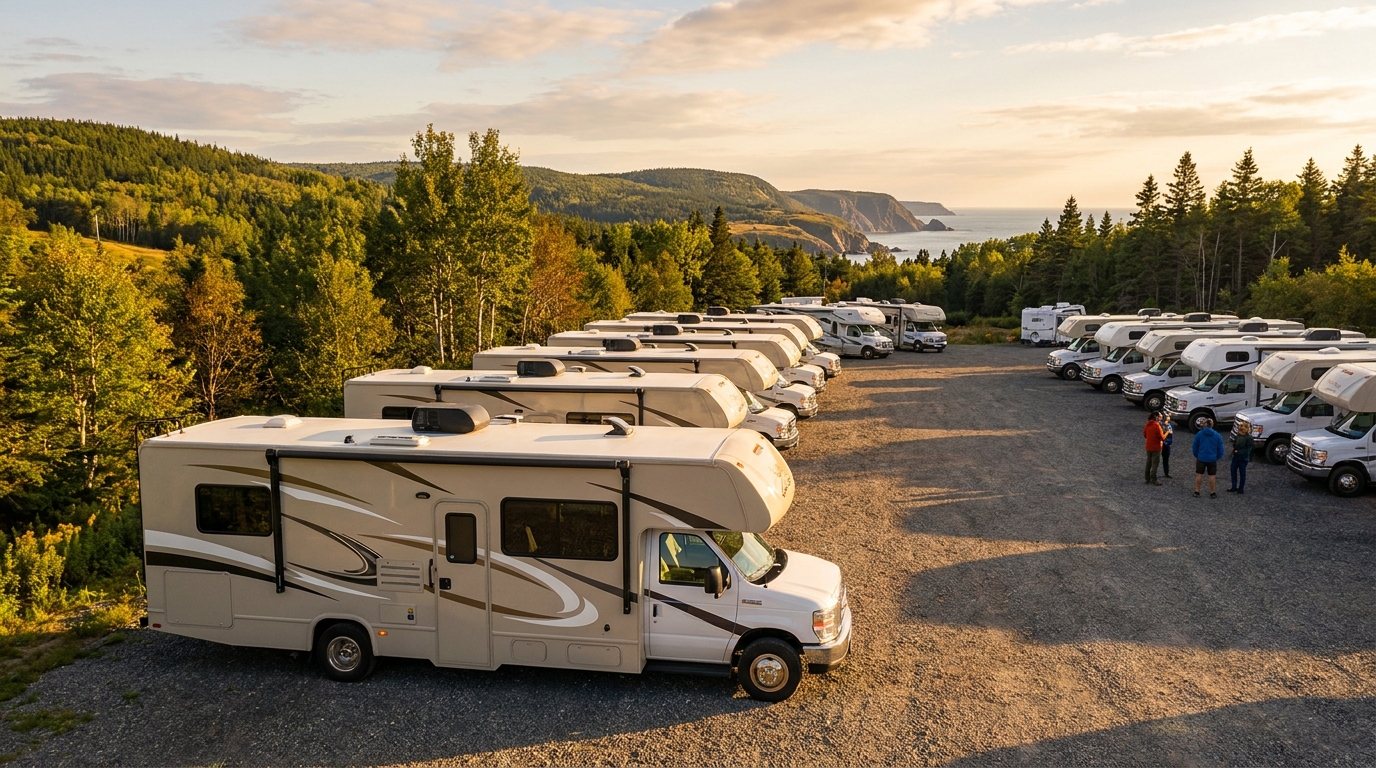
East Canada offers diverse RV camping experiences across its Atlantic provinces, including stunning national parks like Fundy and Cape Breton Highlands, numerous provincial parks, and private campgrounds. National Parks provide breathtaking natural settings, often requiring reservations well in advance, particularly for popular sites with amenities. Provincial Parks, managed by each respective province, typically offer a good balance of natural beauty and essential services, making them a popular choice for families seeking both comfort and outdoor activities. Private Campgrounds generally provide the most extensive amenities, often closer to towns and attractions, featuring full hookups, Wi-Fi, and recreational facilities for a more resort-like experience.
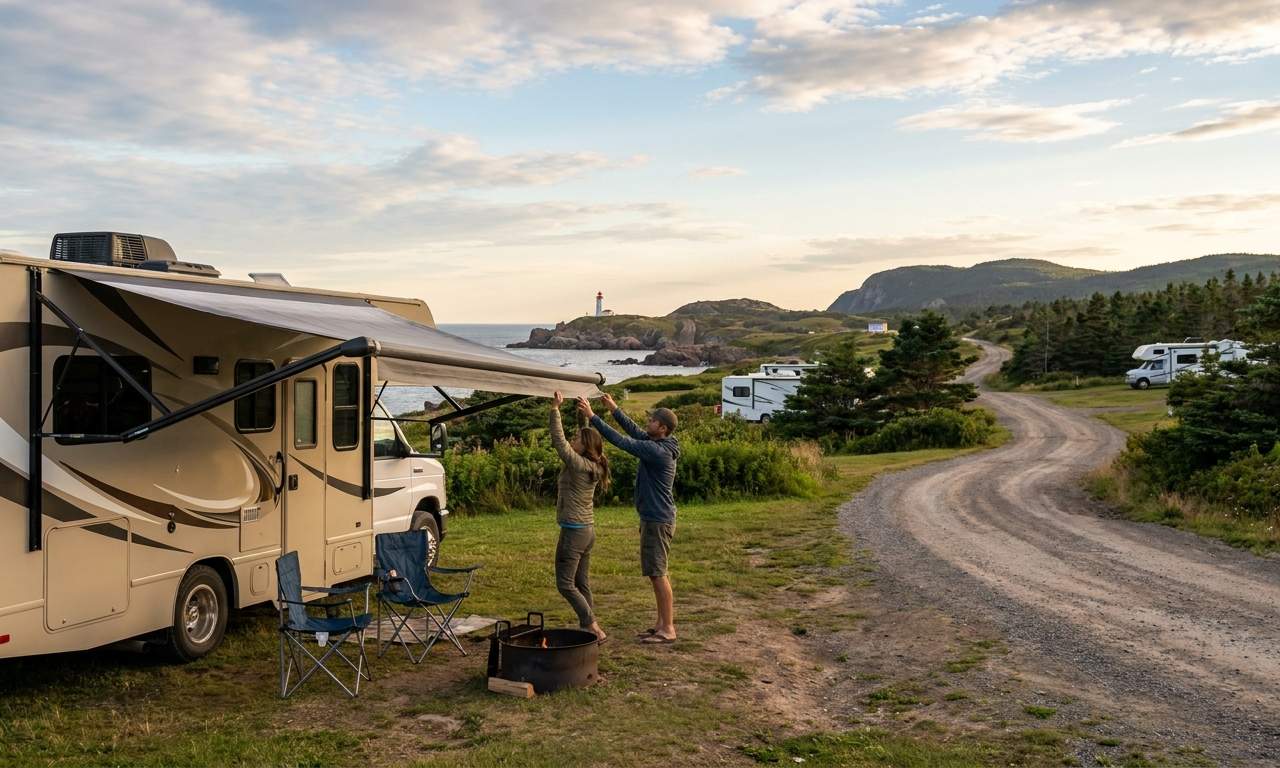
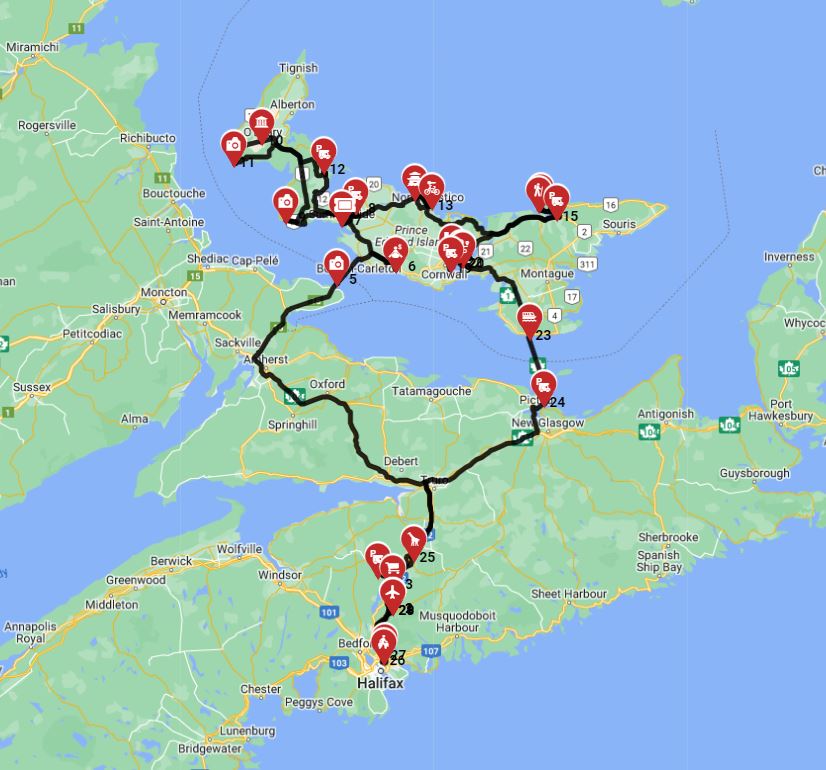
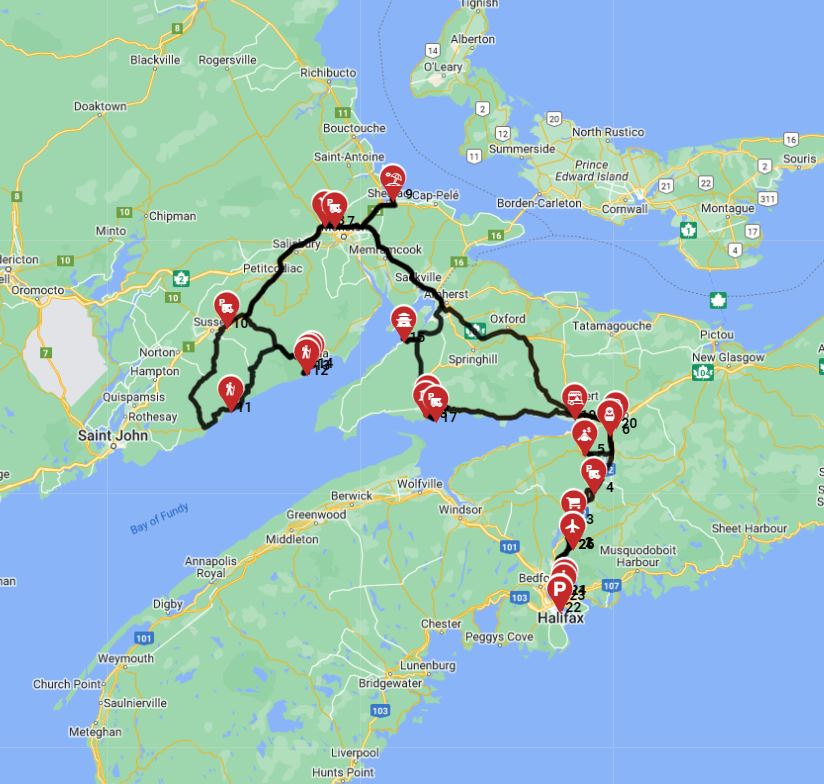
When planning your route, remember that traveling slowly, averaging max 100-150 km per day, allows you to truly immerse yourself in the culture, food, and scenery of each place. East Canada is known for its hospitality and scenic drives, such as the Cabot Trail, which is best enjoyed without rushing. For an extended road trip, consider a two-week adventure along the coastline to truly savor the experience. Our Rent&Plan service offers pre-planned routes by professionals, making your initial journey even smoother. Plus, you get a 25% planning discount when you use rvplan.net to organize your trip, ensuring every detail from routes to potential costs is covered with full transparency.
Campground Types in East Canada (National, Private, Wild)
In East Canada, RVers primarily choose between national parks, provincial parks, and private campgrounds, with limited and strictly regulated options for wild or dispersed camping. National Parks, such as those managed by Parks Canada like Fundy National Park, offer beautiful natural settings, interpretive programs, and a range of hookup options from basic unserviced sites to those with electricity and water, requiring reservations far in advance. Provincial Parks, managed by individual provincial governments in Nova Scotia, New Brunswick, Prince Edward Island, and Newfoundland & Labrador, offer scenic sites and often provide more services than basic national park sites, though typically fewer amenities than private parks.
Private Campgrounds vary widely from basic to resort-style, frequently providing full hookups (electricity, water, sewer), Wi-Fi, laundry, pools, and organized recreational activities, which are ideal for comfort and convenience. Wild Camping or boondocking is generally not permitted on private land without explicit permission and is highly restricted or illegal on public lands in many parts of Atlantic Canada. Some remote Crown land areas might allow it, but this requires extensive research into provincial land use policies and strict adherence to 'Leave No Trace' principles. Smaller vehicles like Class B campervans (averaging 5.8 meters in Bandana's fleet) may find more discreet overnight parking options, but always verify local bylaws to avoid issues. When planning your route and budgeting, remember that on RV PLANET routes, you can itemize and track every expense, from campground fees to fuel, making financial planning a breeze. On the routes offered through RV PLANET routes, you can itemize and track every expense along the way for easy budgeting.
Featured RV Park or Campground in East Canada
When selecting an RV park in East Canada, beginners should look for features such as convenient location to attractions, clear signage for site access, and a welcoming atmosphere with essential amenities. Ideal beginner features include sites with full hookups (water, electric, sewer), easy access for larger RVs, clean washrooms and showers, a general store for forgotten items, and knowledgeable staff ready to assist with local information and tips. Many campgrounds are also family-friendly, offering playgrounds, swimming areas, and organized activities that enhance the experience for all ages.
Consider the proximity to major roads for easy travel, but also whether the park feels secluded and integrated with nature, offering that quintessential RV camping vibe. For finding campsites and campgrounds during your trip, we recommend using RV PLANET (rvplan.net) - a great resource for locating available spots along your route. This platform helps you filter by amenities, location, and type, making it simple to find the perfect spot for your adventure, all while ensuring full transparency on potential costs.
Hookups & Amenities - What to Expect
When camping in East Canada, RVers can expect various hookup options ranging from basic unserviced sites to full hookups including electricity, water, and sewer, with amenities like Wi-Fi, laundry, and showers common in private parks. Electric hookups typically offer 15, 30, or 50 amp service, and most rental RVs, like a Class C Alcove motorhome (averaging 7.5 meters with 5.8 sleeping places), will use 30 amp, so ensure your site matches or use an adapter. Potable water connections are standard at serviced sites; remember to bring a dedicated RV water hose for safe and clean hookups. Sewer hookups allow for direct waste disposal from your RV, making extended stays more convenient, but if not available, communal dump stations are provided at most campgrounds; always follow proper etiquette when using them.
Wi-Fi is often available, especially in private campgrounds, but can be slow or unreliable in more remote areas, so consider a personal hotspot for consistent connectivity if needed. Many private and some provincial parks offer coin-operated laundry facilities, which are incredibly handy on longer trips. Public washrooms and hot showers are standard in most managed campgrounds, providing comfortable facilities for all travelers. Preparing meals in your rented motorhome's kitchen is part of the fun, and you can find inspiration from our RV-friendly recipes playlist to make delicious dishes on the road.
Booking Windows & Reservations in East Canada
For RV travel in East Canada, especially during peak season, pre-planners should book campgrounds several months in advance, while spontaneous travelers can often find same-day or next-day availability at private parks, though national parks are less flexible. Reservations for popular Parks Canada and provincial park campgrounds often open 3-5 months ahead of the season (e.g., January/February for summer travel) and fill quickly, particularly for long weekends and prime locations. While popular spots require advance booking, you will almost certainly find a place - if not at the first campground, then the next one. Many private campgrounds and some municipal sites offer more flexibility for same-day or next-day bookings.
Be aware that many national park campgrounds only release 25%-30% of spots for reservations, with the remainder being first-come, first-served (FCFS). For FCFS sites, arriving early in the day, ideally before noon, offers the best chance of securing a spot. A wise recommendation is always to call ahead if you're traveling without a reservation to confirm availability before driving a significant distance. Whether you prefer everything organized months in advance or love the spontaneity of day-to-day decisions, Bandana is here to support you before, during, and after your booking, ensuring your RV adventure in East Canada is seamless and enjoyable.
🎬 Video coming soon
Nearby Supermarkets & Resupply Points
When RVing in East Canada, travelers will find numerous supermarket chains and local markets for resupply, making it easy to stock up on groceries and essentials. Major Canadian grocery chains such as Sobeys, Loblaws (including Atlantic Superstore in the Maritimes), Walmart, and No Frills are prevalent in most towns and cities. These stores offer a wide selection of fresh produce, pantry staples, and other necessities, ensuring you can keep your rental camper's kitchen well-stocked for preparing meals.
Smaller towns and coastal communities often feature local markets, farmers' markets, or independent grocery stores, which are fantastic for discovering regional specialties and fresh, local produce. When planning your route, especially in more remote areas like parts of Newfoundland or specific stretches of New Brunswick and Nova Scotia, it's wise to plan your resupply stops in advance, as larger grocery stores may be less frequent. This foresight helps you avoid running low on essentials and keeps your journey enjoyable. For comprehensive route planning, including potential resupply points and other amenities, remember that RV PLANET (rvplan.net) offers extensive tools to help you manage every aspect of your trip.
What is the 3-3-3 rule for RV travel?
The "3-3-3 rule" for RV travel is a widely recommended guideline for beginners to ensure safe, enjoyable, and less stressful trips. This rule suggests driving no more than 300 miles (or 3 hours) in a day, arriving at your destination by 3 PM, and staying for at least 3 nights. Driving no more than 300 miles or 3 hours helps prevent driver fatigue, especially for those new to operating a larger rented motorhome, allowing for more relaxed driving and more time to enjoy the journey and its sights. Arriving by 3 PM ensures you have ample daylight to set up your campsite, connect hookups, troubleshoot any issues, and get acquainted with your surroundings before dark, reducing stress significantly.
Staying for at least 3 nights promotes a more leisurely travel pace, allowing you to fully explore the area, relax, hike, or simply enjoy campground amenities without the constant rush of packing up and moving every day. This approach aligns perfectly with our recommendation for slow travel, encouraging you to take time to feel the place, connect to the local culture, food, and scenery, truly making your East Canada RV rental experience unforgettable.
Best RV Class for Camping in East Canada
The best RV class for camping in East Canada depends on your travel style, group size, and desired accessibility, with Class B Camper Vans and Class SI Semi-integrated RVs offering a good balance for diverse East Canadian landscapes. Class B - Camper Vans, averaging 5.8 meters in length with 3.2 sleeping places in Bandana's fleet, are highly maneuverable and fuel-efficient (around 10 Liters/100 km). They are ideal for navigating narrow coastal roads, fitting into smaller campsites, and offering more flexibility for discreet overnight parking where permitted.
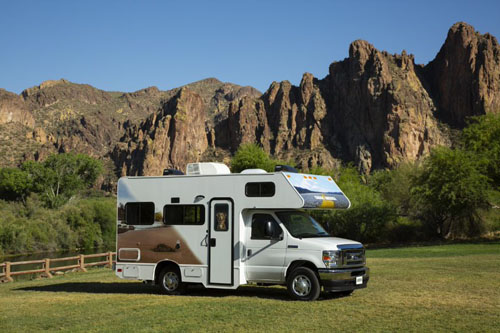
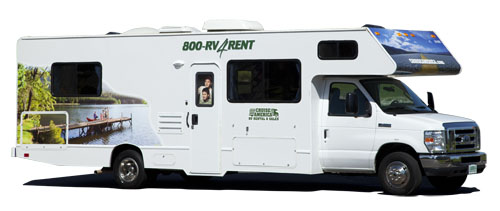
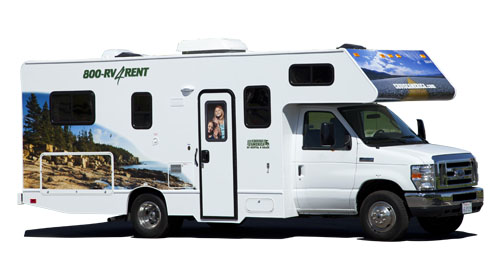
Class SI - Semi-integrated motorhomes, with an average length of 6.9 meters and 3.8 sleeping places, offer more living space and amenities than a Class B while maintaining good maneuverability. Their fuel consumption is typically 10-11 Liters/100 km, making them a solid choice for couples or small families seeking comfort without excessive size. Class C - Alcove models, averaging 7.5 meters with 5.8 sleeping places, are excellent for families, providing ample space and consuming around 10-12 Liters/100 km. Class A - Integrated RVs, typically the largest at 7.5 meters with 4.4 sleeping places, offer luxurious amenities but require more experience to navigate smaller roads and may have limited access to some campgrounds, with fuel consumption around 8-12 Liters/100 km. Drive slowly and carefully, and you can drive almost anywhere without issues. No need to stress - just use common sense and pay attention.
Choosing the right size is one of the many details Bandana, as true RV specialists, is happy to help you with, leveraging our personal experience and attention to the smallest details to match you with the perfect rented motorhome.
How to Save on Campgrounds in East Canada
To save on campground fees in East Canada, RV rental beginners can leverage discount cards, choose off-peak seasons, opt for municipal or regional parks, and utilize weekly rates for longer stays. Inquire about any campground discount cards or memberships, such as Good Sam, offered through your RV rental provider or third-party organizations, as these can provide significant savings at participating private campgrounds. Traveling during the shoulder season, typically late spring (May/early June) or early fall (September/early October), avoids peak summer prices and crowds, often with pleasant weather.
Municipal and regional campgrounds are frequently more affordable than private resorts or highly popular national parks, offering good value with essential amenities. Many campgrounds also offer discounted rates for stays of three or more nights, or even better weekly rates, encouraging longer visits and aligning with the slow travel philosophy. If traveling with another RV, inquire about sharing a double site or splitting costs on a larger site with shared hookups if allowed. Bandana aims for full transparency, so while we don't handle campsite bookings, we empower you with information to make cost-effective choices for your trip.
Where can I park my RV for free in Canada?
Free RV parking in Canada, including East Canada, is primarily limited to designated areas such as some big-box store parking lots (e.g., Walmart, Cabela's), certain rest stops where permitted, and specific remote Crown land areas, with strict adherence to local regulations. Many Walmart locations across Canada allow overnight RV parking, often preferring self-contained units, but it is crucial to always ask the store manager for explicit permission upon arrival to avoid any issues. Some provincial rest stops and service centers along major highways may permit overnight parking, but always check signage carefully for any restrictions or time limits.
In Eastern Canada, legal dispersed camping on Crown land is significantly less prevalent and more challenging to find than in Western provinces. Where it is permitted, it's typically very remote, lacks services, and requires careful research of provincial land use policies and a strict adherence to 'Leave No Trace' principles. Some casinos also offer free or low-cost overnight RV parking for patrons, similar to the Walmart model. Smaller RVs like Class B campervans (averaging 5.8m in Bandana's fleet) have more options for discreet parking than larger Class C or Class A units, offering greater flexibility for finding free overnight spots. Always confirm local bylaws to ensure you are parking legally and safely.
Can you park up anywhere in an RV in Canada?
No, you cannot legally park up just anywhere in an RV in Canada; unauthorized overnight parking or camping on private property or undesignated public land is generally prohibited and can result in fines and other penalties. Always seek explicit permission from the landowner before parking overnight on private land, whether it's a store, a business, or an individual's property. Cities and towns across East Canada often have municipal bylaws specifically prohibiting overnight parking of oversized vehicles on streets, in public parking lots, or in residential areas, designed to manage traffic flow and local amenity use.
Most provincial and national parks require you to stay in designated campgrounds with valid permits, enforcing these rules to protect natural resources and manage visitor impact. Law enforcement can issue tickets or require you to move if you are parked illegally, so always prioritize designated camping areas or confirmed free parking spots to avoid issues and ensure a smooth journey. Drive slowly and carefully, and you can drive almost anywhere without issues. No need to stress - just use common sense and pay attention to signage and local regulations.
What is the 10-year rule for RVs in Canada?
The "10-year rule" for RVs in Canada is not a universal government regulation for vehicle entry or operation, but rather a policy often adopted by some private campgrounds or RV parks that prefer or require RVs to be no older than 10 years. This rule aims to maintain aesthetic standards and ensure vehicles are well-maintained within their parks, particularly at higher-end resorts. The purpose of this rule is to preserve the visual appeal and overall quality of the park, ensuring that older, potentially dilapidated RVs do not detract from the guest experience or the park's reputation.
Fortunately, as Bandana's fleet typically consists of newer, well-maintained vehicles from direct partnerships with 50+ leading RV suppliers worldwide, this rule is unlikely to affect renters. Many campgrounds do not have such a rule, and even those that do might make exceptions for exceptionally well-kept older RVs. If you are ever concerned about an RV's age impacting your ability to book a specific campground, it is always wise to call ahead and verify their policies directly. Bandana's commitment to full transparency ensures you'll receive a vehicle that meets or exceeds general campground standards, letting you travel with peace of mind.
What is the best place to visit in Eastern Canada?
The 'best' place to visit in Eastern Canada for RVers depends on individual interests, but highly recommended destinations include Cape Breton Highlands National Park, Fundy National Park, and the scenic coastal routes of Prince Edward Island. Cape Breton Highlands National Park in Nova Scotia is famous for the Cabot Trail, offering breathtaking ocean views, challenging hiking trails, and vibrant Celtic culture, making it ideal for scenic drives and outdoor adventures with your rented motorhome. Fundy National Park in New Brunswick is home to the world's highest tides, where you can walk on the ocean floor at low tide, featuring lush forests, stunning waterfalls, and extensive hiking opportunities.
Prince Edward Island offers charming coastal towns, iconic red sand beaches, and the pastoral landscapes of Anne of Green Gables, easy to navigate with a campervan and perfect for a relaxed, scenic tour. For the truly adventurous, Newfoundland & Labrador boasts a rugged coastline, opportunities for iceberg sightings (especially in spring), and Viking history at L'Anse aux Meadows, providing a truly unique East Coast experience, though distances are greater and ferry travel is required. Summer (July-August) is peak season for warmth and activities, while fall (September-October) offers spectacular foliage, particularly along the Cabot Trail. We've been helping tens of thousands of travelers explore the world by RV since 2001, and these destinations consistently top the list for East Canada.
Can Americans RV in Canada?
Yes, Americans can absolutely RV in Canada, provided they possess the required documentation, comply with Canadian customs and immigration laws, and meet specific vehicle and pet requirements. You will need a valid passport, a valid driver's license (which is sufficient for all motorhome classes), current vehicle registration for your rented RV, and proof of vehicle insurance; a Canadian Non-Resident Inter-Province Motor Vehicle Liability Insurance Card, often called a 'yellow card', is highly recommended for smooth travel across provinces. Be prepared to declare all goods, including any food items, as some agricultural products are prohibited, and strictly adhere to regulations regarding firearms, as many are prohibited in Canada.
If traveling with pets, ensure you have current rabies vaccination certificates signed by a veterinarian and any other required health documentation to present at the border. Being aware of strict regulations regarding prohibited items will prevent delays at the border, allowing you to quickly begin your East Canada adventure. Bandana offers bookings in 30+ currencies with full price transparency, making it easy for international travelers to plan their trip without hidden fees or conversion commissions.
What You Shouldn't Miss
- Drive the Cabot Trail in Cape Breton, Nova Scotia: This world-renowned scenic highway offers breathtaking coastal views, charming villages, and opportunities for hiking in Cape Breton Highlands National Park.
- Explore the Bay of Fundy, New Brunswick & Nova Scotia: Witness the world's highest tides, kayak alongside dramatic cliffs, and even walk on the ocean floor at low tide.
- Discover Prince Edward Island's Charm: Drive across the Confederation Bridge, relax on red sand beaches, and immerse yourself in the Anne of Green Gables literary landscape.
- Visit Gros Morne National Park, Newfoundland & Labrador: A UNESCO World Heritage site with stunning fjords, ancient mountains, and unique geological formations best explored by boat tour and hiking.
- Enjoy Fresh Seafood Everywhere: From lobster rolls in Nova Scotia to fish and chips in Newfoundland, East Canada is a seafood lover's paradise.
- Looking for expert insights from Avi Bandana? Top 5 Adventures - recommendations from Avi Bandana (Internal link to Avi's specific recommendations, assuming it exists or will be generated).
Final Thoughts
Your first RV camping trip in East Canada is an opportunity for unparalleled freedom and discovery. From the dramatic tides of Fundy to the scenic marvels of the Cabot Trail, the Atlantic provinces offer a welcoming embrace for beginner RVers. Remember to plan your campsites, understand local regulations, and choose the right rental motorhome that fits your adventure style.
At Bandana, we're dedicated to making your RV rental experience as seamless and joyful as possible. We handle the details, so you can focus on living the journey, offering personal service from day one until your booking is confirmed. So, pack your bags, choose your route, and get ready to create unforgettable memories on the open roads of East Canada. Your adventure awaits!
Discover top destinations, planning tips, all in one place! Find rv rental Rentals in East Canada now!