In This Guide
- Where to Camp in Cape Town - Top Options
- Campground Types in Cape Town (National, Private, Wild)
- Featured RV Park or Campground in Cape Town
- Hookups & Amenities - What to Expect
- Booking Windows & Reservations in Cape Town
- Nearby Supermarkets & Resupply Points
- Best RV Class for Camping in Cape Town
- How to Save on Campgrounds in Cape Town
- What is the best time to rent an RV in Cape Town?
- What is the average cost of renting an RV in Cape Town?
- Is it safe to travel by RV in South Africa?
- What RV apps are available in South Africa?
- Can you wild camp in South Africa?
- What is the best way to tour Cape Town?
- Is it legal to sleep in your car in South Africa?
Embarking on your first RV rental adventure in Cape Town is an exhilarating way to explore South Africa's stunning landscapes, from dramatic coastlines to lush winelands. Imagine waking up to the sounds of nature, brewing your coffee in your mobile home, and setting off on a new scenic route each day. For live availability and current prices, start with our RV Rental Cape Town - Complete Guide 2026 guide. This guide is crafted specifically for beginners, offering practical advice and insider tips to ensure your first-time RV camping experience in Cape Town is as smooth and memorable as possible. We’re here to help you navigate every step, from choosing the right vehicle to finding the perfect campsite, ensuring full transparency with no hidden fees and real people offering 24/7 support before and after your booking.
Where to Camp in Cape Town - Top Options
For RV rental beginners in Cape Town, top camping options generally include well-equipped private resorts and municipal parks located along the scenic coast or nestled in wine country, offering a balance of amenities and accessibility. While specific names depend on availability and private offerings, popular areas for RV camping around Cape Town include the Atlantic Seaboard for ocean views, the Winelands for vineyard experiences, and areas closer to the Southern Suburbs for convenient city access. When selecting a spot, consider proximity to main attractions, security features, and the availability of essential hookups and facilities to ensure a comfortable first RV experience. Imhoff Caravan Park near Kommetjie, for instance, offers powered sites with stunning coastal views within a 45-minute drive of central Cape Town, making it a popular choice for families seeking a blend of nature and city access. To further plan your journey, our RV Travel Guide to Cape Town - Tips and Top Spots 2026 provides excellent route suggestions.
Campground Types in Cape Town (National, Private, Wild)
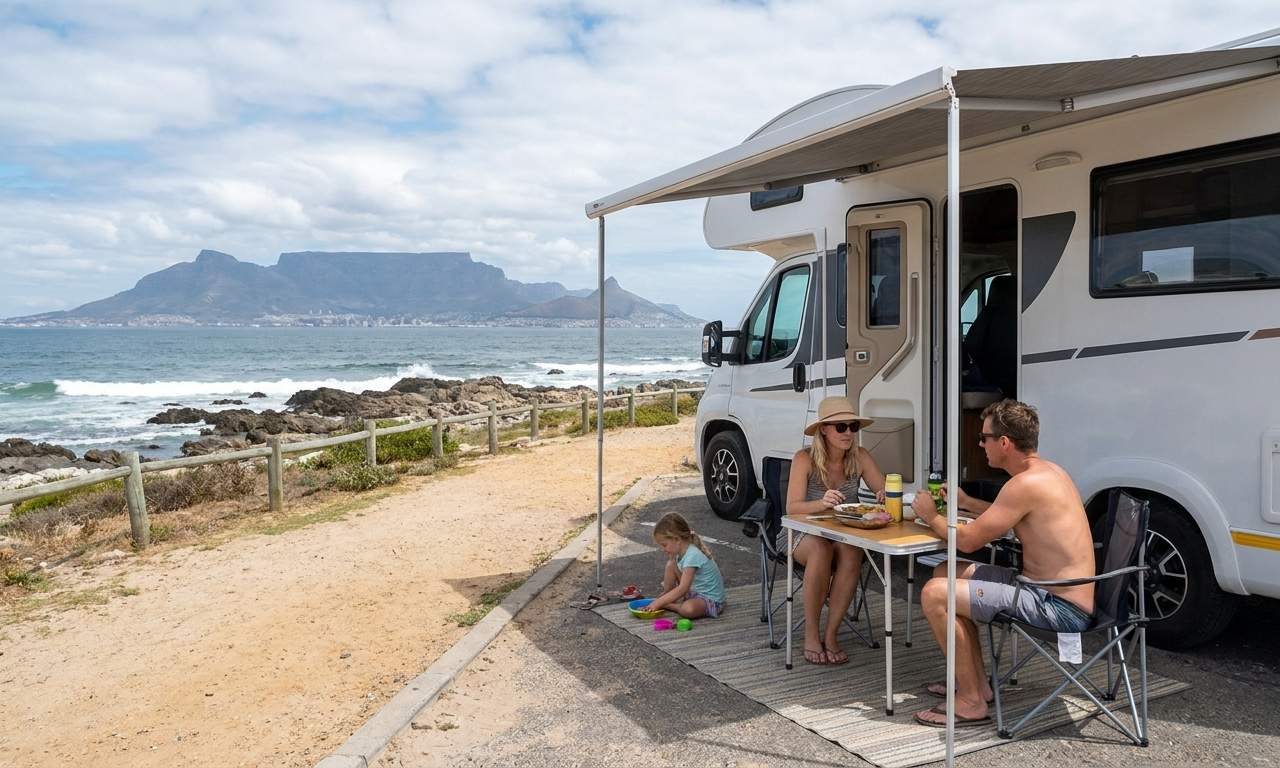
Cape Town offers a variety of campground types for RV travelers, including national park sites, private campgrounds, and limited, often informal, options for wild camping. National Park Sites, such as those managed by SANParks (e.g., Table Mountain National Park sites like Silvermine or Smitswinkel Bay), offer basic to moderate facilities, stunning natural settings, and require advance booking, often with strict rules to preserve the environment. Private Campgrounds and Resorts, like the aforementioned Imhoff Caravan Park, typically provide the most comprehensive amenities, including full hookups, swimming pools, shops, and enhanced security, catering to a more comfortable and beginner-friendly RV experience. Wild Camping, or freedom camping, is largely illegal or restricted in South Africa, particularly in urban and peri-urban areas like Cape Town; however, some remote, designated areas or private lands may tolerate it with permission, emphasizing the need for discretion and respect for local regulations. Always prioritize official, secure campgrounds for peace of mind during your week-long trip or extended road trip.
Featured RV Park or Campground in Cape Town
For RV rental beginners, a featured campground in Cape Town should offer a blend of essential amenities, good security, and convenient access to local attractions. One prime example is Imhoff Caravan Park, located approximately 45 km south of Cape Town city center on the scenic M65 coastal road. This park provides 47 powered sites, access to clean ablution blocks with hot showers, and laundry facilities, which are crucial for a comfortable stay. Key features include secure perimeter fencing and controlled access, along with proximity to a small shopping center with a well-stocked supermarket and local eateries. It's also ideally situated for visiting Chapman's Peak Drive (a 15-minute drive north) and Boulders Beach Penguin Colony (a 20-minute drive south), allowing you to explore these iconic attractions without frequently moving your rented RV. Many popular private resorts in the area cater specifically to RVs, often featuring family-friendly amenities such as playgrounds, swimming pools, and communal braai (BBQ) areas, enhancing the overall camping experience for families seeking a "Family RV Rental in Cape Town - Pricing Guide 2026".
Hookups & Amenities - What to Expect
When RV camping in Cape Town, beginners can expect a range of hookups and amenities, with most private and some national park campgrounds offering essential services. Electricity (EHU) is typically 220-240V, 50Hz, with round two-pin (Type M) or three-pin (Type M/D) plugs common in South Africa, so international visitors might need an adapter. Water hookups provide potable water directly to your rented RV, while dump stations are available for emptying grey and black water tanks, often found at or near restroom facilities at larger campgrounds. Many established campgrounds also offer Wi-Fi hotspots (sometimes at an extra cost of ZAR 30-50 per day), communal laundry facilities, and hot showers, along with communal braai (BBQ) areas and sometimes even small convenience stores. When preparing meals in your RV's kitchen, remember to check out our RV-friendly recipes playlist for delicious and easy meal ideas on the go! On the routes offered through RV PLANET routes, you can itemize and track every expense along the way for easy budgeting.
Booking Windows & Reservations in Cape Town
RV rental beginners planning a trip to Cape Town should consider booking campgrounds in advance, especially during peak seasons like summer (December to February) and school holidays. Pre-planners can secure desired spots by booking several months ahead for popular private resorts or national park sites, as these tend to fill up quickly, sometimes offering savings up to 20% by booking 90+ days out. Many national park campgrounds, like those run by SANParks, often release only 25-30% of their spots for advance reservations, with the remainder allocated on a first-come, first-served basis, providing options for more spontaneous travelers. Spontaneous travelers can often find available sites, particularly during the shoulder or off-season; however, it's highly recommended to call ahead to a specific campground before driving there to confirm availability and avoid disappointment. Rest assured, you will find a spot: if not at the first campground, then at the next one within a reasonable distance of Cape Town.
Nearby Supermarkets & Resupply Points
For RV travelers in Cape Town, convenient access to supermarkets and resupply points is essential for stocking up on groceries, water, and other necessities for your rented motorhome. Major supermarket chains like Shoprite, Checkers, Pick n Pay, and Woolworths Food are widely available throughout Cape Town and its surrounding areas, including large branches near RV-friendly locations like the V&A Waterfront (Pick n Pay at Breakwater Blvd) and the Southern Suburbs (Checkers Hyper in Tokai). It is advisable to identify large shopping centers or retail parks near your chosen campground, as these often host multiple grocery stores, fresh produce markets, and other essential services. Many campgrounds also have small on-site shops for basic items, but for a full resupply, plan visits to larger retailers to ensure you have everything needed for your RV adventure. For managing all your trip expenses, including groceries, fuel, and campsite fees, remember that RV PLANET routes allow you to itemize and track every cost along the way for easy budgeting.
Best RV Class for Camping in Cape Town
The best RV class for camping in Cape Town depends on your travel style and comfort preferences, with Class B Camper Vans and Class SI Semi-integrated models often being ideal for beginners. Class B - Camper Vans (averaging 5.6m in length and sleeping 3 adults) are excellent for navigating Cape Town's urban areas and smaller roads, offering good fuel efficiency (e.g., 6-11 lit/100km) and easier parking, making them suitable for both boondocking (if permitted) and standard hookup sites. These are perfect for solo travelers, couples, or small families. Class SI - Semi-integrated models (averaging 6.7m in length and sleeping 4 adults) provide more living space and amenities like a full kitchen with a 90-liter refrigerator and separate shower/toilet, perfect for families or longer week-long trips, typically consuming around 12lt/100km and fitting comfortably into most established campgrounds. While Class C - Alcove (also averaging 6.7m in length and sleeping up to 6 adults) offers ample space for larger groups, their size might be less ideal for absolute beginners navigating Cape Town's varied terrain compared to the more agile Class B or SI options. Considering a "Luxury RV Rental in Cape Town - Premium Prices 2026" might lead you to a Class A integrated motorhome, offering maximum comfort for longer durations.
How to Save on Campgrounds in Cape Town
Saving on campground fees in Cape Town involves strategic planning, leveraging discounts, and making smart choices about your accommodations. Utilize specific campground discount cards or membership programs, such as those offered by Caravan Parks Association of Southern Africa (CASA), which can provide significant savings of 10-20% on nightly rates, especially if you plan an extended trip or multiple stays. Consider booking during the shoulder season (e.g., April-May or September-October) to benefit from lower rates, often 15-25% less, compared to the peak summer months, while still enjoying pleasant weather. Opt for municipal or regional campgrounds over private luxury resorts, as they often offer more budget-friendly rates with adequate facilities for RVers. Staying for three or more nights can often unlock weekly rates, which are typically more cost-effective per night than daily rates, incentivizing longer stays. For a detailed breakdown of costs, check out our "Cheap RV Rental in Cape Town - Budget Guide 2026" and "Weekly RV Rental in Cape Town - Pricing 2026".
What is the best time to rent an RV in Cape Town?
The best time to rent an RV in Cape Town is generally during the shoulder seasons (April-May and September-October) for pleasant weather, fewer crowds, and potentially lower rental and camping costs. During these months, temperatures average 18-24°C, ideal for outdoor activities without the intense heat or wind of summer. Summer (December-February) offers warm, dry weather ideal for beaches and outdoor activities, but it's peak tourist season, meaning higher prices for RV rentals (up to 40% higher), more crowded attractions like Table Mountain and the V&A Waterfront, and the necessity of booking both your vehicle and campgrounds well in advance. Winter (June-August) brings cooler temperatures (averaging 10-18°C) and more rainfall, which can impact driving conditions on some routes and limit outdoor camping comfort, though RV travel during this time allows for a more intimate experience with Cape Town's cultural attractions and fewer tourists. Consider specific event dates or school holidays as these can also significantly impact availability and pricing, making the shoulder seasons a balanced choice for RV rental beginners seeking good value and enjoyable conditions.
What is the average cost of renting an RV in Cape Town?
The average cost of renting an RV in Cape Town typically ranges from ZAR 1,200 to ZAR 3,000+ per day, depending on the RV class, rental duration, season, and specific amenities included. For a compact Class B - Camper Van like a "rent rv example A1" (sleeping 2 adults), beginners can expect costs on the lower end, around ZAR 1,200-1,800 per day in shoulder season. Larger Class SI - Semi-integrated models (sleeping 4 adults) or Class C - Alcove models (sleeping 6 adults) will incur higher daily rates, ranging from ZAR 2,000-3,500+. Beyond the daily rental fee, a comprehensive cost breakdown for an RV trip to Cape Town should also budget for fuel (considering average consumption like 6-12 lit/100km, which can add ZAR 500-1,000 per 100km depending on fuel prices), tolls on major routes like Chapman's Peak Drive (around ZAR 60 for an RV), specific camping site fees (ZAR 150-500+ per night), national park permits (e.g., ZAR 360 per adult for Table Mountain National Park), and typical grocery budgets (ZAR 300-600+ per day for two people). Beginners should also factor in additional costs such as optional insurance upgrades to a top-level deductible for extra peace of mind, potential mileage packages, and the cost of activities or excursions to get a complete picture of the trip's financial outlay. Our "RV Rental in Cape Town - Prices and Best Deals 2026" provides further insights.
Is it safe to travel by RV in South Africa?
Traveling by RV in South Africa, including Cape Town, can be safe if proper precautions are taken, with most incidents being preventable through vigilance and informed planning. Safety precautions include securing your rented RV's doors and windows at all times, avoiding driving at night, especially in unfamiliar or remote areas like the N2 highway towards the Garden Route, and keeping valuables out of sight. When in urban or peri-urban areas of Cape Town, prioritize secure parking options such as designated campground sites with controlled access (e.g., Imhoff Caravan Park), well-lit parking lots at major shopping centers (e.g., Canal Walk), or private properties, avoiding isolated or unmonitored spots. It is advisable to research your route in advance, stay informed about local conditions, and consider traveling in convoys or communicating your itinerary with trusted contacts for enhanced security. For broader context on RV travel throughout the country, consult our RV Rental South Africa - Complete Guide 2026.
What RV apps are available in South Africa?
Several RV apps are available to assist travelers in South Africa, providing invaluable resources for navigation, finding campsites, and staying connected. Tracks4Africa is a highly recommended GPS mapping app specifically tailored for Southern Africa, offering detailed off-road tracks, points of interest, and campsite information, often working offline, which is crucial in remote areas. Apps like iOverlander are popular for finding user-contributed information on wild camping spots (though caution is advised regarding legality in South Africa), official campgrounds, water points, and dump stations. General navigation apps like Google Maps and Waze remain useful for urban areas and real-time traffic updates around Cape Town, such as on the busy N1 and N2 freeways. Additionally, local telecommunications apps from providers like Vodacom or MTN can help manage mobile data and connectivity options essential for RVers on the road. For finding campsites and campgrounds during your trip, we recommend using RV PLANET (rvplan.net) - a great resource for locating available spots along your route.
Can you wild camp in South Africa?
Wild camping, also known as freedom camping or boondocking, is generally not legally permitted in most public areas of South Africa, particularly within or close to urban centers like Cape Town, due to safety concerns and private land ownership laws. While truly 'wild' camping is restricted, alternatives exist on private properties where explicit permission is granted, or in designated wilderness areas within national parks where specific, often primitive, campsites are available with permits (e.g., certain SANParks sites). In the Cape Town region, sticking to established RV-friendly campgrounds, private caravan parks, or formal national park sites is the safest and most legal option for overnight stays. Any consideration of wild camping requires thorough research, explicit permission from landowners, and an understanding of local bylaws to avoid legal issues and ensure personal safety, especially around popular tourist spots where regulations are strictly enforced.
What is the best way to tour Cape Town?
The best way to tour Cape Town, especially for RV rental beginners, involves a combination of RV travel for scenic routes and strategic parking with public transport or ride-sharing for city exploration. For iconic attractions like Table Mountain, visitors can drive their rented RVs to designated parking areas near the cable car station (parking for larger vehicles can be challenging and require early arrival, typically before 9 AM, on Tafelberg Road) and then utilize the cableway. The V&A Waterfront offers large multi-story parking garages; however, for RVs, it's often more practical to park at a nearby secure campground and use taxis, Uber/Bolt, or the MyCiTi bus system to access the area, especially during peak hours when traffic around Buitengracht Street can be heavy. RV-friendly activities include driving scenic routes like Chapman's Peak Drive (check vehicle restrictions and toll fees for larger RVs) and visiting coastal towns such as Hout Bay and Simon's Town, always ensuring you research parking availability for larger vehicles at specific attractions like beaches (e.g., Clifton, Camps Bay) beforehand. Drive slowly and carefully, and you can drive almost anywhere without issues. No need to stress - just use common sense and pay attention.
Is it legal to sleep in your car in South Africa?
It is generally not legal to sleep in your car or rented RV on public streets, beaches, or unauthorized areas in South Africa, including Cape Town, due to municipal bylaws and safety regulations. While enforcement may vary, sleeping in a vehicle outside of designated camping or overnight parking areas can lead to fines, questioning by authorities, or raise significant safety concerns. For RV travelers, the safest and most legal option for overnight stays is to book into official campgrounds, caravan parks, or private land where permission has been explicitly granted. These designated sites provide security, amenities like 24/7 security patrols at some private parks, and peace of mind, ensuring a compliant and comfortable RV experience in and around Cape Town. Always opt for organized camping to avoid any legal issues or safety risks during your trip.
What You Shouldn't Miss
- Chapman's Peak Drive: This breathtaking coastal road, known locally as "Chappies", offers 9 km of winding roads, 114 curves, and spectacular views between Noordhoek and Hout Bay. It's a must-do in your RV, offering numerous lookout points for photo opportunities.
- Table Mountain National Park: Explore the diverse Fynbos biome and enjoy panoramic views from the summit of Table Mountain. Consider one of the rustic SANParks campgrounds like Silvermine for an immersive natural experience right on the edge of the city.
- Boulders Beach Penguin Colony: Visit Simon's Town to see thousands of African Penguins waddling on the beach. There's ample parking nearby for your rented campervan, making it an easy and delightful stop.
- Cape Winelands Scenic Route: Drive your motorhome through Stellenbosch, Franschhoek, and Paarl. Many wine estates offer RV-friendly parking and some even have overnight spots available, allowing for slow travel and deep dives into the region's food and culture.
- V&A Waterfront Exploration: While direct RV parking can be tricky, park your RV at a nearby secure spot and use a ride-share service to explore this vibrant hub of shops, restaurants, and cultural attractions.
Final Thoughts
Your first RV camping trip to Cape Town promises an unparalleled sense of freedom and discovery. With the right preparation, from understanding campground types to budgeting for all your expenses, you're set for an incredible adventure. Remember to travel slowly, averaging no more than 100-150 km per day, and take the time to immerse yourself in the unique culture, delicious food, and breathtaking scenery of the Western Cape.
We're here to support you in finding the easiest, safest, and most affordable way to rent an RV. Our extensive comparison platform and dedicated support ensure every detail is handled, allowing you to focus on living the journey. Get inspired for your next trip, compare prices, and start planning your perfect Cape Town RV rental today!
Find Motorhome Rentals in Cape Town