For live availability and current prices, start with our RV Rental Paris - Complete Guide 2026 guide.
In This Guide
- Top 5 Tips for rv rental RV Rental in Paris
- Is France motorhome friendly?
- Before You Book - Class, Dates, Insurance
- How much does it cost to rent an RV in France?
- Pre-Trip Prep - Packing Checklist for Paris
- On the Road - Driving, Fueling, Navigation
- What are the new rules for motorhomes in France?
- Do I need speed stickers on my motorhome in France?
- What is the 3-3-3 rule when rving?
- What is the 4 4 4 rule for rving?
- What is the rule of 3 with an RV?
- At the Campground - Setup, Hookups & Etiquette
- rv rental-Specific Tips for Paris
- Common Mistakes to Avoid in Paris
Top 5 Tips for rv rental RV Rental in Paris
Driving a rented motorhome or campervan around Paris with your family offers an incredible sense of freedom, allowing you to explore iconic landmarks and charming countryside at your own pace. For live availability and current prices, start with our RV Rental Paris - Complete Guide 2024 guide. Planning is key to a smooth journey, especially in a dynamic destination like Paris.Here are our top five tips for a fantastic family RV rental adventure in Paris:
- **Book Your RV Rental Early:** Securing your motorhome or campervan well in advance, particularly for peak seasons like summer (June-August) or school holidays, ensures you have the best selection and rates. Early bookings can often lead to savings of 10-20% on daily rental prices.
- **Obtain a Crit'Air Vignette for ZFE Zones:** A Crit'Air environmental sticker is mandatory for all vehicles, including rented RVs, entering designated low-emission zones (ZFE) around Paris and other major French cities. You can apply for this online through the official French government website, and it typically costs less than €5, but processing and delivery can take several weeks. Displaying it is crucial to avoid potential fines up to €135.
- **Plan Your Access to Paris Carefully:** Driving a larger RV directly into central Paris is highly discouraged due to narrow streets, heavy traffic, and limited parking. Instead, plan to stay at campgrounds just outside the city, such as Camping de Paris in the Bois de Boulogne or other well-connected sites, and use public transport (RER trains, metro, buses) for city excursions. Many outer campgrounds offer direct shuttle services or are located near transit hubs.
- **Budget for All Costs Transparently:** Beyond the daily rental rate, your budget should account for fuel, tolls on French autoroutes (consider a Liber-t tag for electronic payment to save time), and varying campsite fees. These ancillary costs can add an average of €50-€100 per day to your trip, depending on mileage and site amenities. For easy budgeting and expense tracking, consider using RV PLANET routes.
- **Consider Using France Passion for Unique Stays:** For an authentic French experience and to save on campground fees, explore France Passion, a network offering free overnight parking at over 2,000 farms, vineyards, and artisan producers across France. This is a wonderful way to connect with local culture and enjoy unique regional products, often located surprisingly close to Paris, such as within a 1-2 hour drive.
Remember, a standard car driver's license is sufficient for driving all motorhome classes in France, and the minimum rental age is 21 years old.
Is France motorhome friendly?
France is indeed exceptionally motorhome-friendly, offering an extensive and well-developed infrastructure that caters specifically to RV travelers. The country features a vast network of thousands of campsites, ranging from basic municipal sites to luxurious private parks, with approximately 85% providing essential amenities like electrical hookups and waste disposal. Beyond traditional campgrounds, France is famous for its "aires de services" or "aires de camping-car," which are designated service areas designed for motorhomes, often providing free or low-cost overnight parking, fresh water, and dump stations in convenient locations near towns or attractions.Local culture is generally very welcoming to RVers, though a polite approach and understanding of common etiquette, like respecting quiet hours or siesta times in smaller villages, will enhance your experience. Many towns and cities have designated RV parking, even if it's on the outskirts, making it feasible to explore without the stress of navigating large vehicles directly into historical centers. While navigating dense urban areas like central Paris requires planning, the surrounding regions and rural areas are a dream for motorhome travel. Using apps like Park4night or Campercontact is highly recommended for locating these services and ensuring a smooth journey across the diverse French landscapes.
Before You Book - Class, Dates, Insurance
Choosing the right RV class for your family trip to Paris is a crucial first step, as it directly impacts your comfort, maneuverability, and overall budget. For couples or small families of 2-3, a compact Class B campervan (like a "Camper Van" or "Category Van" with features such as "Front Air condition" and "Shower") offers excellent fuel efficiency and easier navigation on narrower French roads, with lengths typically under 6 meters. Families of 4-6 people, on the other hand, might prefer a Class C motorhome (such as a "Category Family 5" or "MHC28"), which provides more spacious living areas, dedicated sleeping spots for children (like bunk beds often found in "MH6 - FRIGG"), and a more comprehensive kitchen, often with lengths between 6 to 9 meters.Booking dates significantly impact both availability and pricing; reserving your motorhome 3-6 months in advance is highly recommended to access a wider range of vehicles and better rates, especially if you aim to travel during the popular spring or autumn seasons. When it comes to insurance, ensure you understand the basic coverage included in your rental and consider upgrading to a top-level deductible for extra peace of mind, particularly given dynamic European driving conditions. Bandana RV, with over 23 years of experience helping tens of thousands of travelers, ensures full transparency in pricing, so what you see is what you pay, with no hidden fees or surprises.
🎬 Video coming soon
How much does it cost to rent an RV in France?
The cost of renting an RV in France typically ranges from €70 to €200 or more per night, with specific prices varying significantly based on the vehicle class, the duration of your trip, and the season of travel. For instance, a compact campervan like the "RV rental denver example Category Van" might start around €70-€100 per day in the low season, while a larger, more comfortable Class C motorhome like the "MHC28," which sleeps up to 7, could easily cost €150-€250+ per day during peak summer or holiday periods.Beyond the rental fee, fuel is a significant expense; diesel (Gazole) is generally cheaper than petrol (Essence), and the average motorhome consumes about 10-15 liters per 100 km. Toll roads (autoroutes) are common in France, and a week-long trip can easily accumulate €50-€100 in toll fees, which can be managed with a convenient Liber-t tag. Campground fees near major attractions like Paris often range from €25-€50 per night for a powered site, while more rural options or France Passion stops can be much less or even free. Don't forget small daily costs for propane refills (€10-€20), dump station fees (€0-€5), and groceries. To help you budget effectively, remember that RV PLANET routes allow travelers to itemize and track every expense along the way, providing a clear picture of your total trip cost. Prices are dynamic and can change daily, so comparing options through a platform like Bandana RV is always the best strategy for finding "RV Rental in Paris - Prices and Best Deals 2024". On the routes offered through RV PLANET routes, you can itemize and track every expense along the way for easy budgeting.
Pre-Trip Prep - Packing Checklist for Paris
Preparing a tailored packing checklist for your RV trip to Paris ensures you have all necessary items for comfort, safety, and compliance with local regulations. Here’s a detailed list to get you started:- Passport / ID cards
- International Driving Permit (if required)
- RV rental agreement & insurance documents
- Crit'Air vignette (if driving in ZFE zones)
- Credit/Debit cards & some Euros cash
- European plug adapters & power strip
- GPS device or reliable navigation app with offline maps
- Smartphone with local SIM or roaming plan
- Comfortable walking shoes
- Layers of clothing (t-shirts, sweaters, light jacket)
- Waterproof jacket/umbrella
- Sleepwear
- Basic toiletries (toothbrush, toothpaste, shampoo)
- Quick-drying towels
- First-aid kit
- High-visibility vests (for all passengers, by law)
- Warning triangle
- Fire extinguisher
- Carbon monoxide detector
- Basic cooking utensils, pots, pans, dishes
- Coffee maker (if not supplied)
- Reusable water bottles
- Dish soap & sponges
- Trash bags
- Entertainment (books, games, downloaded movies)
- Camera & chargers
- Backpack for day trips into Paris
- Insect repellent
For tips tailored to your specific trip, talk to rent-motorhome. Planning your meals to enjoy in your rented campervan can be part of the fun, offering flexibility and savings; explore our RV-friendly recipes playlist for inspiration.
On the Road - Driving, Fueling, Navigation
Driving a rented motorhome or campervan in France requires careful attention to local customs and regulations, especially when navigating outside of major highways. Drive slowly and carefully, and you can drive almost anywhere without issues. No need to stress - just use common sense and pay attention. French autoroutes (motorways) are generally well-maintained and fast, but often involve tolls. Using a Liber-t tag for electronic toll payment can save significant time and hassle at toll booths, particularly with a larger vehicle.Understanding French fuel types is essential: "Gazole" refers to diesel, and "Essence" is petrol. Always double-check the fuel cap or rental agreement to ensure you're using the correct type. Some remote areas might have limited fuel stations, so planning stops is advisable. When it comes to navigation, traditional GPS devices specifically designed for RVs or mobile apps like Park4night and Campercontact are invaluable. These apps provide up-to-date information on suitable routes, specific speed limits for heavier vehicles (which are generally lower than for cars), service points, and potential height or weight restrictions on smaller roads or in historic towns. Familiarize yourself with common French road signs, such as those indicating "route barrée" (road closed) or "sens unique" (one-way street), to ensure a smooth and stress-free journey.
What are the new rules for motorhomes in France?
Recent rules for motorhomes in France primarily focus on environmental regulations and safety, most notably the mandatory Crit'Air vignette for driving in Zones à Faibles Émissions (ZFE), such as the Greater Paris area, to reduce air pollution. This sticker categorizes vehicles by their emissions level, and older or higher-emission RVs may face restrictions or outright bans from certain zones during specific hours.Additionally, as of January 1, 2021, motorhomes over 3.5 tonnes (e.g., larger Class C or Class A models) are legally required to display 'Angles Morts' (blind spot) stickers. These stickers, placed on the rear and sides, warn cyclists and pedestrians about hazardous blind spots. Specific speed limits also vary by vehicle weight and road type, with heavier RVs often subject to slightly lower maximum speeds, such as 110 km/h on motorways instead of 130 km/h. It's crucial to stay updated on ZFE rules and sticker applications via official French government websites and display all required stickers to avoid fines.
Do I need speed stickers on my motorhome in France?
As of 2024, motorhomes exceeding 3.5 tonnes are legally required to display 'Angles Morts' (blind spot) stickers, which are distinct from traditional "speed stickers" but are mandatory safety markers in France. These circular stickers, which alert vulnerable road users like cyclists and pedestrians to potential blind spots, must be conspicuously placed on the rear and sides of the vehicle.While France does not typically require separate stickers indicating your vehicle's maximum speed (speed limits are communicated via road signage and are often lower for larger vehicles), failing to display the 'Angles Morts' stickers on a heavy motorhome can result in fines. Therefore, it is crucial to obtain and properly affix these stickers either before your trip or immediately upon arrival in France. They are a practical measure to enhance safety on French roads for everyone.
What is the 3-3-3 rule when rving?
The 3-3-3 rule for RVing suggests limiting your daily travel to no more than 300 miles (approximately 480 km), stopping by 3 PM, and staying at least 3 nights at each location, primarily aimed at preventing driver fatigue and encouraging deeper exploration. This guideline is a popular strategy among RVers for promoting a relaxed and enjoyable pace of travel, allowing ample time for setting up camp, exploring the local area, and unwinding without feeling rushed.While the "300 miles" aspect might be adapted for European contexts where driving distances between attractions are often shorter, the principles of stopping by 3 PM and staying multiple nights are highly relevant for a family rv trip in Paris and beyond. Arriving by mid-afternoon helps secure good spots at popular campsites, especially during busy seasons, and staying for several nights allows families to truly experience a region, connect with the local culture, and make the most of amenities like "Front Air condition" or "Living Room Heating" in a comfortable motorhome like the "MH-B". This slow travel approach (max 100-150 km per day on average) helps you to feel the place, connect to the culture, the food, and the scenery.
What is the 4 4 4 rule for rving?
The 4-4-4 rule for RVing is a variant of popular safety guidelines, recommending driving for a maximum of 4 hours, taking a significant break every 4 hours, and staying for at least 4 nights at each location to promote more immersive and leisurely travel. This rule, similar to the 3-3-3 rule, is designed to reduce driver stress and fatigue, which is particularly important when navigating unfamiliar roads in countries like France.For a family exploring Paris and its surroundings with a rented campervan, embracing the "stay 4 nights" aspect can be highly beneficial, allowing for in-depth exploration of regions like the Loire Valley, Normandy, or the Champagne area without constant packing and unpacking. Regular breaks are crucial, especially when tackling winding secondary roads or navigating French city outskirts. This flexible guideline enhances the quality of your adventure, making your rv rental experience more about discovery and less about covering vast distances. Consider incorporating longer stays at strategically chosen campgrounds with easy access to attractions, as recommended in the "RV Travel Guide to Paris - Tips and Top Spots 2024".
What is the rule of 3 with an RV?
The "rule of 3" with an RV most commonly refers to the 3-3-3 guideline, which advises limiting daily travel to approximately 300 miles (480 km), arriving at your destination by 3 PM, and staying for at least 3 nights to ensure safe and enjoyable travel. This widely adopted principle helps RVers manage fatigue, find suitable campsites before they fill up, and deeply engage with each location rather than rushing through their itinerary.While the "300 miles" component might be adjusted for shorter European driving distances, the "stop by 3 PM" and "stay 3 nights" aspects remain highly valuable for a family rv rental trip in France. Arriving earlier in the afternoon provides ample daylight for setting up your motorhome, connecting hookups, and exploring the immediate vicinity, which is especially helpful when traveling with children. Staying for at least three nights allows for leisurely sightseeing, enjoying campground amenities, and truly experiencing French culture. This approach aligns perfectly with the slow travel philosophy, maximizing connection to the local food, scenery, and people.
At the Campground - Setup, Hookups & Etiquette
Efficiently setting up your rented RV at a French campground ensures a comfortable and hassle-free stay, beginning with proper parking and leveling the vehicle for optimal functionality of internal appliances. Once parked, connect your electrical hookup first, then your fresh water hose, and finally, your waste hose to ensure safe and hygienic operations. Many French campgrounds use the standard European CEE 17 "blue" plug for electricity, so ensure your rental comes with the correct adapter or have one handy.Respecting local etiquette is paramount in French campgrounds. Quiet hours are typically enforced strictly, especially during midday siesta times (often 12 PM - 2 PM) and in the evenings (usually from 10 PM). Be mindful of noise levels, particularly when traveling with a lively family. Maintain cleanliness around your pitch and dispose of waste responsibly in designated areas. For waste disposal, many campgrounds also feature "flot bleu" or "aire de service" points, where you can empty grey and black water tanks and refill fresh water. Remember, an International Driving Permit (IDP) is recommended for visitors from non-English-speaking countries, making communication and official checks smoother.
rv rental-Specific Tips for Paris
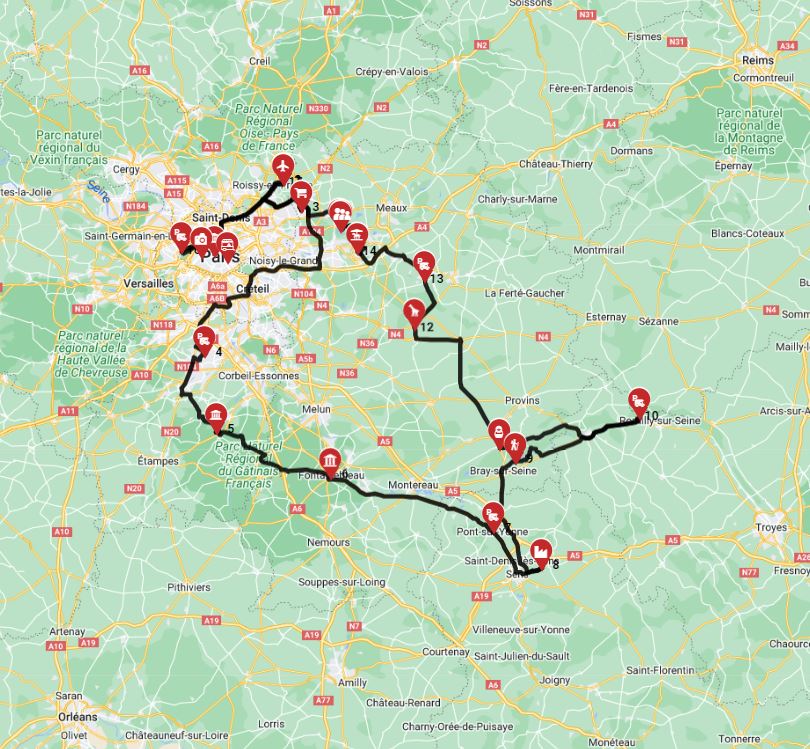
For a family rv rental adventure focused on Paris, strategically choosing campgrounds located slightly outside the immediate city center but with excellent public transport links is the most practical approach. Camping de Paris, nestled within the Bois de Boulogne, is a prime example, offering a tranquil escape with direct bus services to the city's heart, avoiding the complexities of urban RV driving. Drive slowly and carefully, and you can drive almost anywhere without issues. No need to stress - just use common sense and pay attention.When planning routes, actively aim to bypass central Paris if your destination is another region to avoid mandated ZFE zones and large vehicle restrictions that often limit entry or parking options. Utilizing designated park-and-ride facilities on the outskirts, such as those near RER stations, allows you to switch to efficient public transport for sightseeing in iconic areas like the Eiffel Tower or Notre Dame, without moving your motorhome. If you're considering a "Cheap RV Rental in Paris - Budget Guide 2024" or a "Weekly RV Rental in Paris - Pricing 2024", a smaller Class B campervan like the "Category Van" or a compact Class C like the "MHC24" (which sleeps 6 with beds such as a "Bed Over Cub - 147/190cm" and a "Double Bed - 132/188cm") will offer greater flexibility for navigating country roads and parking in smaller towns nearby. Consider Rent&Plan services from RV PLANET, which provides pre-planned routes by professionals, like the "
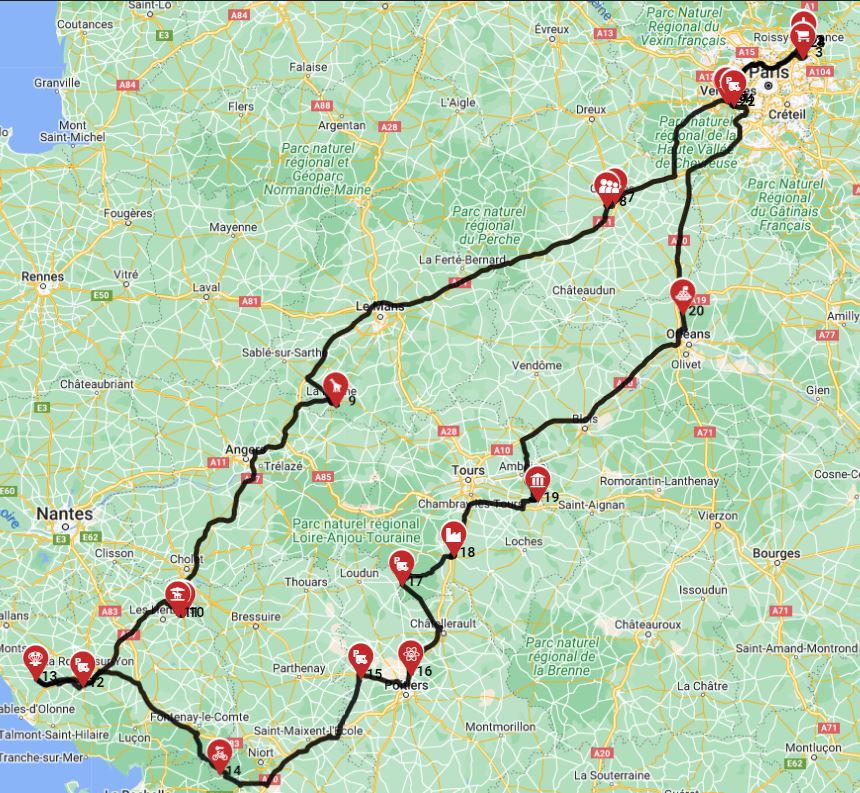
For families, opting for a motorhome with dedicated sleeping areas for kids, such as bunk beds (found in models like "Group G" or "Glamys 40"), can significantly enhance comfort and privacy. Alternatively, young couples might find a cozy "Camper Van" like "Category Van" perfectly suited for their intimate Parisian adventure. For those seeking "Luxury RV Rental in Paris - Premium Prices 2024", Class A motorhomes offer expansive living spaces and amenities. Remember that Bandana RV offers 24/7 support throughout your booking process and coordination to ensure peace of mind, backed by over two decades of expertise as true RV specialists.
Common Mistakes to Avoid in Paris
One of the top mistakes first-time RV renters make in Paris is neglecting to obtain a Crit'Air vignette, which is mandatory for driving within the city's low-emission zones and can lead to immediate fines of up to €135. Travelers should apply for this environmental sticker weeks in advance, ensuring it arrives before their trip. Another common oversight is underestimating the total trip cost; beyond the daily rental fee, budget generously for French tolls (consider acquiring a Liber-t tag for convenience), fuel expenses (diesel is "Gazole," petrol is "Essence"), and varying campsite prices, especially those near popular attractions.Many renters also make the mistake of attempting to drive or park a large RV in central Paris; instead, utilize strategically located campgrounds on the city's periphery, like Camping de Paris, and rely on efficient public transport for sightseeing. Failure to bring appropriate European electrical hookup adapters (CEE 17 "blue" plugs are common) or the correct LPG tank adapters can also disrupt your trip, as these are essential for accessing campground services. Finally, never assume campsites will have last-minute availability, particularly during peak season; booking your overnight spots well in advance is crucial, even if many national and state parks reserve a portion of their spots for first-come-first-serve arrivals, it is always wise to call ahead to confirm availability before driving to a new location. With Bandana RV, you're partnering with true RV specialists who understand these nuances and offer full transparency and support before, during, and after your booking.
What You Shouldn't Miss
- **Explore the Loire Valley Châteaux:** Just a few hours' drive from Paris, the Loire Valley is dotted with magnificent castles like Château de Chambord and Château de Chenonceau, perfect for a slow travel RV trip, averaging 100-150 km per day.
- **Visit Mont Saint-Michel:** This iconic abbey island, about a 4-hour drive from Paris, offers breathtaking views and a unique tidal experience, with RV-friendly parking available nearby.
- **Indulge in Parisian Culture from a Distance:** Stay at Camping de Paris in Bois de Boulogne, and take a quick bus or metro into the city for world-class museums like the Louvre or a stroll along the Seine.
- **Discover Local Flavors via France Passion:** Seek out a France Passion vineyard or farm near Paris for a free overnight stay and experience authentic French food and wine from local producers.
- **Wander Through the Palace of Versailles Gardens:** Park your motorhome a short distance from the Palace of Versailles and spend a full day exploring its opulent grounds and stunning fountains.
Looking for expert insights from Avi Bandana? Top 5 Adventures - recommendations from Avi Bandana
Final Thoughts
An RV rental trip to Paris with your family is an adventure waiting to happen, offering a unique blend of cultural immersion and the freedom of the open road. With careful planning, a clear understanding of local rules, and the right motorhome or campervan, you can create unforgettable memories exploring the City of Light and its beautiful surroundings. Remember to embrace slow travel, allowing your family to truly connect with the enchanting landscapes and rich history of France.Whether you opt for a compact campervan for nimble city access or a spacious Class C motorhome for ultimate family comfort, Bandana RV is here to make your booking experience seamless and transparent. As true RV specialists, we pride ourselves on honesty, comprehensive support before and after your booking, and helping you find the perfect rental without any hidden fees. So, go ahead, imagine yourself driving through picturesque French villages, stopping for fresh pastries, and enjoying meals cooked right in your mobile home. Your family adventure in Paris awaits!
Find Motorhome Rentals in Paris