For live availability and current prices, start with our RV Rental Canada - Complete Guide 2026 guide.
In This Guide
- Best Canada RV Itinerary for family rv rental — Overview
- 7-Day Classic Route in Canada
- 14-Day Extended Journey in Canada
- Recommended RVPlan Trip for Canada
- Must-See Stops Along the Way (Avi Bandana Picks)
- Daily Driving Distances & Drive Times in Canada
- Best RV Class for This Itinerary — Couple & Family Picks
- How much does it cost to rent an RV in Canada
- What is the best month to RV in Canada
- What is the best RV for families in Canada
- What do I need to know before renting an RV in Canada
- Where can I find boondocking spots in Canada
- Are RVs allowed on Icefields Parkway
- How much does a 7-day RV trip in Canada cost
- Is it difficult to drive an RV in Canada
- Do you need a special license to drive an RV in Canada
Best Canada RV Itinerary for family rv rental — Overview
Canada offers an unparalleled RV adventure, with its vast landscapes providing endless opportunities for exploration. A classic cross-country journey can span from the Atlantic coast in Halifax to the rugged Yukon in Whitehorse, covering an impressive 9199.1 km over approximately 37 days. For families with less time, regional trips of at least 7 days are highly recommended to truly immerse yourselves in the experience. The prime seasons for RV travel in Canada are late spring through early fall (May to September), ensuring the best weather and accessibility to campgrounds and attractions across the country.
For families seeking to discover the breadth of Canada, the "Halifax to Whitehorse - Exploring Canada’s Heartland in a Motorhome" RVPlan trip is an epic undertaking. This extensive 37-day, 9199.1 km adventure showcases the country's diverse natural beauty and cultural tapestry, making it a unique opportunity for an unforgettable family road trip. If you're planning a broader trip, our guide Cheap RV Rental in Canada - Budget Guide 2026 can help you find budget-friendly options.
7-Day Classic Route in Canada
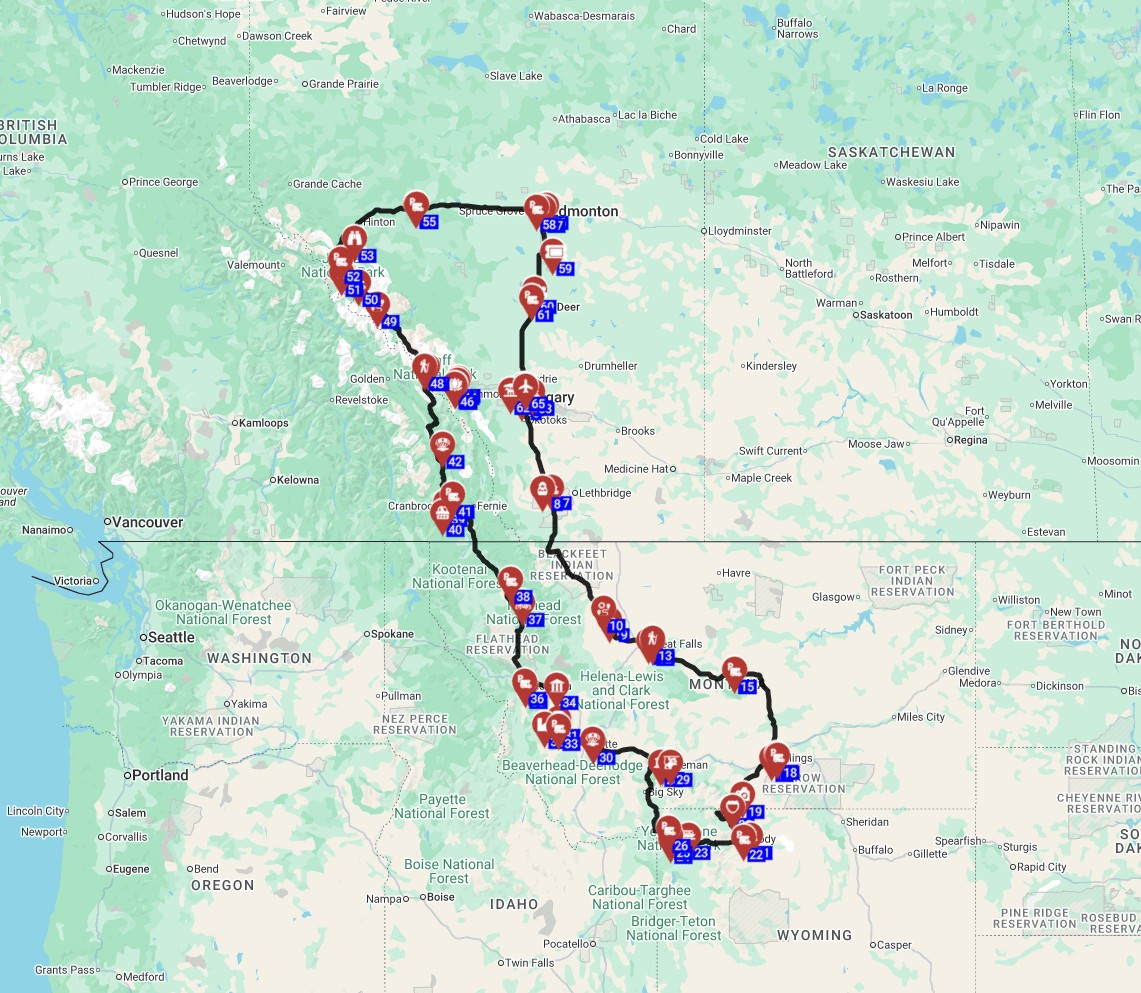
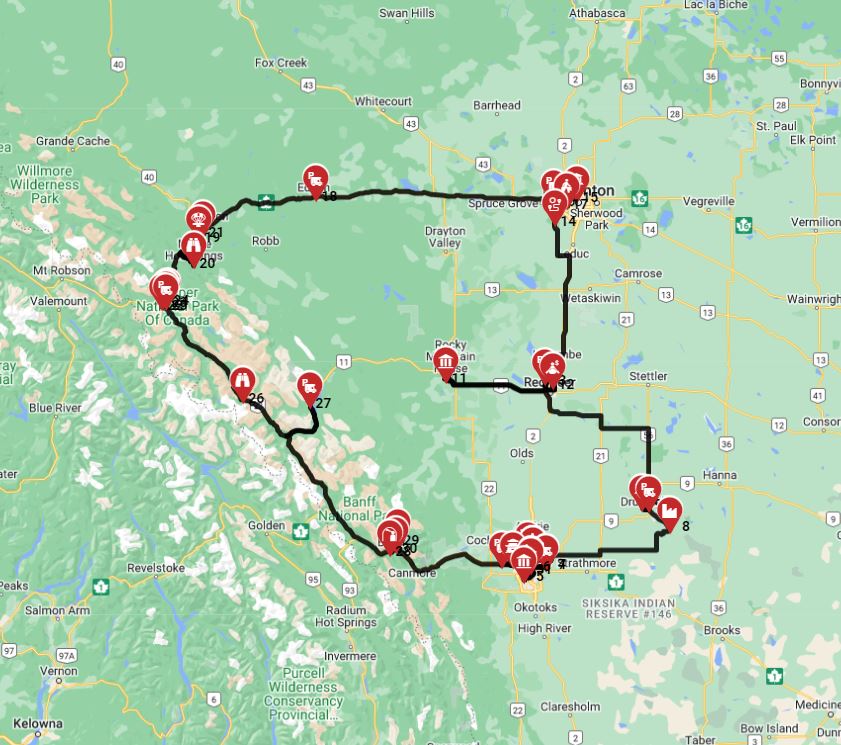
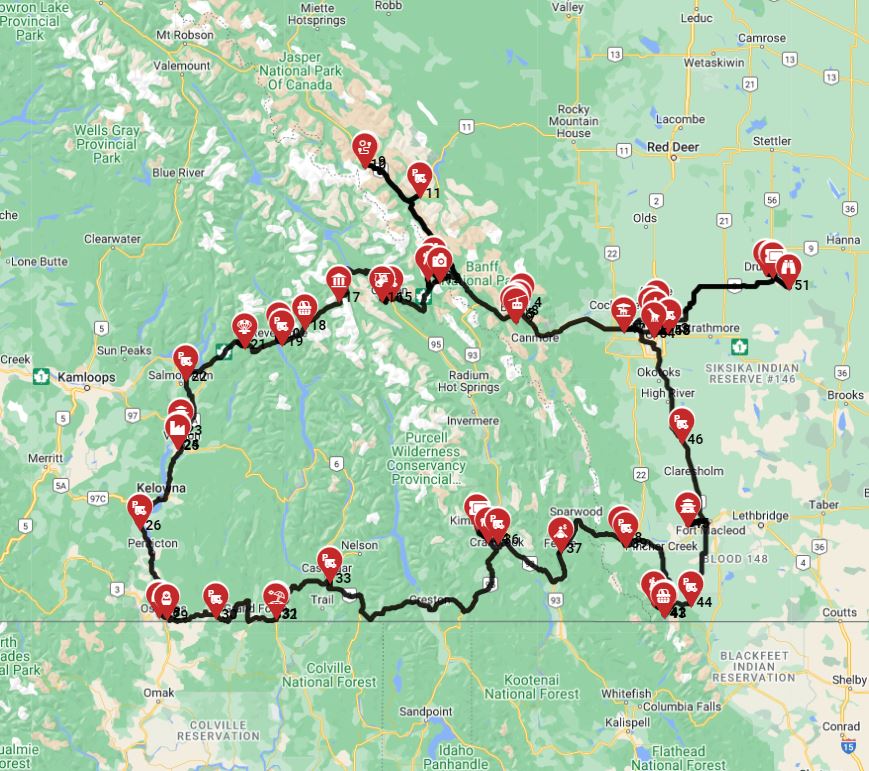
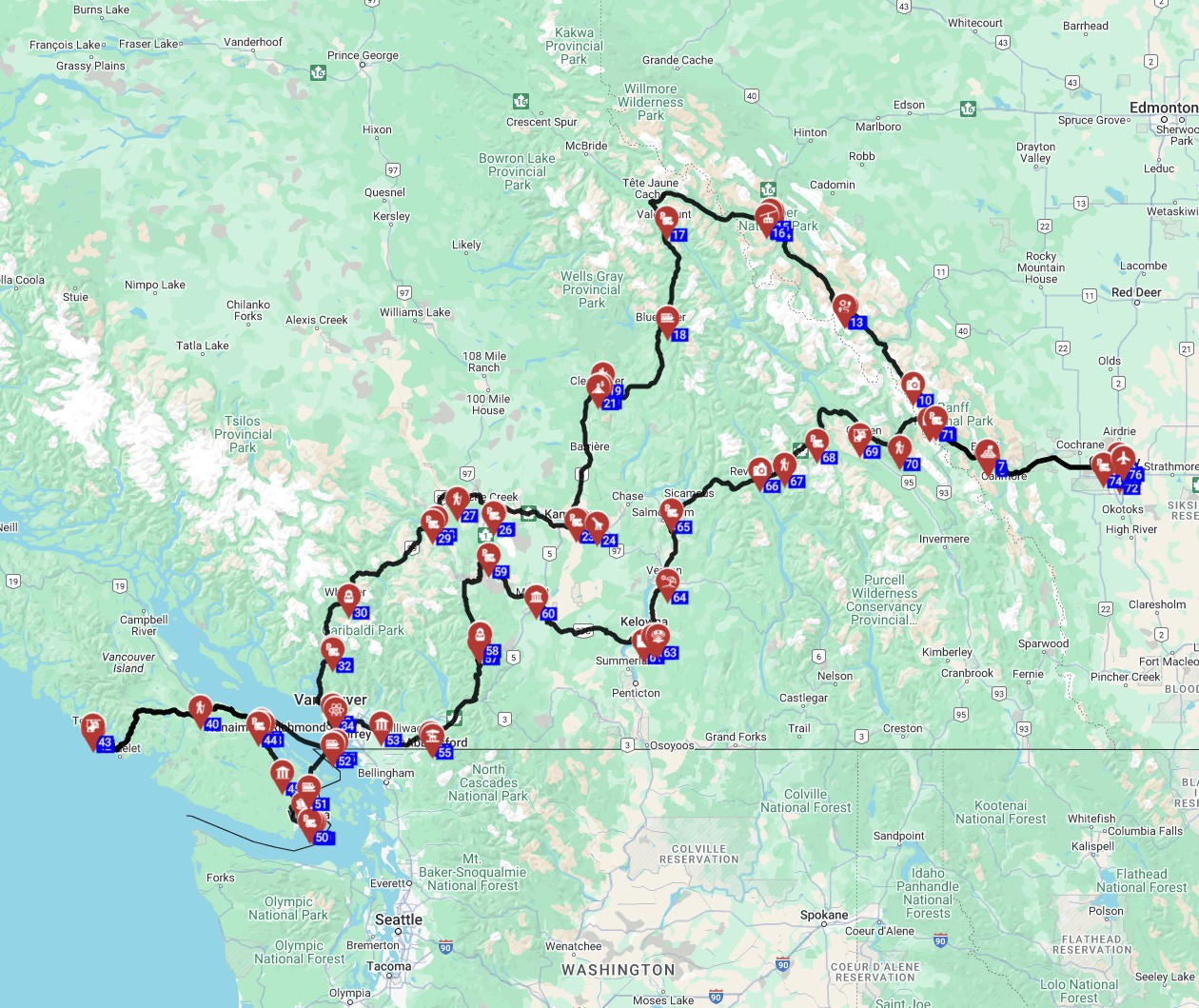
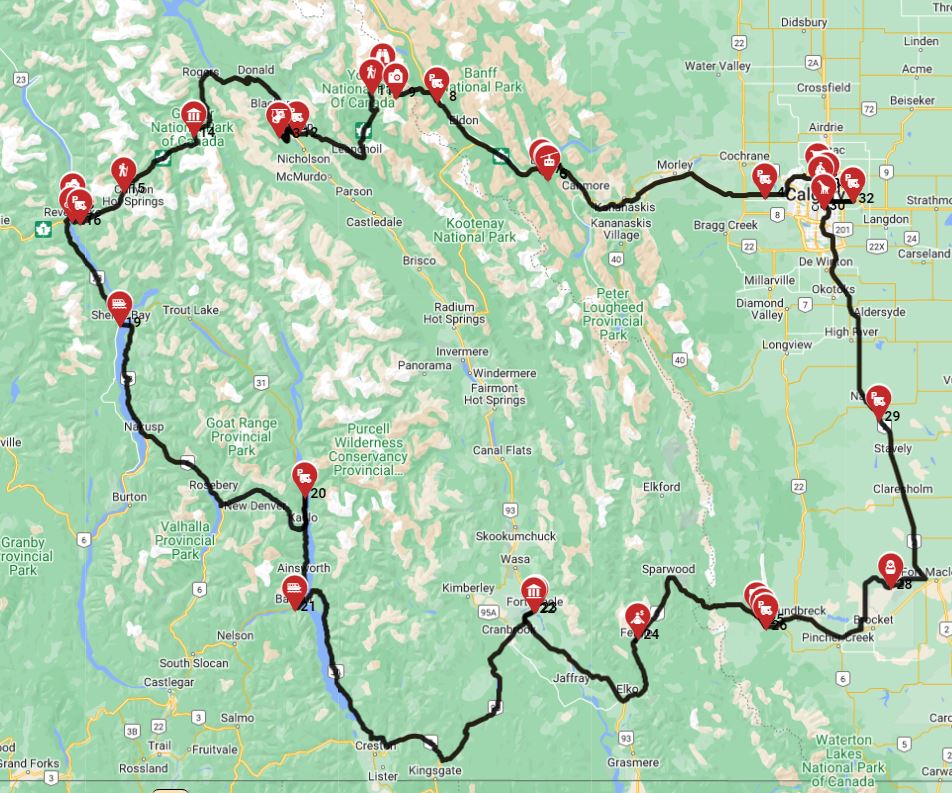
A 7-day itinerary offers a fantastic glimpse into Canada's stunning natural beauty, particularly the Rocky Mountains. This classic route focuses on the highlights of Alberta and British Columbia, perfect for families wanting a taste of the Rockies.
- Day 1: Calgary → Canmore (approx. 100 km). Begin your adventure by picking up your rented RV in Calgary and heading west to Canmore. Explore its charming downtown, nestled amidst the majestic Rockies.
- Day 2: Canmore → Banff National Park (approx. 25 km). A short drive brings you to Banff. Visit the townsite, ascend Sulphur Mountain via the gondola for breathtaking views, and see the iconic Bow Falls. Overnight at Tunnel Mountain Village II Campground.
- Day 3: Banff Area (0-50 km local driving). Dedicate the day to exploring the unparalleled beauty of Lake Louise and Moraine Lake (access is seasonal). A hike through Johnston Canyon is also a must. Stay at Lake Louise Campground.
- Day 4: Lake Louise → Yoho National Park → Golden, BC (approx. 90 km). Venture into Yoho National Park to witness the vibrant Emerald Lake, the thundering Takakkaw Falls, and the engineering marvel of the Spiral Tunnels. Your overnight stop is the Golden Municipal Campground.
- Day 5: Golden Area (0 km driving). Enjoy a day of leisure in Golden. Depending on the season, you might opt for whitewater rafting on the Kicking Horse River, or simply explore the local shops and cafes. Stay at the Golden Municipal Campground again.
- Day 6: Golden → Revelstoke (approx. 150 km). Drive through the spectacular Rogers Pass in Mount Revelstoke National Park, a route steeped in history and natural beauty. Visit the Revelstoke Railway Museum. Overnight at Revelstoke KOA.
- Day 7: Revelstoke → Enderby/Salmon Arm (approx. 100 km). Conclude your week by heading towards the Shuswap Lake region. This area is ideal for a relaxed final day or as a turnaround point if you need to return to Calgary. Consider Salmon Arm Provincial Park Campground for your last night.
This itinerary is just a starting point; for more detailed route planning, consider exploring options within our RV PLANET routes. If you're interested in budget travel, our guide to Cheap RV Rental in Canada - Budget Guide 2026 offers valuable insights.
14-Day Extended Journey in Canada
For those with more time, a 14-day RV journey through Ontario showcases a different facet of Canada's diverse charm, from the dramatic gorges of Elora to the iconic wilderness of Algonquin Park.
- Day 1: Toronto, ON → Elora Gorge Conservation Area (approx. 100 km). Pick up your rented RV in Toronto and drive to the Elora Gorge Conservation Area, known for its stunning limestone cliffs and hiking trails. Stay at the Elora Gorge Conservation Area Campground.
- Day 2: Elora Gorge → Bruce Peninsula National Park (approx. 150 km). Head north to the Bruce Peninsula, renowned for its turquoise waters and dramatic Grotto. Explore Fathom Five National Marine Park. Reservations are essential for Bruce Peninsula National Park Campground.
- Day 3: Bruce Peninsula Area (0-50 km local driving). Spend the day hiking along the Georgian Bay shoreline or take a boat tour to the iconic Flowerpot Island. Overnight again at the Bruce Peninsula National Park Campground.
- Day 4: Bruce Peninsula → Parry Sound (approx. 150 km). Journey through Ontario's picturesque cottage country to Parry Sound, often called the 'Jewel of Georgian Bay.' Find a spot at Killbear Provincial Park.
- Day 5: Parry Sound Area (0 km local driving). Explore the vast 30,000 Islands archipelago by boat cruise, or enjoy the beaches and trails within Killbear Provincial Park. Stay put at Killbear Provincial Park.
- Day 6: Parry Sound → Huntsville (Muskoka) (approx. 100 km). Drive into the heart of Ontario's renowned Muskoka Lakes region. Arrowhead Provincial Park is a great place to camp.
- Day 7: Huntsville Area (0-50 km local driving). Enjoy canoeing, hiking, and exploring charming lakeside towns like Bracebridge or Gravenhurst. Arrowhead Provincial Park offers plenty to do.
- Day 8: Huntsville → Algonquin Provincial Park (West Gate) (approx. 70 km). Immerse yourselves in Canada's iconic wilderness at Algonquin Provincial Park. Camp at one of its many campgrounds.
- Day 9: Algonquin Park Area (0 km local driving). Hike scenic trails, keep an eye out for wildlife, and perhaps paddle a canoe on the park's pristine lakes. Stay another night at an Algonquin Provincial Park Campground.
- Day 10: Algonquin Park → Haliburton Highlands (approx. 80 km). Discover the rugged forests and sparkling lakes of the Haliburton Highlands region. Haliburton Highlands Campground is a good option.
- Day 11: Haliburton Highlands Area (0-50 km local driving). Visit local art galleries, explore quaint small towns, or enjoy more of the area's abundant outdoor activities. Haliburton Highlands Campground is your base again.
- Day 12: Haliburton Highlands → Peterborough (approx. 100 km). Head south to Peterborough to see the engineering marvel of the Peterborough Lift Lock on the historic Trent-Severn Waterway. Peterborough KOA is a convenient stop.
- Day 13: Peterborough → Port Perry (Lake Scugog) (approx. 60 km). Enjoy a more relaxed day by Lake Scugog, exploring the historic downtown of Port Perry. Lake Scugog Campground is an ideal place to stay.
- Day 14: Port Perry → Toronto (approx. 70 km). Conclude your Ontario RV adventure by returning to the vibrant city of Toronto. If you're considering a longer trip, our Long-Term RV Rental in Canada - Monthly Rates 2026 guide might be helpful.
For those looking for inspiration on planning their journey, the RV Rental in Canada - Prices and Best Deals 2026 guide offers great tips. You can also find more structured trip plans on RV PLANET.
Recommended RVPlan Trip for Canada
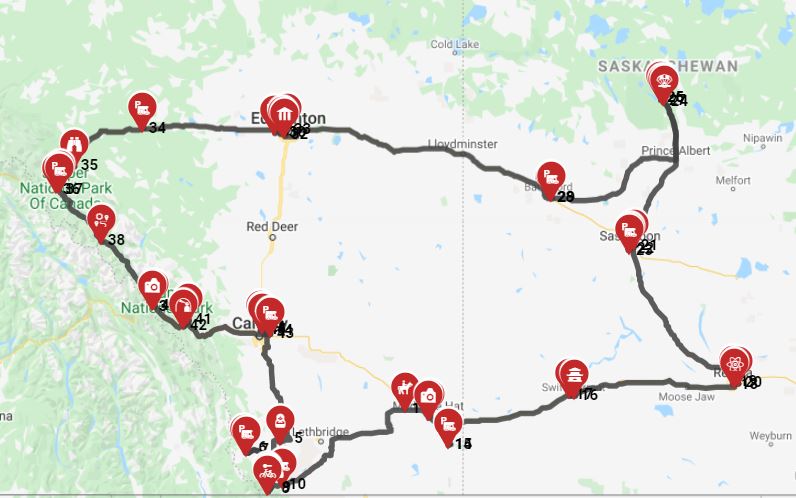
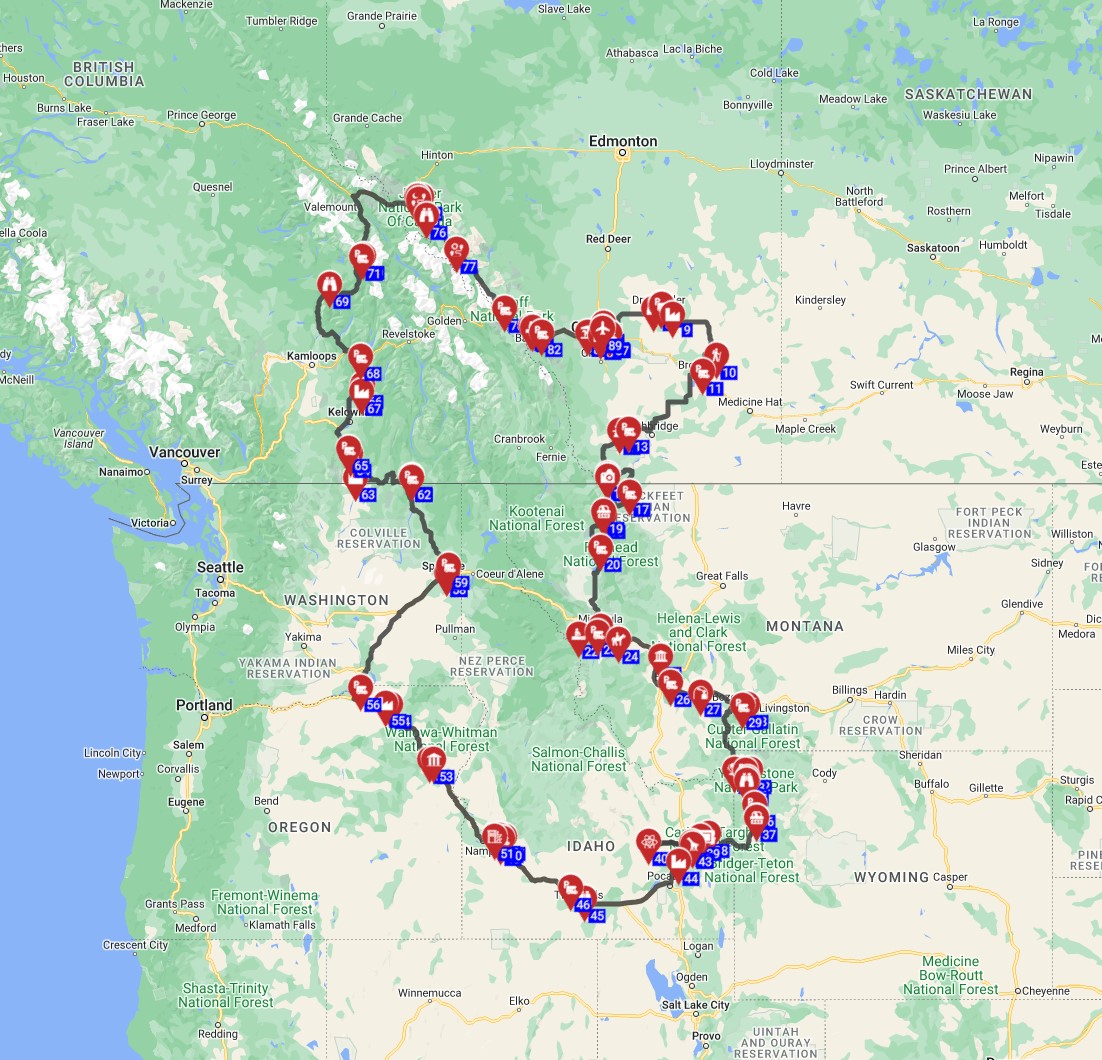
For an truly epic Canadian RV adventure, consider the "Halifax to Whitehorse - Exploring Canada’s Heartland in a Motorhome" trip. This extensive journey covers 9199.1 km over 37 days, showcasing the country's diverse landscapes from coast to coast. It's an unparalleled opportunity for an epic family road trip, offering a unique chance to experience the vastness and beauty of Canada firsthand. For a different perspective, the "

For those seeking last-minute deals, our guide to Last-Minute RV Rental in Canada - What to Expect 2026 provides helpful advice.
Must-See Stops Along the Way (Avi Bandana Picks)
Avi Bandana, our founder and a seasoned RV traveler, recommends delving into local culture and unique tastes to truly experience Canada. His personal picks focus on authentic experiences that connect you with the heart of the country.
- For a Traditional Visit: Engage with Indigenous heritage by exploring sites like the Site d'Interprétation Micmac de Gespeg to learn about Micmac culture.
- Indulge in Local Flavors: Seek out traditional restaurant or fine dining establishments recommended by locals in cities like Quebec City or Montreal to savor regional culinary traditions.
- Experience Local Commerce: Visit a traditional market, such as the Fort Nelson Farmers Market, to discover fresh, local produce and unique artisan goods.
- Gain Insight into Regional Industries: Stop at a local industry attraction, like the Lake of the Woods Brewing Company in Kenora, to sample Canadian craft beer and learn about local brewing heritage.
These recommendations offer a deeper dive into Canada's rich cultural tapestry, ensuring your RV adventure is as enriching as it is scenic. For more itinerary ideas, check out the RV Rental Deals in Canada - Latest Offers 2026.
Daily Driving Distances & Drive Times in Canada
To truly savor the Canadian landscape and avoid travel fatigue, Avi Bandana recommends a relaxed pace, averaging a maximum of 100 miles or 150 km per day. This approach to slow travel ensures families have ample time to explore destinations thoroughly, participate in local activities, and enjoy the serenity of campgrounds.
For example, the drive from Calgary to Banff typically takes around 1.5 hours (approx. 126 km). While Quebec City to Montreal can be done in about 3 hours (around 250 km), it's often best broken over two days when following a comprehensive itinerary. Similarly, the scenic drive from Vancouver to Whistler is about 2 hours (120 km), offering stunning coastal mountain views.
Understanding these distances is key to planning, and our RV PLANET platform can help you map out your daily drives effectively. Remember to explore One-Way RV Rental in Canada - Price Guide 2026 if your trip involves multiple cities.
Best RV Class for This Itinerary — Couple & Family Picks
Choosing the right RV is crucial for a comfortable and enjoyable trip. Bandana Caravan offers a diverse fleet to suit every need.
For couples seeking maneuverability and efficiency, a Class B - Camper Van is often the ideal choice. Our global fleet typically averages 2.7 adults and has a compact length of 5.8 meters, making it easy to navigate both highways and smaller roads.
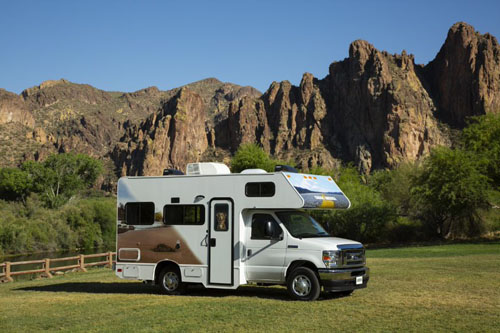
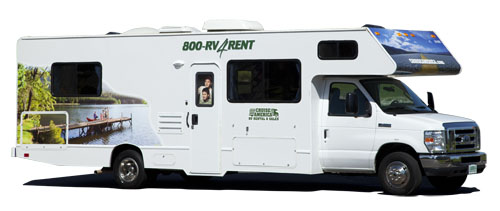
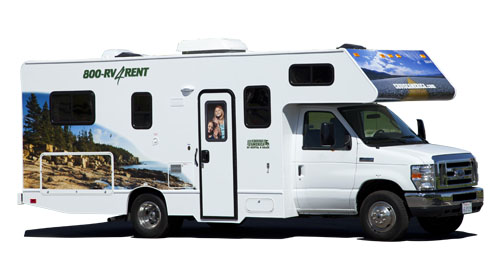
Families often find the Class C - Alcove motorhome to be the perfect fit. These RVs offer ample space and sleeping capacity, averaging 4.4 adults and 5.8 sleeping places across Bandana's fleet, with an average length of 7.5 meters. This provides the necessary comfort and convenience for longer journeys with children.
To simplify the process, Bandana's 'Rent & Plan' service is invaluable. It combines a suitable RV rental with a professionally curated itinerary and access to comprehensive trip-planning software, effectively eliminating the stress of planning for families.
How much does it cost to rent an RV in Canada
The cost to rent an RV in Canada fluctuates significantly, depending on the RV class, rental duration, time of year, and pick-up location. Generally, you can expect prices to range from $100 to $400 CAD per night.
For a family-friendly Class C Alcove motorhome, basic rental costs can start around $150-$250 CAD per night during the shoulder seasons. During the peak summer months, these prices can increase to $250-$400+ CAD per night due to high demand.
It's essential to budget beyond the rental fee. Consider fuel expenses – Bandana's Class C Alcove models typically consume 10-12 Liters/100 km. Campground fees can range from $30-$80 CAD per night, and don't forget to factor in insurance, potential mileage packages, and the costs of activities you plan to enjoy. On the routes offered through RV PLANET routes, you can itemize and track every expense along the way for easy budgeting.
Booking in advance, especially for peak season travel (June-August), is crucial for securing better rates and availability. Traveling during the shoulder seasons (May, September, October) can often yield significant savings and a more relaxed experience.
What is the best month to RV in Canada
The most favorable months for RV travel in Canada are typically from late spring to early fall, specifically June through September. This period offers the most pleasant weather conditions and ensures full access to campgrounds and attractions across the country.
July and August represent peak season, providing the warmest temperatures and longest daylight hours. While ideal for families seeking summer adventures, these months also demand advance bookings for both RVs and campsites due to high demand.
Shoulder seasons, such as May and September, offer a quieter experience with fewer crowds and often more competitive pricing. However, be mindful that some higher-elevation roads or seasonal attractions might have limited access or reduced operating hours.
October can be beautiful for experiencing fall foliage in Eastern Canada, but temperatures drop significantly, and many RV parks begin to close for the winter. Additionally, early snow can create driving challenges, particularly in mountainous regions.
What is the best RV for families in Canada
For families embarking on an RV adventure in Canada, the Class C - Alcove motorhome is frequently considered the best choice. It strikes an excellent balance between living space, essential amenities, and manageable driving characteristics for its size.
These RVs typically feature a sleeping area above the driver's cabin (the alcove), a versatile dinette that converts into a bed, and a private rear bedroom. This layout comfortably accommodates families, with Bandana's global fleet averaging 4.4 adults and 5.8 sleeping places.
Key features that enhance family comfort include separate sleeping zones for privacy, a full kitchen enabling meal preparation (which can significantly reduce dining-out costs), and a private bathroom. While larger Class A Integrated RVs offer even more space, their greater length (averaging 7.5 meters) can present more significant driving challenges in narrower city streets or winding mountain roads, making the Class C a more practical option for many.
What do I need to know before renting an RV in Canada
Before you pick up your rented RV in Canada, several key preparations will ensure a smooth journey. Ensure you possess a valid driver's license; a standard provincial Class 5 or its equivalent is usually sufficient for most RVs, but always verify with the rental provider.
Understanding insurance requirements is crucial, as coverage options can vary between suppliers. Equally important is booking campsites well in advance, particularly for popular national and provincial parks during peak season, as demand is extremely high.
Familiarize yourself with Canadian road rules, including posted speed limits in kilometers per hour (km/h), provincial laws regarding alcohol consumption in vehicles, and any specific procedures for ferry bookings if your route includes islands like Vancouver Island or Newfoundland.
Prepare for wildlife encounters by learning safety protocols for bears and other animals, securing food properly, and carrying essential emergency supplies for remote areas. Also, consider accessibility needs for all family members and research pet-friendly accommodation options if applicable.
Where can I find boondocking spots in Canada
Boondocking, or dispersed camping, is a rewarding experience in Canada and is permissible on Crown land in many provinces and territories. However, regulations can vary significantly by region, making thorough research essential before you travel.
Resources such as iOverlander, Campendium, and provincial tourism board websites are invaluable tools for locating potential boondocking sites and understanding specific guidelines for free overnight parking. Always cross-reference information and check recent user reviews.
Crucially, when boondocking, adhere strictly to Leave No Trace principles. This means packing out all trash, minimizing your environmental impact, and respecting local wildlife and private property. Always confirm local bylaws and restrictions, especially in popular or protected areas, as fines for illegal camping can be substantial.
Be prepared for self-sufficiency, as boondocking sites typically lack hookups for water, electricity, or sewage disposal.
Are RVs allowed on Icefields Parkway
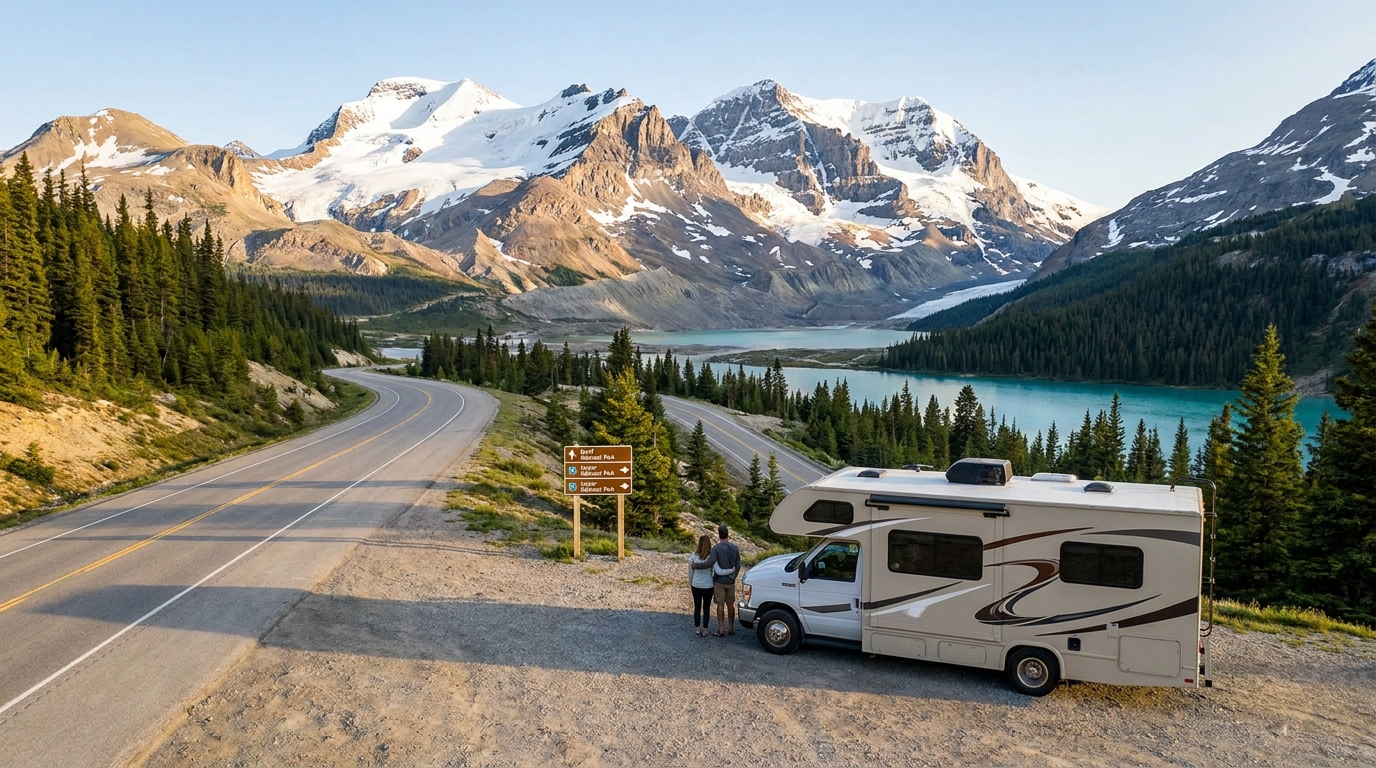
Yes, RVs are generally permitted on the Icefields Parkway (Highway 93 North), which winds through Banff and Jasper National Parks, offering one of the world's most spectacular scenic drives.
However, during the winter months (typically October to May), specific regulations apply. These often include mandatory winter tires or chains, and sections of the parkway may temporarily close due to heavy snowfall or avalanche risk, presenting significant driving challenges for RVs.
While the views are unparalleled, the Parkway is characterized by winding roads and steep mountain passes. Larger RVs, such as Class A motorhomes (averaging 7.5 meters in length), require extra caution and experienced driving, particularly in adverse weather conditions.
Fuel stations are limited along the Icefields Parkway. It is advisable to fill up your RV's fuel tank in Banff or Jasper before commencing your journey. If traveling during the shoulder seasons, ensure your RV is adequately winterized to prevent freezing.
How much does a 7-day RV trip in Canada cost
A 7-day RV trip in Canada can range from approximately $1,500 CAD to over $3,500+ CAD for a family, with costs heavily influenced by the RV class, the season of travel, and the activities planned.
This estimate typically includes average rental costs ($150-$250/night for a Class C), fuel expenses (an estimated $300-$600 for covering 1000-1500 km), campground fees ($210-$560 for 7 nights), and a basic budget for groceries and some activities.
Additional costs to consider might include insurance premiums, mileage packages (if you exceed the allotted kilometers), one-way drop-off fees (if applicable), and charges for specific attractions or tours.
Opting for travel during the shoulder season (May, September) or choosing a smaller, more fuel-efficient RV, such as a Class SI - Semi-integrated model (averaging 3.4 adults and 6.9 meters in length), can help reduce the overall budget compared to peak summer travel with a larger Class C motorhome.
Is it difficult to drive an RV in Canada
Driving an RV in Canada is generally manageable for most drivers holding a standard license, but it does demand more attention and practice than operating a typical passenger car.
Common challenges include navigating larger vehicles, such as Bandana's Class C Alcove motorhomes (averaging 7.5 meters in length), through city traffic, finding suitable parking in smaller towns, and handling mountain passes with steep grades and winding roads.
RV driving tips include: Class B Camper Vans (averaging 5.8 meters in length) offer car-like maneuverability, while larger Class A or C units require wider turns, increased braking distances, and careful consideration of overhead clearances.
Gaining familiarity with the vehicle's dimensions and handling, practicing defensive driving techniques, and planning routes that intentionally avoid overly narrow or challenging roads (like some unpaved logging roads) can significantly ease the driving experience, especially when navigating ferries in coastal regions.
Do you need a special license to drive an RV in Canada
Generally, a standard provincial Class 5 driver's license, or its equivalent in other provinces and territories, is sufficient to operate most recreational RVs for personal use in Canada.
The primary determinant for license requirements is the Gross Vehicle Weight Rating (GVWR) of the RV. Most Class B, C, and even many Class A motorhomes fall within the 11,000 kg (24,250 lbs) limit, which typically does not require a special license.
For exceptionally large RVs or those equipped with air brakes, specific endorsements or a higher class of driver's license might be necessary, though these are uncommon for standard family rentals.
International visitors should confirm that their home country's driver's license is valid for use in Canada. Often, an International Driving Permit (IDP) is recommended in conjunction with their original license, although it's not mandatory in most cases.
What You Shouldn't Miss
- Explore the Canadian Rockies: For the 7-day itinerary, don't miss the stunning natural beauty of Banff and Yoho National Parks, including iconic spots like Lake Louise and Emerald Lake.
- Discover Ontario's Natural Beauty: On the 14-day journey, prioritize a visit to Bruce Peninsula National Park for its crystal-clear waters and unique geological formations like the Grotto.
- Experience Indigenous Culture: As suggested by Avi Bandana, seek out traditional visits to learn about Canada's rich Indigenous heritage.
- Savor Local Flavors: Make time to stop at traditional markets and restaurants recommended by locals to taste authentic Canadian cuisine.
- Embrace Slow Travel: Adhere to Avi Bandana's recommendation of driving no more than 150 km per day to truly soak in the scenery and allow for spontaneous discoveries.
- Stargaze in Wood Buffalo National Park: If your route takes you north, consider visiting this Dark Sky Preserve for unparalleled views of the night sky.
Final Thoughts
Renting an RV in Canada opens up a world of adventure, allowing you to explore its vast landscapes at your own pace. Whether you opt for a shorter, scenic route or a cross-country epic, the freedom and flexibility of RV travel are truly unparalleled for families.
Remember to plan ahead, especially for popular parks and routes, and embrace the journey. With the right preparation and the flexibility that RV travel offers, you're set for an unforgettable Canadian experience. Get inspired for your next trip and discover top destinations and planning tips all in one place!
Ready to plan your Canadian RV adventure? Use our intuitive tools at RV PLANET to find pre-planned routes, compare RVs, and book your perfect home on wheels. Plan a trip itinerary in advance with minimal effort and maximum enjoyment.
For ideas you can prep on the road, watch our RV-friendly recipes playlist on YouTube.