In This Guide
- Can You Drive an RV in Scandinavia? License & Age Rules
- Road Conditions & Terrain in Scandinavia
- RV Size Limits, Bridges & Restricted Zones
- Fuel: Diesel vs. Petrol & Cost per 100 km
- Tolls, Vignettes & Border Rules
- Driving Tips for family rv rental Travelers
- Recommended RV Class for Scandinavia Roads
- Should I Choose a Compact Van Instead of a Large RV in Scandinavia?
- Can I Park Anywhere? Free & Wild Camping Rules in Scandinavia
- Can I Drive an RV Into the City Center? Heights, Tunnels & Local Signage
- How many people can you have in an RV while driving?
- Is Norway RV friendly?
- Do I need a vignette to drive in Sweden?
- What is the hardest country in Europe to get a driver's license?
- What is the 3-3-3 rule for RV travel?
- Is Sweden campervan friendly?
- Is Denmark campervan friendly?
- What is the 3-3-3 rule for RV living?
- Is it hard for an American to drive in Norway?
- What is the largest RV you can drive without a special license?
Embarking on a family RV adventure in Scandinavia is an incredible way to experience the breathtaking landscapes, vibrant cities, and unique cultures of Norway, Sweden, and Denmark. With a rented motorhome or campervan from Bandana RV, you’re not just seeing Scandinavia; you're living it. Imagine waking up to a stunning fjord view in Norway, exploring ancient forests in Sweden, or cycling through the charming streets of Copenhagen, all from the comfort and convenience of your mobile home.
At Bandana RV, we believe in full transparency and honest service, making your family RV rental in Scandinavia a smooth and unforgettable experience. For live availability and current prices, start with our RV Rental Scandinavia - Complete Guide 2026 guide. We're true RV specialists, not just a side department of a general travel agency, meaning we understand the nuances of RV travel and are here to support you before, during, and after your booking. Let’s dive into everything you need to know about driving a family RV safely and confidently in Scandinavia.
Can You Drive an RV in Scandinavia? License & Age Rules
A standard Category B driver's license, suitable for vehicles up to 3,500 kg Maximum Authorized Mass (MAM), is generally sufficient for most rental RVs in Scandinavia, including popular Class C - Alcove and Class SI - Semi-integrated models. For instance, a typical 6.9m Class SI - Semi-integrated RV like the '2 Berth Tamar' usually falls within this weight limit. If you plan to rent a larger RV exceeding 3,500 kg, such as some expansive Class A - Integrated motorhomes, a Category C1 license might be necessary, so always verify the specific vehicle's MAM on its registration documents. The minimum driver age for renting an RV in Scandinavia is 21 years old, with no young driver surcharges or vehicle class restrictions based on age through Bandana RV partner suppliers.
For visitors from non-English speaking countries, an International Driving Permit (IDP) is recommended in addition to their valid domestic driver's license for driving in Norway, Sweden, and Denmark, although it is not always mandatory. Americans and other non-EU/EEA citizens should certainly carry an IDP alongside their valid U.S. or other national driver's license to ensure compliance with local regulations and ease potential interactions with local authorities or rental companies. We handle the details, so you can live the journey, ensuring you have all the necessary documentation for your Scandinavian adventure.
Road Conditions & Terrain in Scandinavia
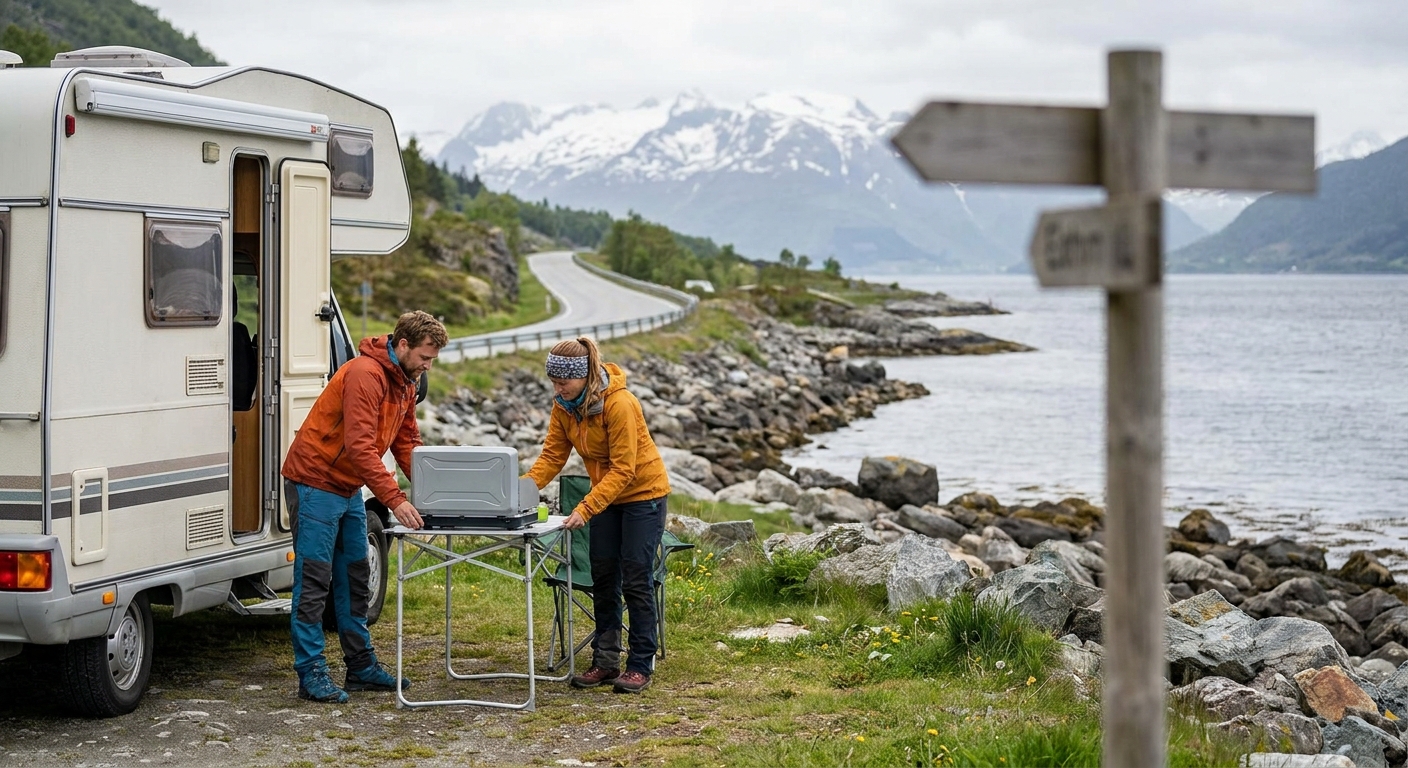
Scandinavia offers an excellent network of well-maintained roads, ensuring a comfortable driving experience for rented family RVs, though the terrain varies significantly across the region. Norway, for example, is famous for its stunning mountain passes and narrow fjord roads, which require slow and careful driving but reward travelers with unparalleled scenic beauty. Sweden and Denmark provide more expansive networks of modern highways and well-kept rural roads, perfect for covering longer distances.
Drivers should always be prepared for changing weather conditions, especially outside of the summer months, and remain vigilant for wildlife such as moose, reindeer, and deer, particularly at dawn and dusk. Driving slowly and carefully is not just a safety recommendation but a way to truly appreciate the breathtaking landscapes, allowing for frequent stops at numerous viewpoints and attractions. Bandana RV encourages slow travel, recommending a maximum of 100-150 km per day on average, to truly immerse yourselves in the culture, food, and scenery of Scandinavia.
RV Size Limits, Bridges & Restricted Zones
While most main roads and highways in Scandinavia easily accommodate typical rented RV sizes, drivers must be highly aware of height, width, and weight restrictions, particularly on older bridges, tunnels, and certain ferry routes. For example, a common Class C - Alcove RV like the 'Cruise America Explorer' has a length of 7.1 meters and a width of 2.78 meters, requiring attention to signage. Always pay close attention to local signage indicating maximum height (e.g., 3.5m, 4.0m) and weight limits, especially when venturing into smaller towns or historic city centers.
Environmental zones (miljøzoner/miljözoner) are active in major cities like Oslo, Bergen, Stockholm, Malmö, and Copenhagen. These zones restrict access for older, more polluting vehicles, so it's essential to ensure your rental motorhome meets the required emission standards or plan alternative routes, such as parking on the outskirts and utilizing public transport. Ferry crossings, which are often essential for navigating Norway's fjords or traveling between Denmark and Sweden, typically have length and weight-based pricing tiers, making it crucial to know your RV's exact dimensions for accurate booking and pricing. There are no hidden fees or surprises when you book with Bandana Caravan, ensuring full transparency.
Fuel: Diesel vs. Petrol & Cost per 100 km
Most rental RVs and campervans in Scandinavia primarily operate on diesel fuel, which is readily available at service stations throughout Norway, Sweden, and Denmark. While petrol (gasoline) stations are common, fewer RVs run on it. Fuel prices in Scandinavia are generally higher than in many other European countries, so budgeting for this expense is crucial for your trip. For instance, diesel prices can hover around €2 per liter. On the routes offered through RV PLANET routes, you can itemize and track every expense along the way for easy budgeting.
Based on our global fleet averages for popular family RVs, you can estimate your fuel consumption:
- A Class SI - Semi-integrated RV (average 6.9m length, like the '2 Berth Tamar') typically consumes 10-11 Liters/100 km, costing approximately 20-22 EUR per 100 km.
- A Class C - Alcove RV (average 7.5m length, like a '4 Berth Adventurer') typically consumes 10-12 Liters/100 km, costing approximately 20-24 EUR per 100 km.
- A Class B - Camper Van (average 5.8m length, such as a 'Combi Van') typically consumes 8-10 Liters/100 km, costing approximately 16-20 EUR per 100 km.
Tolls, Vignettes & Border Rules
Scandinavia primarily utilizes automated toll systems and congestion charges for RVs, rather than physical vignettes; you will not need to purchase traditional 'vignettes' for driving in Sweden, Norway, or Denmark. Norway features numerous automated tolls on roads, bridges, and tunnels, managed by the AutoPASS system. Most rental RVs are equipped with an AutoPASS tag, so charges are automatically billed to the rental company and then passed on to the renter, ensuring a seamless experience. Sweden applies congestion charges in Stockholm and Gothenburg during peak hours, and a bridge toll for the impressive Øresund Bridge, connecting Malmö to Copenhagen. These are also typically collected automatically via camera recognition.
Denmark levies significant tolls for crossing its major bridges, particularly the Storebælt (Great Belt) Bridge (around DKK 270, or approximately €36 for RVs over 6 meters) and the Øresund Bridge. These tolls are usually payable directly at toll booths via card or online. Border crossings between Norway, Sweden, and Denmark are generally open and unstaffed, allowing for smooth transit, but it is always essential to carry your passport or valid ID and all vehicle registration documents, as identity checks can occur.
Driving Tips for family rv rental Travelers
Planning regular breaks is essential with a family onboard your rented motorhome in Scandinavia, ensuring comfort for everyone by allowing children to stretch their legs and explore every 2-3 hours. Given Scandinavia's vast wilderness, you should drive cautiously, especially in rural and forested areas during dawn and dusk, as encounters with large wildlife like moose and reindeer are common and require quick reflexes. Mastering ferry logistics is crucial in Norway's fjord region; research and pre-book popular ferry routes during peak season to secure a spot, as pricing varies by RV length and demand.
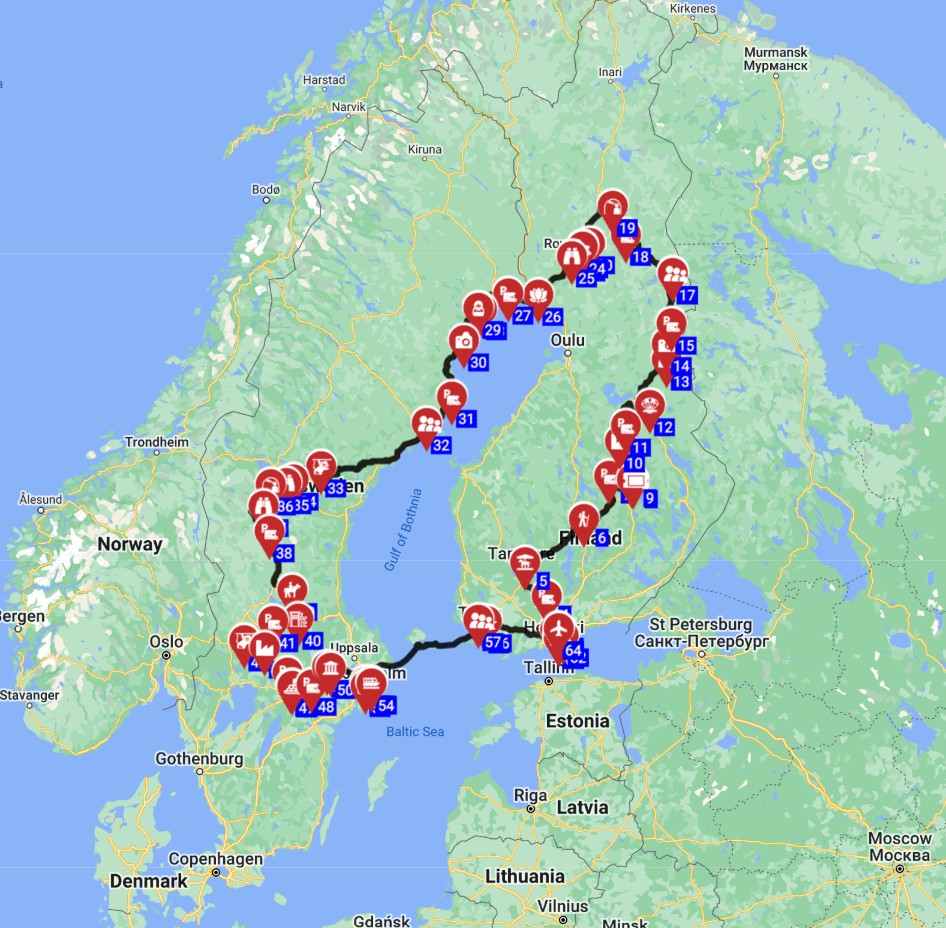
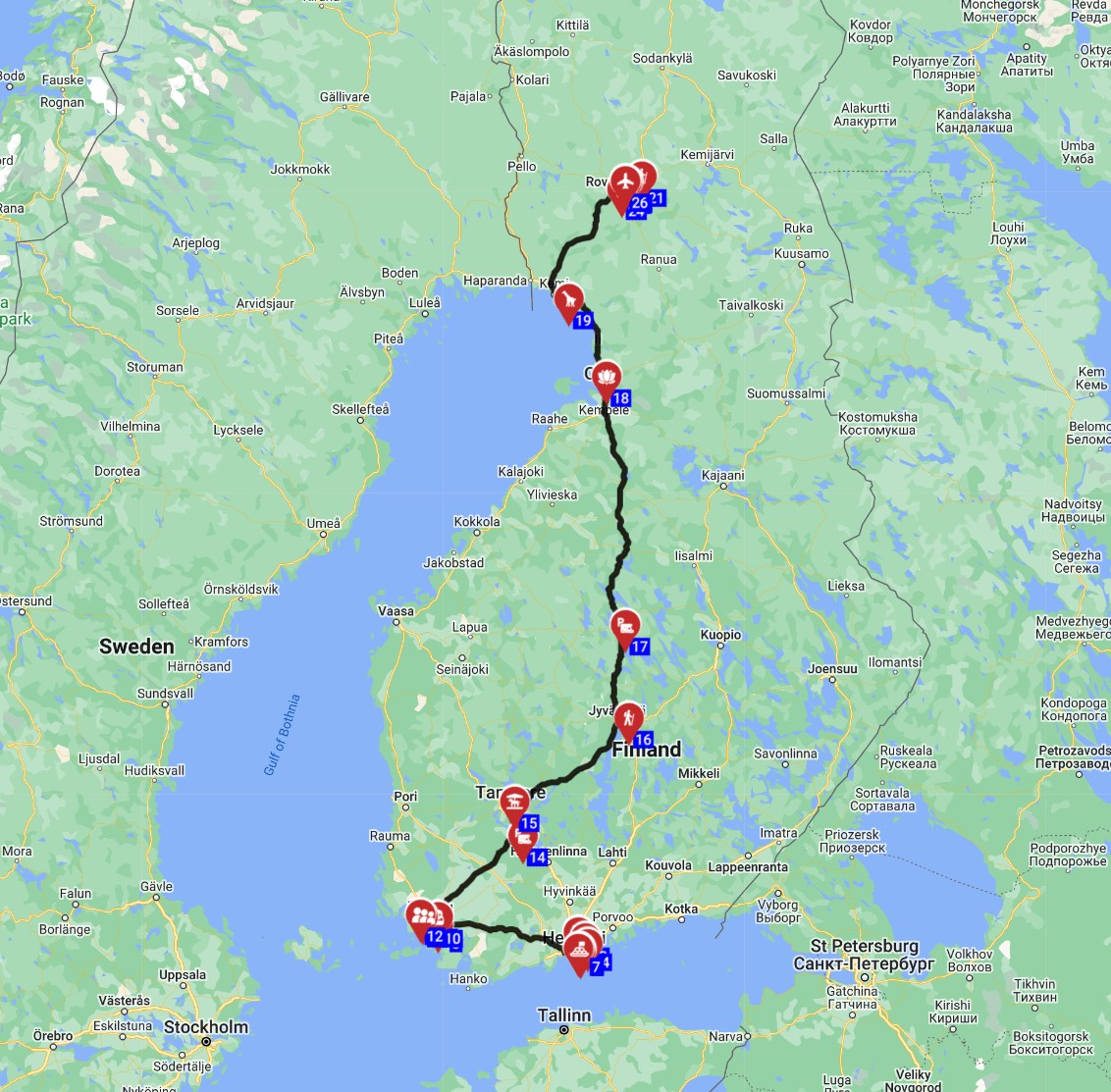
Embrace the relaxed pace of Scandinavian roads, allowing ample time for journeys and appreciating the stunning landscapes rather than rushing through them; our expert advice is to travel slowly, averaging no more than 100-150 km per day. Finally, be prepared for rapidly changing weather conditions, even in summer, particularly in mountain regions, by packing layers and suitable gear. A unique itinerary for an extended trip could be the "Lulea Round trip - Timeless Scandinavia: Fjords, Forests, and History", a 15-day, 2910.7 km route starting and ending in Luleå, packed with 2 wildlife watches, a canoe/kayak experience, 3 museums, and numerous natural features.
🎬 Video coming soon
Recommended RV Class for Scandinavia Roads
For a family RV rental in Scandinavia, Class SI - Semi-integrated and Class C - Alcove motorhomes are highly recommended, as they strike an optimal balance between spacious comfort and maneuverability across diverse terrains. Class SI (Semi-integrated) RVs, typically averaging 6.9 meters in length with sleeping capacity for 3-4 people, provide ample living space and are relatively easier to drive on narrower roads than larger models, without compromising amenities like a functional kitchen or shower. An example is the 'Koru Star 4 Freedom', a Class B Campervan that's actually often a semi-integrated model, balancing space and ease of driving.
Class C (Alcove) RVs, averaging 7.5 meters in length with sleeping berths for 4-6 people, are perfectly suited for larger families. These offer generous headroom, dedicated sleeping areas over the cab, and excellent onboard facilities, while still being manageable on most Scandinavian routes, including secondary roads and ferry crossings. These classes ensure sufficient ground clearance for varied campsite entrances and provide all the necessary amenities for a comfortable extended family trip, without being excessively large for the European road network or city outskirts. Bandana RV offers a wide selection from top suppliers like Apollo and Britz to meet your needs.
Should I Choose a Compact Van Instead of a Large RV in Scandinavia?
While a compact campervan (Class B), such as a 'VW California Ocean' with a length of around 5 meters, might appear advantageous for its maneuverability in Scandinavia, a larger motorhome generally presents no significant driving issues on most Scandinavian roads and often provides superior comfort and space for families. Larger RVs, like Semi-integrated or Alcove models, offer distinct living areas, more extensive storage capacity, and enhanced facilities, which are greatly appreciated on longer family trips. For instance, a Class C - Alcove RV like the 'MHC24' provides ample sleeping for 6 with a refrigerator, shower, and toilet.
A compact van (e.g., a Class B, averaging 5.8m in length) might only offer a genuine advantage if your itinerary focuses intensely on navigating extremely tight historic city centers or exceptionally narrow, winding mountain passes where turning space is minimal. However, for most scenic routes, well-equipped designated campsites, and major attractions throughout Scandinavia, the comfort, and indoor living space of a larger RV typically outweigh the marginal maneuverability benefits of a compact van, especially when traveling with children. Always remember that for any sized RV, you can drive slowly and carefully, and you can drive almost anywhere without issues. No need to stress - just use common sense and pay attention.
Can I Park Anywhere? Free & Wild Camping Rules in Scandinavia
While Sweden and Norway proudly uphold 'Allemansrätten' (the Right to Roam), permitting public access to natural areas, this principle generally applies to non-motorized activities like hiking and tent camping, rather than free overnight parking for RVs. Designated campsites are the primary and legal option for overnight RV parking throughout Scandinavia, and they offer essential facilities such as waste disposal, fresh water, and electrical hookups. Many national and state parks only reserve 25-30% of their spots in advance, leaving the rest for first-come-first-serve, so you'll often find a spot, especially if you call ahead.
In Sweden and Norway, 'wild camping' with a rented RV is generally restricted to designated parking bays or rest areas, typically for a maximum of 24 hours (or 48 hours on weekends), provided no local restrictions are posted and you adhere to leave-no-trace principles. Denmark, however, enforces stricter rules, with wild camping for RVs almost entirely prohibited outside of official campsites or specific designated 'Stellplätze' (motorhome parking areas). Rules can vary significantly by region and municipality, so always check local regulations and adhere strictly to local law before parking overnight, respecting private property and environmental protection zones. For finding campsites and campgrounds during your trip, we recommend using RV PLANET (rvplan.net), a great resource for locating available spots along your route.
Can I Drive an RV Into the City Center? Heights, Tunnels & Local Signage
Yes, you can almost always drive a rented RV into city centers in Scandinavia, but it necessitates careful attention to local signage and awareness of specific urban challenges like narrow streets. Pay close attention to road signs indicating height limits for tunnels, underpasses, and multi-story car parks, as well as weight restrictions on certain older bridges. For example, some cities might have height barriers of 3.2m or 3.5m, which could restrict access for taller Class C or Class A motorhomes.
Many Scandinavian cities, including Oslo, Stockholm, and Copenhagen, implement environmental zones (miljøzoner/miljözoner) or congestion charges. Your RV must either comply with the emission standards or you might need to pay a fee to enter these zones. Finding suitable parking for an RV in dense city centers can be challenging and expensive; therefore, it's often more practical and cost-effective to park on the outskirts at a designated RV parking area and use Scandinavia's excellent public transport systems to explore the city. Always be vigilant for 'residents-only' streets and areas, and adhere strictly to posted speed limits and parking regulations to avoid fines.
How many people can you have in an RV while driving?
The number of people legally permitted in a rented RV while driving in Scandinavia is strictly determined by the vehicle's registered seating capacity and the number of available, properly functioning seatbelts. Each passenger, regardless of age, must have a dedicated seatbelt and use it, as per stringent Scandinavian traffic laws that prioritize safety. For example, an RV like the 'Motorhome MC4 Gold' might have sleeping berths for 5-6, but its legal driving capacity could be limited to 4 or 5 belted seats.
Even if a motorhome has multiple sleeping berths, its driving capacity can be different. Always verify the official seating capacity listed in the vehicle's registration documents before setting off. Overloading an RV with more passengers than legally permitted is not only unsafe but can also result in significant fines and may invalidate your insurance. When selecting your family RV rental, ensure the number of seatbelts matches your group size for a safe and compliant journey.
Is Norway RV friendly?
Norway is exceptionally RV friendly, offering a renowned environment for motorhome travelers with its breathtaking scenic routes, well-maintained road infrastructure, and abundant facilities. The country boasts numerous high-quality campsites, often situated in picturesque locations amidst fjords and mountains, providing essential services like dump stations, fresh water, and electrical hookups. Many sites like Hunderfossen Camping near Lillehammer are designed with RVs in mind.
While some mountain roads and fjord crossings can indeed be narrow and challenging, they are generally navigable by most standard RVs, and the unparalleled views make the careful driving worthwhile. Be prepared for frequent ferry crossings, an integral part of navigating Norway's unique geography; these are often efficient and scenic. Familiarity with Norway's automated toll systems (AutoPASS) is also crucial, but rental companies typically handle the billing, making it convenient for renters. The freedom of a rented RV allows you to fully immerse yourself in Norway's natural wonders.
Do I need a vignette to drive in Sweden?
No, you do not need a vignette to drive a rented RV in Sweden, as the country does not utilize a vignette system for road usage. Instead, Sweden implements congestion charges for vehicles entering the city centers of Stockholm and Gothenburg during specific peak hours. These charges are typically collected automatically via cameras that read license plates, with bills sent to the vehicle owner or rental company.
Additionally, there are bridge tolls for specific major crossings, such as the Øresund Bridge connecting Malmö to Copenhagen. These tolls are also collected automatically or can be paid directly. Understanding these charges is part of transparent trip planning, a core value at Bandana Caravan. We pride ourselves on having no hidden fees, no surprises, just honest information to help you plan your family rv rental in Scandinavia.
What is the hardest country in Europe to get a driver's license?
While determining the 'hardest' country to obtain a new driver's license can be subjective, Finland is frequently cited as one of the most rigorous in Europe, requiring extensive mandatory theory and practical training alongside high testing standards. This reflects Scandinavia's overall strong emphasis on road safety and comprehensive driver education. However, it is important to note that this applies to residents obtaining a new license, not to visitors driving with an existing valid foreign license or an International Driving Permit (IDP) for their rented motorhome.
As a tourist with a valid driver's license from your home country (and an IDP if from a non-English speaking nation), driving in Finland, or any Scandinavian country, is straightforward. The challenge of obtaining a license is distinct from the ease of driving as a tourist, ensuring that your family RV rental experience in Scandinavia will be smooth once you meet the simple licensing requirements.
What is the 3-3-3 rule for RV travel?
The 3-3-3 rule for RV travel is a widely popular guideline that suggests travelers drive no more than 300 miles (approximately 480 kilometers), arrive at their chosen destination by 3 PM, and stay for at least 3 nights. This rule is particularly beneficial for family RV trips in Scandinavia, as it promotes a relaxed, enjoyable, and less rushed travel pace, effectively minimizing driver fatigue and maximizing time for relaxation and local exploration. Applying this rule enables deeper immersion in each stunning Scandinavian location, allowing families to connect with the culture, the food, and the scenery, rather than constantly being on the move.
Following this rhythm also aids in more effective planning for ferry schedules in Norway or securing prime spots at popular campgrounds across the region, where many national parks reserve only 25-30% of spots for advance booking, leaving ample first-come-first-serve options. This approach ensures your rented campervan journey is as stress-free and enriching as possible, providing sufficient time for preparing delicious meals in your RV's kitchen, perhaps using some RV-friendly recipes playlist.
Is Sweden campervan friendly?
Sweden is very campervan friendly, offering a highly welcoming environment for rented motorhome and campervan travel, thanks to its excellent road network, diverse beautiful landscapes, and a good selection of designated campsites. The country's unique 'Allemansrätten' (Right to Roam) allows for considerable freedom to enjoy nature, enabling you to stay a night or two in many non-designated spots, provided you leave no trace and respect private property.
Motorhome-specific parking areas, known as 'Ställplatser', are widely available across Sweden, often offering basic amenities like waste disposal points, which complement the more full-service campsites. Services such as fresh water and waste disposal points are readily accessible, making it convenient to travel by campervan or motorhome. Exploring Sweden with a rented motorhome offers the flexibility to discover both its bustling cities and its tranquil wilderness, from the southern archipelagos to the Arctic Circle, like a trip focused on "Lulea Round trip - Timeless Scandinavia: Fjords, Forests, and History".
Is Denmark campervan friendly?
Denmark is highly campervan friendly, characterized by its predominantly flat, meticulously maintained roads, compact size leading to shorter driving distances, and an abundance of high-quality campsites, making it an excellent destination for family RV rental. While wild camping is generally not permitted outside of designated areas, Denmark compensates with numerous modern campsites featuring excellent facilities and a growing number of 'Stellplätze' (motorhome parking spots) often located in scenic coastal or countryside settings. Its compact geography means you can easily explore different regions, from sandy beaches along the North Sea to charming historic towns like Ribe, without requiring extensive daily driving.
Rented motorhome travelers should be aware of tolls on major bridges, such as the Storebælt and Øresund, and potential environmental zones in larger cities like Copenhagen. However, these are easily navigated with prior planning. Overall, Denmark's infrastructure and amenities are well-suited for a comfortable and enjoyable campervan adventure for families, providing a perfect balance of convenience and natural beauty.
What is the 3-3-3 rule for RV living?
The 3-3-3 rule for RV living is the same practical guideline as for RV travel, suggesting you drive no more than 300 miles (or approximately 480 kilometers for European travel), arrive at your destination by 3 PM, and stay for a minimum of 3 nights. This methodology promotes a slower, more deliberate lifestyle that allows for greater immersion in each location, reducing the stress associated with constant relocation. It's especially valuable for an extended road trip through Scandinavia.
Adopting this rule helps maintain a comfortable routine for families, encourages exploring local culture and food deeply, conserves fuel, and ensures ample time for vehicle maintenance and enjoying campsite amenities. This makes it particularly suitable for longer-term family travel or a more sustainable touring experience in Scandinavia, allowing you to truly "feel the place" and connect with your surroundings.
Is it hard for an American to drive in Norway?
It is generally not hard for an American to drive a rented RV in Norway, as the country boasts an excellent road network, clear and consistent signage, and a logical set of traffic laws. Key differences for American drivers to be aware of include navigating Norway's often narrower roads, especially in the stunning fjord regions and mountain passes, which simply require a slower and more attentive driving style. Norway drives on the right side of the road, similar to the US.
Americans will need an International Driving Permit (IDP) in addition to their valid U.S. driver's license to legally drive an RV in Norway for short visits, ensuring smooth compliance. Familiarization with Norway's extensive automated toll system (AutoPASS) and confidence in navigating roundabouts is also crucial for a seamless driving experience. Overall, with a bit of preparation and common sense, an American family will find driving a rented motorhome in Norway a rewarding and manageable experience.
What is the largest RV you can drive without a special license?
In most European countries, including Norway, Sweden, and Denmark, a standard Category B driver's license (the equivalent of a regular car license) allows you to drive a rented RV with a maximum authorized mass (MAM) of up to 3,500 kg (7,716 lbs). Many common rental RVs, particularly Class SI - Semi-integrated and Class C - Alcove models, are designed to fall within this 3,500 kg limit, making them accessible to most drivers with a standard car license. For instance, a Class C - Alcove motorhome like the 'MIC' which sleeps 6 has a MAM typically below this limit.
For RVs exceeding 3,500 kg MAM, a Category C1 license is typically required, which allows driving vehicles up to 7,500 kg MAM. It is crucial to always verify the specific MAM of your chosen rental RV on its registration documents to ensure you hold the correct driving license category. At Bandana RV, we partner with 50+ leading RV suppliers worldwide, including El Monte and Cruise America, to provide full transparency on vehicle specifications, so you always know what's required.
What You Shouldn't Miss
- Norway's Geirangerfjord: Drive the winding roads (carefully!) leading to the UNESCO-listed Geirangerfjord, then take a ferry through its dramatic waters, marveling at the Seven Sisters waterfall.
- Swedish Lapland in Summer: Experience the Midnight Sun above the Arctic Circle, camping near serene lakes and exploring forests on a rented campervan, as seen in parts of the "Lulea Round trip - Timeless Scandinavia: Fjords, Forests, and History" route plan.
- Danish Coastlines & Islands: Cruise the beautiful coastal routes of Jutland or explore the charming islands, enjoying fresh seafood and picturesque lighthouses.
- Stockholm Archipelago: Park your motorhome on the mainland and take a boat trip to explore the thousands of islands that make up Stockholm’s stunning archipelago, enjoying a truly unique connection to the culture and scenery.
- Road Trip the Atlantic Ocean Road (Norway): Conquer one of the world's most scenic drives, a 8.3-kilometer section of County Road 64 that winds through small islands and skerries, connected by eight bridges, for an unforgettable rented RV experience.
- Looking for expert insights from Avi Bandana? Top 5 Adventures - recommendations from Avi Bandana
Final Thoughts
Exploring Scandinavia with a rented family RV offers an unparalleled sense of freedom and discovery. From Norway's dramatic fjords to Sweden's tranquil forests and Denmark's charming coastal towns, the journey itself becomes as enriching as the destinations. Remember to plan your route at a relaxed pace, embrace the unique local customs, and always prioritize safety on the road.
With Bandana RV, you're choosing a partner that genuinely understands RV travel. Our commitment to full transparency, comprehensive support, and expert guidance ensures that your adventure will be smooth, enjoyable, and free of surprises. So go ahead, start dreaming up your perfect Scandinavian itinerary, and let the open roads call to you.
Get inspired for your next trip! Discover top destinations, planning tips, all in one place! Plan a trip itinerary in advance with minimal effort and maximum enjoyment.