For live availability and current prices, start with our RV Rental North Canada - Complete Guide 2026 guide.
In This Guide
- Can You Drive an RV in North Canada? License & Age Rules
- Road Conditions & Terrain in North Canada
- RV Size Limits, Bridges & Restricted Zones
- Fuel: Diesel vs. Petrol & Cost per 100 km
- Tolls, Vignettes & Border Rules
- Driving Tips for family rv rental Travelers
- Recommended RV Class for North Canada Roads
- Should I Choose a Compact Van Instead of a Large RV in North Canada?
- Can I Park Anywhere? Free & Wild Camping Rules in North Canada
- Can I Drive an RV Into the City Center? Heights, Tunnels & Local Signage
- What is the 3 3 3 rule for RV travel?
- Can Americans RV in Canada?
- Is it easy to drive an RV in Canada?
- What do you need to enter Canada with a RV?
- How much does RV insurance cost in Canada?
- Who has the least expensive RV insurance?
- Do I need RV insurance in Alberta?
- Budgeting for Your North Canada RV Trip
- Preparing for Remote RV Travel in Northern Canada
- Seasonal Considerations for North Canada RV Adventures
- Respectful Travel: Indigenous Communities in Northern Canada
- What You Shouldn't Miss
- Top Cities for RV Rental in North Canada
- Country-Wide Practical Information for RV Travelers
- Why Book with Bandana Caravan
- Final Thoughts
- Frequently Asked Questions
Embarking on a family RV adventure in North Canada promises unparalleled freedom and breathtaking scenery, offering an escape into some of the world's most pristine wilderness. Imagine your family waking up to the views of majestic mountains, serene lakes, or even the possibility of the Northern Lights dancing above your rented motorhome. This guide is designed to help you navigate the unique challenges and incredible rewards of family RV driving in North Canada, ensuring a smooth and memorable trip. For live availability and current prices, start with our RV Rental North Canada - Complete Guide 2024 guide, your comprehensive resource for planning.
Can You Drive an RV in North Canada? License & Age Rules
Yes, you can absolutely drive a rented RV in North Canada with a standard Class 5 (or equivalent) driver's license. This license is typically sufficient for operating most recreational vehicles, including Class C and Semi-integrated motorhomes, as long as the vehicle's gross vehicle weight rating (GVWR) remains under 11,000 kg (24,250 lbs) and it's not equipped with air brakes. The vast majority of family rental RVs fall comfortably within this standard license category, so there's no need for special permits or commercial driver's licenses. For international visitors, including Americans, a valid driver's license from your home country is generally all that's required. An International Driving Permit (IDP) is recommended for licenses not in English or French to ensure smooth communication, but it is not legally mandatory if your home country license is already in one of Canada's official languages. The minimum age for RV rental and driving in Canada is 21 years old, without any young driver surcharges or vehicle class restrictions based on age, making it accessible for many families.
Road Conditions & Terrain in North Canada
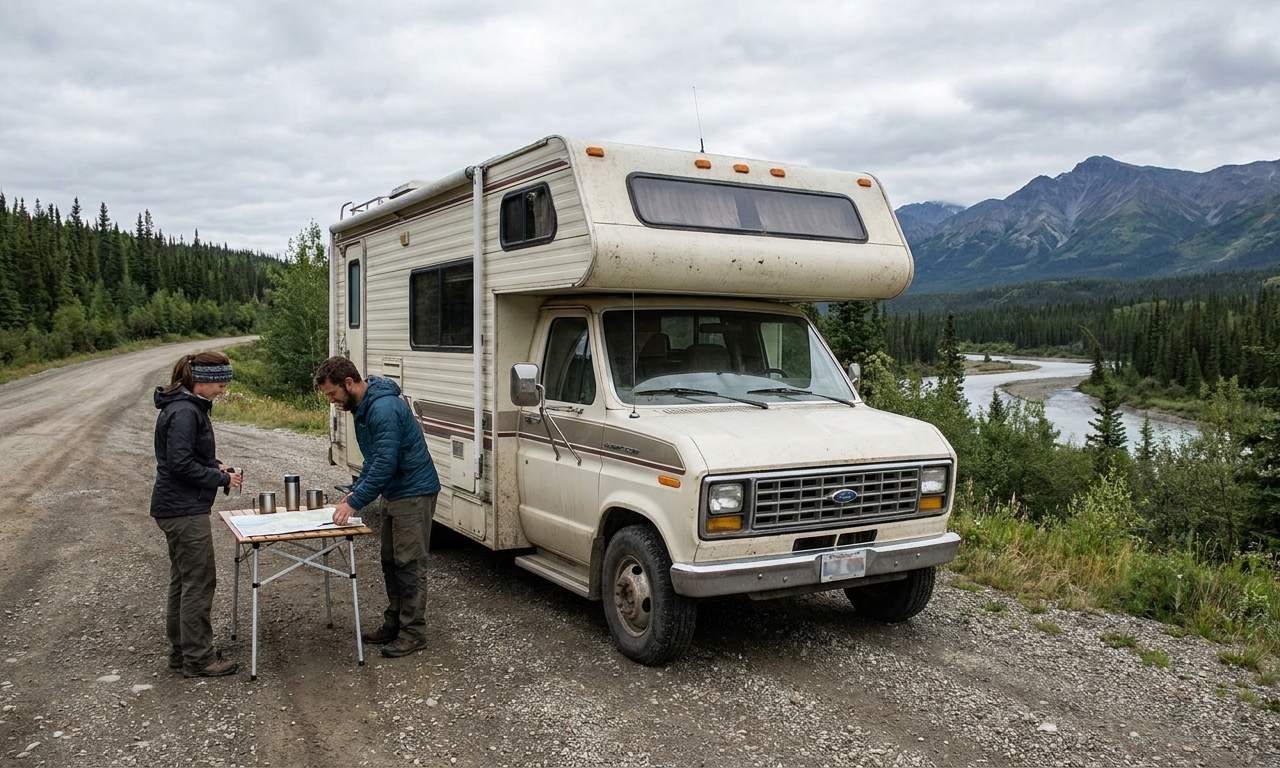
Road conditions in North Canada exhibit significant variability, ranging from well-maintained paved highways to extensive stretches of gravel and unpaved roads, which necessitates careful driving and thorough preparedness. Major routes such as the famous Alaska Highway are generally well-maintained, yet travelers should anticipate sections undergoing construction or temporary gravel surfaces. Roads like the Dempster Highway, a bucket-list route for many, are predominantly gravel, demanding slower speeds, increased following distance, and constant vigilance for wildlife, which can appear unexpectedly. RV travelers in these territories, including Yukon and Northwest Territories, must also be ready for long distances between essential services such as fuel stations and repair shops. Carrying extra supplies like water, non-perishable food, and a basic tool kit is not just wise; it’s crucial for a safe and comfortable journey. Mountainous terrain is also common, particularly in western North Canada, requiring drivers of rented motorhomes to pay close attention to steep grades and winding roads.
RV Size Limits, Bridges & Restricted Zones
While specific height, weight, or length restrictions for rented RVs are uncommon on the main routes throughout North Canada, drivers should always remain aware of posted signs for low bridges, underpasses, or tunnels, especially when entering smaller towns or national parks. Most common family rental RVs, such as Bandana's popular Class C Alcove models with an average length of 7.5 meters, or our streamlined Class SI - Semi-integrated models, will fit standard road infrastructure without issue. Environmental zones or restricted access areas that typically limit larger vehicles are rare for general RV travel in North Canada. However, certain protected areas, national parks, or Indigenous lands may have specific access rules or require permits, so it is always prudent to research these in advance of your trip. If your itinerary involves ferry travel, particularly for coastal routes like sections of the Alaska Marine Highway, carefully check vessel specifications for maximum RV length and height; these details can significantly impact both booking availability and cost.
Fuel: Diesel vs. Petrol & Cost per 100 km
Most family rental RVs in North Canada, including Bandana's Semi-integrated and Alcove classes, typically operate on diesel fuel, which is widely available at most gas stations, though supply can be limited in very remote areas. It is always a good practice to fill up your tank whenever you see a fuel station in the North, even if your tank isn't empty, as distances between services can be extensive. Based on Bandana's global fleet averages, a rented Class SI - Semi-integrated RV typically consumes 10–11 Liters per 100 km, while a larger Class C - Alcove motorhome consumes approximately 10–12 Liters per 100 km, and a more compact Class B - Camper Van uses 8-10 Liters per 100 km. Fuel costs in North Canada are notably higher than in southern Canada, with prices fluctuating significantly based on remoteness. When budgeting for your family RV trip in North Canada, fuel will be a major expense. You can meticulously itemize and track every expense, including fuel, using RV PLANET routes to ensure easy budgeting for your adventure. On the routes offered through RV PLANET routes, you can itemize and track every expense along the way for easy budgeting.
Tolls, Vignettes & Border Rules
Canada does not operate with a widespread system of vignettes or numerous road tolls like some European countries, making navigation in North Canada generally free from such charges. Tolls are exceptionally rare and typically apply only to specific bridges or highways, none of which are prevalent in the northern territories. When crossing into Canada with a rented RV, all travelers must present valid passports, and it is essential to have the RV's registration and proof of insurance readily accessible for customs officials. For our American friends, be mindful of specific Canadian customs regulations concerning the import of certain goods, firearms, and agricultural products. These items must be declared to avoid any issues at the border. While some rental RVs might offer pre-purchased toll passes in other regions, this is generally unnecessary for travel within North Canada due to the scarcity of toll roads, simplifying your planning for a family RV rental in North Canada.
Driving Tips for family rv rental Travelers
For family RV travelers navigating the stunning, yet sometimes challenging, roads of North Canada, prioritizing frequent stops is paramount for both children's comfort and driver alertness. We recommend stopping every 2-3 hours to stretch legs and take a break, especially on long, remote stretches that can be monotonous. Budget-conscious families should proactively plan fuel stops, and on routes with very limited services, consider carrying extra fuel in approved containers to mitigate higher remote fuel costs. Always adhere strictly to posted speed limits, which are often lower on gravel roads, and be extra vigilant for wildlife such as moose, caribou, and bears, which frequently cross roads, particularly at dawn and dusk. Equipping your rented RV with a robust emergency kit, including extra water, non-perishable food, warm blankets, a comprehensive first-aid kit, and a satellite communication device, is essential due to the remote nature of much of North Canada. Many rental motorhomes come with automatic transmissions, which can significantly reduce driver fatigue on extended journeys and contribute to a more relaxed family travel experience.
Recommended RV Class for North Canada Roads
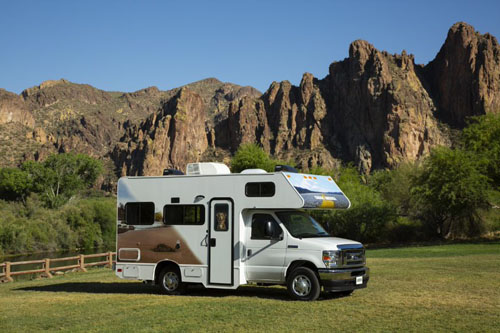
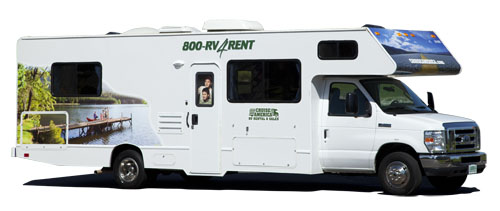
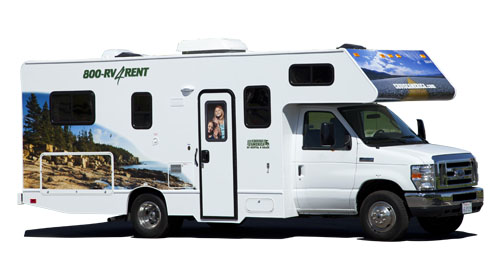
For family RV travel across North Canada's diverse and sometimes rugged roads, Class C - Alcove and Class SI - Semi-integrated motorhome models are highly recommended due to their excellent balance of comfort, interior space, and manageable driving characteristics. Bandana offers a variety of these vehicles from trusted suppliers like El Monte and Cruise America. Our Class C - Alcove RVs, for instance, average around 7.5 meters (24.6 feet) in length and typically accommodate 4 to 6 people, often featuring a convenient over-cab bunk bed and ample living space ideal for families. Class SI - Semi-integrated RVs from Bandana's fleet, averaging 6.9 meters (22.6 feet) in length, provide a more streamlined profile that can be slightly easier to maneuver while still offering all essential amenities. While Class B - Camper Vans (averaging 5.8 meters or 19 feet) offer superior maneuverability and better fuel economy (8-10 Liters/100 km), their limited interior space might be less suitable for larger families or extended trips needing more comfort. Choosing an automatic transmission RV is common in our rental fleets and further enhances driving ease. For those interested in comparing options, explore our "Family RV Rental in North Canada - Pricing Guide 2024" to find the perfect fit.
Should I Choose a Compact Van Instead of a Large RV in North Canada?
For most family RV travel in North Canada, opting for a larger RV, such as a Class C or Semi-integrated motorhome, is generally more advantageous than a compact van, as it prioritizes indoor comfort and essential living space over minimal gains in maneuverability. Larger motorhomes offer significantly more living space, dedicated sleeping areas- for example, Bandana's Class C RVs often provide up to 5-6 sleeping places- and better amenities, which are crucial for families on extended trips, especially when encountering variable weather or remote locations. While compact vans (like Bandana's Class B Camper Vans, averaging 5.8 meters or 19 feet) are indeed easier to park and navigate through very tight spots, such scenarios are infrequent in the expansive, sparsely populated regions of North Canada. The perceived 'difficulty' of driving a larger RV is often overstated; with slow, careful driving and adherence to speed limits, even Class C RVs (averaging 7.5 meters or 24.6 feet) handle North Canadian roads comfortably and without issue. Ultimately, for a memorable family adventure in North Canada, the enhanced experience and greater self-sufficiency provided by a larger rental RV typically outweigh the minor benefits of a smaller vehicle, unless your travel style is extremely minimalist or only for one or two occupants.
Can I Park Anywhere? Free & Wild Camping Rules in North Canada
While the allure of wild camping in North Canada is strong, the regulations vary considerably by territory- Yukon, Northwest Territories, and Nunavut- and depend heavily on specific land ownership, making it essential to verify local rules before parking overnight. Dispersed camping is generally permitted on Crown Land (public land) in many areas of North Canada, provided you are not on private property, within municipal limits, or in designated protected areas like National Parks. When camping on Crown Land, practice strict Leave No Trace principles: pack out everything you pack in, minimize your impact, and respect the natural environment. Always prioritize designated campgrounds in National Parks, Territorial Parks, or private RV parks, which offer essential amenities like fresh water, dump stations, and often electrical hookups, and typically have fewer restrictions. Never park overnight in areas marked as private property, Indigenous lands without explicit permission, or in clearly signed 'no overnight parking' zones. To find available campsites and campgrounds during your trip, we recommend using RV PLANET (rvplan.net) - a great resource for locating available spots along your route.
Can I Drive an RV Into the City Center? Heights, Tunnels & Local Signage
Yes, you can almost always drive a rented RV into the city centers of North Canada's smaller towns and cities, such as Whitehorse, Yukon, or Yellowknife, Northwest Territories. These communities generally boast RV-friendly infrastructure and encounter far fewer height or access restrictions compared to major metropolitan areas in southern Canada or the USA. When navigating these towns, simply drive slowly and carefully, paying close attention to local signage for any potential height limits on overhead structures like bridges or tunnels, though these are typically well-marked and rare on common RV routes in the North. Be mindful of local parking regulations; while main roads are usually accessible, parking for larger RVs may be limited to designated lots or areas just outside the most congested core. Unlike some European cities, environmental zones or residents-only streets that restrict RV access are not a common feature in North Canadian municipalities, ensuring a stress-free experience. No need to stress- just use common sense and pay attention.
What is the 3 3 3 rule for RV travel?
The '3-3-3 rule' for RV travel is an unofficial yet highly practical guideline that suggests RVers drive no more than 300 miles (approximately 480 km) in a day, stop driving by 3 PM, and ideally stay at least 3 nights in each location. This rule is specifically designed to promote a relaxed, enjoyable pace, significantly reduce driver fatigue, and allow ample time to fully explore destinations, comfortably set up camp, and address any minor RV issues that might arise. Adhering to the 3-3-3 rule is particularly beneficial for family RV trips in North Canada, where long driving distances between towns, variable road conditions, and abundant natural attractions genuinely encourage a slower, more immersive travel style. By limiting daily mileage and stopping early, families can better manage children's needs, avoid driving in challenging conditions (like dusk when wildlife is most active), and fully experience the unique northern landscapes. Staying for multiple nights at each stop also reduces the stress of constant packing and unpacking, allowing families to settle into their surroundings and enjoy activities like hiking, fishing, or wildlife viewing without feeling rushed. For families planning their "RV Travel Guide to North Canada - Tips and Top Spots 2024", this rule can be a game-changer.
Can Americans RV in Canada?
Yes, Americans can absolutely RV in Canada for their vacation travels, provided they fulfill standard entry requirements and carry all necessary vehicle documentation. U.S. citizens must present a valid passport for entry into Canada, and all individuals traveling in the rented RV should have appropriate identification. Proof of the RV's registration and valid insurance coverage that extends to Canada are mandatory; most U.S. auto insurance policies do cover travel in Canada, but it is essential to confirm this coverage with your provider before departing. Be prepared to declare all items at the Canadian border, especially firearms, alcohol, tobacco, and any agricultural products, as specific restrictions and duties apply. Familiarize yourself with Canadian driving laws, including speed limits (always posted in kilometers per hour) and road signs, and specific provincial or territorial regulations. For a comprehensive overview of cross-border RV travel, you may find our "RV Rental USA - Complete Guide 2024" helpful, especially when considering a trip that bridges both countries.
Is it easy to drive an RV in Canada?
Driving a rented RV in Canada is generally considered easy, especially on the country's well-maintained major highways, but driving in North Canada introduces unique considerations due to its remoteness and varying road conditions. While much of Canada's extensive highway system is comparable to that of the U.S., driving in the Yukon and Northwest Territories often involves long stretches of unpaved, gravel, or less-traveled roads, as detailed in our 'Road Conditions & Terrain in North Canada' section. The overall ease of driving an RV in North Canada is highly dependent on your preparedness for long distances between services, potential communication blackouts, and constant vigilance for wildlife. For most families renting common RV classes like Bandana's Semi-integrated or Alcove models, the driving experience will be manageable with careful planning, slower speeds, and adherence to safe driving practices. The biggest factors influencing ease are the driver's prior experience with larger vehicles, the specific route chosen (e.g., paved vs. gravel highways), and a willingness to embrace a more adventurous and patient driving style. Remember, Bandana RV specializes in connecting travelers with the perfect rental RV for their adventure, offering true RV specialists to guide you.
What do you need to enter Canada with a RV?
To enter Canada with a rented RV, you will primarily need valid identification for all travelers, proof of the vehicle's ownership and insurance, and a clear understanding of Canadian customs declaration rules. Each person in the RV, including children, must possess a valid passport (for U.S. citizens) or appropriate travel document for their nationality. You must carry the RV's registration papers, and crucial proof of insurance that is valid in Canada; typically, U.S. vehicle insurance policies extend coverage to Canada, but confirming this with your provider before your trip is essential. Be prepared to declare all goods to Canadian Border Services Agency (CBSA) officers, including any food items, alcohol, tobacco, and especially any firearms, as strict rules and prohibitions apply. It is also advisable to have a detailed itinerary, including your planned campsites and destinations, readily available. If you are renting an RV, have the rental company's contact information and the rental agreement on hand.
How much does RV insurance cost in Canada?
The cost of RV insurance in Canada varies significantly based on factors such as the rented RV's value, class, age, your driving record, the specific coverage selected, and the province or territory where the rental originates. For rental RVs from suppliers like El Monte or Cruise America, basic insurance is typically included in the overall rental cost, but this usually comes with a high deductible, often in the thousands of dollars. For extra peace of mind, you can upgrade to a top-level deductible for an additional fee through your rental provider or by choosing one of Bandana's preferred offerings. This optional supplemental insurance, collision damage waivers, or liability protection can significantly reduce your financial risk in the event of an incident. Comprehensive RV insurance for privately owned vehicles can range from a few hundred to several thousand dollars annually, with rates influenced by usage patterns and the specific region. For foreign visitors, it is crucial to ensure your home country's auto insurance policy provides adequate coverage for Canada, and if not, inquire about non-resident insurance options or supplemental coverage through your rental agency or a comparison platform like Bandana.
Who has the least expensive RV insurance?
Identifying the 'least expensive' RV insurance provider in Canada is highly individualized, as rates are tailored to each driver, vehicle type, and specific coverage needs. To secure the most competitive rates for your family RV rental in North Canada, it is strongly recommended to shop around and obtain quotes from multiple insurance companies that offer RV coverage. In provinces like British Columbia, ICBC is the primary insurer, while MPI operates in Manitoba and SGI in Saskatchewan. In other provinces, private insurers such as Intact, Aviva, or The Co-operators are major players. Factors that typically contribute to a lower premium often include maintaining a clean driving record, selecting a newer and safer RV model, bundling insurance with other existing policies (like home or auto insurance), and opting for a higher deductible (though this means higher out-of-pocket risk). For visitors renting an RV, the most straightforward and often cost-effective insurance solution is typically through the rental company's optional coverage, which might offer a reduction in deductible for an additional fee, avoiding the complexity of sourcing third-party short-term insurance. Comparing quotes and thoroughly understanding the scope of coverage is crucial, as the cheapest option may not always provide adequate protection for a remote North Canada RV adventure.
Do I need RV insurance in Alberta?
Yes, mandatory RV insurance is legally required in Alberta, just like in all other Canadian provinces and territories, to operate any motorized vehicle, including a rented recreational vehicle, on public roads. At a minimum, third-party liability insurance is compulsory in Alberta, which provides coverage for damages you might cause to other vehicles, property, or individuals in an accident. For more comprehensive protection against damage to your own rented RV from collisions, theft, fire, or other perils, additional optional coverage like collision and comprehensive insurance is highly recommended. If you are renting an RV in Alberta, the rental company will provide the legally mandated basic insurance; however, it is prudent to purchase their optional collision damage waiver (CDW) or verify that your personal auto insurance or credit card coverage extends to RV rentals in Alberta for reduced deductibles. Before embarking on an RV trip through Alberta, always confirm your insurance coverage meets provincial requirements and provides adequate protection for your planned travel, especially if venturing into more remote areas.
Budgeting for Your North Canada RV Trip
A comprehensive budget for a North Canada RV trip needs to extend well beyond just the rental vehicle and fuel costs, crucially accounting for campsite fees, necessary permits, provisions for remote areas, and a robust emergency fund. RV rental costs will fluctuate significantly based on the chosen class (e.g., Bandana's spacious Class C motorhome versus a more nimble Class B campervan), the duration of your trip, and the seasonality; therefore, obtaining a detailed quote early in your planning process is essential. Fuel will undoubtedly represent a major expense due to the vast distances and higher prices in the North. Factor in average consumption rates- for instance, a Class C RV typically uses 10-12 Liters per 100 km, while a Class B is 8-10 Liters per 100 km- and build in a buffer for price fluctuations. Allocate specific funds for national and territorial park entry fees, any required campsite reservations (especially for popular parks during peak season), and activity-specific permits like fishing licenses. Most importantly, always include a substantial emergency fund to cover unexpected repairs, medical needs, or alternative accommodation, reflecting the inherent remoteness and potential challenges of northern travel. Remember that RV PLANET routes allow you to itemize and track every expense for easy budgeting.
Preparing for Remote RV Travel in Northern Canada
Preparing for remote RV travel in North Canada demands extensive planning focused on self-sufficiency, given the limited access to emergency services, repair facilities, and amenities. Your rented RV should be equipped with a robust emergency kit: a satellite phone or a Garmin InReach is critical for communication beyond cellular range, along with extensive first-aid supplies, extra water, and non-perishable food for several days. A spare tire, a tire repair kit, and a basic set of tools are also essential for minor roadside issues. Thoroughly research fuel availability along your intended route and carry extra fuel in approved containers, as stations can be hundreds of kilometers apart. Ensure your fresh water tank is full, and consider a portable water filter for additional safety. Bear safety is paramount in the North: always store all food and scented items in bear-proof containers, cook and eat away from your sleeping area, and carry bear spray (knowing how to use it safely) as a deterrent. Finally, be prepared for insects, especially mosquitoes and black flies, with strong repellents, head nets, and ensuring all RV windows and doors have functional screens. For ideas you can prep on the road, watch our RV-friendly recipes playlist on YouTube.
🎬 Video coming soon
Seasonal Considerations for North Canada RV Adventures
The optimal window for a family RV adventure in North Canada is typically from late May to early September, as these months offer the best weather conditions, most accessible roads, and full operation of services and attractions. Late spring (May-June) brings significantly longer daylight hours and generally fewer insects, but be aware that some lakes might still be frozen, nights can be cool, and unpaved roads could be muddy from the spring thaw. Summer (July-August) provides the warmest temperatures, vibrant flora, and all visitor services are open, but this is also the peak tourist season, meaning higher prices and increased insect activity. If traveling in July or August, booking popular campsites well in advance is highly recommended. Early autumn (September) offers breathtaking fall foliage and fewer crowds and insects, but temperatures drop rapidly, increasing the chances of frost and even early snow. Regardless of the season, always be prepared for rapidly changing weather conditions, including sudden drops in temperature, rain, and even snow, by packing layers and suitable gear for all occupants in your rented motorhome. You can explore more seasonal tips in our "RV Travel Guide to North Canada - Tips and Top Spots 2024".
Respectful Travel: Indigenous Communities in Northern Canada
Traveling respectfully through North Canada is a vital part of any RV adventure, involving a deep acknowledgment of the rich history and ongoing presence of Indigenous communities, learning about their diverse cultures, and seeking permission when entering traditional lands. Before your trip, research the specific Indigenous territories you will be visiting- including First Nations, Métis, and Inuit communities- to understand their cultural protocols and current events. Supporting local Indigenous businesses, artists, and cultural tourism initiatives is a direct and meaningful way to contribute to these communities and gain authentic insights into their heritage. Always ask for explicit permission before taking photographs of people or their property, and maintain respect for privacy and any designated sacred sites. Engage with an open mind, be mindful of local customs and traditions, and understand that you are a visitor on these traditional lands, fostering positive relationships and promoting mutual respect throughout your journey. This approach ensures your family RV rental experience is not only memorable but also enriching and responsible.
What You Shouldn't Miss
North Canada offers an incredible array of experiences for family RV travelers, from vast wilderness to vibrant local cultures. Here are some must-do adventures:
- Drive the Dempster Highway: Conquer Canada's only public all-weather highway to cross the Arctic Circle, leading to the remote community of Tuktoyaktuk and the Arctic Ocean.
- Explore Kluane National Park and Reserve, Yukon: Witness Canada's highest mountains, immense icefields, and abundant wildlife, perfect for hiking and scenic drives.
- Experience the Midnight Sun in Dawson City, Yukon: During summer, enjoy nearly 24 hours of daylight, allowing for extended exploration, gold rush history, and unique cultural events.
- Chase the Aurora Borealis in Yellowknife, NWT: Visit during late summer or early fall for the best chances to see the spectacular Northern Lights dance across the sky.
- Discover the Nahanni National Park Reserve, NWT: While access is often by air or boat, the region's vastness and stunning canyons can be appreciated from accessible points, offering a glimpse into one of Canada's most wild places.
- Paddle the Yukon River: Even if only for a short day trip from Whitehorse, experiencing a portion of this historic waterway offers a peaceful and immersive connection to the land.
Looking for expert insights from Avi Bandana? Top 5 Adventures - recommendations from Avi Bandana.
Top Cities for RV Rental in North Canada
While vast and remote, North Canada offers several key cities and towns that serve as excellent starting or ending points for your family RV rental adventure. These locations provide essential services and access to the region's incredible natural attractions:
- Whitehorse, Yukon: As the capital of the Yukon, Whitehorse is a vibrant hub with ample RV services, attractions like the SS Klondike National Historic Site, and easy access to the Alaska Highway and Kluane National Park. Many families choose to begin their "Family RV Rental in North Canada - Pricing Guide 2024" here.
- Yellowknife, Northwest Territories: Known as the 'Diamond Capital of North America' and a prime spot for viewing the Aurora Borealis, Yellowknife offers a unique blend of northern culture and urban amenities, with several campgrounds nearby.
- Dawson City, Yukon: Immerse your family in Gold Rush history in this charming town, perfect for exploring under the midnight sun, and a common destination for those traversing the Dempster Highway.
- Fort St. John, British Columbia: Often considered a gateway to North Canada for travelers coming from the south, Fort St. John provides a good base with full services before venturing deeper into the wilderness.
- Prince George, British Columbia: Another strategic entry point, Prince George offers comprehensive RV services and is a convenient stop for families heading towards the Yukon and Alaska.
- Edmonton, Alberta: As a major city just south of the northern territories, Edmonton is a popular pickup location for rental motorhomes, providing excellent access to the northern stretches of Alberta and connecting routes to the NWT.
- Calgary, Alberta: Another large city in Alberta, Calgary offers a wide range of RV rental options and serves as a significant starting point for extended road trips north through Alberta and into the Yukon.
One-way RV rental options are often available, allowing you to pick up in one of these cities and drop off in another, perhaps even extending your journey south, as highlighted in our "One-Way RV Rental in North Canada - Price Guide 2024".
Country-Wide Practical Information for RV Travelers
Venturing through North Canada in a rented motorhome requires some practical knowledge to ensure a safe and enjoyable journey. Firstly, remember that Canada operates on **right-hand drive** and road signs display speed limits and distances in **kilometers per hour (km/h)** and kilometers, respectively. Be sure to adjust your driving habits and expectations accordingly. Speed limits typically range from 80-100 km/h on highways, often lower on gravel roads. For emergencies, the universal contact number across Canada is **911** for police, fire, or ambulance services. Save this number in your phone and be aware of your location for reporting. Regarding connectivity, cellular service is generally reliable in towns and along major highways, but expect large coverage gaps when traveling through remote areas. Consider purchasing a local **SIM card** with a Canadian provider (like Bell, Telus, or Rogers) upon arrival in a larger city if you plan to use data, but always have offline maps downloaded and a satellite communication device for true off-grid safety. Many campgrounds in North Canada offer Wi-Fi, but it can be slow or limited. Planning your trip with these tips in mind will ensure a smoother family RV rental experience in North Canada.
Final Thoughts
Embarking on a family RV adventure in North Canada is an experience like no other, offering a unique blend of stunning natural beauty, rich cultural encounters, and the freedom of the open road. While the region presents its own set of considerations, from varied road conditions to planning for remote travel, these are all manageable with the right preparation and a positive mindset. Remember to embrace slow travel, allowing your family to truly immerse yourselves in the vast landscapes and unique communities.
With a rented motorhome as your mobile headquarters, you have the flexibility to explore at your own pace, creating unforgettable memories together. Our team of true RV specialists at Bandana Caravan is dedicated to ensuring you find the easiest, safest, and most affordable way to rent an RV, comparing final prices across 50+ suppliers so you don't have to. We take care of the small details, because that's what makes the big difference.
So, gather your loved ones, choose your ideal Class C motorhome or spacious campervan, and get ready to discover the magic of North Canada. The wild frontier is calling!
Compare Motorhome Prices for North Canada Today!