In This Guide
- Where to Camp in Cape Town - Top Options
- Campground Types in Cape Town (National, Private, Wild)
- Featured RV Park or Campground in Cape Town
- Hookups & Amenities - What to Expect
- Booking Windows & Reservations in Cape Town
- Nearby Supermarkets & Resupply Points
- Best RV Class for Camping in Cape Town
- How to Save on Campgrounds in Cape Town
- How much does it cost to rent an RV in Cape Town?
- What are the best campsites in Cape Town for RVs?
- What is the best time of year to RV in Cape Town?
- What should I pack for an RV trip in Cape Town?
- What are the rules for wild camping in South Africa?
- Is it safe to travel South Africa by RV?
- Do you need a special license to drive an RV in South Africa?
- How do I dump my RV waste in Cape Town?
- Are there toll roads in South Africa?
- How do I find RV-friendly routes in South Africa?
Embarking on a family RV camping adventure in Cape Town offers an unparalleled way to explore South Africa's stunning landscapes, from dramatic coastlines to vibrant city life. Imagine waking up to the sound of waves, preparing breakfast in your rented motorhome, and having Table Mountain as your daily backdrop. For live availability and current prices, start with our RV Rental Cape Town - Complete Guide 2026 guide, designed to help you navigate this incredible region. At Bandana RV, we're dedicated to making your family's journey seamless and memorable, providing full transparency with no hidden fees, and unwavering support before, during, and after your booking.
Where to Camp in Cape Town - Top Options
Cape Town offers a diverse array of RV-friendly camping experiences, from picturesque coastal sites with breathtaking ocean views to tranquil inland parks nestled amidst nature. Many popular options, such as those along the West Coast or within easy reach of the Cape Peninsula's iconic attractions like Cape Point and Boulders Beach, provide excellent infrastructure for families in a rented motorhome. When selecting a campground, consider its proximity to desired attractions, available amenities like 220V power and fresh water, and its suitability for your RV size to ensure a comfortable stay. For broader context on exploring the region, refer to our RV Rental South Africa - Complete Guide 2026.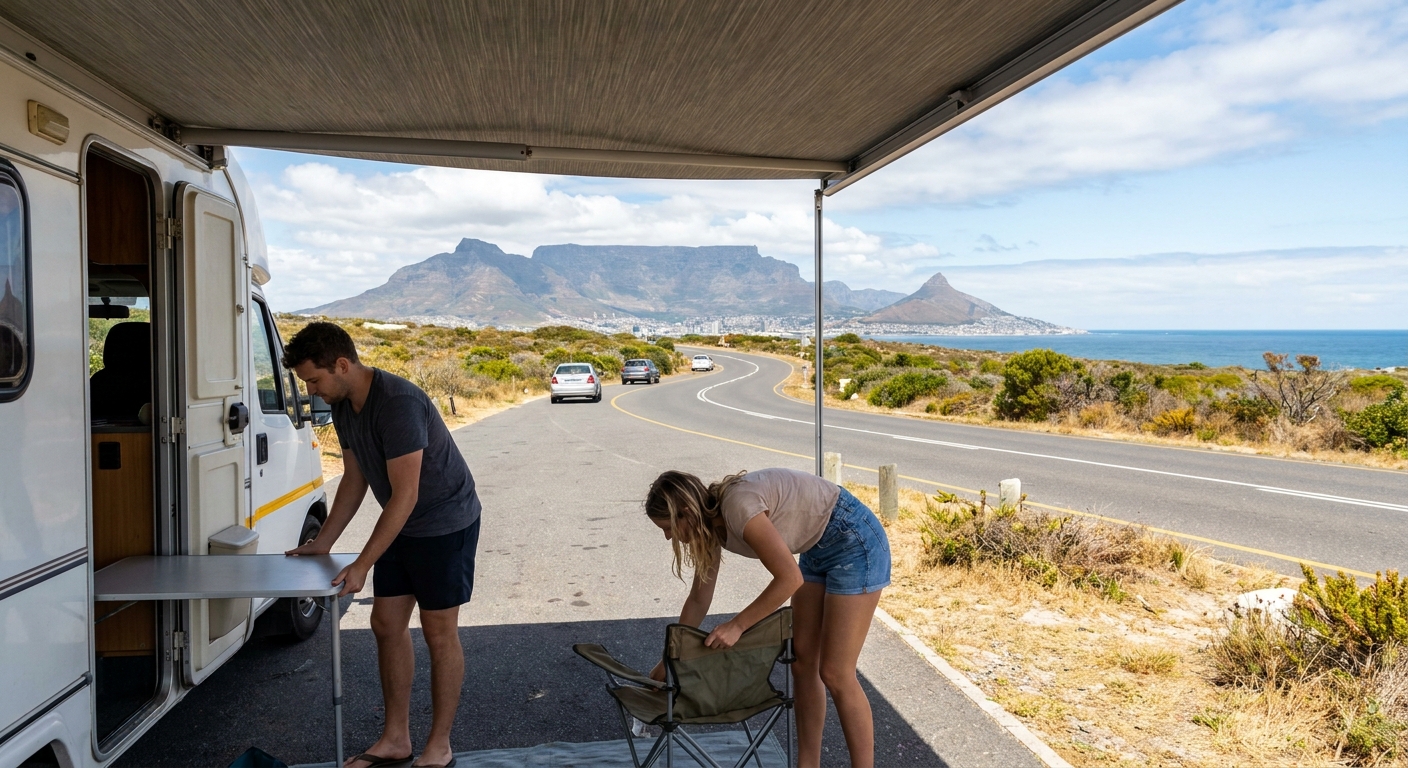
Campground Types in Cape Town (National, Private, Wild)
RV camping in Cape Town typically falls into three main categories: national park sites, private campgrounds, and very limited opportunities for wild camping. National park sites, such as those managed by SANParks like those found near Cape Point, offer natural beauty and often basic but reliable facilities like communal ablution blocks, and usually require advance booking, especially during popular periods. Private campgrounds and resorts, like Imhoff Farm, provide a broader range of amenities including swimming pools, restaurants, and entertainment, with varying price points and generally better security for your family RV rental. Wild camping, also known as 'freedom camping,' is largely restricted and often illegal in most developed areas of South Africa, particularly within the Cape Town metropolitan area; always prioritize designated campsites for safety and legal compliance to avoid any unexpected issues.Featured RV Park or Campground in Cape Town
An ideal RV park for families in Cape Town would typically feature robust RV-specific amenities such as full hookups (220-240V electricity, fresh water, and sewage connections), secure parking with controlled access, and clean, well-maintained ablution blocks. Beyond basic utilities, a family-friendly campground near Cape Town should offer child-focused facilities like playgrounds, swimming pools, or organized activities to keep everyone entertained. Consider locations in areas like Kommetjie or Noordhoek that balance natural beauty with convenient access to popular tourist attractions and essential services, making your rented campervan adventure even better. Always check recent reviews for insights on security, maintenance, and the overall family-friendliness of a prospective campground before booking, and for general pricing, explore our Family RV Rental in Cape Town - Pricing Guide 2026.Hookups & Amenities - What to Expect
In Cape Town campgrounds, you can generally expect a good range of hookups and amenities designed to make your RV travel comfortable, though offerings will vary significantly by site. Standard hookups typically include 220-240V electricity, for which South Africa uses Type M plugs, so international travelers should bring an adapter if needed. Fresh water points are also common, either at individual stands or centrally located, and grey/black water dump stations are usually available on-site for proper waste disposal. Additional amenities frequently feature shared ablution blocks with hot showers and toilets, laundry facilities, communal braai (BBQ) areas perfect for cooking up some delicious local food like boerewors and sosaties, and sometimes Wi-Fi access, which may be paid or limited. For some cooking inspiration on the road, check out our RV-friendly recipes playlist! Always confirm specific hookup types and available amenities directly with the campground when booking to ensure they meet your family's needs for your specific rented motorhome, such as a 'cruise america rv rental example Explorer' which features a 75-liter fuel tank.Booking Windows & Reservations in Cape Town
For family RV rentals in Cape Town, securing campground reservations well in advance is highly recommended, especially during the peak summer season (December-January and Easter holidays), when popular coastal or national park sites can fill up 3-6 months ahead. Proactive planners should aim to book several months ahead, particularly if targeting specific prime locations near attractions like Camps Bay or Kirstenbosch National Botanical Garden. Spontaneous travelers, however, can often find availability at private or less popular campgrounds, sometimes even booking same-day or next-day; it is always wise to call ahead before driving to a site to confirm vacancies. Many national park campgrounds, including those around Cape Town, release only a portion (typically 25-30%) of their spots for advance reservations, reserving the rest for first-come, first-served arrivals, providing some flexibility if you're willing to be adaptable; you'll find a spot, if not at the first campground, then at the next one. For more insights on securing your vehicle, read our RV Rental in Cape Town - Prices and Best Deals 2026.Nearby Supermarkets & Resupply Points
Stocking your family RV rental in Cape Town is remarkably easy, with numerous supermarkets and resupply points conveniently located throughout the city and its surrounding areas. Major grocery chains like Pick n Pay, Woolworths Food, Checkers, and Spar are widely available in shopping centers such as Canal Walk and Cavendish Square, offering a full range of groceries, fresh produce, and household essentials, perfect for your onboard kitchen. Before heading to more remote camping destinations along the Garden Route or up the West Coast, plan to stop at a large supermarket within Cape Town itself or a larger town along your route to fully provision your RV. While many smaller towns also have local stores for basic top-ups, for comprehensive stocking, focus on the larger chain supermarkets, ensuring you have everything for a comfortable trip in your rented motorhome or campervan.Best RV Class for Camping in Cape Town
For family camping in Cape Town, Class C - Alcove and Class SI - Semi-integrated RVs are generally the best choices, offering an excellent balance of comfort and maneuverability on South African roads. Class C - Alcove RVs, like the '32′ Class C Motorhome' (which can sleep up to 8 adults and features 3 double beds), averaging 6.7 meters in length, are ideal for larger families (4-6 people), providing ample living space and dedicated sleeping areas including the overhead bunk. Class SI - Semi-integrated RVs, also typically around 6.7 meters and sleeping up to 4 adults, offer a more streamlined profile with good amenities, suitable for smaller families or those seeking a bit more luxury. While Class B Camper Vans (averaging 5.6m and sleeping 3) offer excellent fuel efficiency (6-11 lit/100km) and easier navigation on tighter city streets like those around Bo-Kaap, they might be too compact for families needing more space, especially for extended trips or those with younger children. Drive slowly and carefully, and you can drive almost anywhere without issues. No need to stress - just use common sense and pay attention.How to Save on Campgrounds in Cape Town
To significantly save on campground fees for your family RV rental in Cape Town, consider utilizing discount cards, booking during shoulder seasons, and opting for longer stays. Many rental providers, including Bandana, may offer exclusive campground discount cards or partnerships that can significantly reduce nightly rates, sometimes by 10-15%. Traveling during the shoulder seasons (spring: September-November, and autumn: March-May) often means lower rates and fewer crowds compared to the peak summer months, potentially saving you 20% or more. Additionally, choosing municipal or regional campgrounds over luxury private resorts, staying for 3+ nights to qualify for weekly rates, and occasionally sharing hookups with another RV group can further decrease costs, helping your budget go further on your adventures.How much does it cost to rent an RV in Cape Town?
The cost of renting an RV in Cape Town varies significantly based on factors such as the RV class, rental duration, season, and included amenities; a realistic trip budget should also account for ancillary expenses like fuel, campsite fees, and activity expenses. Expect daily rental rates to fluctuate, with a compact Class B Camper Van starting from around $80-$120 USD per day in low season, while a larger Class C - Alcove, like the 'cruise america rv rental example Explorer' (which sleeps 4 and has a 75-liter fuel tank), offering more sleeping capacity for up to 6 adults, could range from $120-$200+ USD per day. Beyond the rental fee, factor in fuel costs, noting that RVs like a Class SI - Semi-integrated or Class C - Alcove typically consume around 12 liters per 100km, while Class B Camper Vans are more fuel-efficient at 6-11 liters per 100km, especially on longer routes. Campsite fees range from budget-friendly municipal sites (e.g., $15-$30 USD per night) to more expensive private resorts with extensive amenities ($40-$80+ USD per night), and don't forget daily activity prices, groceries for your RV-friendly recipes playlist, and potential hidden costs like extra mileage charges or cleaning fees. On RV PLANET routes, travelers can itemize and track every expense along the way for easy budgeting. For detailed breakdowns, refer to our Cheap RV Rental in Cape Town - Budget Guide 2026 and Luxury RV Rental in Cape Town - Premium Prices 2026.What are the best campsites in Cape Town for RVs?
The best campsites in Cape Town for RVs offer a balance of essential amenities, security, scenic locations, and accessibility for various RV sizes, catering to diverse family needs. Look for sites with reliable power hookups (220-240V), accessible fresh water points, and well-maintained ablution blocks (showers and toilets), which are critical for comfortable RV travel, ensuring a supply of 100+ liters of fresh water, similar to what a 'Category Family 5' motorhome carries. Top campsites will also provide robust security measures like controlled access and perimeter fencing, optional Wi-Fi access (though often limited or paid), laundry facilities, and specific activities or easy access to local attractions such as the V&A Waterfront or Table Mountain. When researching, prioritize reviews that detail RV-specific features, booking procedures, cost variations, and accessibility for your particular RV class, moving beyond just 'amazing views' to practical considerations like parking for a 7-meter rented motorhome. We handle the details, you live the journey - personal service from day one until your booking is confirmed.What is the best time of year to RV in Cape Town?
The best time of year to RV in Cape Town for families is generally during the shoulder seasons (spring: September-November, and autumn: March-May) or the summer (December-February), each presenting its own advantages. Spring and autumn offer pleasant temperatures averaging 18-25°C, fewer crowds at popular spots like Clifton Beaches, and often lower campsite rates, making it ideal for exploring without the intense heat or peak season rush, and ensuring better campsite availability. Summer (December-February) brings warm, sunny weather (avg. 25-30°C) perfect for beaches and outdoor activities, but also coincides with peak travel times, meaning higher prices, crowded campsites, and the necessity of booking far in advance, sometimes 6+ months. Winter (June-August) is cooler and wetter (avg. 10-18°C), which can lead to road closures in mountainous regions like the Hottentots Holland Mountains and limits outdoor activities, though it's the quietest time for RV travel with potential for significant rental discounts.What should I pack for an RV trip in Cape Town?
For an RV trip in Cape Town, smart packing involves considering the region's diverse climate, your planned activities, and the need for self-sufficiency in your rented campervan. Essentials include layers of clothing suitable for warm days (up to 30°C) and cooler evenings (down to 10°C), especially when visiting coastal areas or mountains; sun protection (hats, SPF 50+ sunscreen, sunglasses); comfortable walking shoes for exploring; and swimwear for the beaches. Beyond personal items, consider practical RV-specific gear such as a basic first-aid kit, insect repellent for evenings, an international power adapter for South Africa's Type M plugs (220-240V), a portable braai (BBQ) kit, and reusable shopping bags for groceries. Don't forget navigation tools like a GPS with offline maps, entertainment for downtime, and any specialized gear for activities like hiking Table Mountain, surfing in Muizenberg, or wildlife viewing. God is in the small details, and we take care of them. That's what makes the big difference for your RV adventure.What are the rules for wild camping in South Africa?
In South Africa, wild camping, or freedom camping, is generally restricted and often illegal, particularly within urban areas like Cape Town and national parks managed by SANParks. RV travelers are required to primarily use designated campsites such as those found at Silverstroom or Imhoff Farm. Specific RV-related laws and regulations dictate that vehicles must be parked in approved areas, and "No Overnight Parking" signs, frequently seen near popular tourist spots and public beaches, should always be respected to avoid fines. While some remote, non-private areas might tolerate an overnight stop with a rented RV, it is crucial to seek explicit permission from landowners or local authorities beforehand and prioritize secure, designated campsites for both safety and legal compliance. Always adhere to local etiquette regarding waste disposal and noise, as environmental protection laws are strictly enforced in protected areas. For finding campsites and campgrounds during your trip, we recommend using RV PLANET (rvplan.net) - a great resource for locating available spots along your route.Is it safe to travel South Africa by RV?
Traveling South Africa by RV can indeed be a safe and rewarding experience for families, provided you adhere to comprehensive safety and security advice tailored for RV travelers. Prioritize staying in recommended secure campsites and RV parks, such as those found in protected nature reserves, which often have controlled access, fencing, and security personnel, especially when in urban or tourist-heavy areas like the Cape Town CBD. Practice vigilant driving safety tips: avoid driving after dark on unfamiliar roads, keep all vehicle doors locked even while driving, don't leave valuables visible inside your rented motorhome, and plan your routes carefully, checking local conditions and road closures before you depart. Always have emergency contacts readily available, including local police (dial 10111), medical services (dial 10177), and your rental company's roadside assistance number. For more travel planning, consider our RV Travel Guide to Cape Town - Tips and Top Spots 2026.Do you need a special license to drive an RV in South Africa?
Typically, you do not need a special license to drive most family RV rentals in South Africa, as a standard valid car driver's license from your home country, along with an International Driving Permit (IDP), is usually sufficient. For non-South African citizens, an IDP is legally required when driving in South Africa, as it translates your existing license into multiple languages and is recognized by local authorities. Ensure your home country's license is valid for the class of vehicle you intend to drive; most standard RVs, including Class B Camper Vans, Class SI - Semi-integrated, and Class C - Alcove, such as the '4 Berth Henty' or '6 Berth Deluxe,' fall under a regular car license category. The minimum rental age is 21, and there are no young driver surcharges or vehicle class restrictions based on age. Always confirm specific license requirements with your RV rental company before booking to avoid any issues upon arrival.How do I dump my RV waste in Cape Town?
Dumping RV waste in Cape Town involves utilizing designated dump stations found at most established campgrounds and some public facilities, adhering to proper environmental and logistical procedures. Campsites, like those in the Kogelberg Nature Reserve or local private parks, typically offer specific points for emptying black water (sewage) and grey water (sink/shower water), often referred to as 'dump points' or 'sanitary stations,' which are clearly marked and easily accessible for a rented RV. Always ensure you have the necessary hoses and connectors for dumping, and meticulously follow the instructions provided at the dump station to maintain hygiene and prevent environmental contamination. Fresh water refills are usually available near dump stations or at individual campsites, allowing you to replenish your potable water supply (e.g., a 100-liter fresh water tank) simultaneously, ensuring you're ready for the next leg of your journey.Are there toll roads in South Africa?
Yes, there are toll roads in various parts of South Africa, including some routes that may be taken when driving an RV in or out of Cape Town, and understanding payment methods is crucial. Toll plazas typically accept cash and major credit/debit cards, but it's always wise to have some local currency (South African Rand) on hand for smaller tolls or in case card machines are offline, especially on less-traveled routes. Certain major routes, like parts of the N1 leading inland from Cape Town or the N2 along the Garden Route, feature manual toll gates (e.g., near Grabouw). The iconic Chapman's Peak Drive, a scenic route linking Hout Bay and Noordhoek, also operates as a toll road, with charges ranging from ZAR 57 for light vehicles to ZAR 144 for heavier RVs. Before embarking on your journey, research your planned route to identify potential toll roads and prepare your payment method, especially for larger vehicles which may incur slightly higher fees.How do I find RV-friendly routes in South Africa?
Finding RV-friendly routes in South Africa involves utilizing reliable navigation and connectivity options, prioritizing well-maintained roads suitable for larger vehicles, and seeking out unique, less-traveled routes for an authentic experience. Use modern GPS systems (like Google Maps or Waze) but also supplement with offline maps (e.g., Maps.me) as cellular coverage can be sporadic in remote areas or mountainous regions like the Cederberg. Focus on national routes (N-roads), such as the N2 coastal route from Cape Town, and larger provincial roads (R-roads) which are generally in good condition and can comfortably accommodate RVs up to 7 meters long; avoid very rural or unpaved tracks unless specifically advised. Look for off-the-beaten-path RV-friendly destinations and unique local experiences by consulting RV-specific travel blogs, forums, and local tourism offices, which can highlight scenic drives, suitable parking in small towns, and authentic perspectives. We proudly offer 1,300+ pre-planned routes across 5 continents via RV PLANET (rvplan.net) - our sister company - to make your route planning easier, and you even get a 25% planning discount when using rvplan.net.🎬 Video coming soon
What You Shouldn't Miss
- Table Mountain Aerial Cableway: Take the rotating cable car up Table Mountain for panoramic views of Cape Town, Lion's Head, and the Atlantic Ocean.
- Boulders Beach Penguin Colony: Visit this sheltered beach near Simon's Town, a mere 40km drive from Cape Town, to see a thriving colony of endangered African Penguins up close.
- Chapman's Peak Drive: Experience one of the world's most spectacular marine drives between Noordhoek and Hout Bay, with 114 curves offering breathtaking coastal vistas.
- Kirstenbosch National Botanical Garden: Explore this magnificent garden on the eastern slopes of Table Mountain, showcasing South Africa's unique flora (fynbos) and offering lovely picnic spots.
- V&A Waterfront: Enjoy world-class dining, shopping, and entertainment at Cape Town's bustling harbor, often with live music and street performers.
- Cape Winelands Day Trip: Drive your rented motorhome to Stellenbosch or Franschhoek, just an hour from Cape Town, for wine tasting, gourmet food, and stunning vineyard scenery.
Looking for expert insights from Avi Bandana? Top 5 Adventures - recommendations from Avi Bandana
Final Thoughts
A family RV camping trip in Cape Town is more than just a vacation; it's an opportunity to create cherished memories, explore stunning natural beauty, and connect with South Africa's rich culture at your own pace. With a rented motorhome, you gain the freedom to craft your ideal adventure, whether it's leisurely cruising along the coastline, discovering hidden gems, or simply enjoying quality time together under the African sky. Remember to travel slowly, averaging 100-150 km per day, allowing ample time to feel the pulse of each place, savor local food, and immerse yourselves in the breathtaking scenery. We at Bandana RV are passionate about helping you discover the joy of RV travel. From finding the perfect family RV rental in Cape Town to providing transparent pricing and expert advice, we're with you every step of the way. Get inspired for your next trip and embark on an unforgettable journey with your loved ones. Find Motorhome Rentals in Cape TownOn the routes offered through RV PLANET routes, you can itemize and track every expense along the way for easy budgeting.