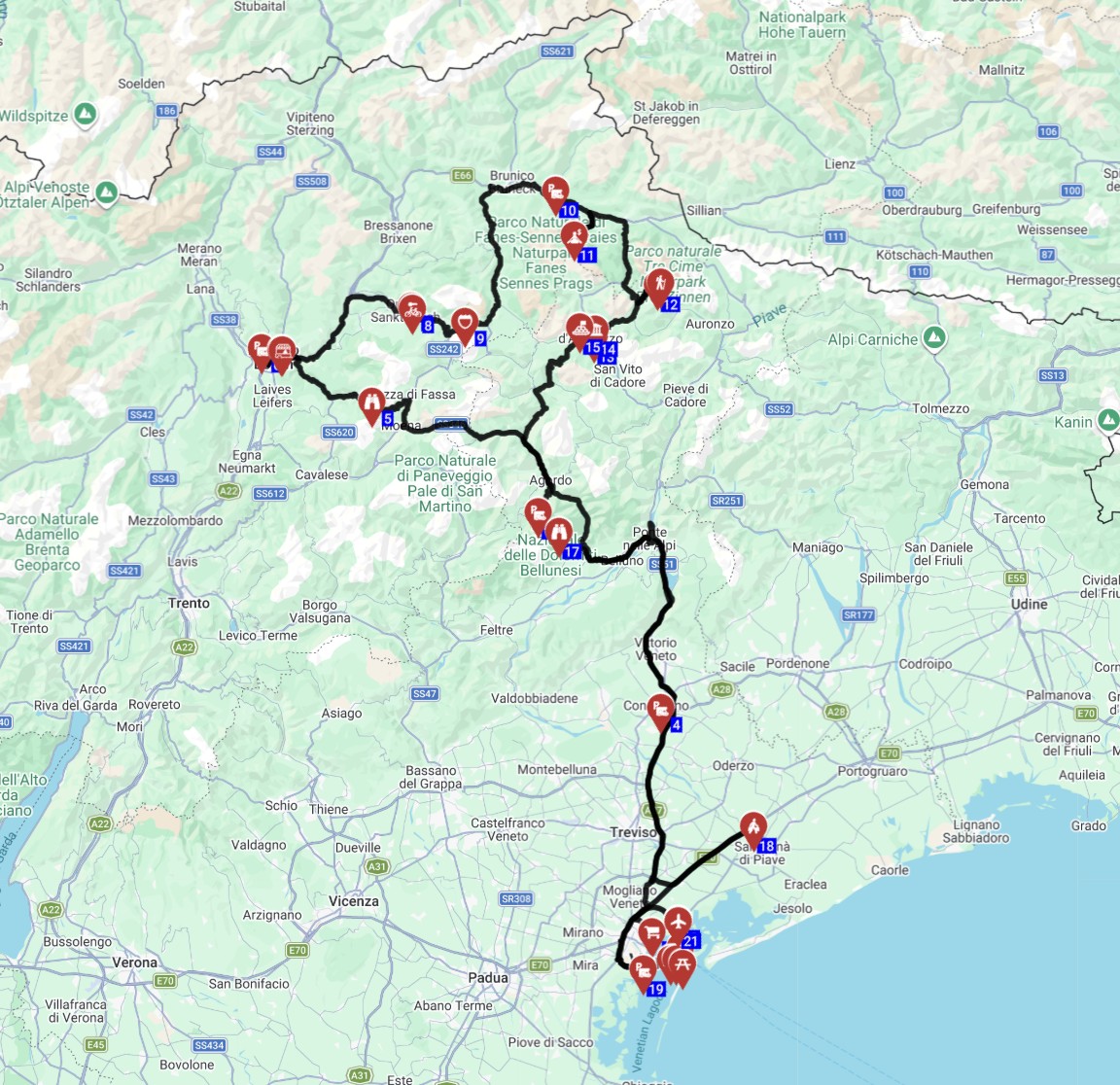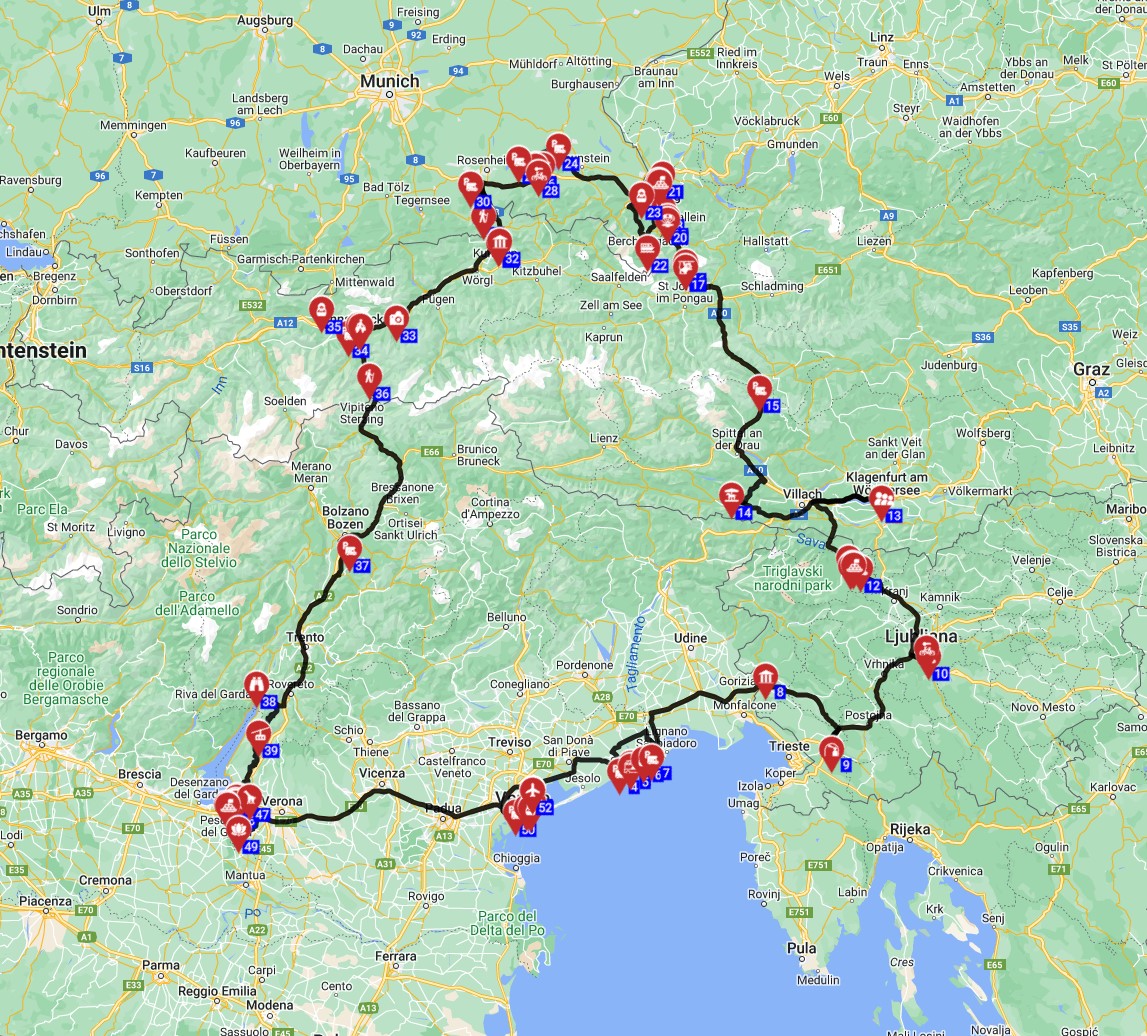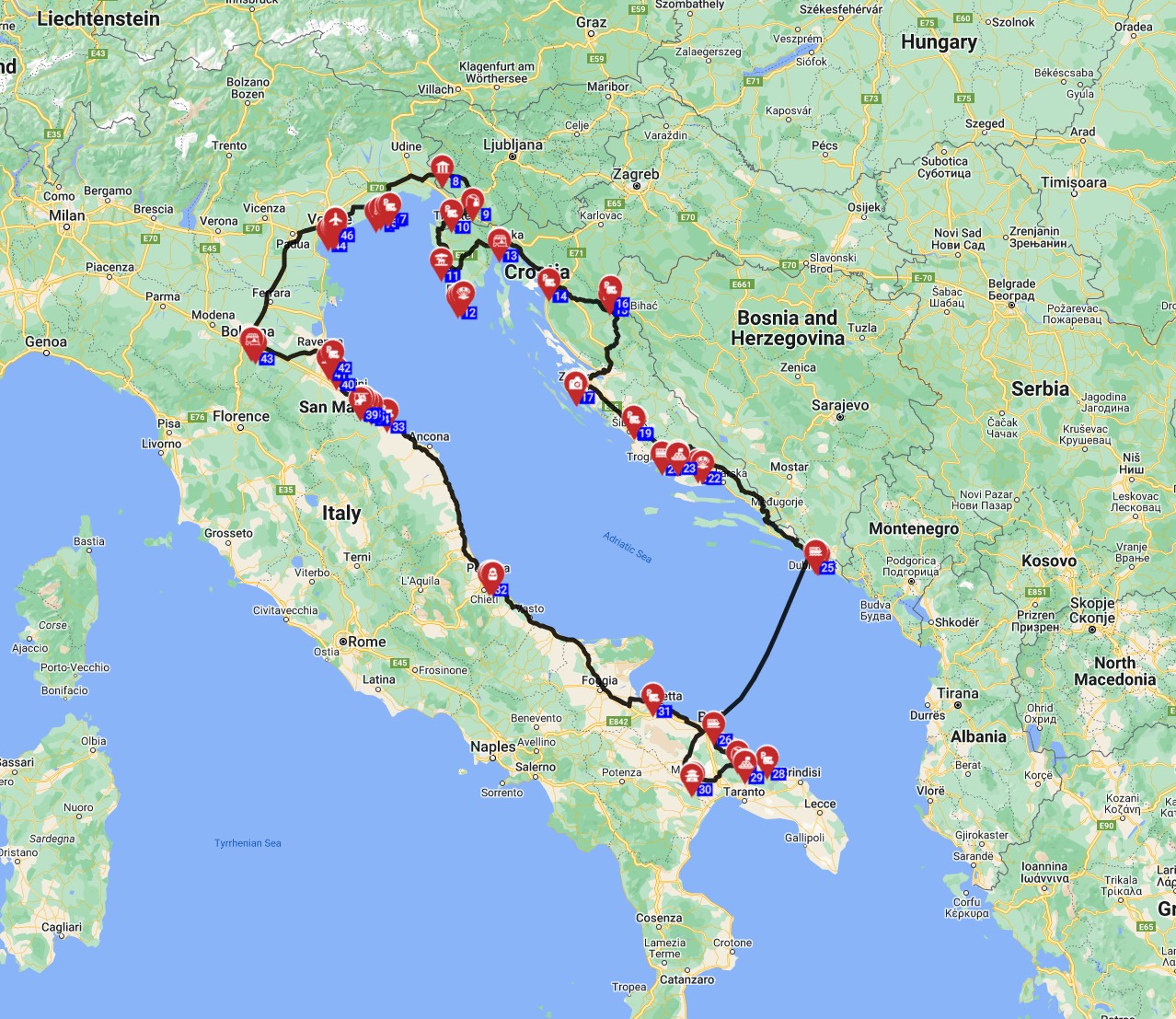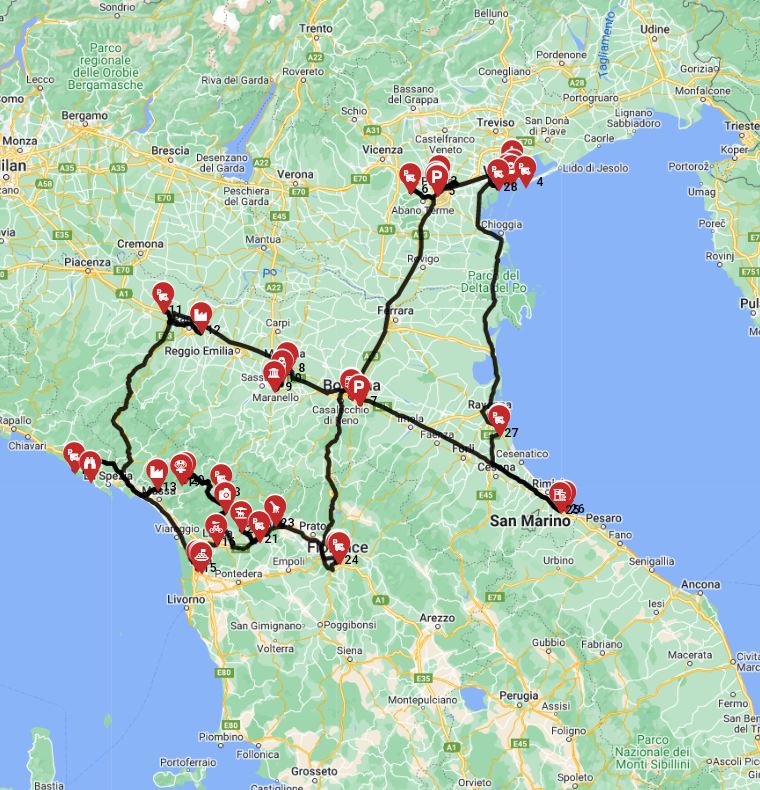
For live availability and current prices, start with our RV Rental Venezia - Venice - Complete Guide 2026 guide.
Can You Drive an RV in Venezia - Venice? License & Age Rules
Yes, you can drive an RV to the periphery of Venezia - Venice, typically requiring a standard B driving license for vehicles up to 3,500 kg (7,700 lbs) Gross Vehicle Weight (GVW), which covers most rental RVs. A standard B license is sufficient for most RVs under 3,500 kg; for vehicles exceeding this weight, a C1 or C license is required. Rental companies typically mandate a minimum driver age of 21 or 25, usually with at least 2 years of driving experience. Non-EU drivers must carry an International Driving Permit (IDP) alongside their national license when driving in Italy.
When planning your motorhome adventure to Venezia - Venice, understanding the licensing and age requirements is paramount. You'll be pleased to know that a standard Category B driver's license, the same one you use for a regular car, is sufficient for driving most rental RVs. This typically applies to vehicles with a Gross Vehicle Weight (GVW) up to 3,500 kg (approximately 7,700 lbs), a common threshold for many Class B Camper Vans and even some of our more compact Class SI motorhomes.
For those considering larger motorhomes, such as our Class C (Alcove) or some of our more spacious Class A (Integrated) models, it's essential to check their specific GVW. If a vehicle exceeds the 3,500 kg limit, you might require a C1 or C category license. Most rental companies, including Bandana Caravan, set a minimum driver age of 21 or 25, often with a requirement of at least two years of driving experience. For international visitors, it's important to note that non-EU drivers will need to carry an International Driving Permit (IDP) alongside their national license to legally drive in Italy. This ensures a smooth and compliant journey as you make your way towards the unique beauty of Venice.
Road Conditions & Terrain in Venezia - Venice
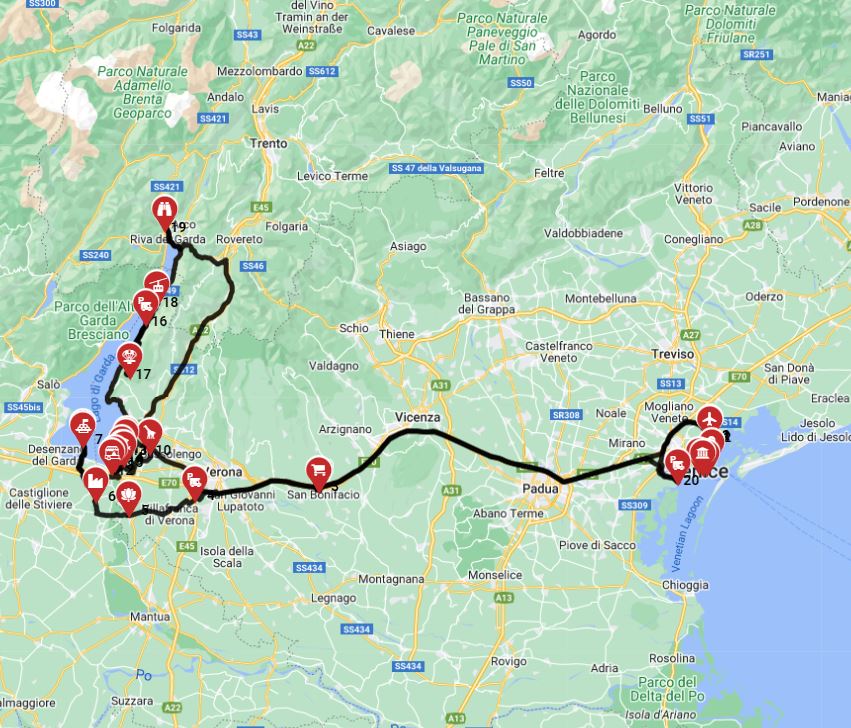
The roads leading to Venezia - Venice are generally well-maintained motorways (autostrade) and regional roads, though urban areas like Mestre can experience congestion. Italian motorways offer excellent quality but are subject to tolls. Driving in urban centers such as Mestre requires vigilance due to traffic and the presence of ZTLs (Limited Traffic Zones). The terrain immediately surrounding Venice is predominantly flat, offering easy driving conditions for RVs. Always plan your route to avoid direct city centers and consider scenic alternatives for a more relaxed journey. On the routes offered through RV PLANET routes, you can itemize and track every expense along the way for easy budgeting.
As you approach Venezia - Venice in your rented RV, you'll find that the primary routes are a mix of well-maintained autostrade (motorways) and regional roads. The autostrade are generally in excellent condition, offering a comfortable drive, though they are subject to tolls. These tolls are distance-based, so be prepared to collect a ticket upon entry and pay at your exit. As you get closer to the mainland hub of Mestre, you might encounter more urban traffic, requiring careful attention and adherence to local signage, particularly for the ZTLs (Zone a Traffico Limitato) which restrict access for vehicles during certain times.
The terrain in the immediate vicinity of Venice is predominantly flat, making for straightforward driving for your motorhome. However, the true essence of a Venice RV trip lies in parking your vehicle on the mainland or at the designated parking facilities on Tronchetto island and then embracing the city's car-free charm. It’s always a good practice to plan your route to bypass busy city centers, opting for more scenic or direct routes to your chosen parking location to ensure a relaxed and enjoyable journey.
RV Size Limits, Bridges & Restricted Zones
While Italy's major roads accommodate standard RV dimensions (e.g., up to 4m height, 2.55m width, 12m length), drivers must be aware of specific restrictions in urban areas, low bridges, ZTLs in towns like Mestre, and environmental zones. Venice itself is entirely car-free; all RVs must be parked outside the historic city, primarily at designated facilities like Tronchetto or Fusina. Be vigilant for ZTL signage in Mestre and other peripheral towns, which restrict vehicle access during certain hours, often enforced by cameras. Low bridges and narrow streets are more common in smaller, historic Italian towns, but major access routes to Venice's parking facilities are generally accommodating for RVs.
When driving your rented RV towards Venezia - Venice, understanding size limitations and restricted zones is key. Generally, Italy's main roads and highways are well-suited for standard RV dimensions, typically accommodating vehicles up to 4 meters in height, 2.55 meters in width, and 12 meters in length. These dimensions are more than adequate for most rental motorhomes, including Bandana's diverse fleet.
However, it's crucial to be aware of specific urban restrictions, particularly in areas like Mestre, which surrounds Venice. Look out for signage indicating "Zone a Traffico Limitato" (ZTLs), often enforced by cameras, which restrict vehicle access during certain hours. While narrow streets and low bridges are more prevalent in smaller, historic towns off the beaten path, the primary access routes to Venice's designated RV parking facilities at Tronchetto island and the Fusina Park Terminal are designed to accommodate larger vehicles. Remember, the historic heart of Venice is entirely car-free, so all RVs must be parked at these peripheral locations before you transition to the city's unique water-based public transport system.
Fuel: Diesel vs. Petrol & Cost per 100 km
Diesel is the predominant fuel type for rental RVs in Italy, including those accessible for Venezia - Venice, with Bandana's Class B Camper Vans typically consuming around 6.3 Liters per 100 km. Diesel (Gasolio) is widely available across Italy, while Petrol (Benzina) is also common but less frequently used by larger RVs. Based on Bandana's fleet data, a Class B Camper Van averages 6.3 Liters per 100 Km, translating to an estimated cost of approximately €11-€12 per 100 km (at typical 2026 diesel prices of €1.7-€1.9/liter). Some RV rental companies may offer fuel discount cards, and self-service pumps (fai da te) are usually cheaper than full-service (servito) options.
Fueling your rented RV for your journey to Venezia - Venice is a straightforward process, as diesel is the most common and often the most economical fuel type for motorhomes in Italy. For instance, Bandana's Class B Camper Vans typically have a fuel consumption of around 6.3 liters per 100 kilometers. Considering current diesel prices, this translates to an estimated fuel cost of approximately €11 to €12 per 100 kilometers, making diesel a cost-effective choice for your travels.
Petrol (Benzina) is also widely available, but diesel is generally the preferred and more efficient option for larger recreational vehicles. You'll find numerous service stations (stazioni di servizio) across Italy, particularly along the major autostrade. Many rental companies may offer fuel discount cards, and opting for self-service pumps (fai da te) is usually cheaper than utilizing full-service options (servito). It’s always a good idea to factor fuel costs into your overall trip budget when planning your itinerary using resources like RV PLANET routes.
Tolls, Vignettes & Border Rules
Italy operates a comprehensive toll road system (Autostrade) where payment is based on distance, and it does not utilize a vignette system; there are generally no specific border rules for RVs entering from other Schengen countries. Tolls on Italian motorways use a ticket system: collect a ticket upon entry and pay at the exit via cash, credit card, or an electronic transponder like Telepass. Vignettes, which are pre-paid road usage stickers, are not required for driving in Italy but may be necessary if your trip extends to neighboring countries like Austria, Switzerland, or Slovenia. For travel within the Schengen Area, passport and visa controls are typically absent, allowing seamless cross-border travel for RVs. Some RV rental companies offer the option to pre-purchase or rent Telepass devices, which allow electronic toll payment and can help avoid potential fines for missed payments.
Navigating Italy's extensive road network with your rented RV is made smoother by understanding its toll system. Italy primarily uses a distance-based toll system on its motorways (Autostrade), meaning you'll pay based on the kilometers traveled, rather than needing a vignette (a road tax sticker required in some other European countries). If your itinerary takes you beyond Italy into countries like Austria, Switzerland, or Slovenia, you will need to ensure you have the appropriate vignettes for those specific nations.
The process for paying tolls in Italy is simple: upon entering an autostrada, you'll collect a ticket from a barrier machine, and then present this ticket at the exit toll booth. Payment can be made using cash, credit cards, or by using an electronic transponder system like Telepass. To streamline this process, many RV rental companies offer the option to rent a Telepass device, which allows for electronic toll payments and can be very convenient. For those traveling within the broader Schengen Area, border crossings are typically seamless, with passport and visa controls being minimal or absent, allowing for easy cross-border travel in your motorhome.
Driving Tips for rv rental Travelers
For rv rental travelers heading to Venezia - Venice, essential driving tips include thorough route planning, understanding Italian road signage, being aware of ZTLs, and pre-booking your RV parking. Always pay close attention to Italian road signs, particularly those indicating 'Zone a Traffico Limitato' (ZTLs) in urban areas like Mestre, and signs for speed cameras ('autovelox'). RV-specific speed limits in Italy are often lower than for cars, especially for vehicles over 3.5 tonnes, so look for signage referring to 'autocaravan'. Pre-book your RV parking at major facilities like Tronchetto or Fusina well in advance, especially during peak season, to ensure a smooth transition to car-free Venice. Familiarize yourself with public transport options (Vaporetti, land buses) from your RV parking to Venice and consider purchasing multi-day transport passes for convenience and cost savings. Pack lightly for your excursions into Venice, as navigating the city's bridges and narrow passages with large luggage can be cumbersome; leave bulkier items securely in your RV.
When embarking on your RV adventure to Venezia - Venice, a few key driving tips will ensure a smoother and more enjoyable experience. Thorough route planning is essential, especially when considering Italian road signage. Pay close attention to signs indicating 'Zone a Traffico Limitato' (ZTLs), particularly in urban areas like Mestre, and be mindful of 'autovelox' signs, which denote speed cameras. RVs, particularly those over 3.5 tonnes, often have specific speed limits that are lower than those for cars, so always look for signage pertaining to 'autocaravan'.
To make your transition from your RV to the enchanting, car-free city of Venice as seamless as possible, it's highly recommended to pre-book your parking at facilities like Tronchetto or Fusina. This is especially important during peak tourist seasons to guarantee a spot. Once parked, familiarize yourself with the excellent public transport options, such as the vaporetti (water buses) and land buses, that connect the parking areas to Venice. Consider purchasing multi-day transport passes for convenience and cost savings during your exploration of the city. Lastly, pack strategically for your Venice excursions: travel light for navigating the city's charming bridges and narrow pathways, leaving any bulkier items securely stored in your RV.
Recommended RV Class for Venezia - Venice Roads
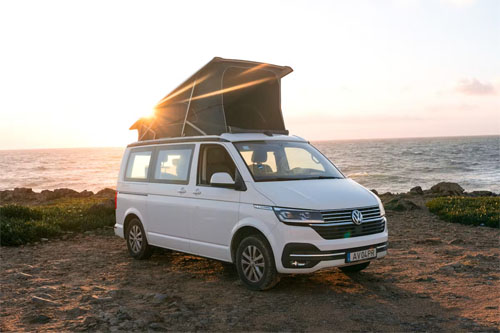
For visiting Venezia - Venice, a Class B Camper Van or a Class SI (Semi-integrated) RV is generally recommended due to their optimal balance of maneuverability on Italian roads and comfortable amenities. Bandana's Class B Camper Vans, with an average length of 5.3m, are highly maneuverable, making them excellent for navigating smaller roads leading to Venice's parking areas and fitting into standard parking spots. Class SI (Semi-integrated) RVs from Bandana, averaging 6.7m in length, provide more living space and amenities for small families (avg. 3.3 adults, 3.7 sleeping places) while remaining manageable for Italian driving conditions. While larger Class C (Alcove, avg. 7.4m) and Class A (Integrated, avg. 6.1m) RVs offer ample space, their increased length and height can make navigation and parking around the Mestre area more challenging.
Choosing the right RV class for your journey to Venezia - Venice is crucial for a comfortable and manageable experience. For navigating Italian roads and accessing the parking facilities near Venice, a Class B Camper Van or a Class SI (Semi-integrated) RV is generally recommended. These vehicles strike an excellent balance between maneuverability and onboard amenities.
Bandana's Class B Camper Vans, typically around 5.3 meters in length, are exceptionally maneuverable, making them ideal for navigating the roads leading to Venice's parking hubs and fitting easily into standard parking spaces. If you're traveling with a small family or desire more living space and amenities—like a full kitchen and private bathroom—Bandana's Class SI RVs, averaging 6.7 meters, offer around 3.3 adult capacity with sleeping for up to 3.7 people, while still being manageable on European roads. While larger Class C (Alcove, averaging 7.4 meters) and Class A (Integrated, averaging 6.1 meters) motorhomes offer more room, their increased dimensions might present more challenges in urban areas and parking, so a more compact option is often preferable for this specific destination. For ideas you can prep on the road, watch our RV-friendly recipes playlist on YouTube.
Should I Choose a Compact Van Instead of a Large RV in Venezia - Venice?
While a compact van offers superior maneuverability and easier parking for a visit to Venezia - Venice, choosing a larger RV is often viable and preferred for enhanced comfort and amenities, especially for longer trips beyond the immediate Venice area. Compact vans (Class B Camper Vans) are excellent for their ease of driving, better fuel economy, and ability to fit into standard parking spaces, which can reduce stress for first-time international RVers. Larger RVs provide more living space, a full kitchen, and a private bathroom, significantly enhancing comfort for families or extended journeys. Since all RVs must park outside car-free Venice (e.g., Tronchetto, Fusina), the main consideration is navigating major roads to these large parking facilities, which can generally accommodate most RV sizes without issue. A Class B Camper Van or a Semi-integrated RV strikes a practical balance between on-road maneuverability and interior comfort for a Venezia - Venice trip, allowing you to choose based on your desired level of space and amenities.
When deciding between a compact van and a larger RV for your trip to Venezia - Venice, consider your priorities for comfort and convenience. A compact van, such as Bandana's Class B Camper Vans, offers excellent maneuverability, improved fuel economy, and easier parking, which can be particularly appealing for first-time international RVers or those who prefer a more agile driving experience. These vehicles often fit more readily into standard parking spaces, reducing potential stress in urban environments.
However, larger RVs, like our Class SI or even some Class C models, provide significantly more living space, a more fully equipped kitchen, and a private bathroom, which can greatly enhance comfort for families or for those embarking on extended journeys that include destinations beyond Venice. The key consideration for Venice is that all RVs must be parked outside the car-free historic center, typically at large, dedicated facilities like Tronchetto or Fusina. These large parking areas are generally equipped to accommodate a wide range of RV sizes. Therefore, the choice often comes down to balancing the desire for more interior comfort and amenities with the ease of driving and parking, with a Class B Camper Van or a Semi-integrated RV often hitting the sweet spot for a Venezia - Venice adventure.
Can I Park Anywhere? Free & Wild Camping Rules in Venezia - Venice
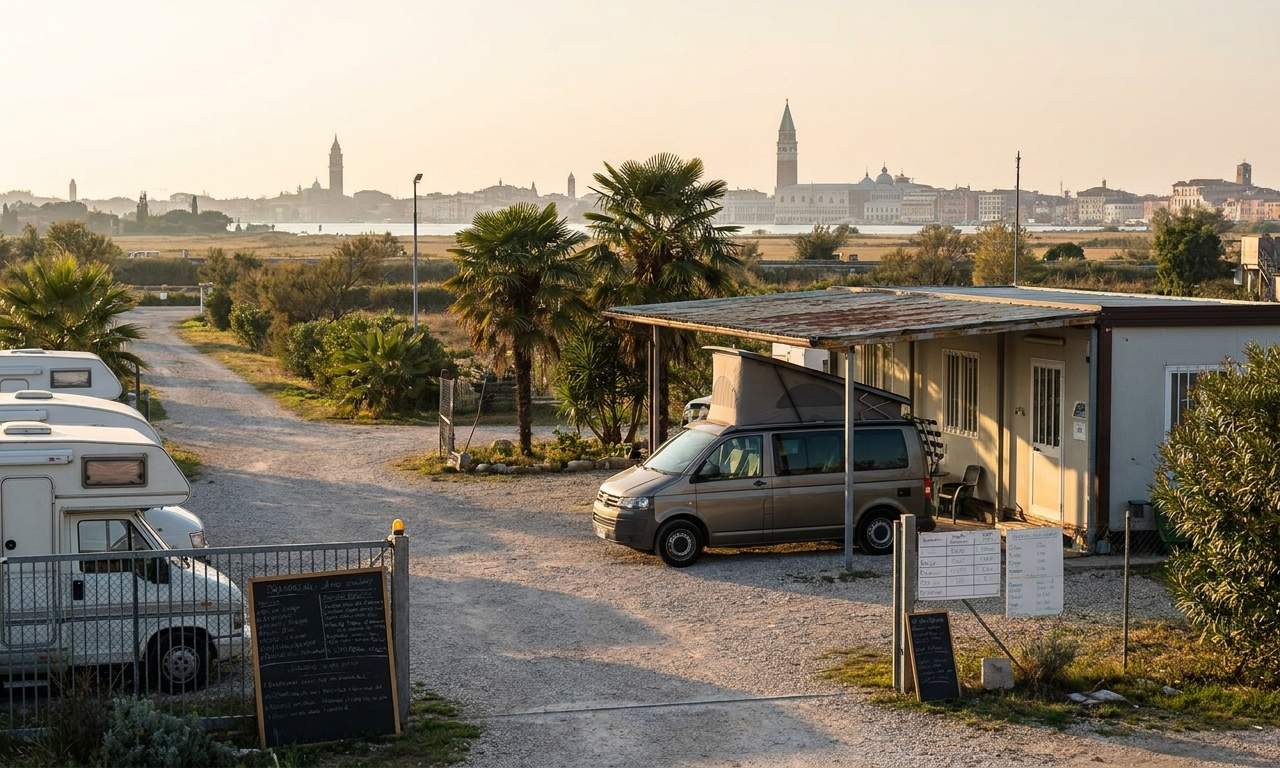
Wild camping and free overnight parking for RVs are generally prohibited or heavily restricted in Italy, particularly near popular tourist destinations like Venezia - Venice, making designated campsites or paid RV parks the only legal options. Italian law widely prohibits wild camping and unauthorized overnight parking outside of specifically designated 'aree di sosta' (RV service areas) or official campsites. For Venezia - Venice, recommended parking includes the paid facilities at Tronchetto Parking (parking only, no overnight in RV) or Fusina Park Terminal (paid RV parking with ferry links to Venice). Numerous well-equipped campsites are available in Mestre and the Cavallino-Treporti area, offering amenities and convenient public transport connections to Venice. Rules vary by region—always check local regulations and follow local law before parking overnight to avoid fines.
When it comes to parking your rented RV near Venezia - Venice, it's important to know that wild camping and unauthorized free overnight parking are strictly prohibited in Italy, especially in popular tourist areas like Venice. Italian law is quite clear on this, and you'll find that designated 'aree di sosta' (RV service areas) or official campsites are the only legal options for overnight stays.
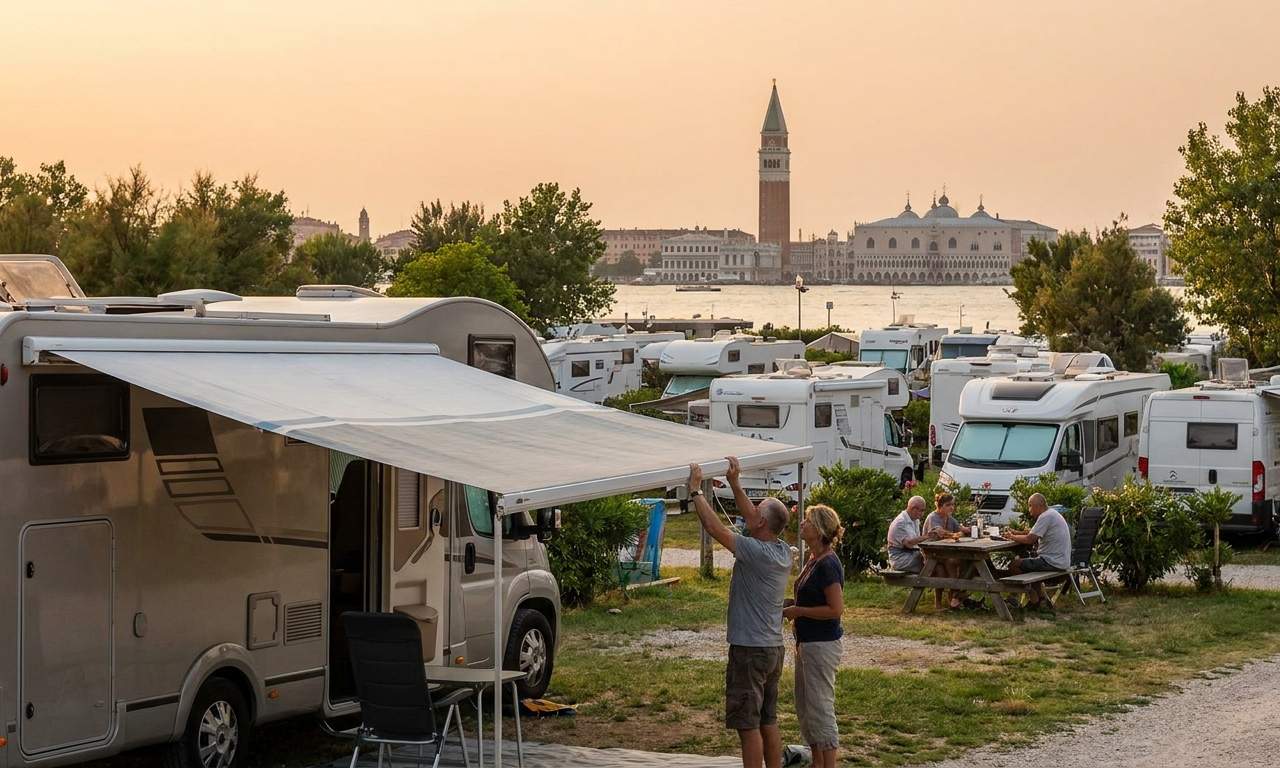
For your visit to Venezia - Venice, the most convenient and recommended parking options are the paid facilities at Tronchetto Parking or the Fusina Park Terminal. Tronchetto offers parking exclusively for vehicles, while Fusina provides paid RV parking along with direct ferry links to Venice, making it an excellent choice for accessing the city. Additionally, numerous well-equipped campsites can be found in the Mestre area and along the Cavallino-Treporti coast. These campsites offer full amenities and convenient public transport connections to Venice, allowing you to explore the city stress-free. Always be mindful of local regulations and ensure you adhere to them to avoid any potential fines.
Can I Drive an RV Into the City Center? Heights, Tunnels & Local Signage
You cannot drive an RV, or any private vehicle, into the historic city center of Venice as it is entirely car-free and navigable only by foot or water. The historic center of Venice is uniquely designed with no roads, only canals and pedestrian walkways, rendering vehicle access impossible. RVs must be parked at designated facilities on the periphery, such as Tronchetto island or the Fusina terminal, which are specifically designed to handle larger vehicles. Access roads leading to Tronchetto and Fusina are generally wide and free of restrictive height limits or narrow passages, accommodating most RV sizes. Always follow local signage for 'Venezia - Tronchetto' or 'Venezia - Fusina' to reach the appropriate RV parking areas, and be mindful of ZTLs in Mestre or surrounding towns.
It's essential to understand that the historic heart of Venice is a unique, car-free zone. This means you cannot drive an RV, or any private vehicle, directly into the city center. Venice is a marvel of canals and pedestrian walkways, making vehicle access simply impossible.
Your RV will need to be parked at designated facilities on the periphery. The most common and recommended spots are Tronchetto island, which is an artificial island serving as a major parking hub, or the Fusina Park Terminal on the mainland. Both locations are specifically designed to accommodate larger vehicles like motorhomes. The access roads leading to these parking areas are generally wide and do not pose restrictive height limits or narrow passages for most RV sizes. Always follow the local signage directing you towards 'Venezia - Tronchetto' or 'Venezia - Fusina' to reach these convenient parking areas, and remember to be vigilant about ZTL signage in Mestre and surrounding towns on your approach.
What are the motorhome rules in Italy?
Italian motorhome rules generally align with broader European road regulations, encompassing specific speed limits based on vehicle weight, strict parking regulations, and the enforcement of environmental zones (ZTLs). RVs under 3.5 tonnes typically follow car speed limits, while heavier motorhomes (over 3.5 tonnes) have lower limits, for example, 80 km/h on ordinary roads and 100 km/h on motorways. Mandatory safety equipment includes carrying a reflective safety vest for each occupant and a warning triangle, which must be accessible. Limited Traffic Zones (ZTLs) are common in Italian city centers, including those in towns leading to Venice like Mestre; RVs must adhere to these access restrictions to avoid hefty fines. Wild camping and overnight parking outside designated campsites or 'aree di sosta' (RV service areas) are generally prohibited across Italy, particularly in tourist areas like Venice.
When driving a motorhome in Italy, adhering to local rules ensures a safe and compliant journey. These regulations generally align with broader European standards, focusing on speed limits adjusted for vehicle weight, strict parking regulations, and the enforcement of environmental zones, known as ZTLs (Zone a Traffico Limitato), in urban centers.
Generally, motorhomes under 3.5 tonnes can follow standard car speed limits. However, heavier motorhomes (over 3.5 tonnes) have designated lower limits: typically 80 km/h on ordinary roads and 100 km/h on motorways. It's mandatory to carry safety equipment in your motorhome, including a reflective safety vest for every occupant, which must be accessible from the driver's seat, and a warning triangle. Be particularly mindful of ZTLs in Italian cities and towns, including those leading to Venice like Mestre, as RVs are often restricted from entering these zones to avoid significant fines. As mentioned earlier, wild camping and unauthorized overnight parking outside of designated areas are widely prohibited across Italy, especially in popular tourist destinations.
What vehicles are allowed in Venice?
Only watercraft, such as vaporetti (public water buses), water taxis, and gondolas, along with essential service and emergency land vehicles, are permitted within the historic city center of Venice, as it is completely car-free. Private land vehicles, including RVs, cars, and motorcycles, are strictly prohibited from entering the historic core of Venice. Visitors arriving by RV or car must park their vehicles at designated facilities on the mainland or adjacent islands, primarily Piazzale Roma, Tronchetto island, or the Fusina terminal. From these parking hubs, travelers transition to public water transport (vaporetti) or private water taxis to reach the heart of Venice, with multi-day transport passes often being the most convenient option. Navigating Venice with luggage requires planning; consider leaving bulkier items in your RV as you'll be walking and using water transport within the city.
When it comes to accessing the unique city of Venice, it's important to understand its strictly pedestrian and water-based transportation system. Within the historic city center, only watercraft such as vaporetti (public water buses), water taxis, and gondolas are permitted. Essential service and emergency land vehicles may have limited access, but private vehicles, including your rental RV, car, or motorcycle, are completely prohibited from entering the historic core.
This means that after arriving by RV, you'll need to park at designated facilities on the periphery. Prime locations include Piazzale Roma, Tronchetto island, or the Fusina terminal. From these parking hubs, you'll transition to the iconic public water transport or private water taxis to reach the heart of Venice. Opting for multi-day transport passes is often the most convenient way to explore the city's numerous islands and attractions. Planning your luggage strategy is also key; consider leaving bulkier items in your RV, as navigating Venice's bridges and walkways with heavy luggage can be challenging.
Why don't you need a special license to drive an RV?
You typically don't need a special license to drive many rental RVs because the majority of models fall under the standard B driving license category, which permits vehicles with a Gross Vehicle Weight (GVW) up to 3,500 kg. The critical factor determining the required license category in Italy is the RV's GVW, not its physical length or size alone. Many popular rental RVs, including Class B Camper Vans (Bandana's average length 5.3m) and many Class SI (Semi-integrated, average length 6.7m) models, are specifically manufactured to comply with this weight restriction. It's crucial to consider the RV's payload capacity, as the combined weight of passengers, luggage, water, and fuel contributes to the GVW, and exceeding 3,500 kg requires a higher license category. Always confirm the specific GVW stated in the vehicle's documentation to ensure compliance with your driving license category.
Many travelers are pleasantly surprised to learn that a special license is typically not required to drive most rental RVs in Europe, including Italy. This is because the majority of popular rental models, particularly Bandana's Class B Camper Vans and many of our Class SI Semi-integrated motorhomes, are specifically designed to fall within the 3,500 kg Gross Vehicle Weight (GVW) limit. This GVW threshold is the defining factor for requiring only a standard Category B driving license.
The key is to remember that the license category requirement hinges on the RV's GVW, not solely its physical dimensions. When choosing your rental, always double-check the vehicle's documentation for its specific GVW. You'll want to account for the payload capacity, as the combined weight of passengers, luggage, water, and fuel will contribute to this total. Exceeding the 3,500 kg limit would necessitate a higher license category, such as C1 or C. However, for most holiday rentals, especially those ideal for navigating European roads, the standard Category B license is indeed sufficient.
What is the largest motorhome you can drive on a car licence?
In Italy and across most of the European Union, the largest motorhome you can legally drive on a standard car license (Category B) is one with a Gross Vehicle Weight (GVW) of up to 3,500 kg (approximately 7,700 lbs). The 3,500 kg GVW limit is the definitive legal threshold for a Category B license, regardless of the motorhome's physical dimensions. Many RV classes, including Class B Camper Vans (Bandana's average length 5.3m), most Class SI (Semi-integrated, average length 6.7m), and some smaller Class C (Alcove) or Class A (Integrated) models, are designed to comply with this weight restriction. It's crucial to consider the RV's payload capacity, as the combined weight of passengers, luggage, water, and fuel contributes to the GVW, and exceeding 3,500 kg requires a higher license category. Always confirm the specific GVW stated in the vehicle's documentation to ensure compliance with your driving license category.
The answer to "what is the largest motorhome you can drive on a car license?" is primarily determined by weight rather than size. In Italy, and indeed across most of the European Union, the definitive limit for driving a motorhome with a standard Category B car license is a Gross Vehicle Weight (GVW) of up to 3,500 kg (roughly 7,700 lbs).
This 3,500 kg GVW limit is the crucial factor. Many of the popular rental RVs available, such as Bandana's Class B Camper Vans (averaging 5.3 meters) and many of our Class SI (Semi-integrated) models (averaging 6.7 meters), are specifically engineered to fall within this weight restriction. Even some smaller Class C (Alcove) or Class A (Integrated) motorhomes might comply. Remember to factor in the RV's payload capacity – the weight of your passengers, luggage, and onboard supplies – as this contributes to the total GVW. Always verify the specific GVW listed in the vehicle's documentation to ensure you are legally compliant with your driving license category.
Is my RV a class A or C?
Your RV's classification as either Class A (Integrated) or Class C (Alcove) describes its fundamental construction style and visual characteristics, reflecting different design philosophies. Class A (Integrated) RVs are built on a heavy-duty commercial chassis (like a bus or truck), featuring a flat front end where the driver's cockpit is seamlessly integrated into the main living area, giving them a distinctive bus-like appearance (Bandana's Class A averages 6.1m in length). Class C (Alcove) RVs are constructed on a cutaway van or truck chassis, retaining the original vehicle's cab structure and are easily identifiable by the distinctive 'alcove' or overhead bunk bed that extends over the driver's cabin (Bandana's Class C averages 7.4m in length). Other common classifications include Class B (Camper Van), which are converted commercial vans (Bandana's Class B averages 5.3m), and Class SI (Semi-integrated), which resemble Class C but have a sleeker, integrated roofline above the cab (Bandana's Class SI averages 6.7m). Understanding your RV's class is helpful for trip planning, as it indicates typical size, amenities, and suitability for different road conditions, especially when traveling internationally in Europe.
Understanding the different classes of RVs is helpful for planning your trip, especially when considering international travel. The primary distinctions between Class A and Class C motorhomes lie in their construction and design.
Class A (Integrated) RVs are typically built on a heavy-duty commercial chassis, like that of a bus or truck. They are characterized by a flat front end where the driver's cockpit is fully integrated into the living space, giving them a distinctive, bus-like appearance. These motorhomes, like Bandana's Class A models which average around 6.1 meters, often provide ample living space and amenities.
Class C (Alcove) RVs are constructed on a cutaway van or truck chassis and retain the original vehicle's cab structure. Their most identifiable feature is the distinctive 'alcove' or overhead bunk that extends over the driver's cabin. Bandana's Class C motorhomes typically average 7.4 meters in length. Other common classes include Class B (Camper Vans), which are converted commercial vans (averaging 5.3 meters), and Class SI (Semi-integrated), which share similarities with Class C but have a sleeker, integrated roofline above the cab (averaging 6.7 meters). Knowing your RV's class can help you anticipate its size, features, and suitability for various road conditions, which is particularly useful when planning international adventures.
What qualifications do you need to get an RV?
To rent and drive an RV in Italy, the primary qualifications typically include holding a valid driving license (Category B for vehicles up to 3,500 kg), meeting the rental company's minimum age requirement, and possessing a stipulated number of years of driving experience. A standard Category B driving license is sufficient for most rental RVs under 3,500 kg Gross Vehicle Weight (GVW); for heavier vehicles, a C1 or C license is required. Non-European Union license holders must obtain an International Driving Permit (IDP) to accompany their national driver's license for legal driving in Italy. Most rental companies in Italy enforce a minimum driver age, commonly 21 or 25 years old, and may also require drivers to have held their license for at least 2 or 3 years. Beyond these driving and rental requirements, there are no specific 'RV qualifications' or separate certifications needed to 'get' or operate a recreational vehicle for a holiday.
The qualifications needed to rent and drive an RV in Italy are straightforward and designed to ensure you have a safe and legal journey. Primarily, you'll need a valid driving license. As we've discussed, a standard Category B license is generally sufficient for most rental RVs up to 3,500 kg GVW. For any vehicles exceeding this weight, a C1 or C license would be necessary.
Rental companies also typically enforce minimum age requirements, commonly set at 21 or 25 years old, and often require that you have held your license for at least two to three years. For drivers holding non-European Union licenses, obtaining an International Driving Permit (IDP) to accompany your national license is a mandatory requirement for legal operation in Italy. It's worth noting that beyond these driving and rental-specific qualifications, there are no specialized 'RV certifications' or separate licenses needed to simply operate a recreational vehicle for your holiday travels.
What does RV insurance not cover?
Standard RV rental insurance often does not cover damages resulting from negligence, loss of personal belongings, specific 'acts of nature', or particular types of accidents like roof damage from low overhangs, and typically comes with a significant deductible (excess). Damage caused by reckless driving, driving under the influence, or operation by an unauthorized driver is almost universally excluded from coverage. Personal items stolen from or damaged inside the RV are rarely covered by the vehicle's insurance; personal travel insurance is essential for this protection. Many policies have specific exclusions or higher excesses for damage to the underside of the vehicle, tires, mirrors, windscreen, or the roof (e.g., from hitting low branches or bridges). Standard rental insurance usually includes a substantial excess (deductible), meaning you are liable for the first portion of any repair costs, often ranging from €1,500 to €3,000 or more.
When considering RV rental insurance for your trip to Venezia - Venice, it's crucial to understand what is typically *not* covered by standard policies, as this can help you make informed decisions about supplemental coverage.
Generally, insurance policies will exclude damages that result from negligence, such as reckless driving, driving under the influence of alcohol or drugs, or operation by an unauthorized driver. The loss or damage to your personal belongings inside the RV is also almost universally excluded from the vehicle's insurance; this is where personal travel insurance becomes essential. Furthermore, be aware of specific exclusions or higher deductibles for damage to certain parts of the RV, such as the underside, tires, mirrors, windscreen, or the roof, which could be vulnerable to low bridges or overhanging branches.
A significant point is the 'excess' or 'deductible' amount, which is the portion of any repair cost you are liable for. Standard rental insurance typically comes with a substantial excess, often ranging from €1,500 to €3,000 or even more, before the insurance coverage kicks in. This is why many renters opt for excess reduction waivers offered by the rental company or third-party insurers to minimize their financial liability in case of an incident.
Who is the best insurance company for RV?
For RV rentals, rather than selecting a single 'best' insurance company, travelers typically enhance their coverage through supplemental excess reduction policies offered by the rental provider or independent third-party insurers to minimize financial liability. All RV rentals in Italy include basic third-party liability insurance as mandated by law, which covers damage to other parties but leaves the renter responsible for a significant excess (deductible) on the rental vehicle itself. Rental companies offer Collision Damage Waiver (CDW) or Loss Damage Waiver (LDW) options to reduce this excess for an additional daily fee. Independent third-party insurance providers specialize in covering the rental vehicle's excess, often at a more competitive price than the rental company's direct offerings. The 'best' option depends on individual factors such as budget, risk tolerance, and the specific terms of your RV rental in Italy, including whether the policy covers international travel.
When it comes to finding the "best" insurance for your RV rental, it's less about identifying a single top-tier company and more about understanding the layers of protection available and choosing what best suits your needs and budget.
Firstly, all RV rentals in Italy are legally mandated to include basic third-party liability insurance. This covers damage caused to other vehicles or property, but it typically leaves you, the renter, responsible for a significant excess (deductible) on the rental RV itself. To mitigate this financial risk, rental companies offer Collision Damage Waivers (CDW) or Loss Damage Waivers (LDW). These are usually purchased for an additional daily fee and significantly reduce your liability for damage to the rental vehicle, often down to a few hundred Euros.
Alternatively, independent third-party insurance providers often specialize in covering the rental vehicle's excess. These policies can sometimes be more cost-effective than the waivers offered directly by the rental company. The "best" choice for you will depend on factors like your budget, your tolerance for risk, and the specific terms and conditions of your rental agreement, including whether the policy offers international coverage if your trip extends beyond Italy. We always recommend comparing the options available to ensure you have the right peace of mind for your journey.
What is the average cost for RV insurance?
For rental RVs in Italy, the 'cost for RV insurance' predominantly refers to the additional daily fees for excess reduction waivers, which can range from €20 to €50+ per day, or the more affordable cost of a third-party excess policy. Basic third-party liability insurance is included in the rental price as it's a legal requirement. To reduce the significant excess (deductible) on the rental RV, direct waivers from the rental company typically cost between €20 to €50 per day, reducing your liability from thousands to a few hundred Euros. Third-party excess insurance, purchased independently, often offers a more economical solution, with policies potentially costing around €100-€200 for a multi-day or even annual coverage. The final cost is influenced by factors like the RV class, the duration of the rental, the driver's age, and the extent of coverage desired, all of which should be factored into your total trip budget to Venice.
When discussing the "average cost for RV insurance" for rentals in Italy, it's important to clarify that this typically refers to the optional extras for excess reduction, rather than a comprehensive insurance policy purchased upfront from a single provider.
The basic third-party liability insurance is usually included in your rental price, as it's a legal requirement in Italy. The cost you'll encounter most often relates to reducing the significant excess (deductible) on the rental RV itself. Direct waivers offered by the rental company can vary, often ranging from €20 to €50 or more per day. These waivers significantly reduce your maximum liability for damages from potentially thousands of Euros down to a few hundred.
Alternatively, purchasing third-party excess insurance independently can be a more economical option. These policies, which cover the rental vehicle's excess, might cost around €100-€200 for coverage that could last for multiple days or even a full year, depending on the provider and policy terms. When budgeting for your trip to Venice, consider how these insurance costs, influenced by RV class, rental duration, driver's age, and desired coverage level, will factor into your overall expenses.
Who has the most affordable motorhome insurance?
For rental motorhome insurance, independent third-party excess insurance providers generally offer the most affordable options compared to purchasing excess reduction waivers directly from the RV rental company. Third-party providers specializing in rental vehicle excess insurance often provide comprehensive coverage for a lower overall premium than the daily rates charged by rental agencies. Travelers who frequently rent RVs may find an annual worldwide excess insurance policy to be the most cost-effective solution. While rental company waivers are convenient and can be purchased on the spot, they are typically priced at a premium. It is always recommended to compare policy details, coverage limits, exclusions, and the claims process from various providers to ensure that the 'most affordable' option also meets your specific needs for international RV travel in Italy.
When searching for the most affordable motorhome insurance for your rental, the key is often looking beyond the rental company's in-house waivers to independent third-party providers.
These specialized third-party insurers typically offer more competitive pricing for covering your rental vehicle's excess compared to the daily rates charged directly by rental agencies. If you're a frequent RVer who rents motorhomes across different destinations, an annual worldwide excess insurance policy could prove to be the most cost-effective solution in the long run. While the rental company's waivers are undeniably convenient and can be purchased at the last minute, they are generally priced at a premium.
We always recommend taking the time to compare the policy details, coverage limits, exclusions, and especially the claims process from various providers. This ensures that the "most affordable" option truly meets your specific needs and provides adequate protection for your international RV travel in Italy.
What You Shouldn't Miss
- **Explore Venice by Vaporetto:** No trip to Venice is complete without experiencing its iconic water buses. A vaporetto ride along the Grand Canal offers unparalleled views of the city's magnificent palazzi and bridges, acting as your main mode of transport and sightseeing rolled into one.
- **Visit St. Mark's Square and Basilica:** Home to the Doge's Palace and the stunning St. Mark's Basilica, this is the heart of Venice. Admire the Byzantine architecture, the golden mosaics, and the sheer grandeur of this historic piazza.
- **Wander through the Dorsoduro District:** For a more local feel, explore the Dorsoduro district. It's known for its art galleries, charming canals, artisan shops, and the Accademia Gallery, housing masterpieces of Venetian painting.
- **Discover the Islands of Murano and Burano:** Take a water bus to the nearby islands of Murano, famous for its glass-blowing demonstrations, and Burano, renowned for its brightly colored houses and lacemaking tradition. They offer a different perspective on Venetian life.
- Enjoy Cicchetti and Wine: Experience the local culinary tradition of 'cicchetti' (Venetian tapas) and regional wines at a traditional 'bacaro' (wine bar). It’s a delicious and authentic way to soak in the local culture.
Final Thoughts
Renting an RV and navigating your way to Venezia - Venice offers a unique blend of freedom and exploration. By understanding the driving rules, choosing the right vehicle, and planning your parking and transit into the city, you can ensure a smooth and unforgettable adventure. Embrace the Italian roads and the magical experience of arriving at this incomparable city by motorhome!
We’re here to support you every step of the way, from comparing vehicles and prices to coordinating your booking. Let us help you craft the perfect RV itinerary for Venezia - Venice and beyond.
Find Motorhome Rentals in Venezia - Venice