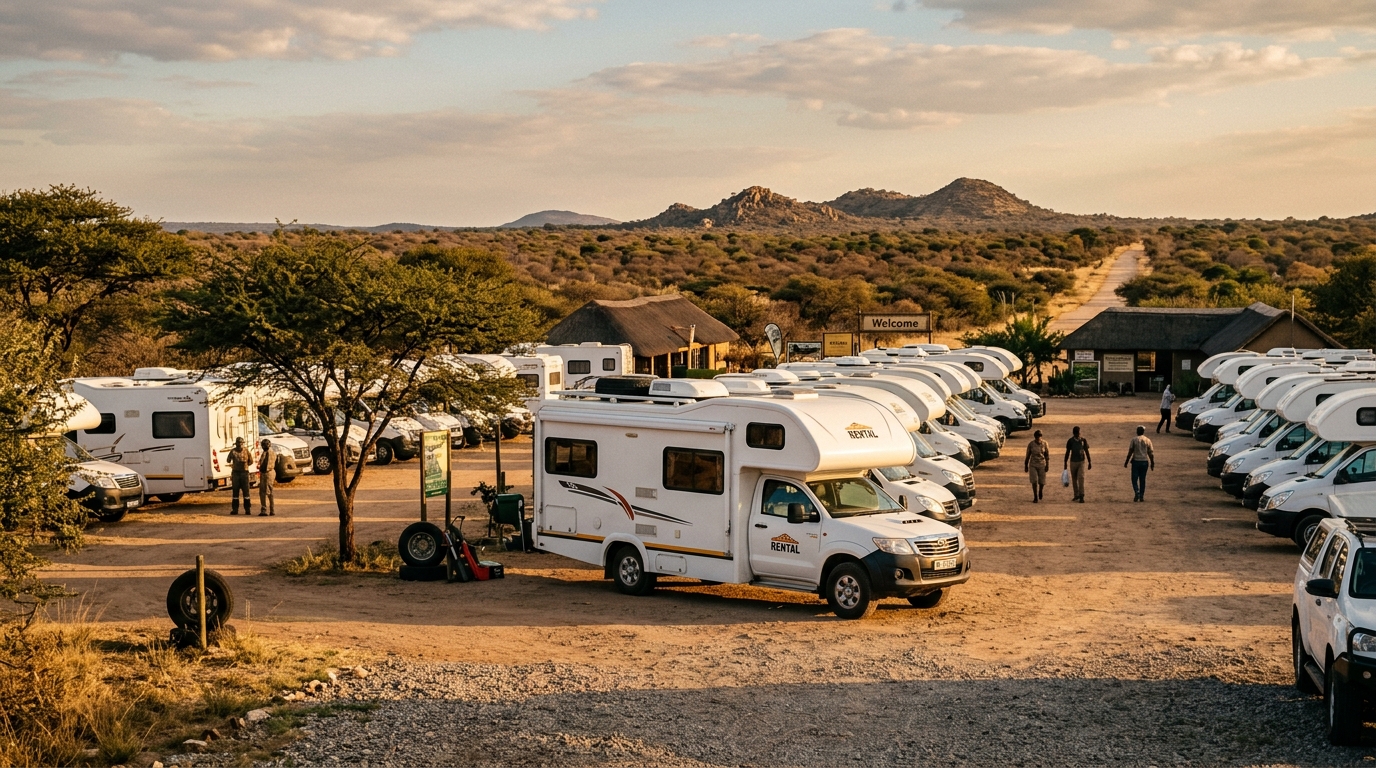
In This Guide
- Can You Drive an RV in Botswana? License & Age Rules
- Road Conditions & Terrain in Botswana
- RV Size Limits, Bridges & Restricted Zones
- Fuel: Diesel vs. Petrol & Cost per 100 km
- Tolls, Vignettes & Border Rules
- Driving Tips for rv rental Travelers
- Recommended RV Class for Botswana Roads
- Should I Choose a Compact Van Instead of a Large RV in Botswana?
- Can I Park Anywhere? Free & Wild Camping Rules in Botswana
- Can I Drive an RV Into the City Center? Heights, Tunnels & Local Signage
- How much does it cost to rent an RV in Botswana?
- What is the best month to RV in Botswana?
- Do you need a 4x4 RV for Botswana?
- What camping equipment do I need for RVing in Botswana?
- Can I take an RV across the border from South Africa to Botswana?
- Is it safe to RV in Botswana?
- Class SI - Semi-integrated RV for Botswana
- Class C - Alcove RV for Botswana
- Class B - Camper Van for Botswana
- Class A - Integrated RV for Botswana
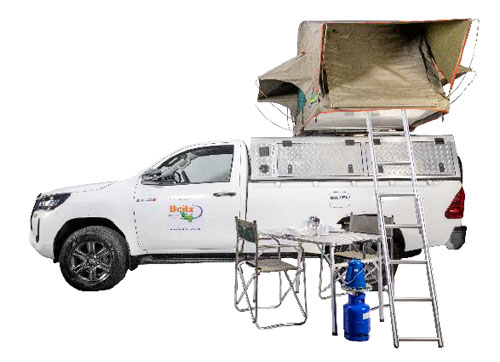
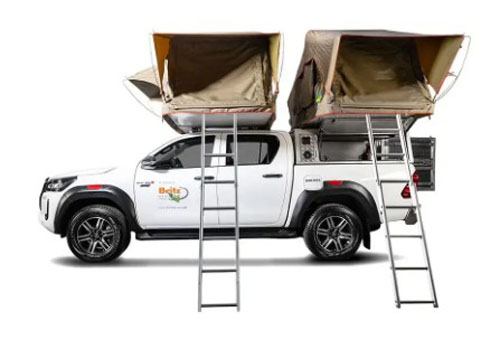
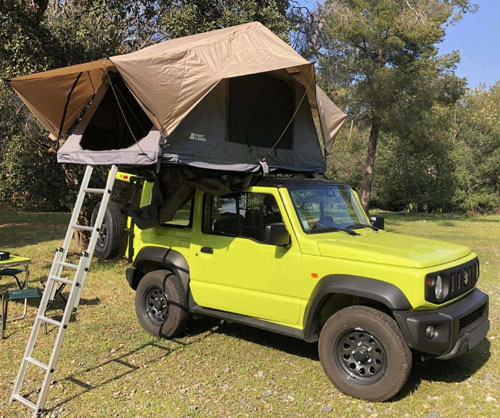
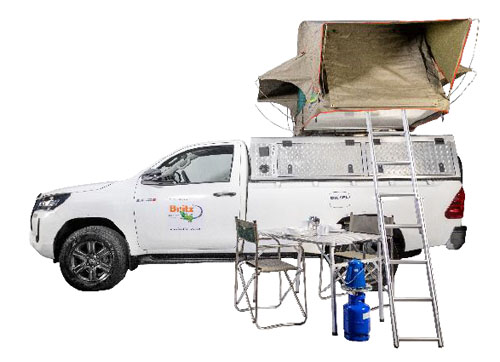
- Class TC - Truck Camper for Botswana
- Top Cities for RV Rental in Botswana
- Practical Information for RV Travel in Botswana
Embarking on an RV adventure in Botswana offers an unparalleled journey into the heart of Africa's wilderness. With a rented motorhome, you're not just a tourist; you're an explorer, carrying your comfort with you as you discover stunning landscapes and incredible wildlife. Here at Bandana Caravan, we've been helping tens of thousands of travelers explore the world by RV since 2001, and we know that Botswana presents a unique blend of challenge and reward that makes it an unforgettable destination for a week-long trip or an extended road trip. For live availability and current prices, start with our RV Rental Botswana - Complete Guide 2026 guide.
Can You Drive an RV in Botswana? License & Age Rules
A valid national driver's license from your home country is sufficient for driving an RV in Botswana, though an International Driving Permit (IDP) is highly recommended for visitors from non-English-speaking countries to ease communication with local authorities. Most rented motorhomes, typically those with a Gross Vehicle Mass (GVM) under 3,500 kg, can be driven with a standard Category B (car) license, provided your home country's license is endorsed for vehicles up to that weight. You'll be pleased to know that the minimum driver age for most RV rental companies in Botswana is 21 years old, and Bandana Caravan proudly offers options without young driver surcharges or vehicle class restrictions based on age, making this adventure accessible to a wider range of travelers.Road Conditions & Terrain in Botswana
Botswana's road network features a good infrastructure of well-maintained tarred roads connecting major towns, but venturing into its renowned national parks and remote areas means you will encounter extensive gravel, sand, and occasionally waterlogged tracks. The terrain outside urban centers is largely flat, yet challenging soft sand, particularly in areas like the Central Kalahari Game Reserve, or muddy conditions in the Okavango Delta region during the wet season, can significantly impact your RV travel. RV travelers should anticipate slower average speeds on gravel roads and within wildlife areas, prioritizing caution over haste to safely navigate corrugations, potholes, and potential wildlife crossings. Driving a rented motorhome or campervan in Botswana requires a flexible itinerary and readiness for varying surfaces, encouraging a slow, scenic pace-we always recommend traveling slowly, averaging max 100-150 km per day-to fully appreciate the diverse landscape and abundant wildlife.RV Size Limits, Bridges & Restricted Zones
Botswana generally does not have prevalent low bridges or height-restricted tunnels that typically affect RVs, so you won't need to worry about extensive overhead clearance issues. However, travelers should always be aware of potential weight limits on smaller bridges or causeways, especially those encountered when driving on gravel roads during or after the rainy season. Access to certain national parks and wildlife reserves may have vehicle size or weight recommendations, though specific hard limits are less common for standard rental motorhomes compared to specialized 4x4 safari vehicles; however, larger RVs may find maneuverability challenging on narrow, sandy tracks within these protected areas. Environmental zones are strictly enforced within Botswana's protected areas, requiring adherence to designated routes, strict 'leave no trace' principles to protect the delicate ecosystems, and often specific entry permits and fees which should be arranged in advance. Ferry crossings, such as the Kazungula ferry for journeys into Zambia, can accommodate most RV sizes but may incur higher costs based on vehicle length and weight.Fuel: Diesel vs. Petrol & Cost per 100 km
Diesel is the predominant fuel type for motorhomes and campervans in Botswana and is widely available in major towns like Gaborone, Maun, and Kasane, as well as along main routes, though petrol stations are also common. Based on Bandana's global fleet averages, a Class SI - Semi-integrated RV typically consumes 10-11 Liters/100 km, while a Class C - Alcove RV averages 10-12 Liters/100 km. A Class B - Camper Van, generally more fuel-efficient, often uses 8-10 Liters/100 km, whereas Class TC - Truck Campers, often 4x4s, can consume 12-17 Liters/100 km due to their robust design and off-road capabilities. Calculating an average cost per 100 km requires current fuel prices (which fluctuate but are generally competitive in Botswana) and your vehicle's specific consumption; for example, at BWP 15/liter, a vehicle consuming 12L/100km would cost BWP 180 per 100 km. It’s always wise to fill up at every opportunity, especially before entering national parks or remote areas, as fuel stops can be few and far between.Tolls, Vignettes & Border Rules
Botswana generally does not have an extensive system of tolls or vignettes for its road network; however, travelers may encounter minor road levies or fees at specific checkpoints, particularly when entering national parks or private concessions. When planning to cross borders from neighboring countries like South Africa or Namibia, RV travelers must prepare for specific documentation including vehicle registration papers, a letter of authorization from the rental company for cross-border travel, and proof of insurance. At border posts, motorhomes and campervans are subject to customs and immigration procedures, and may also undergo veterinary control inspections, particularly when transporting food items or traveling between areas with differing agricultural regulations. It is advisable to carry multiple copies of all essential documents and to confirm current border crossing requirements and fees for Botswana and any adjacent countries well in advance of your trip. Our RV Rental Africa - Complete Guide 2026 offers a broader perspective on cross-border travel within the continent.Driving Tips for rv rental Travelers
Navigating Botswana in a rented RV is an incredible experience, and a few tips will ensure your journey is smooth and memorable. First, always plan your route carefully, given the vast distances and remote areas; identify fuel stops in advance and carry extra fuel and water, especially when venturing off main roads. Second, drive defensively and slowly; maintaining lower speeds on gravel roads reduces wear and tear on your rental motorhome, helps avoid punctures, and allows you to react safely to unexpected wildlife crossings, particularly at dawn and dusk. Third, stay alert for wildlife: Botswana is incredibly rich in animals, meaning large and small creatures can appear on roads at any time; never drive at night if possible, and always be prepared to stop suddenly. Fourth, communication is key: in remote areas, cell phone signal is often absent, so consider renting a satellite phone or carrying a reliable two-way radio for emergencies. Finally, respect local culture and communities; when passing through villages, slow down significantly, greet locals respectfully, and adhere to community speed limits. Always practice 'leave no trace' principles rigorously in all environments to help preserve Botswana's pristine wilderness for future generations.Recommended RV Class for Botswana Roads
For navigating Botswana's diverse road conditions, a Class TC - Truck Camper, which often comes with 4x4 capabilities, is highly recommended for its ruggedness and suitability for off-tar roads. These compact yet robust motorhomes offer an average length of 5.5 meters and robust handling, making them ideal for sandy tracks and corrugated gravel. Alternatively, a Class SI - Semi-integrated RV, averaging 6.9 meters in length with 3.8 sleeping places, provides a comfortable balance of amenities for main tarred roads and well-maintained gravel tracks, though its suitability for deep sand or challenging off-road conditions is limited without 4x4. The best choice depends on your itinerary: a Truck Camper is ideal for extensive national park exploration, while a Semi-integrated RV is suitable for a mix of tarred roads and accessible campsites. Remember to consider the vehicle's ground clearance as a proxy for its ability to handle uneven terrain, as many standard RVs lack the high clearance of a dedicated 4x4.Should I Choose a Compact Van Instead of a Large RV in Botswana?
Choosing between a compact van and a larger RV in Botswana depends more on your desired comfort levels and the specific areas you plan to explore, rather than inherent maneuverability concerns in city centers. A compact van, such as a Class B - Camper Van averaging 5.8 meters in length with 3.2 sleeping places, offers superior agility and potentially better fuel economy (8-10 Liters/100 km) for navigating less-maintained tracks or for those seeking a more adventurous, agile experience in remote wilderness areas. Larger RVs like a Class C - Alcove RV (7.5m average) or Class A - Integrated RV (7.5m average) provide significantly more indoor space, amenities, and comfort, which can be a major advantage for longer trips or families, and are perfectly suitable for Botswana's main tarred routes and established campsites. Drive slowly and carefully, and you can drive almost anywhere without issues. No need to stress - just use common sense and pay attention. While a compact van might genuinely help with very tight tracks or river crossings if it's a 4x4 model, for the majority of RV-accessible destinations in Botswana, the added comfort and living space of a larger RV often outweigh minor maneuverability benefits, provided you stick to suitable roads.Can I Park Anywhere? Free & Wild Camping Rules in Botswana
Free or wild camping is generally not permitted in Botswana, especially within national parks, game reserves, and populated areas, which strictly require visitors to stay in designated campsites. Botswana's conservation-focused tourism policy emphasizes protecting its delicate ecosystems and wildlife, making unauthorized overnight stays outside approved facilities illegal and subject to penalties. Designated campsites, particularly those within national parks and private concessions, offer varying levels of amenities and often require advance booking, especially during peak seasons from May to October. Rules vary by region, so always check local regulations and follow local law before parking overnight, ensuring you have booked and confirmed your campsite accommodation well in advance of your journey. For finding campsites and campgrounds during your trip, we recommend using RV PLANET (rvplan.net) - a great resource for locating available spots along your route.Can I Drive an RV Into the City Center? Heights, Tunnels & Local Signage
Yes, motorhomes and campervans can generally be driven into Botswana's city centers like Gaborone or Maun without significant issues related to height or tunnel restrictions, as these are not prevalent challenges in Batswana urban environments. Drivers should always pay attention to local signage regarding parking restrictions, one-way streets, and potential weight limits on older infrastructure, although these are typically less restrictive for RVs than in many European cities. Finding suitable parking for larger RVs in busy urban areas might require some planning, often involving designated parking lots or spaces on the outskirts of commercial centers. Botswana's cities are not characterized by narrow historic alleys or low-clearance passages, making RV access straightforward, but awareness of general traffic laws and local driving etiquette is always advised. Remember, driving slowly and carefully allows you to drive almost anywhere without issues.How much does it cost to rent an RV in Botswana?
The cost to rent an RV in Botswana varies significantly based on the vehicle class, rental duration, season, and inclusions, with daily rates typically ranging from $150 to $400 USD for popular models like a Class C motorhome, or higher for a dedicated 4x4 Truck Camper. Beyond the base rental fee, a comprehensive cost breakdown should include essential expenses like national park entry fees (often $30-$120 USD per person per day for international visitors, depending on the park), camping fees (ranging from $20-$70 USD per night per person), and substantial fuel costs due to large distances and higher consumption on gravel roads, especially for 4x4 vehicles which can consume 12-17 Liters/100 km. Additional costs to factor in are cross-border permit fees if traveling to neighboring countries, potential vehicle repatriation fees for one-way rentals (e.g., between Maun and Gabarone-Gaborone Airport), and a provision for groceries and food sourcing, which can be more expensive in remote areas. Considering these additional expenses, a realistic daily budget for RVing in Botswana, inclusive of rental, park fees, and consumables, can easily range from $300-$700 USD, especially for trips involving national parks. Our RV Rental in Botswana - Prices and Best Deals 2026 guide offers more detailed pricing insights. For managing these costs, remember that with RV PLANET routes, travelers can itemize and track every expense along the way for easy budgeting. Flexible dates and booking during the shoulder seasons (May, October) can help find more affordable rates for your RV rental in Botswana.What is the best month to RV in Botswana?
The best months to RV in Botswana are generally during the dry season, from May to October, offering optimal wildlife viewing, pleasant temperatures, and more accessible road conditions. During this period, water sources are scarce, causing animals to congregate around permanent waterholes, which makes spotting them easier, and the reduced rainfall leads to fewer muddy tracks, significantly improving RV accessibility for exploring places like Chobe National Park or the Okavango Delta. The shoulder months of May and October offer a balance of good weather, active wildlife, and fewer crowds, with slightly lower prices for RV rentals and campsites compared to the peak dry season months of July and August. Conversely, the wet season (November to April) brings lush landscapes and migratory birds but also challenging muddy roads, higher humidity, and the risk of seasonal flooding, which can impact accessibility and RV travel plans, making some remote areas impassable for a standard motorhome. Planning ahead, whether you are a pre-planner or a spontaneous traveler, ensures you make the most of the season you choose; many national/state parks reserve 25-30% of spots for last-minute arrivals, so you'll often find a spot, even if it's not at the first campground, then the next one – just call ahead before driving.Do you need a 4x4 RV for Botswana?
While not strictly mandatory for all parts of Botswana, a 4x4 RV or a 4x4 vehicle equipped with a slide-on camper is highly recommended for an optimal and unhindered exploration of the country's national parks and remote wilderness areas. Standard 2WD motorhomes are suitable for tarred main roads connecting major towns like Gaborone, Maun, and Kasane, but will likely struggle and potentially get stuck on the extensive network of soft sand, deep gravel, and muddy tracks found within protected areas and many campsites. A 4x4 RV, such as a robust Class TC - Truck Camper, provides the necessary ground clearance and traction to navigate challenging terrain, including sandy stretches in the Kalahari, potentially waterlogged roads in the Okavango Delta region, and the corrugated gravel roads common across the country. For those planning to stick to tarred roads and well-maintained accessible campsites, a 2WD motorhome might suffice, but for true immersion into Botswana's iconic landscapes and wildlife, a 4x4 capability significantly enhances safety, flexibility, and the overall experience.What camping equipment do I need for RVing in Botswana?
Beyond the standard amenities found in a rental motorhome, essential camping equipment for RVing in Botswana includes robust recovery gear such as tow ropes, a spade, and traction mats for potential soft sand or mud encounters, especially if venturing off main roads. A detailed packing list should also include high-quality navigation tools like a GPS with offline maps, complemented by reliable paper maps as a backup, and a comprehensive first-aid kit, a snake bite kit, and sufficient water and fuel storage (jerry cans) for long stretches between supply points. For communication in remote areas, where cell phone signal is often absent, a satellite phone or a reliable UHF/VHF radio is crucial; an air compressor for tire pressure adjustments to adapt to different terrains is also highly recommended. Other vital items include durable spare tires and tire repair kits, powerful spotlights or headlamps for night-time wildlife spotting at camp, ample insect repellent, a sturdy cooler for food, and cooking essentials suitable for outdoor use. For inspiration on preparing delicious meals in your RV kitchen, check out our RV-friendly recipes playlist.Can I take an RV across the border from South Africa to Botswana?
Yes, it is generally possible to take an RV across the border from South Africa to Botswana, but it requires meticulous planning and specific documentation to ensure a smooth crossing. You will need a letter of authorization from your RV rental company granting permission for cross-border travel, along with the vehicle's original registration papers, and proof of insurance valid in Botswana. Some suppliers, like El Monte, Cruise America, Apollo, and Britz, are well-versed in these requirements. At the border post (e.g., Martin's Drift, Tlokweng near Gabarone-Gaborone Airport), RV travelers will undergo immigration procedures, obtain a temporary import permit for the vehicle, and pay any applicable road levies, carbon taxes, or third-party insurance fees. Expect veterinary control fences that may require certain agricultural products (like fresh meat, dairy, or produce) to be declared or even confiscated to prevent the spread of diseases, so plan your provisions accordingly before reaching the border. Always carry multiple copies of all essential documents and confirm current border crossing requirements well in advance.Is it safe to RV in Botswana?
RVing in Botswana is generally considered safe, particularly when following recommended safety protocols, planning routes carefully, and exercising caution, especially in remote areas and around wildlife. Emergency preparedness beyond standard 4x4 skills is crucial, including carrying a satellite phone for communication in areas without mobile signal, a well-stocked medical kit (including anti-malaria prophylaxis if traveling to high-risk areas like the Okavango Delta), and having a detailed plan for vehicle breakdowns. Bandana Caravan offers top-level deductible reimbursement as an optional upgrade for extra peace of mind, providing crucial support should unforeseen events occur. Wildlife encounters are a highlight but also a safety consideration; maintain safe distances, never approach animals on foot, and always secure your campsite at night, being aware of predators. To ensure safety and contribute to responsible tourism, travel in convoy if possible when venturing into very remote areas, inform local authorities or park management of your itinerary, and always adhere to local regulations and cultural etiquettes.Class SI - Semi-integrated RV for Botswana
Class SI - Semi-integrated RVs, averaging 6.9 meters in length with typically 3 to 4 sleeping places, are a comfortable choice for RV rental in Botswana, particularly for couples or small families exploring major routes and well-established campsites. These vehicles, which usually consume 10-11 Liters/100 km, offer a good balance of living space and amenities, suitable for comfortable travel between Botswana's main towns like Maun and Kasane, and more accessible national park gates. While excellent on tarred roads and reasonable on well-graded gravel, Semi-integrated RVs may lack the ground clearance and 4x4 capability required for deep sand or challenging tracks within true wilderness areas. Consider this class if your itinerary focuses on destinations like Chobe National Park (accessed via tar roads), the Khama Rhino Sanctuary, or main town-to-town travel, where extensive off-road driving is not the primary goal. One such model, the "2 Berth Rover", offers automatic transmission, front and roof air conditioning, and a shower/toilet, making it ideal for a couple.Class C - Alcove RV for Botswana
Class C - Alcove RVs, with an average length of 7.5 meters and around 5 to 6 sleeping places, are ideal for larger families or groups seeking ample space and comfortable accommodation during their Botswana RV adventure. These larger motorhomes typically consume 10-12 Liters/100 km and offer generous living areas, separate sleeping berths (often including an over-cab bed), and full kitchen/bathroom facilities, enhancing the comfort of longer journeys. While providing excellent on-board comfort, their size and usually 2WD configuration make them best suited for Botswana's tarred road network and well-maintained gravel roads leading to established campsites and lodges. Alcove RVs might be challenging to maneuver on very narrow, soft sand tracks or through dense bush, so ensure your planned itinerary avoids such conditions if opting for this class. For instance, the "29′ Class C Motorhome" features automatic transmission, a generator, shower, and toilet, making it suitable for larger groups.Class B - Camper Van for Botswana
Class B - Camper Vans, averaging 5.8 meters in length with typically 2 to 3 sleeping places, offer a nimble and often more fuel-efficient option for RV rental in Botswana, typically consuming 8-10 Liters/100 km. These compact RVs provide greater maneuverability and are sometimes available in 4x4 configurations, making them more suitable for navigating less-maintained roads, tighter tracks, and more adventurous itineraries within or near wilderness areas. While offering less interior space than larger RVs, their smaller footprint allows easier access to certain remote campsites or areas where larger vehicles might struggle, ideal for couples or small groups seeking flexibility. Camper Vans are a strong choice for travelers who prioritize agility and a closer connection to the environment, particularly if they plan to tackle moderately challenging gravel or sandy roads. The "2 Berth Hi Top" is an example of a Class B Camper Van with automatic transmission and front air conditioning, suitable for couples.Class A - Integrated RV for Botswana
Class A - Integrated RVs, with an average length of 7.5 meters and around 4 to 5 sleeping places, represent the pinnacle of luxury and space for RV travel in Botswana, consuming an estimated 8-12 Liters/100 km. These fully integrated motorhomes offer expansive living areas, premium amenities, and a panoramic driving experience, making them perfect for those who desire a high level of comfort and convenience on their journey. Due to their size and typically 2WD drive train, Class A RVs are best suited for sticking to Botswana's main tarred road network and accessing well-developed campsites with good infrastructure, such as those near Gabarone. While offering unparalleled comfort, their limited off-road capability means they are not recommended for extensive travel into Botswana's more challenging wilderness parks or remote sandy tracks. For example, the "Active First" model provides front air conditioning, a shower, and a TV, ensuring a luxurious experience.Class TC - Truck Camper for Botswana
Class TC - Truck Campers, averaging 5.5 meters in length with typically 2 to 3 sleeping places, are an excellent and robust choice for RV rental in Botswana, often featuring 4x4 capability perfect for the challenging terrain. These compact, go-anywhere vehicles typically consume 12-17 Liters/100 km due to their rugged design and 4x4 system, but offer unparalleled access to Botswana's remote national parks and wilderness areas, including deep sand and rough tracks in places like the Central Kalahari Game Reserve. Ideal for adventurous couples or solo travelers, Truck Campers provide a self-sufficient camping experience without the bulk of a larger motorhome, allowing for exploration of destinations like the Okavango Delta or less accessible parts of Chobe. Their compact size and high ground clearance make them the most versatile option for those seeking an authentic overlanding experience and are equipped to handle the diverse and sometimes demanding road conditions of Botswana. The "Patagonia Camper 4x4 double cab" is a prime example, featuring 4-wheel drive and air conditioning.Top Cities for RV Rental in Botswana
RV rental options in Botswana are primarily concentrated around key urban centers and major transport hubs that serve as gateways to the country's stunning wilderness areas.- Gaborone (Gabarone) and Gabarone-Gaborone Airport: As Botswana's capital, Gaborone offers the widest selection of amenities and is a common pick-up point for RV rentals. Its airport provides convenient access for international travelers beginning their adventure. From here, you can easily access major tarred roads leading north.
- Maun and Maun - Airport: Maun is widely considered the gateway to the Okavango Delta, making it an incredibly popular starting point for safaris and RV trips into the northern wilderness. Renting an RV from Maun - Airport allows immediate access to the delta's eastern edges and routes towards Moremi Game Reserve.
- Kasane and Kasane - Airport: Located at the convergence of four countries (Botswana, Namibia, Zambia, Zimbabwe), Kasane is the primary hub for exploring Chobe National Park, famous for its vast elephant herds. Picking up a campervan from Kasane Airport puts you right on the doorstep of this magnificent park.
Practical Information for RV Travel in Botswana
When planning your RV journey through Botswana, understanding local nuances will greatly enhance your experience. Botswana drives on the left-hand side of the road, and speed limits are typically 60 km/h in urban areas and 120 km/h on major highways, though lower speeds (often 40 km/h) are enforced within national parks and game reserves. Emergency numbers are 997 for Police, 998 for Fire, and 999 for Ambulance. For connectivity, purchasing a local SIM card (Mascom or Orange Botswana are major providers) upon arrival can provide better coverage in populated areas, though signal will be intermittent or non-existent in remote wilderness. While navigating, consider downloading offline maps on your smartphone or a dedicated GPS device, as internet access is not guaranteed everywhere. Be aware that fuel stations can be sparse in certain regions, necessitating careful planning and carrying extra fuel, especially for longer excursions into the Kalahari.What You Shouldn't Miss
- Chobe National Park's Riverfront: Witness thousands of elephants gathering along the Chobe River, often just meters from your rented RV. Consider a river cruise for a unique perspective on aquatic wildlife.
- Okavango Delta Mokoro Trip: Even with a motorhome, a traditional mokoro (dugout canoe) excursion deep into the Delta is a must-do for an intimate wildlife experience among lily pads and reeds.
- Makgadikgadi Pans Exploration: During the dry season, drive your 4x4 campervan across the surreal, endless expanse of the Makgadikgadi Salt Pans, perhaps even spending a night under a blanket of stars.
- Moremi Game Reserve: Part of the Okavango Delta, Moremi is renowned for its diverse ecosystems and abundant wildlife. It's perfect for self-drive safaris in a capable RV, offering fantastic predator sightings.
- Khama Rhino Sanctuary: A community-based conservation project protecting rhinos. It's an accessible and ethical way to see these magnificent creatures from your motorhome, supporting local efforts.
Final Thoughts
An RV rental adventure in Botswana promises an unparalleled connection with nature and wildlife, offering a freedom that traditional safari lodges simply can't match. Imagine waking up to the sounds of the African bush, enjoying your morning coffee with a panoramic view of the vast savannah, or cooking dinner under a sky brimming with stars. It's about embracing the slow pace of travel, truly feeling the place, and connecting with the culture, the food, and the breathtaking scenery that makes Botswana so special. While planning your journey in Botswana requires attention to detail, especially regarding vehicle choice and itinerary, the rewards are immeasurable. Whether you choose a rugged 4x4 campervan for deep wilderness exploration or a comfortable motorhome for easier routes, the memories you'll create will last a lifetime. Let Bandana Caravan be your trusted partner in comparing prices and securing the perfect rented RV for your unforgettable Botswana escapade. Get inspired for your next trip and discover top destinations, planning tips, all in one place! Ready to explore the wonders of Botswana on your terms? Start comparing prices for your perfect mobile home adventure today.On the routes offered through RV PLANET routes, you can itemize and track every expense along the way for easy budgeting.