In This Guide
- Can You Drive an RV in Asia? License & Age Rules
- Road Conditions & Terrain in Asia
- RV Size Limits, Bridges & Restricted Zones
- Fuel: Diesel vs. Petrol & Cost per 100 km
- Tolls, Vignettes & Border Rules
- Driving Tips for RV Rental Travelers
- Recommended RV Class for Asia Roads
- Should I Choose a Compact Van Instead of a Large RV in Asia?
- Can I Park Anywhere? Free & Wild Camping Rules in Asia
- Can I Drive an RV Into the City Center? Heights, Tunnels & Local Signage
- What is the 3-3-3 rule for RV travel?
- Do I need a special license to drive an RV in Japan?
- Which countries are RV friendly?
- What is the largest RV you can drive without a special license?
- Is it possible to drive from the US to Asia?
- Are RVs allowed in India?
- What is the new RV law in Florida?
- What is the 333 rule for campervan?
- Who has the cheapest RV insurance rates?
Asia offers an incredibly diverse landscape for RV travel, from the bustling cities of Japan to the serene landscapes of India. While the idea of a motorhome adventure across this vast continent might seem complex, with the right planning, it’s an accessible and deeply rewarding way to explore. For live availability and current prices, start with our RV Rental Asia - Complete Guide 2026 guide. We’ve been helping tens of thousands of travelers explore the world by RV since 2001, fostering direct partnerships with over 50 leading RV suppliers worldwide, including trusted names like El Monte, Cruise America, Apollo, and Britz. Our expertise means we handle the details, so you can truly live the journey.
Can You Drive an RV in Asia? License & Age Rules
Yes, you can absolutely drive a rented RV in many parts of Asia, provided you meet the specific licensing and age requirements for each country. To drive an RV in most Asian countries, an International Driving Permit (IDP) is typically required alongside your valid national driver's license. This permit acts as an official translation of your license, which is highly recommended for visitors from non-English-speaking countries, though it's not strictly mandatory in all cases. The minimum driver age for RV rental in Asia is 21 years old, with no young driver surcharges or vehicle class restrictions based on age across Bandana's offerings. For all motorhome classes (Class A, Class B, and Class C), a standard car driver's license is sufficient; no special commercial driver's license (CDL) or additional permits are required for any rental motorhome.
Road Conditions & Terrain in Asia
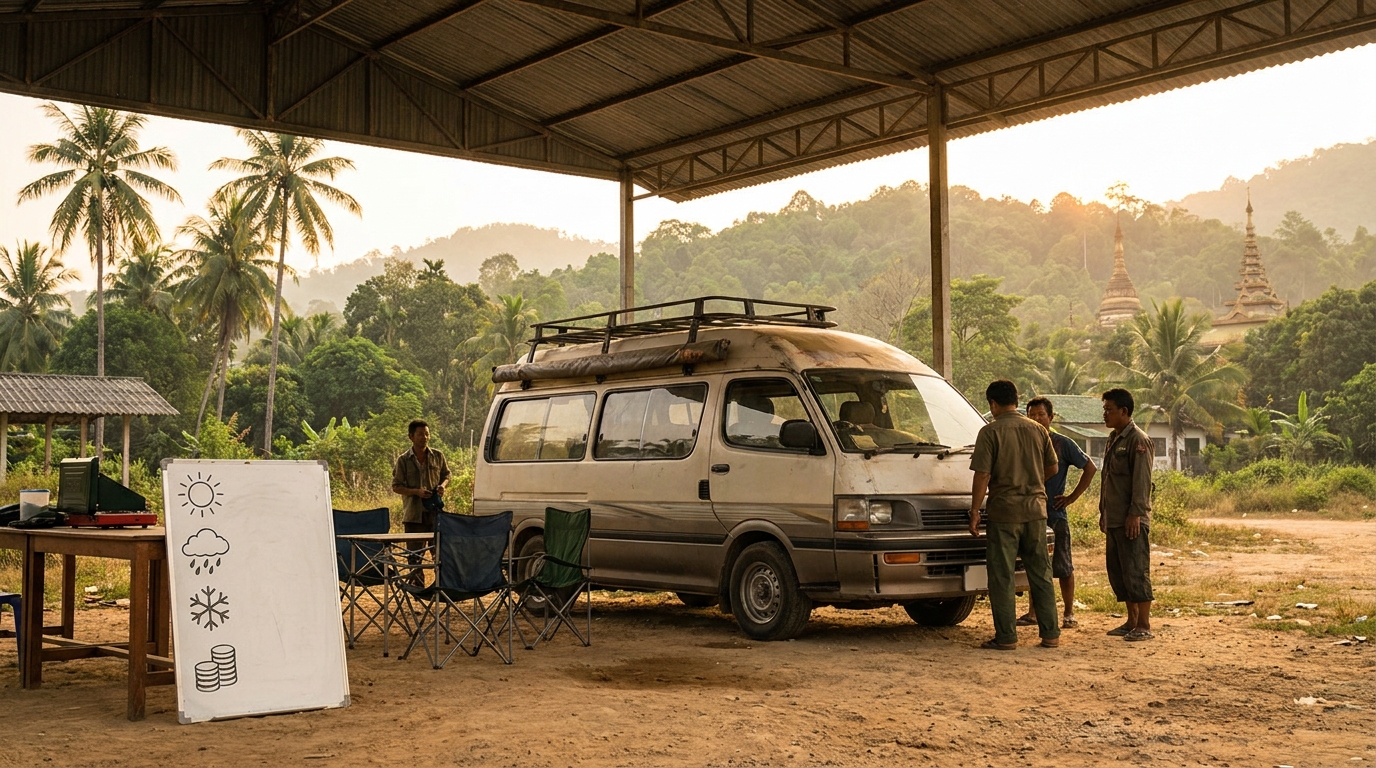
Road conditions in Asia vary significantly, ranging from modern multi-lane highways in countries like Japan and South Korea to unpaved, winding mountain roads and dense urban traffic in other regions. Travelers should anticipate diverse terrains, including coastal routes, mountainous regions with steep ascents and descents, and rural areas that may have narrower or less maintained roads. A slower, more scenic driving pace is often recommended to fully experience the landscape and navigate unexpected conditions safely. Our philosophy is to travel slowly, max 100-150 km per day on average, allowing you time to feel the place, connect to the culture, the food, and the scenery. For example, exploring the diverse terrain on an extended road trip with a Class SI - Semi-integrated RV (averaging 6.9 meters in length) offers comfort without being too large for many Asian roads.
RV Size Limits, Bridges & Restricted Zones
When driving a rented RV in Asia, always be mindful of height and weight restrictions, which can vary significantly between countries and even within cities. Low bridges, tunnels, and overhead infrastructure are common hazards, especially in older urban centers, requiring drivers to pay close attention to posted height limits. Environmental zones, increasingly prevalent in major Asian cities, may restrict access for certain vehicle types or impose emissions standards, often requiring pre-registration or specific permits. For instance, a Class B - Camper Van with an average length of 5.8 meters offers excellent maneuverability and is less likely to encounter height issues, while a larger Class A - Integrated RV (avg. 7.5 meters) would require more careful route planning. If planning to use ferries, particularly for island hopping, confirm maximum vehicle dimensions and weight limits in advance, as larger RVs may face restrictions or higher fares.
Fuel: Diesel vs. Petrol & Cost per 100 km
Diesel is the predominant fuel type for most RVs in Bandana's global fleet, with average consumption for a Class SI - Semi-integrated RV typically being 10-11 Liters/100 km, and for a Class C - Alcove, it's generally 10-12 Liters/100 km. Petrol (gasoline) is also widely available, especially for smaller campervans like a Class B, which average 8-10 Liters/100 km. Fuel prices in Asia fluctuate significantly by country; for example, Japan's fuel prices are generally higher than those in Southeast Asian nations. Travelers should factor in average fuel costs, estimating expenses based on their planned itinerary and the specific RV's consumption rates, such as 12-17 Liters/100 km for a 4x4 Truck Camper. For comprehensive budgeting including fuel, tolls, and other ancillary costs, remember that RV PLANET routes RV PLANET routes allow you to itemize and track every expense along the way. On the routes offered through RV PLANET routes, you can itemize and track every expense along the way for easy budgeting.
Tolls, Vignettes & Border Rules
Toll roads are common in many Asian countries, especially on major highways in nations like Japan, South Korea, China, and Malaysia. While some European countries utilize vignettes (time-based road tax stickers), many Asian countries rely on electronic toll collection systems or cash payments at booths. Drivers should research specific toll requirements for their planned routes and countries, as methods vary widely; for example, Japan's ETC cards offer convenience. When crossing international borders within Asia, extensive customs checks and vehicle import/export permits may be required for privately owned vehicles, but rental RVs typically have specific cross-border restrictions that your supplier will advise on. Always confirm cross-border policies with your rental provider well in advance. We pride ourselves on full transparency: no hidden fees and no surprises, so you'll always know what to expect regarding tolls and border procedures.
Driving Tips for RV Rental Travelers
Driving a rented RV across Asia is an incredible adventure, but it does benefit from thoughtful preparation and local awareness. We recommend following the slow travel philosophy: travel slowly, max 100-150 km per day on average, to fully immerse yourself in the journey. This allows time to appreciate the changing scenery, connect with local cultures and food, and navigate new environments without haste. Always plan frequent stops, especially for families, incorporating regular breaks every 2-3 hours to stretch, refuel, and explore. Familiarize yourself with local traffic laws; speed limits and road signs can vary culturally. Prepare for diverse road conditions, from smooth highways to unpaved rural tracks, and adjust your speed accordingly. Drive slowly and carefully, and you can drive almost anywhere without issues. No need to stress - just use common sense and pay attention. For cooking meals inside your motorhome, check out our RV-friendly recipes playlist for inspiration.
Recommended RV Class for Asia Roads
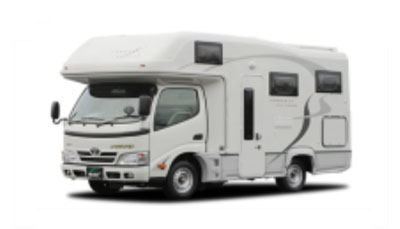
For many Asian road conditions, a Class SI - Semi-integrated RV or a Class B - Campervan offers an excellent balance of comfort, amenities, and maneuverability. Class B - Campervans, with an average length of 5.8 meters, are ideal for navigating narrower rural roads, urban environments, and easier parking, while still providing essential living amenities for an average of 2-3 adults, such as the "rv rental denver example Category Van" or a "Combi Van" with 4 sleeping places. Class SI - Semi-integrated RVs, averaging 6.9 meters in length, provide more interior space and comfort for longer trips or larger groups (averaging 3-4 sleeping places) without being overly cumbersome on diverse Asian terrain, such as a "2 Berth Rover" or "Active Standard Auto" model. While larger Class C - Alcove (avg. 7.5 meters) or Class A - Integrated RVs (avg. 7.5 meters) offer ample space, their increased length and width may present challenges on very narrow roads or in dense city centers, requiring a bit more confidence and careful route planning.
Should I Choose a Compact Van Instead of a Large RV in Asia?
Choosing a Class B - Camper Van is often considered for Asia due to its perceived maneuverability in tight spaces, however, for most major routes and destinations across Asia, even larger motorhomes like a Class SI or Class C are generally manageable and offer superior comfort. The perceived "issue" with driving any RV size in Asian cities is often overstated; proper planning and cautious driving make most destinations accessible. A compact campervan (like a "Category Van" or "Juliette 2-3") is ideal if your itinerary primarily involves navigating very historic, congested city centers or exploring extremely remote areas with genuinely challenging road infrastructure that a larger Class C motorhome (such as a "MHC24" with a length of 7.3 meters) might find difficult. For family trips or those prioritizing indoor space, a semi-integrated or alcove RV (Class SI or Class C) typically offers superior comfort and amenities, including showers and toilets, without excessive compromise on accessibility for most Asian destinations, as long as you plan your route thoughtfully.
Can I Park Anywhere? Free & Wild Camping Rules in Asia
The legality of free camping or "wild camping" for RVs in Asia varies significantly by country and even by specific region or local municipality. While countries like Mongolia offer vast, unfenced steppes where wild camping is widely accepted, others strictly enforce rules against unauthorized overnight parking on public or private land. In Japan, "Michi-no-Eki" (roadside stations) provide excellent, free, safe overnight parking facilities with amenities like clean restrooms, local markets, and sometimes even hot springs, making them a cornerstone of RV travel in Japan. Many Asian nations lack a widespread network of dedicated RV parks, making it crucial to research specific regulations and available facilities for your chosen destinations. Always check local regulations and follow local law before parking overnight, opting for official campsites or designated overnight parking areas whenever possible. For finding campsites and campgrounds during your trip, we recommend using RV PLANET (rvplan.net) - a great resource for locating available spots along your route.
Can I Drive an RV Into the City Center? Heights, Tunnels & Local Signage
Yes, it is almost always possible to drive an RV into city centers in Asia, though it requires heightened awareness of local signage, vehicle dimensions, and traffic patterns. Drivers must pay close attention to posted height limits for tunnels, underpasses, and low bridges, which are common in older urban areas and can vary significantly; a Class B - Camper Van (average 5.8 meters in length) is generally easier to maneuver than a Class C - Alcove (average 7.5 meters). Be vigilant for local signage indicating environmental zones, residents-only streets, or areas with specific vehicle restrictions, which are becoming more prevalent in major cities. Navigating dense urban traffic and finding suitable parking for an RV can be challenging; consider utilizing park-and-ride options or parking on the city outskirts and using public transportation for exploration. While most main arteries will accommodate RVs, side streets or historic districts might be too narrow or have strict access rules, making slow and careful driving essential.
What is the 3-3-3 rule for RV travel?
The 3-3-3 rule for RV travel is a widely adopted guideline encouraging a sustainable and enjoyable pace by suggesting you drive no more than 300 miles (approximately 480 km) a day, arrive at your destination by 3 PM, and stay for at least 3 nights. This rule helps prevent driver fatigue, allows ample time to explore each location thoroughly, and provides a relaxed travel rhythm, which is particularly beneficial when navigating diverse Asian terrains and cultural experiences. Adhering to the 3-3-3 rule can significantly enhance your RV adventure by minimizing stress, providing opportunities for spontaneous discoveries, and ensuring you have enough time to set up and enjoy your campsite, perhaps with a delicious home-cooked meal from our RV-friendly recipes playlist. While a valuable guideline, the rule can be flexibly adapted; in regions with slower road conditions or specific attractions, reducing the daily mileage or extending the stay might be more practical for an Asia RV trip.
Do I need a special license to drive an RV in Japan?
To drive most standard RVs (under 3,500 kg Gross Vehicle Weight) in Japan, foreign visitors typically require an International Driving Permit (IDP) issued under the 1949 Geneva Convention, which must be carried alongside their valid national driver's license. Japan does not generally require a 'special license' beyond the standard Class B (or equivalent) for typical recreational vehicles, provided the vehicle's GVW does not exceed 3,500 kg. Certain countries, like Germany, France, Switzerland, Belgium, Taiwan, and Monaco, have special agreements with Japan that allow the use of their national driver's license with an official Japanese translation, rather than an IDP. Always confirm the specific licensing requirements based on your country of origin and the RV's weight class prior to your trip to Japan, as regulations can occasionally be updated. Remember, the minimum rental age for an RV in Japan is 21 years old.
Which countries are RV friendly?
In Asia, Japan is widely considered one of the most RV-friendly countries, boasting excellent road infrastructure, a comprehensive network of over 1,100 'Michi-no-Eki' (roadside stations with amenities for overnight parking), and a high level of safety and cleanliness. Other emerging RV-friendly destinations include South Korea, which offers good roads and developing camping infrastructure, and parts of Southeast Asia like Thailand and Malaysia, where basic RV services are growing. China has a rapidly developing RV market, with increasing numbers of campsites and supportive policies, although navigating its vastness and administrative procedures can be complex for foreign travelers. India is also actively promoting 'Caravan Tourism' with developing infrastructure for RVs. Countries in Central Asia, such as Mongolia, offer incredible opportunities for adventurous off-road RV travel, though infrastructure is minimal and requires a well-equipped vehicle and extensive self-sufficiency. For finding suitable campsites in these diverse locations, RV PLANET (rvplan.net) is an excellent resource.
What is the largest RV you can drive without a special license?
In most jurisdictions globally, including many parts of Asia, the largest RV you can typically drive without a 'special' or commercial license is one with a Gross Vehicle Weight (GVW) of up to 3,500 kilograms (approximately 7,700 pounds). This weight threshold generally corresponds to the limits of a standard Class B (or equivalent) passenger car driver's license, which is sufficient for most campervans (Class B - Camper Van, avg. 5.8m in length, like the "Active Pop Top") and many semi-integrated RVs (Class SI - Semi-integrated, avg. 6.9m in length, such as the "K125" with a GVW of 3,500 kg). Larger RVs, such as certain Class C - Alcove (avg. 7.5m in length, like the "24 Class C Motorhome") or Class A - Integrated (avg. 7.5m in length) models, might exceed the 3,500 kg limit and thus require a higher license category in some regions, though Bandana offers motorhomes that typically do not require special licenses. Always verify the specific GVW of your rental RV and the licensing requirements of the countries you plan to visit, as laws can vary.
Is it possible to drive from the US to Asia?
While it is technically possible to transport a vehicle from the US to Asia, direct driving is not feasible due to the vast Pacific Ocean, necessitating sea freight for the RV. Overlanders often ship their RVs from North American ports (e.g., in California or Vancouver) to Asian ports (e.g., in Japan, South Korea, or Vladivostok, Russia) using Roll-on/Roll-off (RoRo) vessels or container shipping. The logistical challenges are significant, involving complex customs procedures, temporary vehicle import permits, and substantial shipping costs. For most travelers, renting an RV directly in an Asian country is a far more practical and straightforward option. This avoids the complexities and expenses of international shipping, allowing you to focus on planning your adventure with a rental motorhome, whether a compact "rv rental nj example Category Small" or a spacious "MH-A" family RV.
Are RVs allowed in India?
Yes, RVs are allowed in India, and the country is slowly developing its infrastructure to support recreational vehicle travel, particularly with the growth of domestic tourism. While dedicated RV parks are not as widespread as in Western countries or Japan, there are increasing numbers of private campsites, resorts, and designated parking areas that welcome RVs. Driving an RV in India presents unique challenges, including diverse road conditions, heavy and often chaotic traffic, and navigating specific regional regulations; therefore, a well-prepared itinerary and experienced driver are recommended. India's diverse landscapes, from mountainous regions to coastal areas, offer incredible potential for RV adventures, provided travelers are aware of local driving customs and plan for fuel, water, and waste disposal. For planning your unique journey through India, considering a reliable service like Rent&Plan, which offers pre-planned routes by professionals, can make the experience smoother.
What is the new RV law in Florida?
Information regarding "new RV laws in Florida" is specific to the United States and is not directly relevant to planning an RV rental or trip in Asia. When traveling internationally with a rented RV in Asia, it is crucial to research and adhere to the specific traffic laws, licensing requirements, and vehicle regulations of each Asian country you plan to visit. General best practice for international RV travel involves consulting the respective embassies, tourism boards, or your rental company for the most current local regulations relevant to your chosen destination in Asia. Our true RV specialists have deep knowledge of local requirements and are ready to provide support before and during your booking process.
What is the 333 rule for campervan?
The "333 rule for campervan" travel refers to the same general guideline as the 3-3-3 rule for RVs, advising drivers to travel no more than 300 miles (approximately 480 km) in a day, arrive by 3 PM, and stay at least 3 nights. This rule is particularly well-suited for campervan (Class B - Camper Van, averaging 5.8 meters in length, like the "Combi Van") travelers in Asia, as it encourages a leisurely pace, allowing more time to enjoy destinations and navigate varying road conditions without rushing. Adhering to this pacing strategy for campervan adventures in Asia helps reduce fatigue, provides ample time for setting up camp, preparing meals, and exploring, and allows for greater flexibility and spontaneity. For those seeking even more planned adventures, consider leveraging our 25% planning discount when using rvplan.net for your itinerary.
Who has the cheapest RV insurance rates?
When renting an RV in Asia through platforms like Bandana, comprehensive RV insurance is typically included in the rental package or offered as an optional add-on at the time of booking, rather than being sourced independently. The cost of insurance is usually factored into the overall rental price, and various levels of coverage (e.g., basic, premium with reduced deductible) are often available directly from the rental provider. For travelers looking for the "cheapest" rates, comparing different rental company offerings and their included insurance policies is key, focusing on the deductible amount and what liabilities are covered. You can also upgrade to a top-level deductible for extra peace of mind, an optional enhancement available through Bandana. As true RV specialists, we compare final prices across 50+ suppliers, ensuring full price transparency and allowing you to see all insurance options upfront.
What You Shouldn't Miss
- Explore the ancient temples of Kyoto with a rented campervan, then relax at a tranquil Michi-no-Eki.
- Embark on a two-week adventure through the majestic Himalayas in India, using your motorhome as a base for high-altitude trekking.
- Discover the vibrant urban landscapes and historical sites of South Korea, driving a comfortable Class SI RV with all the amenities.
- Traverse the vast, open steppes of Mongolia in a rugged 4x4 campervan, experiencing true solitude and incredible stargazing opportunities.
- Visit the futuristic cities and cultural landmarks of Japan, enjoying the convenience of a compact motorhome or campervan.
Looking for expert insights from Avi Bandana? Top 5 Adventures - recommendations from Avi Bandana
Final Thoughts
An RV adventure through Asia promises an unparalleled journey filled with cultural immersion and breathtaking landscapes. Whether you dream of traversing the ancient Silk Road in Central Asia, exploring the futuristic cities of Japan, or discovering the spiritual heart of India, a rented motorhome or campervan provides the freedom and flexibility to truly connect with your surroundings. Remember, with careful planning and a spirit of adventure, Asia by RV is not just possible, it's an experience that will stay with you forever.
We're here to support you every step of the way, offering transparent pricing, expert advice, and a wide selection of vehicles to suit your needs. So, what are you waiting for? Discover top destinations, planning tips, all in one place and start planning your unforgettable RV adventure in Asia today!