In This Guide
- Can You Drive an RV in Paris? License & Age Rules
- Road Conditions & Terrain in Paris
- RV Size Limits, Bridges & Restricted Zones
- Fuel: Diesel vs. Petrol & Cost per 100 km
- Tolls, Vignettes & Border Rules
- Driving Tips for RV Rental Travelers
- Recommended RV Class for Paris Roads
- Should I Choose a Compact Van Instead of a Large RV in Paris?
- Can I Park Anywhere? Free & Wild Camping Rules in Paris
- Can I Drive an RV Into the City Center? Heights, Tunnels & Local Signage
- Do I need a Crit'Air sticker for my motorhome in France?
- Are D-roads in France suitable for motorhomes?
- Do I have to pay Paris low emission zone?
- Is France motorhome friendly?
- Can I drive in Paris with a US driver's license?
- Can you own an RV in Europe?
- What kind of license is required for an RV?
- How much is insurance on a $200,000 RV?
- Does France have public liability insurance?
- What You Shouldn't Miss
- Why Book with Bandana Caravan
- Final Thoughts
- Frequently Asked Questions
Embarking on a motorhome adventure from Paris is an exciting way to explore France, offering unparalleled freedom and flexibility. Before you hit the road, it's essential to understand the specific driving regulations and conditions in and around the French capital. For live availability and current prices, start with our RV Rental Paris - Complete Guide 2026 guide.
Can You Drive an RV in Paris? License & Age Rules
Yes, you can absolutely drive a rented RV in Paris, provided you meet the license and age requirements. Most rental motorhomes, especially Class B campervans and Class C motorhomes with a Gross Vehicle Weight (GVW) under 3,500 kg, can be driven with a standard Category B car license. For travelers from non-EU/EEA countries, an International Driving Permit (IDP) is highly recommended as a translation of your national license, though not always legally mandatory, it greatly simplifies interactions with authorities. The minimum rental age for an RV in Paris through Bandana's partners is 21, and we're happy to share that there are no additional young driver surcharges, regardless of the motorhome class you choose.
We pride ourselves on full transparency, ensuring no hidden fees or surprises related to driver age or license class. We make sure you're well-prepared before your booking is confirmed, offering support every step of the way. With Bandana, you have true RV specialists helping you navigate these details, not just a side department of a general travel agency. Driving a rented campervan or motorhome allows you to immerse yourself in the journey at your own pace, especially if you plan to travel slowly, averaging 100-150 km per day.
Road Conditions & Terrain in Paris
French roads are generally well-maintained and suitable for various RV sizes, including motorhomes and campervans. Outside Paris, the 'autoroutes' (motorways) offer smooth, multi-lane travel for covering longer distances efficiently. The 'Routes Départementales' (D-roads), on the other hand, provide a more scenic and charming experience, winding through picturesque villages and rural landscapes, and are also generally suitable for RVs.
Within Paris itself, the terrain is largely flat, which is convenient, but the urban density and historic street layouts require careful navigation. The Boulevard Périphérique, Paris's ring road, is a major artery, and while well-maintained, it can be very busy, especially during peak hours. City streets, particularly in older, central areas like Le Marais or the Latin Quarter, can indeed be narrower and more challenging for larger vehicles. However, with common sense and careful attention to signage, driving almost anywhere is manageable. Don't stress - just take your time, and you'll navigate these charming streets like a pro. Remember to account for scooters and bicycles, which are prevalent in Parisian traffic.
RV Size Limits, Bridges & Restricted Zones
When driving a rented motorhome in Paris, paying close attention to height and weight restrictions is crucial, as these are common in Parisian underpasses, bridges, and older, historic areas. Many city parking garages, for instance, have strict height limits that most RVs will exceed, making street parking or designated RV lots outside the city center the more practical option.
Paris also operates a Low Emission Zone (ZFE - Zone à Faibles Émissions) that requires all vehicles, including RVs, to display a Crit'Air sticker. This sticker categorizes your vehicle based on its emission level, and driving within the ZFE without a valid sticker can result in fines. We always recommend checking local regulations for your specific route well in advance. For example, while a compact campervan like the "V2L" (5.99m length) might have an easier time, even larger vehicles like a "MH-A" (8.8m length) can be managed with proper planning and awareness of local restrictions.
Fuel: Diesel vs. Petrol & Cost per 100 km
Understanding fuel types and costs is key to budgeting for your RV trip from Paris. Bandana's rental fleet in France predominantly utilizes diesel (Gazole), which is widely available at service stations across the country. Diesel vehicles generally offer better fuel economy than petrol counterparts, which can significantly impact your total trip cost. On the routes offered through RV PLANET routes, you can itemize and track every expense along the way for easy budgeting.
Typical fuel consumption for a Class SI - Semi-integrated RV, such as a "2 Berth Rover" or "Cruz" model, ranges from 10-11 Liters per 100 km. Smaller Class B - Camper Vans, like a "Chubby Camper" or "HiTop Campervan" that typically measure around 5-6 meters in length, are more fuel-efficient, usually consuming 8-10 Liters per 100 km. The actual monetary cost per 100 km will fluctuate with current fuel prices, so it's wise to monitor these before and during your trip. Some rental RVs may also offer fuel discount cards for added convenience. For detailed budgeting and tracking of all ancillary trip costs like fuel, tolls, and campground fees, remember that RV PLANET routes allow you to itemize every expense along the way, helping you stay on budget. RV PLANET routes.
Tolls, Vignettes & Border Rules
France operates an extensive toll road ('péage') system on its 'autoroutes', rather than requiring a single vignette sticker for road use. These tolls can be a significant part of your ancillary costs, so planning your route and understanding payment options is helpful. You can typically pay tolls by cash, credit card, or, for maximum convenience, an automatic electronic toll tag (like a 'Télépéage' badge).
While some rented motorhomes may offer pre-purchased toll passes, it's best to confirm this with your supplier. If you plan to drive your rental RV across borders into neighboring European countries, be aware that each country has its own road usage rules, which might include different toll systems or require vignettes (e.g., Switzerland, Austria). Always research these specific requirements for any countries you intend to visit to avoid unexpected fees. Bandana offers bookings in over 30 currencies with full price transparency, so you'll never face hidden conversion commissions.
Driving Tips for RV Rental Travelers
A successful RV adventure from Paris hinges on smart preparation and relaxed driving. When traveling with family in your rented campervan or motorhome, especially with kids, plan frequent stops approximately every 2-3 hours to stretch legs and keep everyone refreshed. Utilizing a GPS navigation system with RV-specific settings is highly recommended, as it can help you avoid height-restricted areas, narrow streets, and small bridges that might be problematic for larger vehicles around Paris.
For budget-conscious travelers, consider pre-paying tolls or using electronic tags for a smoother, more efficient journey, which can also sometimes offer minor discounts. When planning to explore central Paris, the most practical approach is to park your RV on the city outskirts at a designated campground or RV-friendly parking area and utilize public transport. This avoids the challenges of urban driving and parking while allowing easy access to attractions like the Eiffel Tower or the Louvre. Be extra vigilant for scooters, motorcycles, and cyclists in Paris's urban traffic, as they can appear suddenly. Remember to travel slowly, averaging no more than 100-150 km per day, to truly connect with the culture, food, and scenery.
Recommended RV Class for Paris Roads
For a balance of maneuverability in Paris's urban areas and comfortable living space for exploring France, Class B - Camper Vans and Class SI - Semi-integrated RVs are often recommended. Class B - Camper Vans, with an average length of 5.8m, offer excellent agility for city driving and easier parking, making them ideal for navigating streets near landmarks like the Arc de Triomphe. These smaller vehicles, similar to a "Category Van" or "Duo - Campervan" from our fleet, are easy to handle and can access many areas where larger motorhomes might struggle.
Class SI - Semi-integrated RVs, averaging 6.9m in length, provide more interior space, a separate shower and toilet (e.g., the "Active Plus" model), and enhanced amenities while still being manageable on main French roads and 'Routes Départementales'. For instance, a model like the "2 Berth Rover" offers a comfortable experience without being overly large. While any size RV can be driven in Paris with care, these classes provide a good compromise for those who want both city access and comfortable living. We're here to help you compare final prices across 50+ suppliers to find the perfect motorhome for your adventure.
Should I Choose a Compact Van Instead of a Large RV in Paris?
Choosing between a compact campervan and a larger motorhome for your Paris adventure depends on your priorities: urban navigation ease versus on-board living space and amenities. While any RV size can technically be driven in Paris with due care, a compact campervan (like a Class B, approximately 5-6 meters long, similar to our "Active Standard Auto" or "Happy 1 EX") offers superior maneuverability and significantly easier parking in densely populated areas. This makes it a great choice for navigating the bustling streets around Avenue des Champs-Élysées or finding parking at train stations on the outskirts.
Larger RVs (Class C, Class SI, or Class A motorhomes), while offering significantly more indoor comfort, spacious living areas, and enhanced amenities such as a larger refrigerator or multiple beds (like a "Motorhome hire example Big Six" or "Family Sleeper (FS)"), present greater challenges for city driving and parking. For extended journeys beyond Paris or for families and groups of 4-7 people, the increased space of a larger motorhome is certainly advantageous. Regardless of your chosen RV size, parking outside central Paris and using public transport is generally the most practical approach for sightseeing, alleviating parking stress and allowing you to enjoy the city’s attractions.
Can I Park Anywhere? Free & Wild Camping Rules in Paris
No, you generally cannot park your rented RV just anywhere for overnight stays in Paris, as wild camping is largely prohibited throughout France, especially within urban areas and their immediate surroundings. While overnight parking for a motorhome is typically allowed where a regular car can park, provided no local restrictions are posted, setting up camp outside your vehicle (e.g., deploying awnings, tables, chairs) is usually not permitted.
For legitimate and legal overnight stays, it is highly recommended to use designated campgrounds or the extensive network of 'aires de service' available throughout France. These 'aires de service' are specialized motorhome service areas, many of which offer overnight parking, water, and waste disposal facilities, some for a small fee, others free. Near Paris, Camping Paris Bois de Boulogne is a popular official campground located conveniently close to the city center, offering excellent public transport links. Always check local regulations and follow posted signage before parking overnight, as rules vary by region and municipality.
Can I Drive an RV Into the City Center? Heights, Tunnels & Local Signage
While driving a rented RV into central Paris is technically possible, travelers will encounter significant restrictions and navigational challenges that make it generally impractical. Key watchpoints include strict Low Emission Zones (ZFE) which require a Crit'Air sticker, numerous height restrictions on underpasses (such as those along the Seine or leading to underground parking) and many parking garages that most motorhomes cannot access. Additionally, streets in historic areas of central Paris like Île de la Cité or Saint-Germain-des-Prés can be very narrow and congested.
Paying close attention to local signage is paramount, as it indicates height limits, weight restrictions, and residents-only streets, which might not be obvious to an unfamiliar driver. For these reasons, most travelers find it much more practical and less stressful to park their rented campervan or motorhome on the outskirts of Paris at a dedicated RV park or campground and use the efficient public transport system (Metro, RER, buses) for city exploration. Drive slowly and carefully, and you can drive almost anywhere without issues. No need to stress - just use common sense and pay attention.
Do I need a Crit'Air sticker for my motorhome in France?
Yes, a Crit'Air sticker is mandatory for motorhomes to drive in designated Low Emission Zones (ZFE) across France, including Paris. This sticker, which categorizes your vehicle's emission class, must be displayed on your windshield, and driving without one in a ZFE can result in fines. You can easily apply for the Crit'Air sticker online through the official French Ministry of Ecological Transition website before your trip, ensuring compliance and peace of mind.
Are D-roads in France suitable for motorhomes?
Yes, 'Routes Départementales' (D-roads) in France are generally very suitable for motorhomes and often provide picturesque, scenic routes that showcase the country's beauty. These roads are typically well-maintained, offering a charming alternative to faster, tolled 'autoroutes.' While mostly suitable for a rented RV, some very minor D-roads in rural or mountainous areas might be narrower or winding, requiring a bit more caution and a slower pace, especially for larger Class C or Class A motorhomes.
Do I have to pay Paris low emission zone?
No direct payment is required for the Paris Low Emission Zone (ZFE); instead, your motorhome must display a valid Crit'Air sticker. Vehicles are allowed or restricted from the ZFE based on their Crit'Air sticker class and the specific days/times, typically weekdays during daytime hours. Older or more polluting rented motorhomes, classified with higher Crit'Air numbers, may be banned from the ZFE during these restricted periods, so it is essential to have the correct sticker for your vehicle.
Is France motorhome friendly?
France is widely regarded as one of Europe's most motorhome-friendly countries, offering extensive infrastructure for RV travelers. The country boasts a vast network of over 6,000 'aires de service' (dedicated motorhome service areas), which provide essential facilities like water, waste disposal, and often free or low-cost overnight parking. Excellent road conditions and numerous campgrounds, including popular ones like Camping Paris Bois de Boulogne, further contribute to a positive RV travel experience, particularly when exploring outside major urban centers with your rented campervan or motorhome.
Can I drive in Paris with a US driver's license?
Yes, you can drive in Paris with a valid US driver's license for up to one year, provided it is accompanied by an International Driving Permit (IDP). The IDP serves as an official translation of your US license and is legally required for non-EU/EEA residents in France to ensure clarity for local authorities. Ensure both your US license and IDP are current and valid for the entire duration of your week-long trip or extended road trip to avoid any issues.
Can you own an RV in Europe?
While it is technically possible for non-European residents to own an RV in Europe, the process can be complex, involving significant bureaucratic hurdles. Ownership requires navigating various vehicle registration, insurance, and tax laws that differ by country and can be particularly challenging for non-EU citizens. For this reason, many international travelers opt for long-term RV rentals or lease-back schemes, which simplify the logistics and administrative burden of operating a motorhome or campervan in Europe, making it a much more accessible option for vacation travel.
What kind of license is required for an RV?
In France, a standard Category B driver's license, the same one required for cars, is sufficient for driving most rental RVs, specifically those with a Gross Vehicle Weight (GVW) up to 3,500 kg. This covers the majority of campervans and smaller Class C or SI motorhomes available for rent. For heavier RVs with a GVW between 3,500 kg and 7,500 kg, a Category C1 license is required, while vehicles exceeding 7,500 kg GVW necessitate a Category C license. Bandana exclusively offers motorhomes and campervans that can be driven with a standard car license, ensuring ease of access for all our travelers.
How much is insurance on a $200,000 RV?
The cost of insurance for a high-value RV like a $200,000 motorhome in France varies significantly based on multiple factors, including the driver's age and experience, the specific vehicle model, and the chosen level of coverage. Comprehensive insurance for such a vehicle would be substantial, likely ranging from several hundred to over a thousand euros annually, as it includes protection against various risks. It is crucial to obtain detailed quotes from multiple insurers and understand what is included in your rental agreement to determine the exact cost for your specific situation. Bandana offers a top-level deductible reimbursement as an optional upgrade for extra peace of mind, protecting you from significant out-of-pocket expenses in case of an incident.
Does France have public liability insurance?
Yes, France legally mandates public liability insurance (assurance responsabilité civile) for all motor vehicles operating within the country. This insurance is crucial as it covers damage or injury that your rented RV may cause to third parties, including other vehicles, property, or individuals. Basic public liability coverage is typically included in all RV rental agreements in France provided by our partners like El Monte, Cruise America, Apollo, and Britz, ensuring you are legally compliant and protected during your travels.
What You Shouldn't Miss
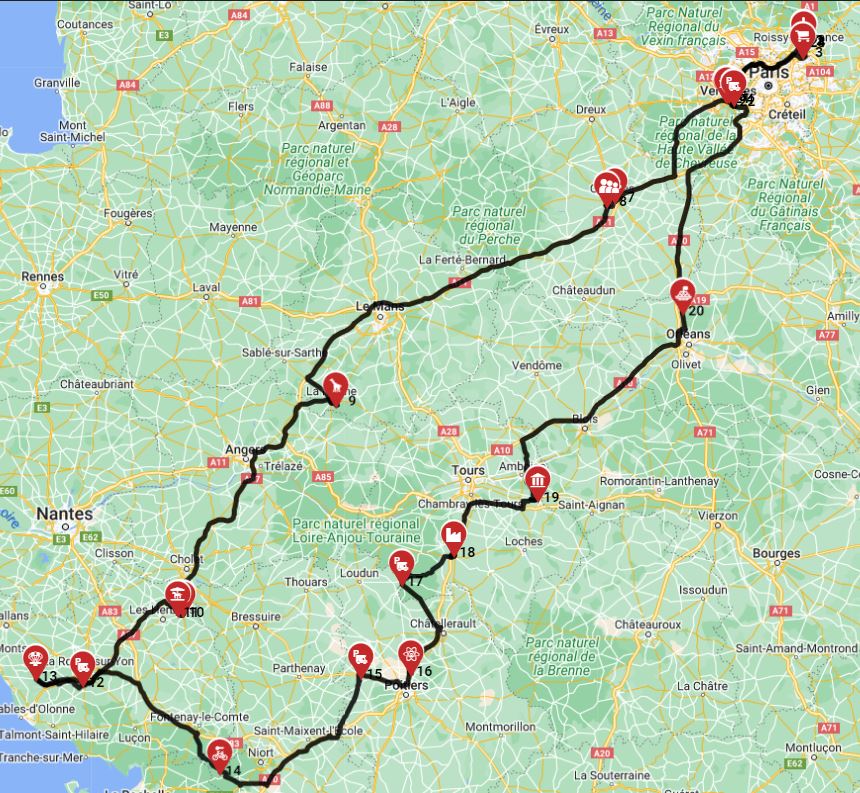
- Explore the Loire Valley Castles: Pick up your rented motorhome from Paris and head west to discover the enchanting châteaux of the Loire Valley. You can visit up to 10 historical sites, including Château de Chambord and Château de Chenonceau, over a relaxed week-long trip.
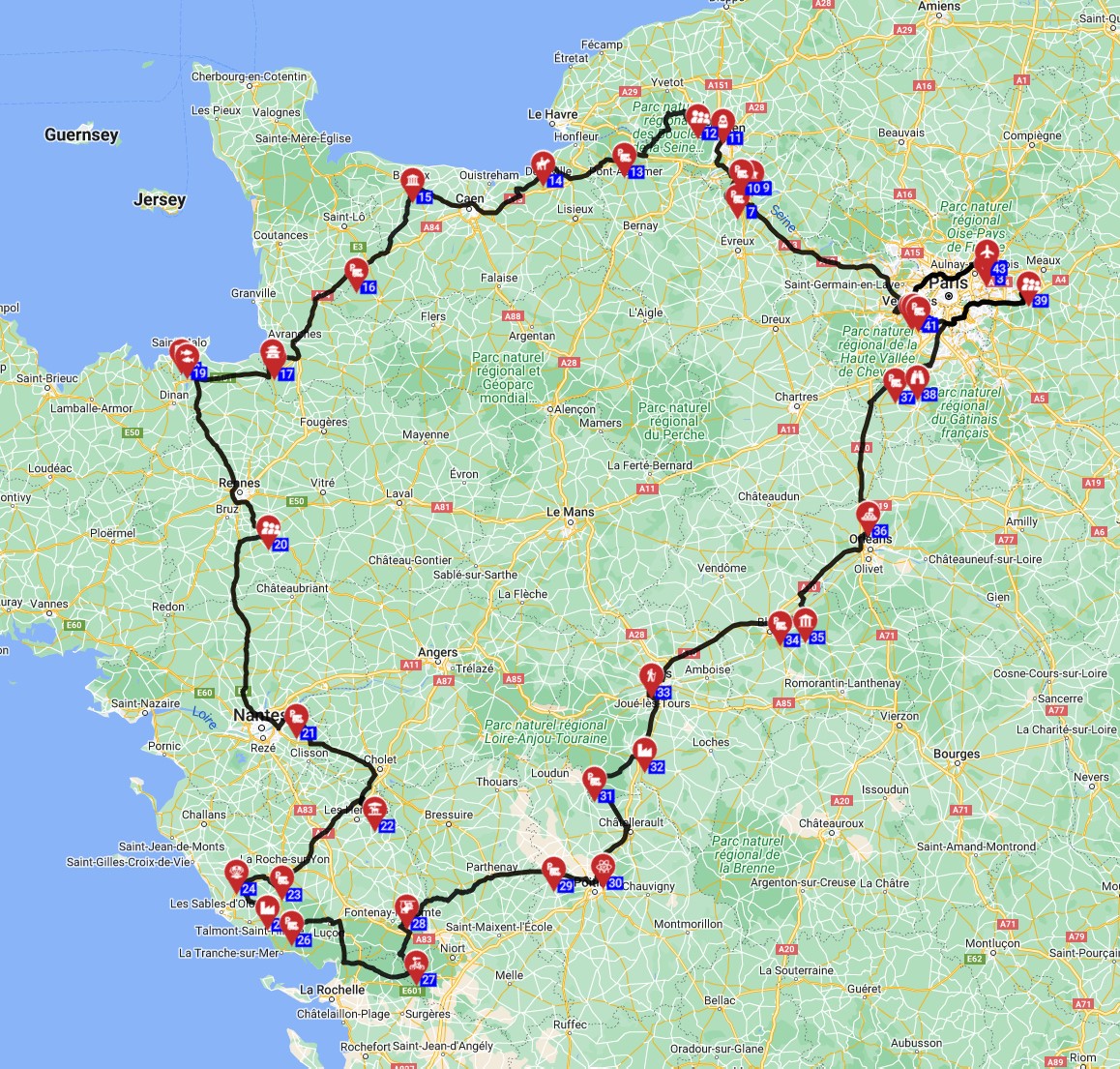
- Normandy Beaches and Mont Saint-Michel: Drive your campervan northwest from Paris to the historic D-Day landing beaches and the stunning Mont Saint-Michel. This route combines significant historical sites with breathtaking coastal scenery, perfect for slow travel.
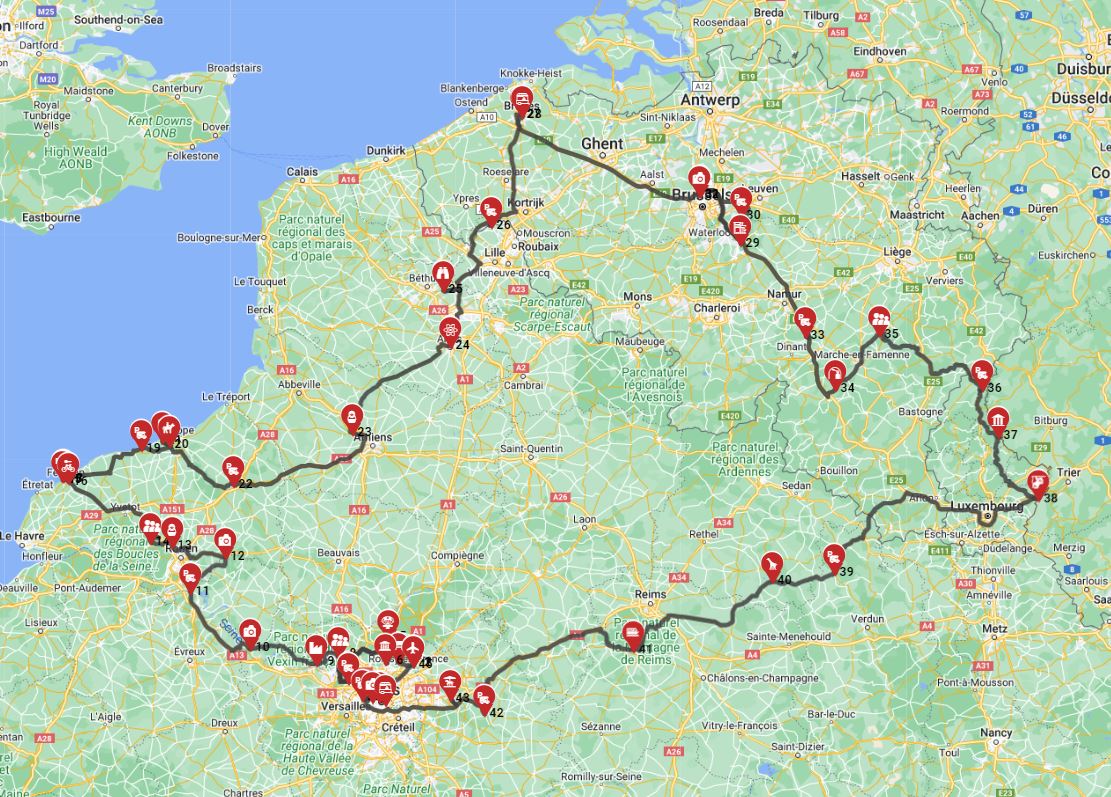
- Champagne Region Delights: Take a shorter route east of Paris to the Champagne region. You can tour several local industry sites, learn about winemaking, and sample exquisite champagne, perhaps incorporating a stop at a traditional restaurant for fine dining.
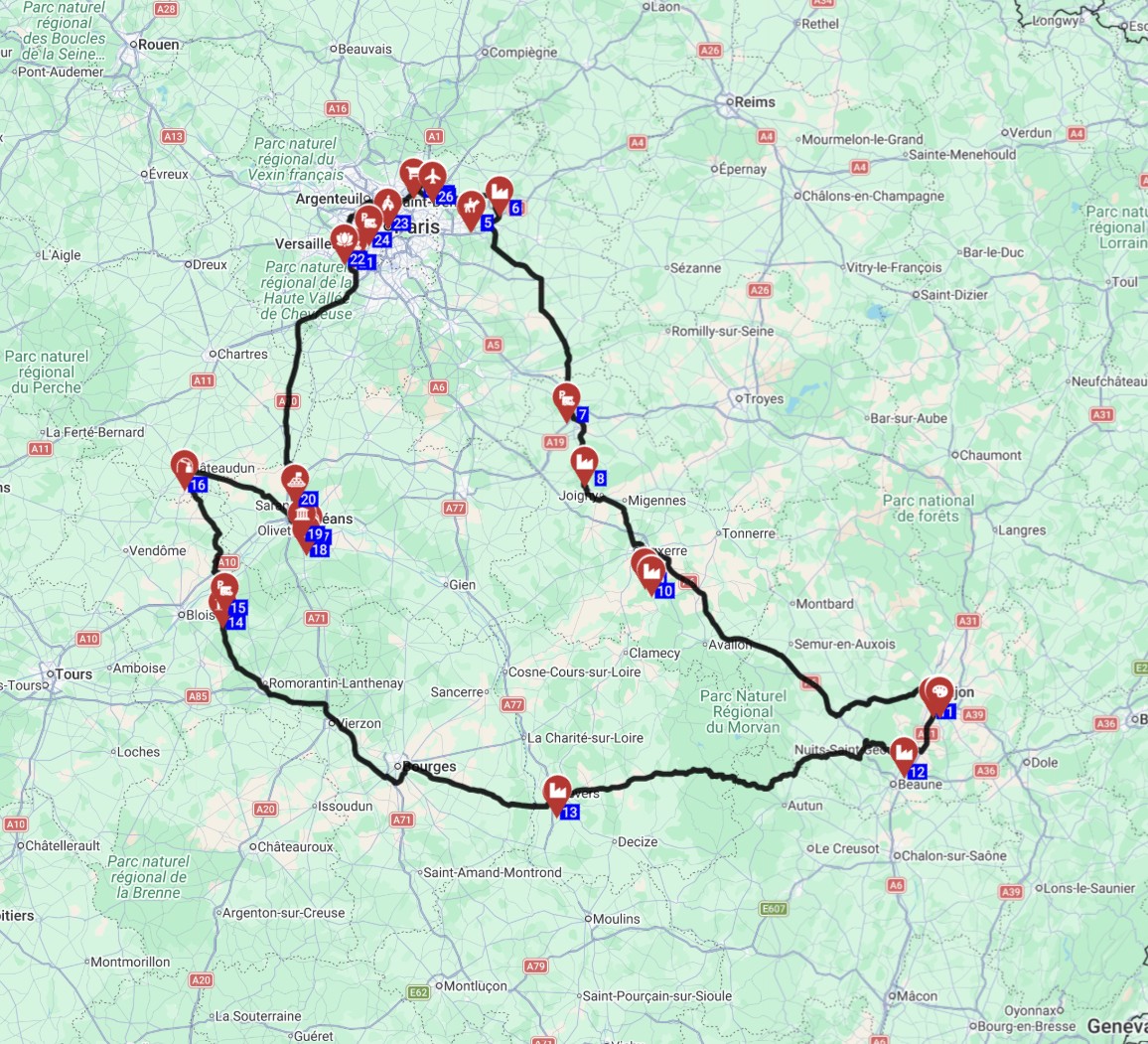
- Burgundy's Scenic Routes and Cuisine: Head southeast in your RV to the Burgundy region, renowned for its wine routes and gastronomy. Explore picturesque villages and enjoy the food and culture, with numerous campgrounds offering excellent facilities.
- Avi Bandana's Top 5 Adventures - recommendations from Avi Bandana:
🎬 Video coming soon
Final Thoughts
Driving a rented RV from Paris offers an incredible gateway to the diverse landscapes and rich culture of France. While navigating the bustling streets of the capital requires a bit more attention, the freedom a motorhome provides for exploring beyond the city limits is truly liberating. From the fuel-efficient Class B campervans perfect for a couple's retreat to the spacious Class C models ideal for a family of 2+2, there's a perfect vehicle for every adventure.
Embrace the French 'aires de service', plan your routes with RV-specific GPS, and always adhere to local regulations like the Crit'Air sticker. With Bandana Caravan's commitment to full transparency, 24/7 support, and expert route planning via RVPLAN.NET, you're set for an unforgettable journey. We handle the details, so you can focus on living the journey and creating lasting memories. So, imagine yourself on the route, winding through charming French villages and along picturesque coastlines, all from the comfort of your mobile home.
Find Motorhome Rentals in Paris