In This Guide
- Can You Drive an RV in North Canada? License & Age Rules
- Road Conditions & Terrain in North Canada
- RV Size Limits, Bridges & Restricted Zones
- Fuel: Diesel vs. Petrol & Cost per 100 km
- Tolls, Vignettes & Border Rules
- Driving Tips for airport rv rental Travelers
- Recommended RV Class for North Canada Roads
- Should I Choose a Compact Van Instead of a Large RV in North Canada?
- Can I Park Anywhere? Free & Wild Camping Rules in North Canada
- Can I Drive an RV Into the City Center? Heights, Tunnels & Local Signage
- What is the 3-3-3 rule for RV travel?
- Can Americans RV in Canada?
- Do you need a different license to drive an RV in Canada?
- Is it easy to drive an RV in Canada?
- What do you need to enter Canada with a RV?
- How much is RV insurance in Canada?
- What is the best travel insurance company for Canadians?
- Who has the cheapest insurance for RVs?
Embarking on an airport RV rental adventure in North Canada offers an unparalleled journey into vast wilderness and unique northern culture. Imagine landing and instantly having your spacious mobile home ready to explore the Yukon, Northwest Territories, and Nunavut - a true specialist's choice for travelers seeking remote beauty. For live availability and current prices, start with our RV Rental North Canada - Complete Guide 2026 guide.
At Bandana RV, we believe in making your exploration seamless and stress-free. Our expertise, honed since 2001, means we understand the nuances of northern travel. We partner with over 50 leading RV suppliers, including trusted names like El Monte and Cruise America, to bring you a wide selection of Class A, Class B, and Class C motorhomes and campervans. Our dedication to full transparency means no hidden fees, ever, and our 24/7 support (before and after booking) ensures you're always in good hands, whether you're comparing options or coordinating your pickup.
Can You Drive an RV in North Canada? License & Age Rules
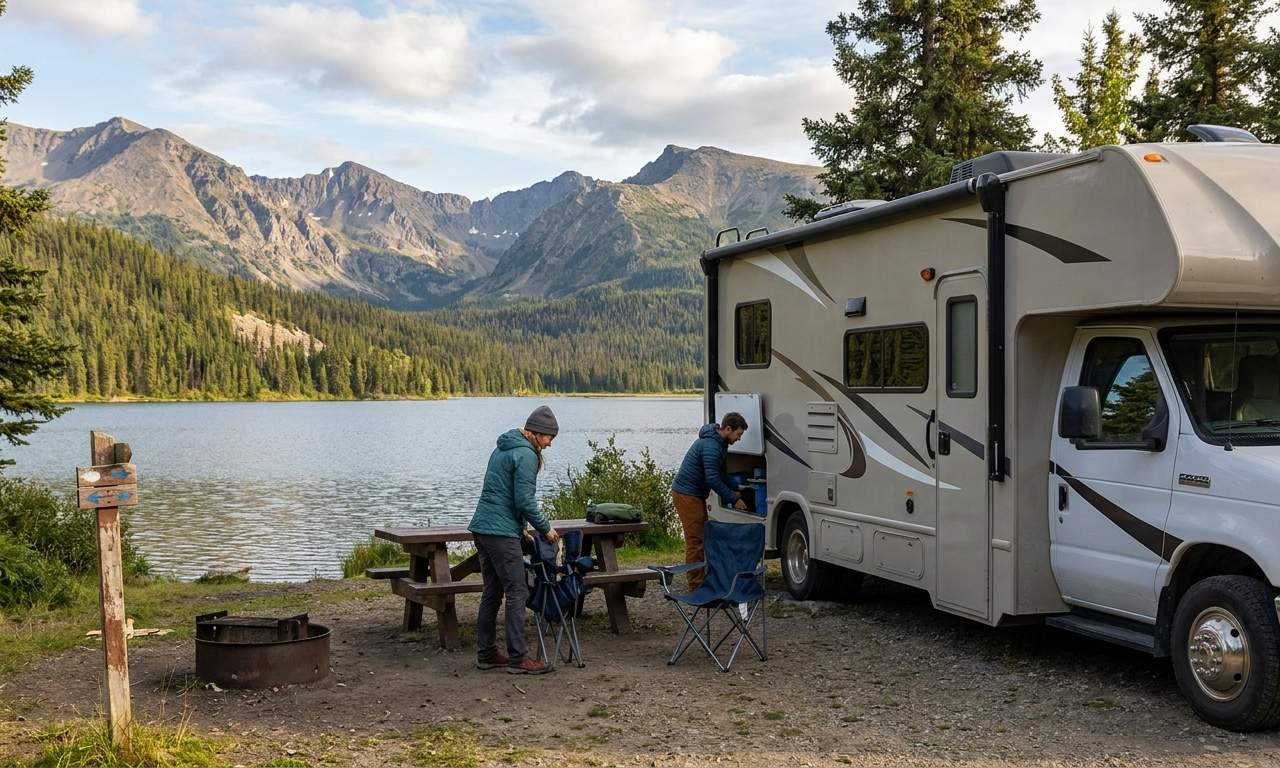
Most common rental RVs, typically those under 11,000 kg (24,250 lbs) in North Canada, can be driven legally with a standard Class 5 Canadian driver's license or an equivalent foreign license.
Foreign drivers, including those from the United States, generally need a valid driver's license from their home country. If your license is not in English or French, an International Driving Permit (IDP) is highly recommended for clarity and ease of communication with local authorities, although it is not mandatory in all cases. The minimum driver age for renting an RV in North Canada is typically 21 years old across most rental companies and vehicle classes, unlike some regions with higher age restrictions or young driver surcharges for larger motorhomes. For exceptionally large RVs exceeding 11,000 kg, a commercial driver's license (such as a Class 1 or 2 in Canada) would be required, but these are rarely encountered in the recreational rental fleet available through Bandana RV. We aim for full transparency, so rest assured, any specific requirements will be clearly outlined before you book.
Road Conditions & Terrain in North Canada
North Canada's road conditions vary significantly, ranging from well-maintained paved highways to extensive gravel roads such as the famous Dempster Highway and the Inuvik-Tuktoyaktuk Highway, which demand slower speeds and extremely careful driving.
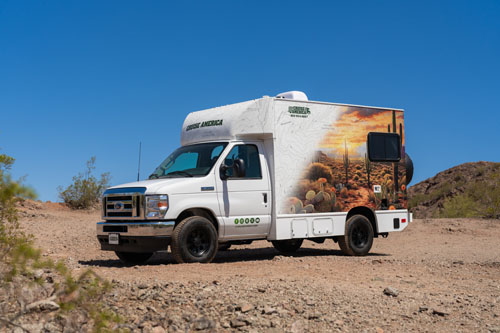
You should anticipate diverse terrain, including mountainous regions, roads affected by permafrost causing frost heaves (which can create uneven surfaces), and long stretches between services, particularly when exploring the remote Yukon and Northwest Territories. Driving a rented RV in this region requires extensive preparedness for remote conditions, including frequent wildlife encounters with animals like bears, moose, and caribou. Be ready for extreme and rapidly changing weather patterns, and always check for potential road closures due to conditions like snow or heavy rain. Many roads, especially the unpaved sections, can become very dusty in dry weather or muddy and challenging during rainfall, making vigilant driving and selecting an RV with adequate ground clearance crucial. For example, a Class TC - Truck Camper, which is built on a robust truck chassis, might offer better suitability for these challenging routes compared to other motorhome types.
RV Size Limits, Bridges & Restricted Zones
While most major North Canadian roads are built to accommodate standard RV sizes, drivers should always be mindful of their vehicle's height and length, particularly when encountering older bridges or navigating through smaller, historic communities.
Generally, there are few formal height or weight restrictions on the main highways suitable for motorhomes in North Canada; however, always pay close attention to posted signage, especially near construction zones or aged infrastructure. For very remote areas or specific ferry services (such as those for river crossings or accessing islands like Herschel Island), length or weight limits might apply, so it's always wise to check ahead for any specific routes you plan to take. Unlike some European regions that have widespread environmental zones or low-emission zones, North Canada typically does not feature such restrictions that would limit RV access based on vehicle type, offering more freedom to explore. Our team of true RV specialists is here to guide you through these details, ensuring you rent the right camper for your northern adventure with full transparency and no surprises.
Fuel: Diesel vs. Petrol & Cost per 100 km
Both diesel and petrol (gasoline) are readily available in North Canada, but petrol stations can be very sparse on remote routes, emphasizing the critical need to fuel up whenever possible, especially before long stretches of road.
When planning your budget for an airport RV trip in North Canada, fuel costs will be a significant factor. Bandana's global fleet data indicates that Class C - Alcove RVs typically consume 10–12 Liters/100 km, while Class SI - Semi-integrated RVs consume 10–11 Liters/100 km. For more compact options, Class B - Camper Vans usually average a more fuel-efficient 8-10 Liters/100 km. Larger, more robust options like Class TC - Truck Campers, which offer features like "4 Wheel Drive", typically consume 12–17 Liters/100 km, reflecting their capability for challenging terrain. Fuel prices in North Canada are notably higher than in southern regions of Canada due to the increased transportation costs to these remote areas; therefore, budgeting generously for fuel and considering carrying extra fuel for extended drives between towns is a smart move. Some of our rental motorhome partners may even include fuel discount cards on certain RVs; always inquire about these to help mitigate the higher unique costs of northern fuel. When mapping out your ancillary trip costs beyond the RV rental itself, such as fuel and campground fees, remember that RV PLANET routes allow you to itemize and track every expense for easy budgeting. On the routes offered through RV PLANET routes, you can itemize and track every expense along the way for easy budgeting.
Tolls, Vignettes & Border Rules
North Canada, specifically the Yukon, Northwest Territories, and Nunavut, generally does not impose tolls or require vignettes on its roads, ensuring a straightforward driving experience without unexpected road fees.
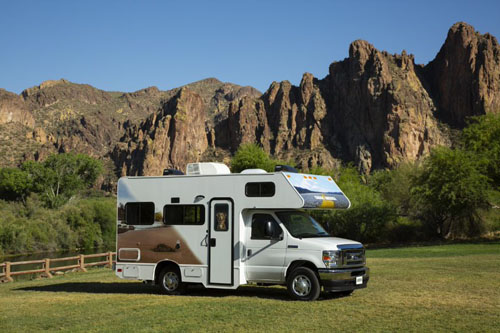
When crossing the US-Canada border with a rented RV, all occupants will need a valid passport, along with the vehicle's registration and proof of RV insurance that is valid for Canada. A critical consideration, particularly for those bringing their own RV (though less common for rentals), is the Canadian '10-year rule': RVs older than 10 years and not originally manufactured for the Canadian market may face stricter import regulations or even be prohibited entry. Ensure all passengers have appropriate travel documents, and always declare all goods, including any firearms, alcohol, and tobacco, to Canadian customs officials to avoid complications. While tolls are not present in North Canada, some rental motorhome partners offer pre-purchased toll passes for other Canadian regions, which can help avoid fines in areas with electronic tolls if your route extends beyond the North. For example, a "cruise america rv rental example Explorer" model might be suitable for an extended journey across Canada.
Driving Tips for airport rv rental Travelers
Successfully navigating North Canada in a rented RV requires remote preparedness, such as carrying satellite communication devices, extra fuel, water, and food, as cell service is minimal and services are extremely scarce on many northern routes.
Always practice wildlife awareness by driving defensively and constantly scanning for animals like bears, moose, and caribou, especially during dawn, dusk, and nighttime hours; familiarize yourself with bear safety protocols for both driving and camping. Be prepared for extreme weather changes, from the warmth of the Midnight Sun to sudden cold snaps or unexpected summer snow; check forecasts frequently and pack versatile layers of clothing. We highly recommend you travel slowly, aiming for a maximum of 100-150 km per day on average, to truly take time to feel the place, connect to the unique Indigenous culture, savor the local food, and immerse yourself in the stunning scenery. Equipping your RV with a spare tire, tire repair kit, and basic tools is wise, as roadside assistance can be hours away, making vehicle self-sufficiency crucial. Remember, many national and territorial parks reserve 25-30% of their spots for first-come-first-serve campers, so you'll find a spot; if not at the first campground, then the next one – just call ahead before driving.
Recommended RV Class for North Canada Roads
For North Canada's diverse roads and long distances, a Class SI - Semi-integrated RV or a Class TC - Truck Camper offers a good balance of comfort and ruggedness, making them excellent choices for exploration.
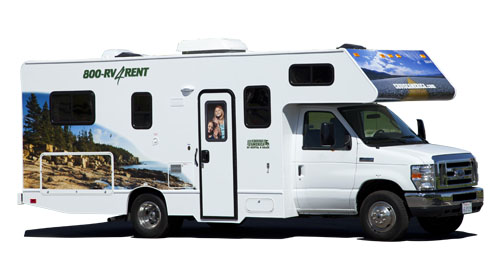
Class SI (Semi-integrated) RVs, averaging around 6.9 meters in length and often sleeping 3-4 people, provide comfortable amenities, ample storage for essential supplies, and are versatile for both paved highways and well-maintained gravel roads. The "2 Berth Tamar" is an example of a Class SI with automatic transmission. Class TC (Truck Campers), with an average length of 5.5 meters and sleeping 2 people, are built on robust truck chassis, which typically implies better ground clearance and durability for more challenging or unpaved routes. The "Patagonia Camper 4x4 double cab" is a great example featuring 4-wheel drive. While Class B (Camper Vans) are agile and fuel-efficient, often consuming 8-10 Liters/100 km, their smaller size might offer less comfort and storage capacity for extended remote travel where self-sufficiency is key. Regardless of the class you choose, prioritizing a rented RV with robust tires and adequate ground clearance is essential, given the prevalence of gravel roads and the potential for frost heaves in North Canada.
Should I Choose a Compact Van Instead of a Large RV in North Canada?
For most journeys in North Canada, there is no inherent issue with driving a larger rented RV; the enhanced comfort and generous indoor space for extended periods often outweigh the marginal maneuverability advantages of a compact campervan.
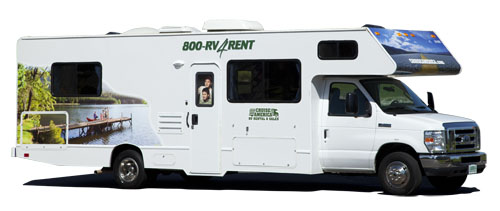
A compact van (Class B) might genuinely be a better fit if your itinerary exclusively focuses on very narrow, rarely maintained tracks, or if you simply prefer a more nimble vehicle for quick stops in tiny, less RV-friendly locales. However, larger RVs like a Class C motorhome (e.g., a "29′ Class C Motorhome" with slide-outs) or a Class SI motorhome offer significantly more living space, crucial storage capacity for essential supplies, and more extensive amenities, which are invaluable for long-distance self-sufficiency in remote areas with limited services. The trade-off for choosing a compact van is often reduced living comfort, less storage for the gear you'll need in the North, and potentially less robust suspension for rough northern roads, which can be a significant factor on a long trip. Ultimately, the best choice depends on your personal comfort preferences, the duration of your trip, and how much time you plan to spend truly off the main, well-traveled routes where services are sparse. With Bandana RV, you get the freedom to choose, supported by full transparency and genuine RV specialists who understand your needs.
Can I Park Anywhere? Free & Wild Camping Rules in North Canada
Wild camping, also known as boondocking or dispersed camping, is often permissible on vast tracts of Crown Land in North Canada, but specific rules and regulations can vary by territory (Yukon, Northwest Territories, Nunavut) and particular regions within them.
Many territorial parks offer basic campgrounds for a modest fee, typically providing essential amenities such as fire pits, pit toilets, and sometimes water, which are often safer and more convenient options for RV travelers. It is absolutely crucial to practice Leave No Trace principles rigorously: pack out everything you pack in, camp only on durable surfaces, and properly manage human waste to protect the incredibly fragile northern ecosystems. Never camp on private land or Indigenous traditional territories without obtaining explicit permission, and always respect signage indicating restricted, protected, or prohibited areas. Because rules vary so much by region, it is always recommended to check local regulations and follow local law before parking your rented motorhome overnight, particularly in sensitive environmental areas or near communities. For finding campsites and campgrounds during your trip, we recommend using RV PLANET (rvplan.net) - a great resource for locating available spots along your route.
Can I Drive an RV Into the City Center? Heights, Tunnels & Local Signage
Yes, you can drive almost anywhere without issues, including into the city centers of North Canada, such as Whitehorse or Yellowknife, as these cities are generally RV-friendly with wider roads than many older global cities; just drive slowly and carefully, using common sense and paying attention.
Always pay close attention to local signage regarding height limits, especially for covered parking garages, though surface parking is far more common for RVs, and be aware of any low tunnels or bridges. North Canadian cities do not typically feature environmental zones or residents-only streets that would broadly restrict RV access, simplifying navigation significantly. Finding suitable parking can be the main challenge in busier areas; look for designated RV parking, large supermarket parking lots, or peripheral parking with convenient transit options to main attractions. For smaller towns, street parking may be available, but always confirm local bylaws for overnight parking, as restrictions can apply. There's no need to stress about driving a rented RV into these cities – simply enjoy the journey!
What is the 3-3-3 rule for RV travel?
The '3-3-3 rule' for RV travel is a widely recommended guideline advising travelers to drive no more than 300 miles (approximately 480 kilometers, or often adapted to 100-150 km per day for slow travel), stop by 3 PM, and stay for at least 3 nights in each location.
This rule actively promotes a more relaxed and enjoyable RV experience by preventing driver fatigue and allowing ample time to safely set up camp, thoroughly explore the local area, and truly relax and connect with your surroundings. Adhering to the 3-3-3 rule is particularly beneficial in North Canada, where the vast distances between services and stunning natural beauty encourage slower travel and deeper immersion into the landscape and culture. Stopping by 3 PM ensures you have sufficient daylight to find a suitable campsite, set up your rented motorhome safely, and enjoy the evening, which is especially important during the Midnight Sun season. Staying for at least three nights minimizes the constant packing and unpacking, allowing you to settle in and experience the destination more fully without feeling rushed, making your journey more meaningful. For pre-planned routes tailored to this philosophy, check out the options on rvplan.net.
Can Americans RV in Canada?
Yes, Americans can absolutely embark on an RV adventure in Canada, including its northern territories, provided they have all the correct documentation for themselves and their vehicle, adhering to Canadian entry requirements.
Required documents typically include a valid passport for each traveler, a valid driver's license from your home state, and proof of vehicle registration and insurance that is valid for travel in Canada. For owned RVs manufactured outside Canada, especially those older than 10 years, there can be specific import regulations and a '10-year rule' that may restrict entry, so always check current Canadian import laws well in advance. It's highly advisable to carry physical copies of all critical documents and confirm that your US insurance policy extends comprehensive coverage to Canada, or alternatively, purchase a temporary non-resident policy. Always declare any firearms, excessive alcohol, or other restricted goods at the border to Canada Border Services Agency (CBSA) officials to ensure a smooth and hassle-free entry into North Canada. This upfront planning is part of our supportive approach to help you prepare for your rented RV trip.
Do you need a different license to drive an RV in Canada?
No, for the vast majority of common recreational vehicles rented for personal use in Canada, including the North, a standard Class 5 Canadian driver's license or an equivalent foreign license (such as a valid US state driver's license) is completely sufficient.
A special license is typically only required if the rented RV exceeds a significant weight threshold, usually 11,000 kg (24,250 lbs), which is exceptionally rare for standard recreational rental motorhomes and campervans. You must ensure your license is valid and not expired, and if it is not in English or French, an International Driving Permit (IDP) is strongly recommended to avoid potential communication issues with local authorities or law enforcement, though it is not strictly mandatory in most cases. The licensing requirements are generally consistent across all Canadian provinces and territories, including the Yukon and Northwest Territories, for recreational vehicles. As true RV specialists, we always advise verifying any specific license requirements directly with your chosen RV rental company, as their individual policies may have minimum age stipulations (typically 21, not 25) or require specific endorsements for certain larger models.
Is it easy to drive an RV in Canada?
Generally, driving a rented RV in Canada is considered easy on major highways, but North Canada specifically presents unique challenges that require additional planning, awareness, and preparedness to ensure a smooth journey.
The vast distances between services, the prevalence of gravel roads, and the potential for extreme weather conditions (both during summer's Midnight Sun and the colder seasons) in North Canada demand a higher level of preparedness and cautious driving. Navigating larger motorhomes or campervans requires more attention, particularly during turns, backing up, and on narrower, winding roads; however, most northern routes are designed to accommodate large vehicles, so no need to stress. Encountering magnificent wildlife, such as bears, moose, and caribou, is common in the North, requiring drivers to be vigilant and ready to react defensively. Despite these unique challenges, the stunning landscapes, unparalleled opportunities for off-grid boondocking, and unique cultural experiences in North Canada make RV travel incredibly rewarding for prepared adventurers. Our Rent&Plan service can provide pre-planned routes by professionals to help simplify your journey.
What do you need to enter Canada with a RV?
To enter Canada with a rented RV, you will primarily need a valid passport for all occupants, the RV's valid registration, and a valid driver's license from your home country for the driver(s).
Proof of RV insurance that is valid for Canada is mandatory; therefore, confirm your existing policy covers international travel or purchase a temporary non-resident policy to ensure top-level deductible reimbursement and peace of mind. If you are entering with your own RV, ensure you have all ownership documents; for a rental, carry your rental agreement and a letter of authorization from the rental company. Be prepared to declare all goods you are bringing into the country, including any food items, alcohol, tobacco, or firearms, to Canada Border Services Agency (CBSA) officers. Pay particular attention to the '10-year rule' for RVs not originally sold in Canada, as vehicles older than 10 years may be subject to specific import restrictions or prohibitions upon entry. Our comprehensive comparison platform helps you understand these requirements clearly, offering full transparency from day one.
How much is RV insurance in Canada?
RV insurance costs in Canada vary significantly based on numerous factors, including the type and value of the RV, your driving history, the province or territory of registration, and the specific coverage you choose.
On average, annual RV insurance can range from a few hundred dollars for basic coverage on a smaller campervan, like a "Patagonia Camper 4x4 double cab", to over a thousand dollars for comprehensive coverage on a large, high-value Class A motorhome. Factors influencing premiums include the RV's age, make, and model, your claims history, the amount of time you use the RV annually, and the deductible amount you select. It is crucial to obtain multiple quotes from different insurance providers specializing in RVs to find the best rate and coverage tailored to your needs. For airport RV rental vehicles in North Canada, basic insurance is typically included in the rental cost, but often with a standard deductible. You can upgrade to a top-level deductible for extra peace of mind, minimizing your out-of-pocket expenses in case of an incident. Our commitment to full transparency means all insurance details and optional upgrades are clear upfront, with no hidden fees.
What is the best travel insurance company for Canadians?
Determining the 'best' travel insurance company for Canadians is highly subjective, as the ideal choice depends on individual travel habits, health status, and specific coverage needs for their RV adventures in North Canada.
Leading travel insurance providers often include companies like Manulife, Blue Cross, Allianz Global Assistance, and Desjardins, but it's essential to compare policies directly to find one that fits your unique trip. When choosing, look for comprehensive coverage that specifically includes medical emergencies, trip cancellation/interruption, baggage loss, and specialized clauses for RV travel or adventure activities if applicable to your North Canada itinerary. Consider factors such as the company's customer service reputation, the ease of claims processing, and any pre-existing condition clauses or age limitations that might apply to your group. Always read the policy's fine print carefully to understand what is and isn't covered, especially for remote travel in North Canada where quick access to medical facilities can be limited. Our supportive team is always available to help clarify any general questions you have about preparing for your journey.
Who has the cheapest insurance for RVs?
Identifying the absolute 'cheapest' RV insurance provider in North Canada is challenging, as rates are highly individualized and fluctuate based on numerous personal and vehicle-specific factors unique to each renter.
Companies often known for competitive rates include Intact Insurance, Aviva, and TD Insurance, but the most effective way to find the lowest price is to gather multiple personalized quotes for your specific rented motorhome or campervan. To secure the most affordable insurance, compare policies from various insurers, consider bundling your RV insurance with other existing policies (e.g., home or auto insurance), and inquire about potential discounts (e.g., for experienced drivers, vehicles with advanced security features). Adjusting your deductible can also significantly impact premiums: a higher deductible typically results in lower monthly payments, but you'll pay more out-of-pocket if a claim arises. While seeking the cheapest option, ensure that it does not compromise essential coverage, particularly when traveling in remote areas of North Canada where robust protection for roadside assistance and medical emergencies is crucial. Our 24/7 support ensures you have all the information to make informed decisions without surprises.
What You Shouldn't Miss
- Drive the Dempster Highway: Experience Canada's only all-weather public road to cross the Arctic Circle, offering incredible views and wildlife encounters on a 736 km gravel adventure from Dawson City to Inuvik.
- Witness the Northern Lights: Visit during autumn or winter for the best chance to see the spectacular Aurora Borealis dance across the vast northern skies, especially outside city lights like Whitehorse or Yellowknife.
- Explore Kluane National Park and Reserve: Home to Canada's highest peak, Mount Logan (5,959 meters), and immense icefields, offering unparalleled hiking, wildlife viewing, and majestic scenery.
- Experience Indigenous Culture: Immerse yourself in the rich traditions, art, and history of the First Nations and Inuit peoples throughout the territories, perhaps at a cultural center in Whitehorse or by visiting local communities.
- Paddle the Yukon River: Trace the path of Klondike gold rush prospectors by taking a multi-day canoe or kayak trip, with your rented RV as your comfortable base at the start or end points.
- Visit the Signpost Forest: Add your own sign to the ever-growing collection of over 100,000 unique signs in Watson Lake, Yukon, a quirky and memorable stop for any RV traveler.
Looking for expert insights from Avi Bandana?
🎬 Video coming soon
Final Thoughts
A rented RV journey through North Canada is more than just a vacation; it's an immersive experience into one of the world's last true wildernesses. From the vibrant indigenous cultures to the awe-inspiring natural phenomena like the Northern Lights or the Midnight Sun, every turn of the wheel promises a new discovery. You'll gain a profound appreciation for slow travel, allowing yourself to connect deeply with the breathtaking landscapes and resilient communities of this incredible region.
With Bandana RV as your trusted partner, you're not just booking a vehicle; you're securing peace of mind and expert guidance from seasoned RV specialists. Our commitment to full transparency, coupled with robust support and flexible planning tools like RV PLANET, ensures your North Canada adventure unfolds exactly as you dreamed, without any hidden fees or unexpected hiccups. So, pack your spirit of adventure, and prepare for an unforgettable journey.
Ready to chart your course to the Canadian North? Compare Motorhome Prices for North Canada and start planning your epic RV adventure today!