In This Guide
- Can You Drive an RV in Chile? License & Age Rules
- Road Conditions & Terrain in Chile
- RV Size Limits, Bridges & Restricted Zones
- Fuel: Diesel vs. Petrol & Cost per 100 km
- Tolls, Vignettes & Border Rules
- Driving Tips for RV Rental Travelers
- Recommended RV Class for Chile Roads
- Should I Choose a Compact Van Instead of a Large RV in Chile?
- Can I Park Anywhere? Free & Wild Camping Rules in Chile
- Can I Drive an RV Into the City Center? Heights, Tunnels & Local Signage
- Top Cities for RV Rental in Chile
- What You Shouldn't Miss
Embarking on an RV adventure in Chile offers an unparalleled opportunity to explore its incredibly diverse landscapes, from the arid Atacama Desert to the majestic Patagonian fjords. With a rented motorhome or campervan, you gain the freedom to craft your own itinerary and truly immerse yourself in the country's natural beauty and vibrant culture. Whether you're picking up your rental right from a major hub like Santiago - Airport or starting your journey elsewhere, preparing for Chilean roads is key to a smooth and unforgettable trip. For live availability and current prices, start with our RV Rental Chile - Complete Guide 2026 guide.
Can You Drive an RV in Chile? License & Age Rules
Yes, you can absolutely drive a rented RV in Chile with the right documentation, making it an accessible adventure for many travelers. In Chile, a standard Class B driver's license is sufficient for operating most motorhomes and campervans, typically those weighing up to 3,500 kg (7,716 lbs). This covers the vast majority of rental vehicles, including popular Class C and Class B campervans offered by Bandana's partner suppliers like El Monte and Apollo.
For international visitors, your national driver's license is generally accepted for up to one year, but an International Driving Permit (IDP) is highly recommended. Many rental companies and insurance providers in Chile will require an IDP for confirmation and peace of mind, so it's best to obtain one before your trip. An IDP is essentially a translation of your home country's license and can prevent misunderstandings with local authorities, should you encounter them.
The minimum age for RV rental in Chile is typically 21 years old across most Bandana partner suppliers. Unlike some countries, there are generally no young driver surcharges or specific vehicle class restrictions based on age in Chile, meaning that a 21-year-old can rent a range of Class B campervans or even a larger Class C motorhome like an "rv rentals example Comfort Class" without additional age-related fees. This full transparency and clear policy are part of what makes Bandana a true RV specialist, ensuring no hidden surprises when you book your adventure.
Road Conditions & Terrain in Chile
Chile offers a spectacular and diverse range of road conditions and terrain, from well-maintained asphalt highways to challenging gravel and unpaved sections, especially in remote areas. Drivers should be prepared for this variety, which contributes to the country's unique RV travel experience. The main north-south artery, Route 5 (Pan-American Highway), is largely paved and in good condition, allowing for smooth travel across central and northern regions. However, venturing off this main route, particularly on scenic byways or towards national parks, will often lead to gravel and dirt roads.
A notable example is the Carretera Austral (Route 7) in Patagonia, a famed route stretching over 1,200 km, much of which is unpaved, featuring washboard surfaces, sharp turns, and steep inclines. This section demands careful, slow driving and a vehicle with good ground clearance, making a Class B - Camper Van like a "2 Berth Hi Top" or a Class SI - Semi-integrated RV an excellent choice. Similarly, mountainous areas in the Andes will present winding passes and varying elevations, requiring attentive driving. The arid Atacama Desert in Northern Chile, while largely flat on main roads, also features extensive gravel tracks for exploring remote geysers and salt flats.
Weather can significantly impact road conditions, with snow and ice common in the Andes during the winter months (June-September), potentially leading to road closures. Heavy rains in Southern Chile can also make unpaved roads muddy and more difficult to navigate. Always embrace a slow, scenic driving pace, averaging max 100-150 km per day, to safely navigate Chile's varied terrain and fully appreciate its stunning landscapes, from the northern deserts to the southern fjords. This deliberate pace allows for spontaneous stops and deeper connections to the local culture, food, and scenery, which is central to the Bandana philosophy of RV travel.
RV Size Limits, Bridges & Restricted Zones
Chile generally accommodates motorhomes and campervans of various sizes, though it's crucial for drivers to be mindful of their vehicle's dimensions, especially when navigating specific routes, low bridges, tunnels, and ferry crossings. While the country does not have widespread, overarching height or weight restrictions like some European nations, local signage must always be observed, particularly in older city centers or on smaller, less-trafficked roads.
For instance, ferry crossings, which are absolutely essential for exploring certain parts of Southern Chile, such as sections of the Carretera Austral, often have specific length and weight limits. Travelers planning a route involving these ferries must check these restrictions with ferry operators well in advance, as larger Class C motorhomes like a "32′ Class C Motorhome" might require different booking procedures or have fewer available slots than a more compact Class B campervan. We strongly recommend planning your ferry crossings in detail if traveling in these regions, as they are key to your journey's overall logistics and cost breakdown. On the routes offered through RV PLANET routes, you can itemize and track every expense along the way for easy budgeting.
Additionally, some major cities, including Santiago, may implement environmental zones, known as 'restricción vehicular', during periods of high pollution. These restrictions can limit vehicle access to certain areas based on license plate numbers or vehicle age, typically during peak hours. It's important to consult local regulations for Santiago and other urban centers you plan to visit, as these rules apply to all vehicles, including your rented RV. Staying informed ensures a smooth trip without unexpected fines or detours, embodying our commitment to full transparency for your RV rental experience.
Fuel: Diesel vs. Petrol & Cost per 100 km
Diesel (Diésel) is the predominant fuel type in Chile and is almost exclusively used by Bandana's RV fleet, with petrol (Bencina) also widely available. Most motorhomes and campervans you'll rent will run on diesel, which is generally more fuel-efficient for longer distances, a key consideration for an extended road trip across Chile's vast landscapes.
Based on Bandana's global fleet averages, a typical Class SI - Semi-integrated RV, like a "2 Berth Tamar" or "2 Berth Rover", consumes approximately 10-11 Liters/100 km. A larger Class C - Alcove RV, such as a "24' Class C Motorhome", averages around 10-12 Liters/100 km, while more compact Class B - Camper Vans, like an "Active Pop Top" or a "Category Van", are even more efficient, using 8-10 Liters/100 km. These figures provide a reliable benchmark for estimating your fuel budget.
Fuel costs in Chile are dynamic and can vary significantly by region. Prices for diesel typically average around 1,000 CLP per liter (approximately 1.10 USD/liter at current exchange rates), but expect to pay up to 15% more in remote areas, particularly in the extreme north and the vast stretches of Patagonia. To estimate your daily fuel expenses, calculate your chosen RV's average consumption. For example, a Class SI RV would cost roughly 10,000-11,000 CLP (about 11-12 USD) per 100 km. While some rental packages may include fuel-related perks, it's generally advisable to budget separately for fuel. When considering your total trip costs, remember that RV PLANET routes allow travelers to itemize and track every expense, including fuel, for easy budgeting.
Tolls, Vignettes & Border Rules
Tolls are common on Chile's major highways, particularly around the bustling urban centers like Santiago and on newer, privately operated routes. These tolls are often collected electronically via a TAG device, which may be pre-installed in your Bandana rental RV for convenience, or they can be paid directly at traditional toll booths. The cost of tolls varies based on distance and road segment, typically ranging from a few hundred to a few thousand Chilean pesos per section.
Chile does not operate on a vignette system, meaning you don't need a single sticker for unlimited road use. Instead, tolls are point-to-point, paid as you go. If your rental RV is not equipped with a TAG device, you'll need to pay cash at booths, so keeping small denominations of Chilean pesos on hand is advisable for a smooth journey. Always inquire with your rental supplier about TAG devices and toll payment methods to ensure full transparency and avoid unexpected fines.
Crossing borders with a rented RV into neighboring countries like Argentina requires specific and meticulous preparation. You will need essential documentation, including your valid passport and visa (if applicable), your national driver's license, an International Driving Permit (IDP), the vehicle registration, and crucially, a notarized power of attorney from the rental company granting you permission to take the RV out of Chile. International insurance coverage for the countries you intend to visit is also mandatory. Additionally, be aware of strict food import restrictions at all border crossings; fresh produce, meats, and dairy products are usually prohibited to prevent agricultural contamination. Planning for potential ferry costs, especially when traveling parts of the Carretera Austral in Southern Chile, is also crucial as these are significant and essential components of your journey's overall logistics and detailed cost breakdown.
Driving Tips for RV Rental Travelers
Traveling by a rented RV in Chile is an incredible experience, and a few practical tips can make your adventure even more enjoyable and seamless. First and foremost, embrace slow travel; aim for a maximum of 100-150 km per day on average. This pace allows you to truly feel the place, connect to the local culture, savor the food, and soak in the stunning scenery without feeling rushed, aligning perfectly with our travel philosophy. Always drive defensively, especially on unfamiliar roads, and maintain a safe distance from other vehicles.
Planning your fuel stops is critical, particularly in remote areas of Northern Chile and Patagonia, where service stations can be scarce and distances between towns are significant. It's wise to keep your fuel tank at least half full whenever possible and carry extra water and basic provisions, especially if you plan to venture off the main routes. For finding campsites and campgrounds during your trip, we recommend using RV PLANET (rvplan.net), a great resource for locating available spots along your route.
To enhance your cultural immersion, stop at roadside stalls or local markets. These are fantastic places to buy fresh produce, local delicacies, and ingredients for cooking delicious meals in your RV's kitchen. For some inspiration, check out our RV-friendly recipes playlist. Staying connected is also important; consider purchasing a local SIM card from providers like Entel, Movistar, or Claro upon arrival at Santiago - Airport or other major cities. While cellular coverage can be spotty in very remote regions, apps like iOverlander can help you find spots even offline. If you're considering a winter RVing trip (June-September), particularly in the Andes or Southern Chile, prepare for potential snow and ice conditions, limited services, and possible road closures, ensuring your RV is properly equipped for winter travel. Remember, our 24/7 support means real people are behind you before, during, and after your booking, ensuring you have assistance with your rental details every step of the way.
Recommended RV Class for Chile Roads
For navigating Chile's remarkably diverse road conditions, which include everything from smooth highways to challenging gravel sections and winding mountain passes, a Class B - Camper Van or a Class SI - Semi-integrated RV offers the most optimal balance of maneuverability, comfort, and accessibility. These classes provide the best versatility for exploring both well-trodden paths and more remote, scenic routes across the country.
Class B - Camper Vans, such as a "Category Van" or "2 Berth Hi Top" with an average length of 5.8 meters from Bandana's global fleet, are exceptional for their agility. Their compact size makes them ideal for tighter roads, navigating smaller towns, and gaining access to more secluded wild camping spots that larger vehicles might find difficult. Despite their smaller footprint, these campervans typically offer essential amenities, providing a comfortable base for a couple or a solo traveler.
Class SI - Semi-integrated RVs, like a "2 Berth Rover" or "2 Berth Tamar", averaging around 6.9 meters in length, provide significantly more living space and enhanced comfort without becoming overly cumbersome. This makes them perfectly suitable for longer journeys and varied terrain throughout Chile, from the arid Atacama to the lush Lakes District. Both Class B and Class SI motorhomes generally feature sufficient ground clearance for the unpaved sections commonly found outside major highways, allowing adventurers to explore comprehensively across regions. These vehicles empower you to experience all the wonders Chile has to offer without feeling restricted by your vehicle's size, reflecting our commitment to helping you find the right RV for your perfect trip.
Should I Choose a Compact Van Instead of a Large RV in Chile?
Choosing between a compact van (Class B Campervan) and a larger RV (Class SI or Class C motorhome) for your trip to Chile largely hinges on your personal travel style and desired level of comfort and amenities, as most RV sizes can generally be driven across the country without significant issues. For many travelers, a smaller vehicle like the "Category Van" is genuinely advantageous, especially for navigating very tight historic city centers, narrower mountain passes, and accessing more secluded wild camping spots that a larger "Adak Argonaut 23 - Gold" Class C motorhome might struggle with.
However, the additional comfort, expanded indoor living space, and comprehensive amenities of a larger RV often present a compelling argument. For instance, a Class C motorhome offers a dedicated shower/toilet, a more spacious kitchen, and increased storage, which can significantly enhance the experience on longer trips or for families traveling with kids. While a compact van like an "Active Pop Top" is nimble, a larger "29′ Class C Motorhome" provides a superior home-on-wheels experience, especially when you consider potential days of inclement weather or the need for more personal space.
For journeys exploring vast regions such as the Carretera Austral, the Elqui Valley, or the Lakes District, the increased living space and storage capacity of a larger RV or even a medium-sized Class SI motorhome often lead to a more relaxed and enjoyable experience. This trade-off in size versus comfort is minimal, as careful and slow driving can mitigate most maneuverability concerns. Unless your itinerary is strictly focused on extreme off-road driving or navigating incredibly dense urban environments daily, a medium to large RV will typically provide a more comfortable and versatile base camp for exploring Chile's incredibly vast and varied landscapes, allowing you to maximize your adventure with peace of mind. Remember, with our top-level deductible reimbursement optional upgrade, you can travel with added security.
Can I Park Anywhere? Free & Wild Camping Rules in Chile
While wild camping is a common practice and often tolerated in many rural areas of Chile, especially in vast, undeveloped regions like Patagonia or the high desert of the Atacama, specific laws and regulations regarding overnight parking vary significantly by municipality and protected area. It is crucial to understand that "tolerated" does not always mean "legal" everywhere, so responsible and respectful practices are paramount for ensuring the continuation of this freedom.
Responsible wild camping etiquette is absolutely essential: always leave no trace behind, carry out all your trash, respect private property by seeking permission if unsure, and avoid sensitive ecological zones, especially within national parks where specific rules usually apply. Resources like the iOverlander app are invaluable for finding established wild camping spots, designated free parking areas, and gaining local insights on safe and permissible overnight stays across Chile. This crowdsourced information can guide you to beautiful, remote locations while adhering to local customs.
For those who prefer amenities, official campgrounds and RV parks are available throughout Chile, offering services such as power hookups, fresh water sources, and waste disposal facilities. The quality and fees of these campgrounds can vary widely, ranging from basic municipal sites to well-equipped private parks. These fees are a part of your detailed cost breakdown for your trip, so research is advised. Always check local regulations, respect posted signage, and when in doubt, seek local permission before parking overnight to ensure compliance with Chilean law. Remember, while we don't assist with finding campsites during your trip, RV PLANET (rvplan.net) is an excellent resource for locating available spots along your route.
Can I Drive an RV Into the City Center? Heights, Tunnels & Local Signage
In most Chilean cities, it is generally possible to drive a rented RV, motorhome, or campervan into the city center, but careful attention to local signage is absolutely essential. Drivers must be particularly vigilant regarding posted height limits for tunnels and underpasses, as well as any specific vehicle restrictions. Drive slowly and carefully, and you can drive almost anywhere without issues. No need to stress - just use common sense and pay attention.
Major cities like Santiago, Valparaíso, and Concepción have developed infrastructure that can accommodate RVs on many main roads. However, older city centers and historic districts may feature narrower streets, pedestrian-only zones, or lower overhead clearances that demand extra caution. Always observe signs indicating vehicle height restrictions for tunnels, underpasses, and multi-story car parks. Failing to do so could lead to damage or fines. For instance, some Class C motorhomes, like a "cruise america rv rental example Explorer" with a height of 3.66m, may face more restrictions than a compact "Category Van" or "Active Pop Top" with a height around 2.5m.
Santiago, as Chile's capital and largest city, may implement specific "restricción vehicular" rules during peak pollution times, which can limit vehicle access to central areas based on license plate numbers (e.g., odd or even plates on certain days). These regulations apply to all vehicles, including RVs, so check daily updates if you plan to drive into Santiago's core. For parking in city centers, especially for larger motorhomes, it can often be challenging to find suitable spots. We recommend considering parking on the outskirts of major cities and utilizing efficient public transport systems (like Santiago's Metro) to explore central areas, avoiding potential issues with RV size limits and simplifying your urban experience.
Top Cities for RV Rental in Chile
Chile offers several excellent starting points for your RV adventure, each providing unique access to different regions of this diverse country. Picking up your rented motorhome from a major city, particularly one with an international airport, simplifies your logistics and allows for immediate exploration. Bandana partners with leading RV suppliers in these key locations, ensuring a wide selection of vehicles from campervans to larger Class C motorhomes.
Santiago - Airport (SCL): As Chile's capital and largest city, Santiago is the primary gateway for international travelers. Renting an RV from Santiago - Airport provides direct access to the central wine regions, the beautiful Pacific coastline, and the Andean foothills. It's an ideal starting point for journeys both north to the Atacama and south towards Patagonia, offering the widest range of rental options and suppliers like El Monte and Apollo. From here, you can easily head north for an adventure in the Atacama or begin a southern traverse, perhaps following routes discussed in "One-Way RV Rental in Chile - Price Guide 2026".
Arica: Located in the far north, Arica is perfect for exploring the Atacama Desert, the driest desert in the world. Picking up a campervan here allows you to immerse yourself in lunar landscapes, geysers, and unique high-altitude lagoons without a long drive from Santiago. It's an excellent choice for a dedicated Northern Chile adventure.
Calama - Airport (CJC): Calama serves as the closest airport to San Pedro de Atacama, the heart of the Atacama Desert. Renting an RV from Calama - Airport means you are immediately surrounded by unparalleled desert scenery, ready to discover salt flats, hot springs, and vast observatories. This is a strategic starting point if your main focus is the northern region and its natural wonders.
Puerto Montt: Situated in the Lakes District, Puerto Montt is the traditional starting point for exploring Southern Chile and the gateway to Patagonia. From here, you can embark on the legendary Carretera Austral, wind through lush forests, pristine lakes, and majestic fjords. Many one-way RV rental options might begin here, allowing you to venture deeper south. The region also offers numerous scenic spots for cooking fresh meals in your RV, perhaps with ingredients from local markets, and you can consult our RV-friendly recipes playlist for ideas.
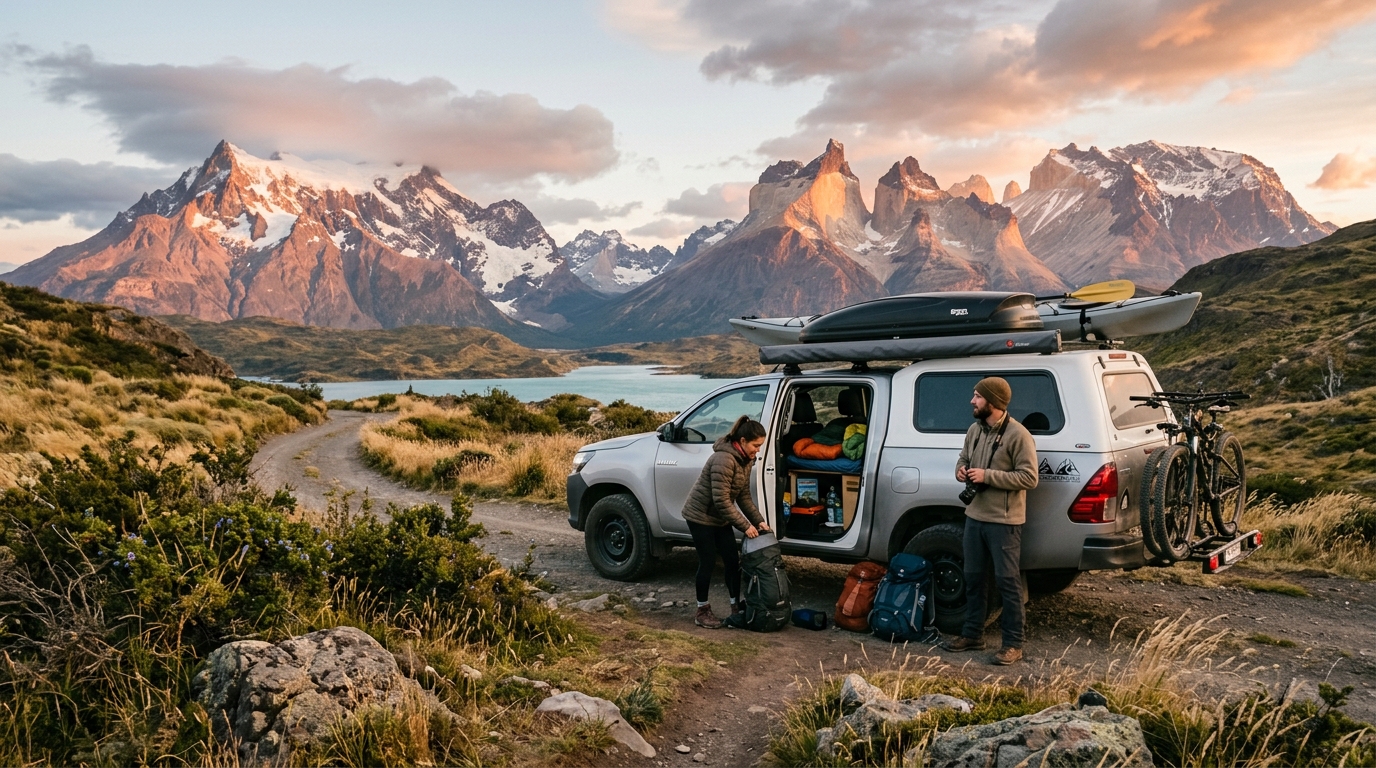
Punta Arenas: For the ultimate Patagonian adventure, Punta Arenas, located on the Strait of Magellan, is the ideal pickup location. It offers access to iconic destinations like Torres del Paine National Park and routes towards Tierra del Fuego. Renting an RV here allows you to maximize your time in this breathtaking, remote region, perfect for those seeking a more rugged and extended road trip.
These cities provide convenient access to Chile's diverse regions, ensuring your RV rental journey starts off on the right foot. When planning your trip, consider checking out our guides like "RV Rental in Chile - Prices and Best Deals 2026" and "Cheap RV Rental in Chile - Budget Guide 2026" to help you find the best vehicle for your chosen starting city and route.
🎬 Video coming soon
What You Shouldn't Miss
Chile is a land of extremes and incredible beauty, offering countless opportunities for unforgettable RV adventures. Here are some must-do experiences that truly showcase the essence of this magnificent country:
- Explore the Atacama Desert: Drive through the otherworldly landscapes of the Atacama, visiting the Valley of the Moon (Valle de la Luna) for breathtaking sunsets, exploring vast salt flats like Salar de Atacama, and marveling at the El Tatio geysers at dawn. The crisp, clear desert nights are perfect for stargazing from your rented campervan.
- Journey the Carretera Austral: This iconic route (Route 7) in Patagonia is a bucket-list drive. Traverse a mix of paved and gravel roads, cross fjords on scenic ferries, and discover national parks like Queulat with its hanging glacier, ending in remote towns like Villa O'Higgins. For detailed planning, consider pre-planned routes available through Rent&Plan on rvplan.net, which can save you 25% on planning services.
- Sip & Explore in the Central Valley Wine Regions: Just a short drive from Santiago - Airport, the Maipo, Colchagua, and Casablanca Valleys offer stunning vineyard scenery and world-class wine tastings. Park your motorhome among the vines and enjoy the relaxed pace of Chilean wine country.
- Hike in Torres del Paine National Park: While you can't drive your RV deep into the park's hiking trails, the surrounding areas near Puerto Natales and Punta Arenas offer ample camping spots. From there, take day trips to witness the iconic granite towers, vibrant turquoise lakes, and diverse wildlife of this Patagonian gem.
- Discover the Lakes District: South of Santiago, this region boasts pristine lakes, snow-capped volcanoes like Osorno, and charming towns influenced by German colonization. Drive around Lago Llanquihue, visit Puerto Varas, and enjoy outdoor activities like kayaking or fly-fishing.
- Looking for expert insights from Avi Bandana? Top 5 Adventures - recommendations from Avi Bandana.
Final Thoughts
Renting an RV and driving through Chile from a major airport like Santiago - Airport is more than just a trip; it's an immersive experience that puts you in control of your adventure. Imagine waking up to the majestic Andes, sipping coffee by a Patagonian fjord, or stargazing in the Atacama, all from the comfort of your mobile home. We at Bandana Caravan are passionate about making these dreams a reality for you.
We're here to handle the details, so you can truly live the journey. From ensuring full transparency in pricing to providing robust support before and after your booking, we strive to make your planning seamless and stress-free. Remember, God is in the small details, and we take care of them. That's what makes the big difference in your travel experience.
So, take the leap! Whether you're a meticulous planner or a spontaneous explorer, Chile's diverse landscapes await. Start comparing motorhome prices for Chile today and begin crafting your unforgettable road trip through this incredible country. Your adventure starts here!
Compare Motorhome Prices for Chile