For live availability and current prices, start with our RV Rental West Canada - Complete Guide 2026 guide.
In This Guide
- Where to Camp in West Canada — Top Options
- Campground Types in West Canada (National, Private, Wild)
- Featured RV Park or Campground in West Canada
- Hookups & Amenities — What to Expect
- Booking Windows & Reservations in West Canada
- Nearby Supermarkets & Resupply Points
- Best RV Class for Camping in West Canada
- How to Save on Campgrounds in West Canada
- How much does it cost to rent an RV in Western Canada?
- What is the cheapest way to RV in Canada?
- Is renting an RV in Canada worth it?
- What is the best month to RV in Western Canada?
- Is it cheaper to rent an RV or stay in hotels in Canada?
- What are the rules for camping on Crown land in BC?
- How do you camp for free in British Columbia?
- Where is the best place to rent an RV in Canada?
- What is the cheapest time to rent an RV in Canada?
- Can you take a rental RV into national parks in Canada?
Where to Camp in West Canada — Top Options
When planning a cheap RV rental adventure in West Canada, you'll find a diverse range of camping experiences. The Canadian Rockies, encompassing areas around Banff and Jasper National Parks, are iconic for their majestic mountain landscapes and well-developed campground infrastructure, offering stunning views right from your doorstep. For a more relaxed RV journey, the Okanagan Valley in British Columbia provides a beautiful setting with lakeside camping, abundant vineyards, and a warmer climate, perfect for those seeking sunshine and local wines. Vancouver Island presents a captivating mix of coastal forests, breathtaking ocean views, and charming towns, with numerous provincial and private campgrounds scattered throughout. For those seeking excellent facilities and natural beauty at a more budget-friendly price point than national parks, consider exploring the numerous provincial parks across British Columbia and Alberta; these often provide a more intimate connection with nature.
Campground Types in West Canada (National, Private, Wild)
Understanding the different types of campgrounds available is key to a budget-friendly RV trip in West Canada. **National Park Campgrounds**, managed by Parks Canada, are situated in breathtaking locations and often require advance booking, especially for peak season. They offer a range of amenities, from basic sites to those with full hookups, and require a park pass for entry. **Provincial Park Campgrounds**, operated by BC Parks and Alberta Parks, are similar to national parks but can sometimes be less crowded and more budget-friendly, providing a spectrum of amenities. For the most amenities, including Wi-Fi, pools, and laundry, **Private Campgrounds** (like KOA or independent resorts) are your best bet, though they are typically the most expensive. If you're looking for the ultimate in budget camping, **Wild Camping or Boondocking** on Crown land (publicly owned land) is legal in many areas of Western Canada, offering free, dispersed camping for up to 14 days. This option requires complete self-sufficiency in terms of water, power, and waste disposal, alongside strict adherence to 'Leave No Trace' principles and local regulations.
Featured RV Park or Campground in West Canada
When selecting a featured RV park or campground in West Canada for a budget-friendly trip, balancing affordability with essential amenities and proximity to natural attractions is crucial. It's often best to prioritize sites offering basic power and water hookups over those with full-service resort amenities to keep your costs down. Look for campgrounds with consistently positive reviews for cleanliness, quiet atmosphere, and convenient access to hiking trails, lakes, or charming small towns that match your travel interests. Many provincial park campgrounds, while perhaps not offering extensive resort-style amenities, provide excellent value, scenic locations, and an authentic West Canadian camping experience, making them a top choice for those on a budget.
Hookups & Amenities — What to Expect
Most RV campgrounds in Western Canada offer a variety of site types, with 'full hookups' typically providing 30-amp or 50-amp electrical service (120V is standard), potable water connections, and sewer dump connections for grey and black water tanks. You can generally expect shared facilities like central dump stations for sites without direct sewer hookups, and communal washrooms often equipped with flush toilets and coin-operated hot showers. Many campgrounds also provide picnic tables and fire rings at each site, with firewood typically available for purchase on location. While Wi-Fi can be spotty or limited to common areas in many campgrounds, private parks are more likely to offer reliable internet access, and laundry facilities are common in larger private parks. It's always advisable to confirm the specific amenities and hookup availability when booking your site, especially if you have particular needs. On the routes offered through RV PLANET routes, you can itemize and track every expense along the way for easy budgeting.
Booking Windows & Reservations in West Canada
For those who prefer to plan ahead, securing campground reservations in popular Western Canada destinations, particularly within National Parks like Banff and Jasper, should ideally be done 6 to 12 months in advance, especially for peak summer dates. Provincial park campgrounds, such as those in BC Parks and Alberta Parks, typically open their booking windows 2 to 4 months ahead of the desired date and can fill up rapidly for weekends and holidays. Spontaneous travelers can often find same-day or next-day spots, particularly in less popular areas or during the shoulder seasons (May-June and September-October). It's also worth noting that many national park campgrounds reserve 25%-30% of their sites as first-come, first-served (FCFS). While finding a spot is usually possible, it might require flexibility and calling ahead to confirm availability before driving to a specific campground, reassuring you that if your first choice isn't available, an alternative is often nearby.
Nearby Supermarkets & Resupply Points
When embarking on an RV journey through Western Canada, you'll find ample supermarket options for restocking your supplies in major towns and cities. Large chains like Superstore, Safeway, Save-On-Foods, and Walmart are widely available. However, in smaller communities, especially those closer to popular parks or remote routes, you may encounter independent grocery stores or general stores with more limited selections and potentially higher prices. To optimize your budget and convenience, plan to stock up on groceries and essentials in larger hubs such as Calgary, Vancouver, Kelowna, Kamloops, or Canmore before venturing into more remote areas of the Canadian Rockies or rural British Columbia. During the season, visiting local farmer's markets is also a fantastic way to source fresh produce and discover unique regional items, often at a cost-effective price.
Best RV Class for Camping in West Canada
For those seeking a cheap RV camping experience in Western Canada, **Class B Camper Vans** are an excellent choice due to their superior maneuverability and fuel efficiency, typically averaging 8-10 Liters/100 Km. These compact vehicles are ideal for navigating narrower roads, urban areas, and more remote boondocking sites, offering essential amenities in a small footprint. Bandana's fleet of Class B vans averages 5.8 meters in length and comfortably sleeps 3.2 people, allowing easier access to diverse camping locations, including national park campgrounds with size restrictions and more discreet wild camping spots. The **Class C Semi-integrated RVs** offer a great balance of comfort and manageability, with Bandana's fleet averaging 6.9 meters in length and sleeping up to 3.8 people, consuming around 10-11 Liters/100 km. While larger **Class C Alcove** and **Class A Integrated** RVs provide more living space and amenities, their higher rental costs, increased fuel consumption (10-12 L/100 km for Class C, 8-11 L/100 km for Class A), and reduced maneuverability might not be the best fit for a 'cheap' or 'off-the-beaten-path' camping style in West Canada.
How to Save on Campgrounds in West Canada
To significantly reduce campground costs during your Western Canada RV trip, consider leveraging campground discount cards and programs. Many private campgrounds offer membership benefits that can save on nightly rates. Traveling during the shoulder seasons—specifically late May to early June and late September to October—is highly recommended, as lower demand often translates to reduced nightly rates and more flexible booking options. Prioritize municipal, regional, or provincial campgrounds over private RV resorts, as they generally offer lower prices for basic to mid-range amenities. For extended stays, many campgrounds offer discounts for weekly rates or longer, which can substantially cut your average nightly cost. Additionally, if you're traveling with another RV, inquire about group camping options to share hookup costs, or opt for unserviced or partial hookup sites, which are typically cheaper than full hookup options.
How much does it cost to rent an RV in Western Canada?
RV rental costs in Western Canada typically range from CAD $100 to $300+ per night for the vehicle itself, with pricing heavily influenced by the RV class, travel season, rental duration, and the specific rental company. Beyond the base rental fee, be prepared for additional expenses like fuel (a Class B Camper Van from Bandana's fleet averages 8-10 L/100 Km, while a Class C is closer to 10-12 L/100 Km), campground fees (which can range from CAD $25-$80+ per night depending on the type of site), and National Park Passes. For example, a Parks Canada Discovery Pass for a family is priced at $151.25 for 2026. Budget also for mileage packages if unlimited mileage isn't included, insurance, optional convenience kits, and potential one-way fees. Food costs can be managed economically by cooking most meals in your RV, but factor in grocery prices, which can vary, with smaller towns sometimes having higher costs. For ideas you can prep on the road, watch our RV-friendly recipes playlist on YouTube.
What is the cheapest way to RV in Canada?
The most budget-friendly way to RV in Canada involves selecting a smaller, more fuel-efficient RV such as a Class B Camper Van (averaging 8-10 L/100 Km fuel consumption), traveling during the shoulder seasons (May-June or September-October), and strategically utilizing free camping options where legally permissible. Prioritizing wild camping or boondocking on Crown land in British Columbia or Alberta—while strictly adhering to the 14-day stay limit and 'Leave No Trace' principles—can entirely eliminate nightly campground fees. Minimizing driving distances will also help save on fuel costs. Additionally, planning your route to resupply groceries in larger towns where prices are typically lower and cooking the majority of your meals in your RV are excellent strategies. Finally, keeping an eye out for special rental deals, early bird discounts, or longer-term rental packages, and considering a campground discount pass for paid sites when boondocking isn't an option, can further enhance savings.
Is renting an RV in Canada worth it?
Renting an RV in Canada is often considered incredibly worthwhile for travelers seeking unparalleled freedom and flexibility to explore Western Canada's vast and diverse landscapes at their own pace, offering a unique combination of accommodation and transportation. For families or groups, an RV rental can prove to be a more cost-effective alternative to booking multiple hotel rooms, car rentals, and dining out for every meal, particularly on trips longer than a week, making it a valuable investment in the overall travel experience. The ability to prepare your own meals, avoid the hassle of daily packing and unpacking, and wake up immersed in stunning natural settings like national or provincial parks provides an intimate connection with nature that is unmatched by traditional hotel stays. While it requires some planning for fuel, campgrounds, and vehicle operation, the sense of adventure and the deep connection with nature often outweigh these considerations for many visitors to Western Canada.
What is the best month to RV in Western Canada?
The prime months for RVing in Western Canada are typically July and August, offering guaranteed warm weather and full accessibility to all attractions and mountain passes, though these are also the busiest and most expensive periods. The shoulder seasons, from May to June and September to early October, provide an excellent balance of pleasant weather, fewer crowds, and lower prices for both RV rentals and campgrounds, making them ideal for budget-conscious travelers. During peak summer, be mindful of the potential impacts of wildfire season and always check local air quality advisories and park regulations; in the shoulder seasons, be prepared for cooler evenings and the possibility of early or late-season snow at higher elevations, which may necessitate checking mountain pass closures. Winter RVing (November through April) is possible but presents significant challenges, including cold weather, limited open campgrounds, and specific vehicle requirements like a winterized RV and appropriate tires, offering a unique experience only for those well-prepared for cold-weather camping.
Is it cheaper to rent an RV or stay in hotels in Canada?
For trips extending a week or more, especially for families or groups, renting an RV in Canada is often significantly more economical than combining the costs of hotel stays, car rentals, and dining out. An RV consolidates accommodation and transportation into a single expense, and the onboard kitchen allows for drastic reductions in food costs compared to eating out for every meal. While the initial RV rental fee, fuel costs (averaging 8-12 L/100 Km depending on RV class), and campground fees do add up, these are typically offset by the savings on multiple hotel rooms, daily car rental charges, and restaurant bills over an extended period. The break-even point, where RV travel becomes the more economical choice, often occurs after approximately 5 to 7 nights, offering greater value for longer itineraries exploring Western Canada's diverse regions.
What are the rules for camping on Crown land in BC?
In British Columbia, recreational camping on Crown land is generally permitted for up to 14 days within any 30-day period in a specific location, and typically does not incur fees for non-commercial use, provided the area is not otherwise restricted. Campers must strictly adhere to 'Leave No Trace' principles: packing out all garbage, properly disposing of human and grey water waste (never directly onto the ground), and minimizing campfire impacts by using existing fire rings and ensuring fires are completely extinguished. It is crucial to understand that Crown land regulations vary; areas may be restricted due to forestry operations, wildfire risks, critical wildlife habitats, private leases, or Indigenous land claims, making it essential to consult maps and local regulations before you go. Always carry maps that clearly identify Crown land boundaries, be fully self-sufficient with water and sanitation, and be prepared for limited or no cell service, ensuring you have robust emergency preparedness protocols in place for remote areas.
How do you camp for free in British Columbia?
Free camping in British Columbia is primarily achieved by responsibly utilizing Crown land (publicly owned land), where recreational camping is permitted for up to 14 days without a fee in many areas, outside of designated fee-based sites. To locate these free camping spots, it's recommended to consult resources like Backroad Mapbooks, use apps such as iOverlander, and research areas accessible via Forest Service Roads (FSRs), which often lead to suitable dispersed camping locations. Adherence to strict 'Leave No Trace' ethics is paramount; you must pack out everything you pack in, manage all waste properly, and be mindful of wildlife and local ecosystems. Ensure your RV is self-contained with adequate water and power, and a means to store waste, as free camping areas typically offer no amenities. Always check for fire bans and be prepared for self-sufficiency, as cell service may be unavailable.
Where is the best place to rent an RV in Canada?
The most advantageous locations to rent an RV in Western Canada are major gateway cities like Vancouver (British Columbia) and Calgary (Alberta). These cities offer the widest selection of rental companies, diverse RV classes, and often the most competitive pricing due to high demand and numerous rental depots. Vancouver serves as an excellent starting point for exploring Vancouver Island, the BC Interior, and coastal routes, while Calgary is the primary gateway to the awe-inspiring Canadian Rockies, including Banff and Jasper National Parks. Edmonton, Alberta, also provides convenient RV rental options, serving as a great base for exploring northern Alberta and the eastern side of the Rockies. Consider renting from depots conveniently located near international airports to streamline your travel logistics, and always compare prices and vehicle availability across multiple rental providers in these key locations.
What is the cheapest time to rent an RV in Canada?
The most economical time to rent an RV in Canada is generally during the shoulder seasons—specifically late May to early June and late September to October. During these periods, demand for rentals is lower than the peak summer months, which typically results in reduced rental rates. The off-season, from November to April, usually offers the absolute lowest rental prices, but travelers must be prepared for colder weather, potential road closures (especially in mountain passes), limited campground availability, and the necessity of a winterized RV. Booking your RV rental well in advance, even during the shoulder season, can help secure better rates and ensure the availability of your preferred vehicle class. Additionally, opting for mid-week pickups and returns over weekends can sometimes lead to further savings on rental costs.
Can you take a rental RV into national parks in Canada?
Yes, you can absolutely take a rental RV into Canada's national parks, but you are required to purchase a valid Parks Canada Pass, which serves as your entry permit for all occupants in the vehicle for the duration of your visit. A Parks Canada Pass can be acquired as a daily pass (per person or per family/group) or as an annual Discovery Pass, which grants unlimited entry to all national parks and national historic sites across Canada for 2026. While the pass grants park entry, securing a camping spot within national park campgrounds requires a separate reservation and fee, which should be booked well in advance due to high demand. Always adhere to specific park regulations regarding wildlife interaction, campfires, waste management, and speed limits. Be aware that some very large RVs might encounter restrictions on certain park roads or specific campground loops.
What You Shouldn't Miss
- Embark on the
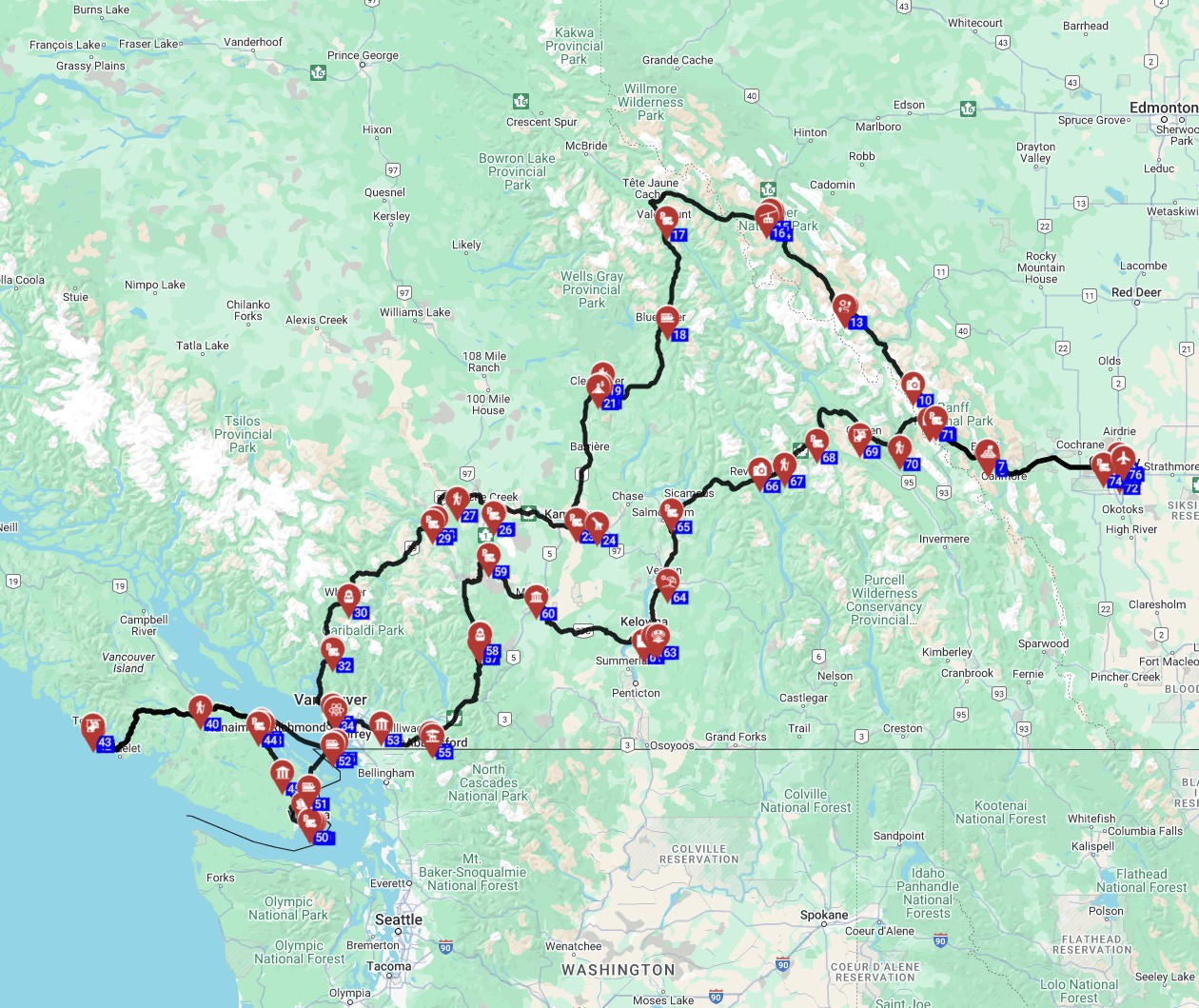
, a 19-day, 2659 km journey showcasing diverse landscapes and activities, including a visit to the Vancouver Aquarium and exploring coastal rainforests.
 Vancouver Round Trip - West Canada Cycling Adventure
 - Experience the raw power of nature at Takakkaw Falls in Yoho National Park, a cascade whose spray touches both sides of the Continental Divide, a geological marvel often accessible via RV.
- Drive through ancient temperate rainforests on Vancouver Island, like those in Cathedral Grove, marveling at trees that have stood for thousands of years.
- Spot wildlife safely from your RV near Banff National Park's extensive network of wildlife overpasses and underpasses, engineered for safe animal crossings on major highways.
- Discover BC's unique desert environment in the Okanagan Valley, a surprising landscape of cacti and rattlesnakes offering a stark contrast to the rest of Western Canada's scenery.
Final Thoughts
Western Canada offers an unparalleled RV adventure, from the towering peaks of the Rockies to the serene coastal rainforests. By planning wisely and choosing the right vehicle and campsites, you can experience the vast beauty of this region on a budget. Remember that flexibility, booking in advance for popular spots, and embracing the diverse camping options—from full hookups to wild camping—will enhance your journey.
At Bandana Caravan, we're dedicated to making your RV rental process as smooth and transparent as possible. We believe in empowering you with the information needed to plan an unforgettable trip, ensuring you get the best value without any surprises. Get inspired for your next adventure and discover the freedom of the open road!
Get inspired for your next trip! Discover top destinations, planning tips, all in one place! Plan a trip itinerary in advance with minimal effort and maximum enjoyment.