In This Guide
- Where to Camp in Alaska - Top Options
- Campground Types in Alaska (National, Private, Wild)
- Featured RV Park or Campground in Alaska
- Hookups & Amenities - What to Expect
- Booking Windows & Reservations in Alaska
- Nearby Supermarkets & Resupply Points
- Best RV Class for Camping in Alaska
- How to Save on Campgrounds in Alaska
- Can I park my RV anywhere in Alaska?
- What is the 3-3-3 rule for RVs and campers?
- Where is the best place to park an RV for free?
- Is boondocking legal in Alaska?
- Can you park an RV anywhere in Alaska?
- What does FF mean in camping?
- What is the best time of year to RV to Alaska?
- How much are campsites in Alaska?
- What is the 3-3-3 rule for camping?
- What is the 200 rule for camping?
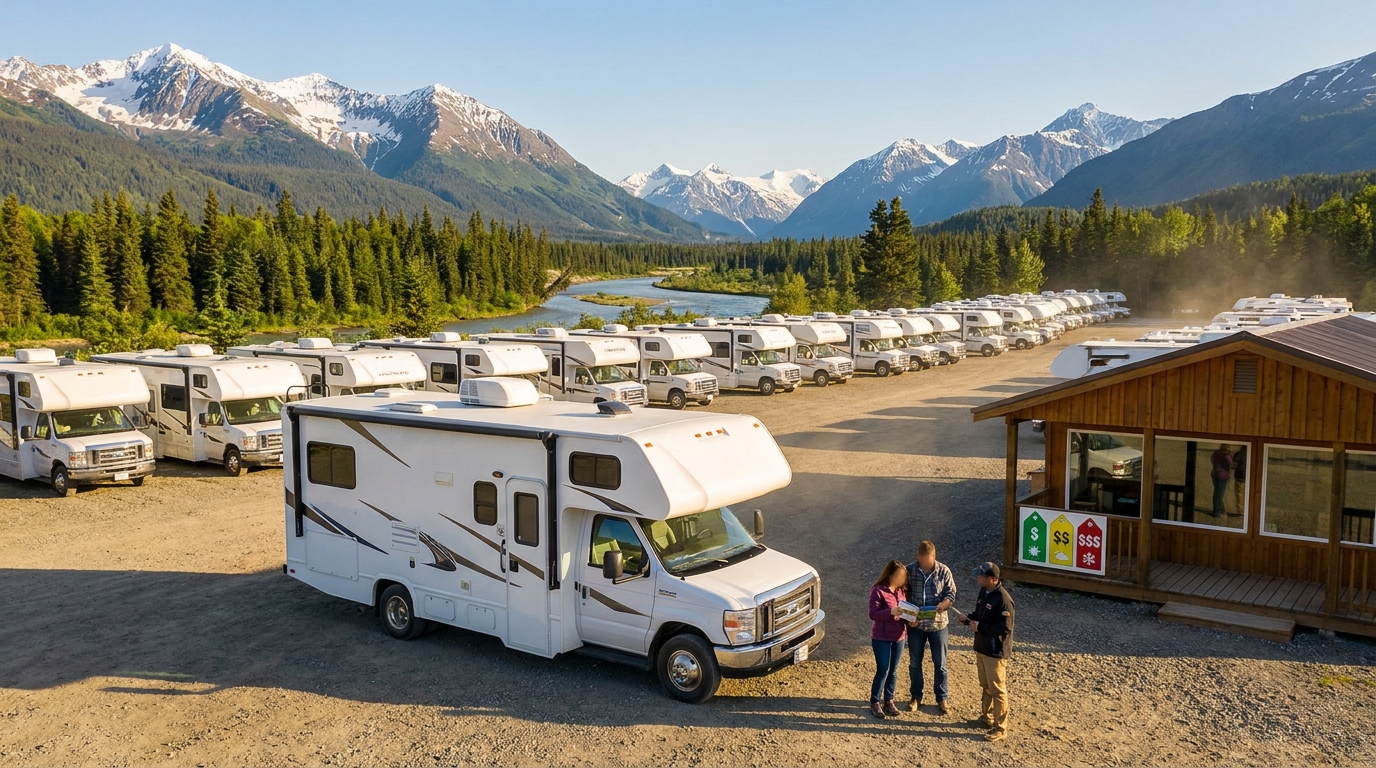
Exploring the vast, untamed wilderness of Alaska with a rented RV offers unparalleled freedom, allowing you to chase stunning scenery and abundant wildlife on your terms. This detailed guide to cheap RV camping in Alaska focuses on making your adventure both memorable and budget-friendly, showing you how to find the best spots and save on your journey through the Last Frontier. For live availability and current prices, start with our RV Rental Alaska - Complete Guide 2026 guide, where you'll find comprehensive information on everything from booking your perfect motorhome to navigating local regulations.
Where to Camp in Alaska - Top Options
Alaska offers diverse camping experiences, from fully-serviced private RV parks to remote, unserviced dispersed camping on public lands, providing options for every budget and style of traveler. Key regions for RV camping include the interior near Denali National Park, the scenic Kenai Peninsula (home to charming towns like Seward and Homer), and the immense Chugach National Forest. When planning your route, consider areas around Fairbanks for exceptional northern lights viewing during shoulder seasons (early spring or late fall) or the easily accessible parks near Anchorage for convenient starting points.
Availability at popular spots, especially within national parks, often requires advance reservations, which we'll delve into further. Remember that in a rented motorhome or campervan, your campsite is your mobile home base, offering the flexibility to move as the spirit moves you. To truly grasp the scope of RV travel here, consider looking at a comprehensive resource like our RV Travel Guide to Alaska - Tips and Top Spots 2026.
Campground Types in Alaska (National, Private, Wild)
Alaska provides a wide array of campground types, each with varying amenities and cost structures, allowing RV renters to tailor their camping experience to their preferences and budget. National Parks and National Forests primarily offer rustic campgrounds, often featuring limited amenities such as water pumps and pit toilets, with few to no electrical hookups. State Parks and Recreation Areas provide a good balance, offering sites ranging from basic to those with electric hookups, and are generally more affordable than private parks.
Private RV parks typically offer the most comprehensive amenities, including full hookups (electric, water, sewer), Wi-Fi, laundry facilities, and hot showers, usually located near towns or popular attractions but at higher price points. For the most budget-friendly option, wild camping (also known as dispersed camping or boondocking) is legal on much of Alaska's Bureau of Land Management (BLM) land and certain state lands, allowing for free, self-sufficient camping. It is critically important to check local borough ordinances and to always avoid Native Corporation lands without explicit, prior permission to prevent trespassing. Always practice 'Leave No Trace' principles to preserve Alaska's pristine environment for all.
Featured RV Park or Campground in Alaska
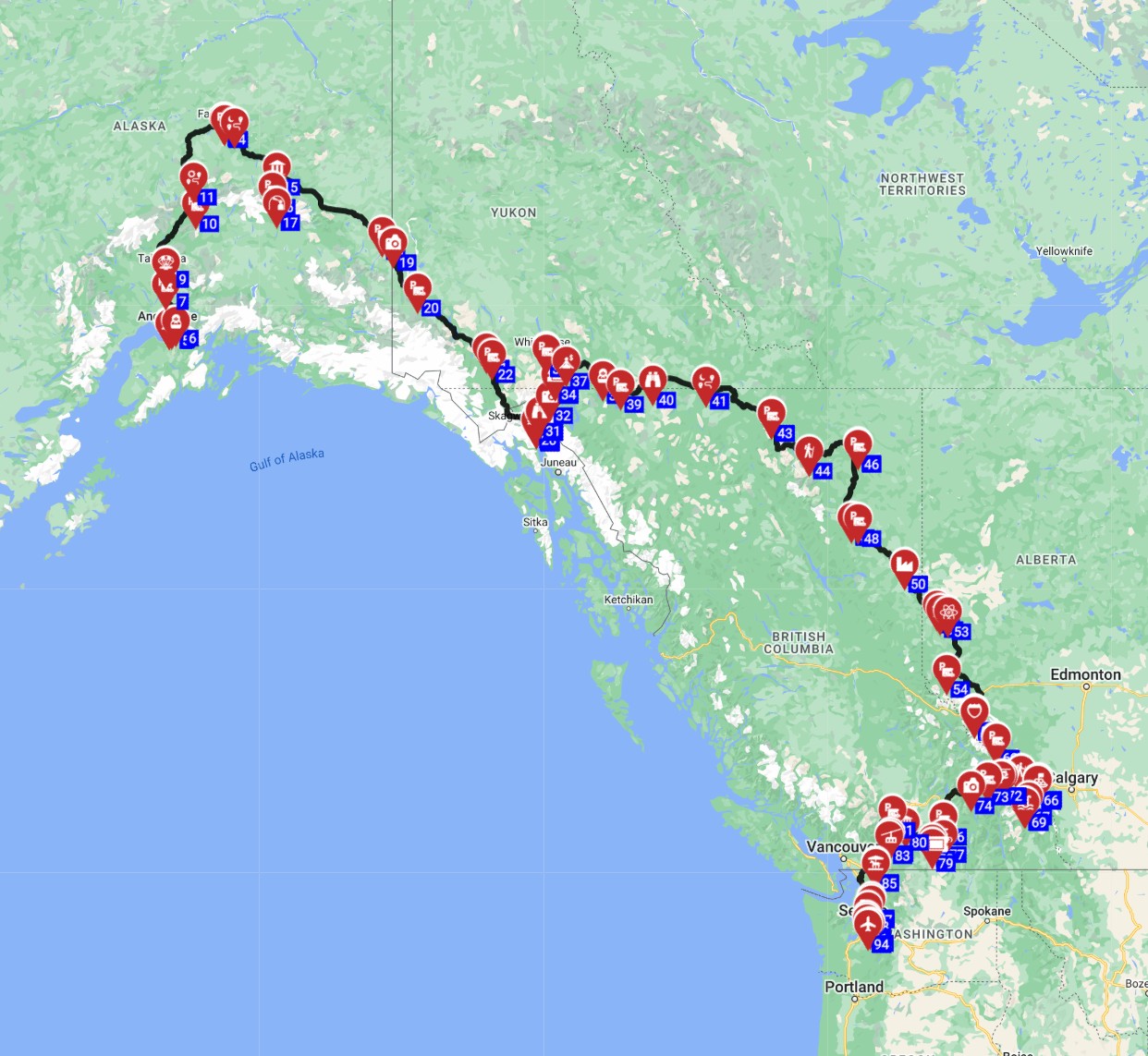
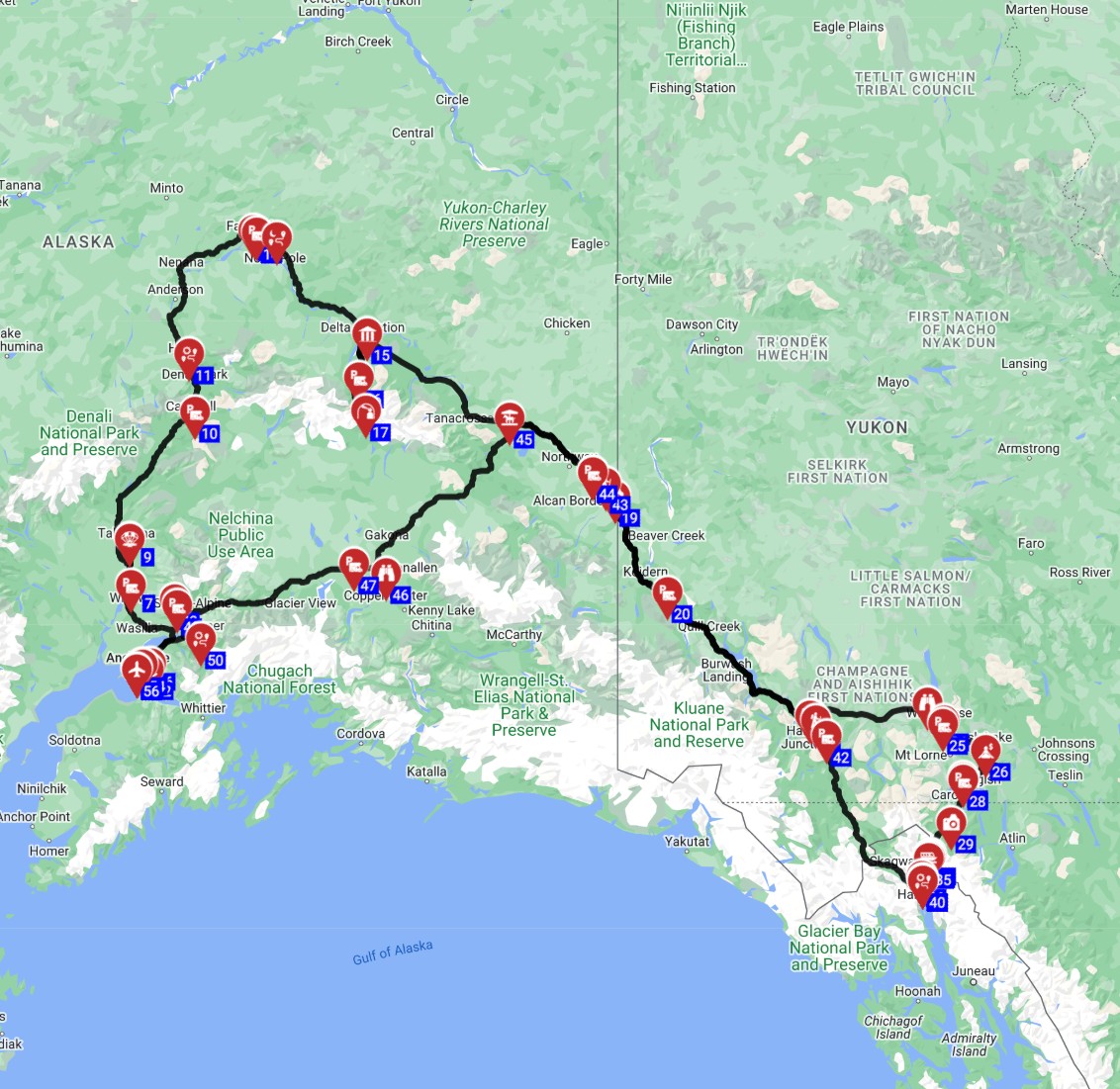
While specific RV parks vary widely across Alaska, a top-tier campground for a rented RV should ideally offer full hookups (electric, water, sewer), easy access to major attractions, and consistently positive traveler reviews. Prioritize parks that provide scenic views, such as waterfront sites along the Kenai Peninsula, or those near prime wildlife viewing opportunities. Essential services like laundry facilities and dump stations are especially valuable in remote Alaskan areas, enhancing comfort during longer trips. Many highly-rated RV parks are strategically located near popular destinations like Denali National Park, the Kenai Peninsula, or along the Parks Highway, serving as excellent bases for extended explorations. On the routes offered through RV PLANET routes, you can itemize and track every expense along the way for easy budgeting.
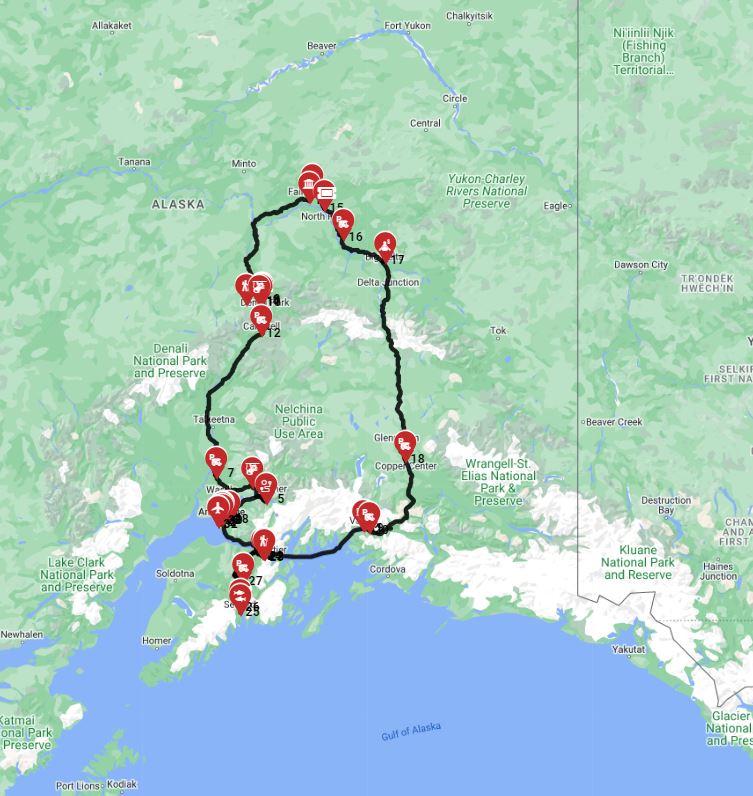
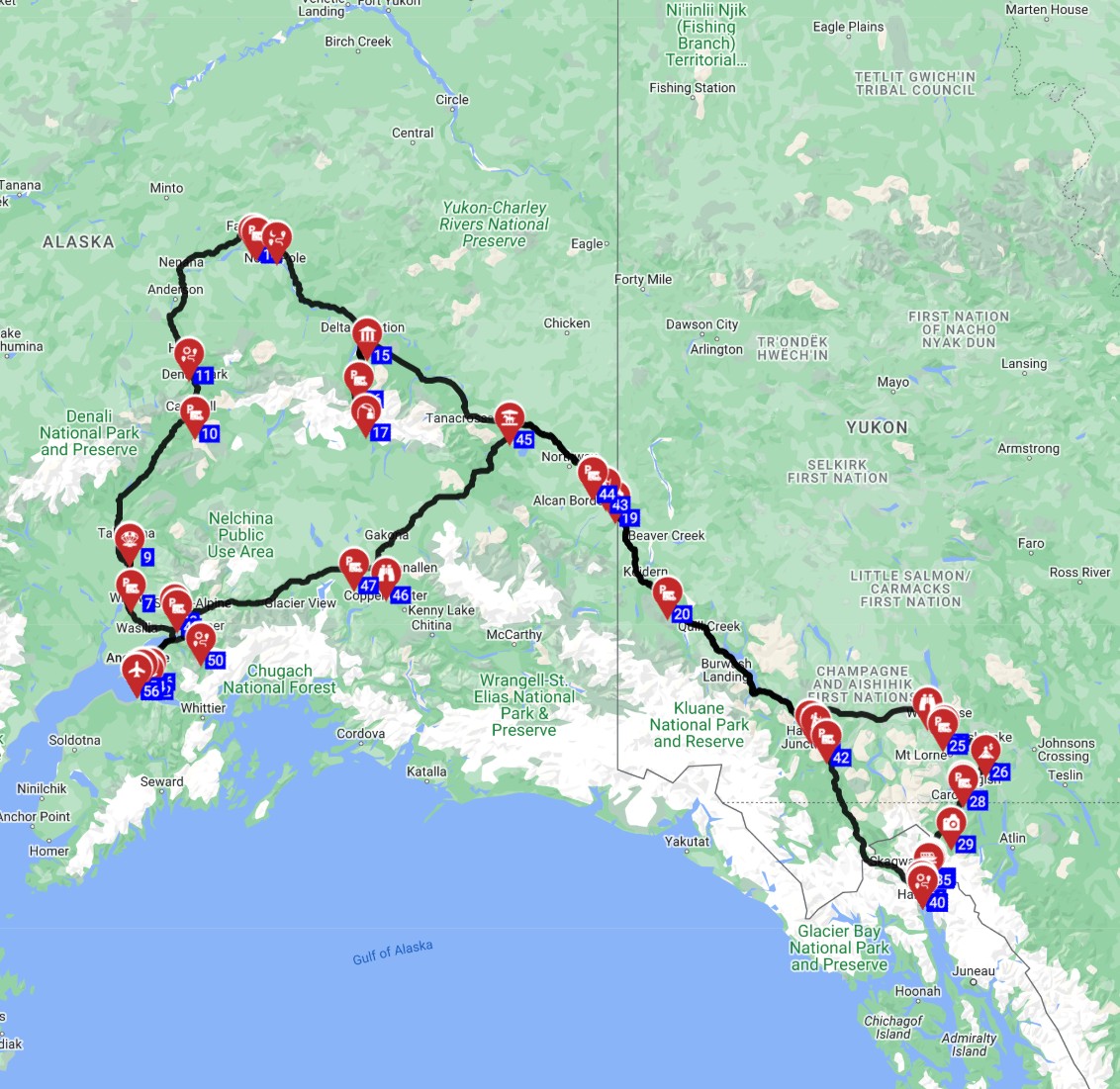
For example, if you're planning an extensive trip, consider the "
Hookups & Amenities - What to Expect
When camping with your rented motorhome in Alaska, the types of hookups and amenities you can expect will vary significantly by campground type. Most private RV parks and some state campgrounds offer 30-amp electric service, and occasionally 50-amp, which is essential for powering your RV's appliances like refrigerators and charging devices. Full hookup sites provide direct water and sewer connections, allowing for unlimited fresh water use and convenient wastewater disposal without needing to relocate your RV.
Dump stations are widely available at most developed campgrounds, even those without full hookups, for emptying your grey and black water tanks. However, Wi-Fi is often limited to private RV parks and can be notoriously slow, while cell service is extremely spotty outside major towns and along remote highways. For this reason, considering satellite communication devices like a Garmin inReach is a wise decision for emergency preparedness, especially if your itinerary involves remote areas. Beyond utilities, common amenities include laundry facilities, hot showers, picnic tables, and fire rings, though their availability depends on whether you're at a basic state site or a more luxurious private resort.
🎬 Video coming soon
If you enjoy cooking delicious meals right in your RV kitchen, having access to these amenities can make a big difference. For inspiration, check out our RV-friendly recipes playlist.
Booking Windows & Reservations in Alaska
For peak season travel in Alaska (July-August) and popular destinations like Denali National Park, advance planners should book RV campsites 6-12 months ahead, as coveted spots fill quickly due to high demand. However, spontaneous travelers often find day-to-day availability at many state parks, private campgrounds, or first-come, first-served (FCFS) sites, especially during shoulder seasons (May, June, and September). Many National Park campgrounds only release 25%-30% of spots for reservations, leaving the majority as FCFS; arriving early in the morning is crucial for securing these desirable spots.
There's no need to stress about finding a place to stay, you will almost certainly find a spot. If not at the first campground, then often the next one down the road. Always call ahead before driving long distances to confirm availability, particularly for smaller, independent campgrounds or during busy holiday weekends. Bandana RV supports both planning styles, ensuring transparency and assistance whether you book months in advance or decide on a spur-of-the-moment adventure. Our dedicated specialists can also assist with planning a multi-week RV Rental in Alaska - Prices and Best Deals 2026.
Nearby Supermarkets & Resupply Points
Major towns in Alaska like Anchorage, Fairbanks, and Juneau (though Juneau is primarily accessible by ferry and not road) offer large chain supermarkets such as Fred Meyer and Safeway for comprehensive grocery and supply runs. Smaller communities along popular RV routes- including Wasilla, Palmer, Seward, Homer, and Tok- typically have local grocery stores or smaller markets for essential resupply needs. In remote areas, expect very limited options, significantly higher prices, and smaller selections, so it is prudent to stock up extensively when passing through larger towns.
Fuel stations can be sparse on long stretches of Alaskan highways; always fill up your rented motorhome when opportunities arise, and consider carrying extra fuel if venturing far off main routes, as fuel prices are generally higher than in the Lower 48 states. This is part of the comprehensive trip cost in Alaska that you need to factor in. For tracking all these ancillary expenses and planning your budget, remember that RV PLANET routes allow travelers to itemize and track every expense along the way.
Best RV Class for Camping in Alaska
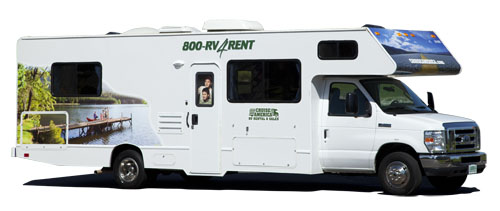
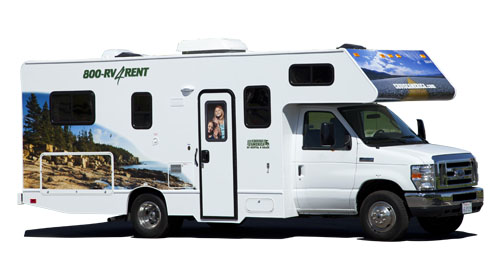
Choosing the best RV class for camping in Alaska depends on your travel style, group size, and comfort preferences, with motorhomes (Class A, B, and C) and campervans being popular choices. A Class B campervan, around 5.8m long with 3.2 sleeping places, offers excellent fuel efficiency (8-10 Liter/100 km) and maneuverability, making it ideal for navigating smaller roads and urban areas, as well as providing flexibility for boondocking. Many of Bandana's rental fleet are perfect for couples or small families, offering features like front air conditioning, a shower, and a toilet in recent models.
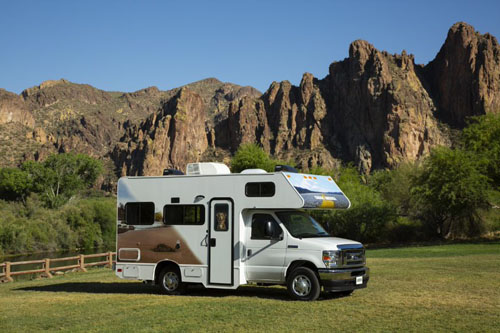
For more space, a Class C motorhome (Alcove), typically around 7.5m long with 5.8 sleeping places, provides ample room for families of 2+2 or even a big family/group of friends (accommodating an average of 4.4 adults). These vehicles usually consume 10-12 Liter/100 km of fuel and offer comfortable amenities like full kitchens, showers, and toilets, making them suitable for navigating most paved and well-maintained gravel roads. The larger Class A integrated motorhomes, averaging 7.5m in length with 4.4 sleeping places, provide the most luxurious experience and spacious living, though their size requires careful driving. Drive slowly and carefully, and you can drive almost anywhere without issues. No need to stress - just use common sense and pay attention. Regardless of your choice, consider vehicle robustness, especially good tires and suspension, and always pack emergency communication devices like a satellite phone or inReach, particularly if planning extensive travel on remote gravel roads or in areas with no cell service.
How to Save on Campgrounds in Alaska
Saving money on campgrounds in Alaska is entirely achievable with smart planning and flexibility, helping you manage your overall RV rental costs. Utilize campground discount cards, such as those offered through Bandana's RV rental partners, to potentially reduce nightly rates at participating private RV parks. Traveling during the shoulder seasons (May, early June, or September) can significantly lower campsite fees and provide a more serene experience with fewer crowds compared to the peak summer months.
Opt for municipal, state, or federal campgrounds over private RV resorts whenever possible, as they typically offer more affordable rates, though often with fewer amenities. Booking longer stays, such as three or more nights, can often qualify you for weekly rates, providing a considerable saving per night. If you're traveling with another RV in your group, consider sharing hookup sites if available, effectively splitting the cost for services. For pre-planned itineraries that factor in budget-friendly camping, remember that Rent&Plan offers routes curated by professionals, and using rvplan.net rewards you with a 25% planning discount.
Can I park my RV anywhere in Alaska?
No, you cannot park your rented RV just anywhere in Alaska, as specific regulations govern where you can legally park and camp, depending on land ownership. Public lands managed by the Bureau of Land Management (BLM) and certain State of Alaska Public Lands generally permit dispersed camping (boondocking), but specific rules apply regarding stay limits (often 14 days in a 30-day period) and fire restrictions. National Parks strictly limit RV parking to designated campgrounds and frequently have size restrictions for vehicles.
Private land, including lands owned by Native Corporations, requires explicit permission from the owner to park or camp; trespassing is illegal and strictly enforced. Always check local borough ordinances, especially near towns and cities like Anchorage or Fairbanks, as overnight parking or camping might be restricted or require special permits. Understanding these nuances is crucial for a smooth and legal RV adventure in Alaska.
What is the 3-3-3 rule for RVs and campers?
The '3-3-3 rule' is an informal guideline for RV travel and camping that suggests you aim to drive no more than 300 miles (approximately 480 km) a day, arrive at your destination by 3 PM, and stay for at least 3 days. Following this rule helps prevent driver fatigue, allows ample time for setting up your rented motorhome and enjoying your surroundings, and reduces the stress of constant travel, which is particularly beneficial given Alaska's unique road conditions and vast distances. Adhering to the arrival time helps secure first-come, first-served campsites, which are prevalent in many Alaskan parks, and provides ample daylight for setup, especially important for wildlife safety and proper food storage protocols.
Staying longer in one location allows for deeper exploration of an area, minimizing the risk of rushing through sights or missing important safety checks for wildlife encounters, especially with bears and moose. At Bandana RV, we encourage slow travel, recommending a maximum of 100-150 km per day on average, allowing you to truly feel the place, connect to the culture, the food, and the breathtaking scenery Alaska offers.
Where is the best place to park an RV for free?
In Alaska, the best places to park a rented RV for free are typically on designated Bureau of Land Management (BLM) lands and some State of Alaska Public Lands, where dispersed camping (boondocking) is generally permitted. These areas require RVers to be entirely self-sufficient, as no hookups, amenities, or services are provided, so come prepared with enough fresh water, propane, and a plan for waste disposal. Resources like iOverlander and Campendium are invaluable for finding specific free camping spots and understanding any local regulations and conditions.
Always ensure you are on legitimate public land and not trespassing on private or Native Corporation land, as violations can lead to fines. Crucially, practice 'Leave No Trace' principles by packing out all trash, properly disposing of human and grey water waste, and leaving no signs of your stay. This responsible camping ensures these pristine areas remain accessible for future adventurers.
Is boondocking legal in Alaska?
Yes, boondocking (also known as dispersed camping or wild camping) is generally legal in many parts of Alaska, particularly on Bureau of Land Management (BLM) lands, some state lands, and within designated National Forests, provided you adhere to specific regulations. Key rules for legal boondocking include a typical 14-day stay limit within a 30-day period in one location, proper disposal of all waste (pack it in, pack it out), adherence to local fire restrictions, and minimizing your environmental impact. It is crucial to verify land ownership before setting up camp, as boondocking is not permitted on National Park lands, private property without explicit permission, or most Native Corporation lands.
Be prepared for wildlife encounters, especially with bears and moose, by securing all food and scented items in bear-resistant containers and carrying bear spray, knowing how to use it. This preparation is part of what it means to be a true RV specialist, understanding the unique challenges and joys of Alaskan travel.
Can you park an RV anywhere in Alaska?
No, you cannot legally park a rented RV just anywhere in Alaska; parking and camping are strictly regulated by land ownership, local ordinances, and specific site designations. While Alaska boasts immense open spaces, the legality of parking an RV overnight is not uniform across all areas; it depends on whether the land is public (such as BLM or state lands) or private, and whether it falls within a developed area or pristine wilderness. Overnight parking on roadsides, in town centers, or in unapproved areas can result in fines or even towing, reflecting local borough ordinances that aim to manage traffic flow, public safety, and waste disposal.
Always seek out designated campgrounds, sanctioned dispersed camping areas, or secure explicit permission for parking on private property to avoid legal issues and ensure a respectful visit. Even large Class A motorhomes can be driven almost anywhere without issues, as long as you drive slowly and carefully and pay attention to signage.
What does FF mean in camping?
In camping, 'FF' most commonly stands for 'Full Hookups,' indicating that a campsite provides all three primary utility connections: electric, water, and sewer. Full hookups are highly sought after by RVers for their unparalleled convenience, allowing for continuous power to run your rented motorhome's amenities, unlimited fresh water access, and direct wastewater disposal without needing to move your RV to a dump station. Campgrounds may also offer 'W/E' (water and electric only) or 'No Hookups,' which typically refers to primitive or dry camping sites without any utility connections.
Understanding these abbreviations is crucial for booking the right type of campsite to match your RV's needs and desired level of comfort during your Alaskan adventure. While full hookups offer maximum comfort, exploring sites without them, known as boondocking, can provide access to more remote and scenic locations, allowing for a deeper connection to Alaska's wild beauty.
What is the best time of year to RV to Alaska?
The best time of year to RV to Alaska generally falls between late May and early September, offering the most favorable weather conditions, open facilities, and abundant daylight for exploring the vast landscapes. Peak season, from July through August, brings the warmest temperatures, nearly 24 hours of daylight in some northern regions, and all attractions and services are fully operational. However, this also means larger crowds, higher prices for RV rentals and campsites, and the critical need for early campsite reservations, sometimes 6-12 months in advance.
Shoulder seasons, spanning late May to early June and September, provide a great balance with fewer crowds, often better chances for wildlife viewing, and cooler, crisp temperatures. Early June showcases the full bloom of spring wildflowers, while September can bring stunning fall colors and the first opportunities to witness the magical Northern Lights. Be prepared for colder temperatures and potential snow if traveling in the shoulder seasons, ensuring your rented RV is ready for cold-weather conditions with adequate heating and insulation. Many services and campgrounds begin to close down after mid-September.
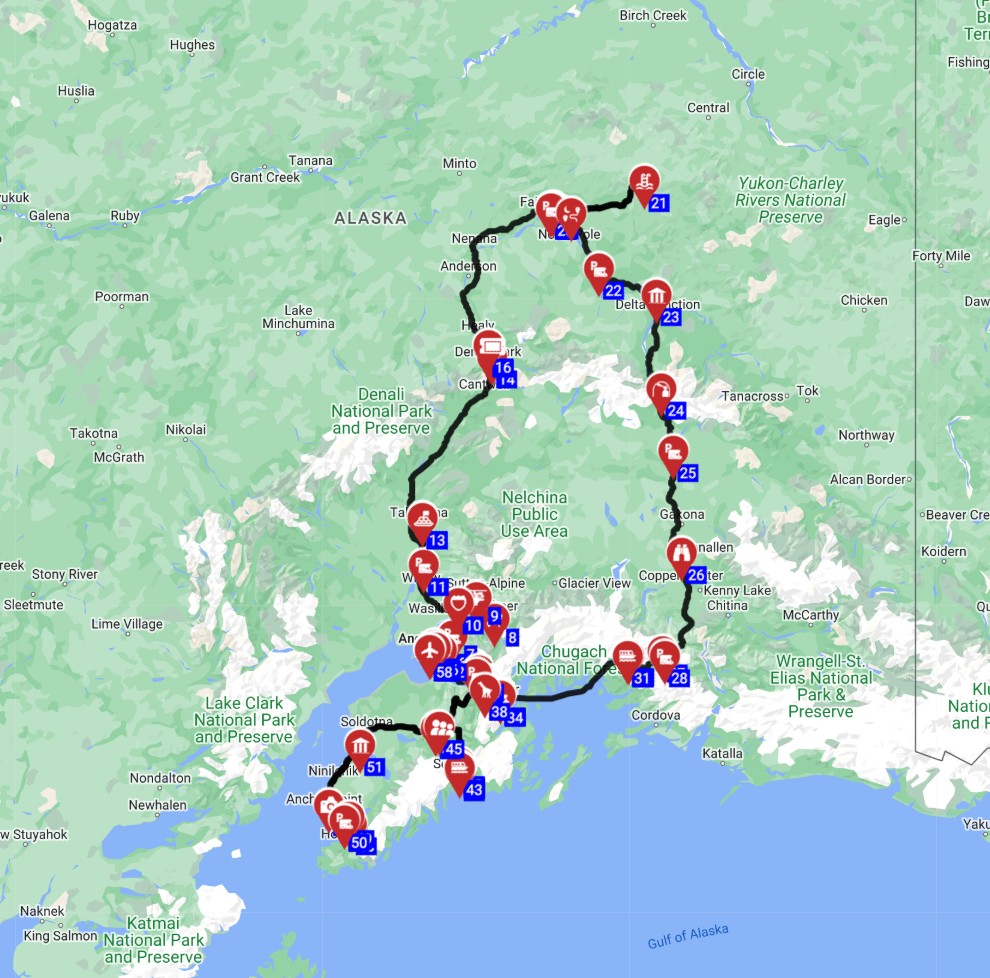
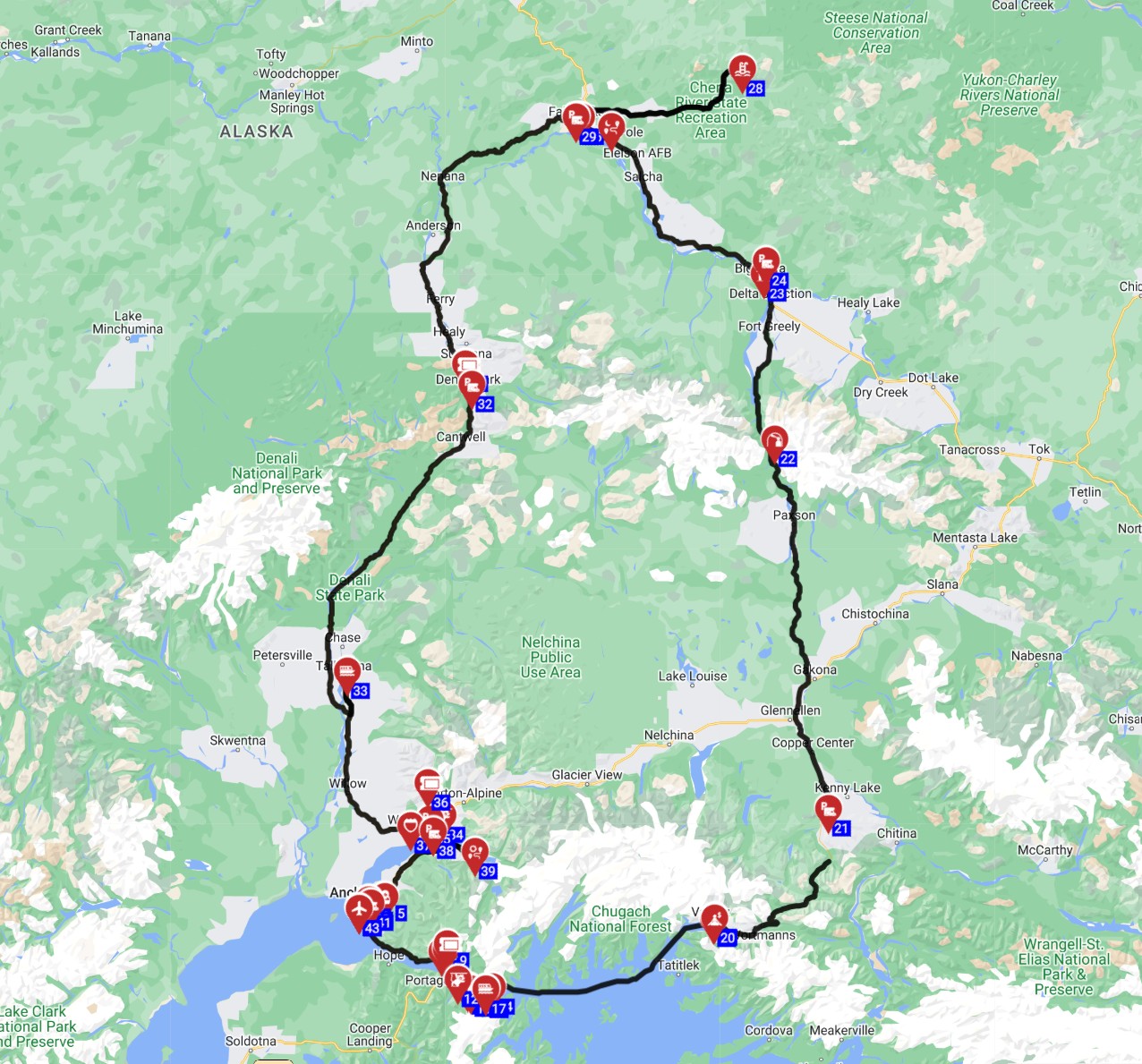
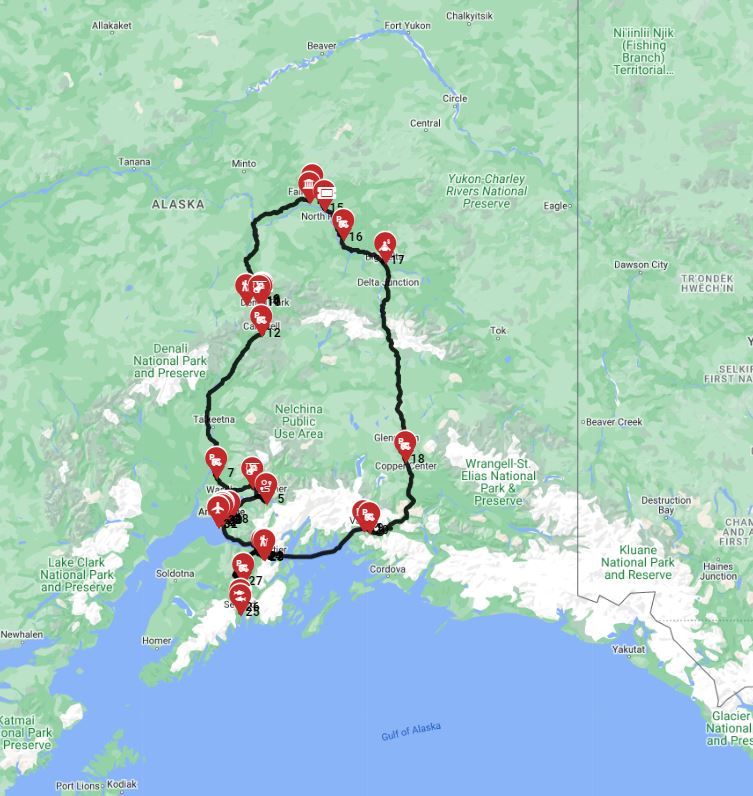
To help you plan, consider an itinerary such as "
How much are campsites in Alaska?
Campsite prices in Alaska vary widely depending on the type of campground, amenities offered, and exact location, ranging from free for dispersed camping to over $100 per night for premium private RV resorts with full hookups. State Parks and Forest Service campgrounds typically cost between $20-$40 per night for a basic site, often including vault toilets and water pumps, with some offering electric hookups. National Park campgrounds usually range from $20-$50 per night; most do not offer hookups and are highly competitive, requiring early reservations.
Private RV parks can range from $40 to over $100 per night for sites with full hookups, Wi-Fi, laundry, and other amenities, especially those in prime locations near popular towns or attractions like Denali National Park. Free camping is available on vast stretches of BLM and some state lands, but it requires complete self-sufficiency and strict adherence to 'Leave No Trace' principles. Beyond campsite fees, budget for realistic fuel costs, which are significantly higher in Alaska (particularly in remote areas), potential ferry expenses if traveling to islands or certain coastal towns, and activity-specific fees for tours or excursions. Remember that for detailed budgeting and cost tracking for your whole trip, RV PLANET (rvplan.net) offers routes where you can itemize every expense, helping you keep track of your overall "RV Rental in Alaska - Prices and Best Deals 2026".
What is the 3-3-3 rule for camping?
The '3-3-3 rule' for camping is an identical guideline to the one for RVs, advising campers to limit daily travel to approximately 300 miles (about 480 km), arrive at their destination by 3 PM, and ideally stay for at least 3 nights to maximize enjoyment and minimize travel stress. This guideline promotes a more relaxed and immersive camping experience, allowing ample time for setting up your rented campervan, exploring the local area, and unwinding, rather than constantly rushing between destinations. For Alaska, where roads can be challenging with frost heaves and extensive gravel sections, and scenic overlooks are frequent, adhering to this rule helps prevent driver fatigue and allows for spontaneous stops to enjoy wildlife or breathtaking views.
It also significantly aids in securing first-come, first-served campsites, as arriving earlier in the day increases your chances of finding a suitable spot, particularly in popular areas like the Kenai Peninsula. Embracing slow travel, as Bandana RV advocates, often means extending stays beyond 3 nights, truly connecting with Alaska's natural beauty.
What is the 200 rule for camping?
The '200 rule' for camping, while less universally known than the '3-3-3 rule,' generally advises against driving a rented RV more than 200 miles (approximately 320 km) in a single day, particularly when traveling through challenging terrain or with a larger motorhome. This more conservative approach encourages even slower, more deliberate travel, allowing for more frequent stops, reduced stress on both the driver and the vehicle, and a greater opportunity to immerse yourself in the journey itself. For RV travel in Alaska, with its unique road conditions (such as significant frost heaves, extensive gravel roads, and often limited services), the 200-mile rule can be a prudent guideline to prevent mechanical issues and ensure safe navigation, especially if you're exploring the more remote highways. It can also be interpreted as staying within 200 miles of a major service point or town, which is critical in vast Alaskan regions where fuel and repair facilities are sparse. Adhering to such guidelines promotes a safer and more enjoyable extended road trip in Alaska.
What You Shouldn't Miss
- **Denali National Park:** Take a bus tour deep into the park for unrivaled wildlife viewing (bears, moose, caribou, Dall sheep) and breathtaking views of North America's tallest peak, Denali. Remember popular spots fill fast, so check our "Booking Windows & Reservations in Alaska" advice.
- **Kenai Peninsula Scenic Drive:** Drive the Seward Highway and Sterling Highway, winding through mountains and along the coast, offering glacier views, world-class fishing in Homer and Seward, and numerous state campgrounds.
- **Alaska Marine Highway System:** Experience a unique RV adventure by taking your motorhome on a state ferry to explore coastal towns like Juneau or Sitka, offering a different perspective of Alaska's majestic fjords and islands.
- **Fairbanks & the Northern Lights:** During the shoulder seasons (September and March), base yourself near Fairbanks with your rented RV for the best chances to witness the spectacular aurora borealis dance across the night sky.
- **Matanuska Glacier:** Take a guided tour to walk on the largest road-accessible glacier in Alaska, offering an incredible, active outdoor experience just a few hours from Anchorage.
- **Alaskan Seafood Feast:** Indulge in fresh Alaskan seafood- king crab, wild salmon, halibut- at local restaurants or by catching your own and cooking it up in your RV kitchen.
Looking for expert insights from Avi Bandana? Top 5 Adventures - recommendations from Avi Bandana
Avi Bandana, our founder, has personally traversed countless miles in RVs across five continents, gathering unparalleled insights into motorhome travel. His top adventures in Alaska include a week-long journey along the Parks Highway to Denali, kayaking through the fjords of Kenai Fjords National Park, spotting grizzly bears in Katmai National Park, experiencing the remote beauty of McCarthy and Wrangell-St. Elias, and chasing the aurora borealis from Fairbanks. These hand-picked experiences are designed to immerse you in Alaska's most incredible natural wonders, offering a true taste of the wilderness.
Final Thoughts
Embarking on an RV adventure through Alaska is truly an unforgettable experience, offering a unique blend of rugged wilderness and stunning natural beauty. From the majestic peaks of Denali to the abundant wildlife of the Kenai Peninsula, having your own rented motorhome or campervan provides the freedom to explore at your own pace. Remember to embrace the spirit of slow travel- averaging 100-150 km per day- to fully absorb the incredible landscapes and local culture, ensuring your trip isn't just a drive, but a deep immersion into Alaska's heart.
With careful planning for campgrounds, understanding local regulations, and leveraging resources like RV PLANET (rvplan.net) for routes and budgeting, your Alaskan RV journey can be both enriching and affordable. We at Bandana RV are here to handle the details, ensuring personal service from your first inquiry until your booking is confirmed, so you can focus on living the journey. Get inspired for your next trip and discover top destinations, planning tips, all in one place!
So, pack your bags, prepare for awe-inspiring views, and get ready to create memories that will last a lifetime in Alaska. Your adventure awaits!