In This Guide
- Top 5 Tips for RV Rental in Paris
- Before You Book - Class, Dates, Insurance
- Pre-Trip Prep - Packing Checklist for Paris
- On the Road - Driving, Fueling, Navigation
- At the Campground - Setup, Hookups & Etiquette
- RV Rental-Specific Tips for Paris
- Common Mistakes to Avoid in Paris
- What are the new rules for motorhomes in France?
- Is France motorhome friendly?
- Do I need speed stickers on my motorhome in France?
- What is the 3-3-3 rule when RVing?
- What is the 4 4 4 rule for RVing?
- How much does it cost to rent an RV in France?
- What is the rule of 3 with an RV?
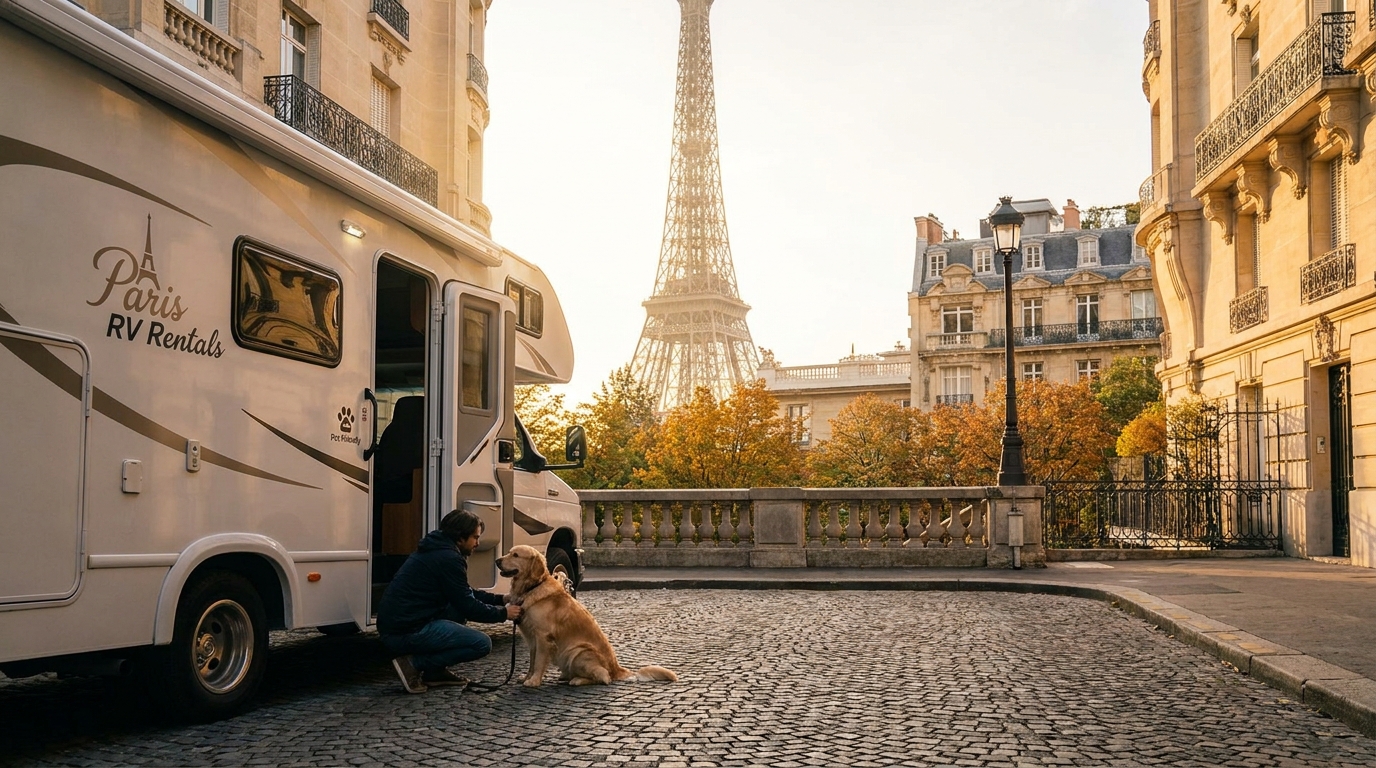
Embarking on a rented RV adventure in Paris offers an unparalleled blend of urban exploration and scenic French countryside escapades. Imagine the freedom of waking up near a historic chateau or a tranquil vineyard, then driving your comfortable mobile home to the outskirts of the City of Lights, ready to explore its iconic landmarks. RV travel provides the flexibility to experience both the vibrant culture of Paris and the serene beauty of regions like the Loire Valley or Normandy, without the hassle of constant hotel bookings. For live availability and current prices, start with our RV Rental Paris - Complete Guide 2026 guide.
Top 5 Tips for RV Rental in Paris
Navigating an RV rental in Paris requires strategic planning to maximize your experience while minimizing stress. To start, plan your route carefully to avoid driving a large RV directly into central Paris, which has ZFE (low-emission) zones that require special permits. Instead, consider parking at an outlying campground like Camping de Paris in Bois de Boulogne, which offers direct shuttle and public transport access to city attractions.
Secondly, research and book campsites or dedicated Aires de Service well in advance, especially near popular tourist areas and during peak seasons like spring or summer. Many campsites around Paris, such as those near Versailles or Disneyland Paris, provide convenient access via public transit. Thirdly, familiarize yourself with French road regulations, including mandatory Crit'Air vignettes for low-emission zones and specific speed limits for RVs over 3.5 tonnes. Fourth, using public transport to access city attractions from your RV parking spot is highly recommended to avoid urban traffic, narrow streets, and challenging parking scenarios within Paris itself. Finally, understand European RV hookup standards for electricity (Type E/F 'Schuko' socket) and gas, which differ from North American systems, and ensure you have the necessary adapters. For extended trips, consider our RV PLANET routes to itemize and track every expense along the way for easy budgeting. On the routes offered through RV PLANET routes, you can itemize and track every expense along the way for easy budgeting.
Before You Book - Class, Dates, Insurance
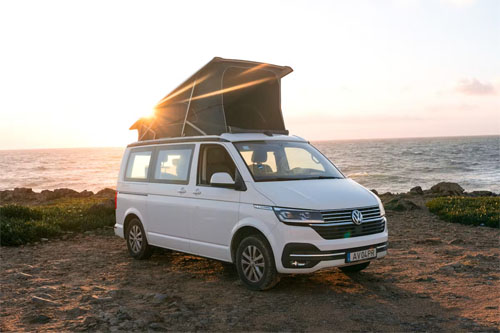
Choosing the right RV class for your Paris trip involves considering vehicle size for navigation and parking ease, typically favoring smaller, more maneuverable models like a Class B campervan such as the "Active Classic" or a compact Class C motorhome for European roads. Booking dates should be locked in as early as possible, particularly for peak travel seasons (spring, summer, major holidays) to secure preferred models and better rates, as prices are dynamic and change daily. For a detailed breakdown of costs, check out our "RV Rental in Paris - Prices and Best Deals 2026" guide.
Insurance options for RV rentals in France typically include basic coverage as standard, with additional comprehensive packages available for purchase. While basic insurance is always included, you can upgrade to a top-level deductible for extra peace of mind, covering potential damages or incidents during your trip. To see prices including the most comprehensive coverage, simply select that option during your search on our platform; then, all relevant insurance options will be shown transparently, with no hidden fees or surprises.
Pre-Trip Prep - Packing Checklist for Paris
A well-prepared packing checklist ensures a smooth RV trip in Paris, covering essentials for comfort, safety, and compliance with local regulations. Essential clothing items for Paris include a rain jacket and umbrella, comfortable walking shoes for city exploration, layers for varying temperatures (even in summer), and sunscreen and a hat for sunny days. When planning meals in your RV, consider bringing reusable water bottles, coffee or tea supplies, basic cooking utensils, and your favorite spices, as well as a compact picnic set for al-fresco dining by the Seine or in a park. For cooking inspiration, check out our RV-friendly recipes playlist.
Safety and legal items are crucial: a first-aid kit, a reflective vest (mandatory for all occupants in case of breakdown), a warning triangle (also mandatory), spare bulbs for lights, and a fire extinguisher. For documentation, always carry your passport/ID, driving license (an International Driving Permit is highly recommended for non-EU licenses), vehicle registration, your RV rental agreement, and your Crit'Air vignette. A portable safe for valuables is also a smart addition. Remember, Bandana Caravan compares final prices across 50+ suppliers, so you always know what you're getting without hidden fees or surprises.
🎬 Video coming soon
On the Road - Driving, Fueling, Navigation
Driving an RV in and around Paris requires careful planning due to urban navigation challenges, specific ZFE (low-emission) zones, and limited suitable parking within city limits. You can drive slowly and carefully, and you can drive almost anywhere without issues. No need to stress — just use common sense and pay attention. Utilize GPS systems with RV-specific settings to avoid narrow streets, low bridges like those under the Pont Alexandre III, and roads restricted by vehicle weight or height, especially important when approaching the city center or historical areas. For access to central Paris landmarks such as the Eiffel Tower or the Louvre, plan to park your RV at an RV-friendly campsite or 'aire de service' outside the city center, then use public transport (RER, Metro, bus) for convenient access. The RER C line from Versailles-Chantiers or Disneyland Paris areas offers excellent connections into the heart of Paris.
Fueling in France uses standard petrol (Essence) and diesel (Gazole), available at numerous stations along major routes like the A6 or A1. Larger service stations on motorways are generally more accommodating for RVs compared to smaller, urban stations. Be aware of French toll roads (Péages), identified by blue signs with 'Péage', which often have dedicated lanes for different vehicle classes. RVs may fall under Class 2 or 3 depending on height and weight, influencing the cost. For an effortless experience, consider checking out "RV Travel Guide to Paris - Tips and Top Spots 2026" for useful route ideas and practical advice.
At the Campground - Setup, Hookups & Etiquette
Setting up your RV at a French campground or 'aire de service' involves a standard sequence: park your rented motorhome, level the vehicle using ramps or blocks, connect to utilities, and observe local etiquette. The typical hookup order is electricity first (using a European adapter with a Type E/F 'Schuko' socket), then fresh water, and finally waste disposal at designated gray and black water points, ensuring all connections are secure and leak-free. European RVs commonly use specific electrical adapters and gas bottle systems (like propane often in 11kg bottles) that may differ from North American standards, so ensure your rental comes equipped or you have the correct converters.
Observe quiet hours, usually from late evening until early morning (often 10 PM to 7 AM), and respect pitch boundaries and shared facilities. Properly dispose of grey and black water at designated 'vidange' (dumping) points, and keep your campsite tidy to maintain good relations with fellow travelers and site management. Camping de Paris (Bois de Boulogne) is a popular option offering all necessary hookups and is conveniently located close to public transport for easy access to the city. For those planning longer stays, our "Long-Term RV Rental in Paris - Monthly Rates 2026" guide can provide further insights.
RV Rental-Specific Tips for Paris
For families with children, select an RV class with sufficient sleeping and living space, such as a Class C motorhome like the "Group E" with bunk beds, and plan itineraries that balance Parisian sightseeing with kid-friendly stops in surrounding regions, like Disneyland Paris or Parc Astérix. Senior travelers might prefer smaller, automatic transmission RVs for easier driving and parking, ensuring campsites are easily accessible to public transport for city excursions. Many campervans, such as the "Active Original," offer an automatic transmission option which can be a real plus in European traffic.
Budget-conscious RV renters can save by utilizing France's extensive 'Aires de Service' network for free or low-cost overnight parking and focusing on cooking meals in their RV, significantly cutting down on food costs. Luxury RV renters can explore premium add-ons like enhanced insurance, pre-stocked kitchens, or delivery services to combine comfort with a Parisian adventure. Consider an itinerary that allows parking your RV outside Paris (e.g., at a campground in Versailles or in the Champagne region) and using public transport to visit the city, minimizing urban driving stress and avoiding Paris's low-emission zones. Travel slowly, max 100-150 km per day on average. Take time to feel the place, connect to the culture, the food, and the scenery.
Common Mistakes to Avoid in Paris
A common mistake is attempting to drive a large RV directly into central Paris; instead, park your rented motorhome at an outlying campsite or 'aire' and utilize the efficient public transport system. Failing to research and obtain a Crit'Air vignette for your RV before entering low-emission zones (ZFEs) in Paris can result in fines of up to €68; apply for it well in advance from the official French government website. Neglecting to understand European RV dimensions (height, width) can lead to difficulties with narrow streets, low bridges (such as the Pont du Garigliano with a 3.8m clearance), and parking garages; always be aware of your vehicle's specifications before setting off from the rental station near Paris-Charles de Gaulle (CDG) Airport.
Overlooking security best practices, such as never leaving valuables exposed and securing your RV with all locks, can make you vulnerable to theft in urban and tourist areas like around Notre Dame or Montmartre. Not booking campsites or 'aires' in advance, especially during peak season or for popular spots like Camping de Paris, can leave you without suitable overnight parking near Paris; secure your spots early. For more tips on planning your trip and avoiding pitfalls, look into "Family RV Rental in Paris - Pricing Guide 2026" which often touches on practical planning aspects.
What are the new rules for motorhomes in France?
Recent regulations for motorhomes in France include the mandatory display of a Crit'Air vignette for entry into Low-Emission Zones (ZFE), such as those established in Paris and other major cities like Lyon and Marseille. This sticker classifies your vehicle based on its emissions, with older or heavier RVs potentially restricted from entering certain zones at specific times. Motorhomes over 3.5 tonnes must display specific blind spot warning stickers ('Angles Morts') on the rear and sides of the vehicle when driving in urban areas to alert other road users, a rule enforced since January 2021.
Speed limits for RVs can vary depending on their total laden weight; vehicles over 3.5 tonnes typically have lower maximum speeds on certain roads compared to lighter vehicles, for example, 100 km/h on expressways and 80 km/h on main roads. Toll road classifications (Péages) for RVs also depend on height and weight, influencing the cost category (Class 2 or 3 are common for motorhomes), which means a "cruise america example P 23-26" could be classified differently than a compact campervan. It's crucial to carry specific documentation, including your driving license (an International Driving Permit is recommended for non-EU licenses), vehicle registration, and proof of insurance.
Is France motorhome friendly?
France is widely considered very motorhome-friendly, largely due to its extensive network of dedicated 'Aires de Service' and a culture that embraces RV travel. The 'Aires de Service' system provides specific parking spots, fresh water, and waste disposal facilities, often for free or a small fee, making it incredibly convenient for overnight stops and servicing your rented motorhome across the country, including many in the Ile-de-France region surrounding Paris. While generally friendly, driving an RV directly into Paris city center can be challenging due to narrow streets, ZFE restrictions, and limited parking; it's advisable to use campsites on the outskirts and public transport.
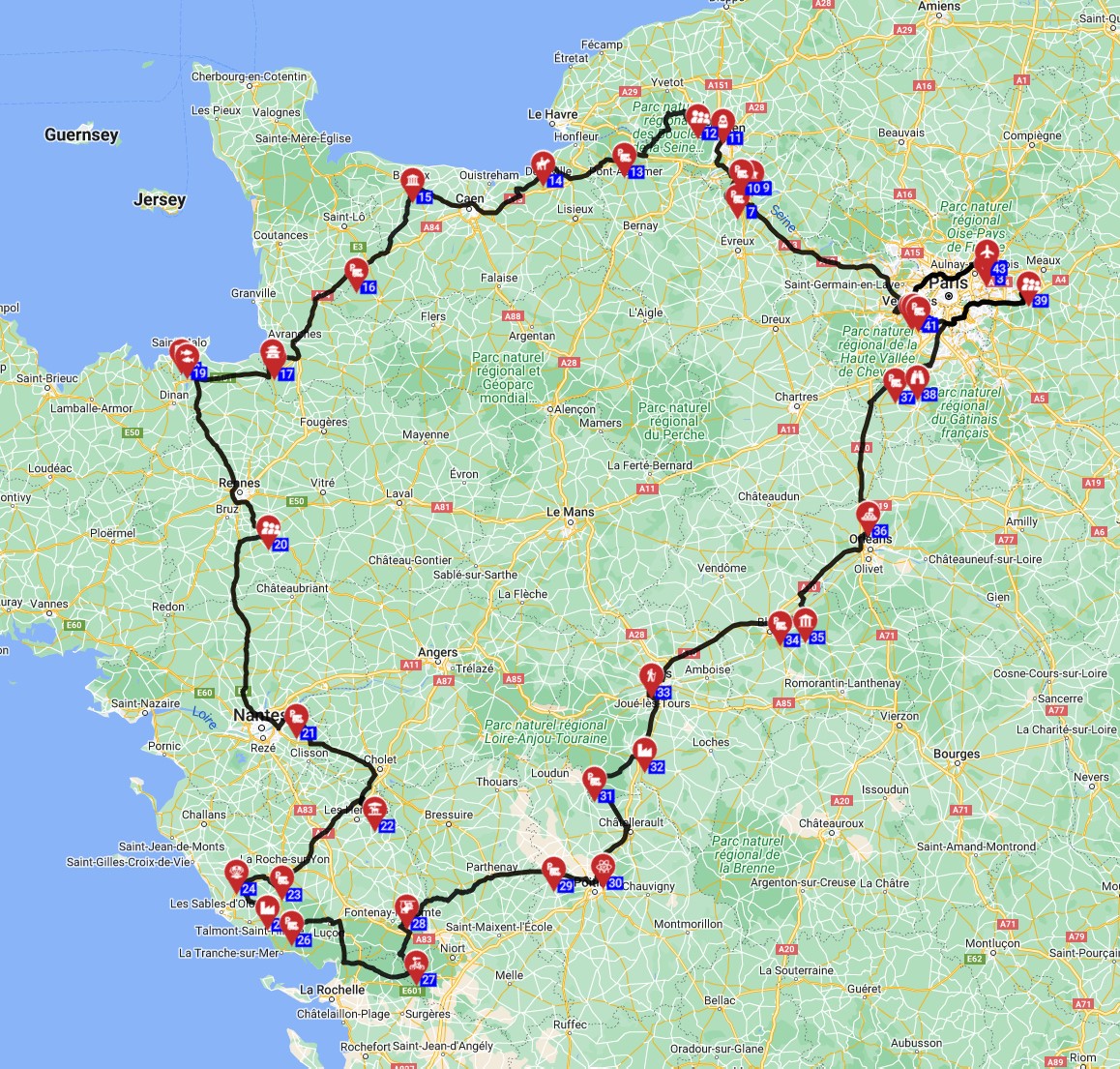
Many campsites and 'aires' near Paris, such as those near Versailles or in the regional natural parks, offer excellent public transport links, allowing easy access to the city's attractions like the Palace of Versailles or the Eiffel Tower without the stress of urban RV navigation. The country boasts beautiful scenic routes and regions (like the Loire Valley with its 1 Botanical garden, 1 Historical Site, and 1 Traditional Restaurant or Normandy with its war memorials) perfectly suited for RV exploration, offering a unique way to combine a taste of Paris with wider French tourism. Discover top destinations and plan a trip itinerary in advance with minimal effort and maximum enjoyment using RV PLANET.
Do I need speed stickers on my motorhome in France?
While specific 'speed stickers' indicating maximum allowable speeds are not broadly required for all motorhomes, vehicles exceeding 3.5 tonnes must display blind spot warning stickers, known as 'Angles Morts' (blind spots), in urban areas. These 'Angles Morts' stickers, depicting blind spot warnings, must be affixed to the rear and sides of the motorhome to alert other road users, particularly cyclists and pedestrians, especially crucial when navigating Parisian streets. Speed limits for motorhomes in France vary by the vehicle's maximum authorized mass (MAM); RVs under 3.5 tonnes typically follow car speed limits, while those over 3.5 tonnes have reduced limits, which is often the case for Class C motorhomes like the "Explorer" model.
For instance, motorhomes over 3.5 tonnes generally have a maximum speed of 110 km/h on motorways (instead of 130 km/h for cars) and 80 km/h on certain secondary roads (instead of 90 km/h). It is essential to be aware of these weight-dependent speed limits and ensure your rental RV is compliant with all mandatory signage requirements before driving in or around Paris. Failure to display the correct 'Angles Morts' stickers can result in fines up to €135, emphasizing the importance of checking with your rental supplier like El Monte or Apollo.
What is the 3-3-3 rule when RVing?
The 3-3-3 rule in RVing is a popular guideline suggesting a conservative approach to daily travel, aiming for a more relaxed and enjoyable trip. It typically recommends driving no more than 300 miles (approximately 480 km) in a day, arriving at your destination by 3 PM, and staying for at least 3 nights. This rule encourages travelers to avoid rushing, allowing ample time for sightseeing, setting up camp at places like Camping de Paris, and unwinding at each location.
Adhering to the 3-3-3 rule can reduce driver fatigue, provide flexibility for unexpected stops like a charming village on the way to Paris, and offer a deeper immersion into the local environment, particularly beneficial for navigating European roads where distances may seem shorter but driving can be more intense. For a Parisian journey, applying this rule would mean comfortable drives to areas surrounding the city, allowing full days for exploring central Paris via public transport without the pressure of long daily drives.
What is the 4-4-4 rule for RVing?
The 4-4-4 rule for RVing is another commonly cited guideline, similar to the 3-3-3 rule, designed to promote a leisurely and stress-free travel experience. This rule suggests driving no more than 400 miles (approximately 640 km) in a day, arriving at your campsite by 4 PM, and staying at least 4 nights at each location. It aims to balance travel time with relaxation and exploration, preventing burnout from excessive driving and allowing for more thorough enjoyment of destinations, whether it's a bustling city like Paris or a serene stop in the French countryside.
Both the 3-3-3 and 4-4-4 rules serve as flexible recommendations rather than strict mandates, encouraging RVers to prioritize safety and leisure over covering long distances rapidly. For instance, if you're exploring the historic landmarks from Paris via an RV PLANET route, giving yourself 4 days in a region allows you to truly connect with the culture and food without feeling rushed. Finding the easiest, safest, and most affordable way to rent an RV starts with comparing final prices across 50+ suppliers on Bandana Caravan.
How much does it cost to rent an RV in France?
The cost to rent an RV in France varies significantly based on several factors, including the RV class, rental duration, season, and the specific rental company. On average, smaller campervans or compact motorhomes, such as a "Category Van" or a "Paradise Camper 4x4 double cab" can range from €70 to €150 per day during off-peak seasons (November-March), while larger, more luxurious models like a "Class A - Integrated" or a "camper for rent example Big Six" may cost €150 to €300+ per day. Peak season rentals (July and August) will see prices at the higher end of these ranges, with some models booking out months in advance due to high demand for destinations like Paris.
Additional costs to factor in include insurance upgrades, mileage fees (some rentals offer unlimited mileage, others charge per km over a certain limit), bedding and kitchen kit add-ons (typically €25-€75 per person/kit), fuel (diesel generally costs €1.80-€2.00 per liter), campsite fees (€20-€50 per night), and potentially a one-way rental surcharge if applicable (ranging from €150-€500 for a Paris to Nice trip). Booking in advance, especially outside of major holidays, can often secure better rates, and comparing prices from multiple rental platforms ensures you find the best deals without hidden fees. For weekly rental budget considerations, you might find our "Weekly RV Rental in Paris - Pricing 2026" article helpful.
What is the rule of 3 with an RV?
The 'rule of 3 with an RV' is commonly interpreted as the 3-3-3 rule, which is a popular guideline for pacing an RV trip to ensure safety and enjoyment. This rule advises driving no more than 300 miles (approximately 480 km) in a single day, arriving at your campsite or stopping point by 3 PM, and planning to stay for at least 3 nights at each location. Its purpose is to prevent driver fatigue, allow ample time for setting up and breaking down camp, and provide opportunities to explore the surrounding area without feeling rushed, which is particularly useful when visiting a culturally rich region around Paris like the Champagne vineyards.
Adhering to this principle helps to make the RV journey itself a part of the vacation experience, rather than just a means to get from one point to another. By dedicating sufficient time to each stop, you can truly connect to the culture, the food, and the scenery, whether you're enjoying a picnic by the Seine or exploring a historic market near Paris. Our detailed route plans through RV PLANET can help you adhere to such rules and maximize your enjoyment.
What You Shouldn't Miss
- Camping de Paris (Bois de Boulogne): Stay at the city's only official inner-city campsite. Located on Allée du Bord de l'Eau, 75016 Paris, it provides direct shuttle service to Porte Maillot, connecting you effortlessly to the Metro and all Parisian sights.
- Aires de Service Network: Experience the uniquely French RV infrastructure by utilizing the extensive 'Aires de Service' for convenient and affordable overnight stops around Paris. Look for 'aires' in nearby towns like Saint-Cloud or Versailles for easy access to public transport into the city.
- Versailles Palace & Gardens: Park your rented motorhome at a nearby campsite, such as Huttopia Versailles, and take a short bus or train ride to explore the magnificent Palace of Versailles and its sprawling gardens, just 20 km southwest of central Paris.
- Giverny - Monet's Garden: Take a picturesque drive about 80 km west of Paris to visit Claude Monet's stunning house and gardens in Giverny. Many local 'aires' or small campgrounds in the Norman countryside can accommodate your RV.
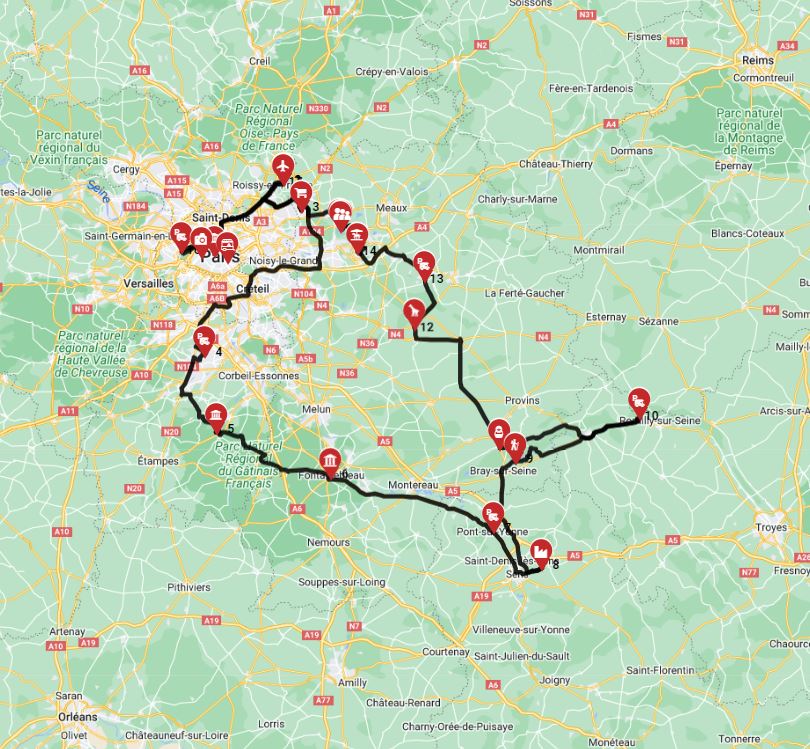
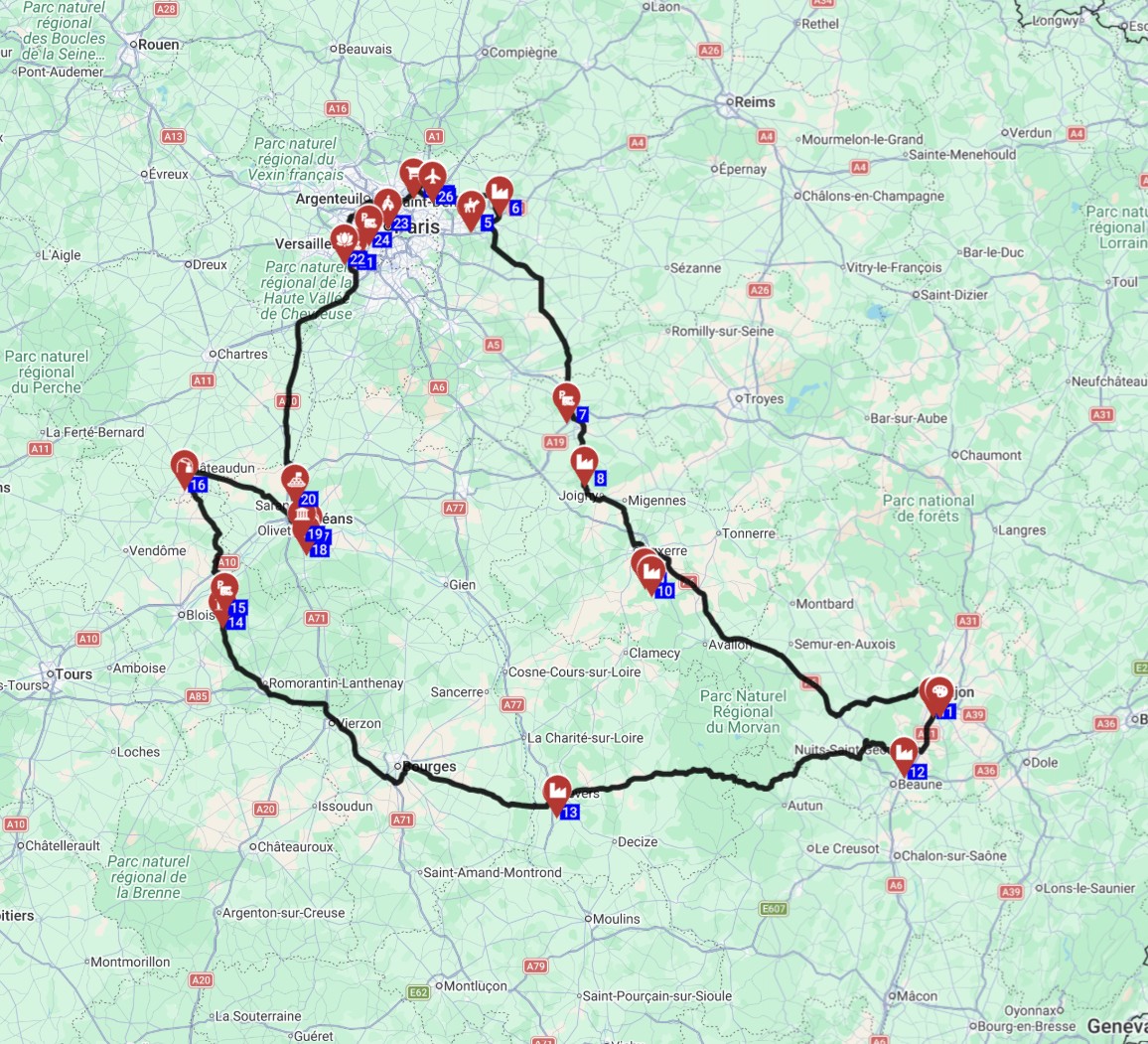
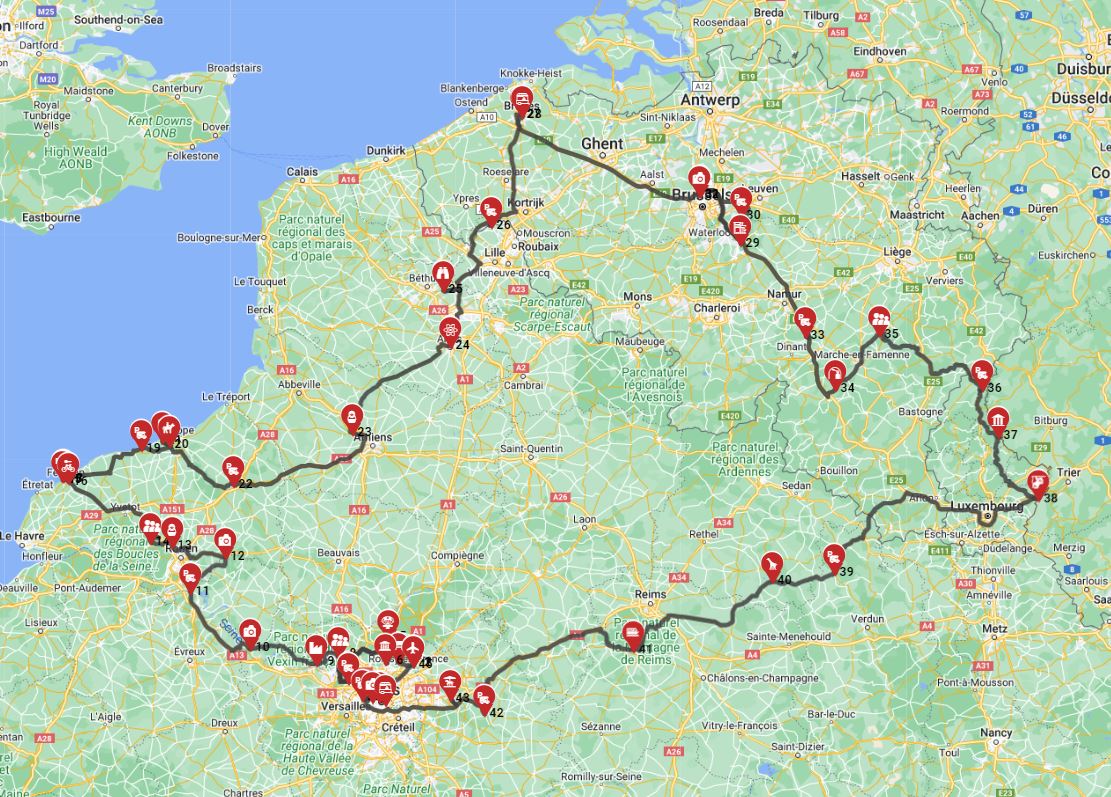
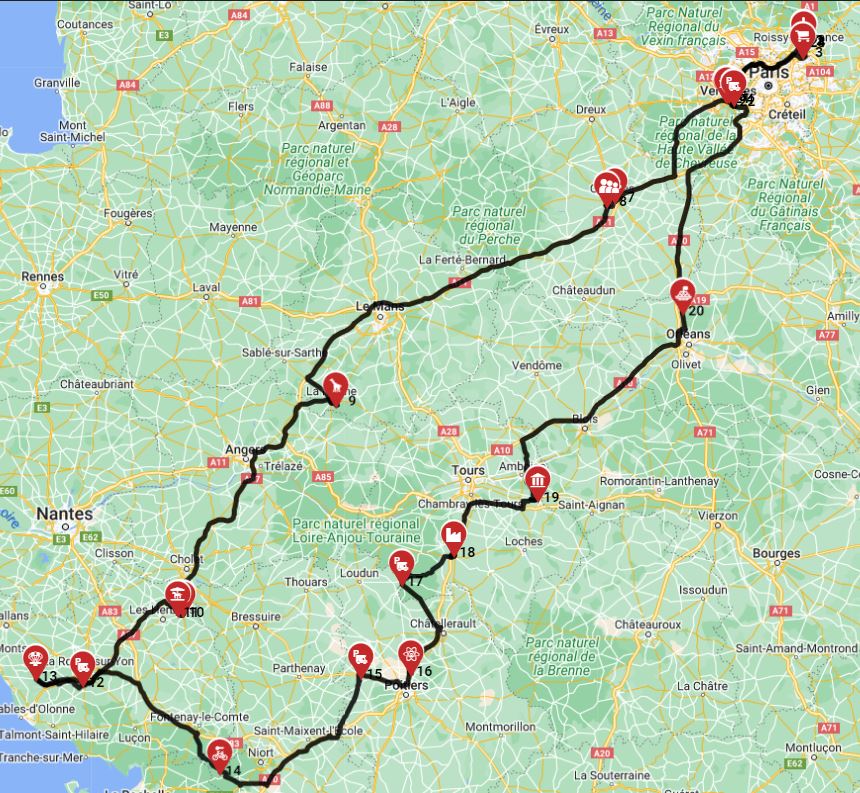
- Loire Valley Châteaux: Extend your Parisian RV adventure with a trip south to the Loire Valley, approximately 200 km. You'll find numerous RV-friendly campsites and 'aires' near iconic castles like Château de Chambord or Chenonceau. RV PLANET offers a "
" which includes 1 Amusement Park, 1 Bike Rental, and 1 Traditional Restaurant across 1235 km in 8 days.
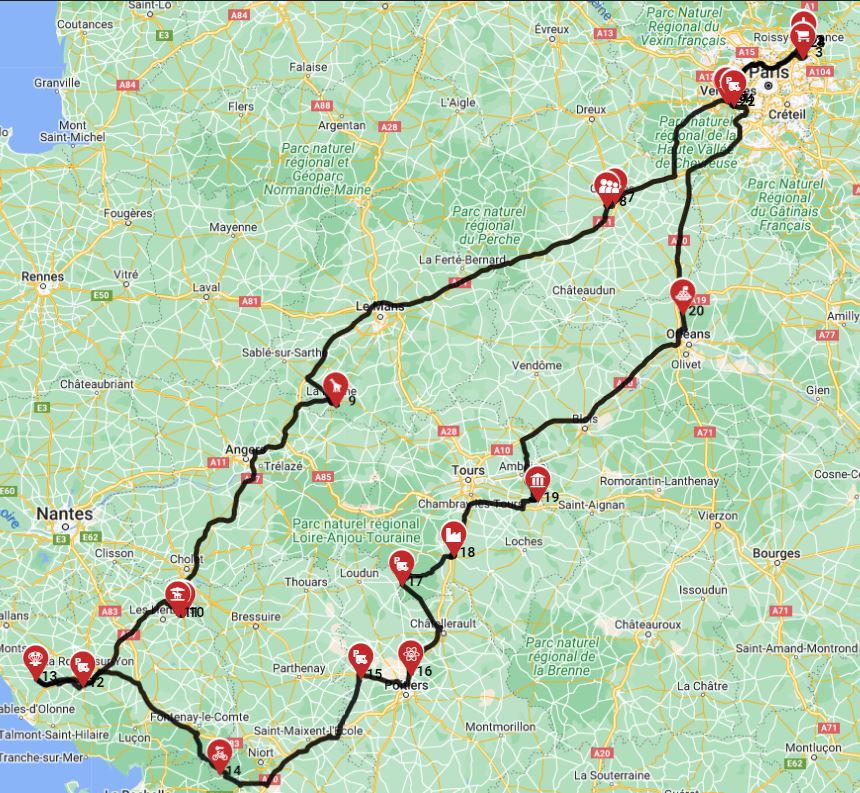 Paris Round trip - Heading Au fil de la Loire
Final Thoughts
Exploring Paris and its enchanting surroundings in a rented motorhome offers a truly unique and memorable way to experience France. From navigating the specific urban regulations with confidence to discovering serene campsites and bustling local markets, your RV journey puts the best of this iconic destination right at your fingertips. Remember to embrace slow travel, allowing yourself to soak in every moment and discover the hidden gems off the beaten path.
Whether you're planning a week-long trip with family or a romantic two-week adventure, Bandana Caravan is here to make your RV rental experience seamless and enjoyable. With our full transparency, expert support, and wide selection of vehicles, you're well-equipped to embark on your dream Parisian escapade. Don't wait – your French adventure on the open road awaits!
Find Motorhome Rentals in Paris