In This Guide
- Best Alaska RV Itinerary for rv rental — Overview
- 7-Day Classic Route in Alaska
- 14-Day Extended Journey in Alaska
- Recommended RVPlan Trip for Alaska
- Must-See Stops Along the Way (Avi Bandana Picks)
- Daily Driving Distances & Drive Times in Alaska
- Best RV Class for This Itinerary — Couple & Family Picks
- What is the 3-3-3 rule for RV travel?
- What is the best route to Alaska by RV?
- What is the best time of year to RV to Alaska?
- What is the 4-4-4 rule for RV travel?
- What should I not miss in Alaska?
- Can I park my RV anywhere in Alaska?
Best Alaska RV Itinerary for rv rental — Overview
Embarking on an RV adventure in Alaska is an unparalleled way to experience the Last Frontier's vast wilderness and breathtaking landscapes. A classic RV trip in Alaska typically requires a minimum of 7 days, allowing for a solid introduction to key regions like the Kenai Peninsula and Denali National Park. For a more comprehensive exploration, stretching your trip to 10-14 days provides ample opportunity to delve deeper into Alaska's wonders without feeling rushed. The optimal season for RVing in Alaska is undoubtedly from mid-June to mid-August. During these months, you'll benefit from the longest daylight hours, the warmest temperatures, and the full accessibility of attractions and campgrounds, many of which open their doors by early June.
Popular routes often cover significant distances, reflecting Alaska's immense scale. A 7-day Southcentral loop might cover approximately 700 km (435 miles), offering a taste of the region's highlights. For those with more time, extended journeys can easily exceed 3,500 km (2,175 miles) when combining Alaska with parts of the Yukon Territory, showcasing an even broader spectrum of this incredible territory. When planning your Alaskan itinerary, consider that many national and state parks release a portion of their campsites 6 months in advance, while the rest are available on a first-come, first-served basis. With Bandana Caravan's flexible booking options, you can adapt your plans to secure the best spots, whether you're a meticulous planner or a spontaneous adventurer.
7-Day Classic Route in Alaska
A 7-day classic RV itinerary in Alaska is perfect for a first-time visitor wanting to experience the highlights of Southcentral Alaska. This route is designed to balance driving with ample time for exploration and immersion in the stunning Alaskan scenery.
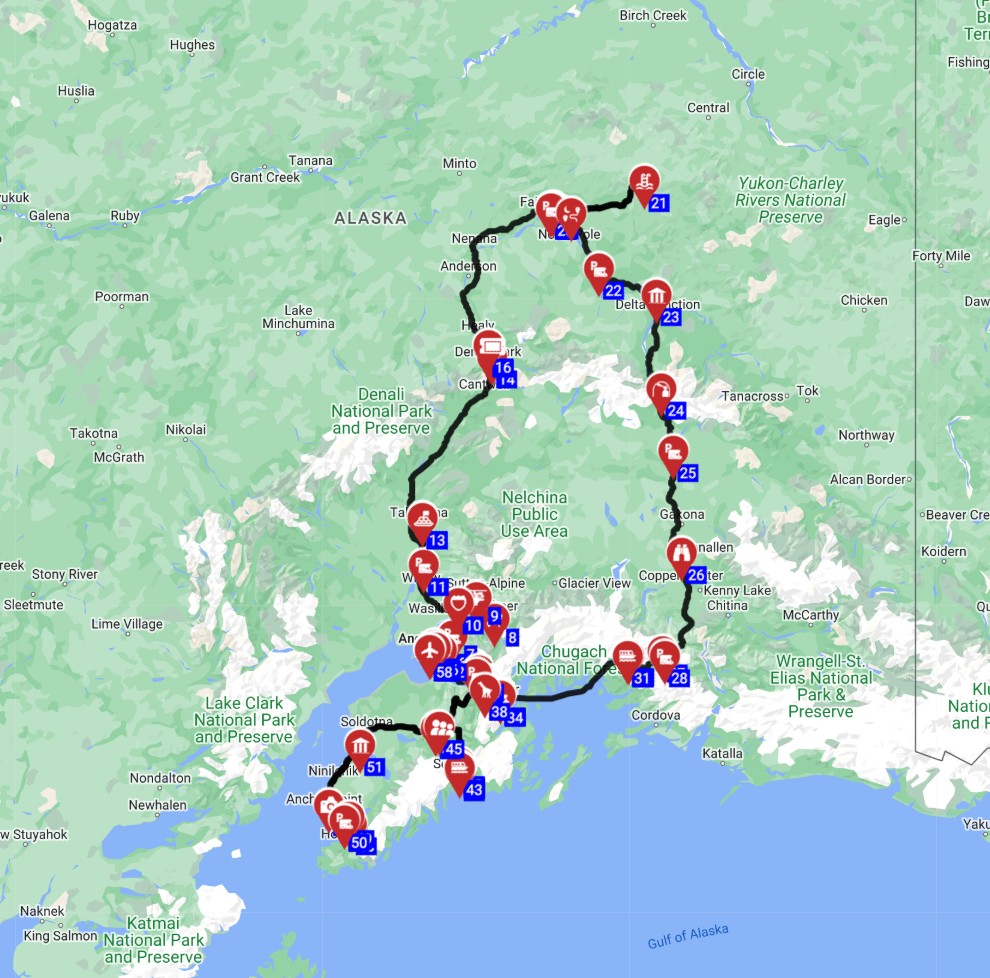
Day 1: Anchorage → Girdwood (60 km / 37 mi): Begin your journey in Anchorage, picking up your rental RV. Enjoy a scenic drive along Turnagain Arm, known for its dramatic views and potential wildlife sightings. A recommended stop is the Alaska Wildlife Conservation Center, where you can see Alaskan wildlife like bears, moose, and musk oxen up close. Overnight at Girdwood RV Park.
Day 2: Girdwood → Seward (100 km / 62 mi): Continue south to Seward, the picturesque gateway to Kenai Fjords National Park. This charming town offers incredible opportunities for glacier cruises, kayaking, and exploring the coastal trails, including the accessible Exit Glacier. Consider overnighting at Seward Waterfront Park.
Day 3: Seward → Cooper Landing (75 km / 47 mi): Today's drive takes you along the Kenai River, a world-renowned spot for fishing and hiking. Cooper Landing offers a more serene experience amidst the Kenai Peninsula's natural beauty. A good camping option is Cooper Landing Campground.
Day 4: Cooper Landing → Soldotna (60 km / 37 mi): A short drive leads to Soldotna, a town celebrated for its vibrant riverfront, fishing opportunities, and local shops. Settle in for the night at Soldotna RV Park.
Day 5: Soldotna → Homer (120 km / 75 mi): Prepare for one of Alaska's most breathtaking drives to Homer, famously dubbed the 'Halibut Fishing Capital of the World.' The journey culminates at the iconic Homer Spit, a narrow strip of land jutting into Kachemak Bay, brimming with art galleries and unique local experiences. Homer Spit Campground is a popular choice for RVers.
Day 6: Homer → Sterling (170 km / 105 mi): Begin your return journey north with a leisurely drive. Consider a stop at Anchor Point for beachcombing and enjoying the coastal views before finding a spot at Sterling RV Park.
Day 7: Sterling → Anchorage (200 km / 124 mi): Conclude your loop back in Anchorage. This final leg offers more opportunities to soak in the Alaskan scenery before returning your rental RV or preparing for your next adventure. Consider an Anchorage RV Park for your final night.
14-Day Extended Journey in Alaska
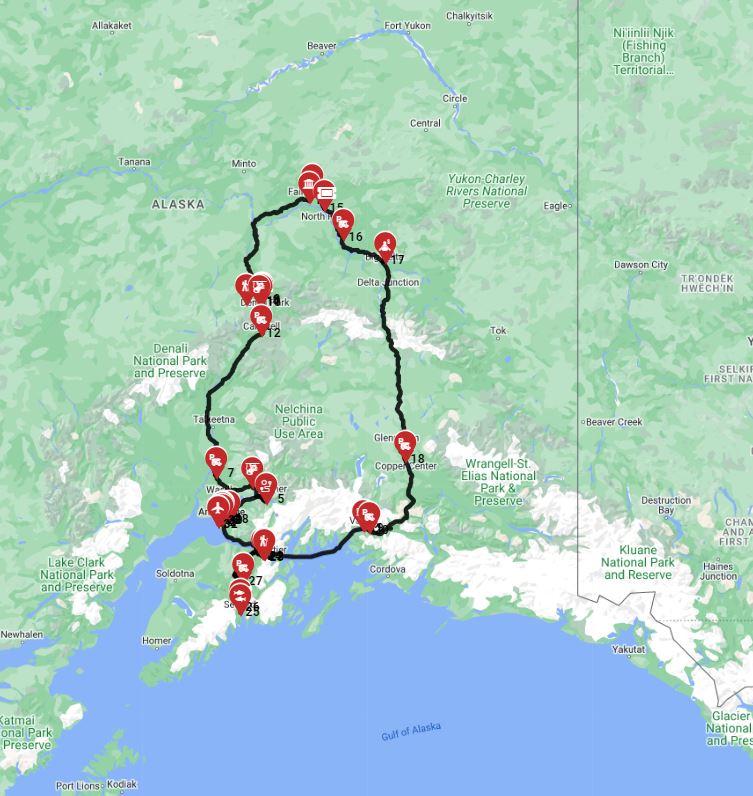
For those seeking a more in-depth Alaskan RV experience, a 14-day itinerary allows for exploration beyond the Kenai Peninsula and into the heart of the Interior, including the magnificent Denali National Park and the scenic Wrangell-St. Elias region.
Part 1: Interior & Denali (Days 1-7)
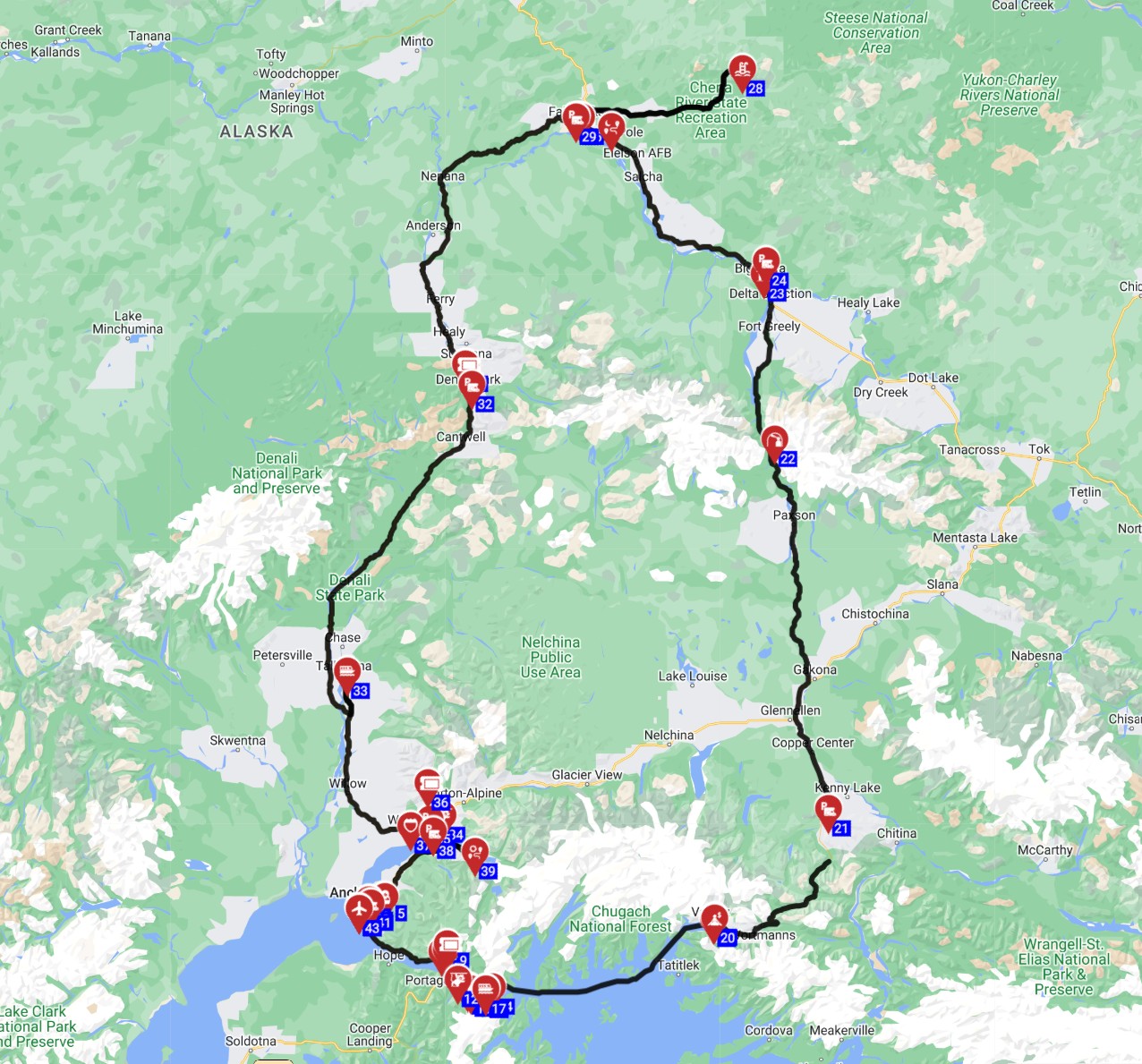
Day 1: Anchorage → Talkeetna (180 km / 112 mi): Head north to Talkeetna, a charming quirky town that serves as a gateway to Denali. It's famous for its flightseeing tours offering spectacular views of North America's highest peak. Camp at Talkeetna Campground.
Day 2: Talkeetna → Denali National Park Entrance (240 km / 150 mi): Continue your journey to Denali National Park. On clear days, you'll be treated to increasingly impressive views of Denali itself. Stay at Riley Creek Campground, conveniently located near the park entrance.
Day 3: Denali National Park: Dedicate a full day to exploring Denali. The best way to experience the park's vastness and wildlife is by taking one of the park's shuttle buses, which offer deep access and excellent opportunities for spotting grizzly bears, moose, caribou, and Dall sheep. Return to Riley Creek Campground.
Day 4: Denali NP Entrance → Cantwell (12 km / 7 mi): Enjoy a short, relaxing drive south to Cantwell, a quieter spot just outside the park's main hustle. Cantwell RV Park is a suitable option for the night.
Day 5: Cantwell → Paxson (180 km / 112 mi): This leg takes you east towards the vast Wrangell-St. Elias National Park area, traveling along some of Alaska's most scenic highways. Consider camping at Paxson Lake Campground.
Day 6: Paxson → Valdez (120 km / 75 mi): Descend through the dramatic Thompson Pass, passing by the Worthington Glacier and through the stunning Keystone Canyon, to reach the picturesque port town of Valdez. Valdez RV Park is a great place to rest.
Day 7: Valdez: Spend a full day exploring Valdez, often called 'Little Switzerland.' Options include glacier cruises, sea kayaking, fishing excursions, or visiting the local sights. Stay another night at Valdez RV Park.
Part 2: Return Southcentral (Days 8-14)
Day 8: Valdez → Glennallen (190 km / 118 mi): Head north through the Copper River Valley, a region steeped in history and natural beauty. Glennallen RV Park offers convenient lodging.
Day 9: Glennallen → Palmer (200 km / 124 mi): Drive the scenic Glenn Highway, with a remarkable opportunity to visit the massive Matanuska Glacier. Palmer KOA is a well-equipped option for your stay.
Day 10: Palmer → Girdwood (60 km / 37 mi): A short drive south brings you back towards Turnagain Arm. Don't miss the Alaska Wildlife Conservation Center for more wildlife viewing. Overnight at Girdwood RV Park.
Day 11: Girdwood → Seward (100 km / 62 mi): Return to Seward for another chance to explore Kenai Fjords National Park, perhaps with a different boat tour or hiking opportunity.
Day 12: Seward: Dedicate this day to deeper exploration of Seward. Hike to Exit Glacier or visit the Alaska SeaLife Center. Enjoy the amenities at Seward Waterfront Park.
Day 13: Seward → Cooper Landing (75 km / 47 mi): A leisurely drive returns you to the heart of the Kenai Peninsula. Cooper Landing Campground is a pleasant spot to relax by the river.
Day 14: Cooper Landing → Anchorage (160 km / 100 mi): Conclude your grand Alaskan RV loop with a final scenic drive back to Anchorage. Reflect on the incredible landscapes and experiences before returning your rental RV or heading to your next destination. Anchorage RV Park or similar would be suitable for your final night.
Recommended RVPlan Trip for Alaska
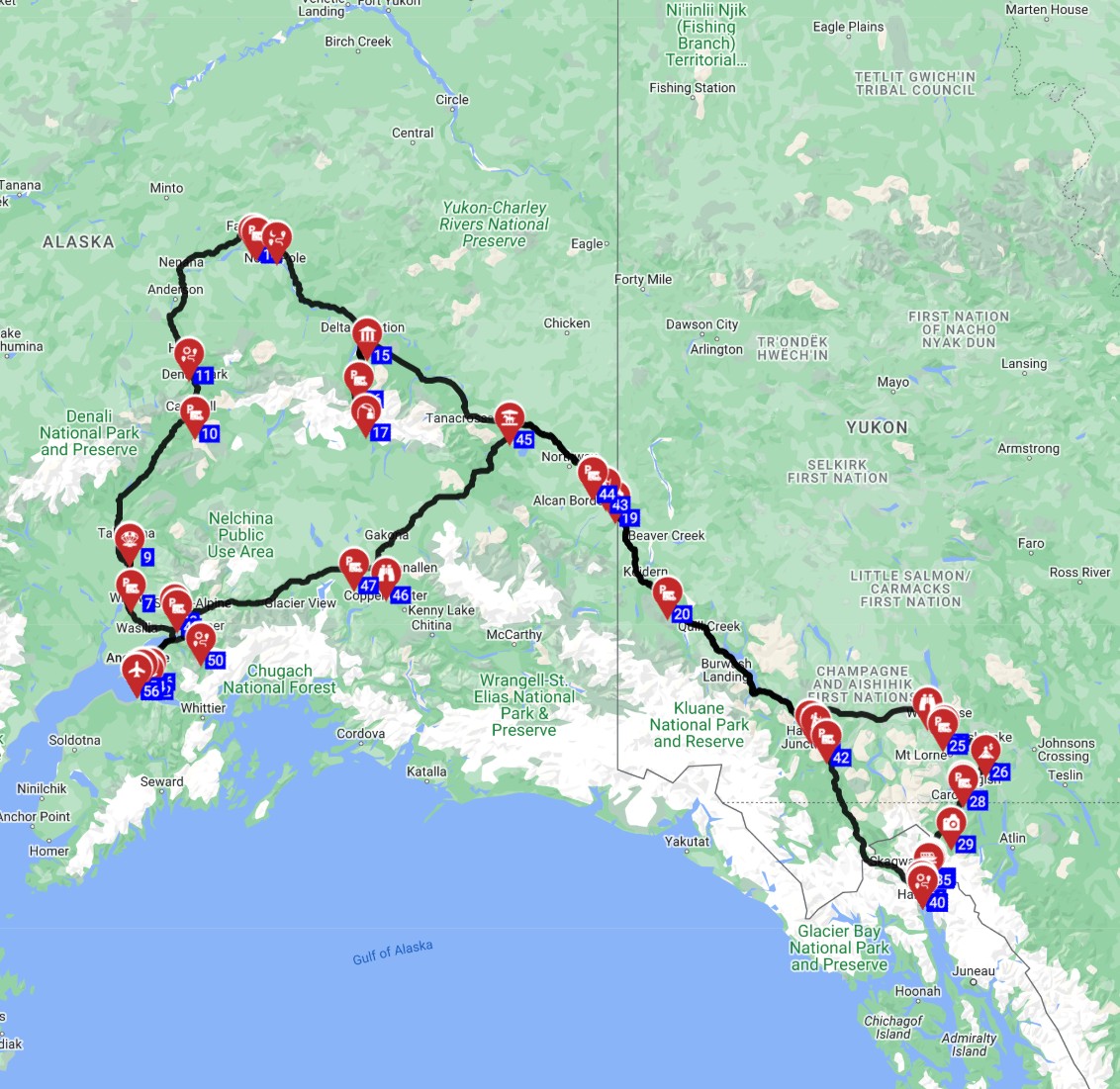
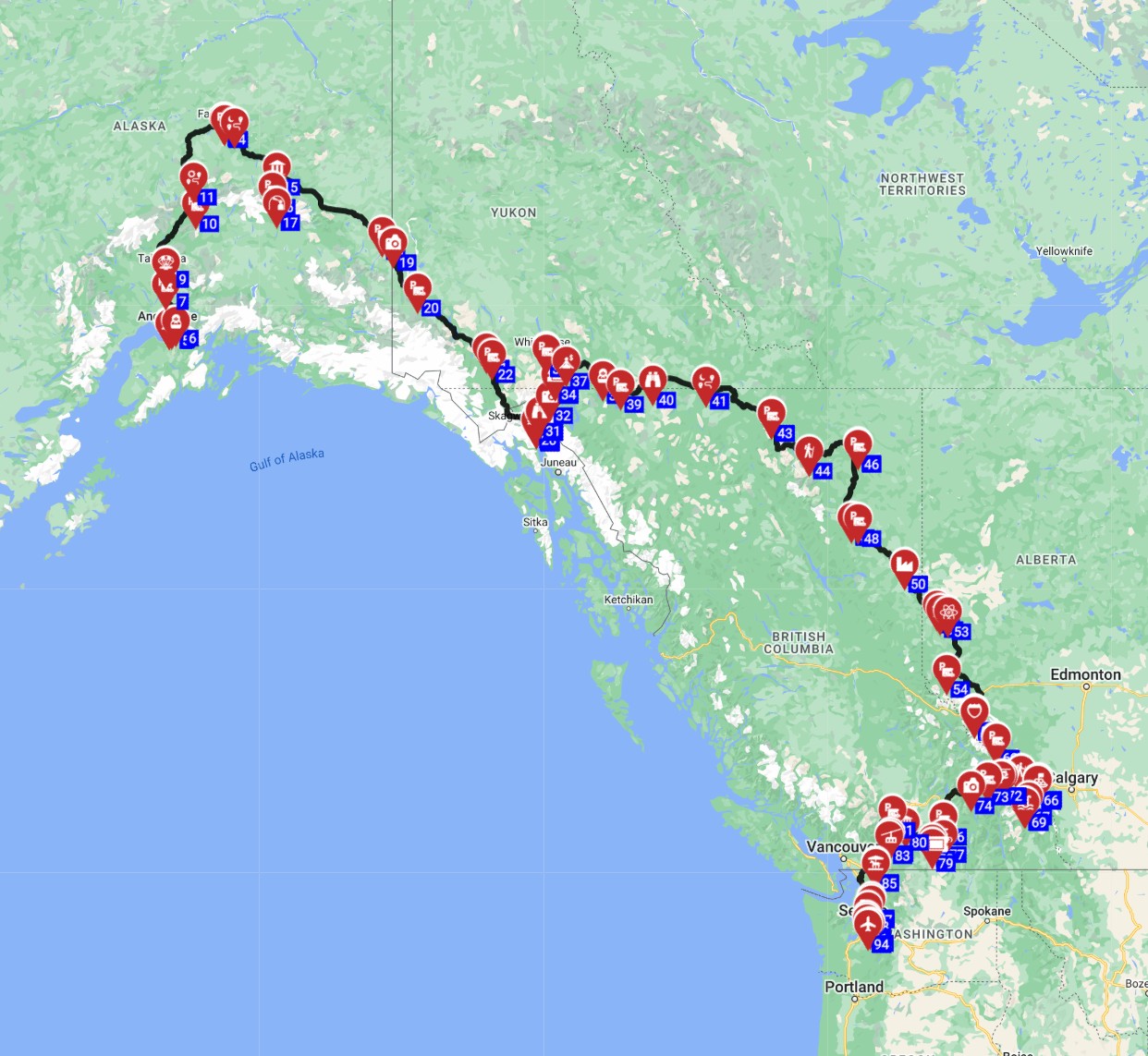
For an immersive RV adventure that meticulously blends the best of Alaska and the Yukon, RVPLANET offers a standout option: the "
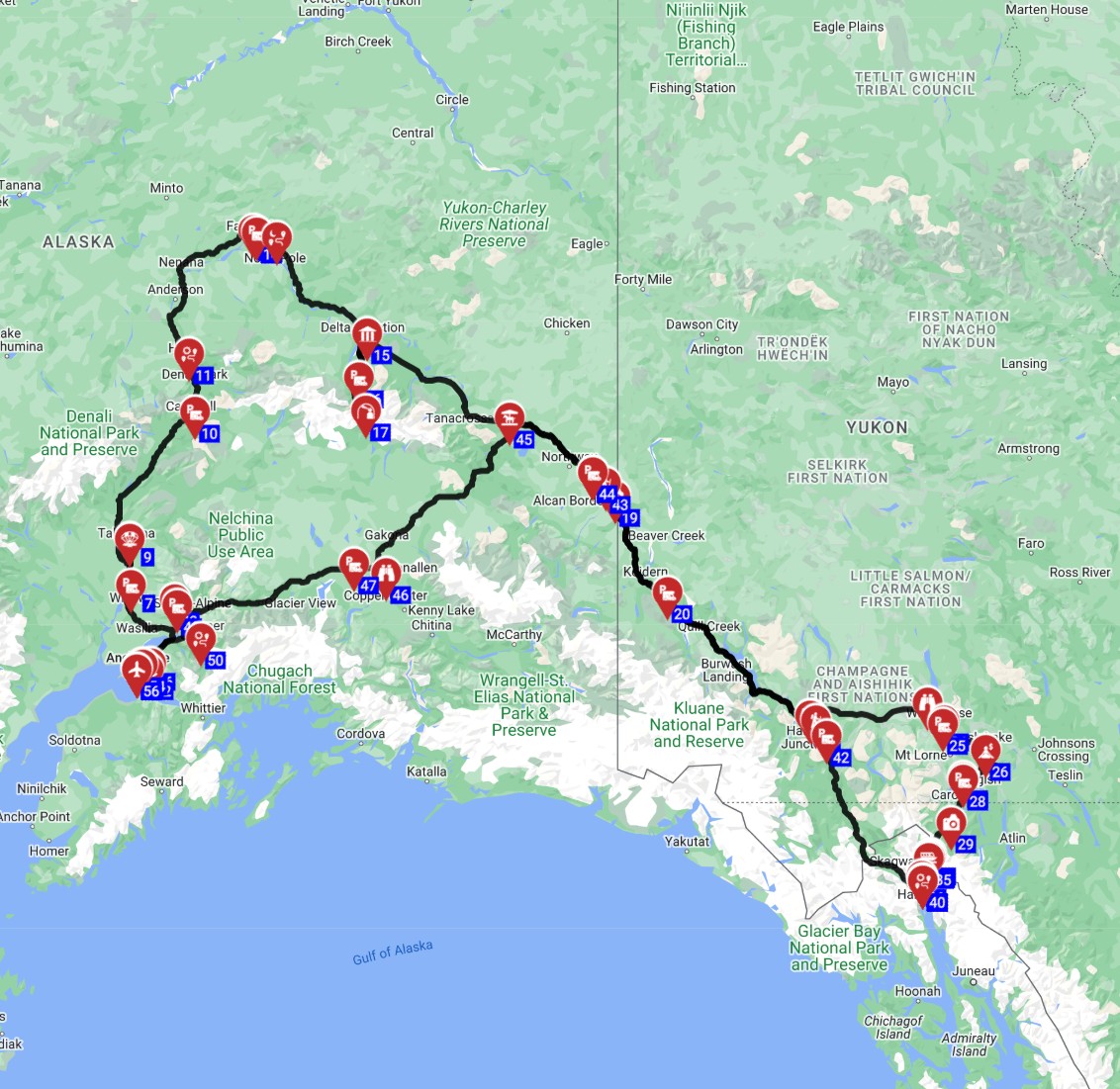
This pre-planned route simplifies your travel experience, allowing you to focus on the journey. It meticulously details stops at over 30 attractions, including natural wonders, historical sites, and cultural experiences, ensuring you don't miss a beat. Using RV PLANET for trip planning rewards you with a 25% planning discount, making your journey both seamless and cost-effective.
Must-See Stops Along the Way (Avi Bandana Picks)
Avi Bandana, our founder and a seasoned RV traveler, shares his personal recommendations for an Alaskan RV trip, focusing on experiences that truly capture the essence of the region's culture, history, and stunning natural beauty. These handpicked stops offer invaluable insights and create unforgettable moments.
- Cultural Immersion: For an invaluable insight into Alaska's indigenous cultures, Avi highly recommends a traditional visit to the Alaska Native Heritage Center in Anchorage.
- Culinary Delights: Indulge in the fresh, local flavors of Alaskan seafood by dining at a traditional restaurant, with excellent options available in Anchorage and Juneau.
- Gold Rush History: History buffs shouldn't miss the S.S. Klondike National Historic Site in Whitehorse, Yukon, for a glimpse into the gold rush era, or Independence Mine State Historical Park near Palmer for a tangible connection to Alaska's mining past.
- Wilderness Wonders: Avi suggests visiting the Kluane National Park and Reserve Visitor Centre in Canada for its breathtaking wilderness and embarking on a Knik Glacier Tour from Palmer/Wasilla for an unparalleled glacier experience that truly showcases Alaska's icy grandeur.
- Contextual Understanding: To round out your historical and artistic journey, explore museums like the Anchorage Museum, which provides rich context for the state's diverse history and art.
These curated experiences are integrated into many of the pre-planned itineraries available through RV PLANET (rvplan.net), ensuring your journey is not only scenic but also culturally enriching. For a trip that encompasses many of Avi's recommendations, consider the "Anchorage Round Trip - Alaska-Yukon Discovery Trail," which spans 23 days and covers over 3,500 km, offering a deep dive into the region's best.
Daily Driving Distances & Drive Times in Alaska
When RVing in Alaska, embracing a slower pace is key to truly appreciating the journey. Avi Bandana's general recommendation is to average a maximum of 100 miles or 150 km per day. This allows ample time for wildlife viewing, spontaneous stops at scenic pull-offs, short hikes, and exploring charming small towns that often reveal themselves to be the true highlights of an Alaskan road trip.
For example, the drive from Anchorage to Seward, approximately 200 km (124 miles), typically takes about 2.5 to 3 hours of pure driving time, leaving you plenty of afternoon to explore the Kenai Fjords or enjoy Seward's waterfront. Similarly, the drive from Anchorage to Talkeetna, covering around 180 km (112 miles), can be completed in about 2 to 2.5 hours, leaving you a full afternoon to experience this unique gateway town. Even longer stretches, such as the drive from Denali National Park entrance to Fairbanks (approximately 200 km / 124 miles), averages 2.5 to 3 hours of drive time, offering flexibility for stops like the Alaska Pipeline viewpoint or exploring the university campus.
Remember that these are estimates, and actual travel times can be affected by road conditions, weather, and the sheer number of stunning vistas that will inevitably tempt you to pull over and soak it all in. Planning for slightly longer travel times per segment will enhance your overall experience, allowing for a more relaxed and enjoyable exploration of Alaska's magnificent landscapes.
Best RV Class for This Itinerary — Couple & Family Picks
Choosing the right RV class is crucial for comfort and maneuverability across Alaska's diverse terrain, from well-maintained highways to more remote access roads. Avi Bandana offers specific recommendations based on your travel party.
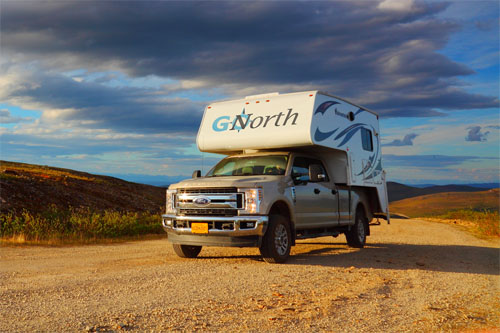
For Couples: Avi Bandana strongly recommends the Class B - Camper Van. These nimble vehicles, typically averaging 5.8 meters in length, are ideal for navigating Alaska's roads and offer comfortable sleeping for around 2-3 adults. With excellent fuel economy, often achieving 8-10 Liters/100 km based on Bandana's global fleet average, they help keep fuel costs manageable on longer Alaskan routes. Their compact size also makes parking easier in smaller towns or scenic spots. On the routes offered through RV PLANET routes, you can itemize and track every expense along the way for easy budgeting.
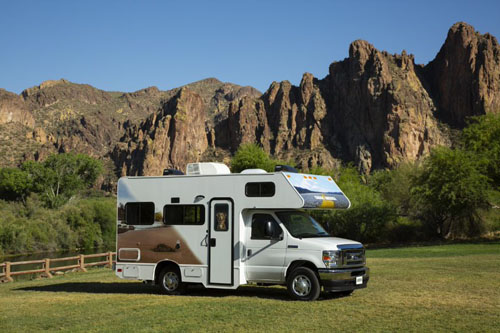
For Families: The Class C - Alcove RV is an outstanding choice. These larger motorhomes, averaging 7.5 meters in length, provide more spacious living and sleeping arrangements, typically accommodating about 4-5 adults comfortably. With an average fuel consumption of 10-12 Liters/100 km (Bandana's global fleet average), they offer a good balance of space and efficiency. Many Class C models feature dedicated sleeping areas and ample storage, ensuring a comfortable experience for families of 4-5 travelers, making extended exploration enjoyable.
To further simplify your planning and ensure you get an RV perfectly suited to your chosen itinerary, consider using Bandana's integrated 'Rent & Plan' service. This feature pairs your ideal RV rental with a professionally crafted itinerary, providing access to trip-planning software and removing the organizational burden, so you can focus on the adventure ahead.
What is the 3-3-3 rule for RV travel?
The 3-3-3 rule for RV travel is a popular guideline suggesting you drive no more than 300 miles (approximately 480 km) in a day, arrive at your campground or destination by 3 PM, and stay for at least 3 days. This rule promotes a relaxed travel pace, helps prevent driver fatigue, and allows ample time to truly explore each location rather than rushing through your itinerary.
While the 300-mile driving limit might be ambitious given Alaska's vast distances, slower average speeds, and the sheer number of scenic pull-offs that beckon exploration, adhering to the 'arrive by 3 PM' and 'stay for 3 days' aspects is particularly beneficial. Arriving earlier in the day often secures better campsites, especially in popular areas like Denali or the Kenai Peninsula, which can fill up quickly. Furthermore, longer stays enable a deeper immersion into Alaska's unique natural attractions and wildlife viewing opportunities, transforming a visit into a truly memorable experience.
What is the best route to Alaska by RV?
The most iconic and widely recommended route for RV travel to Alaska is the Alaska Highway, also known as the Alcan Highway. This historic route begins in Dawson Creek, British Columbia, Canada, and stretches over 2,200 kilometers (1,387 miles) through the stunning wilderness of Yukon Territory, eventually leading into Fairbanks, Alaska.
Beyond the main Alcan Highway, the Cassiar Highway (Hwy 37) offers a compelling alternative through more remote and rugged wilderness, eventually connecting to the Alcan or providing access to the Alaska Marine Highway System for a different travel experience. For those RVing to Alaska via Canada, ensure your vehicle is well-prepared for the journey. This includes having good tires, a full-sized spare, and ensuring your suspension is in excellent condition. Rock chip protection for your windshield and headlights is also highly recommended due to the potential for gravel sections and flying debris.
When crossing the USA-Canada-USA borders, have all passports and travel documents readily accessible for every occupant, including birth certificates for minors. Be aware of prohibited items such as firearms, certain food items (especially fresh produce and unpasteurized dairy), and firewood, as these can cause delays or confiscations. Declare all goods truthfully to ensure a smooth border crossing experience. Verify that your RV insurance and roadside assistance policies extend to Canada and Alaska, as standard US policies may have limitations in these remote regions. Consider supplementary coverage for added peace of mind.
What is the best time of year to RV to Alaska?
The prime season for RV travel to Alaska is generally from mid-June to mid-August. During these peak summer months, you'll experience the longest daylight hours, offering more time for exploration each day. Temperatures are typically warmest, making outdoor activities more comfortable, and most attractions, services, and campgrounds are fully operational and accessible.
However, the shoulder seasons also offer distinct advantages. Traveling in the spring (May to early June) means fewer crowds and potentially lower rental rates. However, be prepared for the possibility that some attractions or campgrounds might still be closed, especially in early May. Mosquito season is also more prevalent during this time, particularly near standing water. Fall (late August to September) presents stunning autumn foliage and decreasing mosquito populations, along with fewer crowds. The trade-off here is cooler temperatures, shorter daylight hours, and the potential for some services to begin closing down, especially towards the end of September. Fall nights can be perfect for aurora viewing, adding another layer of magic to your trip.
Each season offers a unique Alaskan experience with its own set of trade-offs. Whether you prioritize maximum daylight and accessibility or fewer crowds and budget-friendly options, careful planning around the season that best suits your priorities will enhance your RV adventure.
What is the 4-4-4 rule for RV travel?
While less common than the 3-3-3 rule, the 4-4-4 guideline for RV travel suggests driving no more than 400 miles (approximately 640 km) per day, arriving at your campsite by 4 PM, and staying for at least 4 days. This variation offers a slightly more flexible approach to daily driving distances, which can appeal to RVers covering vast distances, particularly those traveling to or from Alaska.
However, applying a strict 400-mile daily drive within Alaska itself can be challenging and is often not practical or recommended. The state's immense scale, coupled with the numerous scenic stops, wildlife viewing opportunities, and variable road conditions, naturally encourages a slower, more deliberate travel pace. Many of Alaska's most rewarding experiences come from lingering in a location, not just passing through.
For an Alaskan RV trip, while the 'stay for 4 days' aspect can be highly beneficial for truly immersing yourself in destinations like Denali National Park or the breathtaking Kenai Peninsula, Avi Bandana generally advocates for the more relaxed pace suggested by the 3-3-3 rule when traversing the state's interior. Prioritizing depth of experience over sheer mileage will undoubtedly lead to a more fulfilling Alaskan adventure.
What should I not miss in Alaska?
When RVing through Alaska, certain experiences are simply unmissable, offering deep dives into the state's unparalleled wildlife, dramatic glaciers, and vibrant local cultures. Essential stops include immersive wildlife viewing in Denali National Park, breathtaking glacier cruises from Seward or Valdez, and exploring charming towns like Talkeetna and Homer.
Denali National Park is a must-visit, where a shuttle bus ride deep into the park provides unparalleled opportunities to spot grizzly bears, moose, caribou, and Dall sheep against a backdrop of Denali's majestic peak. For marine adventures, take a boat tour from Seward to witness tidewater glaciers calve into the ocean and encounter whales, puffins, and sea otters in Kenai Fjords National Park. Alternatively, explore the stunning fjords and glaciers of Valdez, often called 'Little Switzerland,' which offers fantastic opportunities for sea kayaking.
Don't miss the unique allure of the Homer Spit, a famous land formation jutting into Kachemak Bay, renowned for world-class halibut fishing, eclectic art galleries, and charming shops. The quirky town of Talkeetna offers spectacular Denali views (weather permitting), thrilling bush plane tours with glacier landings, and a delightful historic district. Lastly, a visit to the Alaska Wildlife Conservation Center in Girdwood is highly recommended to see iconic Alaskan wildlife up close in spacious enclosures.
These highlights are often seamlessly integrated into the pre-planned itineraries available through RV PLANET (rvplan.net), ensuring you experience the very best of Alaska during your RV journey. For instance, the "Anchorage Round Trip - Alaska-Yukon Discovery Trail" (23 days, 3,539 km) is packed with natural wonders and cultural stops, including 3 museums and 2 national parks.
Can I park my RV anywhere in Alaska?
No, you cannot park your RV just anywhere in Alaska. While dispersed camping, or boondocking, is permitted in many designated public land areas managed by the Bureau of Land Management (BLM) and National Forests, it is generally prohibited on private property, within city limits without explicit permission, and in most state parks outside of designated, paid campgrounds.
RV-specific logistics require careful planning. Always check local signage and regulations, as rules can vary significantly. BLM and National Forest lands often allow dispersed camping for up to 14 days within a 30-day period, but always practice Leave No Trace principles. State Parks typically have designated campgrounds with associated fees, which offer amenities like hookups and restrooms. When planning your route, ensure you map out locations with RV dump stations and fresh water refill points, as these can be sparse in more remote areas; apps like iOverlander can be invaluable for locating these facilities.
Be mindful of generator use and quiet hours, especially in National Parks and some State Parks. Cell service is often nonexistent outside of major towns and along primary highways, so consider satellite communication devices for emergencies. Lastly, always prioritize wildlife encounter safety: secure food in bear-resistant containers or inside your RV, carry bear spray (and know how to use it), and familiarize yourself with bear safety protocols, particularly when dispersed camping or hiking.
What You Shouldn't Miss
- Embark on a scenic 7-day RV journey covering about 700 km through Southcentral Alaska, including Denali National Park and the Kenai Peninsula.
- Experience Denali National Park via shuttle bus for optimal wildlife viewing (bears, moose, caribou) and breathtaking views of Denali itself.
- Take a glacier cruise or kayak tour from Seward to witness calving glaciers and marine wildlife in Kenai Fjords National Park.
- Drive the stunning Homer Spit, famous for halibut fishing and its unique artistic community.
- Explore the historic gold rush era by visiting sites like Independence Mine State Historical Park near Palmer.
- Travel the iconic Alaska Highway (Alcan), a 2,200 km route through British Columbia and Yukon into Alaska, offering incredible wilderness vistas.
- Consider a 14-day extended journey to include the vast Wrangell-St. Elias National Park area, adding another dimension to your Alaskan adventure.
Final Thoughts
Renting an RV for your Alaskan adventure is more than just a mode of transportation; it's your mobile basecamp, offering unparalleled freedom to explore the Last Frontier at your own pace. Whether you choose a compact campervan for nimble navigation or a spacious motorhome for family comfort, the opportunities for discovery are endless.
From the rugged coastlines of the Kenai Peninsula to the majestic peaks of Denali, Alaska offers a journey filled with wildlife encounters, stunning vistas, and the spirit of adventure. By planning with resources like RV PLANET (rvplan.net) and leveraging Bandana Caravan's expertise, you can craft an itinerary that perfectly suits your travel style and budget.
Remember to travel slowly, savor the moments, and embrace the spirit of exploration. Your Alaskan RV adventure awaits, promising memories that will last a lifetime. Get inspired for your next trip, discover top destinations, planning tips, all in one place!