
In This Guide
- Can You Drive an RV in China? License & Age Rules
- Road Conditions & Terrain in China
- RV Size Limits, Bridges & Restricted Zones
- Fuel: Diesel vs. Petrol & Cost per 100 km
- Tolls, Vignettes & Border Rules
- Driving Tips for cheap rv rental Travelers
- Recommended RV Class for China Roads
- Should I Choose a Compact Van Instead of a Large RV in China?
- Can I Park Anywhere? Free & Wild Camping Rules in China
- Can I Drive an RV Into the City Center? Heights, Tunnels & Local Signage
- Is RV travel popular in China?
- How much does it cost to rent an RV in China?
- Do I need a special license to drive an RV in China?
- Are there RV parks in China?
- Can you wild camp in China?
- What are the best places to RV in China?
- What is the average cost of camping in China?
- Is RVing in China safe?
- Top Cities for RV Rental in China
- Navigating Your Trip: Essential Practical Info for RVers in China
- What You Shouldn't Miss
Can You Drive an RV in China? License & Age Rules
Foreigners can legally drive a rented RV in China, but they must first obtain a temporary Chinese driving permit, as the commonly used International Driving Permits (IDPs) are not recognized. The process to secure this temporary permit typically requires a valid foreign driver's license, an official translation of that license into Chinese, and a medical examination. This is a crucial step that needs to be completed well in advance of your trip, and often, local travel agencies or your chosen RV rental provider can facilitate this complex application. The minimum driver age for renting a motorhome in China is 21 years old across most suppliers, and there are no young driver surcharges or vehicle class restrictions based on age. For most standard RVs, a temporary permit equivalent to a C1 Chinese license is sufficient; however, for larger Class A motorhomes, a B1 or B2 equivalent permit might be necessary, depending on the vehicle's weight and passenger capacity. With Bandana, we ensure full transparency during the booking process, clearly outlining all necessary documentation and requirements, so there are no hidden fees or surprises when you pick up your campervan. For live availability and current prices, start with our RV Rental China - Complete Guide 2026 guide to find the perfect vehicle for your adventure.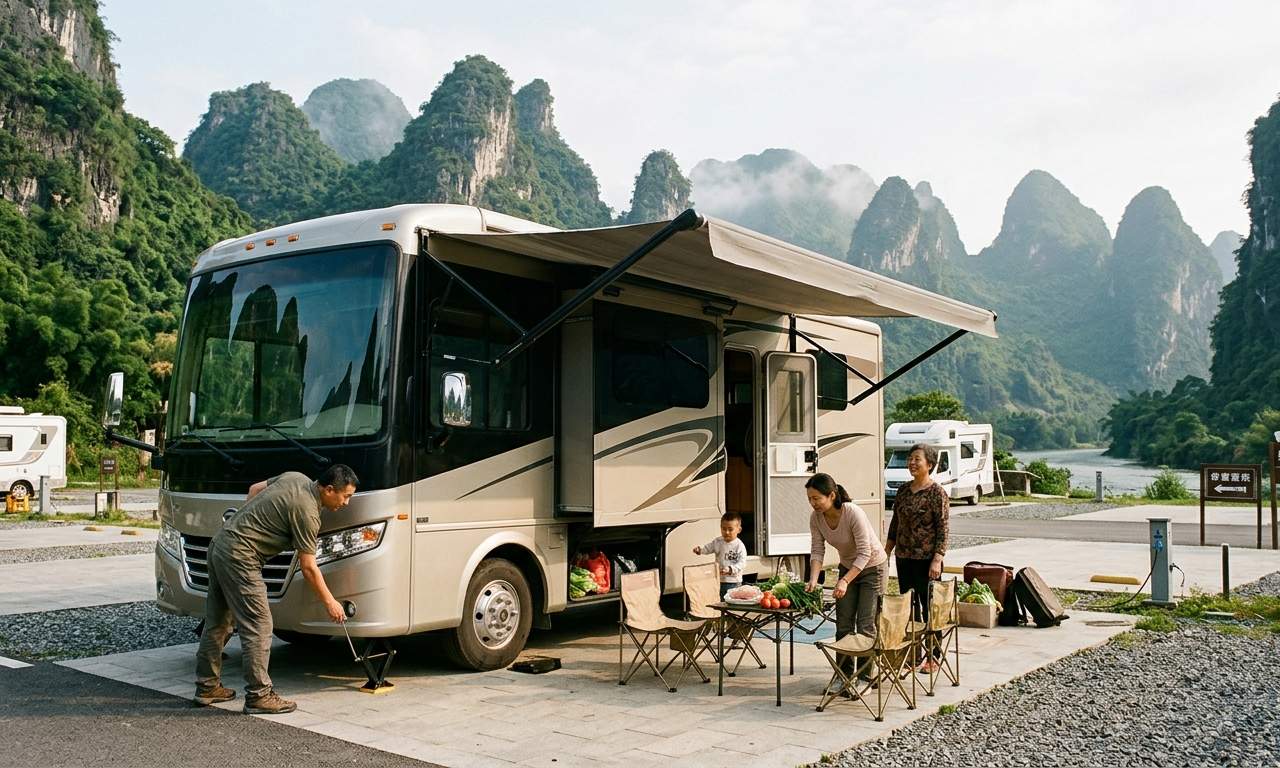
Road Conditions & Terrain in China
China boasts an extensive and generally well-maintained highway network, making long-distance RV travel quite comfortable, covering hundreds of kilometers between major cities. However, road quality can vary significantly outside these primary highways, particularly in rural and mountainous regions which may feature narrower, winding roads, unpaved sections, or more challenging terrain. Specific areas like the Tibetan Plateau or Xinjiang present high-altitude, rugged, and sometimes remote driving conditions that require careful planning and a confident RVer. Urban areas are characterized by heavy traffic, a prevalence of scooters and motorcycles, and complex multi-lane interchanges, all demanding extremely careful navigation. Despite these challenges, picturesque routes, especially in provinces like Yunnan and Sichuan, offer breathtaking views but may involve steep inclines and sharp turns, encouraging slower, more deliberate driving, averaging a maximum of 100-150 km per day. Remember, driving slowly and carefully allows you to navigate almost anywhere without issues; just use common sense and pay attention.RV Size Limits, Bridges & Restricted Zones
When planning your cheap RV rental in China, be aware that while modern infrastructure generally accommodates large vehicles, RV travelers must remain mindful of potential height, weight, and length restrictions, especially within older city centers and specific scenic areas. Lower bridges, tunnels, and older underpasses often have explicit height limits, typically marked in meters, which you must always observe. Many larger cities also implement restricted zones, such as environmental protection zones, resident-only areas, or areas with specific vehicle prohibitions, that RVs might need to avoid. Ferries, particularly in coastal or riverine regions, may also impose size and weight limitations, often requiring prior booking or inquiry for larger motorhomes. It is crucial to always pay close attention to local signage, which is predominantly in Chinese, sometimes with English translations, to avoid unintended violations or fines. Our commitment to full transparency ensures you are aware of any potential fees or fines for non-compliance, supporting your peace of mind throughout your journey.Fuel: Diesel vs. Petrol & Cost per 100 km
Both diesel (柴油 – chái yóu) and petrol (汽油 – qì yóu) are widely available across China, with the majority of Bandana's RV fleet running on diesel, which is generally efficient for longer trips. For example, our Class SI (Semi-integrated) RVs typically show a fuel consumption of 10-11 Liters/100 km, while Class C (Alcove) models average 10-12 Liters/100 km. More compact Class B (Camper Van) RVs from Bandana's fleet generally consume less, around 8-10 Liters/100 km, making them a more budget-friendly choice. Fuel prices in China are government-regulated and remain competitive, although they can fluctuate with global oil prices and regional taxation. Payment at fuel stations is predominantly cashless, requiring local mobile payment apps like WeChat Pay or Alipay, so ensure your rented motorhome includes a solution or that you have these apps set up before you depart. When considering your total trip costs beyond the rental itself, such as fuel and campground fees, remember that RV PLANET routes allow you to itemize and track every expense for easy budgeting.Tolls, Vignettes & Border Rules
China operates an extensive network of toll roads (高速公路 – gāosù gōnglù), which are essential for efficient inter-city RV travel, but it does not use a vignette system like some European countries. Toll fees are typically collected at booths upon entry and exit of highway segments, calculated based on the distance traveled and the vehicle class. While many toll booths increasingly accept local payment apps like WeChat Pay and Alipay, it is always advisable to carry small denominations of cash for tolls, especially in more rural areas. For foreign travelers, renting an RV in China primarily means navigating these internal tolls, as border rules for foreign-owned or long-term rented RVs crossing into China are highly complex, generally requiring extensive permits and often a local guide. Some Bandana partner suppliers may offer options for pre-paid toll passes or electronic toll collection devices, which can streamline your journey and help prevent unexpected fines.Driving Tips for cheap rv rental Travelers
To ensure a smooth RV adventure in China, mastering local navigation apps like Baidu Maps (百度地图) or Gaode Maps (高德地图) is crucial for up-to-date traffic, road conditions, and points of interest, as Google Maps functionality can be limited. Be prepared to understand local driving etiquette, which can be assertive, with frequent horn usage and a high prevalence of scooters and motorcycles, especially in urban and rural areas. For budget travelers, planning routes to minimize toll roads, cooking your own delicious meals in your RV's kitchen, and utilizing free or low-cost parking can significantly reduce overall expenses. For some amazing ideas for cooking on the road, check out our RV-friendly recipes playlist. Always prioritize emergency preparedness: keep important documents, a local SIM card, and emergency contact numbers (including your rental company and local embassy) readily accessible. Finally, remember to take frequent breaks, especially on long stretches, to rest, refuel, and safely enjoy China's scenic wonders. Slow travel, averaging max 100-150 km per day, will allow you to truly connect with the culture, food, and scenery.Recommended RV Class for China Roads
For navigating China's diverse road network, Class SI (Semi-integrated) and Class B (Camper Van) RVs from Bandana's extensive fleet are generally recommended due to their excellent balance of comfort and maneuverability. Class SI motorhomes, with an average length of 6.9 meters, offer ample living space and essential amenities while remaining manageable on most roads, typically consuming 10-11 Liters/100 km. Our popular "2 Berth Rover" is an automatic Class SI with front and roof air conditioning, ideal for a couple and winter-ready, demonstrating the comfort you can expect. Class B Camper Vans, averaging 5.8 meters in length, provide superior maneuverability for urban exploration and tighter mountain passes, with a fuel consumption average of 8-10 Liters/100 km, exemplified by our "2 Berth Hi Top" campervan. While larger Class C (Alcove) and Class A (Integrated) RVs do offer more space (averaging 7.5m and more in length), their size can present greater challenges for parking and navigating specific rural or historical areas. The ideal choice ultimately depends on your trip duration, the number of travelers, and your preferred balance between interior comfort and ease of driving and parking. For a two-week adventure or longer, a Class SI or C might offer the best blend.Should I Choose a Compact Van Instead of a Large RV in China?
Choosing a compact van (Class B Camper Van) over a larger RV in China largely depends on your travel priorities and the specific routes you envision, though larger RVs often provide better comfort for extended trips. Compact vans, typically around 5.8 meters in length, offer superior maneuverability for navigating crowded city streets, finding parking, and traversing narrower mountain passes with ease. These smaller rented motorhomes, like our "Combi Van" which is 5 meters long, are ideal for couples seeking agility. In contrast, larger RVs, such as a Class SI (avg. 6.9m) or Class C (avg. 7.5m), provide significantly more indoor space, larger kitchen facilities, separate sleeping areas, and more amenities, greatly enhancing comfort for longer durations or families. For instance, our "6 Berth Discovery" Class C motorhome features a 190-liter refrigerator and can comfortably sleep six, making it perfect for families. While a compact van is undeniably easier to drive and park in certain situations, the enhanced living space and self-sufficiency of a larger RV can be a more significant advantage for an immersive travel experience in China, especially if you plan to cook and relax extensively inside your rented mobile home. Consider the trade-off between the ease of driving a smaller vehicle versus the greater comfort and amenities offered by a larger RV for your specific itinerary.Can I Park Anywhere? Free & Wild Camping Rules in China
Free or 'wild camping' is generally not permitted or recommended for RVs in China, with most overnight parking legally restricted to designated campgrounds or official parking areas due to regulatory and safety considerations. Unlike some Western countries, China lacks a widespread culture or legal framework for dispersed camping, making official RV parks or designated parking areas the safest and most reliable options for your rented motorhome. Attempting to wild camp may lead to unwelcome encounters with local authorities, pose safety concerns in unfamiliar areas, or result in difficulty finding suitable spots with amenities. Many tourist attractions, national parks, and even service areas along major highways are progressively developing dedicated RV parking zones, some offering basic amenities like water and electricity. Rules vary significantly by region, so always check local regulations and follow local law before parking your campervan overnight, and prioritize official campgrounds for peace of mind and convenient access to facilities. For finding campsites and campgrounds during your trip, we recommend using RV PLANET (rvplan.net) - a great resource for locating available spots along your route, which also features many of the growing 'RV Glamping' resorts in China.Can I Drive an RV Into the City Center? Heights, Tunnels & Local Signage
Most RVs can generally be driven into Chinese city centers, though drivers must pay close attention to local signage indicating height restrictions, environmental zones, and specific traffic rules. Key concerns include lower bridges, tunnels, underpasses, and multi-story parking garages, which may have height limits of 2.2-3.5 meters that larger Class C or Class A RVs will easily exceed. Many major cities have implemented environmental protection zones or restricted traffic areas, often signified by specific signage or license plate restrictions, which RV drivers should be aware of to avoid penalties. Finding suitable parking for a larger RV in a bustling city center can be challenging and expensive; therefore, utilizing public transport after parking on the outskirts and commuting in may be a more practical approach for urban exploration. Drive slowly and carefully, and you can drive almost anywhere without issues. No need to stress - just use common sense and pay attention to all up-to-date navigation apps and local signage to avoid any complications.Is RV travel popular in China?
RV travel is an emerging and rapidly growing segment within China's domestic tourism market, though it is still relatively niche compared to other forms of leisure travel. The popularity of RVing has been steadily increasing among Chinese families and younger generations who are seeking more flexible, self-sufficient, and immersive travel experiences, especially since 2015. While domestic RV travel is gaining significant traction, it remains less common for international visitors due to various logistical complexities, such as obtaining special driving permits and navigating potential language barriers. The Chinese government and numerous private enterprises are actively investing in RV infrastructure, including developing new campgrounds and service areas, to support this burgeoning trend. Many foreign travelers, however, still opt for guided tours or a car-and-hotel combination due to the perceived challenges of truly independent RV travel for non-Chinese speakers, making a rented motorhome an adventurous choice.How much does it cost to rent an RV in China?
The cost to rent an RV in China varies significantly based on factors such as the vehicle class, rental duration, season, and specific rental provider, typically ranging from 800 to 2000+ RMB per day (approximately $110-$280+ USD). Smaller Class B Camper Vans or older models will generally be on the lower end of this spectrum, while newer, larger Class C or Semi-integrated RVs with more amenities will command higher prices. For example, a compact 2-berth campervan might start around $110 USD/day in the low season, while a 6-berth Class C motorhome could be upwards of $280 USD/day during peak periods. Peak travel seasons, such as national holidays and summer months, often see increased rental rates, while off-peak periods may offer more budget-friendly options, with potential savings of up to 25% for booking several months in advance. Additional costs to factor into your total trip budget include insurance, one-way fees (if applicable, typically $150-$500 USD), mileage packages, cleaning fees, and any optional equipment rentals. Bandana offers full transparency on pricing, ensuring what you see is what you pay, with no hidden fees or surprises at pickup. Our system compares final prices across suppliers, so you can clearly see the breakdown. For more specific cost estimates, explore our "Cheap RV Rental in China - Budget Guide 2026" or "RV Rental in China - Prices and Best Deals 2026" for a detailed breakdown.Do I need a special license to drive an RV in China?
Yes, foreign drivers absolutely need a temporary Chinese driving permit to legally operate an RV in China, as international driving permits (IDPs) are not recognized by Chinese law. This is a critical requirement that applies to all motorhomes, campervans, and other vehicles, making it the most important step for any foreigner planning to drive independently. The application process involves submitting your valid foreign driver's license, an authorized Chinese translation of it, and usually requires a medical check-up, often with assistance from your rental company or a local agent. Depending on the size and weight of your rented RV, the temporary permit issued will correspond to an appropriate Chinese license category, such as a C1 license for standard light motorhomes. A standard car driver's license is sufficient for ALL motorhome classes (Class A, Class B, and Class C) once you obtain the temporary Chinese permit. There is no need for a special license or CDL for any rental motorhome from our fleet.Are there RV parks in China?
Yes, China has a developing and expanding network of RV parks and campsites, particularly in popular tourist regions, national parks, and along major scenic routes. These official RV parks, often referred to as 'auto camps' (汽车营地 – qìchē yíngdì), offer varying levels of amenities, ranging from basic parking with hookups for water and electricity to more luxurious resorts with full facilities like showers, laundromats, and recreational areas. While not as ubiquitous as in some Western countries, the number of designated RV parks is growing rapidly to support the increasing domestic interest in RV travel. Many parks are strategically located near cultural landmarks or natural attractions, providing convenient and secure overnight stops for your rented RV. It is highly advisable to research and book RV parks in advance, especially during peak seasons, and to verify the specific amenities offered for your particular motorhome class. For a two-week adventure, planning your overnight stops is key.Can you wild camp in China?
No, wild camping is generally not permitted or recommended in China, with legal and safe overnight RV parking restricted to designated campgrounds or official parking areas. Unlike countries with established 'right to roam' laws, China has stricter regulations regarding land use and public access, making unauthorized overnight parking risky and potentially illegal for your rented mobile home. Prioritizing official campgrounds is essential for your safety, convenience, and to comply with local laws. These sites offer necessary facilities for waste disposal (including fresh and grey water tanks that need to be emptied regularly), and staff who can assist with local information, overcoming potential language barriers. While some informal overnight parking might occur in less-populated rural areas, it is not a sanctioned practice and should be approached with extreme caution, always prioritizing designated sites for peace of mind.What are the best places to RV in China?
The best places to explore with a rented RV in China include culturally rich and scenically diverse regions such as Yunnan, Sichuan, Xinjiang, and sections along the historic Silk Road, all offering unique adventures. Yunnan Province is renowned for its diverse ethnic cultures, stunning mountain landscapes, and picturesque ancient towns, making it ideal for scenic drives and deep cultural immersion. Sichuan Province offers an incredible mix of vibrant cities like Chengdu, majestic panda reserves, and the dramatic high-altitude landscapes bordering the Tibetan Plateau, with a growing number of RV parks. The Xinjiang Uyghur Autonomous Region provides an epic RV journey along parts of the ancient Silk Road, featuring vast deserts, snow-capped mountains, and unique Central Asian cultural experiences. Other fantastic areas for RV travel include China's coastal regions for seaside camping, and numerous national parks in central China that are actively developing RV-friendly infrastructure, providing countless opportunities for an extended road trip. Don't forget to check out our "RV Rental Asia - Complete Guide 2026" for broader regional inspiration!What is the average cost of camping in China?
The average cost of camping at designated RV parks in China can vary significantly based on location, amenities, and seasonality, generally ranging from 100 RMB to 300 RMB per night (approximately $14-$42 USD). Basic campsites found at national parks or provincial scenic spots might offer lower rates, providing essential services like parking and basic hookups for electricity and water. More upscale or privately operated RV resorts, especially those near popular tourist destinations or offering resort-style amenities (like the 'RV Glamping' sites), can command higher prices. Prices also fluctuate based on the season, with higher costs expected during peak national holidays and the popular summer months. Some RV parks may offer discounts for longer stays, such as a week-long trip, or for specific membership cards, so it's always worth inquiring when making reservations for your rented campervan.Is RVing in China safe?
RVing in China is generally considered safe, particularly when travelers adhere to local traffic laws, utilize designated campgrounds, and exercise cultural awareness throughout their journey. China has a remarkably low crime rate, and tourist areas are typically well-patrolled, contributing to an overall secure environment for travelers. The main safety considerations for RVers involve navigating unfamiliar and sometimes dense road conditions, especially heavy traffic in urban areas, and ensuring your rented motorhome is mechanically ready for potentially remote journeys. It is crucial to have reliable navigation, a local SIM card for communication, and a basic understanding of Mandarin for emergencies, or readily available translation apps. Staying in official RV parks provides a secure environment with amenities and staff who can assist with local information or emergencies, further enhancing your peace of mind and overall safety.Top Cities for RV Rental in China
China offers several excellent starting points for your RV adventure, providing access to diverse landscapes and cultural experiences.- Beijing: As the capital, Beijing serves as a major hub with modern infrastructure and good access to RV rental services. From here, you can easily venture north to sections of the Great Wall or west towards Inner Mongolia for a vast, open road trip in your rented RV.
- Shanghai: A vibrant metropolis, Shanghai offers a contrast of bustling city life and nearby scenic coastal drives. Renting an RV here provides a gateway to exploring the picturesque Yangtze River Delta region and its ancient water towns.
- Guangzhou: Located in southern China, Guangzhou is a strategic starting point for exploring the lush landscapes of Guangdong province and beyond. Its warmer climate makes it appealing for RV travel much of the year, providing a base for a week-long trip or more.
- Chengdu: In Sichuan province, Chengdu is famous for its pandas and as a gateway to the majestic Tibetan Plateau. An RV rental from Chengdu allows for incredible mountain drives and cultural immersion in the heart of China.
- Xi'an: Known for the Terracotta Army, Xi'an offers a rich historical starting point for those looking to explore the ancient Silk Road routes by motorhome. The surrounding areas present vast, captivating landscapes for your journey.
Navigating Your Trip: Essential Practical Info for RVers in China
Successfully navigating an RV rental in China requires some practical knowledge to ensure a smooth and enjoyable journey. Firstly, China drives on the right side of the road, similar to the US and most of Europe, which is an important consideration for international drivers. Speed limits are generally 120 km/h on expressways, 80-100 km/h on national highways, and lower in urban and rural areas, so always pay attention to local signage. Emergency numbers are straightforward: 110 for police, 119 for fire, and 120 for medical emergencies. We always recommend getting a local SIM card (available at airports and mobile provider stores) for reliable internet connectivity, essential for navigation apps and keeping in touch. While RVing in China is still developing, major rest stops on expressways often have clean facilities and ample parking for larger vehicles. Remember to travel slowly, averaging a maximum of 100-150 km per day on average, to truly take time to feel the place, connect to the culture, the food, and the scenery. Our pre-planned route plans on rvplan.net can help you manage your journey with confidence.What You Shouldn't Miss
An RV adventure in China is an unparalleled way to experience its vastness and diversity. Don't miss these incredible experiences:- The Terracotta Army in Xi'an: Witness this breathtaking collection of ancient warriors. Park your RV at a nearby official site and take public transport or a taxi for easy access.
- Zhangjiajie National Forest Park: Explore the "Avatar Mountains" with their towering, pillar-like formations. RV parks are available outside the main park entrances, allowing you to spend a few days hiking and absorbing the stunning scenery.
- The Ancient City of Pingyao: Step back in time within these remarkably preserved city walls. Parking your motorhome outside the historical center and walking or cycling in offers the best experience.
- The Silk Road through Gansu and Xinjiang: Embark on an epic week-long trip or more across the ancient trade routes. This journey offers vast desert landscapes, historic grottoes, and unique cultural encounters, but requires meticulous planning due to its remote nature.
- The Scenic Karst Mountains of Guilin and Yangshuo: Cruise along the Li River or explore the dramatic limestone peaks with your rented campervan, finding local campsites near these natural wonders.
Final Thoughts
Embarking on a cheap RV rental adventure in China is an incredibly unique way to discover this vast and ancient land. While it presents some distinct challenges compared to RV travel in other parts of the world, such as navigating licensing and cultural nuances, the rewards of independent exploration are immeasurable. Imagine waking up to a different breathtaking landscape each day, cooking your own meals amidst stunning scenery, and truly immersing yourself in the local culture and food at your own pace. With Bandana Caravan, you have a partner dedicated to making your RV dreams a reality. We offer the transparency, support, and expertise to guide you through every step of planning your adventure. Whether you choose a nimble campervan for city exploration or a spacious motorhome for a family's two-week adventure through China's diverse terrains, we're here to help you find the perfect mobile home for your journey. So, are you ready to hit the road and create unforgettable memories in China? Discover top destinations, planning tips, and all you need in one place. Plan a trip itinerary in advance with minimal effort and maximum enjoyment.On the routes offered through RV PLANET routes, you can itemize and track every expense along the way for easy budgeting.
