In This Guide
- Can You Drive an RV in Alaska? License & Age Rules
- Road Conditions & Terrain in Alaska
- RV Size Limits, Bridges & Restricted Zones
- Fuel: Diesel vs. Petrol & Cost per 100 km
- Tolls, Vignettes & Border Rules
- Driving Tips for RV Rental Travelers
- Recommended RV Class for Alaska Roads
- Should I Choose a Compact Van Instead of a Large RV in Alaska?
- Can I Park Anywhere? Free & Wild Camping Rules in Alaska
- Can I Drive an RV Into the City Center? Heights, Tunnels & Local Signage
- Do you need a special license to drive an RV in Alaska?
- Do you have to have a special license to drive a 30 ft RV?
- Can I drive my RV to Alaska?
- Can I park my RV anywhere in Alaska?
- What is the 3-3-3 rule for RV living?
- Can you sleep in an RV while driving in the USA?
- Can you turn left on a red light in Alaska?
- How do I transfer my license to Alaska?
- Do I need to register my trailer in Alaska?
- Top Cities for RV Rental in Alaska
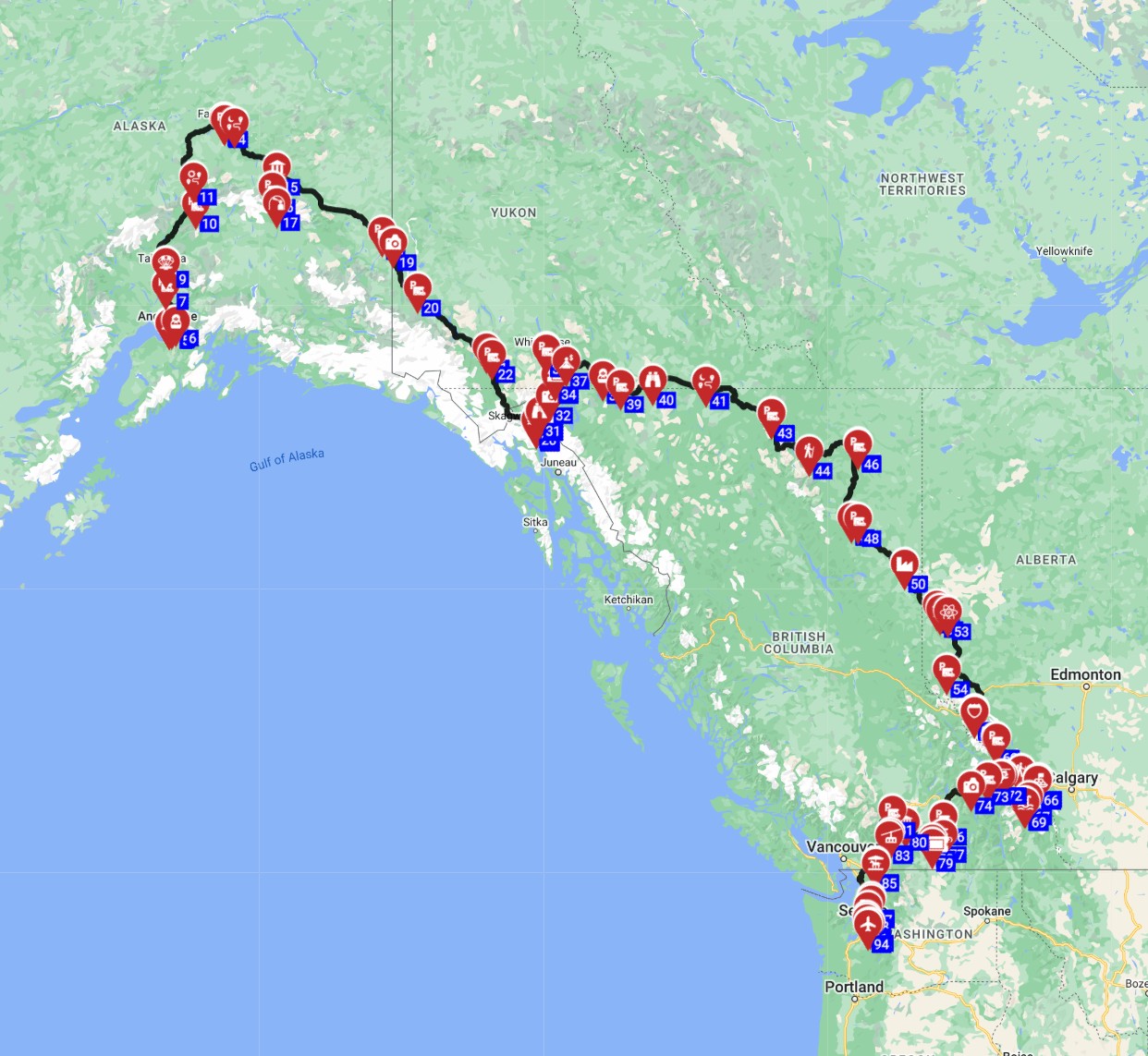
- Planning Your Alaska RV Route: Expert Itineraries
- Connectivity & Emergency Services in Alaska
Can You Drive an RV in Alaska? License & Age Rules
A standard Class D (or equivalent) driver's license from any US state or Canadian province is typically sufficient to drive most rented RVs, including large Class A and Class C models, in Alaska. There's no need for a special commercial driver's license (CDL) for recreational vehicles, even those exceeding 26,000 pounds Gross Vehicle Weight Rating (GVWR), as long as they are not used for commercial purposes. The minimum driver age for renting an RV in Alaska is 21, and we're proud to say there are no young driver surcharges or vehicle class restrictions based on age, making it accessible for more adventurers. For foreign drivers, a valid driver's license from your home country is required, and an International Driving Permit (IDP) is recommended for clarity and translation, though it is not mandatory in most cases. This full transparency ensures no surprises when you arrive to pick up your adventure vehicle.Road Conditions & Terrain in Alaska
Alaskan roads vary significantly, ranging from well-maintained paved highways, such as the Parks Highway, to challenging gravel and unpaved sections, particularly on more remote routes. You can expect diverse terrain throughout your journey, including stunning mountainous passes, picturesque coastal stretches, and vast forested areas. These changing conditions require drivers to remain vigilant and adaptable. Frost heaves are a common phenomenon, especially in the spring, causing uneven pavement and demanding reduced speeds to avoid vehicle damage. Drive slowly and carefully, paying attention to the road, and you can drive almost anywhere without issues. Unexpected wildlife, such as moose, bears, and caribou, can be present on or near roadways, so maintaining awareness is crucial. Be prepared for long stretches between services and potential cell service gaps, particularly on less-traveled routes. Our 24/7 support means real people are behind you, ready to help with any pre-booking or post-booking coordination needs, ensuring you're prepared for the road ahead.RV Size Limits, Bridges & Restricted Zones
Most standard RV lengths and heights generally pose no issues on main Alaskan highways and bridges. For instance, many of our popular Class C motorhomes average around 7.5 meters (approximately 25 feet), which navigate Alaska's primary routes with ease. There are very few specific height or weight restrictions that would impact typical recreational RV travel on major Alaskan routes. However, it's always wise to pay attention to local signage in smaller towns or specific parks, which might have limits on vehicle length or width in certain parking areas. If your adventure includes ferry travel on the Alaska Marine Highway System, be aware that there are specific length and height-based pricing and capacity limits, which should be booked well in advance, especially for larger RVs. This planning helps ensure a smooth journey with no unexpected roadblocks.Fuel: Diesel vs. Petrol & Cost per 100 km
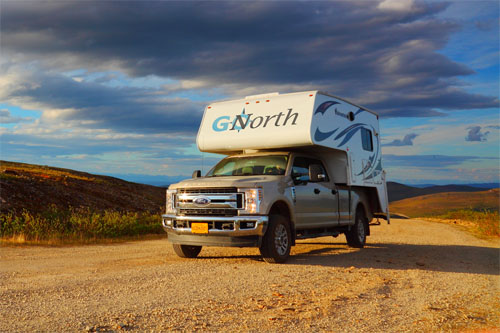
Both diesel and petrol (gasoline) are widely available in Alaska, though you might find diesel stations less frequent in extremely remote areas. Understanding your rented RV's fuel consumption is key to budgeting. Based on our global fleet averages, many Class SI and Class C motorhomes typically consume 10-12 Liters/100 km, while more compact Class B Camper Vans average around 8-10 Liters/100 km. For larger Class A Integrated RVs, consumption might be between 8-12 Liters/100 km, while Class TC Truck Campers typically average 12-17 Liters/100 km. Fuel prices in Alaska are generally higher than in the contiguous United States, especially in more remote towns, so plan for higher costs and refuel opportunistically. To help manage your budget and track expenses like fuel, campground fees, and tolls, remember that RV PLANET routes allow you to itemize every cost along your way.Tolls, Vignettes & Border Rules
There are no state-operated toll roads or vignette systems for standard passenger or recreational vehicles in Alaska, simplifying your travel around the state. However, if your journey involves entering Alaska from Canada via RV, you will need to clear customs. Ensure all occupants have valid passports and that you have all necessary vehicle registration documents. While rare, some private roads or ferries may have fees, so always check local maps and signage for any unexpected costs. For RV rentals, it's crucial to confirm with your provider that your rental agreement permits international travel if you plan to cross into Canada, as some agreements have specific restrictions. We pride ourselves on full transparency, so you'll encounter no hidden fees or surprises with Bandana Caravan.Driving Tips for RV Rental Travelers
When navigating Alaska's unique roads, driving defensively and slowly is essential, especially on gravel roads and those prone to frost heaves, to prevent damage and ensure safety. Maintain extra stopping distance, particularly with larger rented RVs like a "Cruise America Explorer" model with its 7.1-meter length, and be prepared for sudden stops due to wildlife encounters. Always carry emergency supplies, including extra fuel, water, food, a first-aid kit, and a communication device like a satellite messenger, given the long stretches without services or cell signal. Be mindful of your vehicle's length and practice wider turns in towns and campgrounds. Respect local communities and Indigenous lands by familiarizing yourself with local etiquette and adhering to "leave no trace" principles when wild camping. We want you to travel slowly, averaging a maximum of 100-150 km per day, taking time to feel the place, connect to the culture, the food, and the scenery. Our goal is to support you before, during, and after your booking, ensuring you have a memorable and safe trip.Recommended RV Class for Alaska Roads
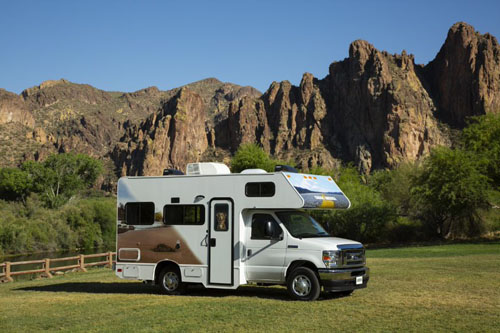
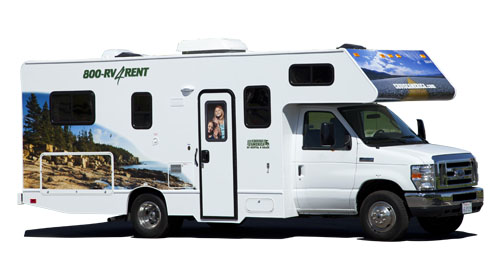
For most Alaska adventures, a Class C Alcove RV (many options, typically around 7.5m in length, ideal for 4-6 adults or families) or a Class SI Semi-integrated RV (averaging 6.9m in length, suitable for 3-4 adults) offers an excellent balance of comfort, space, and maneuverability. These classes, similar to a "Class C - Alcove" or "Class SI - Semi-integrated" available through our partners, provide ample sleeping capacity for families and sufficient ground clearance for most paved and well-maintained gravel roads. Class B Camper Vans (averaging 5.8m in length, perfect for 2-3 adults), like a "rv rental denver example Category Van" or "2 Berth Hi Top", are suitable for couples or small groups seeking more nimble travel and easier parking, though with less interior space. While Class A Integrated RVs (averaging 7.5m in length, accommodating 4-7 adults) offer luxury and space, their larger size can be less agile on narrower or unpaved routes, though still manageable on main highways. We encourage you to compare final prices across 50+ suppliers to find the perfect rented mobile home for your journey.Should I Choose a Compact Van Instead of a Large RV in Alaska?
For most journeys in Alaska, there is no inherent issue driving any rented RV size; comfort and indoor space for changing weather often outweigh minor maneuverability gains. A compact campervan, like a Class B "Camper Van" or even a "Patagonia Camper 4x4 double cab" offers advantages in situations requiring tighter parking, easier navigation through small towns, or if you plan to access more remote, narrow dirt roads. However, larger RVs, such as Class C or Class A motorhomes, offer significantly more living space, amenities, and storage, which can be a considerable advantage for longer trips, families, or unpredictable Alaskan weather. The choice often comes down to balancing the ease of parking and driving a smaller vehicle with the enhanced comfort and convenience of a larger, more fully-equipped RV for extended stays. For typical tourist routes and a family of 4-6, larger motorhomes are generally well-suited, providing a mobile headquarters for your adventures. Remember, you'll find comprehensive information in our RV Rental Alaska - Complete Guide 2026 to help you decide.Can I Park Anywhere? Free & Wild Camping Rules in Alaska
No, you cannot legally park your RV just anywhere in Alaska; regulations govern where overnight parking and camping are permitted. Designated campgrounds in state parks, national parks, and private RV parks are the most common and regulated places for overnight stays, often requiring reservations. However, free camping, often called 'boondocking' or 'wild camping,' is widely permitted in many areas of Alaska on public lands managed by the Bureau of Land Management (BLM) and National Forests, provided you adhere to 'leave no trace' principles. Many Alaskan towns and businesses are RV-friendly, with some offering overnight parking for self-contained RVs, particularly truck stops, large retail stores, and casinos (always ask permission first). Overnight parking on roadsides or in undeveloped areas should only be done where legally permitted and safe, avoiding private property, residential areas, or posted no-parking zones. Rules vary by region, so always check local regulations and follow local law before parking overnight, particularly concerning fire restrictions and waste disposal. For finding campsites and campgrounds during your trip, we recommend using RV PLANET (rvplan.net) - a great resource for locating available spots along your route.Can I Drive an RV Into the City Center? Heights, Tunnels & Local Signage
Yes, you can almost always drive a rented RV into Alaskan city centers like Anchorage, Fairbanks, or Juneau (the latter via ferry), though parking can be more challenging for larger vehicles. Alaskan cities generally lack the tight, historic centers, low bridges, or numerous tunnels found in older European cities that would restrict RV access. Drive slowly and carefully, and you can drive almost anywhere without issues. No need to stress - just use common sense and pay attention. Pay attention to local signage regarding height limits, specific parking restrictions, or residents-only streets, especially in busier downtown areas. Consider parking in designated RV-friendly lots or the outskirts of the city and using public transport or a towed vehicle to explore the city center if your RV is very large. There are no unique, widespread environmental zones or specific RV bans in Alaskan city centers that would prevent general access for your rented campervan or motorhome.Do you need a special license to drive an RV in Alaska?
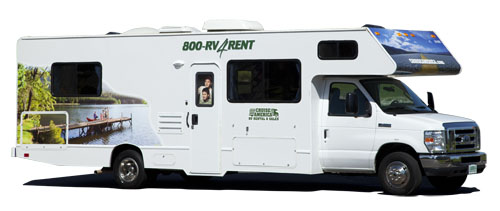
No, for most recreational RVs, including large Class A and Class C motorhomes, a standard Class D driver's license (or equivalent from another US state or Canadian province) is sufficient in Alaska. A special Commercial Driver's License (CDL) is typically only required if the vehicle has a Gross Vehicle Weight Rating (GVWR) of 26,001 pounds or more AND is used for commercial purposes, or if it is designed to transport 16 or more passengers (including the driver). This means your average rented motorhome, such as a "29′ Class C Motorhome" with a capacity for 6 people, does not require a special license. Foreign drivers should carry their valid national driver's license and an International Driving Permit (IDP) for clarity and legal translation. The specific weight threshold for a CDL applies to commercial use, not standard recreational RV travel.Do you have to have a special license to drive a 30 ft RV?
No, generally you do not need a special license to drive a 30-foot rented RV in Alaska, provided it is being used for recreational purposes. The length of the RV itself is not the primary factor determining license requirements; rather, it is the Gross Vehicle Weight Rating (GVWR) and the vehicle's purpose (recreational versus commercial). Even RVs significantly longer than 30 feet, such as many Class A motorhomes, typically fall under the standard Class D license category for recreational use. Always verify the GVWR of your specific rental RV and consult Alaska's Division of Motor Vehicles (DMV) website if you have concerns about exceptionally heavy or complex setups. For instance, a "Denali Searcher 30 - Gold" Class C motorhome, which can sleep 8 people, is still manageable with a standard license.Can I drive my RV to Alaska?
Yes, you can absolutely drive your RV to Alaska, typically via the Alaska Highway through Canada, or by taking an RV on the Alaska Marine Highway System ferry. When driving through Canada, ensure you have valid passports for all travelers, necessary vehicle registration and insurance, and any required permits for firearms or pets. Prepare your rented motorhome for long stretches between services, potentially unpaved roads, and variable weather conditions; this includes checking tires, brakes, fluids, and carrying emergency supplies. For an RV rental, confirm with your rental provider that crossing into Canada is permitted and that you have all necessary vehicle documentation for international travel. Our expert team can assist with pre-booking comparison and provide post-booking coordination, ensuring your documents are in order for a seamless border crossing.Can I park my RV anywhere in Alaska?
No, you cannot legally park your rented RV just anywhere in Alaska; regulations govern where overnight parking and camping are permitted. Designated campgrounds in state parks, national parks, and private RV parks are the most common and regulated places for overnight stays, with fees and reservation systems often in place. Boondocking or wild camping is generally allowed on public lands managed by the Bureau of Land Management (BLM) and National Forests, but always adhere to 'leave no trace' principles and check for local restrictions, especially regarding fire. Avoid parking on private property without permission, in residential areas, or in areas with 'no overnight parking' signs, which are common in many towns and trailheads. Always consult local regulations and signage for specific areas, as rules can vary significantly even within public lands.What is the 3-3-3 rule for RV living?
The 3-3-3 rule is a popular guideline for RV travel designed to enhance safety, manage fatigue, and ensure a more relaxed journey, though we emphasize RV rental for vacation, not full-time living. It suggests driving no more than 300 miles (approximately 480 km) in a day, arriving at your destination by 3 PM, and staying at least 3 nights in each location. Following this rule helps prevent driver fatigue, allows ample time to set up camp before dark, and provides opportunities to explore the local area without constant rushing. While a guideline, adhering to a similar pacing strategy is highly recommended for RV travel in Alaska, where long distances, varying road conditions, and stunning scenery encourage slower travel. This aligns with our philosophy to "travel slowly, max 100-150 km per day on average. Take time to feel the place, connect to the culture, the food, and the scenery."Can you sleep in an RV while driving in the USA?
No, it is generally illegal and highly unsafe to sleep in the back of a rented RV while it is in motion in the USA, including Alaska, unless the sleeping area is equipped with seatbelts and used by belted occupants. All passengers in an RV must be properly seated and buckled into a seatbelt while the vehicle is in motion, just like in a car. Unbelted passengers, especially those sleeping in a bed, are at severe risk of injury or fatality in the event of a sudden stop, collision, or even sharp turn. The driver and all passengers must comply with state seatbelt laws, and sleeping areas typically lack the necessary restraints for safe travel. Always prioritize safety for everyone on board your rented mobile home.Can you turn left on a red light in Alaska?
No, in Alaska, like most of the United States, you cannot turn left on a red light unless specific signage indicates it is permitted, such as a dedicated green arrow. The general rule for red lights is 'no turn on red' for left turns, except from a one-way street onto another one-way street if traffic is clear and no signs prohibit it. Always ensure the intersection is clear and there are no signs prohibiting the turn before proceeding on a red light (which is typically only allowed for right turns, or left turns onto a one-way street from another one-way street). When driving an RV, exercise extra caution at intersections, ensuring you have ample space and visibility before making any turns. Our goal is to ensure a safe and smooth journey for you, so understanding local traffic laws is key.How do I transfer my license to Alaska?
If you are moving to Alaska and establishing residency, you will need to transfer your driver's license to an Alaskan one within 90 days of becoming a resident. This process typically involves visiting an Alaska Division of Motor Vehicles (DMV) office, providing proof of residency, identity, and your current out-of-state license. You may be required to pass a vision test and possibly a written knowledge test; a driving test is generally waived if your out-of-state license is valid and current. For RV renters and tourists, transferring a license is not necessary, as your valid out-of-state or foreign license is sufficient for driving a rented motorhome during your visit. This makes enjoying a "Weekly RV Rental in Alaska - Pricing 2026" or a "One-Way RV Rental in Alaska - Price Guide 2026" straightforward.Do I need to register my trailer in Alaska?
If you are an Alaska resident and own a trailer (including a travel trailer towed by an RV or vehicle), it must be registered with the Alaska Division of Motor Vehicles (DMV). Trailers are subject to specific registration fees and requirements, similar to other vehicles, and must display a valid license plate. For out-of-state residents renting an RV or bringing their own RV and trailer for a visit, your trailer typically remains registered in your home state or province. Remember, Bandana Caravan exclusively rents motorhomes and campervans, so if you're renting from us, you won't need to worry about trailer registration. Ensure your trailer's registration is current and valid from your place of residence before traveling to or within Alaska.Top Cities for RV Rental in Alaska
Alaska offers several excellent starting points for your rented RV adventure, each providing access to different facets of the state's incredible wilderness and culture.- **Anchorage:** As Alaska's largest city, Anchorage is the primary hub for RV rentals and offers extensive services. It provides easy access to the scenic Kenai Peninsula, Denali National Park, and the iconic Alaska Highway. Many travelers begin their "
" from here.
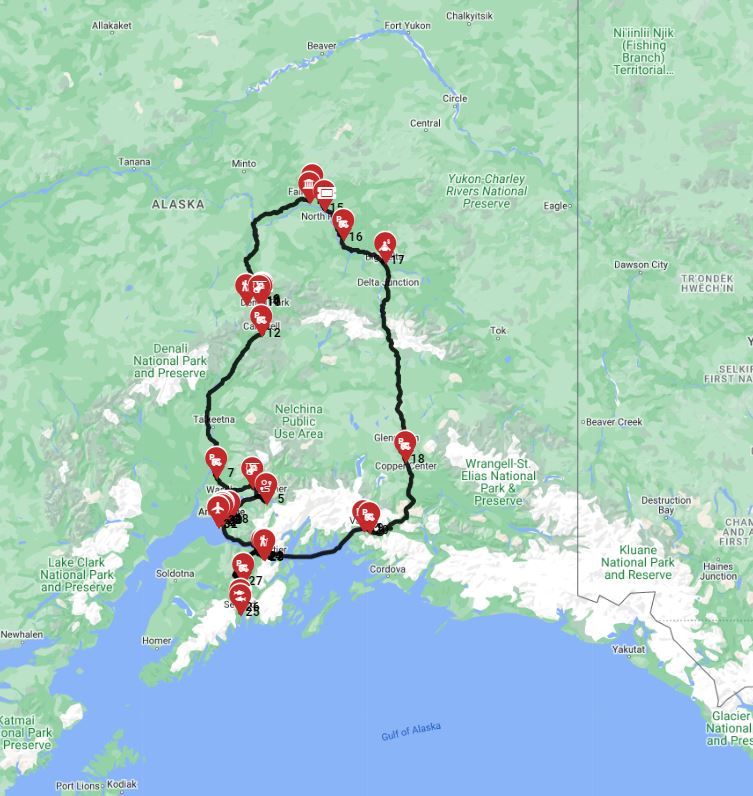 Anchorage Roundtrip - Alaska
 - **Fairbanks:** Located further north, Fairbanks is ideal for exploring interior Alaska, including the Arctic Circle, the Alaska Pipeline, and stunning aurora borealis viewing opportunities in winter. It's a great base for longer excursions into the true wilderness.
- **Juneau:** As the state capital, Juneau is unique because it's only accessible by air or sea. If you choose to bring your rented motorhome via ferry, Juneau offers fantastic opportunities for glacier viewing, whale watching, and exploring the Tongass National Forest.
- **Seward:** A popular port city on the Kenai Peninsula, Seward is known for its access to Kenai Fjords National Park and is a prime spot for ocean wildlife tours, fishing, and kayaking. It’s often a key stop on an "
".
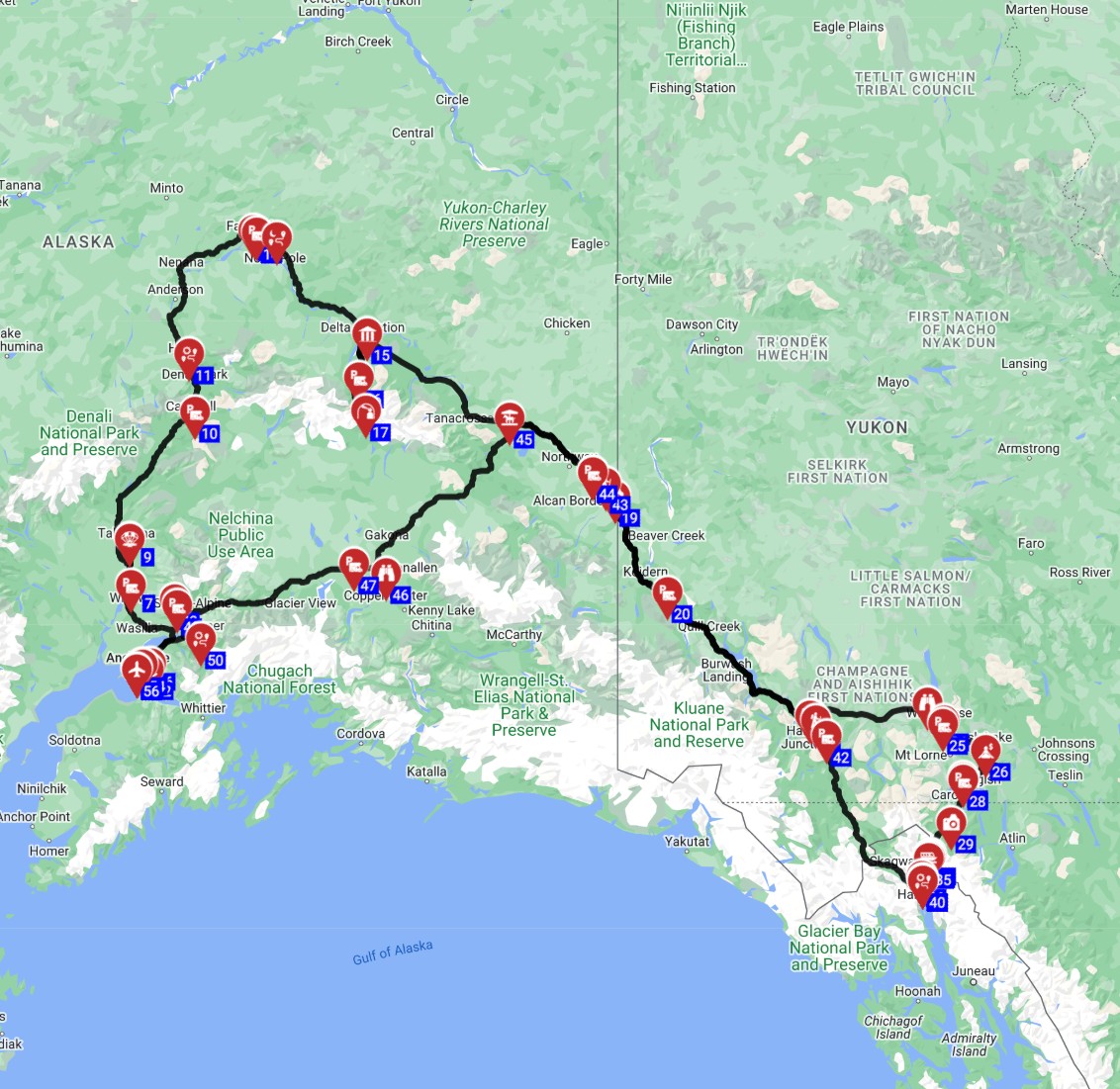 Anchorage Round Trip - Alaska-Yukon Discovery Trail
 - **Talkeetna:** A quirky and charming town nestled at the base of Denali, Talkeetna serves as a base camp for mountaineers and offers flightseeing tours of Denali, riverboat adventures, and unique local artisan shops.
- **Homer:** Known as the "Halibut Fishing Capital of the World," Homer sits at the end of the Sterling Highway on the Kachemak Bay. It's a picturesque coastal town offering stunning views, art galleries, and incredible marine excursions.
- **Valdez:** A scenic port town on Prince William Sound, Valdez is famous for its fjords, glaciers, and waterfalls. It’s an excellent spot for kayaking, fishing, and enjoying the breathtaking drive along the Richardson Highway.
Planning Your Alaska RV Route: Expert Itineraries
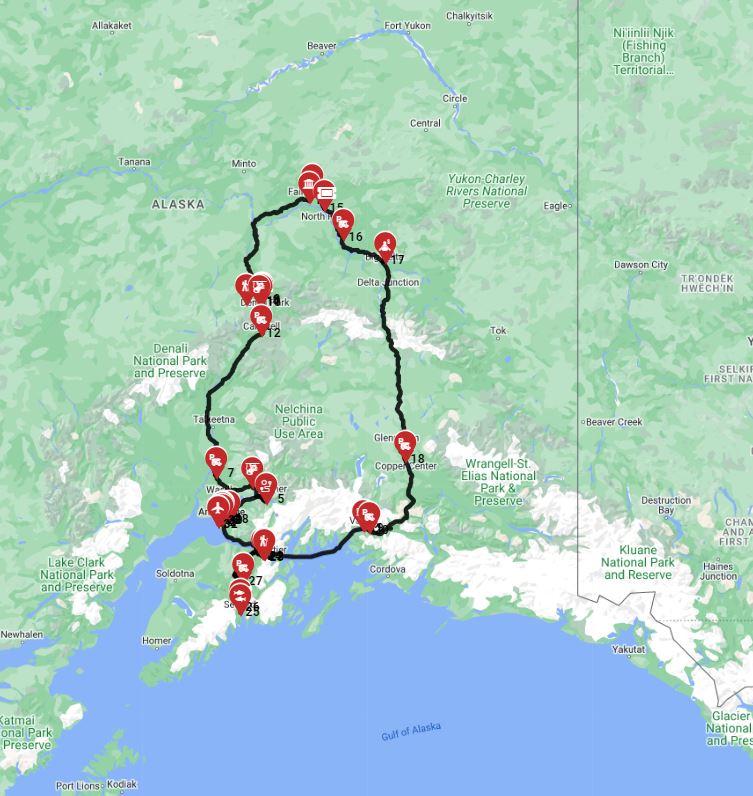
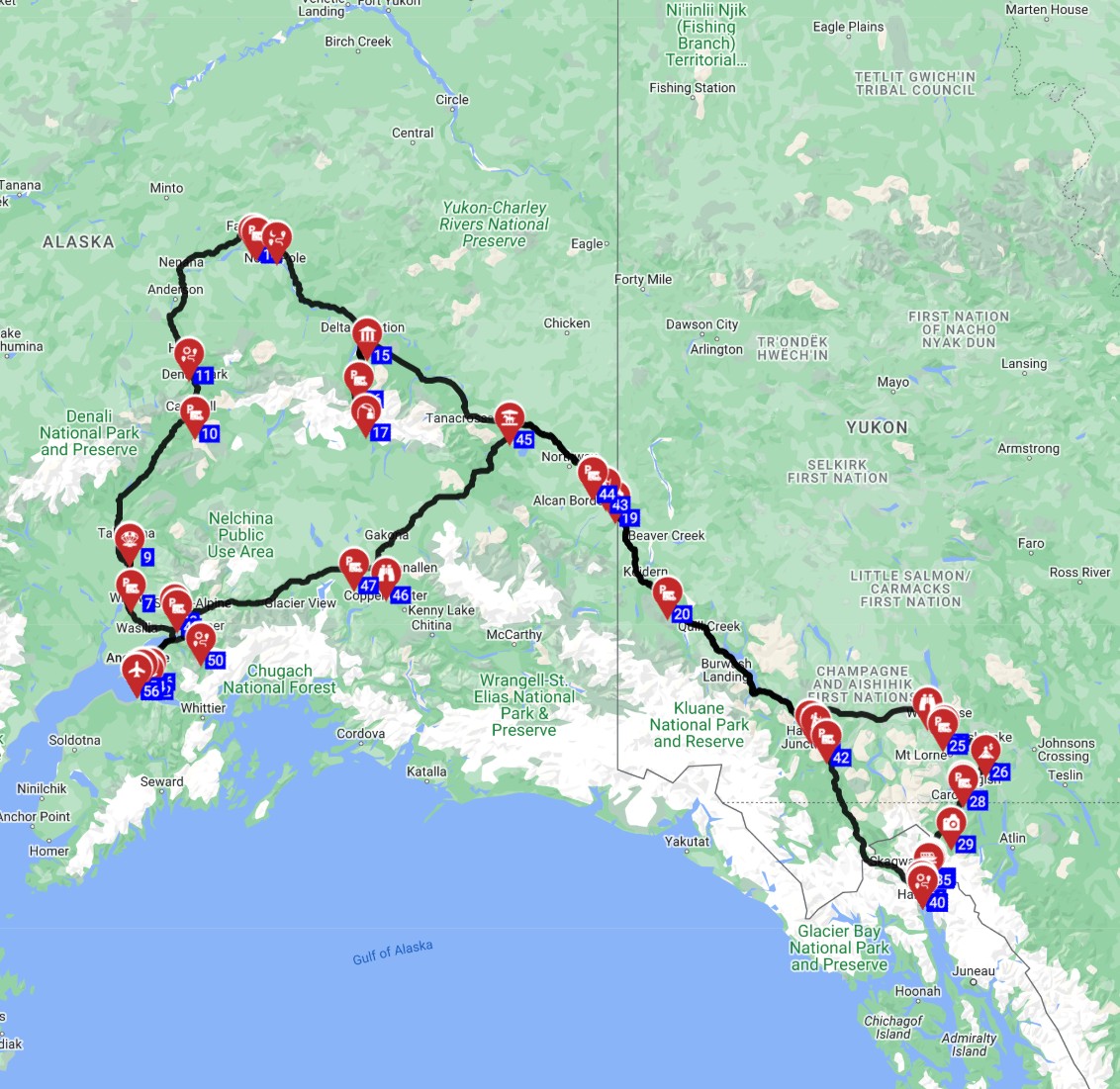
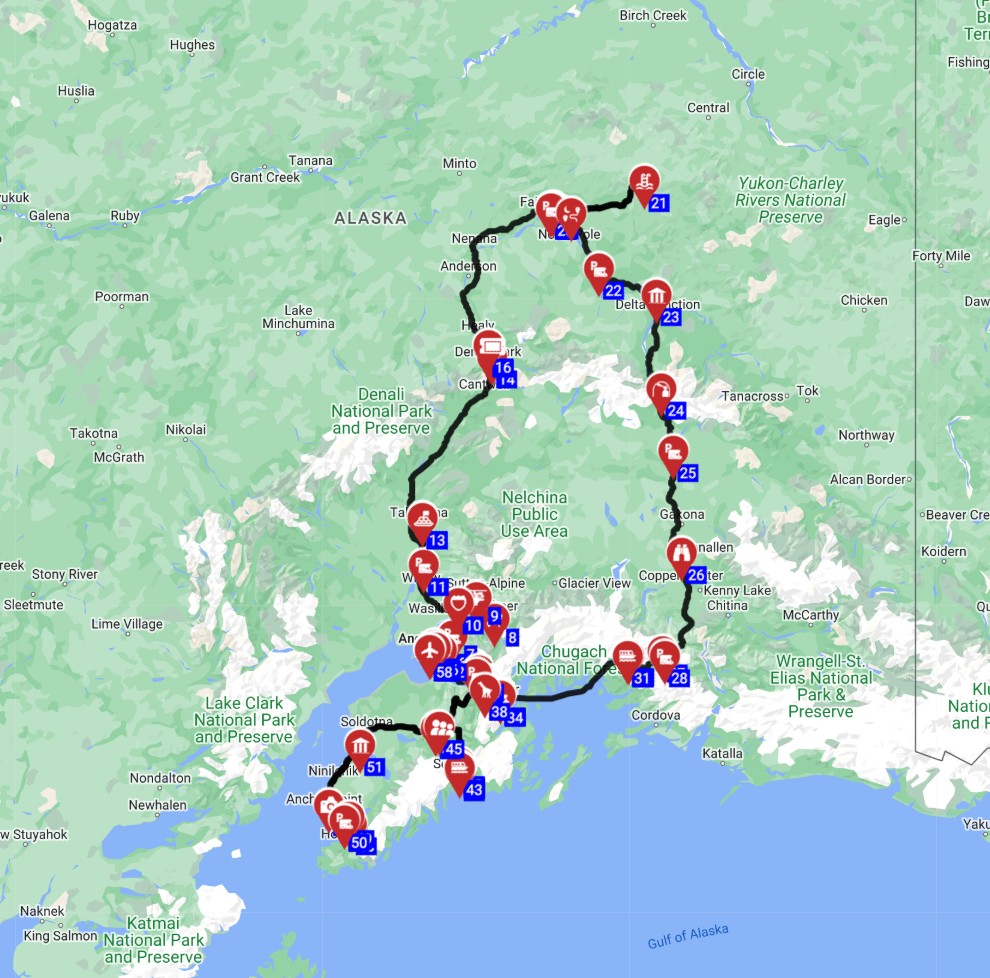
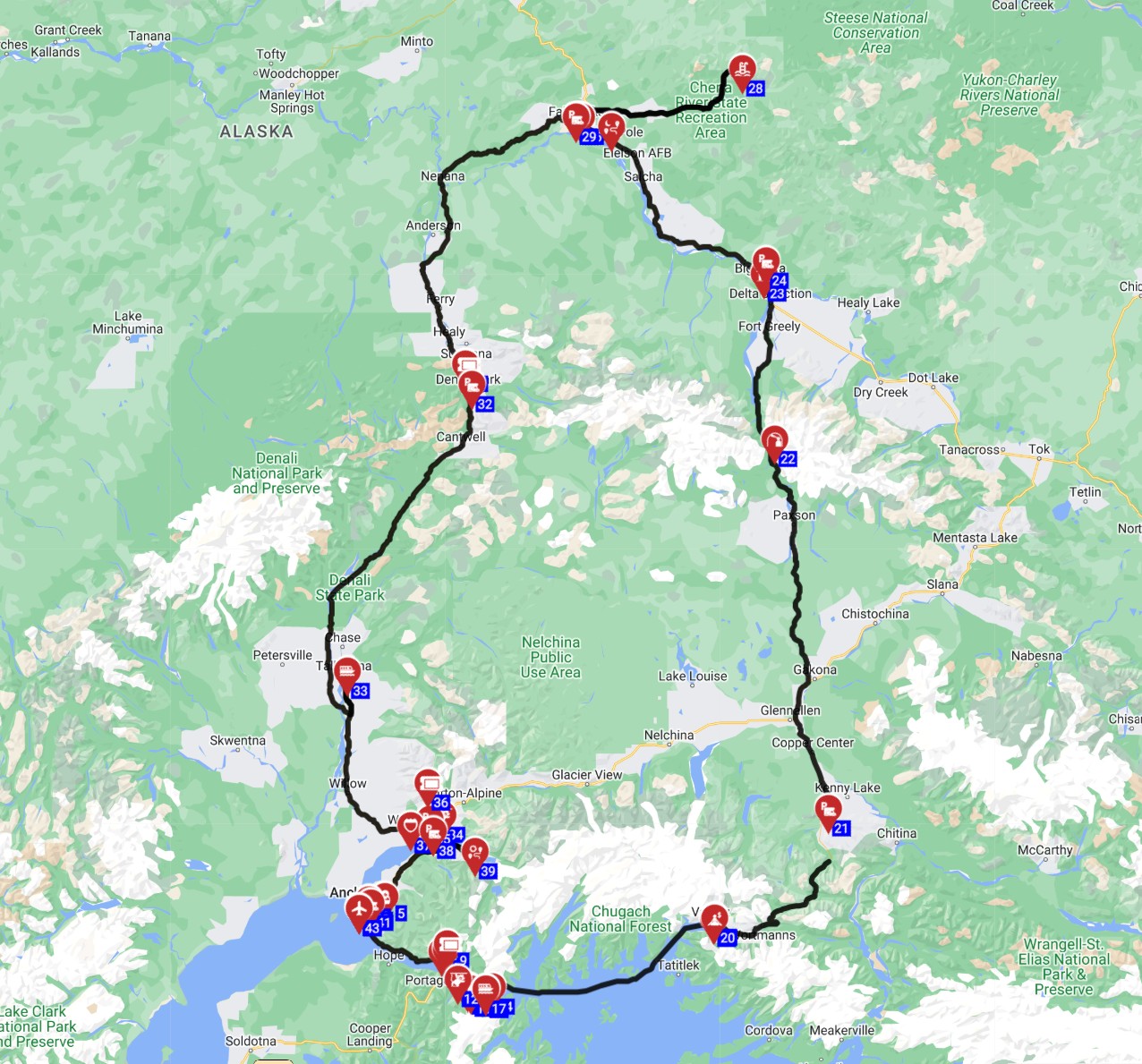
Embarking on an RV trip through Alaska is an experience of a lifetime, and having a well-thought-out itinerary can transform your journey. At Bandana Caravan, we believe in supporting our travelers from inspiration to execution, which is why we partner with RV PLANET (rvplan.net) to offer professionally designed route plans. These itineraries are crafted by experts who understand the nuances of Alaskan travel, suggesting optimal daily distances (we always recommend slow travel, max 100-150 km per day) and highlight must-see attractions. For instance, you might consider routes like the "Anchorage Roundtrip - Alaska" which spans 11 days and covers 1928.5 km, including 2 animal shows, 2 cruise terminal visits, and 3 day tours. This provides a balance of iconic sights and time for relaxation. Another fantastic option is the "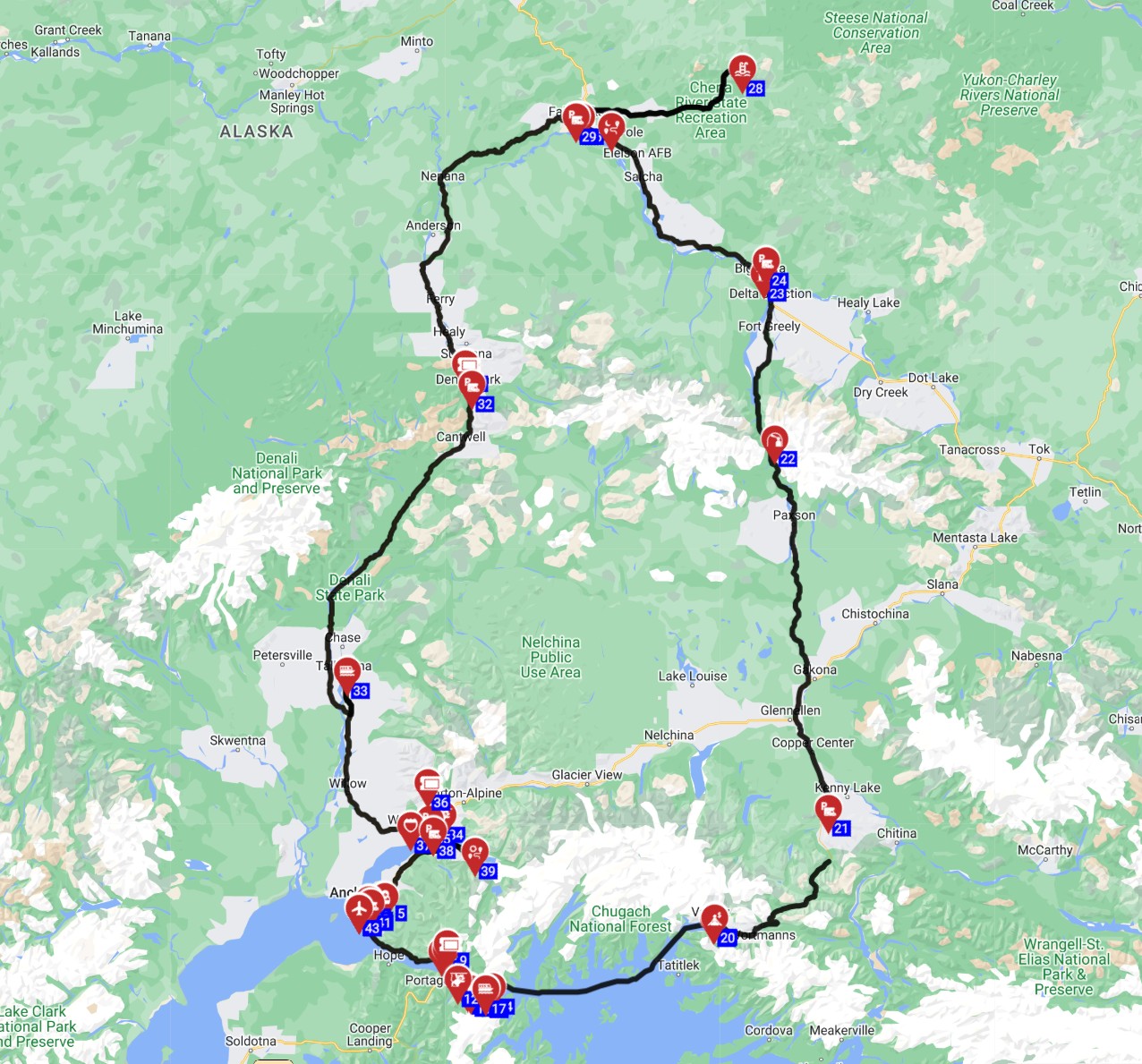
Anchorage Roundtrip Heading North - The Great Alaskan Wilderness Road Trip
Connectivity & Emergency Services in Alaska
Connectivity in Alaska can be spotty, especially outside of major towns and along remote stretches of highway. Cell service is generally reliable in urban areas like Anchorage and Fairbanks, but don't count on it in national parks or wilderness regions. Many RV parks offer Wi-Fi, often for a fee, but speeds can vary. Consider purchasing a local SIM card if you need to stay connected, or for critical communication in remote areas, a satellite messenger or phone is a wise investment for emergencies. Alaska's emergency number is 911, just like the rest of the USA. Be prepared for self-reliance; always have a full tank of fuel, extra water, non-perishable food, and a well-stocked first-aid kit. Having a comprehensive understanding of your entire budget, including unexpected expenses, can be streamlined using RV PLANET routes to itemize and track every cost along the way.What You Shouldn't Miss
Looking for expert insights from Avi Bandana? Top 5 Adventures - recommendations from Avi Bandana- **Drive the Seward Highway:** This scenic byway from Anchorage to Seward offers breathtaking views of mountains, Turnagain Arm, and glaciers. Keep an eye out for beluga whales and Dall sheep.
- **Explore Denali National Park:** Take a bus tour deep into the park for unparalleled wildlife viewing opportunities, including grizzlies, caribou, and moose, with stunning views of North America's tallest peak.
- **Visit Kenai Fjords National Park:** From Seward, take a boat tour to witness massive tidewater glaciers calve into the ocean and observe abundant marine life like sea otters, whales, and puffins.
- **Experience the Alaska Marine Highway:** For a unique perspective, take your RV on one of Alaska's state ferries, exploring coastal communities and stunning fjords inaccessible by road.
- **Witness the Northern Lights:** During the darker months, especially from Fairbanks, the aurora borealis can be a spectacular sight. Find a spot away from city lights, bundle up, and prepare to be amazed.
Final Thoughts
An RV adventure in Alaska is more than just a trip; it's an immersive journey into one of the world's last true wildernesses. With a rented motorhome or campervan from Bandana Caravan, you unlock the freedom to explore at your own pace, creating memories that will last a lifetime. Whether you're seeking majestic glaciers, abundant wildlife, or the serene beauty of endless summer days, Alaska delivers. Remember to plan your route, drive carefully, and embrace the unexpected. Our commitment is to make your rental process seamless, transparent, and supportive, so you can focus on the awe-inspiring landscapes around you. Get ready to discover the untamed beauty of Alaska from the comfort of your mobile home.🎬 Video coming soon
On the routes offered through RV PLANET routes, you can itemize and track every expense along the way for easy budgeting.