In This Guide
- The 5 RV Families Compared for Tokyo - Airport
- Class A (Integrated) - Best For
- Price Comparison by RV Class in Tokyo - Airport
- Class SI (Semi-Integrated) - Best For
- Class C (Alcove) - Best For
- Class B (Campervan) - Best For
- Class TC (Truck Camper) - Best For
- Side-by-Side Comparison Table
- Our Recommendation for airport rv rental Travelers in Tokyo - Airport
- How do I navigate RV driving, parking, and specific restrictions in metropolitan Tokyo?
- What are the urban camping and overnight parking solutions for RVs in Japan, including Michi-no-Eki?
- Which airport, Narita (NRT) or Haneda (HND), is better for RV pickups in Tokyo?
- What is the comprehensive cost breakdown for an RV rental in Tokyo, beyond just rental fees?
- How can I navigate Japanese road culture and laws for RVs, including IDP requirements?
- Are there RV-friendly itinerary suggestions starting from Tokyo/NRT with suitable parking?
- What are the optimal RV sizes and types for Japanese roads and parking?
Embarking on a rented RV adventure from Tokyo - Airport is an incredible way to experience Japan's blend of ancient traditions and modern marvels at your own pace. With Bandana Caravan, you’re backed by specialists who have helped tens of thousands of travelers since 2001, providing direct partnerships with 50+ leading RV suppliers worldwide, including trusted names like Apollo and Britz. For live availability and current prices, start with our RV Rental Tokyo - Airport - Complete Guide 2026 guide. We compare final prices across numerous suppliers so you always find the easiest, safest, and most affordable way to rent an RV, ensuring full transparency with no hidden fees or surprises.
The 5 RV Families Compared for Tokyo - Airport
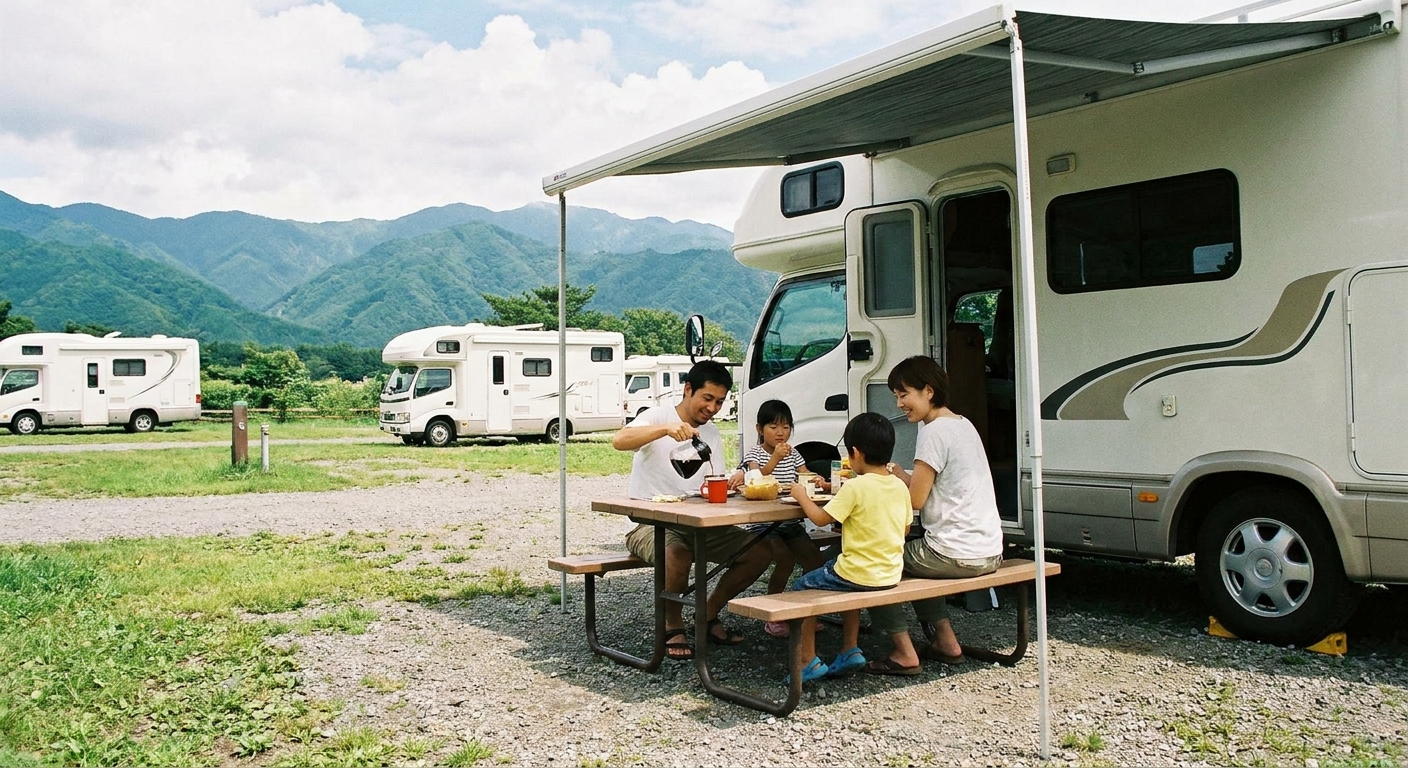
Choosing the right RV family is crucial for a comfortable and efficient trip from Tokyo - Airport, as vehicle size significantly impacts navigation and parking within Tokyo's unique urban environment and beyond. Travelers should consider factors such as group size, road conditions expected on their route plans, and their preferred travel style to match the RV class perfectly. Our true RV specialists understand these nuances, ensuring you rent a campervan or motorhome that fits your specific Japanese adventure. Planning a trip itinerary in advance with minimal effort and maximum enjoyment is easier when your vehicle suits the destination.
Understanding the different categories of motorhomes and campervans available for rental in Tokyo - Airport helps you make an informed decision. Whether you're a couple seeking a cozy campervan or a family needing a spacious Class C motorhome, there's a perfect option to explore Japan's diverse landscapes. For more insights on choosing the right vehicle, explore our Family RV Rental in Tokyo - Airport - Pricing Guide 2026.
Class A (Integrated) - Best For
Class A motorhomes, often averaging 7.5 meters in length, are best suited for large groups of 4 or more adults, offering the maximum interior space and comfort available in a rented RV. These spacious vehicles typically sleep around 4-5 people comfortably and boast extensive amenities, though their fuel consumption is higher, often 11-12 L/100km. Maneuvering and parking a Class A motorhome in Tokyo's dense urban areas and narrow streets can be quite challenging due to their size and limited availability in Japan, making them generally more suitable for long-distance highway travel and stays at larger, well-equipped campgrounds outside the city. Drive slowly and carefully, and you can drive almost anywhere without issues. No need to stress - just use common sense and pay attention.
🎬 Video coming soon
Price Comparison by RV Class in Tokyo - Airport
RV rental prices in Tokyo - Airport are dynamic, much like flight tickets, and vary significantly based on vehicle class, rental duration, and seasonal demand. A compact Class B campervan, for example, might rent for $80-$120 per day during off-peak seasons, while a larger Class A or Class C motorhome could cost $200-$350+ per day. Longer rental periods, such as a two-week adventure or an extended road trip, often result in a better daily value compared to shorter rentals. Bandana Caravan ensures full price transparency across all our 50+ supplier partners, guaranteeing no hidden fees or conversion commissions at the time of booking. For detailed pricing specific to larger vehicles, check our Luxury RV Rental in Tokyo - Airport - Premium Prices 2026 guide.
Early booking can also influence pricing, with many travelers finding better rates when reserving their rented RV a few months in advance. However, last-minute deals can also emerge due to dynamic availability. Our platform allows you to compare various options, helping you find competitive rates for your ideal airport RV rental. You can find more last-minute availability insights in our Last-Minute RV Rental in Tokyo - Airport - What to Expect 2026 article.
Class SI (Semi-Integrated) - Best For
Class SI (Semi-integrated) motorhomes are ideal for small families or couples seeking a balance of comfort and maneuverability, typically sleeping 3-4 people. With an average length of 6.9 meters, these rented RVs offer more interior space and amenities than a campervan while being less cumbersome than a Class A motorhome. Their fuel consumption typically ranges from 10-11 L/100km. Class SI motorhomes like the "2 Berth Tamar" or "2 Berth Rover" are excellent for navigating main roads outside dense city centers in Japan, providing a comfortable base for your adventures. Remember, drive slowly and carefully, and you can drive almost anywhere without issues. No need to stress - just use common sense and pay attention, even in cities like Tokyo. You can find more details in our RV Rental in Tokyo - Airport for Couples - Pricing 2026 guide.
Class C (Alcove) - Best For
Class C (Alcove) motorhomes are excellent for families with children, accommodating an average of 4-6 people, often sleeping up to 6 due to the distinctive over-cab sleeping area. These vehicles typically measure around 7.5 meters in length and offer a cost-efficient option with ample sleeping capacity, consuming approximately 10-12 L/100km of fuel. A rented Class C motorhome, such as the "24' Class C Motorhome" or "6 Berth Deluxe" provides a spacious living area and kitchen facilities, perfect for preparing meals using our RV-friendly recipes playlist. While larger, they suit travelers prioritizing bed count and general touring outside central Tokyo, especially for exploring national parks and more open routes. Navigating Tokyo's narrower streets requires a bit more care, but it's certainly manageable for these vehicles. If you’re traveling with kids, these are a popular choice.
Class B (Campervan) - Best For
Class B (Campervan) rentals are optimal for couples or small groups of 2-3 people, offering high maneuverability and excellent fuel efficiency. With an average length of 5.8 meters and consuming only 8-10 L/100km, a campervan like the "rv rental denver example Category Van" or "2 Berth Hi Top" is best suited for urban exploration and easier parking in Tokyo and its surrounding areas. These compact vehicles provide a perfect balance of mobility and essential amenities, allowing you to seamlessly blend into city traffic and access smaller campgrounds or Michi-no-Eki stations with ease. Their smaller footprint makes them ideal for experiencing Japan's intricate road network without feeling overwhelmed.
Class TC (Truck Camper) - Best For
Class TC (Truck Camper) rentals present a unique option for adventurous couples, typically sleeping 2-3 people, who seek maximum flexibility and robust off-grid capabilities. These vehicles, averaging 5.5 meters in length with fuel consumption of 12-17 L/100km, feature a living unit mounted directly onto a truck chassis, offering higher ground clearance and 4x4 options like the "Patagonia Camper 4x4 double cab." A rented truck camper is ideal for exploring rugged terrain or less-accessible spots outside of Tokyo, providing a mobile base for remote excursions. While less common for urban driving, their compact nature still offers more versatility than larger motorhomes for navigating diverse Japanese landscapes, especially when considering the "Adventure Truck Select" option.
Side-by-Side Comparison Table
To help you decide on the best airport RV rental for your Tokyo - Airport adventure, here's a side-by-side comparison of the key specifications for different motorhome classes:
| RV Class | Average Length | Sleeping Capacity (Avg.) | Fuel Consumption (L/100km) | Best Use Case for Tokyo - Airport |
|---|---|---|---|---|
| Class A (Integrated) | 7.5m | 4-5 adults | 11-12 | Large groups, long highway trips, spacious campgrounds |
| Class SI (Semi-Integrated) | 6.9m | 3-4 adults | 10-11 | Small families/couples, balanced comfort & maneuverability |
| Class C (Alcove) | 7.5m | 4-6 adults | 10-12 | Families with children, ample sleeping, general touring |
| Class B (Campervan) | 5.8m | 2-3 adults | 8-10 | Couples/small groups, urban exploration, easy parking |
| Class TC (Truck Camper) | 5.5m | 2-3 adults | 12-17 | Adventurous couples, off-grid exploration, rugged terrain |
This direct comparison allows travelers to quickly assess length, sleeping capacity, and fuel efficiency to find a rented RV that aligns with their specific needs for a trip starting from Tokyo - Airport. Consider your group size, luggage, and desired amenities when making your selection. With RV PLANET routes, you can itemize and track every expense for easy budgeting, ensuring a smooth journey. On the routes offered through RV PLANET routes, you can itemize and track every expense along the way for easy budgeting.
Our Recommendation for airport rv rental Travelers in Tokyo - Airport
For most travelers embarking on an airport RV rental adventure from Tokyo - Airport, Class B Campervans are our primary recommendation due to their exceptional maneuverability and ease of parking. Their compact size makes them perfectly suited for navigating Tokyo's often narrow streets and accessing urban attractions without stress. For example, a "V3" or "Active Bunk Auto" campervan is agile enough to find parking near popular spots like the Tokyo Skytree or even in some of the smaller Michi-no-Eki stations in the greater Tokyo area. This allows you to truly immerse yourself in the local culture and connect with the scenery, adhering to our recommendation to travel slowly, averaging max 100-150 km per day.
As an excellent runner-up, Class SI Semi-integrated RVs offer a compelling balance of comfort and reasonable size for those needing a bit more space, such as a rented "Aero Plus - convertible twin beds" for a couple on an extended road trip. These motorhomes are comfortable on highways and suburban routes, and with careful planning, can still navigate many parts of the city. Ultimately, our recommendations are rooted in our expertise in Japan's unique urban environment and road conditions, ensuring your RV rental experience is as smooth and enjoyable as possible. Explore our comprehensive "RV Rental Japan - Complete Guide 2026" for broader insights.
How do I navigate RV driving, parking, and specific restrictions in metropolitan Tokyo?
Navigating metropolitan Tokyo in a rented RV requires careful planning due to its dense urban layout, narrow streets, and specific height and width restrictions on certain roads and parking facilities. Drive slowly and carefully, and you can drive almost anywhere without issues. No need to stress - just use common sense and pay attention. It's essential to utilize specific RV-friendly parking lots near attractions, many of which can be found and pre-booked through local parking apps or by checking campground information outside the immediate city center. For instance, the large parking areas near Tokyo Disney Resort or specific Michi-no-Eki stations on the outskirts can serve as excellent bases. Familiarize yourself with Japanese toll road systems, particularly the ETC (Electronic Toll Collection) system, and always verify that your rented RV's dimensions comply with local road infrastructure and tunnel clearances before heading out. Identifying fuel stations accessible for larger vehicles is also critical, especially outside the urban core, as many city gas stations are compact.
What are the urban camping and overnight parking solutions for RVs in Japan, including Michi-no-Eki?
Michi-no-Eki (roadside stations) are Japan's primary and highly convenient solution for safe and free overnight RV parking, a unique feature of RV travel in the country. These stations are government-sanctioned, offering essential facilities like clean restrooms, vending machines, and often local produce markets or restaurants, though they typically do not provide utility hookups. They are invaluable for RVers exploring areas around Tokyo. It's crucial to understand that "wild camping" or sleeping in undesignated public areas is generally discouraged and often illegal in Japan, particularly in populated regions like Tokyo and its surrounds. For longer stays or those requiring full utility hookups (electricity, water, sewer), traditional RV parks and paid campgrounds are available, though they are less common than in some Western countries. Always call ahead to confirm availability and facilities, especially during peak seasons. You can use RV PLANET (rvplan.net) to find these resources along your chosen route plans.
Which airport, Narita (NRT) or Haneda (HND), is better for RV pickups in Tokyo?
The best airport for your airport RV rental pickup in Tokyo - Airport, whether Narita (NRT) or Haneda (HND), largely depends on your chosen rental provider's specific depot locations and your logistical preferences. Narita (NRT), located approximately 60-70 kilometers east of central Tokyo, is a major international gateway and often has more dedicated RV rental depots nearby, such as those used by Apollo or Britz, accommodating larger vehicles. Haneda (HND), being closer to central Tokyo, offers quicker access to the city but may have fewer immediate RV rental options directly at the airport, often requiring a short shuttle transfer to a nearby facility. When booking through Bandana, verify the exact pickup and drop-off services, as well as any transfer requirements or fees, from each airport with your specific rental company. This clarity is part of our full transparency promise, ensuring no surprises.
What is the comprehensive cost breakdown for an RV rental in Tokyo, beyond just rental fees?
Beyond the base RV rental fee for Tokyo - Airport, travelers should anticipate several ancillary costs to ensure a comprehensive budget. Fuel costs are significant, with common motorhome classes typically consuming 10-12 L/100km, which can add up on longer week-long trips or two-week adventures. Japanese expressways often have substantial road tolls, which can be considerable, so budget accordingly. Designated RV parking or camping site fees, if you opt for traditional campgrounds with utility hookups, can range from $20-$50 per night, though Michi-no-Eki offer free overnight parking. Additionally, factor in potential optional upgrades like a top-level deductible for extra peace of mind, or extra equipment rentals such as kitchen kits or bedding. Cleaning fees or fees for returning tanks (fresh, grey, black water) not empty are also common. You can track every expense along the way for easy budgeting on RV PLANET routes. Always aim for full transparency by understanding these potential expenses upfront.
How can I navigate Japanese road culture and laws for RVs, including IDP requirements?
Navigating Japanese road culture and laws with your rented RV requires strict adherence to left-hand traffic rules, a key difference for drivers from right-hand traffic countries. Speed limits are typically 100 km/h on expressways and lower in urban areas (e.g., 40-60 km/h), so always observe posted signage carefully. Obtaining an International Driving Permit (IDP) is mandatory for foreign drivers in Japan and must be carried at all times with your home country's driver's license; without it, you cannot legally drive. Familiarize yourself with common Japanese road signs, many of which are pictorial, but some require basic knowledge of Japanese characters. Parking etiquette is strict, and overnight parking outside designated areas is generally not permitted. Drive slowly and carefully, and you can drive almost anywhere without issues. No need to stress - just use common sense and pay attention. For more detailed driving information, consult our Driving an RV in Tokyo - Airport - Complete Guide 2026.
Are there RV-friendly itinerary suggestions starting from Tokyo/NRT with suitable parking?
RV-friendly itineraries starting from Tokyo - Airport often focus on scenic destinations slightly outside the immediate dense urban core to simplify navigation and parking. A popular route plan involves heading southwest to the Fuji Five Lakes region, offering stunning views of Mount Fuji and numerous campgrounds with RV facilities. Hakone, known for its hot springs and Lake Ashi, is another accessible option with large parking areas. For coastal exploration, the Izu Peninsula provides picturesque drives and RV-friendly spots. Further north, the Tohoku region offers vast natural beauty with suitable roads and Michi-no-Eki for overnight stays. When planning, prioritize attractions explicitly noted as having large vehicle parking or located near Michi-no-Eki. These route plans are designed by professionals and can be found on RV PLANET, our sister company, which offers 1,300+ pre-planned routes across 5 continents, including many starting from Tokyo. Plus, you get a 25% planning discount for using rvplan.net.
Looking for expert insights from Avi Bandana? Top 5 Adventures - recommendations from Avi Bandana
Avi Bandana, a true RV specialist, suggests exploring the serene landscapes around Nikko, a UNESCO World Heritage site, which offers ample RV parking near its famous shrines and temples. Another top adventure is a week-long trip to the Japanese Alps, particularly the area around Matsumoto Castle, where the roads are scenic and less congested, with numerous campsites. For a unique cultural immersion, consider the historic villages of Shirakawa-go and Gokayama, though access might require parking at designated areas slightly outside the main village. The coastal drive along the Sanriku Coast in Tohoku is also highly recommended for its breathtaking views and fewer crowds. Finally, a loop around Lake Biwa, Japan's largest freshwater lake, provides a blend of nature and historical sites with plenty of RV-friendly stops. Each of these route plans emphasizes slow travel, allowing you to truly feel the place, connect to the culture, the food, and the scenery.
What are the optimal RV sizes and types for Japanese roads and parking?
Smaller RVs and campervans are generally optimal for navigating Japanese roads and parking, especially in and around Tokyo - Airport. Class B Campervans, averaging 5.8 meters in length like the "hire campervan example Paradise S/T," are highly recommended due to their superior maneuverability, making urban exploration and parking significantly easier. Class SI (Semi-integrated) motorhomes, around 6.9 meters, offer a good balance of comfort and manageable size, performing well on highways and in suburban areas without being overly cumbersome. Larger Class A (7.5m) and Class C (7.5m) motorhomes can be more challenging for city driving and parking, but are suitable for longer highway travel to more spacious regions. When selecting your rented RV, always consider its width and height to avoid potential issues with narrow streets, low bridges, tunnels, and multi-story parking garages. Our true RV specialists can provide personalized advice based on your itinerary. Check out our RV Travel Guide to Tokyo - Airport - Tips and Top Spots 2026 for visual guidance.
Final Thoughts
Exploring Tokyo - Airport and beyond in a rented motorhome or campervan offers unparalleled freedom and flexibility to discover Japan's wonders at your own pace. By understanding the different RV classes, planning for local driving conditions, and utilizing resources like Michi-no-Eki, you're set for an unforgettable adventure. Whether you're a couple looking for the nimble ease of a campervan or a family needing the comfort of a Class C, there's a perfect rental RV waiting for you.
At Bandana Caravan, we are dedicated to making your RV rental experience in Tokyo - Airport seamless and stress-free. Our expertise, transparent pricing, and comprehensive support ensure that you can focus on making incredible memories. Travel slowly, embrace the journey, and let Japan's unique charm unfold before you.
Find Motorhome Rentals in Tokyo - Airport