In This Guide
- Top 5 Tips for Winter RV Rental in San Francisco
- Before You Book — Class, Dates, Insurance
- Pre-Trip Prep — Packing Checklist for San Francisco
- On the Road — Driving, Fueling, Navigation
- At the Campground — Setup, Hookups & Etiquette
- Winter RV Rental-Specific Tips for San Francisco
- Common Mistakes to Avoid in San Francisco
- Do I need to winterize my RV in Southern California?
- Can you park an RV on the street in San Francisco?
- How much would it cost to rent an RV for 1 month?
- What is the new RV law in California?
- Is it cheaper to rent an RV or stay in a hotel?
- Can you camp in an RV in the winter?
- What is the 3-3-3 rule when RVing?
- What is the 4-4-4 rule for RVs?
- What do I need to know before renting an RV?
Top 5 Tips for Winter RV Rental in San Francisco
When planning your winter RV adventure to San Francisco, embracing these top tips will ensure a smoother and more enjoyable experience. For live availability and current prices, start with our RV Rental San Francisco - Complete Guide 2026 guide.
- Pack layers of clothing to accommodate the varied San Francisco weather, which can change rapidly from cool mornings to milder afternoons, ensuring comfort throughout the day.
- Book RV parks and campgrounds in advance, especially for popular Bay Area locations, as winter can still see significant demand or limited availability for prime spots.
- Familiarize yourself with San Francisco's comprehensive public transportation system (BART, Muni, ferries) to seamlessly explore the city without the hassle of driving and parking your RV in congested urban areas.
- Plan your driving routes carefully, considering San Francisco's numerous steep hills, narrow streets, and unique traffic patterns that can pose challenges for larger RVs.
- Prioritize RV parks located just outside the city with convenient access to public transit options for seamless city exploration without the stress of navigating the RV through downtown.
Before You Book — Class, Dates, Insurance
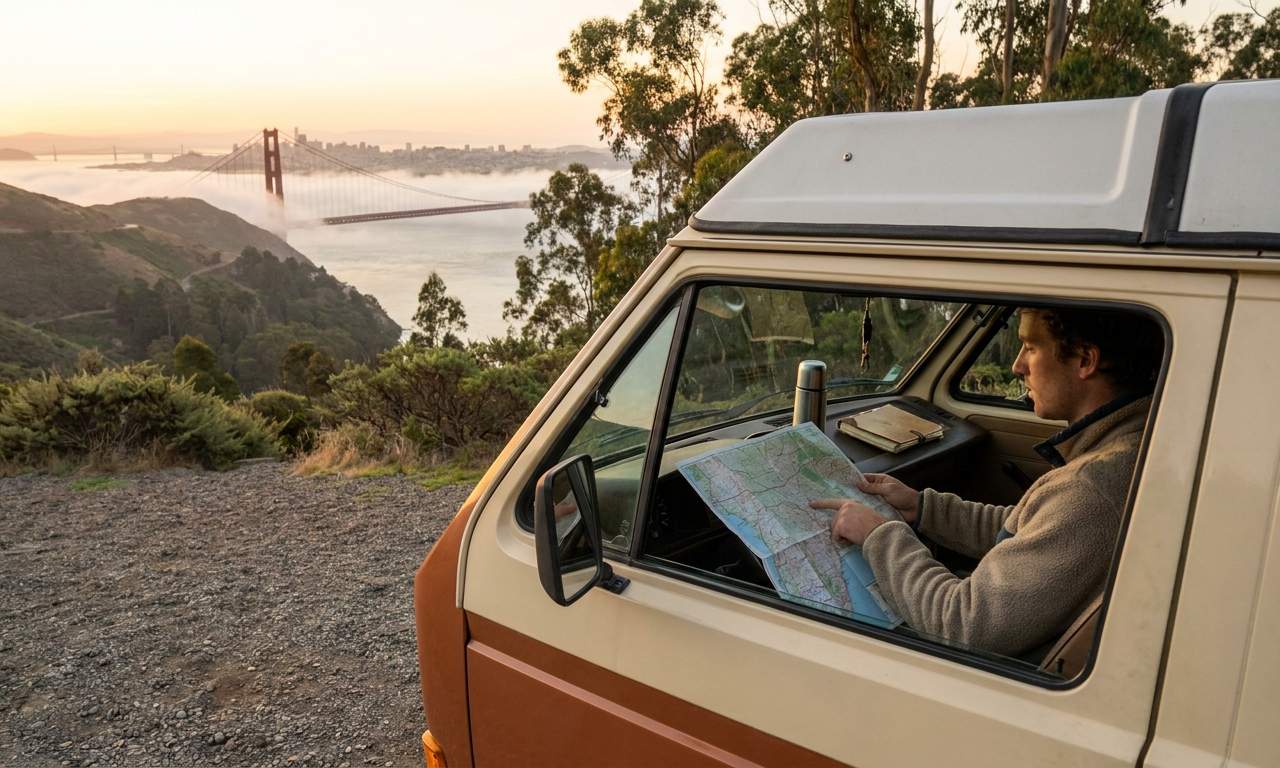
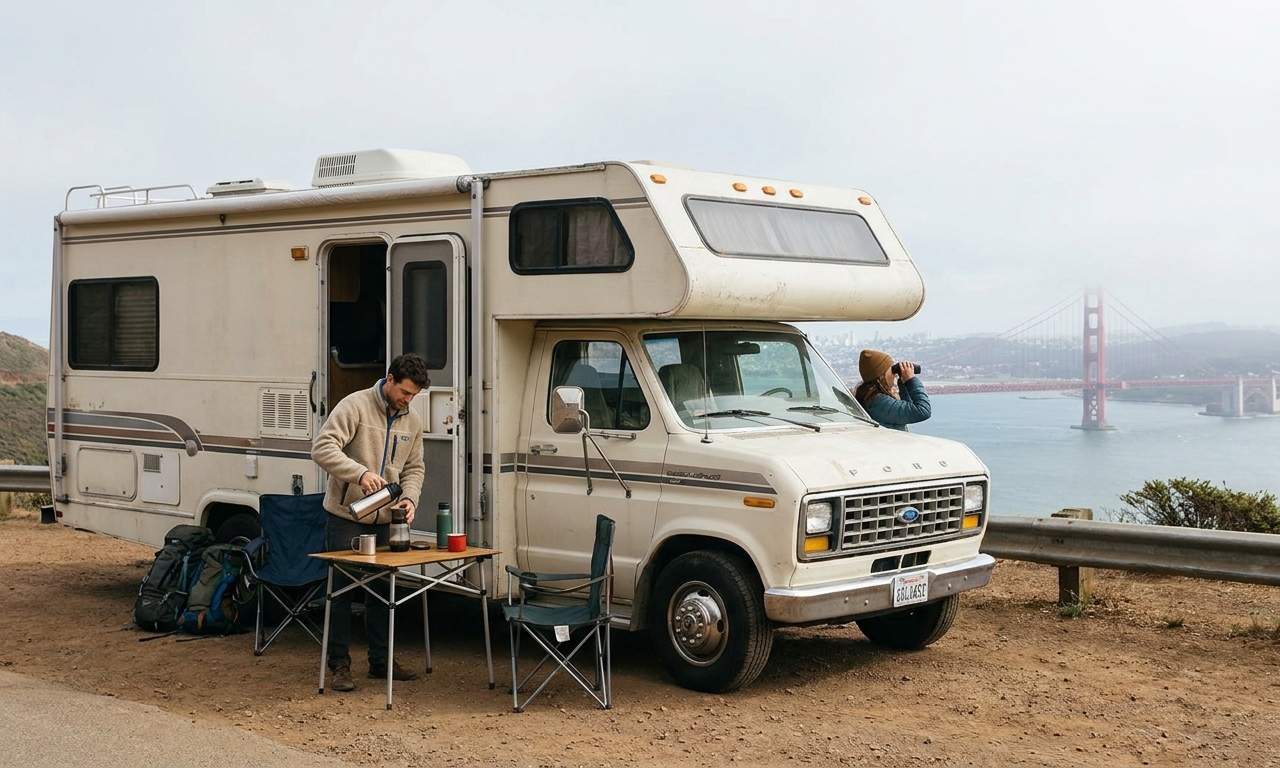
Choosing the right RV class for your winter trip to San Francisco often involves balancing interior comfort with external maneuverability. Smaller Class B (Campervans) or Class C RVs are generally easier to navigate on the city's challenging streets and to find parking for.
Locking in your rental dates well in advance, particularly for weekends or holidays, can help secure better rates and ensure availability, even during the winter season. This proactive approach is key to a successful rental experience.
When considering insurance options, remember that basic insurance is typically included with your rental. To see prices including the most comprehensive coverage, simply select that option during your search—then all relevant insurance choices will be displayed clearly, ensuring full transparency.
Pre-Trip Prep — Packing Checklist for San Francisco
A well-packed RV is key to a comfortable San Francisco winter trip. Here’s a comprehensive checklist to ensure you have everything you need:
Clothing:
- Waterproof and windproof jacket
- Warm layers (fleeces, sweaters, long-sleeved shirts)
- Comfortable, waterproof walking shoes or boots
- Beanie or warm hat
- Gloves
- Quick-dry towels
Kitchen:
- Basic cooking utensils and pots/pans
- Reusable water bottles and coffee cups
- Coffee/tea supplies
- Non-perishable snacks
- Reusable shopping bags (for provisioning outside SF)
Safety & Emergency:
- Comprehensive first-aid kit
- Roadside assistance contact information
- Flashlight with extra batteries
- Jumper cables
- Tire pressure gauge and basic tool kit
Documents & Tech:
- Driver’s license, RV rental agreement, and insurance proof
- Campground reservation confirmations
- GPS or updated maps (physical and digital, with RV-specific routing if possible)
- Portable power bank for devices
- FasTrak transponder (for Bay Area bridge tolls like the Golden Gate Bridge)
On the Road — Driving, Fueling, Navigation
Navigating San Francisco in a rented RV requires heightened awareness. When driving, exercise extreme caution due to the city's notoriously steep hills, narrow streets, and dense urban traffic; planning your route to actively avoid particularly challenging areas is highly advisable.
Fueling an RV necessitates strategic planning, as not all gas stations can accommodate larger vehicles. It's best to seek out truck stops or larger stations conveniently located on major highways outside the immediate city center.
Navigating the San Francisco Bay Area involves an awareness of tolls, such as the Golden Gate Bridge, which operates an electronic tolling system for RVs requiring advance payment or a FasTrak transponder. Be mindful of potential height and weight restrictions on specific bridges and tunnels. On the routes offered through RV PLANET routes, you can itemize and track every expense along the way for easy budgeting.
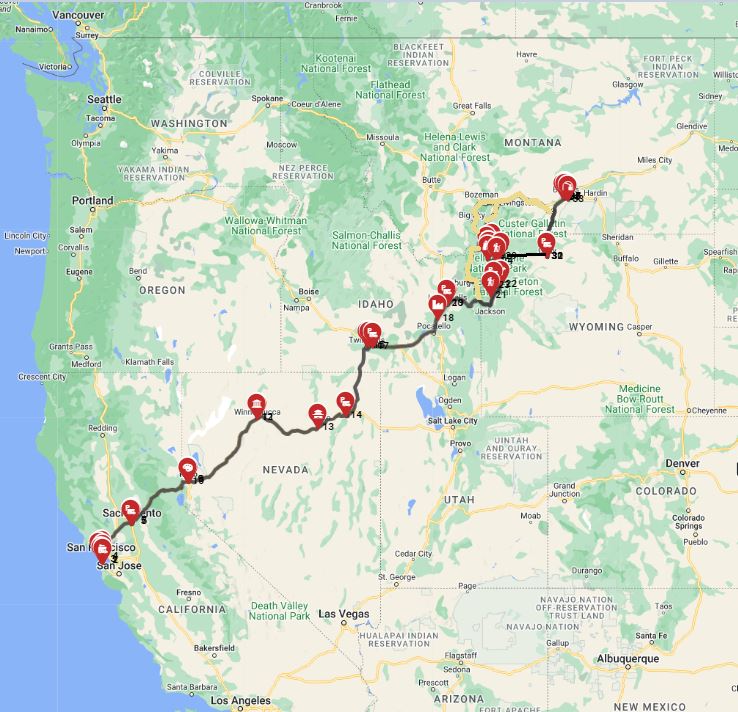
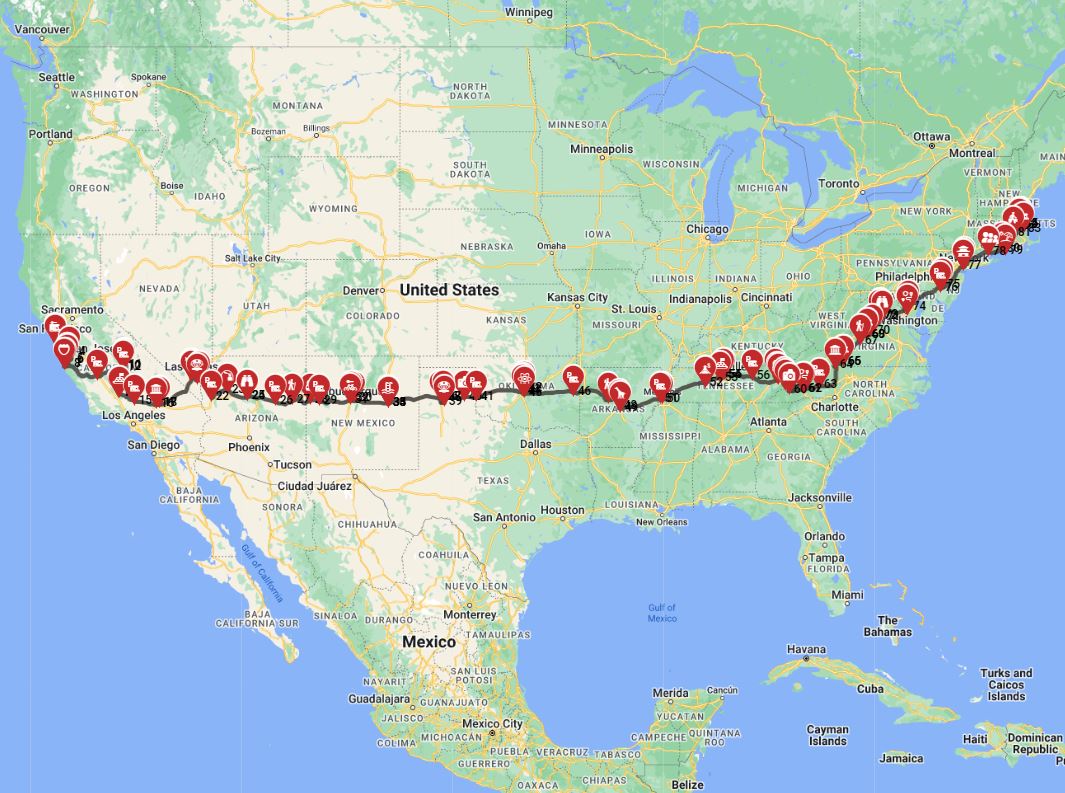
To ensure a smooth journey, utilize GPS apps with RV-specific routing capabilities or consult physical maps to account for your vehicle's dimensions and avoid inadvertent entry into restricted or difficult-to-maneuver areas. Remember, for finding campsites and campgrounds during your trip, we recommend using RV PLANET (rvplan.net)—a great resource for locating available spots along your route.
At the Campground — Setup, Hookups & Etiquette
Upon arriving at your RV site, initiating the setup process correctly is crucial for a comfortable stay. Carefully position and level your RV, then proceed to connect the electrical hookups, followed by the freshwater hose, and finally the sewer hose.
Always ensure your sewer hose is securely connected before opening the black tank valve, then the gray tank valve, and remember to flush the hose thoroughly with freshwater after draining.
Observing campground etiquette, such as adhering to posted quiet hours, maintaining a clean and orderly campsite, and respecting the privacy and space of your neighbors, significantly contributes to a pleasant environment for everyone.
Familiarize yourself with the specific campground's rules regarding waste disposal, recycling, pet policies, and any communal facility usage to ensure a harmonious stay. For travelers using the RV PLANET routes, you can itemize and track every expense along the way for easy budgeting, including campground fees.
Winter RV Rental-Specific Tips for San Francisco
When considering a winter RV rental in San Francisco, tailoring your choice and plans to specific needs can greatly enhance the experience. For families, opting for RVs that offer ample indoor living space and onboard entertainment makes cozy evenings more enjoyable, and identifying kid-friendly Bay Area activities easily reachable via public transport is a smart move.
Senior RVers might find smaller Class B or compact Class C RVs more manageable for driving and parking, focusing on RV parks with accessible amenities and direct shuttle or public transport links to city attractions.
Budget-conscious travelers can significantly reduce costs by choosing RV parks located slightly further from downtown San Francisco, maximizing the use of public transit, and preparing most meals within their RV. Explore RV-friendly recipes playlist for easy meal ideas.
For those seeking a touch of luxury, premium RV models, provisioning with gourmet items from local markets outside SF, and exploring add-on services like personalized itinerary planning can complement your stay beautifully.
Common Mistakes to Avoid in San Francisco
Navigating San Francisco with an RV presents unique challenges. Here are common mistakes to avoid:
- Mistake: Attempting to drive and park your RV directly into popular San Francisco tourist spots. Instead: Park your RV at a well-located Bay Area campground (e.g., in Marin Headlands, Alameda, or South SF) and utilize BART, Muni, or ferry services to explore the city.
- Mistake: Underestimating San Francisco's notoriously steep hills and narrow streets. Instead: Carefully plan your routes using RV-specific GPS or maps, actively avoiding streets known for extreme grades or tight turns, and practice maneuvering your RV in similar conditions if you are unfamiliar.
- Mistake: Forgetting about bridge tolls or underestimating complex parking regulations. Instead: Acquire a FasTrak transponder for Bay Area bridges, thoroughly research specific parking ordinances for any areas you plan to visit, and identify paid parking garages or lots outside prime city zones that can accommodate larger vehicles if necessary.
- Mistake: Not adequately securing valuables when your RV is parked. Instead: Always lock your RV, draw curtains to obscure the interior, and store all valuable items out of sight or take them with you, especially when visiting busy urban areas.
- Mistake: Relying on finding convenient RV waste disposal or dump stations within the city proper. Instead: Plan for waste disposal at your chosen RV campground or at identified dump stations easily accessible from major highways outside congested urban areas.
- Mistake: Over-provisioning groceries or supplies within San Francisco's city limits. Instead: Stock up on groceries and other necessities at larger supermarkets or big-box stores in RV-friendly locations outside the immediate city before heading to your designated campground.
Do I need to winterize my RV in Southern California?
For an RV rental primarily used in the San Francisco Bay Area during winter, full winterization—which involves draining all water systems and adding antifreeze—is generally not required due to the region's mild coastal climate. Sustained sub-zero temperatures that would necessitate full RV winterization are uncommon in coastal San Francisco.
While San Francisco winters are typically cool and wet with average temperatures rarely dipping significantly below freezing, it is prudent to be prepared for colder nights by ensuring your RV's heating system is fully functional and that any exposed water hoses are insulated if left connected overnight.
Unlike higher elevation areas or parts of Southern California's deserts which can experience prolonged freezes, monitoring local weather forecasts is always a smart practice to prepare for any unexpected cold snaps.
Can you park an RV on the street in San Francisco?
Parking an RV on the street in San Francisco is exceedingly challenging and often restricted. Numerous local ordinances prohibit oversized vehicle parking in many residential and commercial zones, making it generally impractical and not recommended for visitors.
San Francisco enforces strict parking regulations, including 72-hour limits in some areas, mandatory street cleaning schedules, and residential parking permit requirements, which are notoriously difficult for RVs to comply with.
For visiting San Francisco, the most advisable strategy is to secure parking at an RV park or campground located outside the city limits, such as those in Marin County, Alameda, or Half Moon Bay, and then utilize the robust public transportation network (BART, ferry, Muni) to access city attractions.
How much would it cost to rent an RV for 1 month?
The cost to rent an RV for one month can vary significantly based on factors such as the RV class (e.g., Class B, C, or A), the time of year, the specific rental company, and the included amenities, typically ranging from $2,50The cost to rent an RV for one month can vary significantly based on factors such as the RV class (e.g., Class B, C, or A), the time of year, the specific rental company, and the included amenities, typically ranging from $2,500 to $7,000+ for a standard Class C RV.
Key factors influencing a one-month rental price include the daily or weekly rates, any included mileage allowances, the level of insurance coverage chosen, and additional fees for preparation, cleaning, or generator usage, with seasonal demand often yielding better rates in winter compared to peak summer.
When budgeting for a month-long RV trip, it is crucial to also account for ongoing expenses like fuel, campground fees, bridge tolls, provisioning costs for food, and potential alternative public transportation costs for city excursions, all of which contribute to the overall trip cost. Utilize RV PLANET routes to get detailed breakdowns of these ancillary costs.
What is the new RV law in California?
While there isn't one single, recent 'new RV law' that broadly impacts all RV usage across the entirety of California, many municipalities frequently implement and update local ordinances regarding RV parking, overnight stays, and oversized vehicle restrictions within their specific jurisdictions.
For example, California Vehicle Code (CVC) section 22507 grants local authorities the power to regulate or prohibit the parking of vehicles, including RVs, that are over 20 feet in length during certain hours or on designated streets.
Therefore, RV travelers should proactively research and understand the specific city and county ordinances for any areas they plan to visit or park overnight, as these laws can vary significantly from one jurisdiction to another within California.
Is it cheaper to rent an RV or stay in a hotel?
Whether renting an RV is ultimately cheaper than staying in a hotel depends heavily on the trip's duration, the number of travelers, the type of RV rented, chosen destinations, and individual lifestyle choices, though RV travel often presents significant cost savings for longer trips with multiple people.
RVs can substantially reduce accommodation expenses, especially in areas with high hotel costs like San Francisco, and offer the flexibility to cook meals onboard, which significantly cuts down on dining out expenditures.
However, RV-related costs encompass rental fees, fuel, campground fees, insurance, and potential maintenance, all of which need to be thoroughly weighed against hotel room rates, restaurant bills, and potential car rental or public transport costs associated with a traditional hotel stay.
Can you camp in an RV in the winter?
Camping in an RV during winter is entirely feasible and can offer a comfortable and unique travel experience, especially in milder climates like the San Francisco Bay Area, provided proper preparation and precautions are taken.
Winter RV camping necessitates ensuring your RV's heating system is fully functional and efficient, packing appropriate warm clothing and bedding, and being mindful of potential rain, damp conditions, and shorter daylight hours.
Many campgrounds and RV parks in California remain open year-round, and the off-season often provides a quieter camping environment with fewer crowds and potentially more budget-friendly rates for RV sites.
What is the 3-3-3 rule when RVing?
The 3-3-3 rule in RVing is a widely recommended guideline for safe and enjoyable travel, advising RVers to drive no more than 300 miles a day, arrive at their destination by 3 PM, and stay for a minimum of 3 nights.
This rule is designed to promote a relaxed pace of travel, actively preventing driver fatigue, allowing ample time for comprehensive RV setup and enjoyment at each location, and reducing the stress associated with constant packing and unpacking.
While a general guideline rather than a strict mandate, adhering to the 3-3-3 rule can significantly enhance the overall RV experience, especially for those new to RVing or traveling with families, by striking a better balance between travel and relaxation.
What is the 4-4-4 rule for RVs?
The 4-4-4 rule for RVs is a similar guideline to the 3-3-3 rule, suggesting that RVers aim to travel no more than 400 miles a day, stop driving by 4 PM, and stay at least 4 nights in a single location.
This variant offers a slightly longer daily driving distance compared to the 3-3-3 rule while still emphasizing important safe travel practices and ensuring sufficient time to comfortably settle into a new campground.
Both the 3-3-3 and 4-4-4 rules serve as helpful planning frameworks for crafting an RV itinerary that prioritizes safety, leisure, and provides ample opportunity to explore each destination without feeling rushed.
What do I need to know before renting an RV?
Before renting an RV, it is essential to thoroughly understand the different RV classes (Class A, B, C) and choose one that is most suitable for your specific trip type, the number of travelers, and the characteristics of your chosen destinations (e.g., urban versus rural driving).
Key considerations include meticulously reviewing the rental agreement, understanding all available insurance options and their coverage limits, checking mileage limits, potential generator usage fees, and any additional charges for cleaning or preparation. Bandana Caravan offers full price transparency, ensuring no hidden fees or surprises.
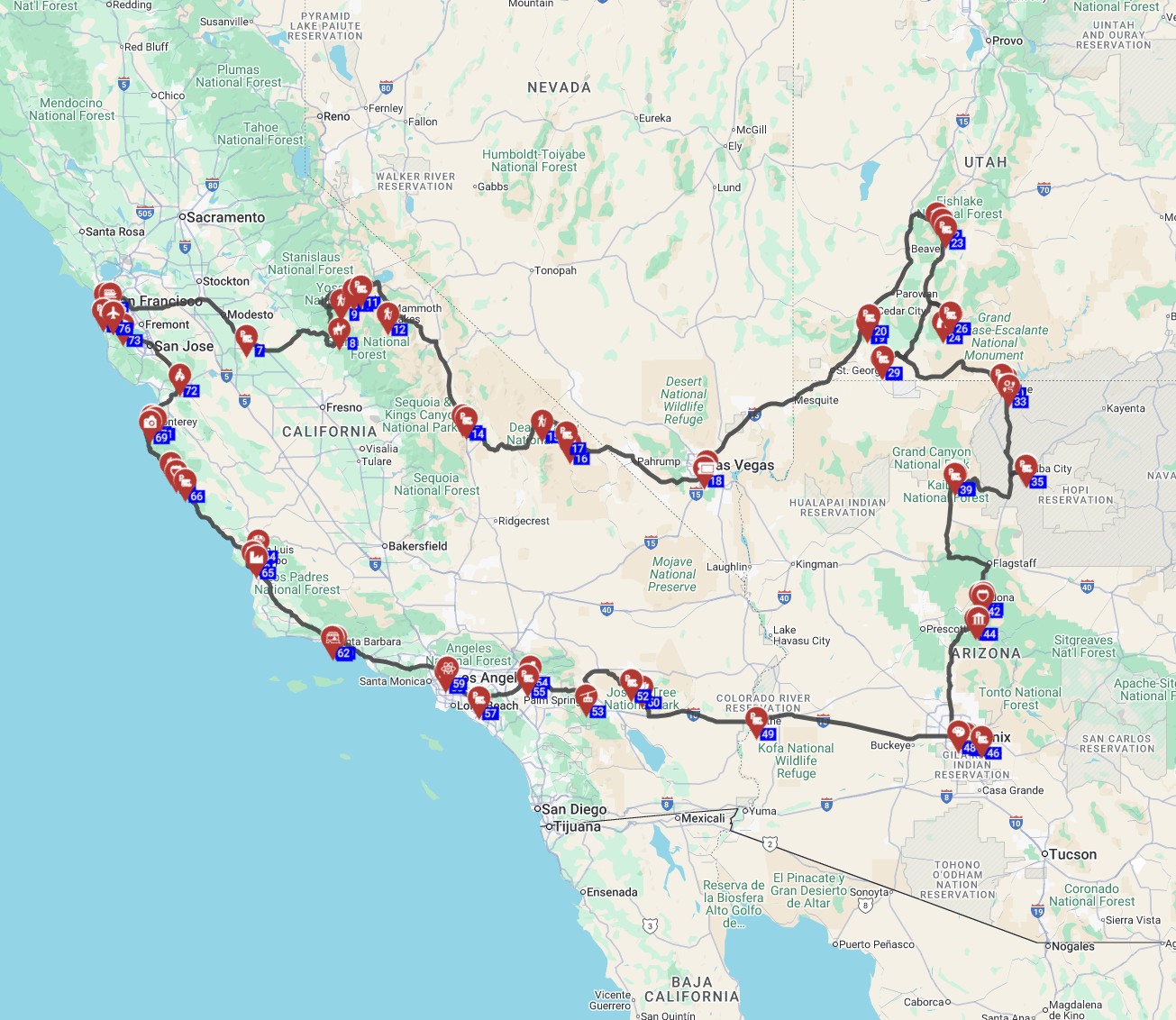
It is also crucial to familiarize yourself with the RV's basic operational functions (hookups, appliance usage, tank management) before departure, plan your route and secure campground reservations well in advance, and budget comprehensively for all potential costs including fuel, tolls, and food. For route planning, check out the RV PLANET platform, which features over 1,300 pre-planned routes across 5 continents.
What You Shouldn't Miss
- Drive the Pacific Coast Highway (Highway 1): Even in winter, sections of this iconic route offer breathtaking coastal views. Consider a shorter, accessible segment north or south of the city for a taste of its beauty.
- Explore Golden Gate Park: This vast urban oasis offers numerous attractions like the Japanese Tea Garden, the California Academy of Sciences, and the de Young Museum, providing plenty of indoor and outdoor activities.
- Take a Ferry to Alcatraz Island: Experience the infamous former prison with a unique perspective, enjoying views of the city skyline and the Golden Gate Bridge. Book tickets well in advance.
- Visit Fisherman's Wharf and Pier 39: Enjoy the lively atmosphere, street performers, sea lions at Pier 39, and fresh seafood. Park your RV outside the city and take public transport.
- Discover Muir Woods National Monument: Take a trip just north of San Francisco to walk amongst ancient redwood trees. Advance reservations are often required, so plan ahead.
- Explore distinct neighborhoods: From the vibrant streets of the Mission District to the historic charm of North Beach, San Francisco's diverse neighborhoods offer unique cultural experiences, accessible via public transport from your RV base.
Final Thoughts
Renting an RV for a winter trip to San Francisco offers a unique way to experience the city and its surroundings. By planning ahead, packing wisely, and understanding the local driving and parking nuances, you can ensure a smooth and unforgettable adventure.
Remember to leverage resources like RV PLANET for route planning and campsite discovery, and always prioritize safety and local regulations. Bandana Caravan is here to support you every step of the way, ensuring your RV rental experience is transparent and hassle-free.
Find Motorhome Rentals in San Francisco