In This Guide
- Top 5 Tips for winter RV Rental in Chicago
- Before You Book - Class, Dates, Insurance
- Pre-Trip Prep - Packing Checklist for Chicago
- On the Road - Driving, Fueling, Navigation
- At the Campground - Setup, Hookups & Etiquette
- Winter RV Rental-Specific Tips for Chicago
- Common Mistakes to Avoid in Chicago
- How to use RV during winter?
- What is the best time of year to rent an RV?
- Can you park an RV on the street in Chicago?
- When renting an RV, what feature is the most important?
- What is the 3-3-3 rule for RV travel?
- What is the 444 rule for RVs?
- What is the 2 2 2 rule for RV travel?
- Where do RV snowbirds go in the winter?
Imagine yourself surrounded by the glittering lights of a winter wonderland, the iconic Chicago skyline as your backdrop, all from the cozy comfort of your own rented motorhome. Winter RV travel in Chicago might sound like an adventure only for the bravest, but with the right preparation and a well-equipped campervan, it offers a truly unique and magical experience.
Exploring Chicago during the colder months provides a different perspective of the Windy City, with fewer crowds and unique seasonal activities. For live availability and current prices, start with our RV Rental Chicago - Complete Guide 2026 guide. At Bandana RV, we believe that RV travel is about freedom and exploration, regardless of the season, and we're here to help you navigate every step of your winter adventure in Illinois.
Top 5 Tips for winter RV Rental in Chicago
Successful winter RV rental in Chicago hinges on careful planning and the right equipment to ensure comfort and safety in sub-freezing temperatures, which can drop below -10°C in January. This list provides five essential tips for an enjoyable cold-weather trip:
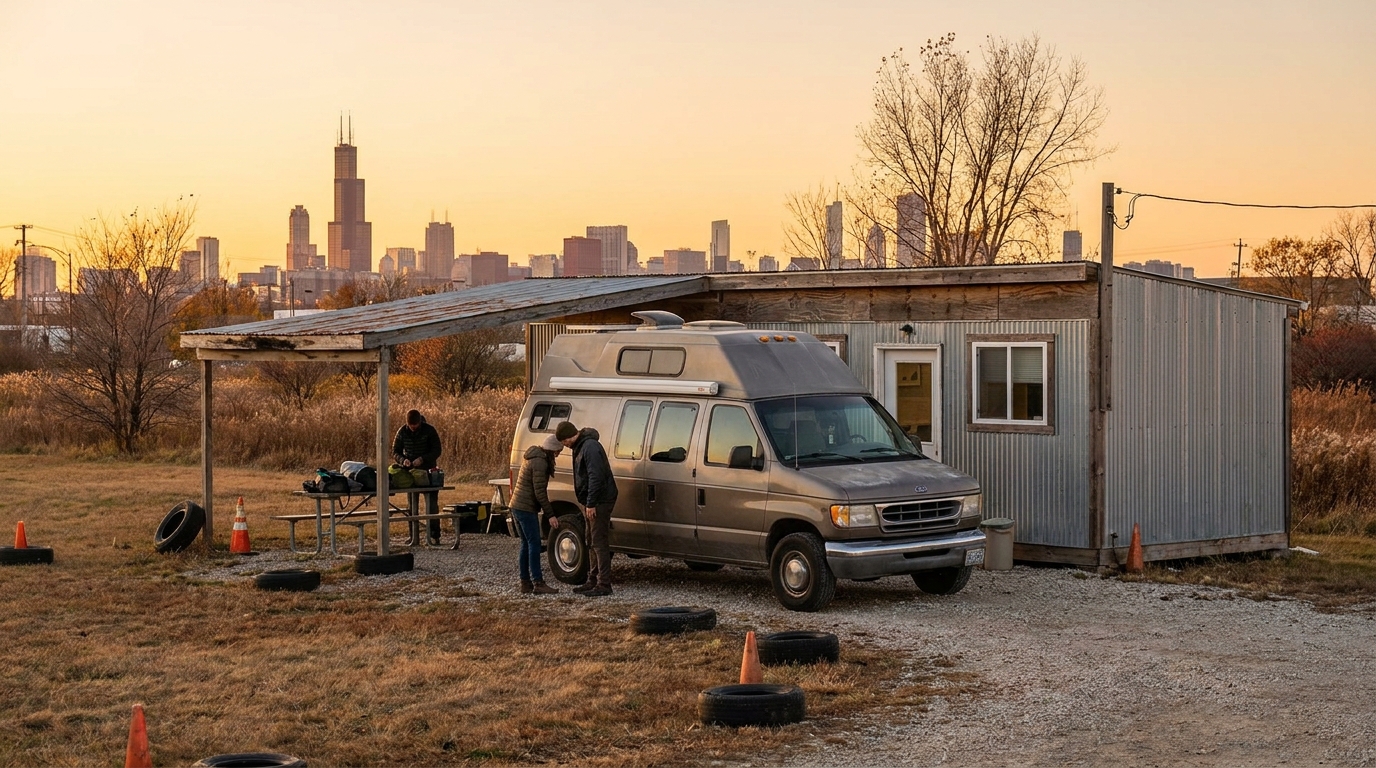
- **Choose a winterized RV with heated tanks and insulated pipes.** Many rental motorhomes, like a '24' Class C Motorhome' or a '4 Berth Deluxe', come equipped with "Winter Ready" features designed to protect plumbing from freezing, crucial for temperatures frequently below 0°C.
- **Plan routes carefully to navigate Chicago's urban core, avoiding multi-level streets and understanding parking rules.** Use a GPS system that accounts for RV height and weight, especially when traversing complex areas like Wacker Drive or Lower Wacker, which have multiple tiers and varying clearances.
- **Book campgrounds with full hookups and heated facilities for comfort and system protection.** Suburban RV parks such as Illinois Beach State Park or Yogi Bear's Jellystone Park in Millbrook often provide 50-amp electrical service, essential for running your RV's heating systems effectively.
- **Pack comprehensive cold-weather gear and an emergency kit tailored for severe conditions.** This should include thermal clothing, extra blankets, a shovel, tire chains, and a robust first-aid kit for Chicago's often unpredictable winter weather, which can bring heavy snowfall and ice.
- **Familiarize yourself with Chicago's cashless tollways (I-PASS) and consider alternative transport for downtown.** Many expressways surrounding Chicago, like I-90 and I-294, operate on an I-PASS system; acquiring one pre-trip avoids fines. Utilize park-and-ride facilities near 'L' train stations in suburbs like Rosemont or Evanston to reach downtown attractions without navigating dense city traffic or searching for elusive RV parking.
Before You Book - Class, Dates, Insurance
Selecting the right RV class and understanding insurance options are paramount for a seamless winter trip in Chicago. Most Class B campervans, often measuring around 6 meters in length, and Class C motorhomes, typically between 7 and 9 meters, are excellent choices for balancing comfort and maneuverability.
When you browse for a rental camper, confirm it has essential winterization features like heated holding tanks and insulated plumbing, especially when daily temperatures can hover around -5°C to 5°C. Booking dates during late fall (November) or early winter (December, excluding holiday weeks) often presents better availability and rates, with potential savings of up to 10-15% compared to peak holiday periods. You can find excellent options by searching for "Cheap RV Rental in Chicago - Budget Guide 2026" or "Luxury RV Rental in Chicago - Premium Prices 2026" on our platform. Basic insurance coverage is typically included with your rental, but upgrading to a top-level deductible reimbursement offers greater peace of mind against unexpected incidents, such as minor fender-benders on icy Chicago roads.
Pre-Trip Prep - Packing Checklist for Chicago
A comprehensive packing checklist is crucial for a comfortable and safe winter RV rental trip to Chicago. Temperatures can drop significantly, so adequate supplies are essential for enjoying your week-long trip.
Pack layers of thermal and waterproof clothing suitable for extreme cold, including insulated jackets, hats, gloves, and waterproof boots, as average winter temperatures range from -7°C to 2°C. Stock the kitchen with non-perishable food items, hot beverage supplies like coffee and tea, and ingredients for hearty meals; a rented Class C motorhome like the 'cruise america rv rental example Explorer' often features a 4-burner gas stove and a 90-liter refrigerator. Consider bringing an electric kettle or portable heater to supplement your RV's heating, especially if relying on campground shore power. Assemble a comprehensive safety kit including tire chains (mandatory in some severe conditions), a portable shovel for snow, extra propane tanks, a first-aid kit, and a jump starter. Finally, gather all necessary documents: your rental agreement, personal identification, insurance information, and an I-PASS transponder or instructions for online payment for Illinois' cashless tollways, like those on I-94 heading north from Chicago. On the routes offered through RV PLANET routes, you can itemize and track every expense along the way for easy budgeting.
🎬 Video coming soon
On the Road - Driving, Fueling, Navigation
Driving a rented motorhome in Chicago during winter requires heightened awareness due to potential icy conditions and the city's complex road network. Drive cautiously at reduced speeds and increase stopping distances by at least double on potentially icy Chicago roads, particularly on bridges and overpasses where ice forms first. Maintain adequate fuel levels, ideally at least half full, to prevent fuel line freezing and ensure your heating system can run when parked. A '2 Berth Rover' or similar campervan with a 75-liter fuel tank can provide sufficient range between fill-ups.
Utilize RV-specific GPS to navigate Chicago's unique multi-level streets, such as Wacker Drive and Michigan Avenue, which have distinct upper and lower levels, to avoid low clearances and incorrect turns. Prepare for Illinois' cashless tollways, like I-90 leading from O'Hare International Airport into the city, with an I-PASS transponder (available for purchase or rental) or by paying online within 14 days of travel to avoid fines. Our "RV Travel Guide to Chicago - Tips and Top Spots 2026" offers more detailed local driving advice. For managing fuel costs and other ancillary expenses on extended road trips, RV PLANET routes allow you to itemize and track every expense for easy budgeting.
At the Campground - Setup, Hookups & Etiquette
Setting up your RV at a winter campground near Chicago, such as those in the Forest Preserves of Cook County, demands specific attention to maintain warmth and prevent system damage. Level your RV upon arrival to ensure appliances function correctly and waste tanks drain efficiently, then connect to shore power first to activate your RV's heating systems. Using heated water hoses and ensuring proper sealing for all water and sewer hookups is critical to prevent freezing when temperatures regularly fall below 0°C; alternatively, opt for dry camping and conserve your freshwater tank by using bottled water and campground facilities.
For finding campsites and campgrounds during your trip, we recommend using RV PLANET (rvplan.net) - a great resource for locating available spots along your route. Always adhere to campground quiet hours, typically from 10 PM to 7 AM, and dispose of waste responsibly, using designated dump stations often found at larger campgrounds like the Chicago Northwest KOA. Remember that sounds carry further in cold, still air, making good neighborly etiquette even more important during a winter campervan trip. Our "Weekly RV Rental in Chicago - Pricing 2026" guide can help budget for these campground fees.
Winter RV Rental-Specific Tips for Chicago
Optimizing your winter RV rental experience in Chicago involves prioritizing specific vehicle features and planning around urban challenges. Prioritize renting an RV with robust winterization, including heated tanks and insulated pipes, ensuring the plumbing systems remain functional when outside temperatures are consistently below freezing.
Consider a smaller motorhome class, such as a Class B campervan like the '2 Berth Hi Top' with an automatic transmission and front air conditioning, for improved maneuverability and parking ease within Chicago's dense urban environment. Research suburban campgrounds like Camp Reinberg or Camp Bullfrog Lake that offer heated amenities, reliable 50-amp electrical service, and convenient access to public transit (like the 'L' train or Metra commuter rail) for easy transportation into downtown Chicago. Planning alternative transportation into downtown Chicago, such as park-and-ride options from suburban campgrounds like those near the Cumberland 'L' station, will help you avoid city driving and parking challenges. Finally, locate local RV repair and maintenance shops in the Chicago area, such as those along I-55 or I-80 corridors, in advance for potential emergency needs during cold weather. If you are planning a more expansive journey, consider reading our "RV Rental Illinois - Complete Guide 2026".
Common Mistakes to Avoid in Chicago
Many first-time RV renters in Chicago make preventable mistakes, particularly during the winter months, that can quickly derail a trip. Neglecting to confirm an RV's winterization features, such as a heated fresh water tank or insulated pipes, is a common oversight that can lead to frozen pipes and costly system damage in sub-zero Chicago weather. Underestimating Chicago's unique traffic patterns, complex cashless tollway system (e.g., I-PASS required on the Jane Addams Memorial Tollway), and multi-level street structures like those found on Wacker Drive, frequently results in missed exits and unexpected delays.
Attempting to park a large motorhome on downtown Chicago streets is almost always futile due to strict regulations and extremely limited space; designated RV parks in suburban areas are always a better choice. Failing to pack adequate cold-weather emergency supplies for unexpected snowfall or ice, which can drop 10-20 cm of snow quickly, leaves travelers vulnerable. Finally, not booking winter campgrounds in advance, especially those with full hookups and heated facilities, can leave you scrambling for a spot, as many close for the season or have limited winter availability. For instance, only a handful of campgrounds within 50 km of Chicago remain open year-round.
How to use RV during winter?
Using a rented RV during winter, especially in cold climates like Chicago, primarily involves managing interior heat, preventing system freezing, and adapting driving habits. Ensure the RV is fully winterized, meaning it has heated holding tanks, insulated pipes, and a powerful furnace capable of maintaining an interior temperature of 20°C even when outside is -10°C.
Manage propane and electrical consumption carefully to maintain interior heat and prevent system freezing, using campground electrical hookups whenever possible to conserve propane for heating and cooking inside your motorhome. Handle water hookups diligently, using heated hoses if connecting to city water, or opting to dry camp and conserve freshwater by using a 100-liter onboard tank and dumping grey water at designated stations. Drive cautiously on potentially icy roads, increasing stopping distances by two to three times and monitoring tire pressure, which can drop in cold weather. Always carry a comprehensive emergency kit including extra insulation, warm clothing, a shovel, and rock salt for traction around your Chicago campsite.
What is the best time of year to rent an RV?
The "best time of year to rent an RV" largely depends on your travel preferences, but each season offers distinct advantages in Chicago. Spring (April-May) and Fall (September-October) generally offer mild weather, fewer crowds, and often better rental rates, with daily costs for a Class C motorhome averaging $150-$200.
Summer (June-August) is peak season with warm weather, ideal for lakefront activities at places like Navy Pier, but it brings higher rental prices (often $200-$350 per day) and requires booking 6-8 months in advance for popular RV parks. Winter provides a unique, less crowded experience in Chicago, allowing you to enjoy festive lights and cultural events with lower RV rental rates (sometimes as low as $100-$180 per day outside of holidays), but it demands a fully winterized RV and thorough preparedness for cold temperatures and potential snow, like the average 90 cm of snowfall Chicago receives annually.
Can you park an RV on the street in Chicago?
Street parking for a rented RV in Chicago, especially overnight, is generally highly restricted or prohibited due to vehicle size and specific commercial vehicle ordinances. Most city streets cannot accommodate a motorhome longer than 7 meters without blocking traffic or violating parking signs, which often carry fines of $50-$250.
Residential parking permits and strict time limits further complicate street parking for visitors, making it impractical to park your campervan in most neighborhoods. It is strongly recommended to use designated RV parks or campgrounds in suburban areas, such as the Camp Bullfrog Lake in the southwest suburbs or Illinois Beach State Park to the north, and utilize public transportation like the 'L' train or Metra commuter rail for accessing downtown Chicago attractions, thereby avoiding fines and parking headaches. Our "One-Way RV Rental in Chicago - Price Guide 2026" can provide options for picking up or dropping off outside the immediate city limits.
When renting an RV, what feature is the most important?
The most important feature of a rented RV is trip-dependent, but for winter travel in Chicago, robust winterization is absolutely critical. This includes heated holding tanks, insulated plumbing, and a powerful, efficient furnace to ensure your comfort and prevent freezing damage to the water system, especially when temperatures often drop below zero.
Generally important features include overall reliability of the engine and systems, appropriate size for your group (a 'Family RV Rental in Chicago - Pricing Guide 2026' can help determine this), and essential amenities like a functional kitchen and bathroom. Safety features such as reliable brakes, good all-season or winter tires, and secure seatbelts for all passengers are universally important for any RV rental, ensuring peace of mind on Illinois' diverse roads.
What is the 3-3-3 rule for RV travel?
The 3-3-3 rule for RV travel suggests a relaxed pace to maximize enjoyment and minimize driving stress, especially relevant for a winter trip in Chicago. It advises driving no more than 300 miles (approximately 480 km) in a single day, ensuring you don't overextend yourself on potentially challenging winter roads.
This rule also recommends stopping driving by 3:00 PM local time to allow ample daylight for campsite setup, which is particularly important during shorter winter days in Illinois, when sunset can be as early as 4:30 PM. Finally, the 3-3-3 rule suggests staying at each location for at least three nights, providing enough time to explore Chicago's museums, enjoy a hearty meal at a RV-friendly recipes playlist, or visit nearby attractions like Starved Rock State Park.
What is the 444 rule for RVs?
The 4-4-4 rule is a variation of the slow travel philosophy, encouraging RVers to maintain a steady, unhurried pace, which can be beneficial for winter road conditions around Chicago. It advises driving no more than 400 miles (approximately 640 km) per day, slightly more ambitious than the 3-3-3 rule but still promoting moderate travel distances.
This rule also suggests stopping driving by 4:00 PM to ensure adequate time for campsite arrival and setup, allowing you to comfortably get your Class C motorhome settled before darkness falls. Adhering to this rule helps prevent rushed setups in the cold and provides more time to relax in your warm mobile home. Finally, the 4-4-4 rule recommends staying for at least four nights at each destination, such as an RV park near the Morton Arboretum or the Forest Preserves, to allow for deeper exploration of the Chicago area's winter landscapes and cultural offerings.
What is the 2 2 2 rule for RV travel?
The 2-2-2 rule for RV travel promotes an exceptionally relaxed pace, ideal for first-time renters or those seeking maximum relaxation during a winter getaway to Chicago. This guideline suggests driving no more than 200 miles (approximately 320 km) in a day, ensuring a stress-free journey with plenty of time for sightseeing and leisurely stops.
It advises stopping driving by 2:00 PM, maximizing your leisure time at the campsite and allowing for early exploration of local attractions before crowds gather. This early stop is particularly advantageous during winter in Illinois, when daylight hours are shorter. Moreover, the 2-2-2 rule recommends staying at each campsite for a minimum of two nights, providing a stable base to explore the Chicago area, visit local breweries, or simply enjoy the cozy comfort of your rented campervan, making it perfect for a true slow travel experience.
Where do RV snowbirds go in the winter?
RV snowbirds, typically seeking warmer climates, primarily migrate to southern states in the U.S. like Florida, Arizona, Texas, and Southern California to escape harsh northern winters. Destinations such as Quartzsite, Arizona, or Florida's Gulf Coast RV parks are popular for their mild temperatures, plentiful sunshine, and extensive RV communities, attracting tens of thousands of winter travelers annually.
While Chicago is not a traditional snowbird destination, it offers a unique winter RV experience for those prepared for cold weather and snowy activities, such as ice skating in Millennium Park or visiting indoor attractions. Renting a winterized motorhome allows adventurous travelers to experience Chicago's festive season and urban charm, contrasting sharply with the warm retreats favored by snowbirds. If you're looking for different winter RV options, consider exploring "RV Rental Deals in Chicago - Latest Offers 2026" for potential cold-weather adventures.
What You Shouldn't Miss
- **The Magnificent Mile Lights Festival:** Experience Chicago's premier shopping district illuminated by over a million holiday lights, typically from mid-November to early January.
- **Ice Skating in Millennium Park:** Glide across the McCormick Tribune Ice Rink with the iconic "The Bean" sculpture and city skyline as your backdrop.
- **Museum Campus Exploration:** Visit the Field Museum, Shedd Aquarium, and Adler Planetarium, all conveniently located on one stunning lakefront campus.
- **Lincoln Park Zoo Lights:** Enjoy free admission to this festive, illuminated zoo during select winter evenings, a magical experience for families.
- **Indoor Food Tours:** Escape the cold by indulging in Chicago's famous deep-dish pizza or exploring the culinary delights of the Fulton Market District.
- **Looking for expert insights from Avi Bandana? Top 5 Adventures - recommendations from Avi Bandana**
Final Thoughts
A winter RV rental in Chicago is an adventure waiting to happen, offering a unique blend of urban exploration and cozy comfort. With the right preparation, a reliable winterized motorhome, and our transparent support, you're set for an unforgettable experience in the Windy City. Remember to travel slowly, perhaps max 100-150 km per day on average, taking time to feel the unique winter ambiance, connect to the culture, the delicious food, and the stunning scenery that Chicago offers even in the coldest months.
At Bandana RV, we handle the details, so you can truly live the journey. From pre-booking comparisons to ensuring all your questions are answered, we're with you from day one until your booking is confirmed. God is in the small details, and we take care of them - that's what makes the big difference in your travel plans.
Find Motorhome Rentals in Chicago