In This Guide
- Best Tokyo RV Itinerary for winter rv rental — Overview
- 7-Day Classic Route in Tokyo
- 14-Day Extended Journey in Tokyo
- Recommended RVPlan Trip for Tokyo
- Must-See Stops Along the Way (Avi Bandana Picks)
- Daily Driving Distances & Drive Times in Tokyo
- Best RV Class for This Itinerary — Couple & Family Picks
- Is it safe to drive an RV in Tokyo in winter?
- How do you prepare an RV for winter in Tokyo?
- Where can I park an RV overnight in Tokyo?
- How much does it cost to rent an RV in Japan?
- What is the best time of year to RV in Japan?
- Can foreigners rent an RV in Japan?
- Are there RV parks in Japan?
- Do you need a special license to drive an RV in Japan?
- Can you sleep in an RV overnight in Japan?
- What kind of RV is best for Japan?
Best Tokyo RV Itinerary for winter rv rental — Overview
Winter RV rental in Tokyo provides a distinctive opportunity to explore Japan's urban landscapes, serene nature, and therapeutic hot springs, ideally over a minimum of 7 days. This itinerary prioritizes safe navigation through winter conditions, focusing on scenic routes outside the immediate urban core. Recommended duration ranges from 7 to 14 days for a comprehensive experience, covering approximately 500-1000 km (310-620 miles). The optimal period for this itinerary is late November to early March, offering opportunities for picturesque snowy scenery and festive illuminations.
7-Day Classic Route in Tokyo
Day 1: Tokyo Arrival & Preparation (Tokyo Area): Pick up RV outside central Tokyo (e.g., Chiba), approx. 50 km (30 miles). Focus on RV briefing and essentials. Sleep at a designated RV park or Michi-no-Eki.
Day 2: Mount Fuji & Lake Kawaguchiko (Tokyo Area → Kawaguchiko): Drive approx. 110 km (68 miles). Highlights include winter views of Mount Fuji and Chureito Pagoda. Overnight at an RV park near Lake Kawaguchiko.
Day 3: Hakone & Onsen Experience (Kawaguchiko → Hakone): A short drive of approx. 60 km (37 miles). Explore Hakone Open-Air Museum and enjoy a traditional onsen. Stay at an RV park in Hakone.
Day 4: Izu Peninsula Coastal Drive (Hakone → Ito/Atami): Travel approx. 80 km (50 miles). Enjoy scenic coastal routes and fresh seafood. Sleep at a Michi-no-Eki or RV park on Izu Peninsula.
Day 5: Return to Tokyo Outskirts & Edo Exploration (Ito/Atami → Saitama/Chiba): Drive approx. 120 km (75 miles) back to Tokyo's periphery. Explore a town like Kawagoe. Park overnight at an RV park.
Day 6: Tokyo Public Transport Day (Tokyo Outskirts → Central Tokyo): Park RV at a secure peripheral lot (0 km driving). Use public transport to explore Shibuya, Shinjuku, Asakusa. Return to peripheral RV parking.
Day 7: Departure (Tokyo Area): Drive approx. 50 km (30 miles) to return the RV and transfer to the airport, allowing for last-minute souvenir shopping.
14-Day Extended Journey in Tokyo
Days 1-3: Greater Tokyo & Fuji-Hakone-Izu Region: Begin with RV pick-up near Tokyo, followed by exploration of Mount Fuji and Hakone, similar to the start of the 7-day itinerary (avg 60-110 km daily).
Days 4-6: Exploring the Izu Peninsula: Extend your stay on the Izu Peninsula, visiting Shimoda, Jogasaki Coast, and Kawazu Nanadaru Waterfalls for more onsen and coastal scenery (avg 70-100 km daily).
Days 7-9: Head North to Nikko & Kinugawa Onsen: Drive towards Nikko National Park (UNESCO World Heritage), exploring Toshogu Shrine and relaxing in Kinugawa Onsen (avg 100-140 km daily).
Days 10-11: Nasu Highlands & Winter Activities: Continue to Nasu Highlands for winter sports, farm visits, and more onsen, enjoying the unique winter landscapes (avg 70 km daily).
Days 12-13: Return towards Tokyo Outskirts & Chiba Exploration: Journey back towards Tokyo, possibly exploring Chiba's coastal areas. Park the RV on the periphery for a final central Tokyo visit via public transport (avg 100-130 km daily).
Day 14: Departure: Return the RV to the rental location and transfer to the airport.
Recommended RVPlan Trip for Tokyo
While no specific RVPlan trip is currently matched for this query, Bandana RV encourages travelers to explore its diverse range of meticulously curated RV itineraries for Japan. These pre-planned routes are designed by travel experts to maximize your journey, covering essential highlights and hidden gems, allowing you to focus purely on enjoying your winter adventure without the stress of planning. For detailed planning assistance and route options, explore the resources available through RV PLANET routes.
Must-See Stops Along the Way (Avi Bandana Picks)
- Traditional Onsen Towns: Avi Bandana recommends seeking out traditional hot spring towns like Hakone, Atami, or Kinugawa Onsen for a quintessential Japanese winter experience, ideal for relaxing after driving.
- Michi-no-Eki (Roadside Stations): Avi highlights these as prime spots for sampling local specialties, finding fresh produce, and unique souvenirs, often featuring regional cuisine and sometimes foot onsen, offering a glimpse into local industry and culture.
- Local Markets and Street Food: Look for local markets, particularly in coastal areas of the Izu Peninsula, for fresh seafood and an authentic traditional restaurant experience, providing a true taste of local life.
- Temple and Shrine Visits: Avi suggests incorporating visits to significant temples and shrines, such as Nikko's UNESCO sites, which offer unique winter perspectives and provide profound traditional visit opportunities.
Daily Driving Distances & Drive Times in Tokyo
Avi Bandana recommends a maximum of 100 miles or 150 km per day on average when RVing in Japan, especially during winter, to ensure a relaxed pace and ample time for exploration. This approach minimizes stress on potentially icy or narrow roads and allows travelers to fully appreciate the scenery.
- Tokyo Outskirts to Lake Kawaguchiko: Approximately 110 km (68 miles), typically 2-3 hours drive, accounting for potential traffic and winter conditions.
- Lake Kawaguchiko to Hakone: About 60 km (37 miles), roughly 1.5-2 hours, often involving scenic mountain roads.
- Hakone to Izu Peninsula (e.g., Ito): Around 80 km (50 miles), 2 hours of enjoyable coastal driving.
Driving within Tokyo itself is generally discouraged due to dense traffic, narrow streets, and complex expressways; utilizing perimeter parking and public transport is often a more efficient and stress-free strategy for city exploration. For help navigating these routes, consider exploring pre-planned RV PLANET routes.
Best RV Class for This Itinerary — Couple & Family Picks
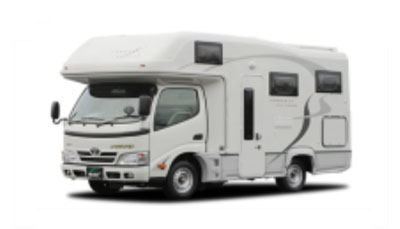
For RV travel in Japan, particularly during winter, smaller, more maneuverable vehicles are generally recommended due to narrower roads and limited parking. Bandana's fleet offers excellent options perfectly suited for these conditions.
- Ideal for a Couple: Class C - Alcove. While offering generous space, Bandana's Class C - Alcove, with an average length of 5 meters, is notably compact for its class, making it surprisingly agile for Japanese roads. It comfortably accommodates 3 adults (though a couple would enjoy ample space), providing amenities like heating and a kitchenette crucial for a winter journey, and ensuring a cozy retreat after a day of exploration. Its design allows for ease of driving and parking compared to larger RVs.
- Ideal for a Family: Class C - Alcove. The Class C - Alcove excels for families, offering an average of 6 sleeping places within its 5-meter length, comfortably housing a family of 3 (its `avg_adults` spec). This layout provides separate sleeping areas, essential for family comfort, and enough room for winter gear. Its robust design is well-suited for navigating diverse Japanese winter landscapes while offering the security and warmth necessary for family adventures.
To remove the headache of itinerary planning, Bandana offers a unique 'Rent & Plan' service. This combines your RV rental with a ready-made, expert-designed itinerary, granting full access to dedicated trip-planning software, ensuring a seamless and memorable winter RV adventure in Tokyo.
Is it safe to drive an RV in Tokyo in winter?
Driving an RV in the greater Tokyo area during winter can be safe, provided drivers are prepared for specific challenges like narrow streets, complex multi-layered expressways, varying road conditions, and dense traffic. Focus on peripheral parking and utilizing public transport for central Tokyo to avoid dense traffic and complex toll systems; an ETC card is highly recommended. On the routes offered through RV PLANET routes, you can itemize and track every expense along the way for easy budgeting.
Roads outside urban centers, especially towards mountainous regions, may experience snow and ice, making winter tires (studless or chains) crucial and often legally required. Familiarize yourself with basic Japanese road signs, many of which use pictograms or include English on major routes, but rely heavily on GPS.
Always carry an emergency kit, learn basic Japanese phrases for assistance, and have relevant apps for breakdowns or medical emergencies, like JAF for roadside assistance. For expert recommendations on navigating Japan's roads, consider exploring the detailed routes available through RV PLANET routes.
How do you prepare an RV for winter in Tokyo?
Preparing an RV for winter in Tokyo involves ensuring the vehicle is equipped for cold weather, including antifreeze for water systems, appropriate winter tires, and understanding proper waste management in freezing temperatures. Confirm your rental RV's water system (fresh, grey, black tanks) is properly winterized or learn how to prevent freezing, especially during overnight cold snaps. Verify the RV's heating system is fully functional and understand its operation to maintain a comfortable internal temperature.
Ensure the RV is fitted with appropriate winter tires (スタッドレスタイヤ - *studless tyres*) for traction on potentially icy roads; snow chains might be needed for higher elevations. In winter, grey and black water tanks are susceptible to freezing; plan frequent dumps at designated facilities like some Michi-no-Eki or RV parks to avoid issues.
Where can I park an RV overnight in Tokyo?
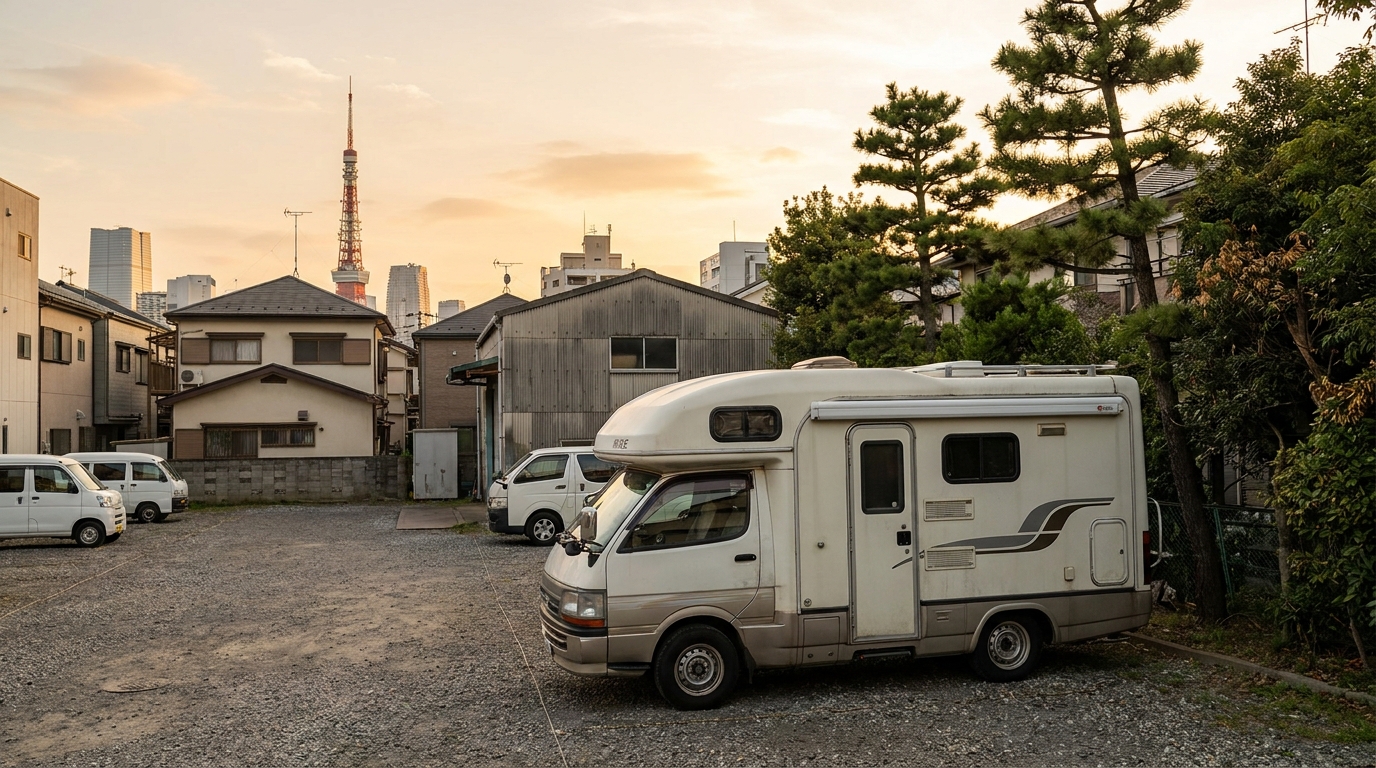
Overnight RV parking directly within central Tokyo is highly challenging and generally not recommended due to scarcity of space, high costs, and regulations; instead, utilize dedicated RV parks or Michi-no-Eki on the outskirts of Tokyo. Many Michi-no-Eki (roadside stations) permit overnight parking for self-contained RVs, offering restrooms and sometimes basic amenities; always adhere to local etiquette.
Dedicated RV parks are available further from the city center, providing more comprehensive facilities like electrical hookups, fresh water, and waste disposal points; reservations are strongly advised. For central Tokyo exploration, park your RV at a secure, large parking facility on the city's periphery and use Japan's efficient public transport. Expect significantly higher parking costs in and around Tokyo compared to rural areas; budget accordingly and use apps to find RV-friendly spots. For finding available campgrounds along your route, we recommend using RV PLANET routes.
How much does it cost to rent an RV in Japan?
The cost of renting an RV in Japan typically ranges from ¥15,000 to ¥35,000 per day (2026 estimates), varying based on vehicle class, rental duration, season, and included services. Smaller campervans are generally less expensive than larger Class C motorhomes. Winter rentals might offer slightly lower demand-based pricing, but additional costs like winter tires may apply. Budget for insurance, tolls (an ETC card is essential), fuel, campsite fees, and potentially a roadside assistance package.
Booking well in advance, especially for specific models, can often secure more favorable rates. Bandana RV offers competitive pricing with transparent cost breakdowns, ensuring no hidden fees or surprises. You can compare motorhome prices for Tokyo and find the best deals by checking our RV Rental in Tokyo - Prices and Best Deals 2026 guide.
What is the best time of year to RV in Japan?
While spring (cherry blossoms) and autumn (fall foliage) are traditionally considered prime RV seasons in Japan, winter offers a unique and often less crowded experience, particularly for those seeking hot springs, snowscapes, and festive illuminations. Experience Japan's stunning snow festivals, enjoy relaxing onsen amidst snowy backdrops, and witness city illuminations, often with less congestion on roads outside major holidays.
Winter requires specific preparation for cold weather driving (winter tires, antifreeze) and awareness of potential road closures in very mountainous regions; days are also shorter. The 'best' time depends on your priorities; for a distinctive cultural and scenic experience with fewer crowds and unique winter activities, winter RVing can be highly rewarding if properly planned.
Can foreigners rent an RV in Japan?
Yes, foreigners can absolutely rent an RV in Japan, provided they meet specific licensing requirements, which typically include an International Driving Permit (IDP) alongside their home country's driver's license. You must present your valid driver's license from your home country along with an IDP obtained in your home country *before* arriving in Japan. Note that specific countries (e.g., Belgium, France, Germany) require an official Japanese translation of their license instead of an IDP. Most rental companies require drivers to be at least 21 years old.
A valid passport and appropriate visa for your stay in Japan are also necessary for RV rental. For more detailed information on the booking process, consult our RV Rental Tokyo - Complete Guide 2026.
Are there RV parks in Japan?
Yes, Japan has a growing number of RV parks and auto campsites, particularly outside major urban centers, offering various levels of amenities for RV travelers. These range from basic Michi-no-Eki (roadside stations) that permit overnight parking to fully equipped auto campsites with power hookups, water, and dump stations, and sometimes showers and laundry facilities.
It is highly recommended to book RV park spots in advance, especially during weekends, holidays, and popular seasons, to ensure availability. Utilize Japanese RV park apps (e.g., RV Park Japan, Campsite Japan) or websites, many of which have English language support, to locate suitable spots, check amenities, and review local etiquette. For finding the cheapest RV rental in Tokyo, consider off-peak travel and using comparison tools.
Do you need a special license to drive an RV in Japan?
No, for most standard recreational vehicles available for rental in Japan, a regular foreign driver's license accompanied by an International Driving Permit (IDP) is sufficient; a special license is typically not required for RVs. The RVs commonly available for rent (like Bandana's Class C - Alcove) fall within the limits of a standard passenger vehicle license (under 3.5 tons gross vehicle weight, carrying up to 10 passengers).
The critical requirement for foreigners is obtaining an IDP in your home country *before* traveling to Japan, ensuring it is valid for your entire trip. As noted, drivers from certain countries require an official Japanese translation of their home license instead of an IDP; always verify the specific requirements for your nationality. To ensure you have all necessary documents, review our RV Rental Deals in Tokyo - Latest Offers 2026.
Can you sleep in an RV overnight in Japan?
Yes, you can legally and safely sleep in an RV overnight in Japan, primarily at designated Michi-no-Eki (roadside stations), dedicated RV parks, and some public parking areas that explicitly allow it. Michi-no-Eki are generally the most accessible and popular option for overnight stays, offering restrooms and a safe environment; respectful use (no awnings, BBQ) is expected.
'Wild camping' or sleeping in an RV in random public places (like undesignated rest stops or private land without permission) is generally frowned upon, often illegal, and can lead to issues with local authorities. Always be discreet, keep your area tidy, and avoid creating a nuisance; observing local customs is paramount for a positive experience in Japan. Remember to properly dispose of grey and black water at designated facilities (many RV parks, some Michi-no-Eki) rather than illegally dumping.
What kind of RV is best for Japan?
For RV travel in Japan, smaller, more maneuverable campervans or compact Class C motorhomes, like Bandana's 5-meter Class C - Alcove, are generally considered best due to Japan's narrower roads, tighter parking spaces, and busy urban environments. A Class C - Alcove, averaging 5 meters in length, strikes an ideal balance, providing comfortable living space while remaining nimble enough to navigate local streets and fit into most parking spots.
Smaller RVs tend to be more fuel-efficient, which is a significant consideration given fuel costs in Japan. An RV that handles more like a large van or SUV will reduce driving stress, particularly when encountering Japanese specific driving challenges like multi-layered expressways and dense city traffic. Many Japanese rental RVs come equipped with integrated navigation systems and ETC card readers, which greatly enhance the driving experience. For further comparisons on vehicle classes, check our Cheap RV Rental in Tokyo - Budget Guide 2026.
What You Shouldn't Miss
- Immerse yourself in the serene beauty of the Fuji-Hakone-Izu National Park, especially the breathtaking winter views of Mount Fuji reflecting on Lake Kawaguchiko.
- Experience the rejuvenating power of a traditional Japanese onsen (hot spring) in Hakone or Atami, a perfect way to relax amidst the winter chill.
- Explore the charming historic streets of Kawagoe, often called "Little Edo," and step back in time with its traditional warehouse-style buildings and Edo-period atmosphere.
- Discover the stunning coastal scenery of the Izu Peninsula, stopping at picturesque spots like the Jogasaki Coast for invigorating sea air and fresh seafood.
- Visit the awe-inspiring Nikko Toshogu Shrine, a UNESCO World Heritage site, and marvel at its intricate architecture, especially serene under a dusting of winter snow.
- Indulge in the local flavors and unique crafts found at the Michi-no-Eki (roadside stations) scattered throughout the region.
Final Thoughts
Embarking on an RV adventure in Tokyo during winter offers a unique perspective on Japan's captivating landscapes and culture. From the iconic views of Mount Fuji to the relaxing warmth of onsen towns, a rented RV provides the freedom and comfort to explore at your own pace.
Remember, preparation is key to a smooth journey. By understanding the local driving conditions and utilizing resources like RV PLANET for route planning, you can ensure a safe, enjoyable, and truly unforgettable winter road trip. Get inspired for your next trip!
Find Motorhome Rentals in TokyoFor ideas you can prep on the road, watch our RV-friendly recipes playlist on YouTube.