For live availability and current prices, start with our RV Rental Czech Republic - Complete Guide 2026 guide.
In This Guide
- Best Czech Republic RV Itinerary for winter rv rental — Overview
- 7-Day Classic Route in Czech Republic
- 14-Day Extended Journey in Czech Republic
- Recommended RVPlan Trip for Czech Republic
- Must-See Stops Along the Way (Avi Bandana Picks)
- Daily Driving Distances & Drive Times in Czech Republic
- Best RV Class for This Itinerary — Couple & Family Picks
- Is it safe to drive an RV in Czech Republic in winter?
- What are the road conditions like in Czech Republic in winter?
- Can you wild camp in Czech Republic in an RV?
- What are the alternatives to wild camping in Czech Republic?
- Are RV campsites open in Czech Republic in winter?
- Where can I find less touristy places to visit by RV in Czech Republic?
- Are motorhome tolls required in the Czech Republic?
- Are there specific road signs for RVs in Czech Republic?
- What are the common scams to watch out for in Czech Republic?
- Do you need winter tires for an RV in Czech Republic?
- How do I manage water and waste in a winter RV rental in Czech Republic?
- How much does it cost to rent an RV in Czech Republic in winter?
- What is the fuel consumption for RVs in Czech Republic?
- What documents do I need to rent an RV in Czech Republic?
- Is an International Driving Permit necessary for RV rental in Czech Republic?
Best Czech Republic RV Itinerary for winter rv rental — Overview
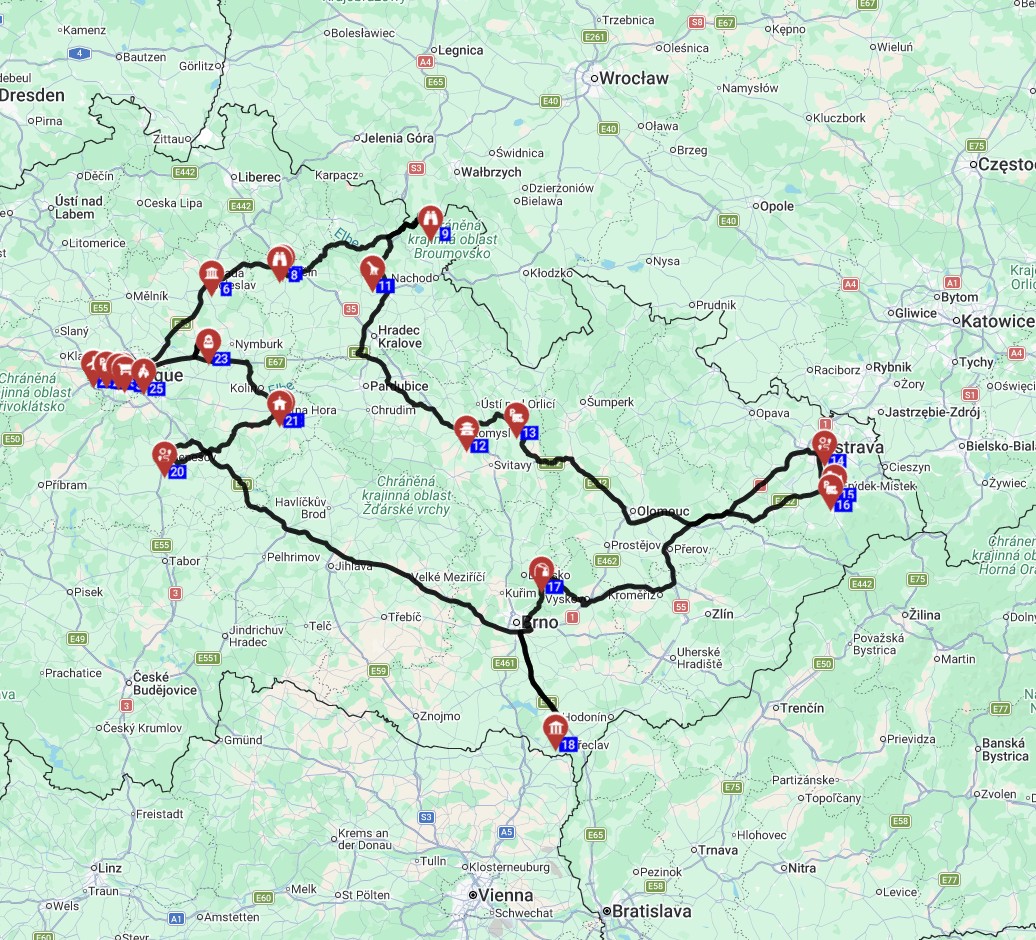
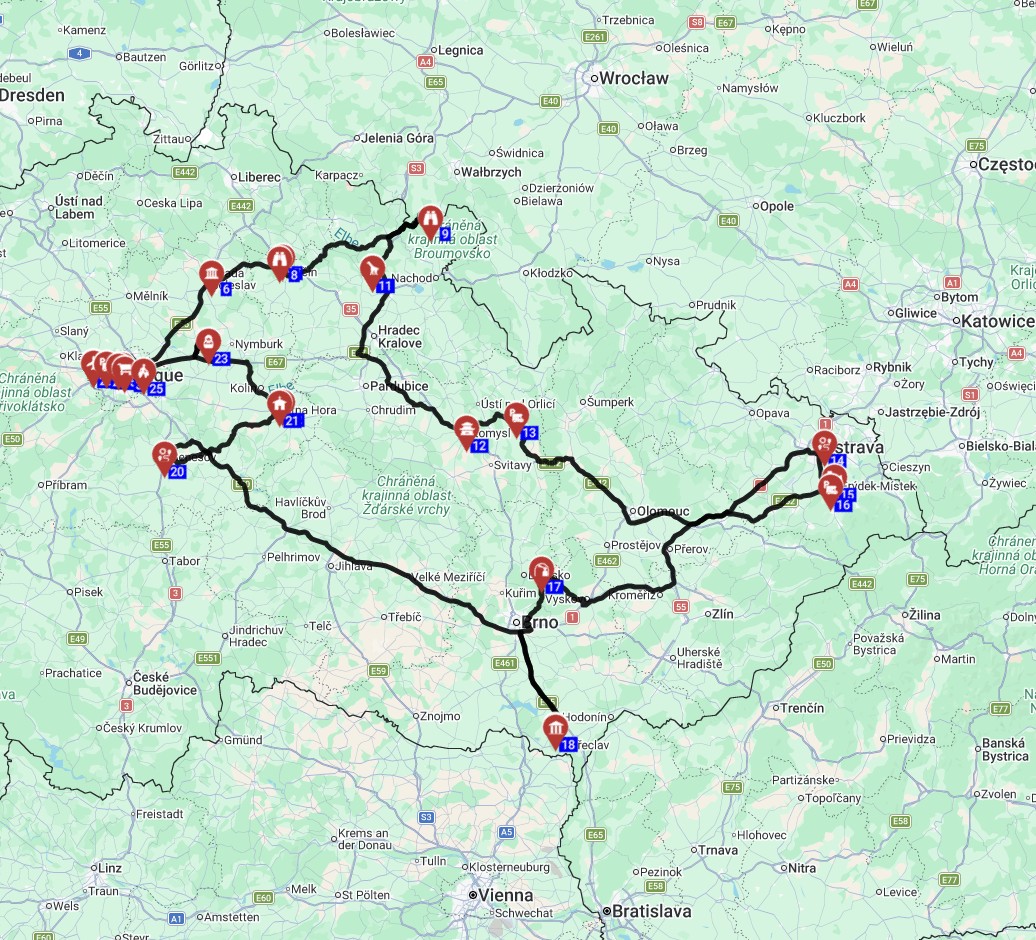
A winter RV adventure in the Czech Republic offers a unique perspective on its snow-dusted castles, historic towns, and tranquil landscapes, typically spanning 7 to 14 days. While a pre-planned itinerary like RVPlan's '
7-Day Classic Route in Czech Republic
This 7-day winter itinerary focuses on the picturesque South Bohemia region, minimizing daily driving distances to enhance safety and enjoyment during colder months. Begin your journey in Prague, heading towards Příbram (approx. 60 km) to explore the Svatá Hora pilgrimage site, and find suitable RV parking or a local guesthouse. Day two takes you to Písek (approx. 50 km) to visit the oldest stone bridge in the Czech Republic and its historical town center, again securing local RV parking for the night. Continue to Hluboká nad Vltavou (approx. 40 km) on day three to marvel at the stunning Hluboká Castle, often blanketed in snow, and park near the castle or in town. Day four involves a short drive to Český Krumlov (approx. 30 km), a UNESCO World Heritage town, where you can immerse yourself in its castle and medieval streets, checking for winter availability at Camping Český Krumlov or designated parking. Explore České Budějovice (approx. 25 km) on day five, discovering Samson's Fountain and potentially visiting the Budvar brewery, utilizing local campground or RV parking. Day six leads to Tábor (approx. 60 km) to delve into Hussite history and explore its unique underground tunnels, with local campground or RV parking available. Finally, on day seven, return to Prague (approx. 90 km) from Tábor, allowing ample time for sightseeing and vehicle return.
14-Day Extended Journey in Czech Republic
An extended 14-day winter itinerary allows for a more comprehensive exploration of the Czech Republic, including parts of South Bohemia and Moravia, with relaxed daily driving. Start with days 1-2 in Prague and then head to Tábor (approx. 90 km), spending two days exploring its Hussite history, museums, and fortifications, staying at a local RV park or campground. Days 3-4 involve a journey to Telč (approx. 100 km), the UNESCO-listed town known for its Renaissance square and castle, where you can find local RV parks or campgrounds. Proceed to Brno (approx. 90 km) for days 5-6, Moravia's vibrant capital, visiting Špilberk Castle and the Cathedral of St. Peter and Paul, and securing an RV park near the city. For days 7-8, explore the Moravian Karst (approx. 40 km) to see the Punkevní Caves (check winter access) before moving on to Olomouc (approx. 60 km), a city rich in Baroque architecture and home to the Holy Trinity Column; consider camping Olšovec or Autokemp Hamry if open. Days 9-10 are dedicated to Kroměříž (approx. 40 km) and Zlín (approx. 30 km), visiting Kroměříž's UNESCO Archbishop's Palace and Gardens, then Zlín for its unique functionalist architecture, finding local RV parks for overnight stays. Journey to Jindřichův Hradec (approx. 100 km) and Třeboň (approx. 30 km) for days 11-12 to explore the impressive Jindřichův Hradec Castle and the spa town of Třeboň, utilizing local RV parks. Finally, days 13-14 will see you return to Prague (approx. 150 km) from Třeboň, making stops in České Budějovice (approx. 30 km) and Hluboká nad Vltavou (approx. 15 km) for a final glimpse of South Bohemia's beauty before concluding your trip.
Recommended RVPlan Trip for Czech Republic
For a well-structured Czech Republic adventure, consider the '
Must-See Stops Along the Way (Avi Bandana Picks)
Avi Bandana’s personal picks for your Czech Republic RV journey go beyond typical tourist spots, focusing on authentic experiences that reflect the region’s deep heritage and local charm, as highlighted in the RVPlan trip data. Look for 'Traditional Visit Opportunities' to engage with local crafts, historical reenactments, or unique regional customs, offering a genuine glimpse into Czech culture. Seek out 'Local Industry Explorations' such as glassblowing workshops, traditional pottery studios, or local brewery tours to understand Czech artisanal traditions. Embrace the rich history at designated 'Heritage' and 'Historical Site' locations for a more intimate experience of ancient castles, grand cathedrals, and preserved town squares.
Daily Driving Distances & Drive Times in Czech Republic
Avi Bandana recommends a maximum of 100 miles or 150 km per day on average when RVing in the Czech Republic, especially during winter, to ensure a relaxed pace and ample time for exploration and unforeseen weather conditions. Traveling slowly allows you to fully appreciate the snow-covered landscapes, stop at quaint villages, and avoid the rush of highway driving, which is particularly important on potentially icy or snowy roads. For example, the drive from Prague to Český Krumlov (approx. 170 km) typically takes 2.5 to 3.5 hours, best planned as a longer driving day or split over two days in winter. Brno to Olomouc (approx. 80 km) is about 1.5 to 2 hours, and Příbram to Hluboká nad Vltavou (approx. 90 km) is generally 1.5 to 2 hours, offering comfortable daily journeys.
Best RV Class for This Itinerary — Couple & Family Picks
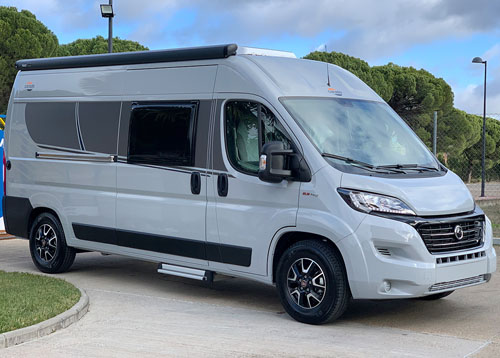
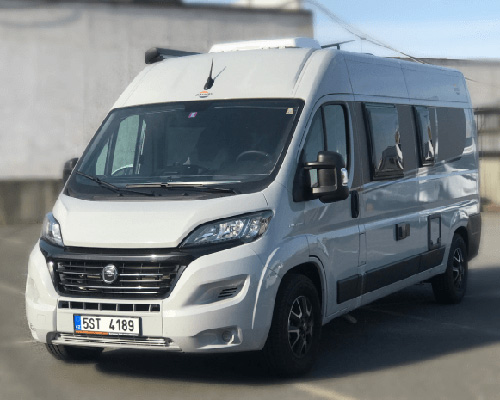
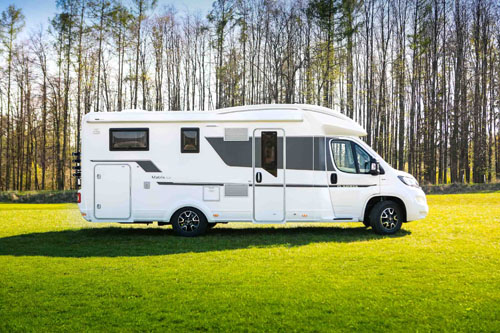
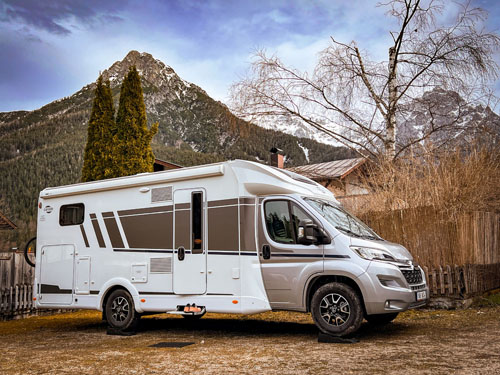
Choosing the right RV class is crucial for a comfortable winter rental in the Czech Republic, balancing warmth, maneuverability, and living space. For couples, a Class B - Camper Van is an excellent choice, offering an average length of 5.8 meters and sleeping places for about 3.2 adults. Its compact size makes it highly maneuverable on narrower winter roads and easier to park in towns, while providing sufficient amenities. For families, a Class SI - Semi-integrated motorhome is recommended, with an average length of 6.9 meters and sleeping places for around 3.8 adults. This class strikes a perfect balance between comfortable living space and manageable driving. To streamline your trip planning, Bandana's 'Rent & Plan' service combines your RV rental with a ready-made itinerary, crafted by travel experts and accessible through full-featured trip-planning software, significantly reducing planning headaches.
Is it safe to drive an RV in Czech Republic in winter?
Driving an RV in the Czech Republic in winter is generally safe with proper preparation, as main roads are typically well-maintained, but requires heightened awareness for potentially icy or snowy conditions. Ensure your RV is equipped with mandatory winter tires (November 1st to March 31st) and consider carrying snow chains for mountain passes. Be aware of local emergency contacts (112 for general emergencies, 158 for police) and secure your vehicle by locking doors and windows, using alarms, and parking in well-lit areas or dedicated campgrounds to deter common issues like opportunistic theft. Familiarize yourself with winter driving techniques, such as maintaining greater braking distances, reducing speed, and avoiding sudden maneuvers, especially on less-traveled routes where snow removal may be less frequent.
What are the road conditions like in Czech Republic in winter?
Road conditions in the Czech Republic during winter are variable, ranging from clear on major highways to snowy and icy in higher elevations and rural areas, with frequent plowing and salting on main routes. Expect significant snowfalls in mountain regions like the Giant Mountains (Krkonoše) and the Šumava National Park, where roads can become challenging, and snow chains may be required or highly advisable. Black ice is a particular hazard, especially in early mornings and shaded areas; always drive cautiously and reduce speed accordingly. While standard road signs apply, pay attention to specific signs indicating slippery conditions, required snow chains, or closed mountain passes, ensuring you have the electronic highway vignette for toll roads. On the routes offered through RV PLANET routes, you can itemize and track every expense along the way for easy budgeting.
Can you wild camp in Czech Republic in an RV?
Wild camping or boondocking in an RV in the Czech Republic is generally illegal and subject to fines, particularly in national parks, protected landscape areas, and private property. While discreet overnight parking might be tolerated in some non-residential areas for a single night, it is not officially permitted and carries risks of legal penalties. The strictest regulations apply to protected natural areas, where open fires are also prohibited, and environmental damage can result in significant fines. Always prioritize legal and designated camping options to ensure safety, access to facilities, and respect for local laws and the environment.
What are the alternatives to wild camping in Czech Republic?
The primary and recommended alternatives to wild camping in the Czech Republic are official campgrounds, stellplatze (motorhome parking areas), and sometimes farm stays or private RV parks, offering legal and amenity-rich options. Many dedicated campgrounds remain open in winter, providing essential facilities such as heated sanitary blocks, electrical hook-ups, and waste disposal points, which are crucial for self-sufficient camping in cold weather. Stellplatze, often found in smaller towns or near attractions, offer basic overnight parking, sometimes with electricity or water, at a lower cost than full campgrounds. Consider using apps like Park4Night or Campercontact to find legal and winter-friendly parking and camping spots, and always check seasonal opening times and services.
Are RV campsites open in Czech Republic in winter?
While the number of open RV campsites in the Czech Republic decreases during winter, many key campgrounds, especially near popular tourist destinations and ski resorts, remain operational, offering essential services for winter RVers. It is crucial to verify seasonal opening times and available facilities (e.g., heated showers, snow removal, electrical hook-ups, fresh water, and waste disposal points) directly with the campground prior to your visit, as some may operate on reduced services. Booking in advance is highly recommended, especially during peak winter periods like Christmas or New Year, to secure a spot and ensure access to necessary amenities. Focus on larger, well-equipped campgrounds that are more likely to have insulated facilities and anti-freeze systems for water and waste management in sub-zero temperatures.
Where can I find less touristy places to visit by RV in Czech Republic?
To discover less touristy places by RV in the Czech Republic, explore regions beyond Prague and popular South Bohemian towns, focusing on Eastern Bohemia and Moravia, which offer authentic charm and fewer crowds, especially in winter. Consider towns like Slavonice with its unique Renaissance sgraffito houses, Litomyšl with its beautiful castle and Smetana's House, or Kroměříž, home to the UNESCO Archbishop's Palace and Gardens. The smaller villages and towns along the 'Greenways' routes or in regions like Vysočina (e.g., Telč, Třebíč) offer cultural depth and tranquil winter scenery. Smaller RVs, like Class B Camper Vans (averaging 5.8m in length), are ideal for navigating the narrow streets of these hidden gems and accessing more secluded spots where larger motorhomes might struggle.
Are motorhome tolls required in the Czech Republic?
Yes, motorhomes require an electronic highway vignette (dálniční známka) for use on Czech motorways and expressways, regardless of the season. Vehicles up to 3.5 tonnes (most standard RVs for rental) must purchase an e-vignette, which can be acquired online via eDalnice.cz, at Czech Post offices, or at most petrol stations near the border. For RVs over 3.5 tonnes, a separate electronic toll system called 'MYTO CZ' (on-board unit) is required, so it's crucial to confirm your RV's weight class. Failing to display a valid vignette or possessing the incorrect toll unit can result in substantial fines, making early purchase essential for a smooth journey.
Are there specific road signs for RVs in Czech Republic?
While there are few road signs specifically designating 'RVs' in the Czech Republic, motorhome drivers must adhere to general road signs related to vehicle dimensions, weight, and parking restrictions. Pay close attention to signs indicating height and width restrictions (e.g., for tunnels, bridges, or narrow city entrances), which are critical for larger RVs. Parking signs often include symbols for 'no parking' or 'no stopping,' and specific pictograms might indicate parking restrictions for vehicles over a certain weight or length, which includes many RVs. Additionally, environmental zone signs may restrict access to certain city centers for vehicles not meeting specific emission standards, so always check local regulations before entering urban areas.
What are the common scams to watch out for in Czech Republic?
While the Czech Republic is generally a safe destination, RV travelers should be aware of common scams such as pickpocketing in crowded tourist areas (e.g., Prague's Old Town Square, Charles Bridge) and inflated taxi fares. To secure your RV, always lock all doors and windows, keep valuables out of sight or secured, and park in official, well-lit campgrounds or designated parking areas rather than isolated spots. Be cautious of individuals offering unsolicited help with parking or luggage, as these can be distractions for pickpockets. Familiarize yourself with local emergency numbers (112 for all emergencies, 158 for police) and keep them readily accessible; for currency exchange, use reputable banks or exchange offices with clearly displayed rates.
Do you need winter tires for an RV in Czech Republic?
Yes, winter tires are legally mandatory for all vehicles, including RVs, in the Czech Republic from November 1st to March 31st, or at any time when winter conditions (snow, ice, slush) are present on the road. These tires must have a minimum tread depth of 4 mm, and it's advisable to ensure your rental RV is properly equipped before setting off. While not always legally required, carrying snow chains is highly recommended, especially if your itinerary includes mountain regions or if severe snowfall is forecast, as specific road signs may mandate their use. All-season tires with the 'M+S' (Mud + Snow) marking may be sufficient if they meet the tread depth requirements, but dedicated winter tires offer superior grip and safety in true winter conditions.
How do I manage water and waste in a winter RV rental in Czech Republic?
Managing water and waste in a winter RV rental in the Czech Republic requires careful planning to prevent freezing, typically involving anti-freeze systems, insulated tanks, and reliance on open campgrounds for services. Ensure your rental RV is 'winterized' with a heated fresh water tank, insulated pipes, and a heated wastewater tank, or that it uses a non-toxic anti-freeze solution in its water systems. Reduce your fresh water usage and empty grey and black water tanks frequently at designated disposal points, which are typically found at open campgrounds and some stellplatze, to prevent freezing and damage. If temperatures are consistently below freezing, consider draining your fresh water tank and using bottled water, and for wastewater, keep the tank valve slightly ajar with a bucket underneath (where permissible) to prevent accumulation and freezing.
How much does it cost to rent an RV in Czech Republic in winter?
The cost of renting an RV in the Czech Republic in winter typically ranges from €70 to €150 per day, often being slightly lower than peak summer rates, but varies significantly based on vehicle class, rental duration, and included amenities. Factors influencing the price include the RV class (e.g., a compact Class B Camper Van will be cheaper than a larger Class A Integrated), the length of your rental, the specific rental company, and whether winterization packages or additional equipment (like snow chains or skis) are included. Beyond the rental fee, budget for fuel costs (Bandana's fleet typically consumes 10-12 Liters/100 km for Class SI or C motorhomes), the mandatory electronic highway vignette (approx. €14 for 10 days), and overnight camping fees (€15-€35 per night at winter-friendly sites). Consider potential savings by booking in advance and looking for winter-specific deals, but also factor in higher heating costs and potentially increased fuel consumption due to colder temperatures and challenging road conditions.
What is the fuel consumption for RVs in Czech Republic?
Fuel consumption for RVs in the Czech Republic varies significantly depending on the RV class, driving style, road conditions, and external temperature, but Bandana's global fleet averages offer a good estimate. For smaller Class B - Camper Vans, Bandana's fleet typically consumes around 8-10 Liters/100 km, making them a more economical choice for fuel. Larger Class SI - Semi-integrated and Class C - Alcove motorhomes, common for families, generally consume 10-12 Liters/100 km. During winter, expect slightly higher fuel consumption due to factors like continuous heating usage, driving through snow or slush, and engines operating less efficiently in colder temperatures, so budget accordingly.
What documents do I need to rent an RV in Czech Republic?
To rent an RV in the Czech Republic, you will typically need a valid driver's license (from your home country), an International Driving Permit (IDP), a passport or national ID card, and a major credit card for the rental deposit and payment. The driver's license must be held for a minimum period (often 2-3 years) and match the required category for the RV's weight and size. Specific vehicle registration and insurance requirements for foreign RVs are handled by the rental company, but ensure you receive documentation proving your rental is legally insured for driving in the Czech Republic. It's always advisable to carry physical copies of all these documents, including your rental agreement and insurance policy, at all times while driving.
Is an International Driving Permit necessary for RV rental in Czech Republic?
While not strictly mandatory for all foreign driver's licenses, an International Driving Permit (IDP) is highly recommended and often necessary for RV rental in the Czech Republic, especially if your national license is not in English or does not feature an EU-standard format. An IDP serves as a multi-language translation of your domestic driving license and can be requested by law enforcement or rental companies. It is particularly crucial for non-EU citizens or those with licenses that may be difficult for Czech authorities to interpret, ensuring smooth interactions with rental agencies and traffic police. You can obtain an IDP from your home country's national motoring association before your trip; it cannot be obtained upon arrival in the Czech Republic.
What You Shouldn't Miss
- Explore the fairy-tale town of Český Krumlov, a UNESCO World Heritage site, with its stunning castle and medieval streets, especially picturesque under a blanket of snow.
- Visit the romantic Hluboká Castle in South Bohemia, known for its Neo-Gothic architecture that appears straight out of a fairytale, particularly captivating in winter.
- Discover the historical underground tunnels of Tábor, a city rich in Hussite history, offering a unique glimpse into the past.
- Experience the charm of Telč, another UNESCO gem, famous for its perfectly preserved Renaissance square lined with colorful houses.
- Indulge in local culture by seeking out traditional festivals or markets in smaller towns, often a great way to connect with local life.
- Sample the renowned Czech beer at a local pub or microbrewery, a quintessential experience that can be found in nearly every town.
Final Thoughts
Embarking on a winter RV adventure in the Czech Republic offers a unique and enchanting perspective on this beautiful country. From the charming medieval towns dusted in snow to the serene, quiet landscapes, an RV provides the perfect cozy and flexible way to experience it all. Remember to prepare your vehicle for winter conditions, plan your routes with manageable daily distances, and embrace the slower pace that winter travel often encourages.
With Bandana Caravan, you can compare prices and book your ideal winter RV rental with confidence, knowing you're getting transparent pricing and reliable support. For finding the perfect campsites along your chosen route, we recommend using RV PLANET (rvplan.net) – a great resource for locating available spots. Get inspired for your next trip and discover the magic of a Czech winter!