For live availability and current prices, start with our RV Rental Switzerland - Complete Guide 2026 guide.
In This Guide
- Can You Drive an RV in Switzerland? License & Age Rules
- Road Conditions & Terrain in Switzerland
- RV Size Limits, Bridges & Restricted Zones
- Fuel: Diesel vs. Petrol & Cost per 100 km
- Tolls, Vignettes & Border Rules
- Driving Tips for Winter RV Rental Travelers
- Recommended RV Class for Switzerland Roads
- Should I Choose a Compact Van Instead of a Large RV in Switzerland?
- Can I Park Anywhere? Free & Wild Camping Rules in Switzerland
- Can I Drive an RV Into the City Center? Heights, Tunnels & Local Signage
- How do I plan an RV trip to Switzerland?
- What is the best month to visit Switzerland in an RV?
- Can you drive an RV through the Swiss Alps in winter?
- Do I need winter tires for an RV in Switzerland?
- Can you rent a heated RV for winter in Switzerland?
- What are the pros and cons of RV travel in Switzerland versus train?
- How much does it cost to rent an RV in Switzerland?
- How much does it cost to stay at an RV park in Switzerland?
- Is it cheaper to RV in Switzerland than other European countries?
- What amenities do RV parks offer in Switzerland during winter?
- Are there specific RV routes in Switzerland suitable for winter?
- What activities can you do with an RV in Switzerland in winter?
- How to dispose of waste in an RV in Switzerland?
- RV Rental Switzerland - What are the best companies?
Can You Drive an RV in Switzerland? License & Age Rules
Yes, you can drive an RV in Switzerland with a valid driver's license. Drivers holding a standard B driving license are generally permitted to operate RVs with a maximum laden mass up to 3,500 kg (7,700 lbs) in Switzerland. For RVs exceeding 3,500 kg, a higher license category such as C1 (for vehicles up to 7,500 kg) or C (for over 7,500 kg) is required. The minimum driver age for most RV rentals in Switzerland is typically 21, often with an additional requirement of having held a driving license for 1-3 years, though this can vary by rental provider. Foreign drivers from outside the EU/EFTA usually need an International Driving Permit (IDP) alongside their national license to legally drive an RV in Switzerland.
Road Conditions & Terrain in Switzerland
Swiss roads are renowned for their excellent quality and maintenance, even during winter, but the terrain is predominantly mountainous, featuring steep gradients, winding roads, and sharp hairpin turns. In winter, roads in higher elevations will frequently be covered in snow and ice, necessitating winter tires and potentially snow chains, which are critical for winter RV rentals. Urban areas offer well-marked, efficient road networks but can be congested with limited, size-restricted parking for RVs, while rural and mountain routes provide spectacular scenic drives at a slower pace. Driving an RV in Switzerland, particularly in winter, demands careful attention to weather conditions, specific road signs, and reduced speeds, especially on challenging alpine passes.
RV Size Limits, Bridges & Restricted Zones
While Switzerland's infrastructure generally accommodates RVs, drivers must adhere to specific height, weight, and length restrictions, especially when navigating through tunnels, old town areas, or certain mountain passes. The standard maximum legal vehicle height is 4 meters and width is 2.55 meters, though lower clearances for bridges and tunnels are common and clearly signposted. Environmental zones are less prevalent in Switzerland compared to neighboring countries, but drivers should always check for local restrictions, especially when planning to enter historic city centers with larger vehicles. Specific road signs indicating maximum length, weight, or height are critical on mountain roads and before major tunnels (e.g., the Gotthard Pass tunnel has specific rules for larger vehicles), and must be strictly obeyed.
Fuel: Diesel vs. Petrol & Cost per 100 km
Diesel is the most common fuel type for RVs in Switzerland and is readily available at most service stations, alongside petrol. Based on Bandana's global fleet averages, Class SI Semi-integrated and Class C Alcove RVs typically consume 10-12 liters per 100 km, while more compact Class B Camper Vans average 8-10 liters per 100 km. As of 2026, the average cost for diesel in Switzerland can range from approximately CHF 1.90 to CHF 2.10 per liter, meaning a 100 km journey could cost around CHF 19 to CHF 25 in fuel. Although some RV rentals may offer fuel discount cards, fuel expenses are a notable part of the overall budget for an RV trip in Switzerland due to higher fuel prices. On the routes offered through RV PLANET routes, you can itemize and track every expense along the way for easy budgeting.
Tolls, Vignettes & Border Rules
All motorways in Switzerland require an annual vignette, costing CHF 40 for 2026, which must be purchased and displayed on your RV's windscreen. Unlike some other European countries, Switzerland does not offer shorter-term vignettes; the annual sticker is mandatory for any use of the national motorways, regardless of visit duration. If your RV trip involves neighboring countries, be aware of their specific toll systems: Austria requires a separate vignette, while Italy and France operate distance-based toll roads. Some rented motorhomes offer the convenience of pre-purchasing toll passes or vignettes for nearby countries, which can help avoid fines and simplify border crossings.
Driving Tips for Winter RV Rental Travelers
Always drive cautiously and significantly reduce your speed on winter roads, especially on icy patches, snowy surfaces, and winding mountain routes. Ensure your RV is equipped with winter tires (often legally mandatory under specific conditions) and always carry snow chains, knowing how to fit them, as they may be required on certain passes. Maintain a greater following distance than usual, as braking distances are substantially increased on slippery winter terrain. Regularly check official Swiss road condition reports and weather forecasts before setting out, as mountain passes can be subject to sudden closures due to heavy snowfall or avalanche risk. Confirm that your rented RV has an efficient heating system, good insulation, and winterized tanks to prevent freezing and ensure a comfortable journey.
Recommended RV Class for Switzerland Roads
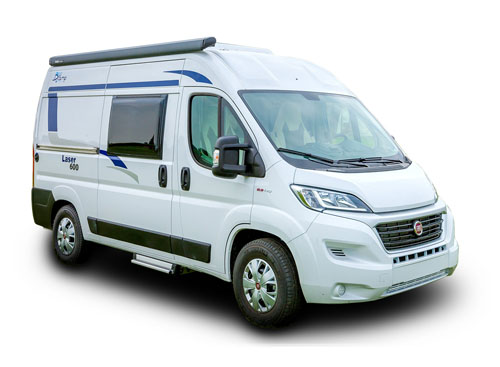
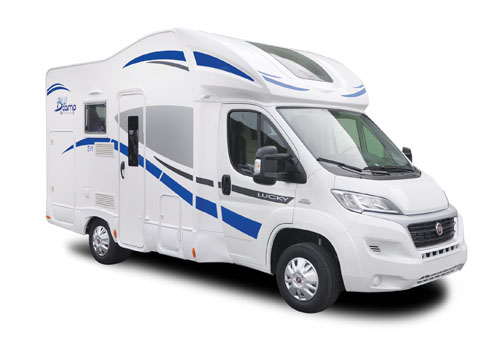
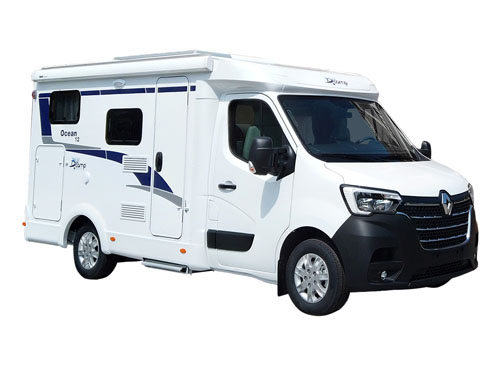
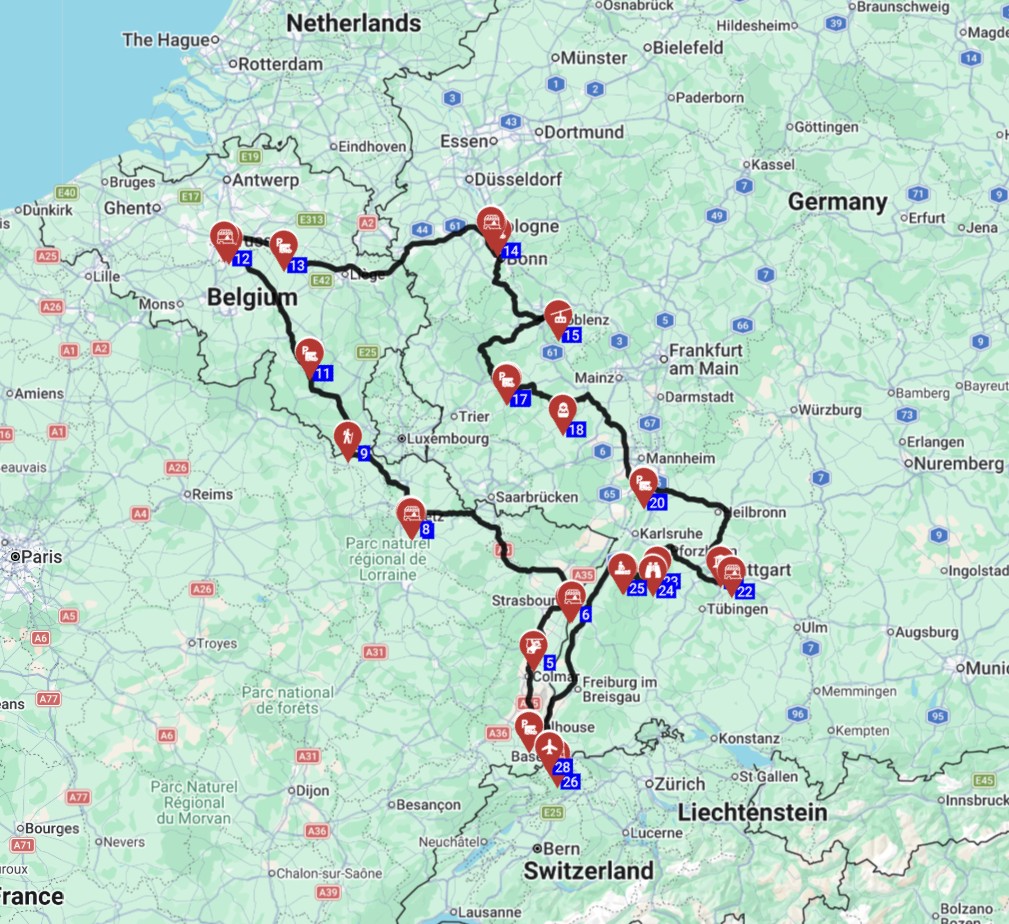
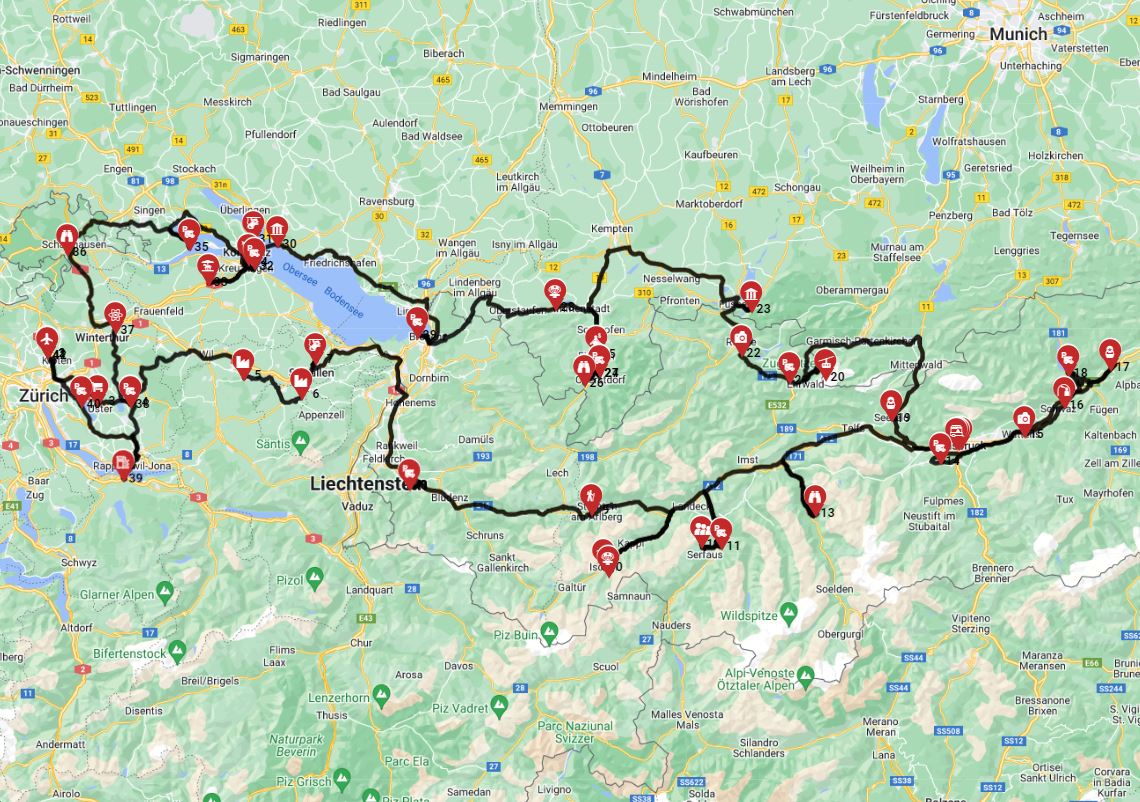
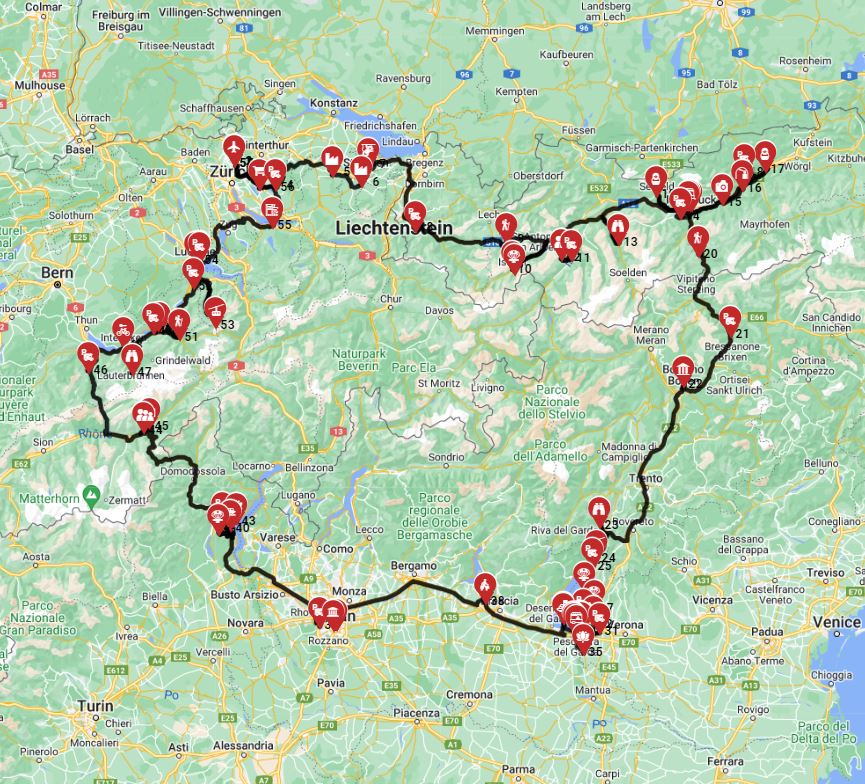
For navigating Switzerland's diverse roads, including its iconic mountain passes and charming village streets, compact to medium-sized RV classes are generally most suitable. Class B Camper Vans, with an average length of 5.8 meters according to Bandana's fleet data, offer superior maneuverability and ease of parking, making them ideal for couples or small families seeking flexibility. Class SI Semi-integrated RVs, averaging 6.9 meters in length, provide a comfortable balance of living space and relative ease of driving, suitable for families of 3-4. While larger Class C Alcove (avg 7.5m) and Class A Integrated (avg 7.5m) RVs offer extensive amenities, their increased size can present challenges on very narrow roads, tight turns, or in busy urban centers, especially during winter. For travelers seeking to explore the French Riviera and Northern Italy before heading into Switzerland, our "Nice Roundtrip - French Riviera toward North Italy, Switzerland, and the French Alps" itinerary offers a fantastic 15-day adventure covering 1742 km, showcasing a variety of attractions.
Should I Choose a Compact Van Instead of a Large RV in Switzerland?
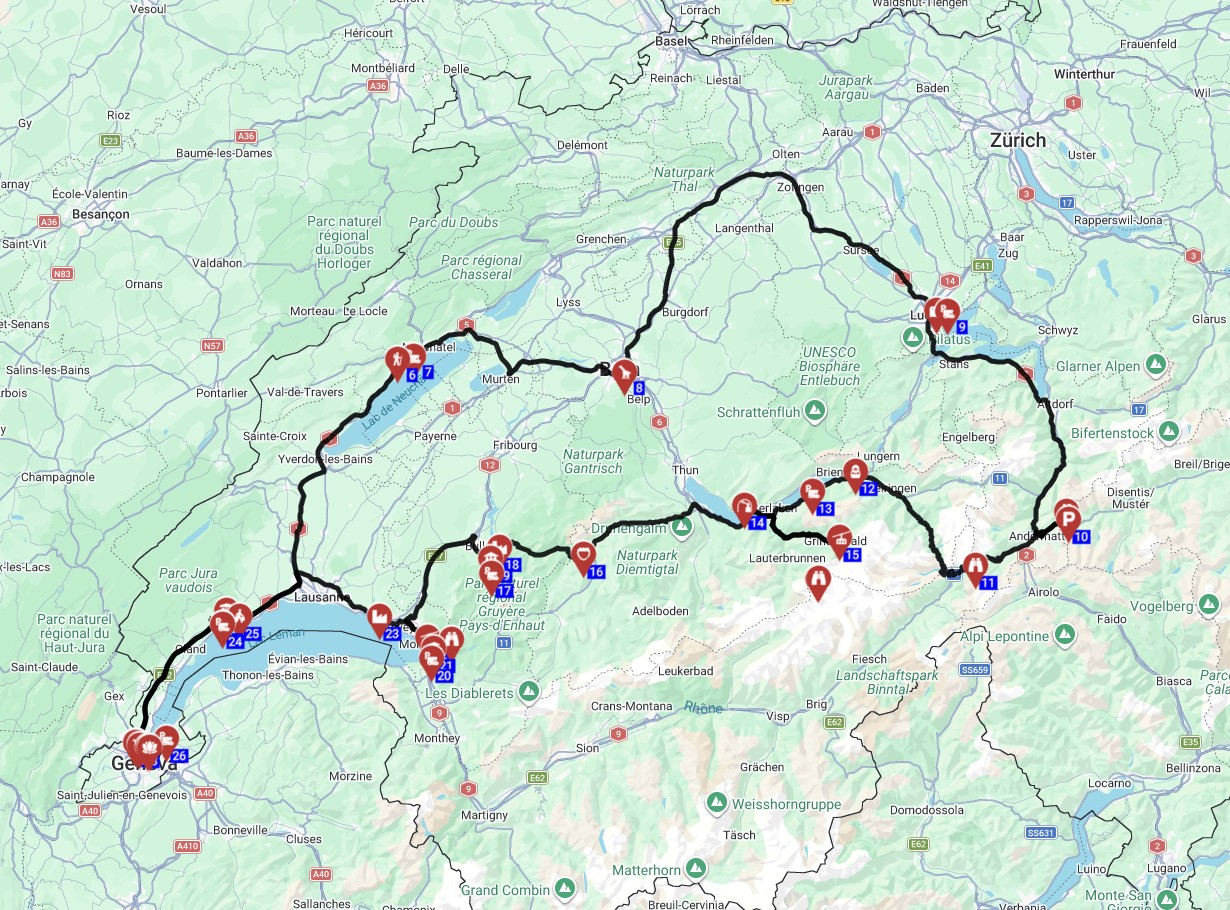
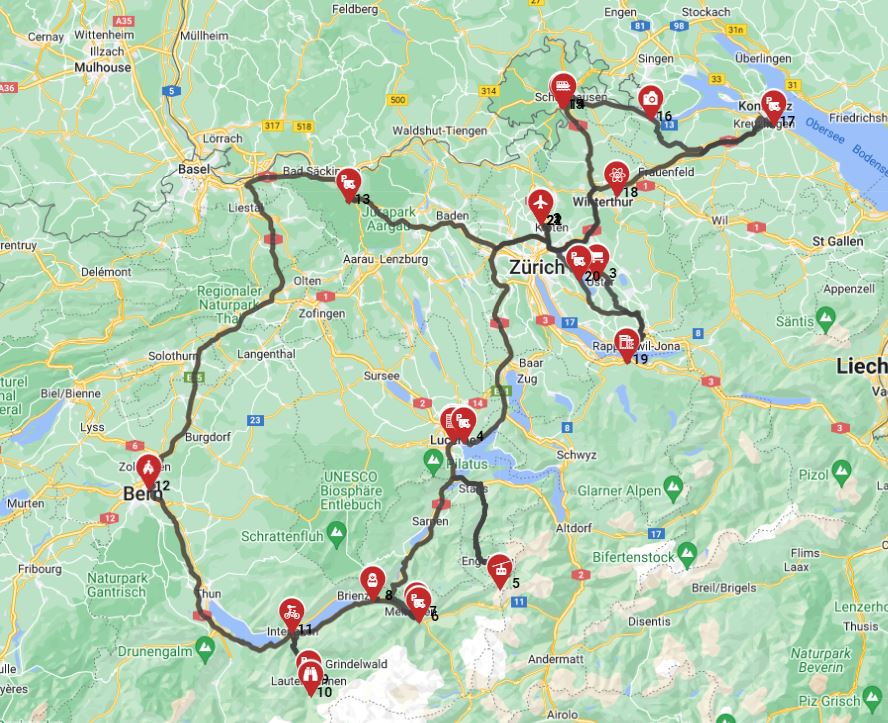
While most RV sizes can be driven in Switzerland, opting for a compact van or smaller RV often enhances flexibility and reduces driving stress, particularly beneficial during winter. Compact vans (Class B) are significantly easier to maneuver in tight historic city centers, navigate narrow mountain passes, and find suitable parking spaces, which can be a major advantage in Switzerland. Larger RVs provide superior indoor living space, storage capacity, and enhanced comfort features, making them excellent for longer trips or those prioritizing onboard amenities. The decision hinges on your travel style: a compact van for maximum accessibility and easier driving, or a larger RV for greater comfort and space, understanding the potential trade-offs in maneuverability and access to certain areas. For a short but sweet exploration, consider the "
Can I Park Anywhere? Free & Wild Camping Rules in Switzerland
Wild camping and free overnight parking in RVs are generally prohibited across much of Switzerland, with regulations varying significantly by canton (state) and individual municipality. While a single night's stop for 'recreation' (e.g., to break up a journey) might be tolerated in some areas, it is strictly forbidden within national parks, nature reserves, and many designated protected zones. Legal alternatives for overnight stays include official campsites, designated Stellplätze (motorhome parking areas that often provide basic services for a fee), farm stays, or private parking lots with explicit permission. Always verify local regulations through tourism offices or municipal websites before parking overnight, as unauthorized wild camping can lead to substantial fines and legal issues.
Can I Drive an RV Into the City Center? Heights, Tunnels & Local Signage
Yes, you can generally drive an RV into Swiss city centers, but it is imperative to pay close attention to all local signage due to potential restrictions. Drivers must be vigilant for signs indicating height limits, especially for underground parking garages, tunnels, and low bridges, as well as weight restrictions on older infrastructure or narrow streets. Although environmental zones are less common in Switzerland compared to some other European nations, watch out for 'residents-only' parking areas or zones with restricted access for larger vehicles in historic or pedestrianized city sections. Strictly observe all local traffic signs, which clearly mark prohibitions on vehicle types, turn restrictions, and parking limitations to avoid fines and ensure a smooth journey.
How do I plan an RV trip to Switzerland?
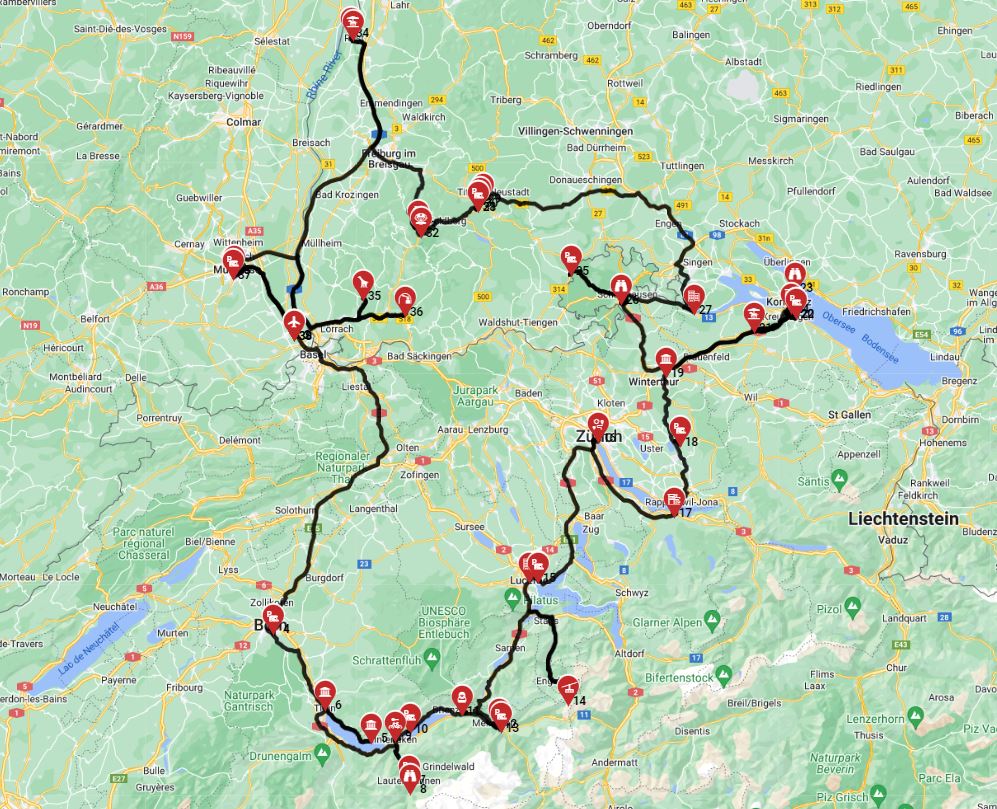
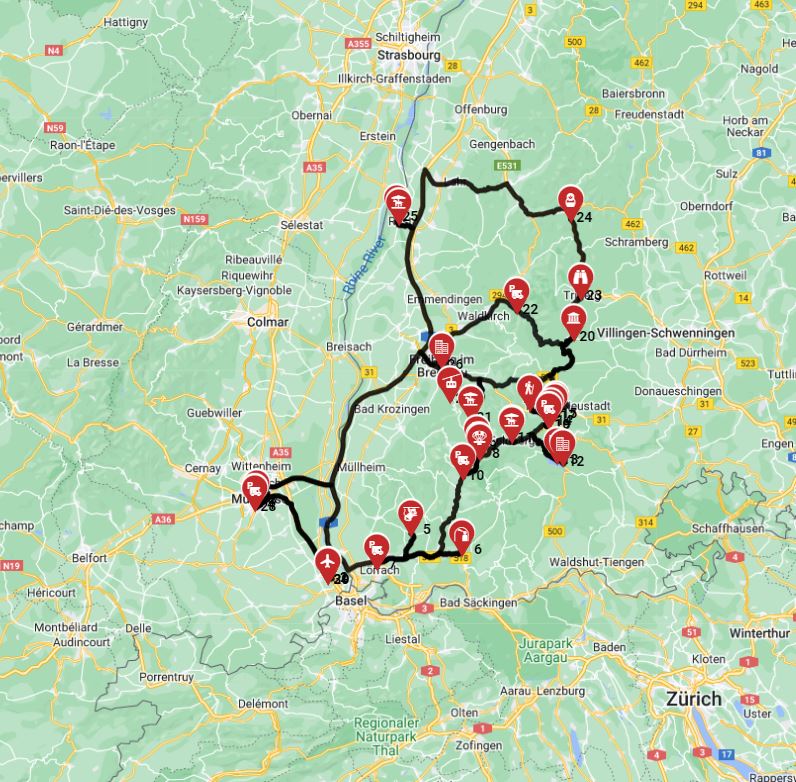
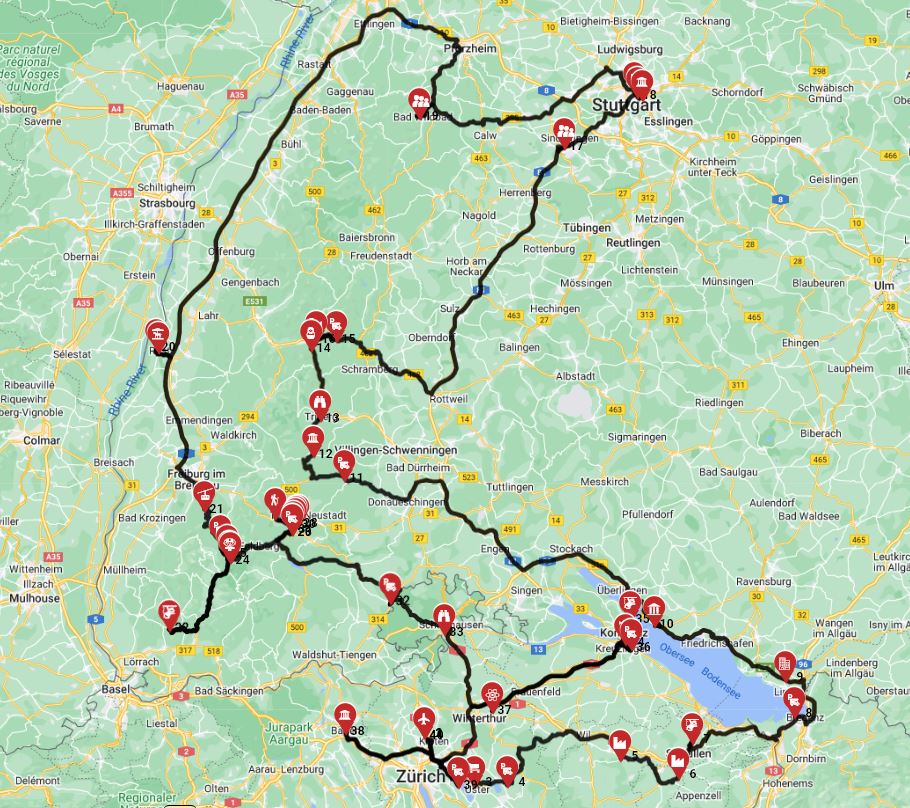
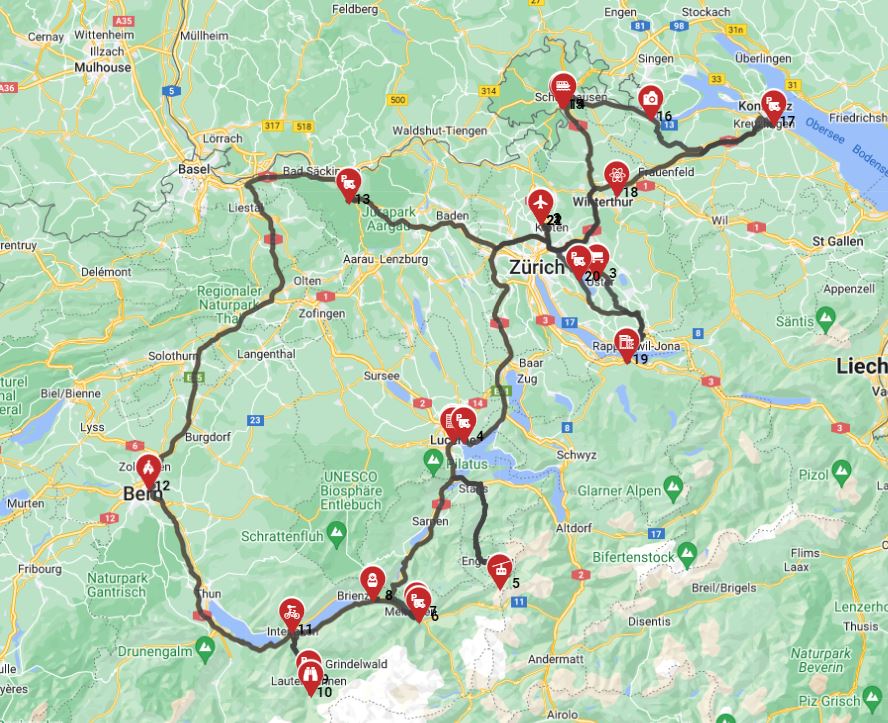
Planning an RV trip to Switzerland involves carefully selecting the ideal season for your activities, choosing an RV class suited to Swiss terrain, and mapping out a detailed route incorporating designated campsites or *Stellplätze*. Start by researching essential documents like an International Driving Permit if required, and familiarize yourself with Swiss driving laws, including the mandatory motorway vignette. For winter travel, prioritize confirming your RV is equipped with winter tires and snow chains, and plan routes that utilize open mountain passes or tunnels, checking their status regularly. Book your campsites well in advance, particularly for popular winter resorts or during peak season, and create a comprehensive budget covering rental costs, fuel, tolls, groceries, and activities. To help with planning, explore the "Basel Roundtrip - Switzerland & Black Forest" itinerary, a comprehensive 16-day, 1233.4 km route, perfect for a deep dive into the region.
What is the best month to visit Switzerland in an RV?
The best month to visit Switzerland in an RV depends entirely on the type of experience you seek, with distinct advantages across the seasons. For winter RV travel, December to March offers unparalleled access to snowy landscapes, skiing, snowboarding, and festive Christmas markets, though many high mountain passes will be closed. If your goal is to explore all regions and access high alpine passes, late spring (May-June) or early autumn (September-October) are generally ideal, offering milder weather, fewer crowds, and most roads fully open. Winter RVing specifically requires meticulous planning around weather and road closures but rewards with unique, serene snowscapes and opportunities for winter sports.
Can you drive an RV through the Swiss Alps in winter?
Yes, driving an RV through accessible parts of the Swiss Alps is feasible in winter, primarily via major valley roads and specific mountain tunnels that remain open year-round. It is crucial to be prepared with winter tires (often legally required) and snow chains, and to consistently monitor live road conditions and weather forecasts for pass closures. Key year-round routes include the Gotthard Tunnel and the Simplon Pass (road via Simplon Dorf), providing vital connections through the alpine regions. Always avoid venturing onto smaller, unmaintained roads or passes explicitly marked as closed for winter, as these can be dangerous and lead to fines.
Do I need winter tires for an RV in Switzerland?
While Switzerland does not have a blanket legal requirement for winter tires during a specific period, their use is strongly recommended and legally mandated by road signs under certain conditions or in particular regions. Swiss law requires drivers to use vehicles adequately equipped for prevailing road and weather conditions; failure to do so can result in fines, liability in an accident, and insurance complications. For winter RV rentals in Switzerland, ensure your vehicle is fitted with tires marked M+S (Mud and Snow) or, preferably, the 3PMSF (3 Peak Mountain Snowflake) symbol for optimal performance in snow and ice. Always carry snow chains and practice fitting them, as they are often required or mandatory on specific mountain passes during heavy snowfall or icy conditions.
Can you rent a heated RV for winter in Switzerland?
Yes, RVs available for rent in Switzerland, particularly those offered for the winter season, are typically well-equipped with robust heating systems to ensure comfort in cold temperatures. Most modern RVs feature efficient gas or diesel-powered central heating, providing consistent warmth even when the vehicle is parked and not connected to shore power. When renting for winter, it is advisable to confirm the type of heating system (e.g., Truma Combi, Webasto), the RV's insulation quality, and whether the fresh and grey water tanks are heated or insulated to prevent freezing. Look for 'winterized' models, which often include enhanced insulation, double-glazed windows, and robust battery systems designed to support prolonged heating demands in cold climates.
What are the pros and cons of RV travel in Switzerland versus train?
RV travel in Switzerland offers unmatched flexibility and the freedom to explore remote areas at your own pace, providing a mobile base perfect for families and outdoor enthusiasts. However, RVing can be more expensive than train travel due to higher costs for fuel, campsite fees, tolls, and the rental itself, plus navigating and parking can be challenging in Swiss cities. Train travel in Switzerland is exceptionally efficient, punctual, and offers stunning panoramic routes without the stresses of driving, parking, or specific winter road preparations. The choice between RV and train hinges on priorities: RV for freedom, spontaneous exploration, and self-sufficiency; train for convenience, speed, access to car-free villages, and generally lower environmental impact.
How much does it cost to rent an RV in Switzerland?
The cost to rent an RV in Switzerland varies significantly based on factors like the RV class, rental duration, season, and specific rental company, typically ranging from CHF 90 to CHF 250+ per day. More compact Class B camper vans (e.g., Bandana's fleet averages 5.8m in length) are generally the most affordable, while larger Class C Alcove (avg 7.5m long) or Class A Integrated (avg 7.5m long) models command higher daily rates. Winter rentals might offer specific packages or slightly lower base rates, but it's important to account for potential additional costs such as winterization fees, snow chains, and possibly higher fuel consumption. Beyond the daily rental fee, always factor in insurance costs, one-way rental fees, cleaning charges, and any mileage limits for a comprehensive total cost breakdown. For the most up-to-date pricing and deals, consult guides like "RV Rental in Switzerland - Prices and Best Deals 2026".
How much does it cost to stay at an RV park in Switzerland?
Staying at an RV park or official campsite in Switzerland typically costs between CHF 25 and CHF 60 per night for two adults, with prices varying based on location, amenities, and the season. Campsites in high-demand winter destinations, particularly near popular ski resorts or major tourist attractions, will generally be at the higher end of this range, especially for pitches with electricity and full hook-ups. Many campsites offer discounts for longer stays or through international camping membership cards (e.g., ACSI, CampingCard International), which can provide savings for extended trips. Budget for potential additional fees for services such as showers, laundry facilities, waste disposal, and charges for extra occupants or pets, which can add to the nightly rate.
Is it cheaper to RV in Switzerland than other European countries?
RV travel in Switzerland is generally more expensive than in most other European countries, primarily due to higher costs for fuel, groceries, dining out, and campsite fees. Compared to Eastern European nations or even neighboring Germany and France, Switzerland's overall cost of living and tourism services tend to be significantly higher. Despite the higher costs, the unparalleled quality of infrastructure, stunning natural beauty, safety, and unique travel experience Switzerland offers can justify the premium for many travelers. To mitigate expenses, strategies include cooking most meals in your RV, opting for more basic campsites or *Stellplätze*, and planning routes to minimize long-distance driving and associated fuel costs. For budget-conscious travelers, exploring guides like "Cheap RV Rental in Switzerland - Budget Guide 2026" can provide valuable tips. For ideas you can prep on the road, watch our RV-friendly recipes playlist on YouTube.
What amenities do RV parks offer in Switzerland during winter?
RV parks in Switzerland that remain open in winter typically offer a range of essential and often heated amenities to ensure comfort for winter travelers. Standard amenities include electrical hook-ups (EHU), heated shower blocks and restrooms, dedicated waste disposal points for grey and black water, and access to fresh water (sometimes requiring insulated hoses). Many winter campsites are strategically located near ski resorts and may provide additional conveniences such as ski storage facilities, drying rooms for gear, and shuttle services to the slopes. Some higher-end parks offer luxury amenities like indoor swimming pools, saunas, on-site restaurants, and small shops, though these typically come with a higher nightly price.
Are there specific RV routes in Switzerland suitable for winter?
While many high alpine passes close during winter, several scenic and practical RV routes in Switzerland remain accessible, predominantly in valleys, major tunnels, and lower-elevation regions. Popular winter routes include traveling through the picturesque Rhone Valley from Lake Geneva towards Valais, with the Simplon Pass road (via Simplon Dorf) often remaining open for cross-border travel. The Bernese Oberland, encompassing destinations like Interlaken and Grindelwald, offers easily accessible main roads to breathtaking winter landscapes and a plethora of activities. Focus on routes that utilize key tunnels, such as the Gotthard or San Bernardino, for reliable trans-alpine passage, and always check official Swiss traffic websites (e.g., ViaSuisse or TCS) for real-time road status before embarking on a journey.
What activities can you do with an RV in Switzerland in winter?
An RV provides a flexible base for a wide array of activities in Switzerland during winter, from exhilarating alpine sports to exploring festive towns and serene snowy landscapes. Primary attractions include skiing, snowboarding, and cross-country skiing, with many RV parks conveniently located near major world-class ski resorts. Other popular activities involve winter hiking and snowshoeing on groomed trails, ice skating on natural or artificial rinks, or unwinding in one of Switzerland's renowned thermal baths after a day in the cold. In early winter, you can explore charming Swiss towns adorned with Christmas lights and markets, or simply enjoy the comfort of your heated RV while soaking in panoramic views of snow-covered mountains.
How to dispose of waste in an RV in Switzerland?
Proper waste disposal in an RV in Switzerland is essential for environmental protection and compliance with local regulations, with readily available designated facilities. Black and grey water (sewage from the toilet and wastewater from sinks/showers) must be emptied at official emptying stations, which are found at almost all campsites, many *Stellplätze*, and some larger petrol stations. For general household rubbish, utilize public waste bins or designated recycling points, separating glass, plastic, and paper where appropriate and available. It is strictly illegal and environmentally harmful to dispose of any wastewater or rubbish in unauthorized locations, and violations can result in significant fines.
RV Rental Switzerland - What are the best companies?
When selecting an RV rental company in Switzerland, prioritize reputable providers known for a diverse fleet, comprehensive insurance options, and exceptional customer support. Consider companies like Bandana, which offers a wide range of RV classes (e.g., Class B, Semi-integrated, Alcove, Integrated) suitable for Swiss road conditions, often with winterized options and transparent rental terms. Look for companies that provide 24/7 roadside assistance, clear and upfront pricing, and explicit policies regarding essential winter equipment such as snow chains and winter tires. Always review customer feedback, compare inclusions like mileage limits and insurance excess, and inquire about any specific winter packages or discounts available before finalizing your booking. For options beyond Switzerland, our "RV Rental Europe - Complete Guide 2026" can offer insights into cross-border travel.
Final Thoughts
Embarking on an RV adventure in Switzerland, even in winter, is an incredible way to experience the country's stunning landscapes and unique culture. While winter travel presents its own set of considerations, meticulous planning and choosing the right vehicle can ensure a comfortable and unforgettable journey. Remember to always prioritize safety, stay informed about road conditions, and embrace the freedom that RV travel offers.
From the majestic Alps to charming villages, a rented RV provides the perfect mobile base for your Swiss explorations. With Bandana Caravan, you get the expertise and transparency needed to plan a trip that perfectly matches your travel style and budget. Get inspired for your next trip and discover the ease of planning!
Get inspired for your next trip! Discover top destinations, planning tips, all in one place! Plan a trip itinerary in advance with minimal effort and maximum enjoyment.