
In This Guide
- Can You Drive an RV in Saint Petersburg? License & Age Rules
- Road Conditions & Terrain in Saint Petersburg
- RV Size Limits, Bridges & Restricted Zones in Saint Petersburg
- Fuel: Diesel vs. Petrol & Cost per 100 km in Saint Petersburg
- Tolls, Vignettes & Border Rules for RVs in Saint Petersburg
- Driving Tips for Winter RV Rental Travelers in Saint Petersburg
- Recommended RV Class for Saint Petersburg Roads
- Should I Choose a Compact Van Instead of a Large RV in Saint Petersburg?
- Can I Park Anywhere? Free & Wild Camping Rules in Saint Petersburg
- Can I Drive an RV Into the City Center? Heights, Tunnels & Local Signage
- What is the 3-3-3 rule for RVs?
- Can you drive an RV in the winter?
- How cold does St. Petersburg get in winter?
- Are RVs winter proof?
- What is the average cost for RV insurance?
- Can you get temporary RV insurance?
- Does an RV need insurance in Florida?
- Does RV insurance cover snow damage?
Can You Drive an RV in Saint Petersburg? License & Age Rules
Most rental motorhomes under 26,000 lbs, including popular Class B campervans and Class C alcove models, require only a standard Class D driver's license for operation in Florida. The minimum age to rent an RV in Saint Petersburg is typically 21, though some specialized rental companies may have different policies, a factor Bandana RV transparently details in search results. Foreign drivers can generally use a valid driver's license from their home country for up to one year in Florida; an International Driving Permit (IDP) is recommended but not legally required for short-term visits. Florida does not require a commercial driver's license (CDL) for recreational vehicles, regardless of size, as long as they are not used for commercial purposes. We believe in full transparency, ensuring you know all requirements upfront, with no hidden fees or surprises at pickup. Our extensive experience, dating back to 2001, confirms that a standard license is sufficient for a comfortable RV rental adventure. To explore your options, refer to our RV Rental Saint Petersburg - Complete Guide 2026.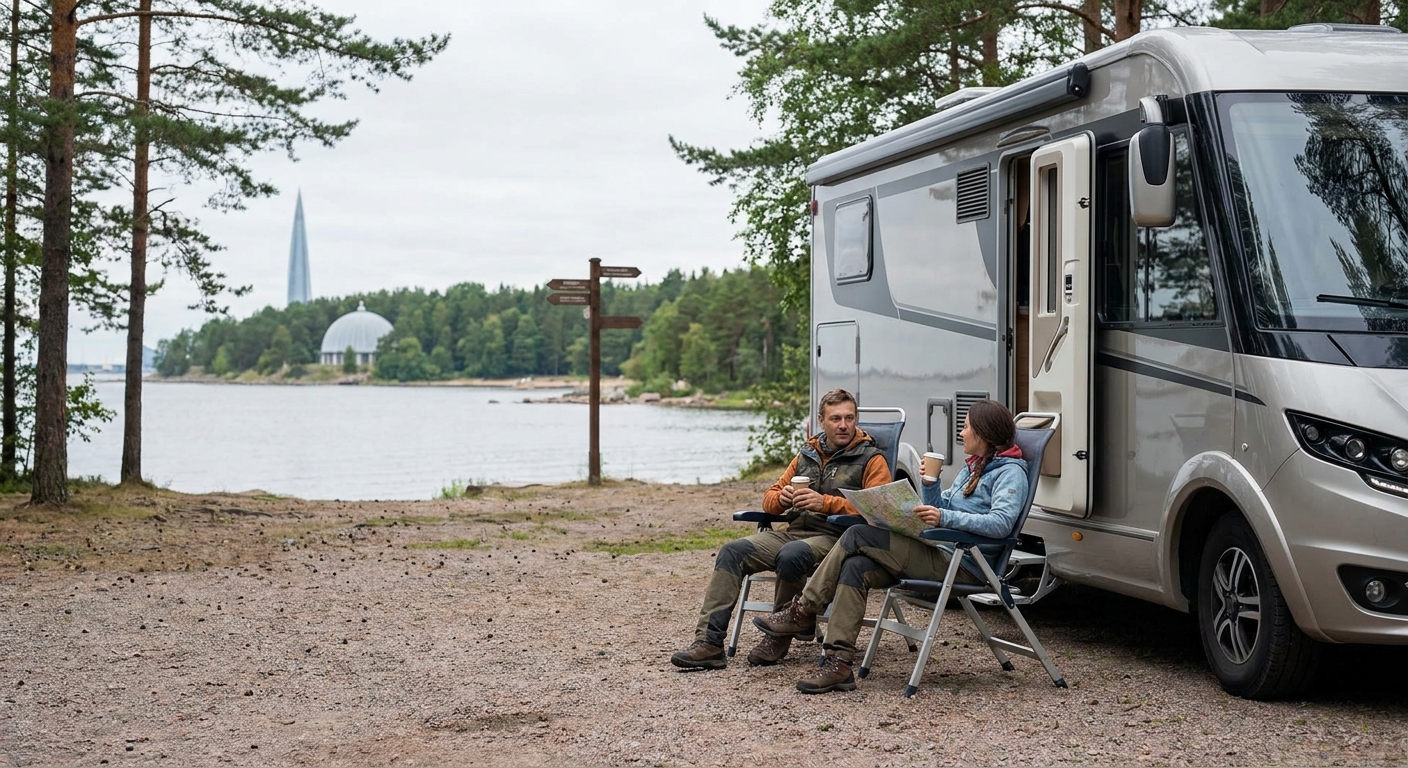
Road Conditions & Terrain in Saint Petersburg
Roads in Saint Petersburg and the surrounding Pinellas County area are generally well-maintained and flat, making RV driving straightforward year-round. The terrain is predominantly flat coastal and urban, without mountains or challenging grades to navigate, offering a relaxed driving experience. Urban density does mean drivers should be prepared for moderate to heavy traffic, especially during peak seasons like winter snowbird migration and around popular attractions such as the St. Pete Pier or Salvador Dalí Museum. Winter in Saint Petersburg, Florida, brings mild and generally dry road conditions, eliminating any concerns about snow or ice, allowing for comfortable travel. We always encourage slow, scenic driving, averaging 100-150 km per day, to fully enjoy the coastal views and safely navigate city streets, connecting to the culture, food, and scenery at a relaxed pace.RV Size Limits, Bridges & Restricted Zones in Saint Petersburg
Saint Petersburg generally has no significant height or weight restrictions for standard recreational vehicles on its major roads, making most Class B campervans, Class SI semi-integrated, and Class C alcove motorhomes easily navigable. Low bridges are rare on primary routes, but drivers should always pay attention to posted signage for specific overpasses, especially near older infrastructure or when approaching urban parking garages in areas like downtown St. Pete. There are no specific environmental or low-emission zones that restrict RV access in Saint Petersburg, Florida, unlike some European cities. Ferry services, such as the Fort De Soto ferry to Egmont Key, are not typically designed for RVs; always check weight and size limits for any specific ferry if planning coastal excursions. Always be mindful of parking garage height clearances in downtown areas, as most are unsuitable for even smaller Class B or C RVs. For a variety of vehicles to compare, check out our "RV Rental in Saint Petersburg - Prices and Best Deals 2026" guide.Fuel: Diesel vs. Petrol & Cost per 100 km in Saint Petersburg
Most motorhomes available for rent in Saint Petersburg, Florida, especially Class B Camper Vans (like the "Active Compact Select" or "VW California Ocean" with ~8-10 Liters/100 km fuel consumption) and Class C Alcove models (like the "24' Class C Motorhome" with ~10-12 Liters/100 km), primarily run on petrol (gasoline). Larger Class A Integrated RVs and some newer Class C models may use diesel fuel, which is typically found at designated diesel pumps at most major gas stations and truck stops around the Tampa Bay area. Bandana's global fleet averages for fuel consumption typically range from 8-10 Liters/100 km for Class B Camper Vans, 10-11 Liters/100 km for Class SI Semi-integrated, and 10-12 Liters/100 km for Class C Alcove models. The average cost of fuel in Saint Petersburg, like the rest of Florida, fluctuates daily, making real-time price checks via apps like GasBuddy useful. For budgeting ancillary trip costs like fuel, remember that on RV PLANET routes, travelers can itemize and track every expense for easy financial planning.Tolls, Vignettes & Border Rules for RVs in Saint Petersburg
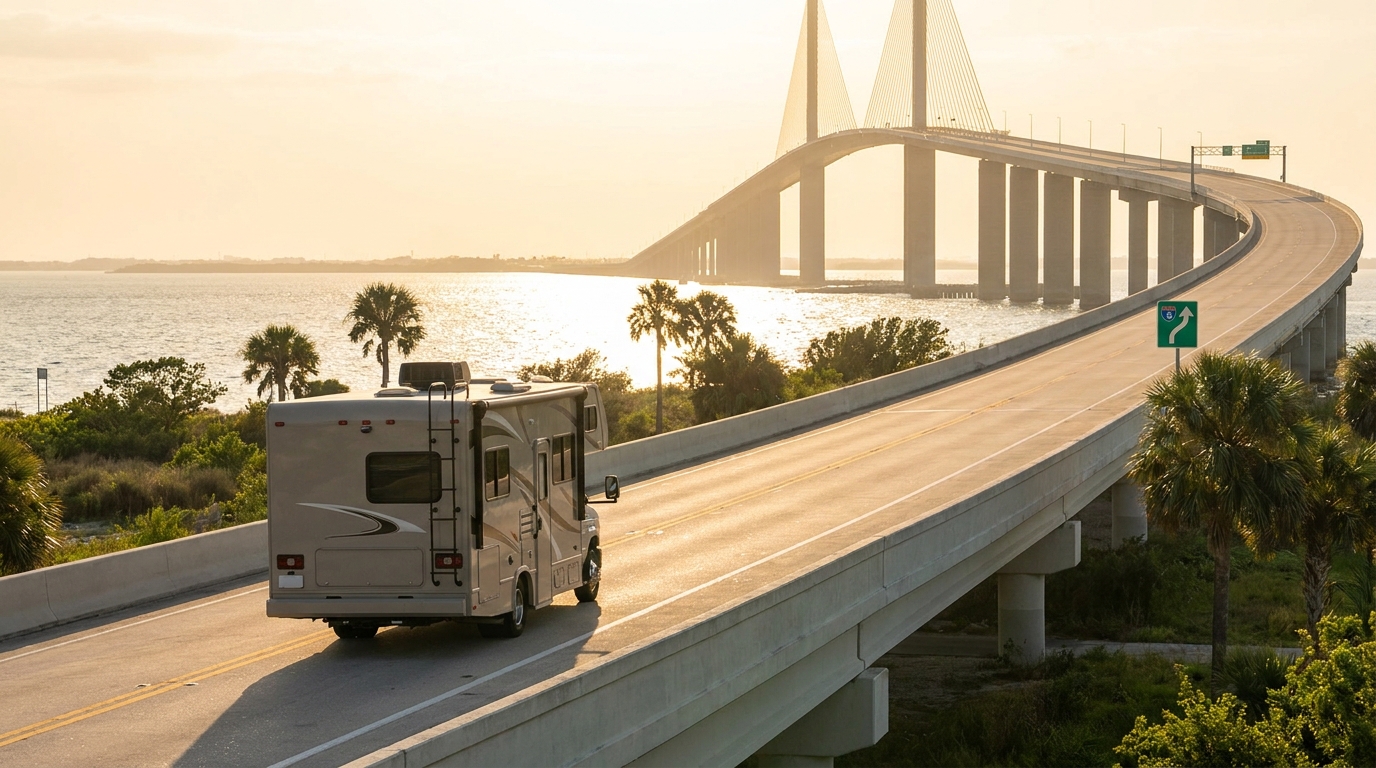
Florida has numerous toll roads, bridges, and causeways, particularly in the Tampa Bay area which includes Saint Petersburg. The Sunshine Skyway Bridge, connecting St. Petersburg to Manatee County, is a notable toll bridge. The primary electronic toll collection system in Florida is SunPass, which is highly recommended for RV travelers to avoid higher 'Toll-by-Plate' charges that involve a mailed bill. Vignettes (pre-paid road use stickers common in some European countries) are not used in Florida or the United States; tolls are paid electronically or at staffed booths. There are no 'border rules' or customs checks for RV travel between Florida and neighboring U.S. states. When renting a motorhome, inquire with your rental provider about SunPass transponders, as many companies, including Bandana partners, allow pre-purchasing or renting them to streamline toll payments and avoid potential fines. This is part of our full transparency promise, ensuring no surprises. For ideas on where to go, check out our "RV Rental Russia - Complete Guide 2026" (for general context, though this article focuses on Florida).Driving Tips for Winter RV Rental Travelers in Saint Petersburg
1. **Plan Your Route Carefully:** Use RV-specific GPS navigation to avoid potential low bridges or restricted areas, especially when entering urban centers like downtown Saint Petersburg or navigating parking near popular spots such as Tropicana Field. 2. **Stay Hydrated and Cool:** Even in winter, Florida can be surprisingly warm, with average highs of 21-24°C; ensure your rented RV's AC is optimized for comfort and carry plenty of water. 3. **Watch for Wildlife:** Particularly at dawn and dusk, be aware of deer, alligators, and other wildlife, especially outside urban areas near nature preserves like Boyd Hill Nature Preserve or state parks. 4. **Secure Loose Items:** Before driving, always ensure all internal items, from kitchen cookware to personal belongings, are securely stowed to prevent damage or distraction on the road. For cooking on the go, explore our RV-friendly recipes playlist. 5. **Mind the Sun:** Florida's winter sun, while pleasant, can still be intense; use sunshades or blinds while parked to keep the interior cool and protected, and always use sunscreen outdoors. 6. **Pet-Friendly Stops:** If traveling with pets, research pet-friendly parks and attractions in advance to plan adequate exercise stops, such as the dedicated dog beach at Fort De Soto Park. For more local tips, see our "RV Travel Guide to Saint Petersburg - Tips and Top Spots 2026".Recommended RV Class for Saint Petersburg Roads
For optimal maneuverability and ease of parking in Saint Petersburg's urban and coastal environment, a Class B Camper Van or Class SI Semi-integrated RV is highly recommended. Class B Camper Vans, like the "Active Pop Top" with its average length of 5.99 meters, are ideal for navigating city streets, fitting into standard parking spaces, and exploring narrow beach access roads. Class SI Semi-integrated RVs, such as the "Euro Quest" or "2 Berth Rover," averaging around 6.9 meters in length, offer more space and amenities while remaining relatively easy to drive and park in larger lots. For families seeking more interior space, a Class C Alcove RV (like the "MHC24" with an average length of 7.3 meters) also performs well on Saint Petersburg's main roads, though parking in tighter spots may require more planning. These classes balance comfortable living space with practical driving dimensions suitable for Florida's infrastructure and popular attractions.Should I Choose a Compact Van Instead of a Large RV in Saint Petersburg?
For most major roads and attractions in Saint Petersburg, even larger motorhomes like Class C or Class SI models can be driven without significant issues, so there's no need to limit yourself to the smallest option. A compact van (Class B Camper Van), such as an "Active Original" or "HiTop Campervan," genuinely helps with parking in crowded downtown areas, tighter beach access roads, and general urban maneuverability, especially near popular spots like the St. Petersburg Pier. However, a larger RV offers considerably more indoor living space, storage, and amenities like a full bathroom and kitchen, which often outweighs the slight parking convenience gained from a compact van, particularly for longer trips. The trade-off between comfort and maneuverability often leans towards a larger RV for a winter stay in Saint Petersburg, given the mild weather encourages indoor-outdoor living. Consider your group size and desired amenities: a Class B is great for 1-2 people, while a Class C (e.g., "MHC28") or SI is better for families (e.g., 4-6 people) or those wanting more extensive facilities for a week-long trip. For luxury options, check out our "Luxury RV Rental in Saint Petersburg - Premium Prices 2026" guide.Can I Park Anywhere? Free & Wild Camping Rules in Saint Petersburg
Free or 'wild camping' (parking overnight outside designated campgrounds) is generally prohibited throughout Saint Petersburg and most of Florida due to local ordinances. Local regulations in Saint Petersburg specifically restrict overnight parking of RVs on public streets, residential areas, and beach parking lots like those along Gulf Boulevard on St. Pete Beach. Designated campgrounds, RV resorts such as St. Petersburg / Madeira Beach KOA Holiday, and some private properties (with explicit permission) are the legal and safe places for overnight RV stays. Researching county parks like Fort De Soto Park Campground and private boutique RV parks in and around Saint Petersburg can reveal diverse options beyond popular, larger campgrounds. Always prioritize safety and legal compliance: rules vary by region, so checking local regulations and following local law before parking overnight is crucial. We offer full transparency in booking, ensuring you understand all associated costs and rules before you travel.Can I Drive an RV Into the City Center? Heights, Tunnels & Local Signage
Yes, you can almost always drive a rented RV into the city center of Saint Petersburg, Florida, as major roads like I-275 and US-19 are designed to accommodate various vehicle sizes, including Class A, B, and C motorhomes. The main challenges in the city center are finding suitable parking and being aware of height restrictions for parking garages, which are typically too low for most RVs. For instance, downtown parking garages usually have height limits of around 2.1-2.4 meters (7-8 feet), making them unsuitable for even smaller Class B campervans that can be 3 meters (10 feet) tall. Pay close attention to local signage, which will clearly indicate any height limits, one-way streets, or residents-only parking zones in areas like the Central Arts District or Beach Drive. There are no major tunnels in Saint Petersburg with height restrictions that would impact typical RV travel. Consider using peripheral parking lots or designated RV-friendly parking outside the immediate downtown core and utilizing public transport or ride-shares for closer access to specific attractions. Drive slowly and carefully, and you can drive almost anywhere without issues. No need to stress - just use common sense and pay attention.🎬 Video coming soon
What is the 3-3-3 rule for RVs?
The 3-3-3 rule for RVs is a popular guideline suggesting that you should drive no more than 300 miles a day, arrive at your destination by 3 PM, and stay for at least 3 nights, promoting slow travel. This rule aims to provide a relaxed and enjoyable RV travel experience, significantly reducing driver fatigue and allowing ample time to set up camp and explore your surroundings in areas like Saint Petersburg. Adhering to the 3-3-3 rule helps prevent rushed journeys and ensures you're not driving in unfamiliar areas after dark, which can be challenging for even experienced RVers. While primarily a guideline, it's particularly useful for extended trips to a mild winter climate like Saint Petersburg, encouraging a leisurely pace to connect with local culture and scenery. Remember, with Bandana, our focus is on making your week-long trip or longer adventure stress-free and memorable.Can you drive an RV in the winter?
Yes, you can absolutely drive a rented RV in the winter, especially in mild climates like Saint Petersburg, Florida, where winter conditions are generally favorable with sunny skies and comfortable temperatures. In colder climates, driving an RV in winter requires specific preparation, including winterizing the plumbing, using anti-freeze, and potentially having winter tires or chains. For a winter RV rental in Saint Petersburg, you typically won't encounter snow or ice, making driving conditions similar to other seasons, generally from November through April. It's important to ensure the rented RV's heating system and insulation are adequate for occasional cooler nights, even in Florida, where temperatures can dip to 10°C (50°F). Always check tire pressure regularly, as even mild temperature fluctuations can affect tire performance. We partner with over 50 leading RV suppliers, including El Monte and Cruise America, ensuring a wide selection of "Winter Ready" RVs for your Saint Petersburg adventure.How cold does St. Petersburg get in winter?
In winter, St. Petersburg, Florida, experiences mild temperatures, with average lows typically ranging from the low 50s°F (10-12°C) and average highs in the low to mid-70s°F (21-24°C) during the day. Occasional cold fronts can bring overnight temperatures into the 30s°F (around 0°C), particularly in December and January, though these colder periods are usually short-lived. Daytime temperatures generally remain pleasant and ideal for exploring, making it an excellent winter destination for RV travel. While rare, a hard freeze (temperatures below 32°F / 0°C for several hours) is possible, necessitating some precautions for exposed RV water lines. Packing layers is advisable to comfortably accommodate the temperature swings from cool mornings to warm afternoons. Our expertise as true RV specialists means we understand these local nuances, helping you choose the perfect campervan or motorhome.Are RVs winter proof?
While many modern RVs are designed for various climates, few are truly "winter proof" in extreme cold without specific modifications or extensive "winterization" of plumbing and systems, typically not needed in Saint Petersburg. For mild Saint Petersburg winters, most standard rental motorhomes and campervans are perfectly adequate, benefiting from basic insulation and reliable heating systems to maintain comfort during cooler nights. RVs intended for four-season use typically feature enhanced insulation, heated tanks, and double-pane windows, which are less common in standard rental fleets but offer superior cold-weather performance for sub-zero conditions. In Florida's winter, the main concerns are more about occasional cold snaps and protecting water lines from freezing rather than sustained sub-zero temperatures. When renting an RV through Bandana, inquire about the specific model's insulation and heating capabilities to ensure it meets your comfort expectations for Florida's mild winter. We offer options like the "4 Berth Deluxe" or "Euro Deluxe" which often come "Winter Ready".What is the average cost for RV insurance?
The average cost for RV insurance varies widely depending on factors such as the RV's type, age, value, how often it's used, your driving history, and the coverage limits chosen. For rental RVs in Saint Petersburg, insurance costs are usually included in the base rental agreement or offered as an optional add-on, often covering basic liability and collision. High-end motorhomes or longer rental durations generally incur higher insurance premiums. Comparing quotes from multiple providers is crucial to find the best rate and coverage tailored to your specific RV and travel plans, a service Bandana provides with full transparency. For example, a basic collision deductible might be $1500-2500, but you can upgrade to a top-level deductible for extra peace of mind. Florida-specific factors, like comprehensive coverage that protects against potential strong winds or heavy rain (even in winter), can influence overall premiums.Can you get temporary RV insurance?
Yes, it is possible to get temporary RV insurance, often available for short-term rentals, specific trips, or for situations where you only need coverage for a limited period. Many RV rental companies in Saint Petersburg include basic liability insurance in their rental fees, but offer optional temporary collision or comprehensive coverage for added peace of mind during your trip. If you own an RV, some insurance providers offer short-term policies or allow you to adjust your existing coverage for specific travel dates, which can be beneficial for infrequent use. Temporary insurance can be a practical solution for borrowing an RV or covering a short winter trip to Saint Petersburg. Always confirm the scope and duration of temporary coverage to ensure it meets Florida's minimum legal requirements and your personal protection needs; Bandana ensures full transparency on all insurance options.Does an RV need insurance in Florida?
Yes, like any motor vehicle, an RV registered or operated on public roads in Florida is legally required to have at least minimum liability insurance coverage. Florida's Personal Injury Protection (PIP) and Property Damage Liability (PDL) coverages are mandatory for all motor vehicles, including motorhomes and campervans. For rental RVs in Saint Petersburg, the rental company typically provides the legally required minimum insurance, but you may want to purchase additional coverage for comprehensive protection against unforeseen events. Proof of insurance is necessary for vehicle registration in Florida and must be carried while operating the RV. It's highly recommended to carry more than the minimum required liability, as Florida's dense traffic and occasional severe weather can increase risk. Bandana works with 50+ leading RV suppliers worldwide, including Apollo and Britz, to offer clear insurance options.Does RV insurance cover snow damage?
Standard comprehensive RV insurance policies typically cover damage caused by various weather events, including snow, ice, and hail, though specific coverage can vary by policy and deductible amount. While snow is highly unlikely in Saint Petersburg, Florida, during winter, comprehensive coverage would also protect against other Florida-specific weather events like heavy rain, strong winds, and potential hail. If your rented motorhome is damaged by a tree falling due to a storm (or any other severe weather), or if your RV slides on ice (even if very rare in Florida), comprehensive coverage would generally apply. Always review your specific policy documents to understand the full extent of your coverage, including any exclusions or limitations related to weather-related damage. For Florida RV travel, consider coverage that specifically addresses wind and hurricane damage, even in winter months, as severe weather can sometimes occur. Find comprehensive details for different insurance options by comparing on our platform.What You Shouldn't Miss
- **St. Pete Pier Exploration:** Spend a day exploring the iconic St. Pete Pier, featuring restaurants, shops, a beach, and incredible views of Tampa Bay. You can easily find parking for most RVs at the nearby municipal lots and shuttle in.
- **The Dalí Museum Visit:** Immerse yourself in the world of Salvador Dalí at the renowned Dalí Museum. RV-friendly parking is available a few blocks away, and the museum often has special exhibits during the winter season.
- **Fort De Soto Park Camping & Beaches:** Experience Florida's natural beauty by staying at the Fort De Soto Park Campground, consistently rated among the best in the US. Enjoy pristine beaches, kayaking, and the famous dog beach. Remember to book ahead or check for first-come-first-serve spots.
- **Mural Tour in the Central Arts District:** Take a leisurely stroll or bike ride through the Central Arts District to discover St. Petersburg's vibrant street art scene, with over 100 colorful murals. Park your motorhome on a wider street a few blocks out and explore on foot.
- **Sunset at Pass-a-Grille Beach:** Drive your campervan to the historic Pass-a-Grille Beach for a breathtaking Gulf Coast sunset. Parking can be found along the beachfront streets, making it an ideal spot for a picturesque evening.
