In This Guide
- Where to Camp in Chile - Top Options
- Campground Types in Chile (National, Private, Wild)
- Featured RV Park or Campground in Chile
- Hookups & Amenities - What to Expect
- Booking Windows & Reservations in Chile
- Nearby Supermarkets & Resupply Points
- Best RV Class for Camping in Chile
- How to Save on Campgrounds in Chile
- Is winter RV travel in Chile possible?
- What are the challenges of RVing in Chile during winter?
- Which RV rental companies operate in Chile during winter?
- Are roads in Patagonia passable by RV in winter?
- What permits or documents are needed for RV travel across Chile and Argentina?
- How much does it cost to rent an RV in Chile for winter?
- Is wild camping legal or tolerated in Chile?
- What are the safety tips for RV travel in Chile?
- How reliable is cell service and internet for RVers in remote Chilean areas?
- What are the best routes for winter RV travel in Chile?
- Are there special winter considerations for RVs (e.g., antifreeze, heating)?
- What are environmental impact and responsible travel tips for RVing in Chile?
- What health precautions should I take for winter RVing in Chile?
- Top Cities for RV Rental in Chile
- Chile RV Travel: Practical Information
- What You Shouldn't Miss
- Why Book with Bandana Caravan
- Final Thoughts
- Frequently Asked Questions
Winter RV camping in Chile offers a breathtaking and uniquely tranquil experience, transforming popular summer destinations into serene, snow-dusted landscapes. Imagine yourself waking up to panoramic views of snow-capped volcanoes or enjoying a warm meal inside your cozy rented motorhome while a gentle snowfall blankets the Patagonian steppe. At Bandana RV, we believe that RV travel should be an adventure of discovery, comfort, and complete transparency. For live availability and current prices, start with our RV Rental Chile - Complete Guide 2026 guide. We are true RV specialists, founded in 2001, with over 23 years of dedicated experience in helping tens of thousands of travelers explore the world by RV, making sure you experience Chile with absolute peace of mind.
Where to Camp in Chile - Top Options
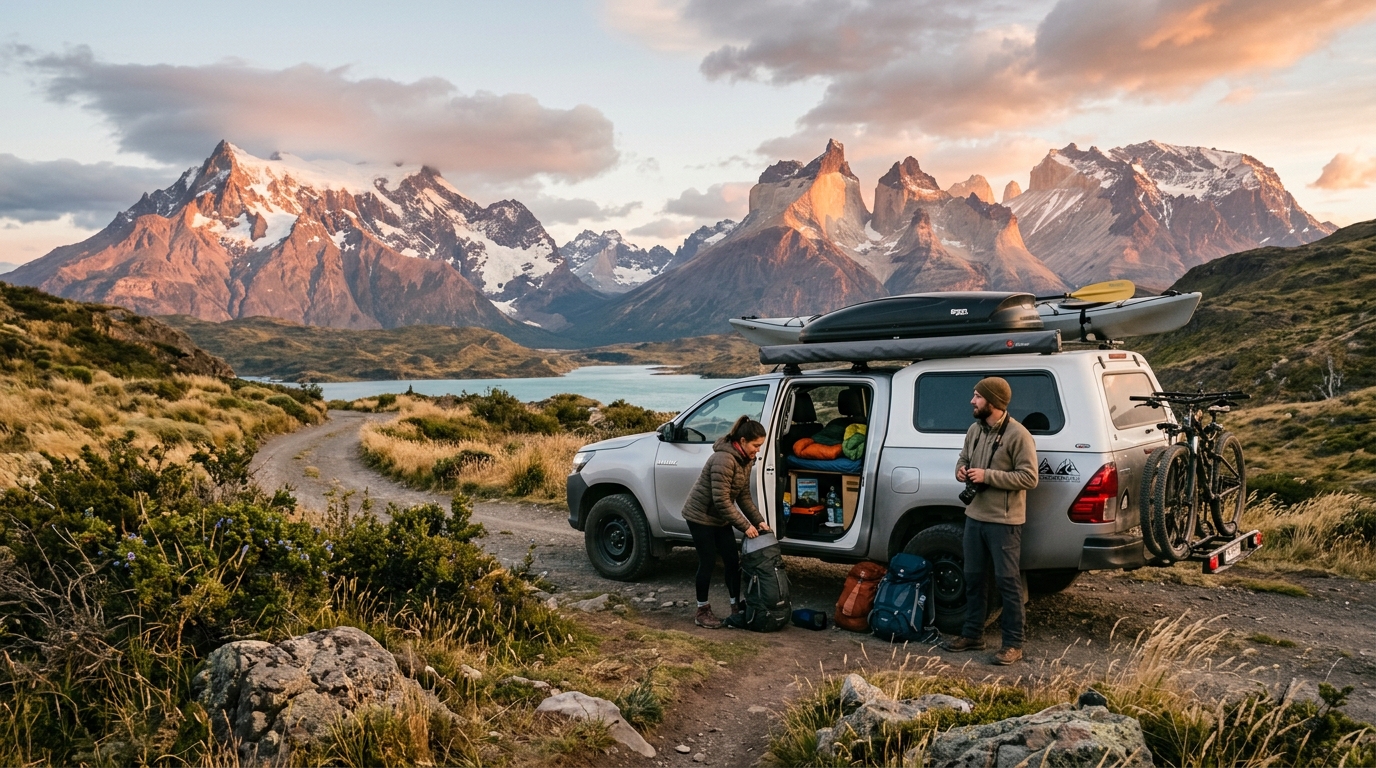
Chile offers diverse and captivating winter camping opportunities, with regions like the Lakes District providing accessible sites and a wealth of activities. For instance, areas around Pucón and Puerto Varas feature numerous campgrounds that remain open, offering amenities such as hot springs access and stunning views of Villarrica Volcano. Further south, Patagonia, including regions near Torres del Paine or parts of the Carretera Austral, presents breathtaking snow-covered landscapes for more experienced winter RVers, though some routes demand careful planning and a robust vehicle. Central Chile's valleys and coastal areas, less prone to heavy snow and ice, offer milder winter conditions with many campgrounds remaining operational, providing a comfortable base for exploring.
Campground Types in Chile (National, Private, Wild)
Chile's camping landscape includes National Park Campgrounds (CONAF), private facilities, and opportunities for wild camping. CONAF sites typically provide basic facilities and immerse you in stunning natural settings, though in winter, services may be reduced or some areas could be temporarily closed. Private Campgrounds (often called "Campings Particulares") are generally the most comfortable option for winter RV travel, offering a wider range of amenities such as heated showers, reliable electricity (usually 220V, so bring European Type C or L adapters), and sometimes Wi-Fi. Wild Camping (also known as Freedom Camping) is generally tolerated in remote, non-private areas without explicit "No Camping" signs, but it is strictly prohibited within national parks and protected areas. This option provides no amenities and can be more challenging and less secure during winter months, making prior research and common sense essential.
Featured RV Park or Campground in Chile
For an exceptional winter RV experience in Chile, Termas de Puritama, located in the Atacama Desert, stands out for its natural hot springs amidst a stunning desert landscape. While not a traditional RV park, nearby areas offer camping options that provide access to these warm, mineral-rich pools, creating a unique contrast to the surrounding arid environment. When selecting any RV park in Chile for winter, prioritize sites offering reliable winter-specific amenities like heated showers, sheltered pitches, and 24-hour security for optimal comfort. Look for campgrounds with easy access to main roads, proximity to emergency services, and convenience to grocery stores or winter activity hubs like ski resorts or hot springs, which can greatly enhance your cold-season RV trip.
Hookups & Amenities - What to Expect
In Chile, RV electrical hookups typically provide 220V power, requiring European Type C or L plugs, so travelers should bring appropriate adapters to ensure their appliances can connect safely. Potable water is generally available at most private campgrounds and some national park sites, while dump stations for grey and black water are common in private facilities but rarer elsewhere. Wi-Fi availability is highly variable; it's often present in private campgrounds but can be spotty or non-existent in remote areas. Laundry and heated showers are primarily found at private establishments, often for an additional fee, enhancing comfort during colder winter months. On the routes offered through RV PLANET routes, you can itemize and track every expense along the way for easy budgeting.
Booking Windows & Reservations in Chile
For winter RV rentals in Chile, while popular summer spots can be competitive, winter generally offers more flexibility due to lower demand. Pre-planners who like everything organized should book national park campgrounds ahead, especially for popular areas, as many only release 25%-30% of spots for reservations, with the remainder being first-come, first-served. Spontaneous travelers will almost certainly find a place, if not at the first campground then the next, but it is highly recommended to call ahead before driving long distances in potentially challenging winter conditions. You can often secure better rates for your rented motorhome by booking at least 2-3 months in advance, though last-minute availability is frequent in the off-season.
Nearby Supermarkets & Resupply Points
Major supermarket chains in Chile, such as Lider (Walmart), Jumbo, and Santa Isabel, are readily available in most towns and cities for convenient resupply throughout your journey. Travelers should plan to stock up on groceries and essentials in larger urban centers like Santiago, Puerto Montt, or Punta Arenas before venturing into more remote winter destinations, where smaller towns may have limited supplies. When cooking on board your rented RV, remember to plan your meals to maximize freshness and minimize waste; our RV-friendly recipes playlist offers great ideas for delicious, easy-to-prepare meals.
Best RV Class for Camping in Chile
For winter camping in Chile, where challenging road conditions and maneuverability are key, Class B Camper Vans and Class SI - Semi-integrated RVs are generally the most suitable choices. Class B Camper Vans, averaging 5.8 meters in length and sleeping 3.2, offer excellent maneuverability and fuel efficiency; our Bandana fleet typically consumes 8-10 Liter/100 Km, making them ideal for navigating potentially icy or narrow roads with ease. A "rv rental denver example Category Van" or similar model offers flexibility. Class SI - Semi-integrated RVs, averaging 6.9 meters in length and sleeping 3.8, provide a good balance of comfort and agility, with Bandana's fleet typically consuming 10-11 Liter/100 km, making them a practical choice for winter exploration without being overly large. Even Class C motorhomes, like a "24' Class C Motorhome" with 4-5 berths, are manageable; remember to drive slowly and carefully, and you can drive almost anywhere without issues. No need to stress - just use common sense and pay attention.
How to Save on Campgrounds in Chile
Leveraging campground discount cards, potentially offered by rent-motorhome, can be a significant saving lever for RVers in Chile, reducing your overall trip expenses. Travelers can further save by choosing municipal or regional campgrounds, which are often more affordable than private resorts, especially during the less crowded winter season. Booking stays of three or more nights can frequently secure weekly rates, offering a better daily value. For groups traveling in a larger rented motorhome, sharing hookup fees can also considerably reduce overall camping costs. When planning your route, exploring RV PLANET routes allows you to itemize and track every expense along the way for easy budgeting.
Is winter RV travel in Chile possible?
Yes, winter RV travel in Chile is absolutely possible and offers a unique, less crowded experience, particularly in regions like the Lakes District and parts of Patagonia. While it presents challenges such as colder weather and potential road closures, many areas remain accessible, providing opportunities for winter sports, hot springs, and stunning snowy landscapes. This off-season period allows for a more intimate connection with Chile's natural beauty, avoiding the peak tourist crowds and often benefiting from lower prices on rented campers.
What are the challenges of RVing in Chile during winter?
RVing in Chile during winter presents several challenges, including colder temperatures, potential snow and ice on roads (especially in the south and high altitudes), and reduced availability of services and campgrounds. Vehicle suitability is critical, as a 4x4 or a rented RV with good traction and heating is essential for navigating varied road conditions. Travelers should be prepared for limited connectivity and potential delays due to adverse weather. Health considerations such as preventing hypothermia, managing altitude sickness, and ensuring a robust emergency plan are also paramount for safe winter travel, making thorough preparation key.
Which RV rental companies operate in Chile during winter?
Several reputable RV rental companies operate in Chile during winter, though their fleets and availability may be more limited compared to the peak summer season. Major international and local providers, including Bandana partner suppliers like El Monte, Cruise America, Apollo, and Britz, typically offer a range of motorhomes and campervans. Some specialize in robust, winter-ready models equipped with proper insulation and heating to ensure comfort. It is highly recommended to book your rented RV well in advance and confirm specific winterization features and availability with your chosen rental provider to ensure a comfortable and safe trip.
Are roads in Patagonia passable by RV in winter?
Roads in Patagonia can be challenging but are often passable by rented RV in winter, particularly major routes like sections of the Carretera Austral, though conditions vary significantly and require careful planning. While key arteries may be maintained, secondary roads, especially those leading to national parks or remote areas, can be covered in snow or ice, potentially requiring a 4x4 vehicle or snow chains. Some less-traveled routes may be closed entirely. Always check current road conditions via official sources (e.g., MOP Chile or local police) before travel, and be prepared for sudden weather changes that can impact passability. Drive slowly, averaging 100-150 km per day, to fully experience the majestic winter scenery.
What permits or documents are needed for RV travel across Chile and Argentina?
For RV travel between Chile and Argentina, comprehensive documentation is required for each traveler, including your valid passport and an International Driving Permit (IDP), which is recommended for visitors from non-English speaking countries. If you are renting a motorhome, you will absolutely need a notarized authorization from the rental company granting explicit permission for the vehicle to cross international borders, specifying both Chile and Argentina. Chilean customs (Aduana) and the Agriculture and Livestock Service (SAG) will thoroughly inspect your rented RV for prohibited items, particularly fresh produce. You will also need specific insurance coverage for international travel, which your rental company should help arrange. Ensure all vehicle ownership papers are in order and easily accessible.
How much does it cost to rent an RV in Chile for winter?
The cost to rent an RV in Chile for winter can vary widely, typically ranging from $100-$300 USD per day for a standard Class C motorhome, with prices generally lower than peak summer season rates. Beyond the rental fee for your camper or mobile home, travelers should budget for significant daily expenses. These include fuel (often 10-12 Liter/100 km for Bandana's typical fleet), road tolls, groceries, and paid campgrounds which average $20-$50 USD per night for private sites. Consider potential additional costs such as national park entry fees, propane for heating, optional chain rental for snowy conditions, or extra insurance for winter travel. Remember, prices are dynamic and change daily based on availability, seasonality, and supplier marketing decisions; the final price is set at actual booking time. For managing and tracking all these expenses, RV PLANET routes allow you to itemize and track every cost along the way for easy budgeting.
Is wild camping legal or tolerated in Chile?
Wild camping, or freedom camping, is generally tolerated in Chile in remote, non-private areas where no explicit 'No Camping' signs are posted, though it is not legally defined as 'legal' in most contexts. It is explicitly prohibited within national parks and protected areas unless in designated camping zones. Travelers must always seek permission if planning to camp near private property. Remember that amenities are non-existent in these spots, making them less secure and more challenging in winter. For a more detailed comparison of legalities and amenities across different camping options, refer to the 'Campground Types in Chile (National, Private, Wild)' section.
What are the safety tips for RV travel in Chile?
For safe RV travel in Chile, exercise vigilance by being aware of urban versus rural safety differences, always securing your rented motorhome, and understanding common local scams. Always lock your RV, avoid leaving valuables visible, and choose well-lit, secure parking areas or designated paid campgrounds, especially in urban or unfamiliar environments. Drive slowly and carefully, and you can drive almost anywhere without issues. No need to stress - just use common sense and pay attention to your surroundings. Keep emergency contacts (e.g., local police, rental company, roadside assistance numbers) easily accessible, and be cautious of unsolicited help or offers, particularly on remote roads.
How reliable is cell service and internet for RVers in remote Chilean areas?
Cell service and internet reliability for RVers in remote Chilean areas are generally spotty and can be very limited, especially in Patagonia or high-altitude regions. Major towns and cities typically have good coverage from providers like Entel, Movistar, and Claro, but as you venture into national parks or less populated routes, expect frequent dead zones. Consider purchasing a local SIM card upon arrival for better local rates and data plans. For critical connectivity in truly remote areas, a satellite communication device might be a worthwhile investment to ensure you stay connected.
What are the best routes for winter RV travel in Chile?
The best routes for winter RV travel in Chile often include the scenic Lakes District (e.g., around Pucón, Puerto Varas, and Frutillar) for its accessible hot springs, volcano views, and relatively well-maintained roads. The northern stretches of the Carretera Austral offer manageable challenges with proper preparation, leading to stunning fjords and temperate rainforests. While more demanding, parts of Torres del Paine in southern Patagonia offer breathtaking snow-covered landscapes for experienced winter drivers, emphasizing regions with maintained roads and open facilities. Remember to travel slowly, max 100-150 km per day on average, to fully feel the place, connect to the culture, the food, and the scenery.
Are there special winter considerations for RVs (e.g., antifreeze, heating)?
Special winter considerations for RVs in Chile are crucial to ensure a comfortable and safe trip, including confirming the rented vehicle is properly winterized. This means ensuring antifreeze is in all water systems to prevent pipes from freezing, which is a common issue in cold climates. Adequate heating, such as a robust diesel or propane furnace, is essential for interior comfort and preventing vital systems from freezing in sub-zero temperatures. Confirm with your rental company that the RV is equipped with appropriate tires (M+S or dedicated winter tires), and that water tanks and external systems are insulated for cold weather travel. Many of Bandana's partners offer Class B Camper Vans or Class SI - Semi-integrated RVs that are specifically "Winter Ready" for such journeys.
What are environmental impact and responsible travel tips for RVing in Chile?
For responsible RVing in Chile, travelers must adhere strictly to 'Leave No Trace' principles, including carrying out all trash, minimizing waste, and utilizing designated dump stations for grey and black water. Respect local communities by observing cultural norms, supporting local businesses, and minimizing noise pollution, especially in residential or sensitive natural areas. Stay on marked roads and designated camping areas to protect fragile ecosystems, particularly during winter months when landscapes can be more vulnerable to damage. Every small detail makes a big difference in preserving Chile's natural beauty for future generations.
What health precautions should I take for winter RVing in Chile?
For winter RVing in Chile, health precautions include preventing altitude sickness by acclimatizing gradually and staying well-hydrated, especially when traveling through Andean passes such as Paso Los Libertadores. Ensure all necessary vaccinations are up-to-date and carry a comprehensive first-aid kit, as access to medical facilities can be limited in remote areas. Be thoroughly prepared for colder temperatures to prevent hypothermia by dressing in layers, consuming warm fluids, and being aware of the symptoms of cold-related illnesses. Always have an emergency plan and communicate your route to someone reliable, as connectivity can be spotty.
Top Cities for RV Rental in Chile
Chile offers several key hubs for picking up your rented motorhome or campervan, providing excellent starting points for your winter adventure. Each city offers unique access to different regions:
- Santiago: As the capital, Santiago and Santiago - Airport offer the widest selection of RV rental options. It's an ideal starting point for exploring Central Chile, the Elqui Valley, or heading south towards the Lakes District.
- Puerto Montt: The gateway to Patagonia and the Lakes District, Puerto Montt is perfect if you plan to explore southern Chile's fjords, volcanoes, and national parks like Vicente Pérez Rosales.
- Punta Arenas: Located in Chilean Patagonia, Punta Arenas is your entry point for extreme southern adventures, including Torres del Paine National Park, Tierra del Fuego, and ferry routes to remote islands.
- Calama - Airport: For those dreaming of the stark beauty of the Atacama Desert, Calama - Airport is the primary pick-up location, offering access to San Pedro de Atacama, geysers, and lunar landscapes.
- Arica: Positioned in the far north, Arica provides access to the high-altitude Lauca National Park and its stunning Andean wildlife and landscapes.
Whether you're starting from Arica in the north or Punta Arenas in the south, Bandana partners with over 50 leading RV suppliers worldwide to bring you the best options for your winter RV rental in Chile.
Chile RV Travel: Practical Information
Navigating Chile by rented RV is an incredible experience, and a few practical tips can make your journey even smoother. In Chile, you drive on the right-hand side of the road, and speed limits are generally 50 km/h in urban areas, 100 km/h on rural roads, and 120 km/h on highways. Always be mindful of signage, especially in mountainous or rural areas where conditions can change quickly. Toll roads (autopistas) are common around major cities, and some require an electronic device (TAG) or specific payment methods, so check with your rental company.
For emergencies, dial 133 for police, 131 for ambulances, and 132 for fire services. Having local emergency numbers programmed into your phone is always a good idea. Staying connected on the go is easy with local SIM cards from major providers like Entel, Movistar, or Claro, available at airports and city centers. While coverage is generally good in populated areas, prepare for limited to no service in very remote regions. We handle the details, you live the journey, ensuring personal service from day one until your booking for a rented camper is confirmed.
🎬 Video coming soon
What You Shouldn't Miss
- Drive the Carretera Austral: This legendary route offers unparalleled access to Chile's wildest landscapes, including glaciers, fjords, and national parks like Queulat, even if only partially in winter.
- Relax in Patagonian Hot Springs: Seek out natural hot springs (termas) such as Termas de Puyuhuapi or Termas Geométricas, offering a warm escape amidst stunning snowy surroundings.
- Explore the Lakes District: Base yourself around Pucón or Puerto Varas for access to volcano views, charming towns, and plenty of winter activities from your rented motorhome.
- Stargaze in the Elqui Valley: Head north to the Elqui Valley, an International Dark Sky Sanctuary, for some of the clearest night skies on Earth, perfect for observing constellations from your RV.
- Encounter Wildlife in Torres del Paine: For experienced winter RVers, a trip to Torres del Paine National Park offers a chance to see guanacos, condors, and perhaps even pumas in a serene, less crowded setting.
Looking for expert insights from Avi Bandana? Top 5 Adventures - recommendations from Avi Bandana.
Final Thoughts
Embracing a winter RV adventure in Chile is an unparalleled way to witness its dramatic landscapes in a season of quiet beauty and fewer crowds. From the hot springs of the Lakes District to the majestic, snow-dusted peaks of Patagonia, a rented motorhome provides a cozy and flexible base for your explorations. We understand the unique considerations for winter travel, and we're here to ensure every detail, big or small, is managed with expertise and transparency.
At Bandana RV, our 23+ years of experience and direct partnerships with top suppliers mean you're not just booking a vehicle; you're securing a seamless journey backed by genuine specialists. So, whether you're a meticulous planner or a spontaneous explorer, let us help you craft an unforgettable winter RV trip through Chile. Discover top destinations, planning tips, all in one place!
Ready to embark on your Chilean winter escape? Find your perfect winter rv Rentals in Chile today!