In This Guide
- The 5 RV Families Compared for Iceland
- Class A (Integrated) - Best For
- Price Comparison by RV Class in Iceland
- Class SI (Semi-Integrated) - Best For
- Class C (Alcove) - Best For
- Class B (Campervan) - Best For
- Class TC (Truck Camper) - Best For
- Side-by-Side Comparison Table
- Our Recommendation for weekly rv rental Travelers in Iceland
- What are the true costs of a weekly RV rental in Iceland, beyond just the vehicle?
- Can you wild camp with an RV in Iceland and what are the rules?
- What are the essential driving tips and road conditions to expect when RVing in Iceland?
- What should I pack for a weekly RV trip in Iceland's unpredictable weather?
- How can I practice responsible and sustainable RV travel in Iceland's fragile environment?
- What You Shouldn't Miss
- Why Book with Bandana Caravan
- Final Thoughts
- Frequently Asked Questions
The 5 RV Families Compared for Iceland
Choosing the right RV family for a weekly rental in Iceland is crucial for matching the unique terrain, climate, trip length, and group size to your travel style and budget. Each RV type offers distinct advantages and trade-offs regarding space, maneuverability, fuel efficiency, and off-road capability. Understanding these differences helps ensure a comfortable, safe, and cost-effective Icelandic adventure, allowing you to maximize your exploration of this incredible island. Whether you're planning a full Ring Road tour or a shorter exploration of the Golden Circle, the right vehicle makes all the difference.Class A (Integrated) - Best For
Class A integrated motorhomes are ideal for larger groups or families prioritizing spacious living, luxury, and comfort during their weekly RV rental in Iceland. Bandana's fleet typically features Class A RVs averaging 7.5 meters in length and sleeping around 4.4 people, offering ample space for both travel and relaxation. With an average fuel consumption of 11-12 Liters/100 km, these vehicles offer a premium experience but come with higher running costs due to their size. They excel at providing a home-like environment, making them suitable for travelers who plan to spend significant time inside the RV and desire a comfortable base for their Icelandic exploration. A trade-off is their size, which can make navigating narrower roads or parking in smaller spots more challenging, especially for drivers unaccustomed to large vehicles. Drive slowly and carefully, and you can drive almost anywhere without issues. No need to stress - just use common sense and pay attention.Price Comparison by RV Class in Iceland
RV rental prices in Iceland are dynamic and vary significantly based on the class of vehicle, duration of rental, and time of year. Because pricing is flex-rate, the final price is set at the actual booking time and can change daily based on availability and supplier decisions. For the most current rates, use the search box at the top of the page. Our platform lets you compare final prices across 50+ suppliers, ensuring you find the easiest, safest, and most affordable way to rent an RV without any hidden fees. This means you can easily see options for "Cheap RV Rental in Iceland - Budget Guide 2026" or "Luxury RV Rental in Iceland - Premium Prices 2026" side-by-side.🎬 Video coming soon
Live April Price Comparison — RV Class × Trip Length
| Trip length | Class A | Class B | Class C | Class SI | Class TC |
|---|---|---|---|---|---|
| 1 week 15/04 → 22/04 | 1,339.20 € EUR | 721.80 € EUR | 1,103.80 € EUR | 960.00 € EUR | Check prices |
| 2 weeks 15/04 → 29/04 | 2,498.40 € EUR | 1,333.60 € EUR | 2,037.60 € EUR | 1,765.00 € EUR | Check prices |
| 1 month 01/04 → 30/04 | 4,872.00 € EUR | 2,630.80 € EUR | 3,955.80 € EUR | 3,448.60 € EUR | Check prices |
Estimates only — flex-rate prices change daily based on availability and season.
Class SI (Semi-Integrated) - Best For
Class SI (Semi-Integrated) motorhomes are an excellent balanced choice for weekly RV renters in Iceland, offering a blend of comfort, space, and maneuverability. Bandana's fleet typically shows these RVs averaging 6.9 meters in length, sleeping approximately 3.8 people, making them perfect for couples or small families. With common fuel consumption around 10-11 Liters/100 km, they offer better fuel economy than Class A vehicles while still providing a well-equipped living space. Semi-integrated RVs often feature a more aerodynamic profile than alcove models, potentially leading to slightly better handling in Iceland's often windy conditions. They outperform Class A in ease of driving and parking, and offer more amenities and comfort than a basic campervan, making them versatile for exploring Iceland's Ring Road and many accessible attractions. You can travel slowly, averaging 100-150 km per day, allowing plenty of time to feel the place, connect to the culture, food, and scenery.Class C (Alcove) - Best For
Class C (Alcove) motorhomes are particularly well-suited for families or groups on a weekly RV rental in Iceland, prioritizing extra sleeping capacity and cost-efficiency. Bandana's fleet typically lists Class C RVs averaging 7.5 meters in length and comfortably sleeping around 5.8 people, thanks to the distinctive 'alcove' bed over the cab. With common fuel consumption ranging from 10-12 Liters/100 km, they offer a good balance of space and operational cost for longer trips. The robust build of Class C RVs makes them a practical choice for Iceland's varied road conditions, providing stability while accommodating a larger number of travelers. Their generous internal space and separate sleeping areas make them ideal for families seeking comfort and privacy, aligning well with weekly rental priorities for a comprehensive Icelandic adventure.Class B (Campervan) - Best For
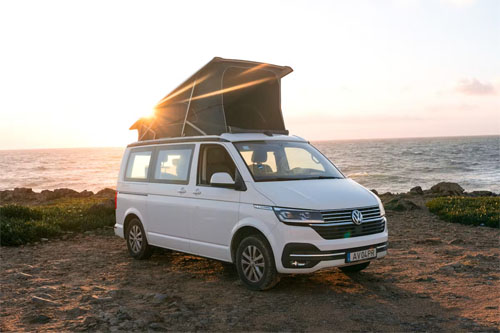
Class B (Campervan) rentals are excellent for couples or solo travelers seeking maneuverability, fuel economy, and flexibility during a weekly RV trip in Iceland. Bandana's fleet typically features Class B campervans averaging 5.8 meters in length and sleeping around 3.2 people, making them the most compact RV option. With common fuel consumption between 8-10 Liters/100 km, they are the most fuel-efficient choice, which can significantly reduce overall travel costs in Iceland. Campervans are ideal for navigating Iceland's smaller towns, winding roads, and parking at popular attractions with ease, offering a nimble and agile travel experience. While offering less interior space than larger RVs, their integrated kitchenettes and sleeping arrangements provide essential comforts for those who prioritize a more minimalist and active outdoor adventure. When preparing meals in your campervan, remember to check out our RV-friendly recipes playlist for delicious and easy meal ideas on the go.Class TC (Truck Camper) - Best For
Class TC (Truck Camper) rentals are the preferred choice for adventurous couples or solo travelers planning a weekly RV trip in Iceland that involves off-grid exploration and F-road access. Bandana's fleet typically shows these versatile units averaging 5.5 meters in length, sleeping around 2.4 people, and often mounted on robust 4x4 trucks. While fuel consumption can be higher, typically 12-17 Liters/100 km due to the robust vehicle, their enhanced off-road capability allows access to more remote highland areas (F-roads) not accessible by standard 2WD RVs. Truck campers provide the flexibility of a durable, integrated living unit, offering unparalleled access to Iceland's rugged interior and a robust vehicle for tackling diverse terrains during your weekly rental. For those seeking true wilderness, a Truck Camper offers an authentic and unforgettable experience.Side-by-Side Comparison Table
This table provides a quick overview of the key specifications for each RV family available for weekly rentals in Iceland, helping you compare options at a glance. | Family | Avg Length (m) | Sleeps (Avg) | Fuel Use (L/100km) | Best Use Case in Iceland | |---|---|---|---|---| | Class A (Integrated) | 7.5 | 4.4 | 11-12 | Large groups, luxury, spacious travel | | Class SI (Semi-integrated) | 6.9 | 3.8 | 10-11 | Couples/small families, balanced comfort and efficiency | | Class C (Alcove) | 7.5 | 5.8 | 10-12 | Families, extra sleeping capacity, budget-conscious | | Class B (Campervan) | 5.8 | 3.2 | 8-10 | Couples/solo, maneuverability, fuel efficiency | | Class TC (Truck Camper) | 5.5 | 2.4 | 12-17 | Adventurous couples, F-roads, off-grid exploration |Our Recommendation for weekly rv rental Travelers in Iceland
For most weekly RV renters in Iceland, especially those exploring the Ring Road and major attractions, a **Class SI (Semi-Integrated) RV** is our primary recommendation. This motorhome offers an optimal balance of comfort, sufficient space for couples or small families, and manageable fuel consumption (10-11 L/100km) and maneuverability (avg 6.9m length). Its design provides a comfortable touring experience without the bulk of a Class A. The runner-up recommendation is a **Class B (Campervan)** for solo travelers or couples prioritizing maximum fuel efficiency (8-10 L/100km), ease of driving, and the ability to access tighter spots, though with less interior space. These choices generally provide the best blend of cost-effectiveness, practicality for Iceland's most popular routes, and essential amenities for a comfortable weekly adventure.What are the true costs of a weekly RV rental in Iceland, beyond just the vehicle?
The true cost of a weekly RV rental in Iceland extends beyond the daily rental fee and typically includes significant expenses for fuel, campsite fees, specific grocery vs. restaurant costs, attraction fees, shower fees, and potential hidden costs. Fuel is a major expense; a Class SI RV averages 10-11 L/100 km, and covering over 1,500 km on a Ring Road trip can easily cost hundreds of Euros in diesel. Campsite fees are essential to budget for, as wild camping is restricted; expect to pay 1,500 - 3,000 ISK (approx. €10-€20) per person per night, with additional costs for electricity or showers. Cooking in your RV is far more economical than dining out, where restaurant meals can be €25-€50+ per person. While many natural wonders are free, attractions like thermal baths often have entrance fees ranging from €30-€100+. Additionally, factor in potential costs for extra insurance coverage (you can upgrade to a top-level deductible for extra peace of mind), additional drivers, gas for cooking or heating, and any tolls (though rare for RVs). With RV PLANET routes, you can itemize and track every expense along the way for easy budgeting. This full transparency ensures no surprises for your Icelandic adventure.Can you wild camp with an RV in Iceland and what are the rules?
Wild camping with an RV in Iceland is highly restricted and generally illegal outside of designated campsites or private land with explicit owner permission, especially since 2015 regulations. Under Icelandic law, it is illegal to camp overnight in a motorhome, camper, or similar vehicle outside of an officially registered campsite, unless you have explicit written permission from the landowner. While some remote areas might have slightly ambiguous signage, relying on this is risky and can lead to substantial fines, often ranging from 25,000 to 50,000 ISK (approx. €170-€340) or more. Always plan to stay at official campgrounds, which are plentiful around the Ring Road and in popular areas, offering essential services like waste disposal, fresh water, and often showers; resources like rvplan.net can help locate these spots. When staying at a designated spot, always 'Leave No Trace'-take all trash with you, dispose of grey water and toilet waste at approved stations, and respect private property and the fragile Icelandic ecosystem. Remember, you'll find a spot. If not at the first campground, then the next one. Call ahead before driving.What are the essential driving tips and road conditions to expect when RVing in Iceland?
RVing in Iceland demands awareness of unique driving conditions and hazards, including sudden weather changes, unpaved sections, single-lane bridges, and specific requirements for F-roads. Iceland's weather is notoriously unpredictable; expect rapid shifts from sun to rain, wind, or even snow, requiring constant vigilance and adaptability in driving style. Many secondary roads, and even sections of the Ring Road in the east, are unpaved gravel; reduce speed significantly, maintain distance from other vehicles to avoid stone chips, and be prepared for less traction. Numerous bridges, particularly outside of the Reykjavík area, are single-lane; the rule is that the vehicle closer to the bridge or with the larger obstacle (if marked) has the right of way, so slow down and yield if necessary. Many roads feature blind hills and sharp curves; always stay on your side of the road and be cautious of oncoming traffic, especially larger vehicles. Sheep roam freely in rural areas during summer and frequently wander onto roads; drive slowly and be prepared to stop suddenly, as they are not road-savvy. F-Roads are rough, unpaved mountain roads, often with river crossings, and are only accessible by 4x4 vehicles (like a Class TC Truck Camper) during summer months (typically June-September); driving a 2WD RV or a larger 4x4 RV not rated for F-roads on them is illegal and voids insurance. High winds are common; maintain a firm grip on the steering wheel, reduce speed, and be aware of crosswinds, especially when passing larger vehicles or coming out from sheltered areas. Our "Winter RV Driving in Iceland - Safety Guide 2026" offers more specialized advice for colder months.What should I pack for a weekly RV trip in Iceland's unpredictable weather?
A specialized packing list for an Icelandic RV trip should prioritize layers, wind and waterproof outerwear, and essential safety equipment to contend with the country's famously unpredictable weather. A layering system is essential for adapting to temperature swings; pack moisture-wicking base layers (merino wool or synthetic), insulating mid-layers (fleece or down), and a warm sweater. High-quality, breathable windproof and waterproof jacket and trousers are non-negotiable for protection against rain, sleet, and strong winds, which can occur even in summer. Waterproof hiking boots with good ankle support are crucial for exploring varied terrain, along with comfortable shoes for driving and campsite use. A warm, windproof hat, balaclava, and waterproof gloves are vital for protecting against cold and wind, especially during shoulder seasons or in the highlands. Always consider a first-aid kit, a headlamp/flashlight, a multi-tool, extra batteries, a portable power bank, and a map/GPS device, even if you have phone GPS, as coverage can be spotty in remote areas. Other essentials include sunglasses (glare can be intense), swimwear for hot springs, quick-drying towels, and a reusable water bottle (Icelandic tap water is excellent).How can I practice responsible and sustainable RV travel in Iceland's fragile environment?
Practicing responsible and sustainable RV travel in Iceland is vital to protect its fragile ecosystem and respect local culture, primarily by adhering to 'Leave No Trace' principles and proper waste management. Always stay on marked roads and trails to prevent damage to delicate moss and vegetation, which can take decades to recover; never drive off-road. Dispose of all trash, including organic waste, in designated bins at campsites; never leave anything behind in nature or by the roadside. Only empty grey water (from sinks/showers) and black water (toilet waste) at official dumping stations found at most campsites, never directly into nature, as chemicals and waste can pollute water sources and soil. To truly immerse yourself, support local communities by purchasing local goods and services, dining at local eateries, and visiting smaller towns to distribute tourism benefits and ensure your visit positively impacts residents. Be mindful of noise levels, especially in quiet natural areas and campgrounds, and respect the privacy of locals; remember that many natural wonders are on private land, so respect boundaries and rules. Finally, conserve water and electricity within your rented RV, and choose products with minimal packaging to reduce waste; consider offsetting your travel carbon footprint to minimize environmental impact.What You Shouldn't Miss
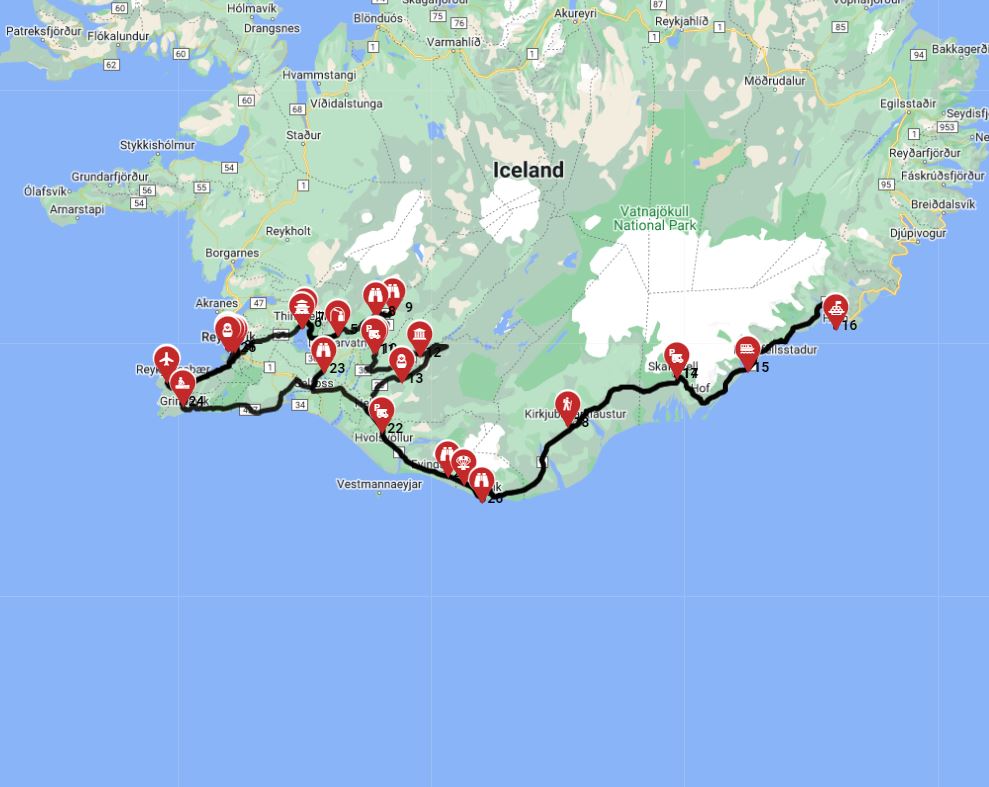
Looking for expert insights from Avi Bandana? Top 5 Adventures - recommendations from Avi Bandana:- **Explore the Golden Circle's Wonders**: Witness the powerful Gullfoss waterfall, the geysers at Geysir, and the historical Þingvellir National Park. This classic route, easily managed in a week-long trip, packs incredible natural features and heritage sites into a manageable distance.
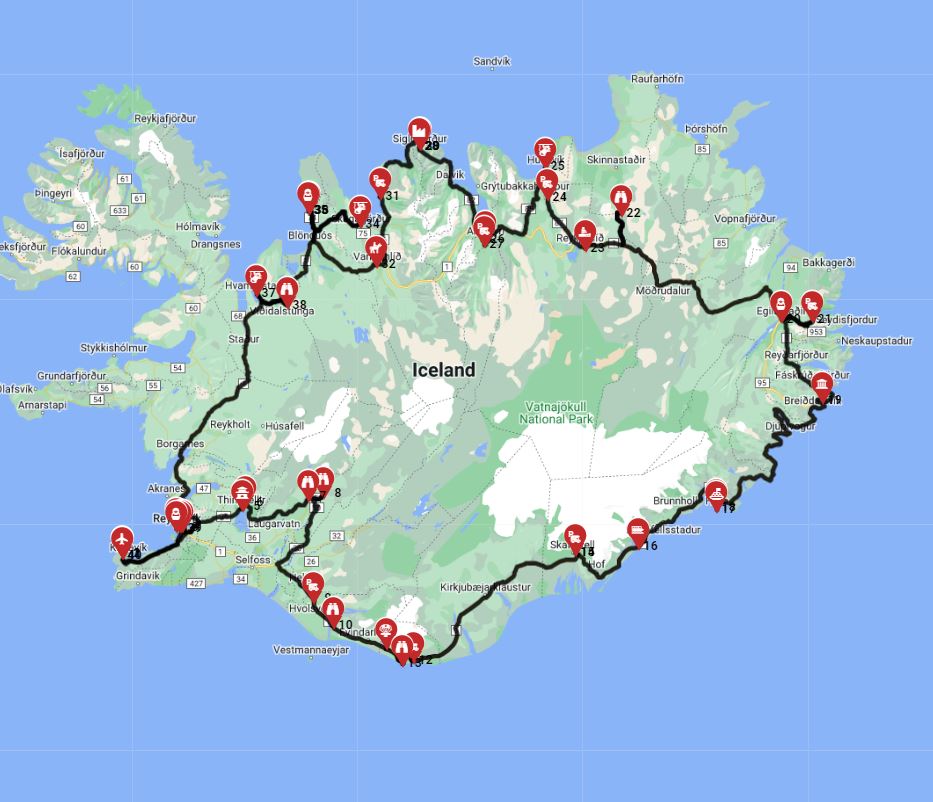
- **Circumnavigate the Ring Road**: Embark on the ultimate 2,045 km adventure around Route 1, discovering black sand beaches, ice lagoons, and charming coastal towns. This comprehensive journey is best suited for a two-week or longer adventure, as highlighted in our
itinerary. It features 6 natural features and 4 traditional visits, amongst other unique experiences.
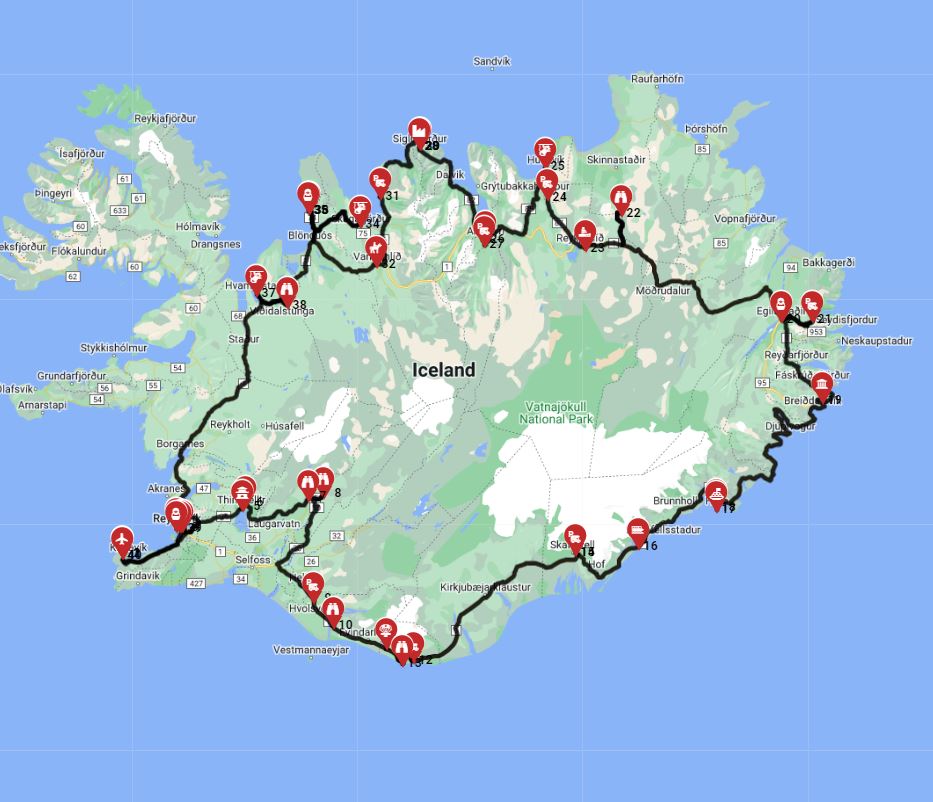 Iceland - Full ring road
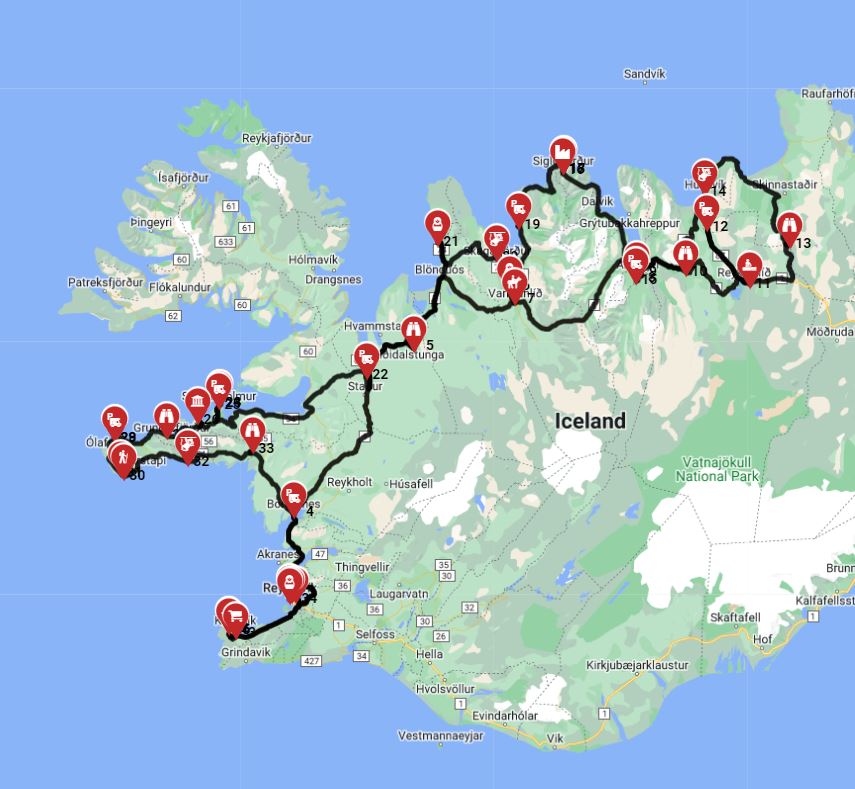
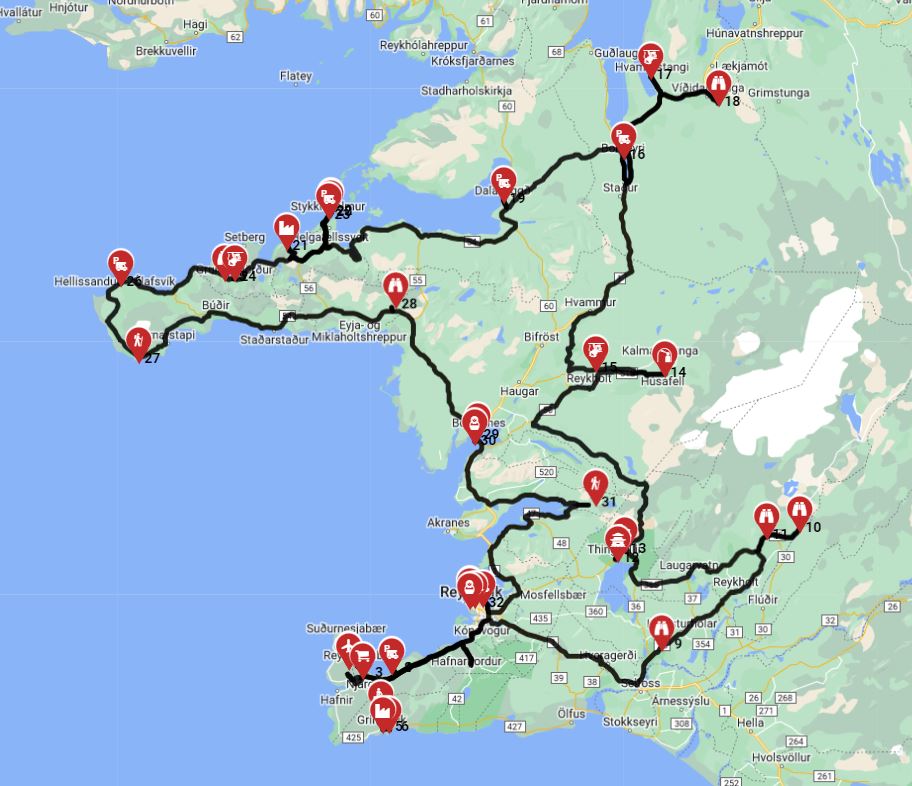
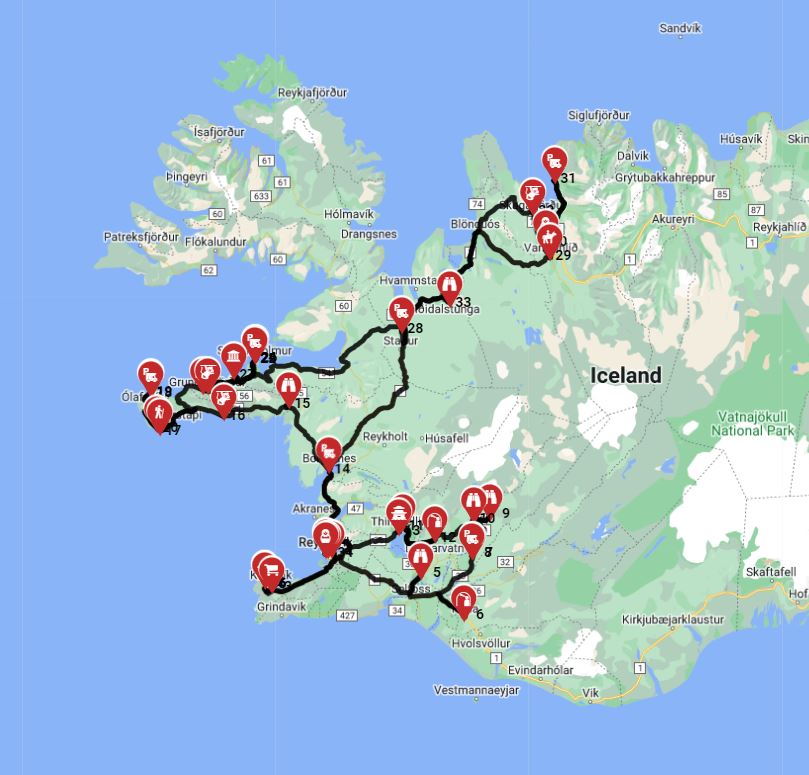
 - **Discover the North West's Hidden Gems**: Head to the Snæfellsnes Peninsula, often called "Iceland in Miniature," and explore the Westfjords. This region, detailed in our
route plan, offers dramatic cliffs, quaint fishing villages, and abundant wildlife watching opportunities, including 4 animals shows.
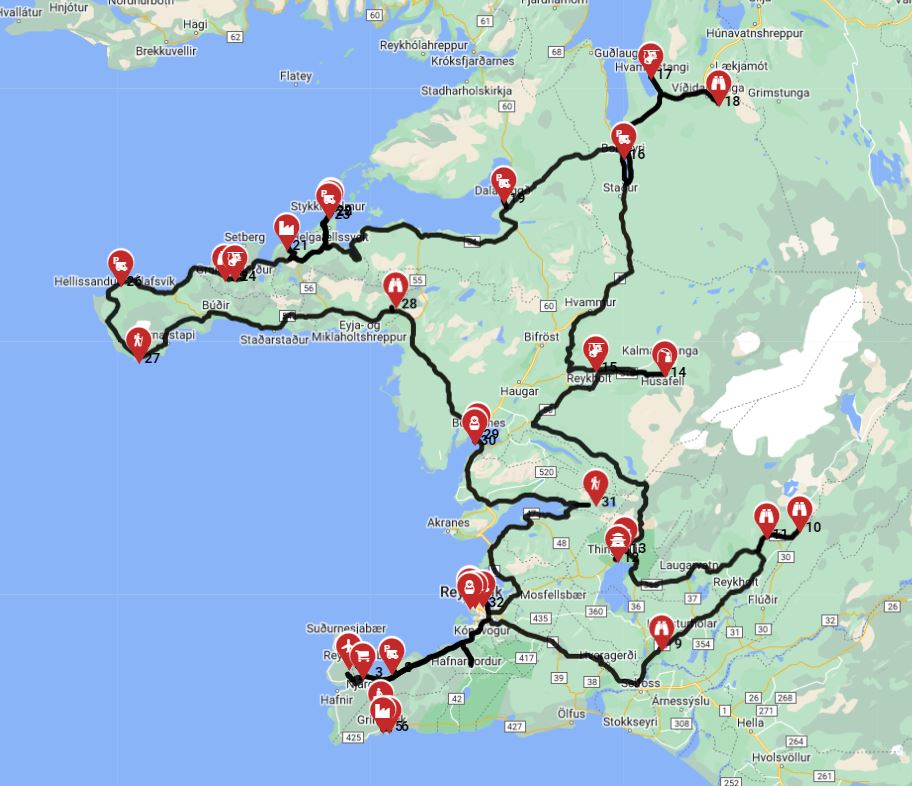 Iceland - North West
 - **Soak in Geothermal Spas**: Relax in iconic hot springs like the Blue Lagoon or Myvatn Nature Baths. After a day of adventure, these natural wonders offer a rejuvenating experience unique to Iceland's volcanic landscape.
- **Hike to Majestic Waterfalls**: From Seljalandsfoss, where you can walk behind the cascade, to the powerful Skógafoss and the dramatic Dynjandi in the Westfjords, Iceland is a haven for waterfall enthusiasts. Each offers a unique perspective and photo opportunity.
Final Thoughts
An RV adventure in Iceland offers unparalleled freedom and intimacy with its stunning natural beauty. From the majestic glaciers and active volcanoes to the charming towns and vibrant culture, a rented motorhome transforms your trip into a journey of discovery. By understanding the different vehicle classes, budgeting wisely for ancillary costs, and adhering to local driving and camping regulations, you're set for an incredible experience. Remember to embrace slow travel, allowing ample time to truly soak in each moment and connect with Iceland's unique spirit. We believe that God is in the small details, and we take care of them, making a big difference in your travel planning. Whether you're a meticulous planner or a spontaneous adventurer, Bandana Caravan is your trusted partner. We compare final prices across 50+ suppliers, ensuring you find the perfect campervan, caravan, or motorhome for your epic Icelandic quest.Discover top destinations, planning tips, all in one place! Plan a trip itinerary in advance with minimal effort and maximum enjoyment.
Ready to embark on your Icelandic RV journey? Compare Weekly RV Rental Prices in Iceland Now
On the routes offered through RV PLANET routes, you can itemize and track every expense along the way for easy budgeting.