In This Guide
- The Main RV Families Compared for Greece
- Class A (Integrated) - Best For
- Class SI (Semi-Integrated) - Best For
- Price Comparison by RV Class in Greece
- Class C (Alcove) - Best For
- Class B (Campervan) - Best For
- Side-by-Side Comparison Table
- Our Recommendation for weekly rv rental Travelers in Greece
- Is wild camping allowed in Greece with an RV?
- What are Greek road conditions like for an RV?
- Is Greece safe for RV travel?
- What size RV is best for Greece?
- How to immerse in Greek culture with an RV?
- How to deal with language barriers and services in Greece with an RV?
- When is the best time to RV in Greece?
- How to practice responsible RV travel in Greece?
Exploring Greece in a rented RV for a week-long or longer adventure offers unparalleled freedom to discover ancient ruins, stunning coastlines, and charming villages at your own pace. For live availability and current prices, start with our RV Rental Greece - Complete Guide 2026 guide. Bandana Caravan is your trusted partner for comparing and booking the perfect weekly RV rental in Greece, ensuring full transparency with no hidden fees and dedicated support throughout your planning and booking journey.
The Main RV Families Compared for Greece
Choosing the right RV family for your weekly rental in Greece significantly impacts your travel experience, particularly concerning maneuverability on narrow roads, fuel efficiency on diverse terrain, and overall comfort for your group. Bandana, as true RV specialists with direct partnerships with over 50 leading RV suppliers worldwide including El Monte and Apollo, helps you find the motorhome or campervan that fits your trip style perfectly. For a memorable trip, striking a balance between a vehicle size that is manageable for Greek roads and one that provides enough space for comfortable living is crucial.
We focus exclusively on motorhomes and campervans, offering a range of Class A, Class SI (Semi-Integrated), Class C (Alcove), and Class B (Campervan) vehicles suitable for various travel needs. Each class offers distinct advantages, from luxurious space to nimble agility, designed to enhance your Greek road trip. Consider how many people you are traveling with and what kind of adventures you envision when selecting your ideal rented camper or motorhome.
Class A (Integrated) - Best For
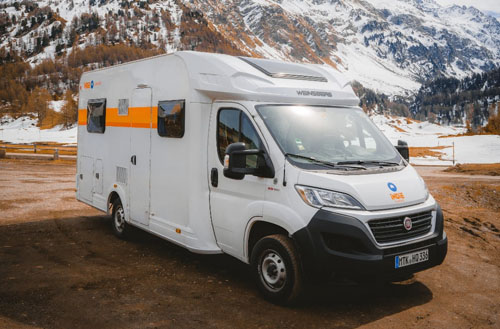
Class A motorhomes, typically averaging 7.5m in length from Bandana's global fleet, are ideal for luxury travelers or larger groups seeking maximum space and comfort for a weekly rental in Greece. These integrated motorhomes feature expansive living areas, full kitchens, and private bathrooms, offering a premium "home-away-from-home" experience for up to 4 adults. For example, some models can feature a Queen bed 152/203cm and a dinette conversion bed 114/208cm, providing ample sleeping space. Bandana's fleet generally reports fuel consumption between 8-12 Liters/100 km for these models, and an average load capacity of 209.5kg, which is excellent for carrying extra gear. However, their larger size can make navigating Greece's often narrow village streets, winding coastal roads, and ferry access more challenging; parking can also be difficult in busy areas.
If you prioritize spaciousness and amenities and plan to stick mostly to well-maintained main roads or larger campgrounds, a Class A rental motorhome can provide a luxurious base for your Greek exploration. Remember that while driving these larger vehicles in cities like Athens is certainly possible, it requires slow and careful attention, using common sense to navigate without issues. You can upgrade to a top-level deductible for extra peace of mind when renting a larger motorhome, knowing you are well-covered.
Class SI (Semi-Integrated) - Best For
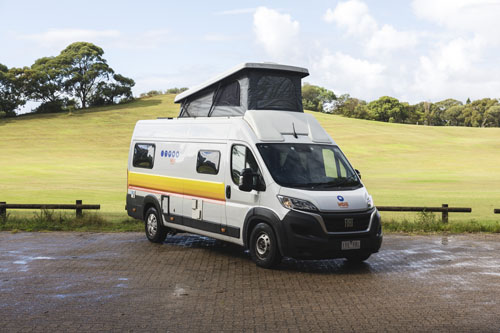
Class SI (Semi-integrated) motorhomes represent a balanced choice for weekly RV rentals in Greece, combining comfortable living space with better maneuverability than Class A models. Bandana's global fleet of semi-integrated RVs averages 6.9m in length, offering a good compromise for navigating both highways and moderately challenging Greek roads. They typically provide 3.8 sleeping places and accommodate around 3.4 adults, making them suitable for couples, small families, or friends. With common fuel consumption around 10-11 Liters/100 km and an average load capacity of 72.2kg, they offer a good blend of efficiency and utility, often outperforming Class A in agility and Class C in modern amenities while still being manageable on Greece's diverse terrain.
These motorhomes are ideal for those who want a comfortable rented mobile home with modern amenities like a kitchen featuring a 3-burner gas stove and a 140-liter refrigerator, but without the bulk of a full Class A. They are a popular choice for touring diverse regions of Greece, from the Peloponnese to the northern mainland, allowing for a good pace of travel of approximately 100-150 km per day.
Price Comparison by RV Class in Greece
Pricing for RV rentals in Greece is dynamic, fluctuating based on demand, availability, and season, much like airline tickets. For the most current rates for your specific dates, it's always best to use Bandana Caravan's search platform. The following table provides real example prices from Bandana's live search for a clearer comparison across different RV classes for a typical week-long rental in Greece, based on current market trends and past seasonal data.
| RV Class | Avg. Length (m) | Avg. Sleeping Places | Estimated Low Season Daily Rate (EUR) | Estimated Mid Season Daily Rate (EUR) | Estimated High Season Daily Rate (EUR) |
|---|---|---|---|---|---|
| Class A (Integrated) | 7.5 | 4-6 | €150-€250 | €250-€380 | €380-€550 |
| Class SI (Semi-Integrated) | 6.9 | 3-5 | €100-€180 | €180-€280 | €280-€400 |
| Class C (Alcove) | 7.5 | 4-7 | €90-€170 | €170-€270 | €270-€390 |
| Class B (Campervan) | 5.8 | 2-4 | €70-€130 | €130-€200 | €200-€300 |
It's important to remember that these prices update daily, and for the most current rates for a weekly RV rental in Greece, you should always use the search box at the top of the page. Bandana Caravan offers full transparency in pricing, meaning what you see is what you pay, with no surprise fees at pickup. This commitment to honesty ensures you can budget effectively for your adventure. For detailed breakdowns of trip costs, including fuel, campground fees, and more, RV PLANET routes allow travelers to itemize and track every expense along the way for easy budgeting. On the routes offered through RV PLANET routes, you can itemize and track every expense along the way for easy budgeting.
Class C (Alcove) - Best For
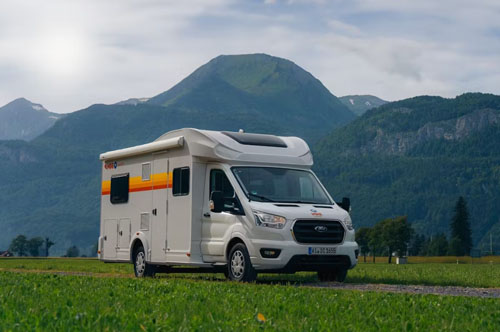
Class C (Alcove) motorhomes are highly recommended for families or larger groups undertaking a weekly RV rental in Greece due to their practical design and cost-efficiency. Bandana's global fleet shows these models typically average 7.5m in length, but the defining alcove over the cab provides significant extra sleeping capacity, with an average of 5.8 sleeping places and room for 4.4 adults. This configuration is excellent for maximizing sleeping arrangements without requiring a significantly longer vehicle, making it ideal for families with children. Common fuel consumption is around 10-12 Liters/100 km, offering a reasonable balance for the space provided, and an average load capacity of 42.4kg is sufficient for family essentials. Their robust build is well-suited to Greek road conditions, and the extra sleeping space is a major plus for weekly rentals where maximizing comfort for everyone is key.
Imagine preparing breakfast in your rented Class C's kitchen, featuring a 3-burner gas stove and a 145-liter refrigerator, before setting off to explore the ancient sites or beautiful beaches of Greece. If you're looking for an RV-friendly recipes playlist to get inspired, check out our RV-friendly recipes playlist on YouTube!
Class B (Campervan) - Best For
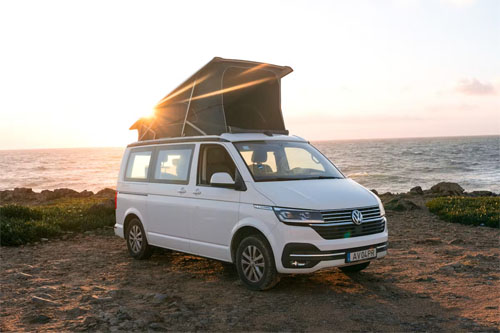
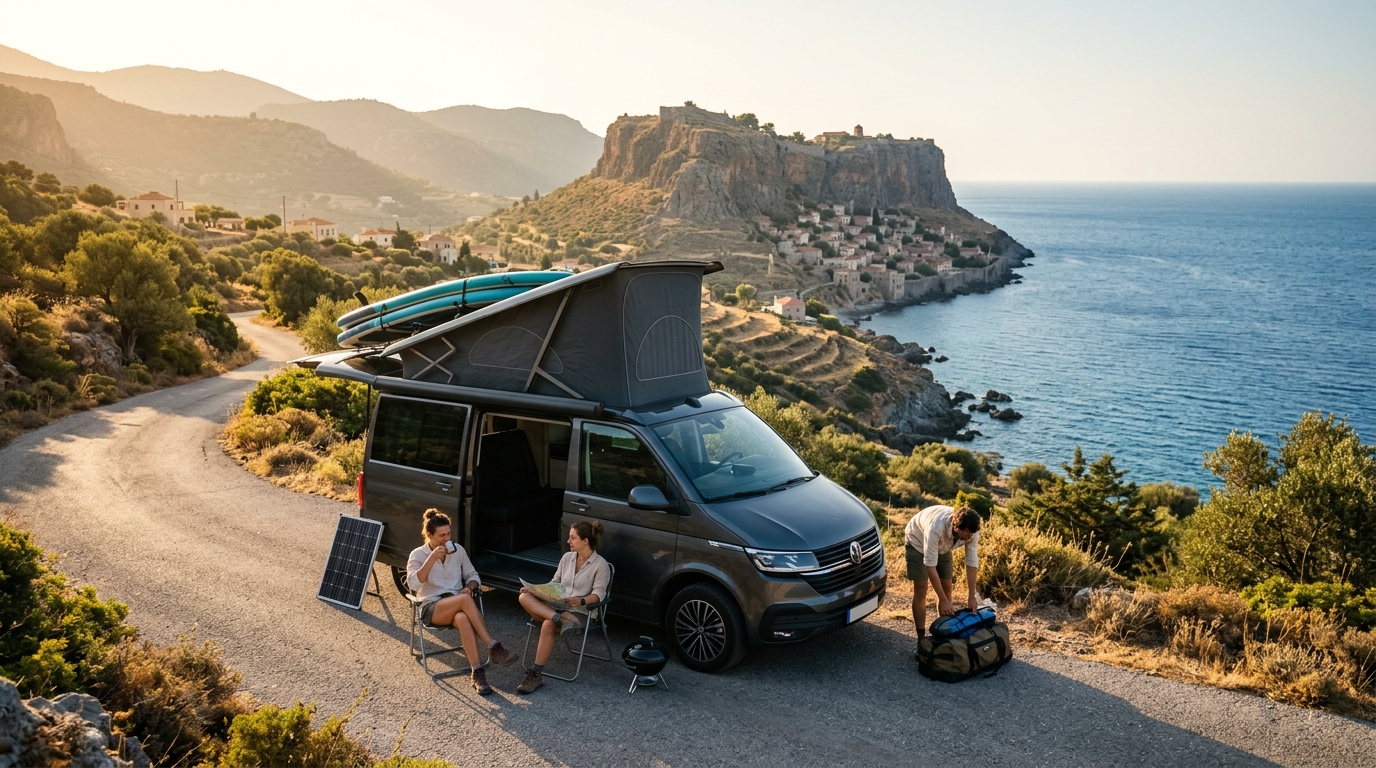
Class B (Campervan) models are the optimal choice for weekly RV rentals in Greece for solo adventurers, couples, or small groups prioritizing maneuverability, fuel economy, and ease of access to tight spaces. Averaging a compact 5.8m in length from Bandana's global fleet, these campervans excel on Greece's narrow island roads, winding coastal routes, and in dense urban or village environments where larger RVs struggle. They typically offer 3.2 sleeping places and accommodate around 2.7 adults, making them perfect for intimate trips where the journey itself is as important as the destination. With excellent fuel economy often around 8-10 Liters/100 km and an average load capacity of 37kg, campervans minimize operating costs and environmental impact, favoring those who prefer nimble exploration over extensive living space for a week-long trip.
These agile rented campervans, sometimes featuring amenities like a rear double bed of 140/185cm and a compact kitchen, allow you to truly immerse yourself in the local culture by reaching secluded spots larger motorhomes simply cannot. Discover top destinations, planning tips, all in one place with Bandana Caravan, your true RV specialists who understand the nuances of travel in countries like Greece. For travelers looking for a "Luxury RV Rental in Greece - Premium Prices 2026" or "Cheap RV Rental in Greece - Budget Guide 2026", campervans offer a range of options.
Side-by-Side Comparison Table
To help you quickly compare the different RV families available for a weekly rental in Greece, refer to the table below, which summarizes key characteristics and ideal use cases based on Bandana's global fleet averages. This comparative view, offered by a service that has been helping tens of thousands of travelers explore the world by RV since 2001, simplifies your decision.
| Family | Avg Length (m) | Sleeps | Avg Fuel Use (L/100km) | Best Use Case in Greece |
|---|---|---|---|---|
| Class A (Integrated) | 7.5 | 4.4 | 8-12 | Luxury, large groups, maximum comfort, highways |
| Class SI (Semi-integrated) | 6.9 | 3.8 | 10-11 | Balanced comfort and maneuverability, couples/small families |
| Class C (Alcove) | 7.5 | 5.8 | 10-12 | Families with children, maximizing sleeping space, general touring |
| Class B (Campervan) | 5.8 | 3.2 | 8-10 | Solo/couples, maneuverability, city access, fuel efficiency |
This table provides a snapshot to guide your choice for a rented RV in Greece, whether you're interested in "RV Rental Deals in Greece - Latest Offers 2026" or planning a comprehensive "RV Rental Europe - Complete Guide 2026" trip. Choosing the right vehicle ensures your comfort and maximizes your ability to navigate Greece's diverse landscapes effectively.
Our Recommendation for weekly rv rental Travelers in Greece
For most weekly RV rental travelers in Greece, especially families or small groups, the Class C (Alcove) motorhome is our primary recommendation. Its average of 5.8 sleeping places (from Bandana's global fleet data) provides ample room, making it excellent for accommodating children without compromising too much on maneuverability on Greece's varied roads. The balance of space, comfort, and a manageable size (average 7.5m length) makes it highly practical for navigating both popular tourist routes and smaller villages. It's truly a mobile home that caters to the diverse needs of family travel, from sleeping comfortably to preparing meals in a well-equipped kitchen. Remember, drive slowly and carefully, and you can drive almost anywhere without issues. No need to stress - just use common sense and pay attention.
A strong runner-up, particularly for couples or adventurous solo travelers, is the Class B (Campervan). Its compact average length of 5.8m and superior fuel economy (8-10 Liters/100km) make it unparalleled for navigating Greece's narrowest coastal roads, island ferries, and accessing secluded spots, offering freedom and flexibility ideal for a week of exploration. This nimble campervan allows for spontaneous detours to charming towns like Rethimno or ancient sites near Heraklion - Airport, truly embodying the spirit of slow travel, maximizing 100-150 km per day to feel the place, connect to the culture, the food, and the scenery.
Is wild camping allowed in Greece with an RV?
Wild camping with an RV in Greece is officially illegal across the mainland and islands, however, the enforcement of this law can vary significantly by region and season, especially in more remote areas. Legally, free camping is prohibited under Article 31 of Law 4277/2014, with fines for violations, often starting from €300. To mitigate risks and avoid issues, alternatives include utilizing organized campsites, designated parking areas, or asking for permission from private landowners; showing respect for local communities and ancient sites is paramount. Always prioritize safety by choosing well-lit, visible spots if opting for informal stops, and be aware that emergency assistance might be slower to reach remote locations. Proper etiquette dictates leaving no trace, respecting private property, and being discreet to maintain good relations with locals and avoid attracting unwanted attention from authorities. For finding campsites and campgrounds during your trip, we recommend using RV PLANET (rvplan.net) - a great resource for locating available spots along your route.
What are Greek road conditions like for an RV?
Greek road conditions for an RV are generally good on major highways and national routes, but can become challenging on secondary roads, particularly in mountainous regions, coastal areas, and within smaller villages. Highways are well-maintained with clear signage and are suitable for all RV sizes, including larger Class A and C motorhomes. However, mountain passes like those in the Pindus range can be steep and winding with sharp turns, requiring careful driving, and smaller RVs (like Class B campervans or Class SI motorhomes) may be more comfortable. Coastal routes often feature breathtaking views but can also be narrow and winding, sometimes without guardrails, making larger RVs more demanding to navigate. Tolls are common on Greek motorways, typically paid by cash or card at booths; it's advisable to carry small denominations of euros. Village access can be very difficult for larger RVs due to extremely narrow streets, sharp turns, and limited parking, making Class B campervans often the only viable options for truly exploring authentic village life. Greek driving culture can be assertive; drivers may overtake aggressively, and motorcyclists might weave through traffic, requiring a defensive driving approach, but generally, local drivers are accustomed to varied vehicle sizes.
Is Greece safe for RV travel?
Greece is generally considered safe for RV travel, with low rates of serious crime, though travelers should exercise standard precautions against petty theft and be prepared for specific driving and environmental hazards. General travel safety tips include securing your rented RV, avoiding leaving valuables in plain sight, and being aware of your surroundings, especially in crowded tourist areas like marketplaces in Thessaloniki or Athens. Specific driving hazards include aggressive local drivers, poorly lit rural roads at night, and occasional potholes or uneven surfaces, especially on older roads or in remote areas. Emergency procedures require knowing the local emergency numbers (112 for general emergencies, 100 for police, 166 for ambulance, 199 for fire brigade), and having comprehensive roadside assistance coverage for your RV. Bandana Caravan offers top-level deductible reimbursement as an optional upgrade, providing extra peace of mind. Communication tips in a foreign language include learning basic Greek phrases (e.g., "Kalimera" for good morning, "Efharisto" for thank you), using translation apps, and having a local SIM card for reliable phone and data access; most tourist-facing staff will speak English. Always ensure your RV is well-maintained to minimize breakdowns, and carry a basic first-aid kit, extra water, and a fully charged phone.
What size RV is best for Greece?
The best RV size for Greece largely depends on your travel style and desired destinations, with smaller, more nimble vehicles generally outperforming larger ones due to the country's varied terrain and infrastructure. For navigating narrow island roads (like those on Crete), winding coastal routes, and tight village streets, Class B Campervans (averaging 5.8m in length) are highly recommended due to their superior maneuverability. If you plan to stick primarily to highways and larger towns like Pallini or Heraklion, a Class SI Semi-integrated (averaging 6.9m) or Class C Alcove (averaging 7.5m) offers a good balance of comfort and reasonable size, suitable for families. Class A Integrated RVs (averaging 7.5m) provide maximum comfort but can be challenging to drive and park in many Greek locations, often limiting access to more remote or authentic sites. Consider ferry limitations for island hopping, as larger and heavier RVs may incur higher costs (e.g., a 7m motorhome could cost €80-€150 for a ferry crossing to a major island, plus passenger fees) or face restrictions on certain routes, making a smaller RV more advantageous for an island-centric itinerary.
How to immerse in Greek culture with an RV?
Immersing in Greek culture with an RV goes beyond traditional sightseeing, offering unique opportunities to connect with local life by strategically choosing smaller, non-touristy locations and engaging directly with communities. Find local markets by asking residents or checking local online forums; these are excellent places to source fresh local produce, regional cheeses, olives, and authentic Greek ingredients directly from farmers, supporting the local economy. For example, the Central Market in Athens or local markets in Rethimno on Crete offer a vibrant taste of Greek life. Participate in village life by visiting local tavernas, attending village festivals (often publicized locally), or simply spending time in the central platia (square) where daily life unfolds. For sourcing local produce, look for roadside stands or small family-run shops, especially in rural areas, where you can often find seasonal fruits, vegetables, and homemade goods, perfect for your rented motorhome's kitchen. Discover hidden, non-touristy gems by using topographical maps, asking for local recommendations, or venturing off the main roads; this might lead to secluded beaches, ancient ruins not on tourist maps, or charming, untouched villages. Parking discretely near a village for a night (where permitted) can allow you to wake up to local rhythms and experience a more authentic side of Greece, away from crowded tourist hubs. Remember to travel slowly, max 100-150 km per day on average, to truly feel the place, connect to the culture, the food, and the scenery.
How to deal with language barriers and services in Greece with an RV?
Dealing with language barriers and accessing everyday services in Greece with an RV is manageable with preparation, as English is widely spoken in tourist areas, but basic Greek phrases and digital tools are invaluable elsewhere. Practical guidance for language barriers includes learning essential Greek phrases (e.g., "Yassas" for hello, "Parakalo" for please), using translation apps like Google Translate, and employing gestures when needed. Navigating local bureaucracy, if necessary, is often simplified by having copies of all relevant documents (driver's license, international driving permit, RV rental agreement, insurance) readily available. Accessing everyday services: for laundry, look for laundromats in larger towns or utilize campsite facilities; for specific gas types, diesel (petrelaiou kinisis or diesel) is widely available for RVs at petrol stations across the country, typically costing around €1.80-€2.10 per liter. Waste disposal requires using designated dump stations at organized campsites, often marked with symbols for grey and black water; avoid illegal dumping to protect Greece's environment and avoid fines. Ensure you have a reliable data plan (e.g., a local SIM card from providers like Cosmote or Vodafone for €15-€25) for GPS navigation, online translation, and searching for nearby services like supermarkets, pharmacies, or medical facilities, especially when driving a rented caravan in less populated areas.
When is the best time to RV in Greece?
The best time to RV in Greece is typically during the shoulder seasons-April to early June and September to October-to enjoy favorable weather, fewer crowds, and often lower prices compared to peak summer months. Detailed insights into off-season or shoulder-season travel reveal specific advantages: fewer crowds mean easier access to popular sites like the Acropolis, more availability at campsites (many national/state parks reserve only 25-30% of spots, with the rest being first-come-first-serve), and a more relaxed pace of travel. Lower prices for RV rentals and sometimes ferries are a significant benefit during these periods, with a weekly rental potentially costing 15-25% less than in high season. Challenges during the shoulder seasons can include cooler temperatures, especially in early spring or late autumn (average daily temperatures of 15-20°C in April), and some tourist facilities or campsites might operate with reduced hours or close completely, particularly on smaller islands. Summer (July-August) offers guaranteed sunshine and warm seas (average daily temperatures of 28-35°C) but comes with extreme heat, high prices, significant crowds, and difficulty finding available RVs or campsites for weekly rentals. Winter travel (November-March) is generally not recommended for RVing due to cold weather, potential for snow in mountainous areas, and many coastal facilities being closed, though some urban campsites may remain open. You'll find a spot during shoulder season; if not at the first campground, then the next one, just call ahead before driving.
How to practice responsible RV travel in Greece?
Practicing responsible and sustainable RV travel in Greece is essential for preserving its natural beauty and ancient heritage, focusing on minimizing environmental impact and respecting local communities. Strategies for minimizing environmental impact include proper waste management by using designated grey and black water disposal points at campsites and avoiding illegal dumping. For example, a typical RV grey water tank holds 80-120 liters, requiring regular and proper disposal. Reduce plastic waste by refilling water bottles, carrying reusable shopping bags, and properly sorting recycling where facilities are available. Conserve water and electricity within your rented RV, as these resources can be precious, especially on islands, aiming for minimal consumption with your 100-liter fresh water tank. Respect local communities by being mindful of noise levels, especially when parking near residential areas, supporting local businesses, and integrating respectfully into village life. Protect ancient sites and natural areas by strictly adhering to designated paths, not touching or disturbing historical structures, and avoiding driving or parking off-road in sensitive ecosystems or archaeological zones. Always leave your overnight spot cleaner than you found it, demonstrating a commitment to sustainable tourism and preserving Greece for future travelers. Bandana Caravan strongly advocates for leaving no trace, ensuring that your exploration of Greece is both enriching and respectful.
🎬 Video coming soon
What You Shouldn't Miss
- Explore the Meteora Monasteries: Drive your rented campervan through the stunning landscape of Meteora, marveling at monasteries perched on sandstone pillars. Park at Camping Kastraki and take local tours or hike to these incredible UNESCO sites.
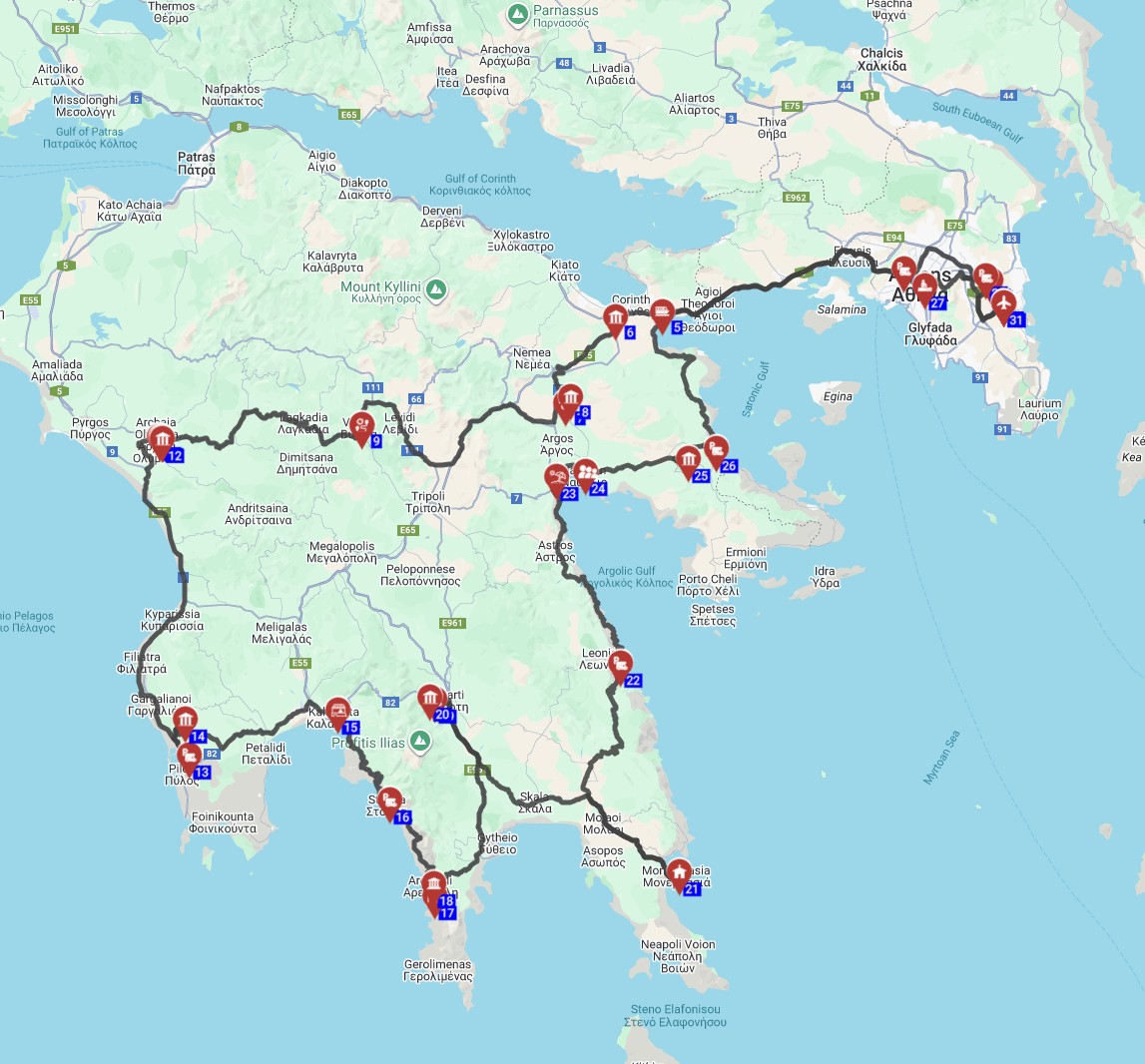
- Drive the Coastal Road of the Peloponnese: Embark on a breathtaking journey along the Peloponnese coast in your motorhome, visiting ancient Olympia, the castles of Monemvasia, and the beaches of Mani. This route offers countless scenic pull-offs for a perfect snapshot or a quick picnic.
- Visit the Archaeological Site of Delphi: Park your RV at a nearby campground and immerse yourself in the ancient world at Delphi, once considered the center of the world. The mountain setting adds to the spiritual and historical ambiance.
- Discover the Island of Crete by Campervan: Take an RV-friendly ferry to Crete and explore its diverse landscapes, from the vibrant city of Chania to the secluded beaches of Elafonisi, all from the comfort of your agile campervan.
- Indulge in Local Flavors: Seek out local tavernas and markets in villages throughout Greece. Fresh seafood, local cheeses, and traditional Greek dishes are a must-try. Use your RV's kitchen to cook up some of your market finds for an authentic culinary experience.
- Experience the Northern Greece Wilderness: Head to the Pindus Mountains and explore areas around Valia Calda National Park, offering rugged beauty and a chance to spot rare wildlife. This is an ideal route for those seeking true wilderness adventure away from the crowds in their versatile rented mobile home.
Looking for expert insights from Avi Bandana? Top 5 Adventures - recommendations from Avi Bandana
Final Thoughts
A weekly RV rental in Greece offers a truly unique and enriching travel experience, allowing you to blend iconic historical exploration with breathtaking natural beauty. Imagine waking up to a different Mediterranean vista each morning, with the flexibility to chase the sunrise or extend your stay in a charming coastal village. Bandana Caravan is here to ensure your journey is as seamless and enjoyable as possible, providing you with transparent pricing, expert advice, and the perfect rented motorhome or campervan to create unforgettable memories.
Whether you're planning a romantic escape, a family adventure, or a trip with friends, Greece by RV promises discovery around every bend. We encourage you to embrace the spirit of slow travel, allowing yourself the time to truly connect with the vibrant culture, delicious food, and stunning scenery that Greece has to offer. Your adventure awaits!
Get inspired for your next trip! Compare weekly RV Rental Prices for Greece now.