In This Guide
- The Right RV Class for Your Durban Weekly Rental
- Class A (Integrated) - Best For
- Price Comparison by RV Class in Durban
- Class SI (Semi-Integrated) - Best For
- Class C (Alcove) - Best For
- Class B (Campervan) - Best For
- Side-by-Side Comparison Table
- Our Recommendation for Weekly RV Rental Travelers in Durban
- What is the cheapest way to rent an RV for a week?
- Is it cheaper to rent an RV for a week or a month?
- How far in advance should I book an RV rental for Durban?
- What are the best RV campsites and infrastructure near Durban?
- What are the road conditions and driving tips for RVs in Durban?
- What permits and documents are needed for RV rental in Durban?
- What are the hidden costs of renting an RV in Durban?
The Right RV Class for Your Durban Weekly Rental
Choosing the ideal RV family for a weekly rental in Durban is crucial, as the right vehicle impacts your maneuverability on varied terrain and overall comfort. Durban's warm, subtropical climate and diverse attractions, from city beaches to lush inland routes, mean that your group size and desired level of amenities will significantly influence your choice. For live availability and current prices, start with our RV Rental Durban - Complete Guide 2024. Whether you're planning a romantic escape or a family adventure, understanding the distinct characteristics of each motorhome and campervan class will ensure your week-long trip is seamless and enjoyable. Bandana Caravan, with over 23 years of experience, specializes exclusively in RV travel and offers full transparency in all bookings, so you’ll know exactly what to expect with no hidden fees or surprises.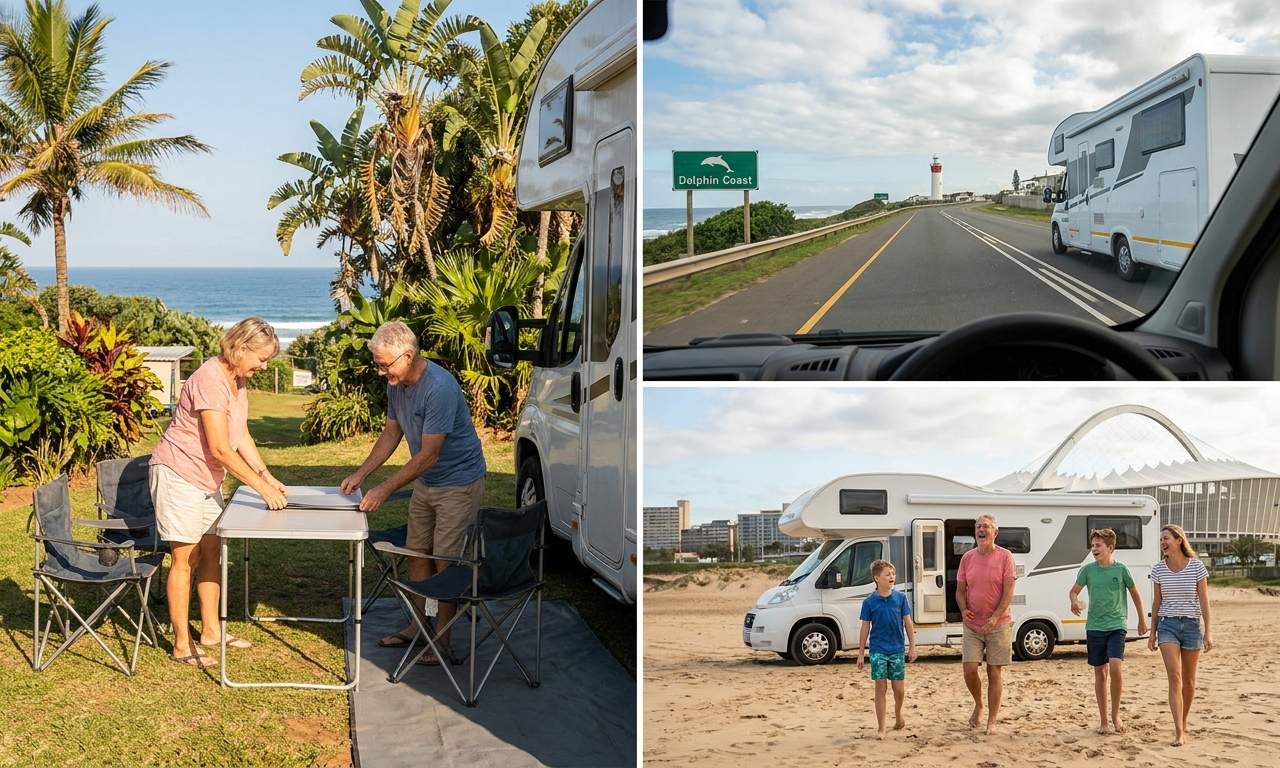
Class A (Integrated) - Best For
Class A motorhomes, typically averaging 7.5 meters in length and sleeping 4 to 6 people, are best suited for large families or groups seeking luxury and ample space for a weekly rental in Durban. Our fleet shows these integrated motorhomes offer significant comfort and amenities, making them ideal for those prioritizing a 'home-away-from-home' experience with average fuel consumption around 11-12 Liter/100 km. While their size offers luxurious living, it requires careful navigation on Durban's potentially narrower city roads and more thought for parking at popular attractions like uShaka Marine World or along the Golden Mile; however, with common sense and attention, you can drive almost anywhere without issues. These large motorhomes offer substantial load capacity, averaging around 200 kg, for longer trips or carrying more gear, ensuring a comfortable base for your extended road trip around KwaZulu-Natal.Price Comparison by RV Class in Durban
Understanding the cost of a weekly RV rental in Durban requires examining prices across different RV classes, as rates dynamically fluctuate based on demand, seasonality, and supplier marketing decisions. Prices are similar to flight tickets, changing daily, so the final price is set at the actual booking time. Below is a representative table of estimated daily rates from Bandana's live search, reflecting common price ranges.Because pricing is flex-rate, the table below pulls real example prices from Bandana's live search.
🎬 Video coming soon
These prices are estimates and update daily; for the most accurate and live numbers, use the search box at the top of the page. Remember to account for ancillary trip costs such as fuel, campground fees, and tolls; our RV PLANET routes allow you to itemize and track every expense for easy budgeting throughout your Durban adventure. On the routes offered through RV PLANET routes, you can itemize and track every expense along the way for easy budgeting.
Class SI (Semi-Integrated) - Best For
Class SI (Semi-integrated) motorhomes, averaging 6.9 meters in length and comfortably sleeping up to 4 people, strike an excellent balance between comfort and maneuverability, making them a popular choice for weekly RV rentals in Durban. Our fleet typically reports average fuel consumption of 10–11 Liter/100 km, positioning them as a more fuel-efficient option than Class A, while still offering more living space than a Class B campervan. These vehicles are ideal for couples or small families looking to explore Durban and its surroundings without the bulk of a larger motorhome or the compact nature of a campervan, easily handling both city driving and scenic routes through areas like the Valley of 1000 Hills. With an average load capacity of around 70 kg, they can comfortably accommodate gear for a week-long trip, making them a versatile choice for your South African adventure.Class C (Alcove) - Best For
Class C (Alcove) motorhomes, typically 7.5 meters long and sleeping an average of 4 to 7 people, are perfect for families or larger groups seeking a cost-effective weekly RV rental in Durban, primarily due to their characteristic over-cab sleeping area. Our fleet indicates an average fuel consumption of 10–12 Liter/100 km, offering a good balance between size and running costs. Their robust design makes them suitable for Durban's varied road conditions, providing ample space for passengers while remaining manageable for driving and parking at most campsites or attractions. An average load capacity of around 40 kg means they can carry essentials for a family trip without excessive bulk, making them a practical choice for a memorable family RV Rental in Durban - Pricing 2026 adventure.Class B (Campervan) - Best For
Class B (Campervan) rentals, averaging 5.8 meters in length and typically sleeping 2 to 3 people, are the top choice for solo travelers, couples, or small groups prioritizing maneuverability, fuel economy, and quick setup for a weekly RV trip in Durban. Our fleet shows these compact vehicles typically consume around 10 Liter/100 km, making them the most economical for fuel among motorhomes. Their smaller size is perfectly suited for navigating Durban's urban traffic, finding parking in tighter spots along the Golden Mile, and accessing remote or off-the-beaten-path locations where larger RVs might struggle. With an average load capacity of around 35 kg, they are best for minimalist travelers but still offer essential comforts for a week, providing flexibility for spontaneous exploration.Side-by-Side Comparison Table
Selecting the ideal RV for a weekly rental in Durban depends on balancing size, sleeping capacity, fuel efficiency, and intended use, as highlighted in this comparative overview of Bandana's fleet. For those exploring options, our RV Rental in Durban for Beginners - Pricing 2026 guide can offer further insights.| Family | Avg Length (m) | Sleeps (people) | Fuel Use (L/100 km) | Best Use Case in Durban |
|---|---|---|---|---|
| Class A (Integrated) | 7.5 | 4-6 | 11-12 | Luxury, large groups, long stays, ample amenities |
| Class SI (Semi-Integrated) | 6.9 | 2-4 | 10-11 | Balanced comfort and maneuverability, small families/couples |
| Class C (Alcove) | 7.5 | 4-7 | 10-12 | Families, cost-effective, good space for multiple sleepers |
| Class B (Campervan) | 5.8 | 2-3 | 10 | Solo/couples, urban mobility, fuel-efficient, nimble adventures |
Our Recommendation for Weekly RV Rental Travelers in Durban
For most weekly RV rental travelers in Durban, particularly families or small groups seeking a balance of comfort and practicality, the **Class SI (Semi-integrated)** motorhome is our primary recommendation. Its average length (6.9m) and sleeping capacity (2-4 people) offer ample space without being overly cumbersome for Durban's roads and campsite access, while its fuel efficiency (10-11 L/100km) helps manage weekly costs. As a strong runner-up, the **Class B (Campervan)** is highly recommended for couples or solo adventurers prioritizing maximum maneuverability and fuel economy (around 10 L/100km), ideal for exploring Durban's cityscapes and coastal areas with ease during a week-long trip. Travel slowly, maximum 100-150 km per day on average, to fully immerse yourself in the culture, food, and stunning scenery of South Africa.What is the cheapest way to rent an RV for a week?
The cheapest way to rent an RV for a week in Durban typically involves opting for smaller, more fuel-efficient models like Class B campervans, and booking during off-peak seasons such as May, June, or October. Booking well in advance, especially outside of major school holidays and events like the Comrades Marathon, can significantly reduce weekly rental costs by up to 25%. Compare prices across different suppliers, as Bandana works with 50+ leading RV suppliers worldwide, including Apollo and Britz, to help you find the best value. Consider a Long-Term RV Rental in Durban - Monthly Rates 2026 if your trip extends beyond a week, as daily rates often decrease for longer durations. Additionally, look for specials or early bird discounts that some suppliers may offer.Is it cheaper to rent an RV for a week or a month?
Renting an RV for a month generally results in a lower average daily or weekly rate compared to a one-week rental, as companies often offer discounted long-term pricing. For example, a 7-day rental might average $200 per day, while a month-long rental could drop to $150 per day, making the per-week cost substantially lower. While the total upfront cost for a month will be higher, the cost savings per week can be substantial due to bulk pricing and reduced administrative overhead for the rental provider. This pricing structure incentivizes longer rentals, so travelers with extended plans in Durban or broader South Africa should compare total costs carefully using our platform, which offers bookings in 30+ currencies with full price transparency.How far in advance should I book an RV rental for Durban?
It is highly recommended to book an RV rental for Durban at least 3-6 months in advance, especially if you plan to travel during peak season, which runs from December to January and includes Easter holidays. Booking early ensures a wider selection of RV classes and better rates, which is crucial given the high demand for weekly rentals in popular tourist destinations. For off-peak travel, booking 1-2 months ahead should suffice, though earlier is always better to secure your preferred vehicle type. Spontaneous travelers should not fret, as many national and state parks reserve 25-30% of their spots for first-come-first-serve arrivals, meaning you'll likely find a spot, even if it's not at the first campground you check – just remember to call ahead before driving. For finding campsites and campgrounds during your trip, we recommend using RV PLANET (rvplan.net), a great resource for locating available spots along your route.What are the best RV campsites and infrastructure near Durban?
Durban and its surrounds offer several well-equipped RV campsites such as Ansteys Beach Caravan Park in Bluff, Mac Nicol's Caravan Park in Bazley Beach (about 70 km south), and Happy Wanderers Holiday Resort near Scottburgh (about 60 km south), all providing essential amenities like dump stations, water refill points, and electrical hookups. When planning a weekly trip, ensure your chosen campsite has reliable Wi-Fi availability and good cellular network coverage, as connectivity can vary in more remote areas away from the city center. For RV logistics, major fuel stations suitable for larger vehicles are plentiful along national routes like the N2 and N3, and specialized RV repair services might be available in larger towns, though general auto repair shops can handle common issues. Provisioning is easy with access to large supermarkets in Durban and smaller local markets in coastal towns, offering fresh produce and unique ingredients for enjoyable RV cooking.What are the road conditions and driving tips for RVs in Durban?
Driving a rented RV in Durban requires awareness of local traffic patterns, especially during morning (7:00-9:00 AM) and afternoon (4:00-6:00 PM) peak hours, where major routes like the N2 and N3 can experience congestion, particularly around the city center. While most main roads in and around Durban are well-maintained, some scenic routes or older areas might have steeper roads or narrower passages; always check your RV's dimensions and plan routes accordingly. Drive slowly and carefully, and you can drive almost anywhere without issues. No need to stress - just use common sense and pay attention. Toll roads are common on national routes leading to and from Durban, such as sections of the N2; ensure you have a payment method ready, or consider a toll-pass system if offered by your rental provider. Parking an RV can be challenging in central Durban; look for designated large vehicle parking lots near popular attractions or plan to use campsites with shuttle services to city attractions, always securing your vehicle properly.What permits and documents are needed for RV rental in Durban?
To rent an RV in Durban, you will primarily need a valid standard car driver's license from your home country, your passport, and a credit card for the rental deposit. An International Driving Permit (IDP) is recommended for visitors from non-English speaking countries but is not mandatory in most cases, though it can be helpful for identification. The minimum rental age for all motorhome classes is 21, and there are no young driver surcharges or vehicle class restrictions based on age. For specific activities during your weekly trip, permits may be required for entry into South African National Parks, such as iSimangaliso Wetland Park (approximately 2.5 hours north of Durban), or certain coastal access points, which can often be purchased at the park gates or online in advance. Always ensure your rental agreement clearly outlines insurance coverage and any specific regulations regarding cross-border travel if you plan to venture beyond South Africa.What are the hidden costs of renting an RV in Durban?
Hidden costs for a weekly RV rental in Durban can include mileage charges (some rentals have limited free kilometers, with additional kilometers costing around $0.30-$0.50 USD), one-way fees if dropping off at a different location (typically $200-$600 USD), and additional driver fees (often $20-$50 USD per driver). Budget for fuel, which can be a significant expense, especially for larger RVs with average consumption of 10-12 Liter/100 km, and consider local expenses like campsite fees (ranging from $20-$50 USD per night for powered sites), national park entry fees (e.g., ~$10-20 USD per person for iSimangaliso Wetland Park), and toll road charges. Other potential costs are convenience kits (bedding, kitchenware, often $50-$100 USD), cleaning fees if the RV isn't returned in good condition (up to $150-$250 USD), and insurance deductibles or additional coverage beyond the basic policy. You can upgrade to a top-level deductible for extra peace of mind. Always review the rental contract thoroughly for taxes, environmental levies, and any charges for amenities like propane refills or tank emptying services before finalizing your booking. Our platform ensures full price transparency so you avoid any surprises.What You Shouldn't Miss
- Explore the Golden Mile: After picking up your rented motorhome, spend a day relaxing or cycling along Durban's iconic Golden Mile beachfront, stretching from Blue Lagoon to South Beach, and grab a delicious bunny chow from a local eatery.
- Visit uShaka Marine World: Park your RV and dive into a world of aquatic adventure at uShaka Marine World, featuring a world-class aquarium, water park, and diverse marine exhibits, perfect for families with kids in Durban.
- Safari in Hluhluwe-Imfolozi Park: Take your rented RV on a several-day trip north (about 2.5 hours, 250 km) to Hluhluwe-Imfolozi Park, the oldest proclaimed nature reserve in Africa, offering incredible wildlife viewing opportunities, including the Big Five. Our RV Travel Guide to Durban - Tips and Top Spots 2026 can help with this planning.
- Discover the Drakensberg Mountains: Drive your mobile home westward (about 3 hours, 250 km) to the majestic Drakensberg Mountains, a UNESCO World Heritage site, for stunning hikes, ancient rock art, and breathtaking vistas. Consider a Pet-Friendly RV Rental in Durban - Pricing 2026 if you're bringing your furry friends along.
- Experience the Midlands Meander: Enjoy a scenic route with your campervan through the KwaZulu-Natal Midlands, visiting artisanal crafts, cheese makers, and charming country stops – a perfect example of slow travel (aim for 100-150 km per day).