
In This Guide
- Best Quebec RV Itinerary for weekend rv rental — Overview
- 7-Day Classic Route in Quebec
- 14-Day Extended Journey in Quebec
- Recommended RVPlan Trip for Quebec
- Must-See Stops Along the Way (Avi Bandana Picks)
- Daily Driving Distances & Drive Times in Quebec
- Best RV Class for This Itinerary — Couple & Family Picks
- What is the best month to RV in Quebec?
- What kind of RV can I rent in Quebec?
- How much does it cost to RV in Quebec?
- Do you need a special license to drive an RV in Quebec?
- Can you freedom camp in Quebec?
- Where can you RV in Quebec?
- Is it hard to drive an RV in Quebec?
- What are the best RV routes in Quebec?
- Can you take an RV from US to Canada?
- How do I dump my RV in Quebec?
Best Quebec RV Itinerary for weekend rv rental — Overview
For those dreaming of a scenic getaway, Quebec offers a perfect canvas for RV adventures. While longer trips allow for a deeper exploration, a weekend RV rental in Quebec is certainly feasible for experiencing its charm. If you're planning a broader trip, our guide Rent a Motorhome in Quebec - Prices, Routes & Tips 2026 covers everything you need to know about the province. When considering your Quebec RV rental, think about the duration; while a comprehensive tour ideally spans a minimum of 7 days, covering approximately 700-1000 km, shorter weekend excursions can focus on specific regions. The best seasons for RV travel in Quebec are typically late spring (May-June) for pleasant weather and fewer crowds, or autumn (September-October) for stunning foliage and comfortable temperatures.
7-Day Classic Route in Quebec
A classic 7-day RV itinerary through Quebec offers a fantastic introduction to its diverse landscapes and culture. Avi Bandana, drawing inspiration from comprehensive cross-Canada journeys like the '
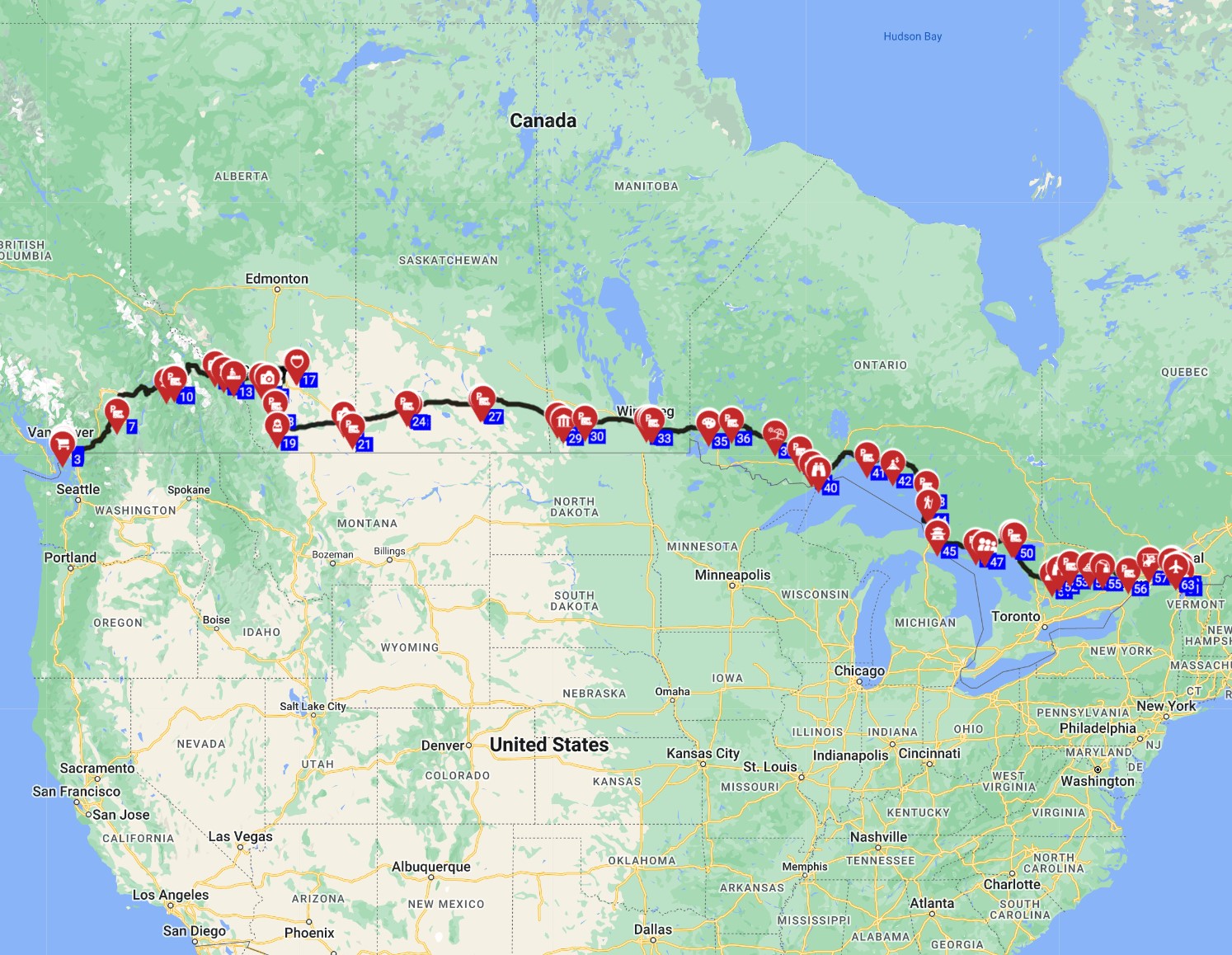
- Day 1: Montreal → Oka National Park (approx. 60 km). Start your journey by exploring the vibrant city of Montreal before heading to Oka National Park, known for its beautiful beach. Overnight at the Oka National Park campground.
- Day 2: Oka → Mont-Tremblant National Park (approx. 120 km). Enjoy a scenic drive through the Laurentian Mountains, arriving at Mont-Tremblant National Park for hiking and breathtaking views. Stay at a campground within the park.
- Day 3: Mont-Tremblant National Park. Dedicate the day to exploring the park's natural beauty, perhaps with some canoeing or a stroll through Tremblant Village. Overnight at the same park campground.
- Day 4: Mont-Tremblant → Trois-Rivières (approx. 150 km). Travel to Trois-Rivières, a historic city on the St. Lawrence River. Explore its charming old district and enjoy the riverside atmosphere. Consider camping at Camping Paradis.
- Day 5: Trois-Rivières → Quebec City (approx. 140 km). Continue your journey to the historic capital, Quebec City. Begin your exploration of Old Quebec, a UNESCO World Heritage site. Find a spot at Camping Quebec.
- Day 6: Quebec City. Immerse yourself in the history and charm of Quebec City, visiting landmarks like the Château Frontenac, Dufferin Terrace, and the Plains of Abraham. Overnight at your Quebec City campground.
- Day 7: Quebec City → Montreal (approx. 250 km). Enjoy a final scenic drive back towards Montreal for RV drop-off, reflecting on your Quebec adventure. This final leg is a longer drive to accommodate the return to your departure point.
14-Day Extended Journey in Quebec
For a more immersive experience, a 14-day RV journey allows for a deeper dive into Quebec's diverse regions, from the bustling cities to the serene Eastern Townships and the dramatic Charlevoix coast. This longer itinerary provides ample opportunity for slow travel, allowing you to truly connect with the province's culture and landscapes. For example, consider the '
- Days 1-2: Montreal & Surroundings. Begin in Montreal, exploring its diverse offerings before heading to a nearby campground, such as Oka National Park (approx. 60 km), for a relaxing second day.
- Days 3-5: Eastern Townships. Drive to Sutton (approx. 130 km) to explore wine routes and charming villages, then move to Magog (approx. 50 km) to enjoy Lake Memphremagog.
- Days 6-7: Centre-du-Québec & Mauricie. Travel from Magog to Parc National de Frontenac (approx. 80 km) for nature, then continue to Shawinigan in Mauricie (approx. 170 km) to discover Parc national de la Mauricie.
- Days 8-10: Quebec City & Île d'Orléans. From Shawinigan, drive to Quebec City (approx. 140 km), dedicating two days to exploring Old Quebec and the rural charm of Île d'Orléans.
- Days 11-12: Charlevoix Region. Head from Quebec City to Baie-Saint-Paul (approx. 90 km), known for its art galleries, and then to La Malbaie (approx. 60 km) for coastal views and potential whale watching.
- Days 13-14: Laurentians & Return to Montreal. Journey from La Malbaie towards the Laurentians (approx. 200 km), enjoying forests and quaint towns, before the final drive back to Montreal (approx. 60 km) for RV return.
Recommended RVPlan Trip for Quebec
For those seeking expertly curated adventures, RVPlan (rvplan.net) offers a wealth of resources. While their offerings span across Canada, their '
Link: Canada epic RV road trip from Vancouver to Montreal - route and tips
Must-See Stops Along the Way (Avi Bandana Picks)
Drawing from extensive travel experience, Avi Bandana emphasizes seeking authentic local encounters when exploring Quebec. These experiences offer a deeper connection to the province’s rich heritage and vibrant culture.
- Local Industry: Visit a traditional sugar shack during maple season to taste authentic maple syrup production, or explore Quebec's many craft breweries and cheese producers for a taste of local craftsmanship.
- Traditional Market: Immerse yourself in Quebec's culinary scene by visiting bustling markets like Montreal's Jean-Talon Market or Quebec City's Marché du Vieux-Port. Here, you can find fresh, local produce, artisanal goods, and regional specialties.
- Traditional Restaurant / Fine Dining: Indulge in Quebecois cuisine at a traditional restaurant. Savor classic dishes like poutine, tourtière, or a hearty 'cabane à sucre' meal to truly experience the province's gastronomic heritage.
- Traditional Visit: Engage with Quebec's history by visiting iconic sites such as the historic district of Old Quebec, a UNESCO World Heritage site, or a preserved heritage village like Village Québécois d'Antan.
Daily Driving Distances & Drive Times in Quebec
To truly savor Quebec's landscapes and avoid travel fatigue, Avi Bandana recommends a relaxed pace, averaging no more than 100 miles (150 km) per day. This approach to slow travel allows for spontaneous discoveries, explorations of charming towns, and ample time to appreciate the natural beauty that Quebec's regions offer. For instance, the drive from Montreal to Quebec City typically covers about 250 km and takes approximately 2.5 to 3 hours, a manageable distance for an RV. Similarly, the journey from Mont-Tremblant National Park to Trois-Rivières is around 150 km, taking about 1.5 to 2 hours, making it ideal for a day of scenic driving and exploration.
Best RV Class for This Itinerary — Couple & Family Picks
Choosing the right RV for your Quebec adventure is key, and Bandana offers reliable options for both couples and families. The size and type of motorhome you select will greatly influence your comfort and maneuverability. For those traveling as a couple or seeking a more agile driving experience, the Class B - Camper Van is an excellent choice. Bandana's fleet typically features Class B models averaging 5.8 meters in length, providing sleeping places for about 3.2 individuals and offering fuel efficiency with an average consumption of 8-10 Liters/100 km. For families or larger groups, the Class C - Alcove motorhome offers more space and sleeping capacity. These units in Bandana's fleet typically average 7.5 meters in length, providing sleeping places for about 5.8 individuals, with an average fuel consumption of 10-12 Liters/100 km. To simplify your planning process, consider Bandana's 'Rent & Plan' service, which bundles your RV rental with a pre-designed itinerary crafted by travel experts, providing access to trip-planning software and taking the stress out of organizing your route.
What is the best month to RV in Quebec?
The ideal time for RVing in Quebec generally falls between late spring and early fall. September stands out as a prime month, offering pleasant weather, vibrant fall foliage, and fewer crowds compared to the peak summer months. Summer (July-August) is also highly popular, with warm temperatures perfect for outdoor activities and fully operational campgrounds, though this means higher demand and prices. Late Spring (May-June) provides a refreshing experience with blooming landscapes, fewer insects, and comfortable temperatures, making it a great time for nature enthusiasts. Fall (September-October) is highly recommended for its spectacular autumn colors, mild temperatures, and generally lower campground occupancy, though some services may begin to close by late October. Winter (November-April) presents significant challenges due to heavy snow and cold temperatures, with many campgrounds closed; specialized winterized RVs and careful consideration of propane availability and road conditions are essential for any winter travel. On the routes offered through RV PLANET routes, you can itemize and track every expense along the way for easy budgeting.
What kind of RV can I rent in Quebec?
Quebec's RV rental market offers a diverse fleet to suit various travel styles and group sizes. You can typically rent several classes of motorhomes, including the compact Class B - Camper Van, the versatile Class C - Alcove motorhome, and the streamlined Class SI - Semi-integrated motorhome, with availability depending on the rental provider. The Class B Camper Van is ideal for couples or solo travelers, known for its agility and ease of driving and parking. The Class C Alcove, a popular choice for families, features an overhead bunk (alcove) for extra sleeping space and provides a comfortable living area, balancing size with amenities. For those seeking a sleeker design and potentially better fuel efficiency, the Class SI Semi-integrated motorhome is suitable for couples or small families. While less common for weekend rentals due to their size and cost, larger, luxurious Class A - Integrated motorhomes offer extensive amenities and spacious living. For a more rugged or adventurous experience, a Class TC - Truck Camper, which is a living unit mounted onto a pickup truck, offers flexibility and off-road capability.
How much does it cost to RV in Quebec?
The cost of an RV trip in Quebec can vary significantly, but generally includes rental fees, fuel, campgrounds, food, and potential tolls, with an average daily expenditure ranging from $200-$500 CAD for a mid-range experience. RV rental costs for a weekend trip might range from $150-$300 CAD per day for a smaller Class B or C motorhome, while a week-long rental could average $1000-$2000+ CAD, depending on the season, RV class, and provider. Fuel is a major expense given Quebec's vast distances; expect to spend $80-$150+ CAD per day on fuel for average driving, noting that Bandana's Class C motorhomes average 10-12 Liters/100 km, while Class B motorhomes are more economical at 8-10 Liters/100 km. Nightly campground fees for equipped sites with electricity, water, and sewer hookups typically range from $35-$70 CAD, with basic sites being cheaper and popular locations requiring advance booking. Budget around $50-$100+ CAD per day for groceries and occasional restaurant meals, which is considerably less than eating out for every meal thanks to the convenience of your RV's kitchen. Be aware of potential tolls on some major highways and bridges (e.g., Highway 30, A25 bridge in Montreal), which can add a small amount to your daily expenses. To save money, cook most meals in your RV, utilize free or low-cost provincial park sites, travel during shoulder seasons, and book your rental well in advance for better rates. For detailed cost breakdowns and tracking, explore the RV PLANET routes, which help itemize and track every expense for easy budgeting. For ideas you can prep on the road, watch our RV-friendly recipes playlist on YouTube.
Do you need a special license to drive an RV in Quebec?
In Quebec, the majority of rental RVs, including Class B, C, and most Class SI motorhomes, can be driven with a standard Class 5 driver's license, which is the basic license required for passenger vehicles, provided they weigh under 4,500 kg (approximately 9,920 lbs). This makes RVing accessible to most licensed drivers. For larger RVs, such as some Class A motorhomes that exceed 4,500 kg, a specific heavy vehicle license, like a Class 3, might be necessary, although these are less common for weekend rentals. It's always crucial to confirm the specific weight and licensing requirements directly with your RV rental company, as they possess the most accurate information regarding their fleet. Foreign drivers should ensure their home country's driver's license is valid for use in Quebec or acquire an International Driving Permit (IDP), especially if their license is not in English or French, to ensure smooth cross-border and provincial travel.
Can you freedom camp in Quebec?
Freedom camping, also known as boondocking or wild camping, is generally not permitted on public land in Quebec without explicit authorization or in designated areas, a rule that differs from some other regions. Most public lands, including provincial parks and wildlife reserves (ZECs), require permits for overnight stays and typically only allow camping in designated campgrounds. Overnight parking in private lots, such as those at Walmart or casinos, may be tolerated at the property owner's discretion, but it is always essential to ask for permission beforehand. Unsanctioned roadside camping is usually illegal and can lead to fines, so it’s best to plan your overnight stays in established campgrounds or authorized areas for a legal and hassle-free experience. Quebec offers an extensive network of private campgrounds, provincial park campgrounds (Sépaq), and municipal sites, providing a variety of options with different amenities.
Where can you RV in Quebec?
Quebec presents a wealth of RV-friendly destinations, from vibrant urban centers to stunning natural parks. Popular regions for RVing include the Laurentians, the Eastern Townships, the Charlevoix region, and for longer trips, the Gaspésie peninsula. The Laurentians are renowned for their rolling hills, numerous lakes, and ski resorts, offering year-round outdoor activities and charming villages like Mont-Tremblant. The Eastern Townships are celebrated for their wine route, picturesque towns, and scenic lakes, making them perfect for foodies and cyclists. Charlevoix, a UNESCO World Biosphere Reserve, offers dramatic landscapes where mountains meet the St. Lawrence River, featuring acclaimed art galleries and whale-watching opportunities. For those venturing further afield on longer trips, the Gaspésie peninsula boasts breathtaking coastal drives, the iconic Percé Rock, and Forillon National Park, providing a truly unique, off-the-beaten-path experience. The Mauricie region is home to Parc national de la Mauricie, offering extensive canoeing, hiking, and wildlife viewing in a vast forested landscape, while Saguenay–Lac-Saint-Jean features the majestic Saguenay Fjord and the immense Lac Saint-Jean, ideal for fjord cruises, watersports, and discovering local blueberries.
Is it hard to drive an RV in Quebec?
Driving an RV in Quebec is generally manageable, but it requires awareness of specific road conditions, city navigation challenges, and unique cultural aspects. Quebec's roads are typically well-maintained, but rural routes can be narrower, and winter driving presents significant challenges due to snow and ice, necessitating careful planning for shoulder seasons. Navigating and parking a larger RV in major cities like Montreal or Quebec City can be challenging due to narrow streets and limited parking; it's often advisable to park at a suburban RV-friendly lot or campground and utilize public transport for city exploration. When driving through rural areas and national parks, remain vigilant for wildlife, especially at dusk and dawn, as deer and moose can pose road hazards. Given that Quebec's primary language is French and road signs are predominantly in French, a basic understanding of French or a translation app can be helpful, though most services are bilingual in tourist areas, and a polite 'Bonjour' is always appreciated. Generally speaking, with careful planning, patience, and adherence to local traffic laws, driving an RV in Quebec can be a very rewarding experience.
What are the best RV routes in Quebec?
Quebec offers several scenic RV routes that highlight its diverse landscapes and cultural heritage, with top recommendations including the Whale Route, the King's Road (Chemin du Roy), and the Wine Route in the Eastern Townships. For longer trips that extend beyond a weekend, the Whale Route (Route des Baleines) along the St. Lawrence River's north shore from Tadoussac to Blanc-Sablon is renowned for prime whale-watching opportunities and stunning coastal scenery. The King's Road (Chemin du Roy), Canada's oldest road, stretches between Quebec City and Montreal along the north shore of the St. Lawrence, providing a historical journey through charming villages and agricultural landscapes. The Eastern Townships Wine Route is perfect for shorter weekend trips, combining wine tasting with beautiful rural scenery. For a picturesque drive through the Laurentian mountains, explore the Route des Belles-Histoires. The Charlevoix Scenic Route, running from Baie-Saint-Paul to La Malbaie, offers breathtaking views of mountains meeting the St. Lawrence, art galleries, and culinary delights. For more off-the-beaten-path experiences, consider venturing into the Saguenay Fjord region for dramatic natural beauty and unique fjord-side camping, or exploring the remote beauty of the Gaspésie peninsula.
Can you take an RV from US to Canada?
Yes, you can take an RV from the US to Canada, but cross-border travel requires specific documentation, adherence to customs procedures, and awareness of prohibited items. All occupants must have valid passports, and drivers need a valid driver's license (an International Driving Permit is recommended if your license is not in English or French) and vehicle registration. Be prepared for inspection at the border; declare all goods, including food, alcohol, and tobacco, and answer all questions truthfully. Certain items are restricted or prohibited, including firearms, many agricultural products (fruits, vegetables, meats), and cannabis (even if legal in your US state, it is illegal to bring across the border). Ensure your RV insurance policy extends to Canada; most US policies do, but it's crucial to confirm coverage with your provider. If you are traveling with pets, ensure you have up-to-date vaccination records (especially for rabies) and any necessary health certificates, as per Canadian import requirements. If you are renting an RV, confirm with your rental company that cross-border travel into Canada is permitted and if any additional documentation or insurance is required for the vehicle itself.
How do I dump my RV in Quebec?
To properly dump your RV's wastewater tanks in Quebec, you will utilize designated dump stations, which are commonly found at most campgrounds, many provincial parks, and even some rest stops or truck stops along major highways. The most convenient and common places to find dump stations are within private campgrounds and provincial park campgrounds (Sépaq), often included with your camping fees or available for a small fee if you are not a registered guest. Some larger rest stops and commercial truck stops along major highways may also offer dump station facilities, typically for a fee. A limited number of gas stations, particularly those catering to RV travelers, might also provide dump stations. Fresh water refill stations are usually located near dump sites or within campgrounds; always use a potable water hose (distinct from your black tank rinse hose) for refilling your fresh water tank. Propane refill stations are widely available across Quebec at gas stations, hardware stores, and RV dealerships. Regarding internet connectivity, while major cities boast good cellular coverage, be prepared for spotty internet in remote areas and national parks, so plan accordingly if you rely on mobile data.
Final Thoughts
Embarking on an RV adventure in Quebec offers an unparalleled way to connect with its stunning landscapes and rich culture. Whether you opt for a quick weekend escape or an extended journey, the freedom of the open road combined with the comfort of your rented RV creates lasting memories. From the vibrant streets of Montreal to the historic charm of Quebec City and the natural beauty of its national parks, Quebec is a treasure trove of experiences waiting to be discovered. Embrace the slow travel philosophy, savor the local flavors, and let the spirit of adventure guide you.
Ready to start planning your Quebec RV adventure? Compare motorhome rentals in Quebec and discover the perfect vehicle for your trip.
Find Motorhome Rentals in Quebec