
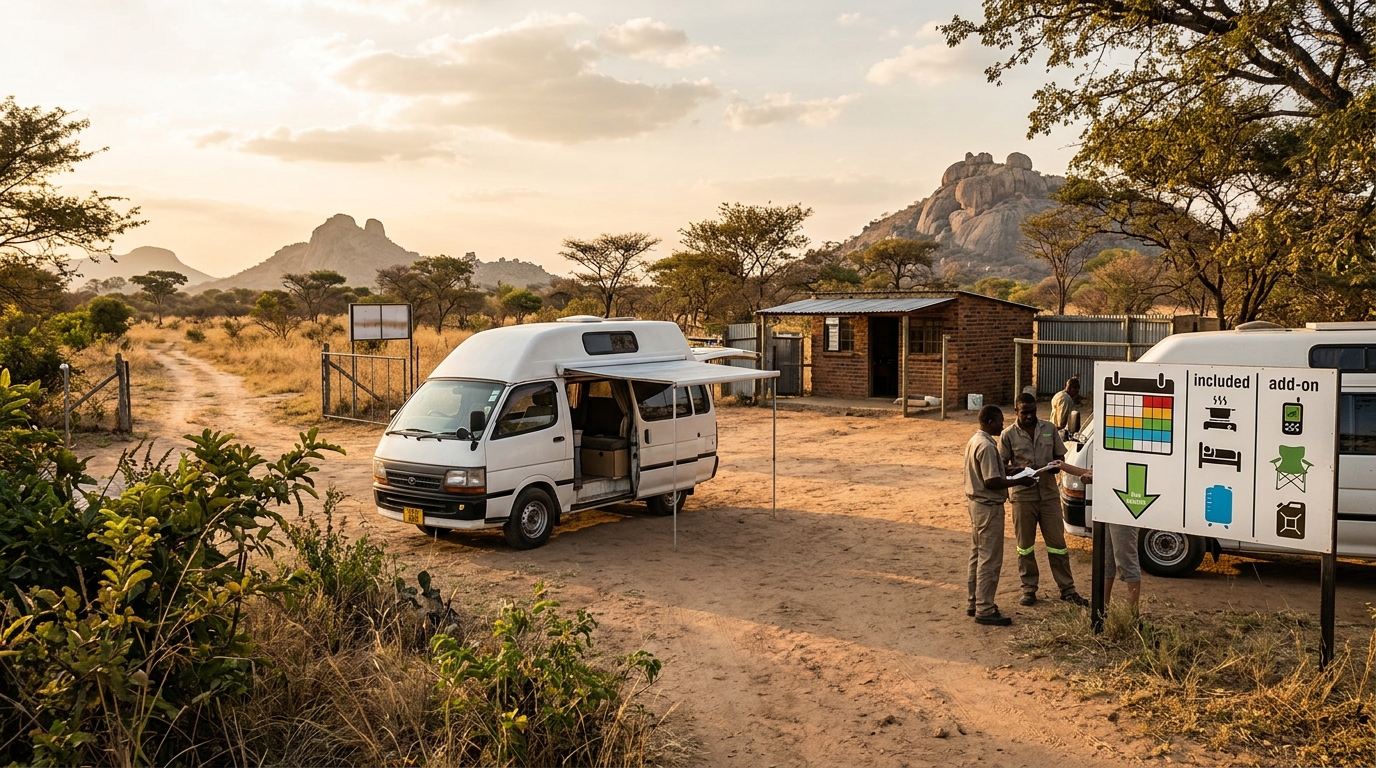
For live availability and current prices, start with our RV Rental Zimbabwe - Complete Guide 2026 guide.
In This Guide
- Can You Drive an RV in Zimbabwe? License & Age Rules
- Road Conditions & Terrain in Zimbabwe
- RV Size Limits, Bridges & Restricted Zones
- Fuel: Diesel vs. Petrol & Cost per 100 km
- Tolls, Vignettes & Border Rules
- Driving Tips for weekend rv rental Travelers
- Recommended RV Class for Zimbabwe Roads
- Should I Choose a Compact Van Instead of a Large RV in Zimbabwe?
- Can I Park Anywhere? Free & Wild Camping Rules in Zimbabwe
- Can I Drive an RV Into the City Center? Heights, Tunnels & Local Signage
- How much does it cost to rent an RV in Zimbabwe for a weekend?
- What is the best time of year to RV in Zimbabwe?
- Are RVs common in Zimbabwe?
- What are the must-see places in Zimbabwe for an RV trip?
- Is it safe to RV in Zimbabwe?
- How do I plan an RV trip to Zimbabwe?
- Where can I rent an RV in Zimbabwe?
Can You Drive an RV in Zimbabwe? License & Age Rules
Yes, driving an RV in Zimbabwe is possible with the correct licensing and adherence to age regulations. Typically, a valid national driver's license is required, and foreign visitors should also possess an International Driving Permit (IDP). A standard Class B driver's license, or its equivalent in your home country, is generally sufficient for most RVs weighing under 3,500 kg (7,700 lbs). For heavier RVs exceeding 3,500 kg, Zimbabwean regulations may necessitate a higher license category, such as a C1. It's essential for renters to verify the Gross Vehicle Mass (GVM) of their chosen vehicle. Most RV rental companies in Zimbabwe enforce a minimum driver age, commonly 25 years, though some may permit drivers from 23 years with an additional surcharge. For drivers from countries outside the Southern African Development Community (SADC), an IDP is mandatory in conjunction with their national license.
Road Conditions & Terrain in Zimbabwe
Zimbabwe's road conditions present a varied landscape, from well-maintained main roads connecting major cities to secondary and rural routes that can range from paved but potholed to unpaved gravel or dirt tracks. Travelers should anticipate that main arterial roads, such as those between Harare and Bulawayo or Harare and Mutare, are generally tarred and in good condition, suitable for all RV classes. However, secondary roads leading to popular national parks like Hwange or Mana Pools, and to more remote areas, are often gravel or dirt and can be heavily corrugated. These surfaces, especially during the rainy season, might require higher clearance vehicles or even 4x4 capability. It's always advisable to drive slowly and deliberately, particularly on unpaved roads and when encountering local traffic, pedestrians, or livestock. Weekend RV trips will likely involve a mix of these terrains, so selecting an RV appropriate for your planned destinations is crucial.
RV Size Limits, Bridges & Restricted Zones
Zimbabwe generally does not impose restrictive RV size limits for general road travel. However, drivers must remain aware of specific bridge clearances, road widths, and any localized restrictions that may exist within towns or particular park areas. Most rental RVs, including larger Class C models which average around 7.5 meters in length, can navigate within standard road infrastructure. Always be attentive to signage indicating low bridges or narrow sections, particularly when deviating from main routes onto older or rural roads. Unlike some urban centers in Europe, Zimbabwe does not typically have widespread environmental zones that restrict RV access. While ferry limits are not a concern in landlocked Zimbabwe, very remote river crossings might have weight restrictions, though these are uncommon for standard RV routes.
Fuel: Diesel vs. Petrol & Cost per 100 km
Diesel is the predominant fuel type for RVs and is readily available throughout Zimbabwe, with petrol stations also being widespread in urban areas and along major routes. For context, Bandana's global fleet data indicates that Class C Alcove RVs typically consume around 10-12 liters per 100 km. Similarly, Class SI Semi-integrated RVs average 10-11 liters per 100 km, and Class B Camper Vans are generally more fuel-efficient, averaging 8-10 liters per 100 km. Most popular RV classes, including Class A Integrated models, predominantly run on diesel. Fuel availability is generally good in major towns and along main highways, but it can be sparse in very remote areas. This necessitates careful planning, especially for extended trips into wilderness areas, and it may be prudent to carry extra fuel. Travelers should budget for fuel costs, as prices can fluctuate and are typically paid for in local currency (ZWL) or USD. On the routes offered through RV PLANET routes, you can itemize and track every expense along the way for easy budgeting.
Tolls, Vignettes & Border Rules
Zimbabwe employs a toll gate system on its major highways, with fees usually payable in local currency (ZWL) or USD. The country does not require a vignette, a system common in some European countries for road tax. For those planning weekend RV trips that might extend into neighboring countries, it's crucial to ensure all vehicle documentation is in order. This includes original registration papers, a letter of authorization from the rental company, and valid third-party insurance. Personal travel documents, such as passports and visas, along with your IDP if applicable, must also be current and validated for international travel.
Driving Tips for weekend rv rental Travelers
For a safe and enjoyable weekend RV adventure in Zimbabwe, prioritizing defensive driving and thorough planning is key. Always be vigilant for potholes, pedestrians, livestock, and wildlife, especially when driving on rural roads or during the twilight hours of dusk and dawn, when visibility is reduced and hazards are more difficult to spot. It is strongly advised to avoid night driving in Zimbabwe. Fuel stations can be spaced widely apart in rural areas, so it's essential to keep your tank topped up and consider carrying extra fuel if you plan to venture off the main routes. Respect posted speed limits, which are generally lower in urban areas and near villages (around 60 km/h) and typically range from 100-120 km/h on major highways. Staying connected is also important; ensure you have a mobile phone with a local SIM card for better coverage and keep emergency contact numbers readily accessible. Before departing, perform basic vehicle checks such as tire pressure and fluid levels.
Recommended RV Class for Zimbabwe Roads
For a comfortable weekend RV rental experience in Zimbabwe, Class SI (Semi-integrated) and Class C (Alcove) RVs are generally well-suited. They offer a good balance of living space and maneuverability on main roads, with Class B (Camper Vans) also being an excellent choice for those planning to explore more rugged or off-the-beaten-path destinations. Camper Vans, with an average length of 5.8 meters, are ideal for couples or small families, providing excellent maneuverability, better fuel economy (around 8-10 liters/100 km), and often higher ground clearance suitable for less-maintained roads or tighter spots. The Class SI Semi-integrated RVs, averaging 6.9 meters in length, are a popular choice, offering more interior amenities than a camper van while remaining manageable on tarred main roads and reasonably accessible secondary routes. For families or larger groups needing maximum space and comfort, Class C Alcove motorhomes, averaging 7.5 meters, are ideal. While larger, they are still manageable on many secondary roads with careful driving (average fuel consumption 10-12 liters/100 km). For particularly challenging off-road conditions, a 4x4 truck camper (Class TC) might be considered, though these are less common in standard rental fleets.
Should I Choose a Compact Van Instead of a Large RV in Zimbabwe?
The choice between a compact camper van and a larger RV for your Zimbabwe adventure depends on your priorities. A compact camper van (Class B) offers superior maneuverability and potentially better access to rugged tracks, with an average length of 5.8 meters and fuel consumption of 8-10 liters/100 km. They are ideal for agile exploration and couples seeking an adventurous experience. Conversely, a larger RV, such as a Class SI or C motorhome (averaging 6.9 to 7.5 meters in length), provides significantly more comfort, living space, and amenities, which are often preferred for a weekend rental, especially when sticking to main tourist routes. The trade-off is generally between maximum flexibility and access to remote spots with a compact van, versus enhanced comfort and amenities with a larger RV. For a comfortable weekend with more amenities, particularly on well-traveled routes, a larger RV like a Class SI or C is often the better choice. Road conditions in Zimbabwe often favor larger RVs on primary routes, where their stability and comfort are appreciated rather than the extreme maneuverability of a compact van.
Can I Park Anywhere? Free & Wild Camping Rules in Zimbabwe
Free or wild camping is generally not permitted or recommended outside of designated campsites in Zimbabwe, especially within national parks or on private land, primarily due to safety concerns and the presence of wildlife. It is always best to prioritize staying at official campsites located within national parks, game reserves, and private lodges. These sites typically offer enhanced security, essential ablution facilities (toilets and showers), and sometimes electricity hook-ups. Camping outside designated, fenced, or protected areas within national parks is strictly prohibited for your safety, given the presence of potentially dangerous wildlife such as elephants, lions, and hyenas. If you consider camping on private land, you must always seek explicit prior permission from the landowner to avoid any trespassing issues. For security reasons, unofficial overnight parking can pose risks, so opting for established, secure locations is always the safest choice for both you and your rented RV.
Can I Drive an RV Into the City Center? Heights, Tunnels & Local Signage
Driving an RV into Zimbabwean city centers like Harare or Bulawayo is generally permissible. However, drivers should exercise caution and be mindful of potential height restrictions, particularly in parking garages, as well as navigate narrower streets and heed local signage. Most main roads within Zimbabwean city centers are sufficiently wide to accommodate RVs, including larger Class C models. The primary challenge in urban centers is often finding suitable and secure parking for larger vehicles. It’s advisable to look for open-air parking lots or designated areas on the city outskirts rather than attempting to fit into underground garages. While tunnels and very low bridges are uncommon in major city centers, always pay close attention to local signage indicating any height, weight, or environmental zone restrictions. Be prepared for varying traffic conditions, especially during peak hours, and observe local driving customs.
How much does it cost to rent an RV in Zimbabwe for a weekend?
The cost to rent an RV in Zimbabwe for a weekend typically ranges from approximately $150 to $350 USD per day. This rate can fluctuate significantly based on the RV class, rental duration, the season of travel, and any included amenities. However, a comprehensive budget should also account for essential additional expenses such as fuel, national park entrance fees, and food provisions. Base rental rates vary considerably: Class B Camper Vans might start in the $150-$250/day range, while larger Class SI or C motorhomes could cost $200-$350+/day, often with lower per-day rates for longer rental periods. Fuel costs represent a significant portion of the budget, with consumption rates varying from 8-17 liters/100 km depending on the RV class and terrain. National Parks charge daily conservation fees (approximately $20-$30 USD per international visitor per day) plus vehicle entry fees ($10-$15 USD per vehicle), which can quickly add up over a weekend. Campground fees can range from basic national park sites ($10-$20/night) to more amenity-rich private lodges ($30-$60+/night). Always include a contingency fund for unexpected expenses.
What is the best time of year to RV in Zimbabwe?
The optimal period for an RV trip in Zimbabwe is generally during the dry winter months, spanning from May to October. This time of year offers cooler, drier weather, making for more comfortable driving and camping conditions. Wildlife viewing is particularly excellent as animals congregate around dwindling water sources, enhancing game viewing experiences in parks like Hwange. While the shoulder seasons of April and November can also provide a good balance with fewer crowds and pleasant temperatures, there's a possibility of sporadic rain. The rainy season, from December to March, brings lush green landscapes and is excellent for birdwatching, but heavy rains can make some gravel and dirt roads impassable, and wildlife viewing can be more challenging due to denser vegetation. Mosquitoes and humidity are also more prevalent during this period. Consider your primary interests when planning: the dry season is paramount for wildlife enthusiasts, while the rainy season offers a different kind of beauty and potential challenges.
Are RVs common in Zimbabwe?
RVs are steadily gaining popularity in Zimbabwe, particularly among self-drive tourists and local adventurers, although the supporting infrastructure is still developing compared to more established RV destinations globally. While not as ubiquitous as in North America or Europe, the concept of independent travel and exploration via RVs and camper vans is on an upward trend. Many local and international tour operators are expanding their RV fleets to meet a growing demand for flexible and independent travel experiences, especially to national parks and scenic regions. Reflecting this trend, the country's national parks and a growing number of private lodges are increasingly offering dedicated campsites equipped with facilities suitable for RVs, including water, electricity, and waste disposal points. The unique combination of Zimbabwe's stunning natural landscapes, abundant wildlife, and rich cultural experiences makes it an increasingly attractive destination for RV enthusiasts seeking an authentic African adventure.
What are the must-see places in Zimbabwe for an RV trip?
For an unforgettable RV trip in Zimbabwe, several key destinations offer a diverse blend of natural beauty, cultural heritage, and historical significance. The majestic Victoria Falls, one of the Seven Natural Wonders of the World, is a must-visit, with ample parking and RV-friendly campsites in Victoria Falls town serving as a convenient base for activities like boat cruises and helicopter tours. Hwange National Park, Zimbabwe's largest park, is renowned for its vast elephant herds and diverse wildlife, offering several RV-friendly campsites such as Main Camp and Sinamatella, though some interior roads may require 4x4 capabilities. The ancient ruins of Great Zimbabwe, a UNESCO World Heritage site, present an opportunity to explore impressive stone structures built without mortar, offering a deep dive into the region's history. For those seeking scenic beauty, the Eastern Highlands, encompassing Nyanga and Chimanimani, offer mountains, waterfalls, and lush landscapes ideal for hiking and fishing, with various lodging and camping options suitable for RVs. Integrating visits to local markets, like Mbare Musika in Harare for vibrant local life, or craft centers such as Chapungu Sculpture Park, will provide authentic cultural immersion beyond wildlife viewing.
Is it safe to RV in Zimbabwe?
RVing in Zimbabwe can be a safe and rewarding experience when appropriate precautions are taken. Responsible driving practices are paramount; drive defensively, avoid night driving, and be acutely aware of potential hazards like potholes, pedestrians, livestock, and wildlife, especially on rural roads. For personal security, always utilize secure, established campsites or lodges for overnight stays, keep your RV locked, and secure valuables out of sight. In national parks and wildlife areas, strictly adhere to park rules, remain inside your RV when encountering animals, and store food securely to avoid attracting wildlife. Health preparedness is also essential; consult your doctor about necessary vaccinations and malaria prophylaxis, particularly for areas like Victoria Falls. Carry a comprehensive first-aid kit and ensure you have robust travel insurance that covers medical emergencies and evacuation. While mobile network coverage is generally reasonable in urban areas and along main routes, it can be limited in remote national parks, so consider a local SIM card or even a satellite phone for deep wilderness areas, and always ensure your devices are charged.
How do I plan an RV trip to Zimbabwe?
Planning an RV trip to Zimbabwe involves a comprehensive approach, starting with researching suitable routes and booking campsites well in advance, especially for peak seasons. Understanding local regulations and preparing for diverse road conditions and cultural experiences are crucial for a smooth journey. Develop a realistic itinerary that balances driving time with leisure, carefully researching road conditions for each segment, particularly if venturing off main highways. Identify points of interest such as national parks, cultural sites, and towns for resupply. It's highly recommended to book all campsites in national parks and popular tourist areas in advance, confirming the specific amenities available like water, electricity, ablution block quality, and security. Create a detailed budget covering RV rental, fuel, park fees, campsite fees, food, and planned activities, always including a contingency fund. Stock up on groceries in major towns like Harare or Bulawayo, and always carry sufficient drinking water or a purification system. For connectivity, research mobile network coverage along your route and consider a local SIM card or satellite phone for remote areas. Lastly, embrace sustainable and responsible travel by adhering to "leave no trace" principles, disposing of waste properly, conserving water, and respecting wildlife by maintaining a safe distance.
Where can I rent an RV in Zimbabwe?
RV rentals in Zimbabwe are primarily available through specialized companies located in major cities, with Harare and Bulawayo serving as the main pick-up points. These locations typically offer a diverse selection of vehicle classes, from agile camper vans to more spacious motorhomes. Utilizing online booking platforms like Bandana allows you to compare various models, prices, and availability from different local and international providers operating in Zimbabwe. You can generally find a range of RV classes to suit different needs, including Class B Camper Vans (average length 5.8m) for nimble travel, Class SI Semi-integrated RVs (average 6.9m) for a balance of comfort and manageability, and Class C Alcove motorhomes (average 7.5m) for larger groups. Booking your RV well in advance is highly recommended, particularly for peak travel seasons such as the dry winter months (May to October) and public holidays, to secure your preferred vehicle and potentially benefit from better rates. Always carefully review the rental agreement for details on insurance coverage, mileage limits, included equipment, and any additional fees.
What You Shouldn't Miss
- Experience the awe of Victoria Falls: Witness one of the Seven Natural Wonders of the World, with excellent RV facilities available in the nearby town.
- Wildlife Encounters in Hwange National Park: Visit Zimbabwe's largest park, renowned for its massive elephant herds and diverse wildlife, with several well-equipped campsites for RVs.
- Step back in time at Great Zimbabwe Ruins: Explore the ancient, mortar-less stone city, a UNESCO World Heritage site offering a profound cultural experience.
- Scenic Drives through the Eastern Highlands: Discover mountainous landscapes, waterfalls, and lush scenery in Nyanga and Chimanimani, perfect for hiking and relaxation.
- Cultural Immersion in Local Markets: Engage with authentic Zimbabwean life by visiting vibrant local markets like Mbare Musika in Harare for a taste of local culture and crafts.
Final Thoughts
Embarking on an RV adventure in Zimbabwe offers an unparalleled way to experience the country's breathtaking landscapes and abundant wildlife at your own pace. By understanding the driving conditions, adhering to local regulations, and planning your route and campsites, you're setting yourself up for an incredible journey. Remember to choose an RV that suits your travel style and needs, and always prioritize safety and responsible travel practices.
With Bandana Caravan, planning your dream RV trip is straightforward. We're here to help you compare options, understand costs, and book the perfect vehicle for your Zimbabwean exploration. Get inspired for your next trip and discover the freedom of the open road!
Ready to start planning? Compare RV rental prices for Zimbabwe and find the perfect motorhome for your adventure!
