In This Guide
- Can You Drive an RV in Switzerland? License & Age Rules
- Road Conditions & Terrain in Switzerland
- RV Size Limits, Bridges & Restricted Zones
- Fuel: Diesel vs. Petrol & Cost per 100 km
- Tolls, Vignettes & Border Rules
- Driving Tips for weekend rv rental Travelers
- Recommended RV Class for Switzerland Roads
- Should I Choose a Compact Van Instead of a Large RV in Switzerland?
- Can I Park Anywhere? Free & Wild Camping Rules in Switzerland
- Can I Drive an RV Into the City Center? Heights, Tunnels & Local Signage
- Can I rent an RV for a weekend?
- How much does it cost to rent an RV in Switzerland?
- What is the best month to RV in Switzerland?
- Where can I take my RV in Switzerland?
- Are RVs allowed in Swiss national parks?
- Is it worth renting an RV in Switzerland?
- What is the average gas price in Switzerland for RVs?
Can You Drive an RV in Switzerland? License & Age Rules
Most standard B-category driving licenses are sufficient to drive many RVs in Switzerland, particularly those weighing up to 3,500 kg. A B license permits vehicles up to 3,500 kg; however, for RVs between 3,500 kg and 7,500 kg, a C1 license is required. The minimum rental age for RVs is typically 21-25, regardless of when the driver obtained their license, though this can vary by rental provider. Foreign drivers from EU/EFTA countries can usually use their national license, but it's advisable for non-EU/EFTA drivers to carry an International Driving Permit (IDP) alongside their national license to ensure compliance with Swiss legalities, especially when it comes to the specific Gross Vehicle Weight (GVW) of your chosen RV.
Road Conditions & Terrain in Switzerland
Switzerland boasts an excellent road infrastructure, though its mountainous terrain means drivers will encounter steep inclines, winding roads, and a mix of tunnels and scenic routes that are perfect for an RV adventure. Swiss roads are generally exceptionally well-maintained and clearly signposted, even in remote alpine regions. Drivers can expect numerous mountain passes with sharp curves, significant elevation changes, and tunnels; these are an integral part of the scenic experience but demand careful and attentive driving. Urban areas can present narrower streets and more traffic, particularly in historic centers. It's always recommended to embrace slow, scenic driving to fully appreciate the landscape and ensure safety on winding roads, integrating techniques like engine braking for managing descents on steep inclines.
RV Size Limits, Bridges & Restricted Zones
While most RVs can navigate Switzerland's main routes, drivers must pay close attention to posted height, width, and weight restrictions, especially on smaller roads, in tunnels, and when entering older town centers. Always observe road signs indicating maximum height (e.g., for tunnels and underpasses) and width restrictions, which are clearly marked. Ensure your RV's Gross Vehicle Weight (GVW) does not exceed limits posted on bridges or dictated by your driving license category. Environmental zones, which restrict vehicle access, are less common in Switzerland compared to some neighboring countries, but it's always wise to check for specific city regulations if planning to enter urban cores. Larger Class A or C RVs may find some very narrow mountain passes or historic village roads challenging; opting for smaller campervans (Class B) can offer greater accessibility and peace of mind.
Fuel: Diesel vs. Petrol & Cost per 100 km
Most RVs available for rent in Switzerland, including Bandana's global fleet, run on diesel, which is widely available. It's crucial to ensure you use the correct fuel type for your rented RV. Bandana's global fleet averages for fuel consumption typically range from 8-10 Liters/100 km for Class B Camper Vans, 10-11 Liters/100 km for Class SI Semi-integrated RVs, and 10-12 Liters/100 km for Class C Alcove RVs. Based on 2026 fuel prices, you can estimate your cost per 100 km by multiplying your RV's average consumption by the current average diesel price (e.g., 10L/100km at CHF 2/L = CHF 20 per 100km). Fuel prices in Switzerland can be higher than in surrounding countries, so it's essential to factor this into your overall trip budget breakdown.
Tolls, Vignettes & Border Rules
All vehicles using Swiss national motorways, including RVs under 3.5 tonnes, require an annual vignette, which is an annual sticker costing CHF 40 for 2026, valid from December 1st of the previous year to January 31st of the following year. Separate tolls apply for specific mountain tunnels, such as the Grand St Bernard and Munt la Schera, which are not covered by the vignette. RVs with a gross vehicle weight exceeding 3.5 tonnes (e.g., some larger Class C or Class A models) are subject to a Heavy Vehicle Charge (HVC) based on mileage, rather than requiring a vignette. If you are traveling from neighboring countries, be aware of their specific toll systems: Austria requires its own vignette, while France uses a 'péage' (pay-as-you-go) system, and Germany has no general tolls for passenger vehicles. Some rental motorhomes may offer the option to pre-purchase vignettes or toll passes, which can save time and help avoid potential fines. On the routes offered through RV PLANET routes, you can itemize and track every expense along the way for easy budgeting.
Driving Tips for weekend rv rental Travelers
For a successful weekend RV rental in Switzerland, prioritize planning your route, understanding mountain driving techniques, and strictly adhering to local regulations to maximize enjoyment and safety. Master mountain driving by using engine braking (lower gears) on descents to preserve your brakes; ascend in a gear that allows for steady power without over-revving. Pace yourself, as Swiss roads are designed for scenic enjoyment, not high speeds. Factor in extra time for winding mountain passes, photo stops, and simply soaking in the views. Always observe local signage, paying particular attention to height, weight, and width restrictions, as well as parking regulations. Prepare for weather changes, as alpine weather can shift rapidly. Carry emergency gear, check forecasts regularly, and be aware that some mountain passes may close seasonally or due to sudden snowfall. Practice sustainable RVing by using designated waste disposal sites, respecting quiet hours in campgrounds, and leaving no trace in Switzerland's pristine natural areas.
Recommended RV Class for Switzerland Roads
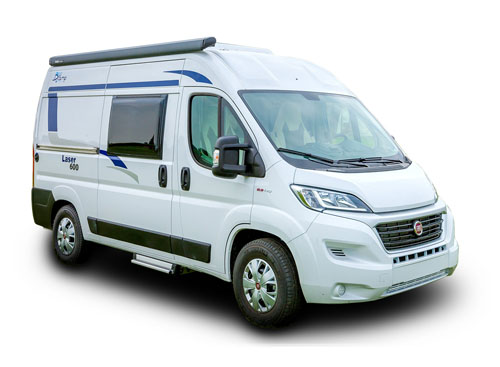
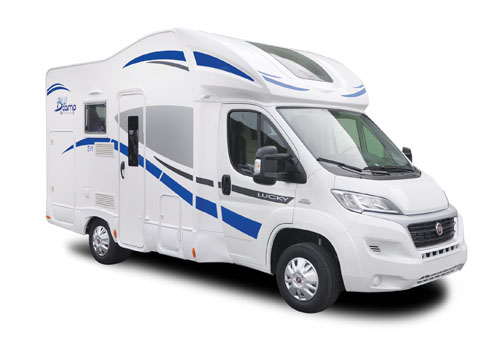
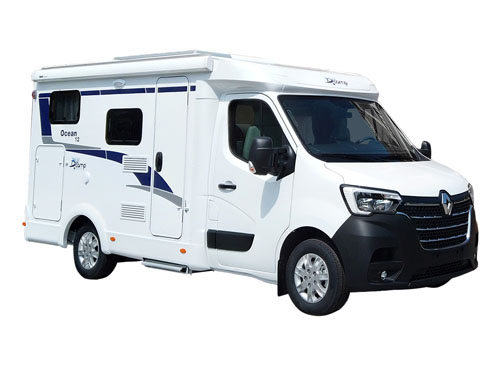
For navigating Switzerland's diverse roads, from winding mountain passes to charming village streets, a Class B Camper Van or a Class SI Semi-integrated RV generally offers the best balance of comfort and maneuverability. A Class B Camper Van, typically around 5.8 meters in length in Bandana's global fleet, is highly recommended for its agility, ease of parking, and ability to access narrower roads and tighter village centers, making it ideal for solo travelers or couples. The Class SI Semi-integrated RV, averaging 6.9 meters in length, offers more living space, a full bathroom, and a larger kitchen than a campervan, while remaining relatively manageable for most Swiss roads, making it suitable for small families or couples seeking extra comfort. Larger Class C (Alcove) or Class A (Integrated) RVs, averaging 7.5 meters in length, are very comfortable but may require more caution and planning on very narrow mountain roads and in smaller towns. For ideas you can prep on the road, watch our RV-friendly recipes playlist on YouTube.
Should I Choose a Compact Van Instead of a Large RV in Switzerland?
While larger RVs can generally navigate Switzerland's main routes, a compact camper van, like a Class B, offers distinct advantages for accessing narrower mountain passes, quaint village centers, and easier parking, making it a strong contender for a weekend trip focused on exploration. Compact vans, such as Bandana's Class B Camper Van (averaging 5.8m length), provide superior maneuverability on tight, winding mountain roads and in historic town centers, along with easier parking in public spaces and smaller campsites, and typically better fuel economy (8-10 Liter/100 km). Larger RVs, like Class SI, C, or A models, offer significantly more interior space, private bathrooms, larger kitchens, and greater comfort for extended stays or families, making them suitable for major routes and larger, well-equipped campgrounds. For a weekend rental, especially if your itinerary includes exploring charming villages or challenging mountain routes, the ease of driving and parking a compact van often outweighs the extra interior space of a larger RV. Consider your itinerary: if your focus is on designated RV parks and main attractions, a larger RV might be suitable; for off-the-beaten-path exploration, a compact van is preferable.
Can I Park Anywhere? Free & Wild Camping Rules in Switzerland
Wild camping and free overnight parking are generally prohibited across Switzerland, with specific enforcement varying by canton and municipality, making official campsites the safest and most legal option for RV travelers. The prohibition on wild camping is strict, particularly in nature reserves, national parks, and agricultural areas. Rules regarding overnight parking for a single night (not camping with awnings or tables) can vary; always look for 'no overnight parking' signs. Fines for illegal wild camping can be substantial, depending on the canton and specific violation. Official campsites and designated Stellplätze (motorhome parking areas), often found near towns or attractions, are the only reliable and legal places to stay overnight in an RV. Remember that rules vary by region, so it's always best to check local regulations and follow local law before parking overnight.
Can I Drive an RV Into the City Center? Heights, Tunnels & Local Signage
Yes, you can generally drive an RV into Swiss city centers, but it requires careful attention to specific local signage regarding height and width restrictions, environmental zones, and designated parking areas. Most main routes into Swiss cities are accessible to RVs, but older, historic city centers often have narrow streets and low overhead clearances (e.g., arches, tunnels, underpasses). Always observe height (Höhe/Hauteur) and width (Breite/Largeur) restriction signs, especially when approaching bridges and tunnels. While Switzerland has fewer strict environmental zones than some European countries, always check for specific city regulations that might restrict vehicle access. Parking an RV in city centers can be challenging; look for designated RV parking lots or use park-and-ride facilities on the outskirts and utilize public transport to reach the core. Pay close attention to local signage, which may indicate 'residents only' streets or temporary restrictions, to avoid fines.
Can I rent an RV for a weekend?
Yes, many rental providers in Switzerland offer RV rentals specifically tailored for weekend trips, though availability might be tighter during peak seasons and some providers may have minimum rental periods. Weekend rentals are a popular option, typically ranging from 2 to 4 nights, allowing for a concentrated exploration of a specific region. Booking well in advance is highly recommended for weekend rentals, especially during national holidays or popular summer months, due to high demand. Some rental companies may impose a slightly higher daily rate or mileage limits for shorter weekend hires compared to longer-term rentals. It’s often best to look for compact Class B Camper Vans or smaller Class SI Semi-integrated models, as these are frequently favored for their maneuverability during shorter trips.
How much does it cost to rent an RV in Switzerland?
The cost to rent an RV in Switzerland for a weekend typically ranges from CHF 150-300 per night for a compact campervan to CHF 300-500+ for larger, luxury models, excluding fuel, insurance, and campsite fees. Rental prices vary significantly based on the RV class (e.g., Class B vs. Class A), the season (peak summer is most expensive), and the duration of your rental. Beyond the base rental fee, budget for additional costs such as insurance (deductibles, coverage upgrades), mileage fees (if applicable), preparation/cleaning fees, and potential surcharges for one-way rentals. Other essential expenses to factor into your detailed budget breakdown include fuel (a significant cost in Switzerland), campsite fees (typically CHF 30-60 per night), the mandatory Swiss vignette (if not included and RV is under 3.5t), and any specific tunnel tolls. Consider variations for different travel styles: a budget-conscious trip might involve a smaller Class B and self-catering, while a luxury experience could feature a large Class A with full hookups and dining out.
What is the best month to RV in Switzerland?
The best months for RVing in Switzerland are generally May, June, September, and early October, which offer pleasant weather, fewer crowds than peak summer, and most mountain passes open for stunning scenic drives. During the shoulder seasons (May-June & September-October), you'll find an ideal balance with comfortable temperatures, vibrant landscapes (either spring blooms or autumn colors), reduced tourist numbers, and most high-alpine roads accessible. Peak season (July-August) offers the warmest weather and typically ensures all mountain passes are open, but campgrounds are often fully booked, prices are higher, and popular attractions can be very crowded. The off-season (November-April) presents unique challenges and benefits; many mountain passes are closed, campground availability is limited, but it's perfect for winter sports enthusiasts willing to face colder temperatures and potential snow-related road closures. Always check the opening status of specific mountain passes before traveling, especially in early spring or late autumn, as conditions can change rapidly.
Where can I take my RV in Switzerland?
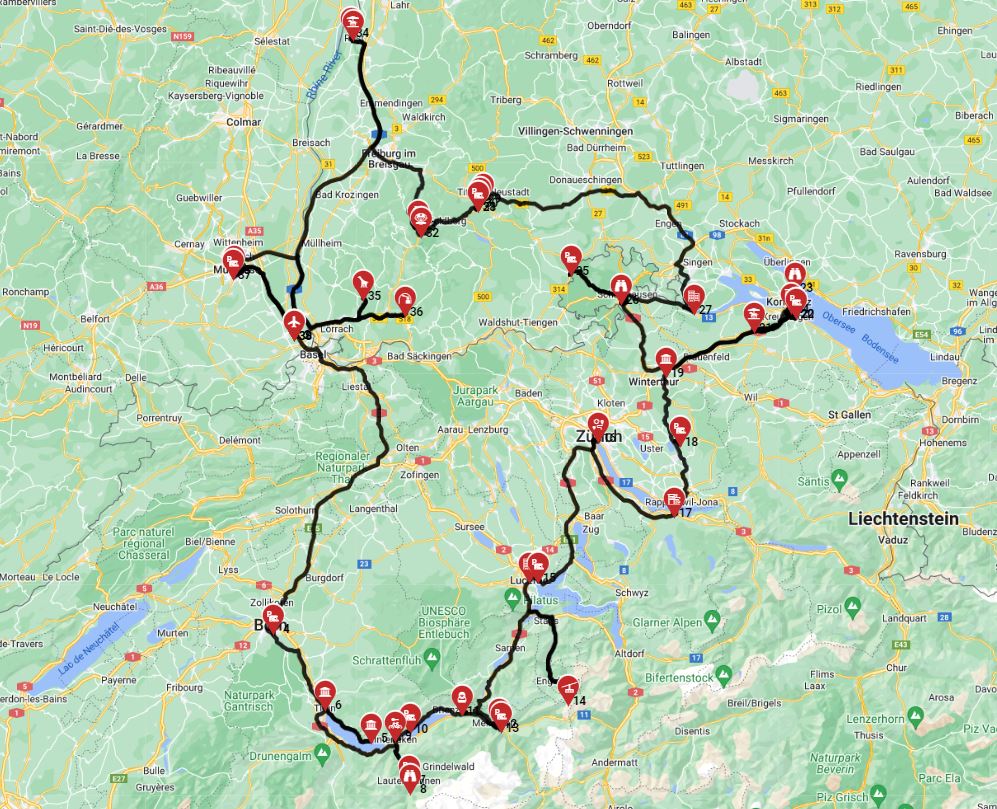
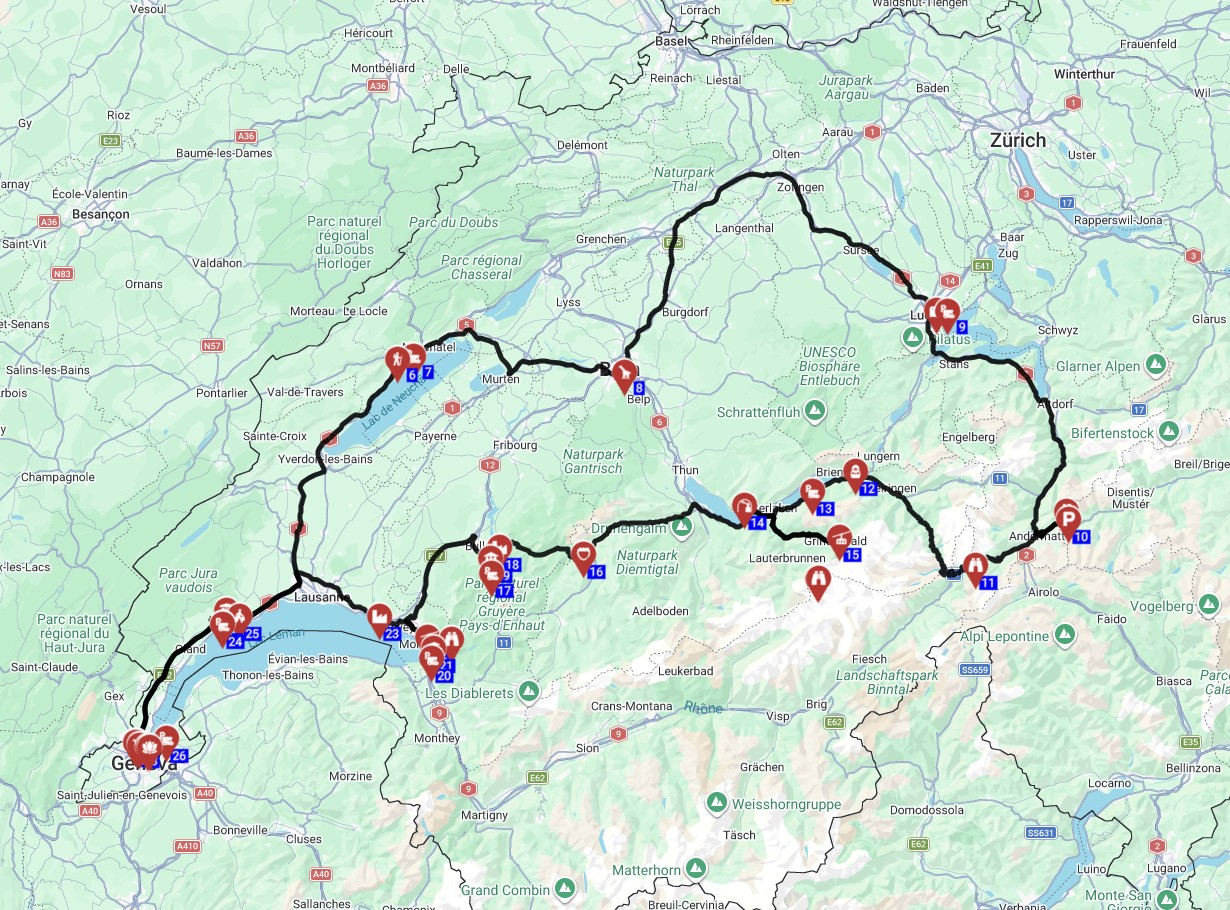
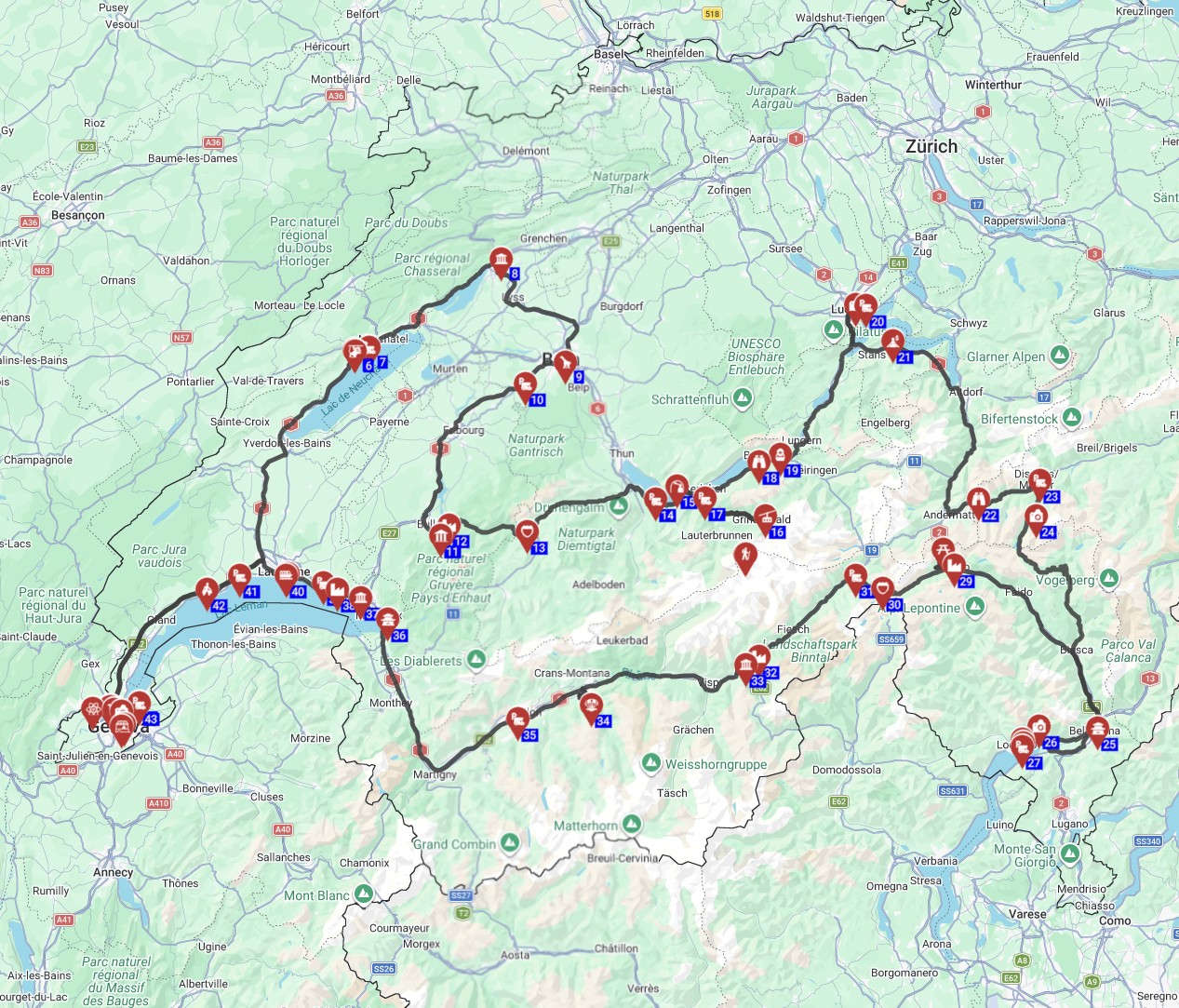
RVs can explore nearly all of Switzerland's regions, from the majestic Alps and tranquil lakes to historic cities and charming valleys. Popular destinations include the Bernese Oberland, the Lake Geneva region, and Ticino. For Alpine adventures, drive iconic mountain passes like the Grimsel, Furka, or Susten Pass (seasonal access) to experience breathtaking panoramas, or base your RV near famous peaks like the Matterhorn (Zermatt, reached by train) or Jungfraujoch. Discover the serene beauty of Lake Geneva (Montreux, Lausanne), Lake Lucerne, or the turquoise waters of Lake Thun and Brienz in the Bernese Oberland, with numerous lakeside campgrounds available. For cultural immersion, explore charming towns like Lucerne, Bern (a UNESCO World Heritage site), or Gruyères, parking your RV on the outskirts and using public transport to navigate tighter centers. You might also find local markets, traditional festivals, or unique culinary experiences accessible off main routes. Head to the Italian-speaking canton of Ticino for palm trees, Mediterranean flair, and towns like Lugano and Locarno. Connectivity is generally good, with mobile data coverage widespread, though it can be spotty in very remote alpine valleys. Most official campgrounds offer Wi-Fi and power hookups for comfortable stays.
Are RVs allowed in Swiss national parks?
While Switzerland has only one true 'National Park' (the Swiss National Park in Graubünden), RVs are not permitted for camping or overnight stays within its strictly protected boundaries, and strict rules apply to all vehicle access. The Swiss National Park has stringent conservation laws, meaning no overnight parking, wild camping, or driving off designated public roads is allowed within the park itself. For visits to the Swiss National Park, RVs must park in designated visitor parking areas outside the park boundaries, and exploration is typically done on foot. Switzerland also has numerous 'Nature Parks' (Regional Nature Parks), which are broader regions focusing on landscape and cultural heritage; RVs are generally allowed on public roads within these, but wild camping rules still apply (i.e., it's prohibited outside official sites). Always respect protected areas by adhering to all signage and utilizing official campgrounds or designated Stellplätze located nearby.
Is it worth renting an RV in Switzerland?
Renting an RV in Switzerland is highly worthwhile for travelers seeking flexibility, immersive scenic experiences, and the freedom to explore diverse landscapes at their own pace, despite the country's higher cost of living. The advantages include unparalleled freedom to create your own itinerary, wake up to breathtaking views, access remote hiking trails, and benefit from the convenience of having your accommodation and kitchen readily available. However, it's important to consider that Switzerland is known for its higher prices, meaning fuel, campsite fees, and groceries can be more expensive than in neighboring countries. Careful budgeting is essential. The unique blend of stunning natural beauty, excellent infrastructure, and the ability to travel sustainably (by using designated facilities and minimizing environmental impact) often makes an RV trip a memorable and rewarding experience. While public transport is extensive and efficient, an RV offers a distinct advantage for reaching smaller villages, specific trailheads, or simply enjoying the journey itself without fixed schedules.
What is the average gas price in Switzerland for RVs?
As of 2026, the average price for diesel fuel, which most RVs use, typically ranges higher than in neighboring countries, often between CHF 1.90 and CHF 2.20 per liter. Diesel prices in Switzerland fluctuate daily and can vary significantly between different cantons and individual service stations. Budgeting for fuel is a critical component of your overall trip cost; a typical weekend trip covering 300-500 km at an average consumption of 10-12 L/100 km could incur fuel costs of CHF 60-132. It's generally advisable to fill up your tank before entering Switzerland if coming from a country with lower fuel prices, such as France, Germany, or Austria. Keep an eye on price comparison apps or signs along major highways for the most up-to-date fuel costs.
What You Shouldn't Miss
- Drive the Swiss Alps: Traverse iconic mountain passes like the Susten Pass or the Grimsel Pass (check seasonal opening) for unparalleled alpine scenery, and take advantage of the many scenic viewpoints.
- Explore Lake Geneva: Visit charming towns like Montreux and Lausanne, enjoy lakeside campgrounds, and perhaps take a boat trip on the crystal-clear waters.
- Wander through Lucerne: Discover the Chapel Bridge, the Water Tower, and the picturesque Old Town, enjoying a blend of history and natural beauty.
- Experience Bern's Old Town: Park your RV on the outskirts and take public transport into the UNESCO World Heritage city center to explore its medieval architecture and arcades.
- Visit Gruyères: This medieval hilltop town is famous for its cheese, castle, and charming atmosphere, offering a delightful step back in time.
- Discover Ticino's Italian Flair: Experience the Mediterranean vibe in the southern canton of Ticino, with its palm trees and vibrant towns like Lugano and Locarno.
Final Thoughts
Embarking on an RV adventure in Switzerland offers an unparalleled way to experience the country's breathtaking landscapes and charming culture. From the majestic Alps to serene lakes and historic cities, a rented RV provides the flexibility and freedom to explore at your own pace.
While Switzerland may present a higher cost of living, the investment in an RV rental for a weekend trip unlocks unique experiences and allows for deeper immersion into the local environment. Remember to plan your routes, be mindful of road conditions and regulations, and most importantly, embrace the slow travel ethos to truly connect with the places you visit. We're here to help you every step of the way, ensuring your Swiss RV adventure is as smooth and memorable as possible.