
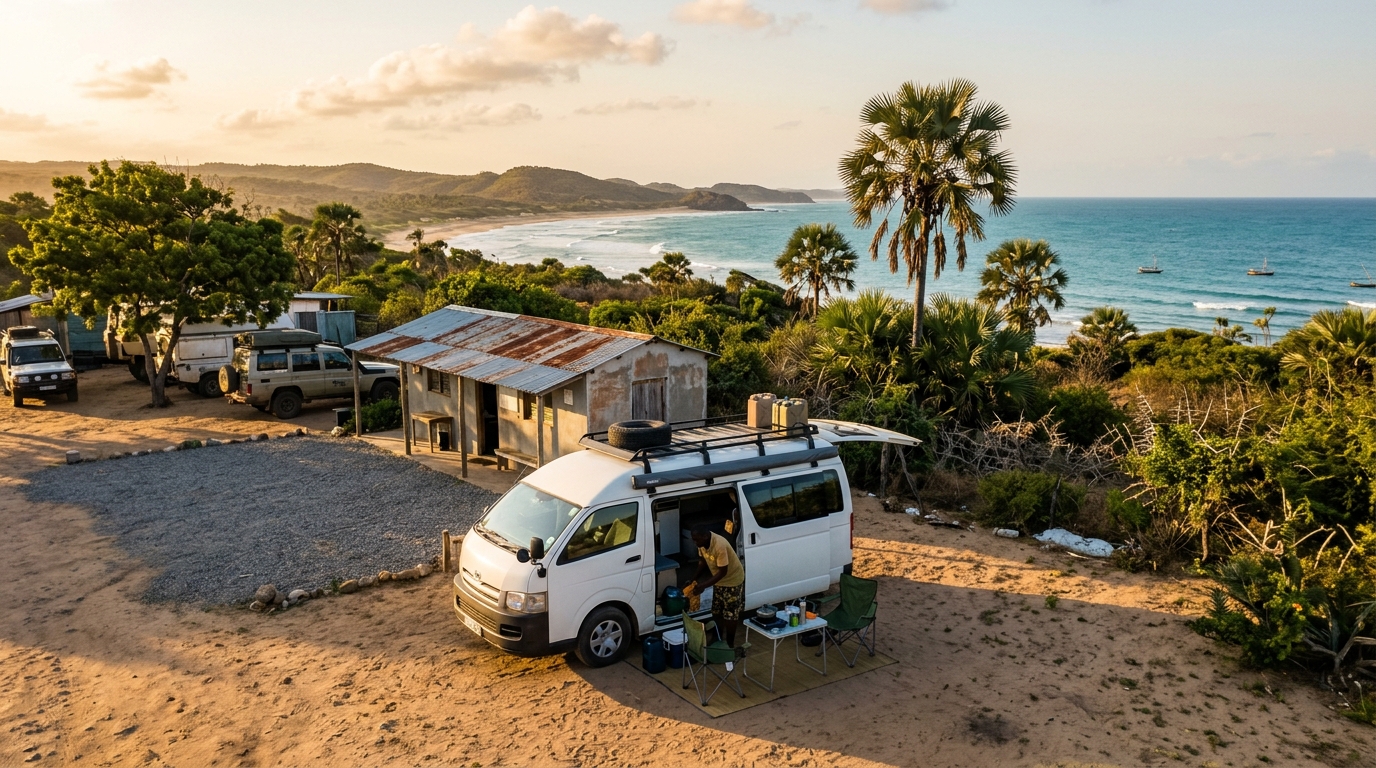
For live availability and current prices, start with our RV Rental Mozambique - Complete Guide 2026 guide.
In This Guide
- Can You Drive an RV in Mozambique? License & Age Rules
- Road Conditions & Terrain in Mozambique
- RV Size Limits, Bridges & Restricted Zones
- Fuel: Diesel vs. Petrol & Cost per 100 km
- Tolls, Vignettes & Border Rules
- Driving Tips for weekend rv rental Travelers
- Recommended RV Class for Mozambique Roads
- Should I Choose a Compact Van Instead of a Large RV in Mozambique?
- Can I Park Anywhere? Free & Wild Camping Rules in Mozambique
- Can I Drive an RV Into the City Center? Heights, Tunnels & Local Signage
Can You Drive an RV in Mozambique? License & Age Rules
Yes, driving an RV in Mozambique is possible with a valid foreign driver's license accompanied by an International Driving Permit (IDP), ensuring legal compliance for international visitors. The minimum age for RV rentals generally starts at 21, though some rental companies may impose a higher age limit of 23 or 25, often with a requirement for a specified period of driving experience. For RVs with a Gross Vehicle Mass (GVM) exceeding 3,500 kg (approximately 7,700 lbs), a C1 license category or its equivalent might be necessary, while standard RVs typically only require a regular B license, which most international visitors already possess.
Road Conditions & Terrain in Mozambique
Mozambique's road conditions present a varied landscape, ranging from well-maintained primary tar roads to challenging gravel, sand, and dirt tracks, particularly in rural and coastal regions. Main arterial routes, such as the EN1, are generally paved and navigable for RVs, though travelers should anticipate the presence of potholes and factor in slower travel times due to these conditions. Accessing many interior and coastal destinations often requires 4x4 capabilities and higher ground clearance, underscoring the importance of slow, scenic driving to ensure vehicle preservation and safety.
RV Size Limits, Bridges & Restricted Zones
While Mozambique typically lacks strict overarching RV size limits for general road use, awareness of potential height restrictions at smaller bridges or from low-hanging wires is crucial, especially in older towns or remote villages. Ferry crossings, essential for reaching certain islands or coastal areas, often impose specific weight and length limitations, making pre-trip verification a critical step for any itinerary. Currently, there are no widespread environmental zones that restrict RV access; however, national parks and wildlife reserves may enforce specific vehicle requirements, such as 4x4 only, or limit access to certain tracks.
Fuel: Diesel vs. Petrol & Cost per 100 km
Diesel is widely available and the predominant fuel type for RVs in Mozambique, with petrol (gasoline) also available but less common for larger recreational vehicles. Based on Bandana's global fleet averages, Class SI (Semi-integrated) RVs typically consume 10-11 Liters/100 km, Class C (Alcove) RVs consume 10-12 Liters/100 km, and Class B (Camper Vans) consume 8-10 Liters/100 km. Fuel prices can fluctuate and are generally higher in remote areas, making it advisable to carry extra fuel in jerry cans for extended journeys.
Tolls, Vignettes & Border Rules
Mozambique operates a system of toll gates on its major national roads, particularly the EN1, where payments are typically made in cash using Meticais (MZN). No country-wide vignettes are required for RVs in Mozambique; instead, tolls are paid on a per-use basis at specific checkpoints. Border crossings, such as from South Africa (e.g., Ressano Garcia/Lebombo), demand specific vehicle documentation, including valid registration, proof of ownership, and mandatory third-party insurance, which is purchasable at the border. On the routes offered through RV PLANET routes, you can itemize and track every expense along the way for easy budgeting.
Driving Tips for weekend rv rental Travelers
Prioritize slow and cautious driving, especially on unpaved roads, to safely navigate potholes, livestock, and pedestrians. Plan your routes to include regular stops every 2-3 hours, particularly for family travelers, allowing for rest, exploration, and appreciation of the scenery. Keep valuables out of sight and maintain situational awareness, especially in urban areas and at border crossings, to minimize the risk of petty crime. Always carry local currency (Meticais) for tolls, small purchases, and potential 'unofficial' fees, as card payments are not universally accepted. Be prepared for limited cell service in remote areas; consider packing offline maps, a physical map, and a satellite communication device for emergencies to ensure comprehensive connectivity and navigation.
Recommended RV Class for Mozambique Roads
For Mozambique's diverse road conditions, a Class B Camper Van or a Class SI Semi-integrated RV is often recommended due to their optimal balance of maneuverability and comfort. Class B Camper Vans, averaging 5.8 meters in length, offer excellent agility for varying terrains and typically achieve fuel efficiency of 8-10 Liters/100 km, making them ideal for exploring both paved and less-traveled routes. Class SI Semi-integrated RVs, averaging 6.9 meters in length, provide more interior space and sleeping capacity (around 3.8 people) while remaining manageable on main routes, consuming 10-11 Liters/100 km and offering good vehicle-specific preparation for diverse conditions.
Should I Choose a Compact Van Instead of a Large RV in Mozambique?
For the majority of RV travel in Mozambique, the enhanced comfort and indoor space provided by a standard RV often outweigh the minor maneuverability advantages of a compact van. While a compact van (like a Class B Camper Van) might offer slightly easier navigation in very tight village roads or dense urban centers, these specific scenarios are less common for typical RV itineraries in Mozambique. Larger RVs, such as Class C or Class SI models, provide superior living amenities, greater storage capacity, and frequently offer better off-road capabilities (especially if 4x4 variants are selected), making them a more suitable and practical choice for extended stays and diverse travel needs across Mozambique.
Can I Park Anywhere? Free & Wild Camping Rules in Mozambique
Wild camping or boondocking in Mozambique is generally not explicitly prohibited nationwide, but it is often discouraged due to safety concerns and is typically restricted in national parks, private land, or near urban areas. It is safer and highly recommended to utilize designated campsites, lodges, or private properties (with prior permission), which usually offer essential facilities and enhanced security. If considering off-grid camping, always prioritize safety: choose discreet locations away from isolated areas, ensure you leave no trace, and respect local communities by seeking permission if uncertain; rules vary by region, so always check local regulations and follow local law before parking overnight.
Can I Drive an RV Into the City Center? Heights, Tunnels & Local Signage
Yes, driving an RV into most city centers in Mozambique is generally permissible, as there are typically no widespread height or weight restrictions specifically preventing RV access in urban areas. Drivers should always pay close attention to local signage, particularly for low bridges, narrow streets, or any specific local restrictions that might be present in older town sections. Major cities like Maputo feature wide boulevards and often have ample parking; however, drivers should remain aware of traffic, pedestrians, and unofficial parking attendants, and it is advisable to avoid driving at night where possible.
What You Shouldn't Miss
- Explore the beaches and marine life around Ponta do Ouro, a popular destination for diving and snorkeling.
- Visit the Maputo Special Reserve for a unique blend of bush and beach experiences, accessible with various RV classes.
- Drive along the coastal roads, stopping at towns like Bilene or Xai-Xai for relaxation and scenic views.
- Experience the vibrant local culture by visiting markets in smaller towns, observing daily life, and interacting with communities.
- Discover the diverse birdlife and flora within national parks, taking advantage of slow travel to truly immerse yourself in nature.
- Enjoy the culinary scene by sampling local dishes and fresh seafood, a key part of the Mozambican travel experience.
Final Thoughts
Renting an RV for a weekend trip in Mozambique offers a unique and flexible way to experience the country's diverse landscapes and vibrant culture. By understanding the driving regulations, preparing your vehicle adequately, and planning your routes with local insights, you can ensure a smooth and unforgettable adventure.
Remember to embrace the spirit of slow travel, taking your time to connect with the places you visit and the people you meet. With Bandana Caravan, you have the support and resources to make your Mozambican RV journey a reality, offering peace of mind and the freedom to explore.
Ready to embark on your Mozambican RV adventure? Compare RV rental prices and book your perfect motorhome today to start planning your dream road trip!
