
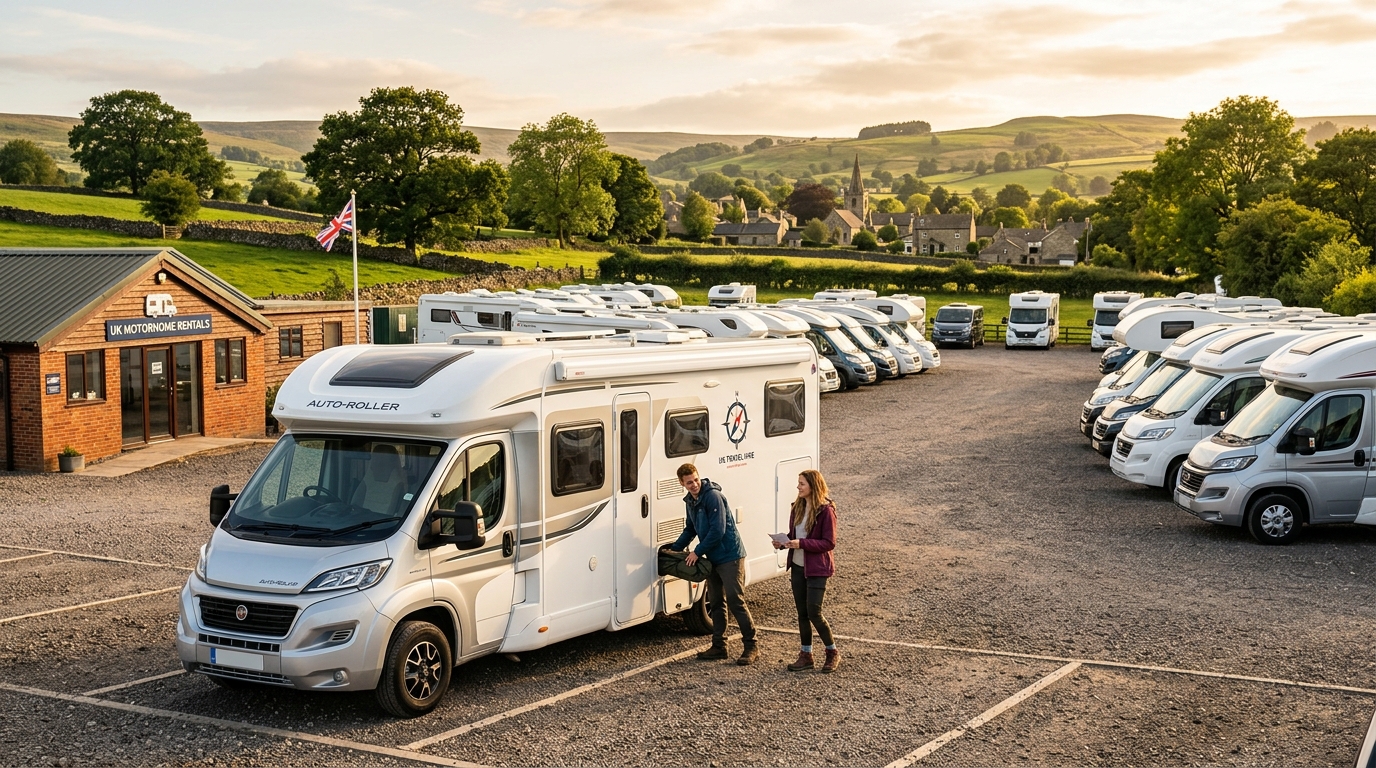
For live availability and current prices, start with our RV Rental UK - Complete Guide 2026 guide.
In This Guide
- Where to Camp in UK — Top Options
- Campground Types in UK (National, Private, Wild)
- Featured RV Park or Campground in UK
- Hookups & Amenities — What to Expect
- Booking Windows & Reservations in UK
- Nearby Supermarkets & Resupply Points
- Best RV Class for Camping in UK
- How to Save on Campgrounds in UK
- What are the rules for wild camping and overnight parking in the UK with an RV?
- How much does a weekend RV rental cost in the UK, including hidden expenses?
- What are the challenges of driving an RV in UK cities, including ULEZ and CAZ zones?
- What should international RVers know about renting and driving in the UK?
- How can I prepare for emergencies while RV camping in the UK?
Where to Camp in UK — Top Options
The UK offers a diverse tapestry of camping experiences for weekend RV adventurers, from rugged coastal retreats to serene national park havens. Popular regions renowned for their RV-friendly campsites and breathtaking scenery include the Lake District, the Scottish Highlands, and the charming coastal county of Cornwall. Each of these areas provides a unique blend of natural beauty and accessible amenities for motorhome travellers.
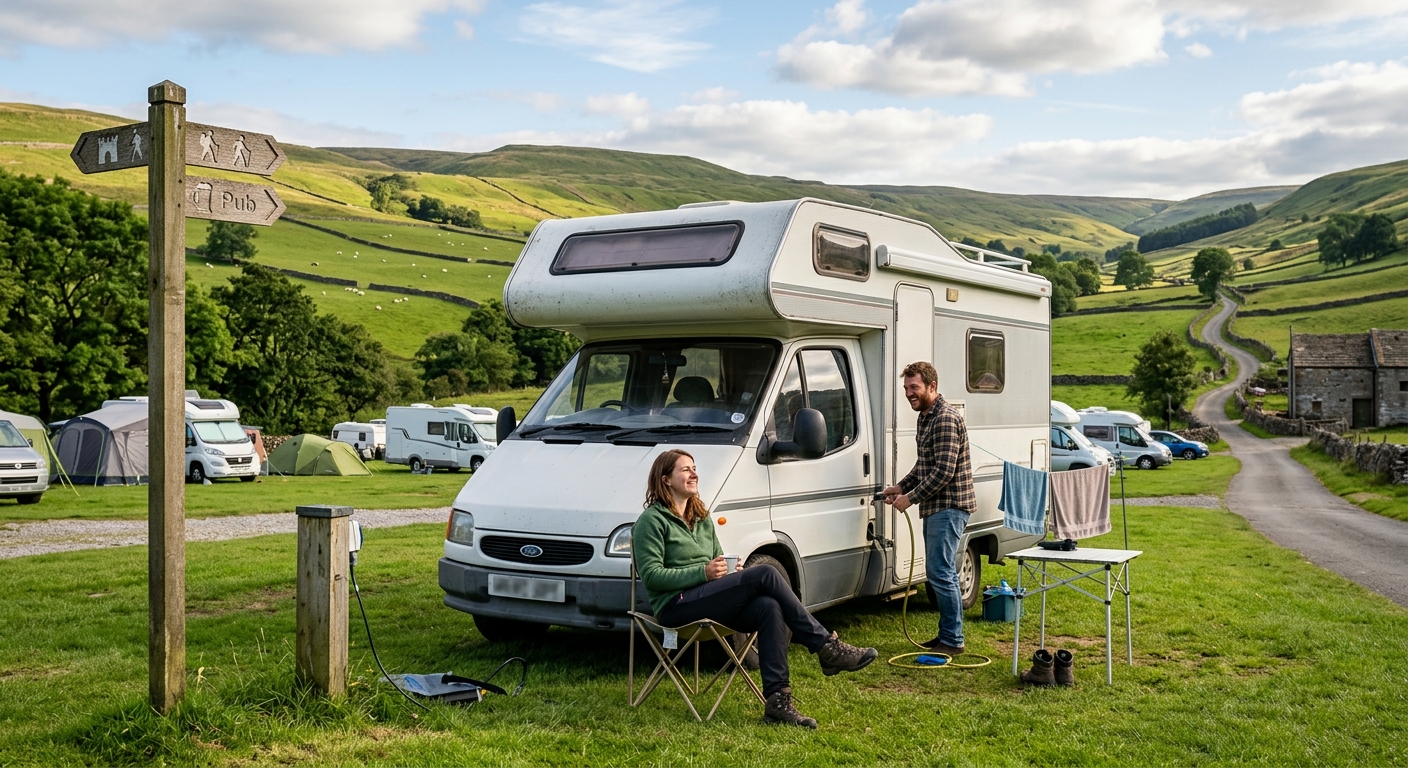
Consider the Lake District for its dramatic mountain vistas and tranquil lakes, perfect for a short but immersive escape. The Scottish Highlands offer vast, untamed landscapes and a sense of profound open space, ideal for those seeking true wilderness. For a quintessential seaside experience, Cornwall boasts beautiful beaches and quaint fishing villages, providing a relaxed atmosphere for a weekend break. Across these regions, you’ll find a variety of public and private campsites specifically equipped to welcome RVs, ensuring you can explore mountains, coastlines, and forests even on a brief trip.
Campground Types in UK (National, Private, Wild)
In the UK, RVers have a choice between well-equipped private campgrounds, picturesque national park sites, and, under specific conditions, areas designated for wild camping, particularly prevalent in Scotland. Private campgrounds are the most common and usually offer a full suite of amenities, including electric hookups, showers, laundry facilities, and often family-friendly activities, with prices varying based on the level of service.
National park sites, such as those found within the Peak District or Brecon Beacons, typically provide more basic facilities in stunning natural settings, requiring adherence to park regulations and often advance booking due to their popularity. It's important to note that wild camping, while legally tolerated in Scotland under the Land Reform (Scotland) Act 2003 with strict 'leave no trace' principles, is generally illegal in England, Wales, and Northern Ireland without explicit landowner permission. Overnight parking in an RV on public roadsides in England and Wales is also typically prohibited by local bylaws.
Featured RV Park or Campground in UK
For an excellent blend of amenities and access to stunning natural surroundings, consider the 'Windermere Camping and Caravanning Club Site' in the heart of the Lake District. This popular site offers comprehensive facilities and a picturesque setting ideal for a weekend RV adventure.
Located at Bridge Ln, Troutbeck Bridge, Windermere LA23 1LA, this campsite provides essential amenities crucial for a comfortable stay, including reliable electric hookups, fresh water points, waste disposal stations, and modern shower blocks. Its prime location offers convenient access to popular attractions such as the beautiful Lake Windermere, numerous hiking trails catering to all levels, and the charming local villages that dot the landscape, making it an ideal base for exploring the region.
Hookups & Amenities — What to Expect
UK RV campgrounds typically provide a standard range of essential services for motorhomes, including electricity hookups, fresh water points, and waste disposal stations for grey and black water. Electric hookups usually adhere to the European standard of 230-240V, utilizing the familiar blue CEEform connector, so international travellers may need an adapter. Beyond these core services, common campground amenities often include hot showers, flushing toilets, and coin-operated laundry facilities.
Wi-Fi is frequently available at many UK sites, though it may be a paid service or have signal strength that varies, particularly in more remote national park locations. For staying connected on the go, mobile data coverage is generally reliable in populated areas but can be inconsistent in national parks; therefore, considering a local SIM card or portable Wi-Fi device is a useful planning tip for consistent connectivity throughout your weekend trip.
Booking Windows & Reservations in UK
For weekend RV rentals in the UK, especially during peak travel periods like summer holidays or bank holiday weekends, booking your campground spot several months in advance is highly recommended to ensure availability. While spontaneous travellers can often find last-minute openings by contacting campgrounds directly, popular sites, particularly in national parks, can fill up quickly.
A general guideline is to book 3-6 months ahead for peak seasons, while 1-2 months advance notice is usually sufficient for shoulder seasons like spring and autumn. It's also worth noting that many national park campgrounds reserve a portion of their sites (around 25-30%) for advance reservations, with the remainder often managed on a first-come, first-served basis; always confirm specific policies and availability by calling ahead. While finding a spot is usually possible – if not at your first choice, then at the next nearby campground – calling ahead before driving is strongly advised to avoid disappointment, especially for shorter weekend stays in popular destinations.
Nearby Supermarkets & Resupply Points
Major supermarket chains like Tesco, Sainsbury's, Asda, and Morrisons are widely accessible across the UK, providing convenient resupply points for RVers. These retailers are typically found in most towns and cities, often situated on the outskirts where parking facilities are more accommodating for larger vehicles.
These prominent brands, alongside discount retailers like Lidl and Aldi, make it efficient to stock up on groceries, toiletries, and essential RV supplies. For a more local experience, consider supporting farm shops and independent markets for fresh produce, which not only offers quality goods but also contributes to local economies and minimizes your trip’s environmental impact. On the routes offered through RV PLANET routes, you can itemize and track every expense along the way for easy budgeting.
Best RV Class for Camping in UK
For weekend RV camping in the UK, Class B Camper Vans or Class SI Semi-integrated motorhomes are generally the most recommended choices due to their superior maneuverability on the UK's often narrower roads and ease of parking. These classes strike an excellent balance between comfort and practicality for exploring diverse landscapes.
Class B Camper Vans, typically averaging around 5.8 meters in length and sleeping up to 3-4 people, are perfect for couples or small families, offering great flexibility on country lanes and good fuel efficiency (often around 8-10 Liters/100 km). Class SI Semi-integrated motorhomes, averaging about 6.9 meters in length and accommodating 3-4 adults, provide more living space and amenities while remaining manageable on UK roads, with fuel consumption typically around 10-11 Liters/100 km. While larger Class C Alcove or Class A Integrated models do offer more living space, their increased dimensions (averaging 7.5 meters for Class C) can present challenges on very narrow roads and in smaller city car parks, making the smaller classes a more suitable option for typical UK weekend trips.
How to Save on Campgrounds in UK
RVers can significantly reduce their campground expenses in the UK by utilizing campground discount cards, strategically planning travel during shoulder seasons, opting for more basic municipal or regional sites, and booking longer stays to take advantage of weekly rates. Leveraging discount programs, such as memberships with UK organizations like the Camping and Caravanning Club, can offer reduced nightly rates at participating sites.
Travelling during the shoulder seasons—spring (April to May) and autumn (September to October)—typically results in lower nightly fees and fewer crowds compared to the peak summer months. Furthermore, choosing municipal, regional, or independent basic campsites over larger, more amenity-rich private resorts often provides a more budget-friendly alternative for a short weekend stay, allowing for more funds to be allocated to exploring attractions.
What are the rules for wild camping and overnight parking in the UK with an RV?
Wild camping in an RV across England, Wales, and Northern Ireland is largely restricted, generally requiring explicit landowner permission. Scotland, however, offers a more permissive approach under its 'right to roam' laws, but this still comes with strict responsible travel guidelines for RVers.
In England, Wales, and Northern Ireland, parking an RV overnight outside of designated campsites or private land with permission is typically considered illegal and may lead to fines or eviction. In Scotland, while the Land Reform (Scotland) Act 2003 grants a 'right to roam' for non-motorised access, specific local bylaws often prohibit overnight RV parking on public roadsides, lay-bys, or car parks unless signage explicitly permits it. Regardless of location, always adhere to 'leave no trace' principles, dispose of all waste responsibly, and respect local communities and wildlife. Utilizing apps like Park4Night can help identify potential overnight spots, but always be prepared to relocate if asked by authorities.
How much does a weekend RV rental cost in the UK, including hidden expenses?
A weekend RV rental in the UK typically ranges from £300 to £600 for a compact motorhome, but the overall trip cost, which can average £600-£1200 for a weekend, must also factor in significant additional expenses like fuel, campsite fees, insurance excess, and food. The rental cost for the vehicle itself usually falls between £150-£300 per night for smaller Class B or SI models, with extra costs often associated with insurance excess (which can range from £500-£1500, though reducible with optional extra cover) and any additional hired equipment like bedding or kitchen kits. For ideas you can prep on the road, watch our RV-friendly recipes playlist on YouTube.
Fuel expenses are a notable consideration; an RV typically consumes between 8-12 Liters/100 km (for example, Bandana's Class B models average 8-10 L/100km). This translates to an estimated £80-£150 for a typical 200-300 mile weekend trip, depending on current UK fuel prices (approximately £1.50-£1.70 per liter for diesel). Additionally, factor in campsite fees, which can range from £25-£50 per night for a serviced pitch, along with food costs estimated at £50-£150 for a weekend, and potential expenses for attractions, tolls, or city congestion charges that may apply along your route.
What are the challenges of driving an RV in UK cities, including ULEZ and CAZ zones?
Driving an RV in UK cities presents distinct challenges, primarily due to the prevalence of narrow, historic streets, limited parking availability, and the increasing number of Ultra Low Emission Zones (ULEZ) and Clean Air Zones (CAZ). These zones often impose daily charges on older, more polluting vehicles, adding a layer of complexity to urban exploration with a motorhome.
Many UK cities feature historic centers characterized by very narrow roads, sharp corners, and low bridges, which can make navigation difficult for larger RVs. Parking in city centers is also notoriously limited and often expensive. The London ULEZ, for instance, operates 24/7, charging vehicles that do not meet Euro 4 standards (petrol, typically post-2006) or Euro 6 standards (diesel, typically post-2015) a daily fee of £12.50. Similarly, other Clean Air Zones (CAZ) in cities like Birmingham, Bristol, and Bath also levy daily charges, varying from £8 to £60, on non-compliant vehicles, making it crucial to verify your rental RV's Euro emission standard on official government websites before entering these controlled areas.
What should international RVers know about renting and driving in the UK?
International RVers embarking on a trip in the UK must primarily remember to drive on the left side of the road, understand local licensing requirements for different RV sizes, and navigate the specifics of insurance coverage. Familiarizing yourself with UK road signs and vehicle dimensions is also crucial for a smooth journey.
The UK's left-hand driving system, with roundabouts being a prevalent feature, may require an adjustment period for drivers accustomed to right-hand traffic. A standard Category B car license is generally sufficient for RVs up to 3,500 kg MAM (Maximum Authorised Mass), which covers most smaller camper vans and semi-integrated models. However, for larger motorhomes exceeding this weight threshold (like some Class C or A models), a Category C1 license might be necessary; therefore, international drivers must verify their home license's validity for such vehicle weights and consider obtaining an International Driving Permit (IDP). It is also vital to confirm the rental RV's insurance coverage, especially for non-UK residents, and to be mindful of the vehicle's dimensions, as UK roads, particularly in rural areas, can be considerably narrower than drivers might expect.
How can I prepare for emergencies while RV camping in the UK?
Preparing for RV emergencies in the UK involves knowing the national emergency numbers, understanding breakdown procedures, carrying essential safety equipment, and having a plan for unexpected medical issues or road closures. In any life-threatening situation, dial 999 for immediate assistance from Police, Ambulance, or Fire services. For non-emergencies requiring police contact, dial 101, and always ensure you have the roadside assistance contact details for your RV rental provider (such as AA or RAC) and your travel insurance company readily accessible.
It is always advisable to carry a well-stocked first-aid kit, high-visibility vests, a warning triangle, and a fire extinguisher within your RV. For medical concerns, be aware of the location of the nearest pharmacies or Accident & Emergency (A&E) departments, and keep your mobile phone charged, considering a portable power bank, especially given that mobile signal can be intermittent in the UK's more remote areas.
What You Shouldn't Miss
- Embark on the scenic North Coast 500 in Scotland for breathtaking coastal drives and dramatic landscapes. This route is perfect for experiencing the freedom of RV travel with ample opportunities for wild camping (responsibly, of course!).
- Explore the Lake District National Park, a UNESCO World Heritage site, with your RV. Discover charming villages like Grasmere, hike to stunning viewpoints, or enjoy a cruise on Lake Windermere. Many campsites here offer excellent facilities for motorhomes.
- Discover the historic charm of the Cotswolds, a region of rolling hills and picturesque villages. Many of the campsites in this area are RV-friendly and provide a peaceful base for exploring the idyllic countryside.
- Drive the Great Ocean Road (in Australia, but for UK context, consider the scenic coastal routes of Cornwall or the Jurassic Coast in Dorset) for dramatic cliffside views and seaside towns.
- Experience stargazing in one of the UK’s Dark Sky Reserves, such as Galloway Forest Park in Scotland or the Brecon Beacons National Park in Wales, offering unparalleled celestial views directly from your RV.
Final Thoughts
Renting an RV for a weekend in the UK offers a fantastic opportunity to experience the country's diverse landscapes and charm at your own pace. Whether you're navigating the winding roads of the Lake District or exploring the rugged beauty of the Scottish Highlands, a motorhome provides the ultimate freedom and flexibility.
With careful planning, especially regarding reservations and understanding local driving regulations, your short RV break can be incredibly rewarding. We encourage you to use resources like RV PLANET (rvplan.net) to discover pre-planned routes and find the perfect campsites to complement your adventure. Get inspired for your next trip!
Remember, Bandana Caravan is here to support you throughout the booking process, ensuring a transparent and stress-free experience. Discover top destinations, planning tips, all in one place, and plan your trip itinerary in advance with minimal effort and maximum enjoyment!
