
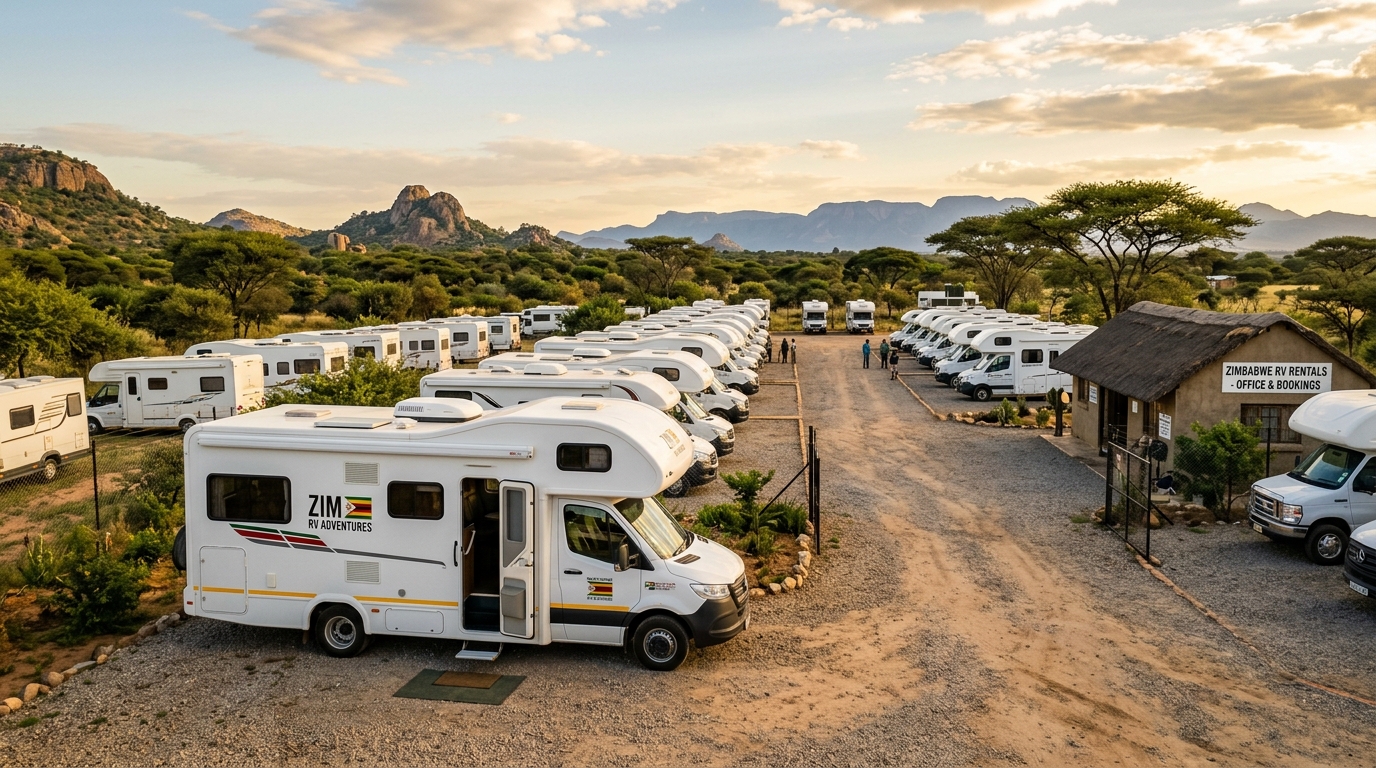
For live availability and current prices, start with our RV Rental Zimbabwe - Complete Guide 2026 guide.
In This Guide
- Can You Drive an RV in Zimbabwe? License & Age Rules
- Road Conditions & Terrain in Zimbabwe
- RV Size Limits, Bridges & Restricted Zones
- Fuel: Diesel vs. Petrol & Cost per 100 km
- Tolls, Vignettes & Border Rules
- Driving Tips for weekly rv rental Travelers
- Recommended RV Class for Zimbabwe Roads
- Should I Choose a Compact Van Instead of a Large RV in Zimbabwe?
- Can I Park Anywhere? Free & Wild Camping Rules in Zimbabwe
- Can I Drive an RV Into the City Center? Heights, Tunnels & Local Signage
- Where Can RVers Find Dump Stations and Water Refills in Zimbabwe?
- What Local Etiquette and Cultural Practices Should RVers Know in Zimbabwe?
- What are Essential Wildlife and Bush Safety Tips for RVers in Zimbabwe?
- How Can RVers Ensure Connectivity and Communication in Remote Zimbabwe?
- What Emergency Planning and Contacts are Crucial for RV Travel in Zimbabwe?
- What are the Specific Border Crossing Logistics for RVs Entering Zimbabwe?
- What Vehicle Preparation and Recovery Gear are Essential for RVing in Zimbabwe?
Can You Drive an RV in Zimbabwe? License & Age Rules
Driving an RV in Zimbabwe is permissible for those holding a valid driver's license, typically requiring a Class 2 (C1) license for vehicles over 3,500 kg Gross Vehicle Mass (GVM). For foreign drivers, an International Driving Permit (IDP) is strongly recommended and often required by rental companies. Standard passenger vehicle licenses (often Class 4 or B) are sufficient for RVs under 3,500 kg GVM. However, most larger RVs commonly rented will exceed this weight, thus generally requiring a Class 2 (C1) license.
The minimum driving age in Zimbabwe is 18, but RV rental companies typically impose higher age restrictions, commonly starting at 21 or 25 years old. It is crucial for foreign drivers to carry their valid national driver's license alongside an IDP translated into English. Always verify the specific license and age requirements with your chosen rental provider and confirm with current Zimbabwean traffic regulations before your travel dates.
Road Conditions & Terrain in Zimbabwe
Zimbabwe's main arterial roads are generally tarred and maintained in fair to good condition, making them suitable for RV travel, although it's important to be aware that secondary and rural roads can frequently be gravel, corrugated, or poorly maintained. This necessitates careful and slower driving, especially when venturing off the main highways.
Major routes such as the Beitbridge-Harare or Harare-Bulawayo highways are typically well-maintained tar roads, offering a smoother experience. However, access to national parks, wildlife reserves, and more remote scenic areas often involves navigating gravel, dirt, or sandy tracks, which can become particularly challenging during the rainy season (typically November to April). Drivers should always prioritize slow, defensive driving outside urban centers to account for potential potholes, wandering livestock, pedestrians, and unmarked road hazards.
For the most accurate information and to plan your route effectively, it's advisable to research specific route conditions, such as the ratio of gravel to tar roads and any seasonal challenges. Utilizing reliable offline navigation tools like Tracks4Africa or OSMAnd is highly recommended for exploring remote areas where mobile signal may be non-existent. While many Class SI and Class B RVs can handle well-maintained gravel roads, genuine 4x4 capabilities are highly recommended if your itinerary includes extensive travel off the main grid or into very remote national park sections.
RV Size Limits, Bridges & Restricted Zones
Zimbabwe does not have widespread, specific RV size restrictions beyond the standard vehicle regulations. However, drivers must remain aware of potential weight and height restrictions on older or rural bridges, and always comply with any environmental zone regulations that may apply within specific conservation areas or national parks.
While low bridges or overhead power lines are uncommon on main roads, they can be a concern on rural routes. It’s prudent to always plan your RV routes with your vehicle's specific dimensions in mind. Access to certain national parks or remote wildlife reserves might be restricted for very large vehicles, or could require specific permits or even guided escorts. Environmental zones are primarily related to conservation efforts within parks, rather than urban areas, so checking specific park rules is essential before entering.
Should your travel plans involve crossing borders via waterways, be aware that ferry limits for larger RVs could be a factor. For instance, utilizing the Kazungula Ferry to cross between Botswana and Zambia might have specific weight or size limitations for larger motorhomes.
Fuel: Diesel vs. Petrol & Cost per 100 km
Diesel is the predominant fuel type for RVs in Zimbabwe and is widely available. For Bandana's fleet, semi-integrated RVs (Class SI) typically consume between 10-11 Liters per 100 km. To estimate your cost per 100 km, multiply this average consumption by the current local diesel price. This calculation will provide a realistic budget for fuel expenses. On the routes offered through RV PLANET routes, you can itemize and track every expense along the way for easy budgeting.
Most RVs, particularly Classes SI, C, and B in Bandana's fleet, are diesel-powered and diesel is readily available at most service stations across Zimbabwe. Petrol is also available but less common for larger RVs. As a general guideline, Class B Camper Vans typically consume 8-10 Liters/100 km, while larger Class A Integrated RVs might consume 8-11 Liters/100 km. For context, Class C Alcove RVs typically consume 10-12 Liters/100 km, and Class TC Truck Campers can range from 12-17 Liters/100 km.
It's important to note that fuel stations can be sparse in remote areas. Therefore, always plan your refueling stops and aim to fill up your tank whenever you have the opportunity. Inquire with your rental provider if they offer any fuel discount cards or loyalty programs that could help manage costs.
Tolls, Vignettes & Border Rules
Zimbabwe operates a system of toll gates on its major highways, and RVs are subject to these tolls, with fees typically paid in local currency or USD cash. Unlike some European countries, there is no vignette system required for general road usage.
For international border crossings, such as Beitbridge from South Africa or Kazungula to Botswana/Zambia, RVs will require specific documentation and fees. This typically includes a Temporary Import Permit (TIP) for the vehicle, a Carbon Tax, and a Road Access Fee upon entry. It's crucial to ensure all your vehicle registration documents, rental agreements, and your personal passport/visa are in order and readily accessible to expedite the process.
Mandatory third-party liability insurance must also be purchased at the border if not already covered by your rental provider for cross-border travel. Some rental RVs may come with pre-purchased toll passes or provide guidance to help streamline border procedures, which can significantly reduce potential delays and avoid fines. Always check the latest requirements from Zimbabwean customs and immigration authorities, as regulations can change.
Driving Tips for weekly rv rental Travelers
For weekly RV renters in Zimbabwe, prioritizing defensive driving, careful fuel management, and factoring in frequent breaks, especially for families, will significantly enhance both safety and overall enjoyment of your journey.
Defensive Driving: Always anticipate potential road hazards like potholes, livestock on the road, pedestrians, and unlit vehicles, particularly when driving at night. It's best to drive slowly and be prepared to stop suddenly.
Route Planning: Thoroughly pre-plan your itinerary, noting reliable fuel stops, potential overnight parking locations, and points of interest. This is especially important for families who might need more frequent breaks every 2-3 hours.
Fuel Management: Maintain a high fuel level in your tank, especially before venturing into remote or sparsely populated areas. Refuel whenever you have the opportunity.
Night Driving: It is strongly advised to avoid driving at night due to poor visibility, increased wildlife activity on roads, and the potential for unlit road hazards.
Respect Road Rules: Adhere to posted speed limits, which are often strictly enforced in certain areas. Always give way to larger vehicles where appropriate, and be mindful of local driving customs.
Food Sourcing: Plan your grocery stops and explore local markets for fresh produce. Familiarize yourself with safe food storage practices in an RV and consider trying unique local ingredients while cooking on the road. For some culinary inspiration, check out our RV-friendly recipes playlist.
Recommended RV Class for Zimbabwe Roads
When navigating Zimbabwe's diverse terrain, a Class B - Camper Van or a Class SI - Semi-integrated RV is often recommended for weekly renters. These classes strike a good balance between maneuverability and comfortable living space, making them suitable for a variety of journeys.
Class B - Camper Van: Typically around 5.8 meters in length and sleeping up to 3.2 adults, these camper vans offer excellent maneuverability, making them easier to handle on narrower tracks and simpler to park. Their often higher ground clearance, comparable to SUVs, makes them suitable for more adventurous travel. Their compact size also contributes to better fuel efficiency, usually consuming 8-10 Liters/100 km.
Class SI - Semi-integrated: These RVs, averaging around 6.9 meters in length and sleeping approximately 3.8 adults, provide more living space and enhanced comfort for longer trips or small families, while generally maintaining reasonable dimensions for most Zimbabwean roads. They typically consume 10–11 Liters/100 km, offering a good compromise for those seeking more amenities.
Larger RVs, such as Class C (Alcove) or Class A (Integrated) models, which average around 7.5 meters in length, offer superior comfort and sleeping capacity. However, their size might make them less ideal for extremely rough or narrow roads that can be encountered when accessing certain national parks or very remote sites. If your adventures lean towards off-road exploration, consider specialized Class B conversions or Class TC - Truck Campers, which often come with 4x4 capabilities.
Should I Choose a Compact Van Instead of a Large RV in Zimbabwe?
The decision between a compact van and a larger RV in Zimbabwe primarily hinges on your personal comfort preferences and your planned itinerary. While most RV sizes can successfully navigate the main road network, compact vans only offer a significant advantage on truly challenging, unmaintained off-road tracks.
Maneuverability: Compact vans, like Class B Camper Vans, are undoubtedly easier to handle in very tight spaces or on extremely narrow, unpaved tracks. However, the primary road network in Zimbabwe is generally well-suited to accommodate larger RVs, so this benefit might be marginal for many travelers.
Comfort vs. Agility: Larger RVs, such as Class SI or Class C models, provide considerably more indoor living space, better amenities, and greater sleeping capacity. This can significantly enhance the overall weekly rental experience, particularly for families or those planning extended stays.
Access to Remote Areas: If your itinerary specifically involves deeply remote, unmaintained 4x4 tracks or very specific sections within national parks that are known to be difficult, a smaller, often 4x4-equipped compact van might indeed be a more advantageous choice. However, for most weekly RV rental itineraries that combine main roads with reasonably maintained gravel access to major attractions, the enhanced comfort and amenities of a larger RV typically outweigh the subtle maneuverability benefits of a compact van.
Can I Park Anywhere? Free & Wild Camping Rules in Zimbabwe
Wild camping and general free overnight parking are typically not permitted in Zimbabwe's national parks, protected areas, or on most private lands without explicit prior permission. This means that designated campsites or established private facilities are generally the safest and most legal options for overnight RV stays. Always prioritize safety and never attempt to park or camp in unlit or isolated areas.
Zimbabwean law strictly prohibits wild camping within national parks, wildlife areas, and on private property unless you have obtained the necessary prior arrangements or permits. Your best bet for legally sanctioned bush camping with your RV would be at designated conservancies that offer specific, sanctioned bush camp sites.
The most reliable places to find RV-specific amenities such as dump stations and consistent water refill points are usually within established national park campsites or private caravan parks that cater specifically to self-drive tourists. Always confirm local regulations and park rules, and adhere to the law before selecting an overnight parking spot. Remember, rules can vary significantly by region, so it’s always wise to inquire locally.
Can I Drive an RV Into the City Center? Heights, Tunnels & Local Signage
Yes, RVs can typically be driven into most city centers in Zimbabwe, including major hubs like Harare and Bulawayo. However, drivers must remain vigilant and pay close attention to local signage that might indicate height restrictions, narrow streets, or specific parking regulations. Generally, Zimbabwean cities are quite accommodating to RVs.
Most major Zimbabwean cities do not feature the stringent height restrictions or narrow historical alleyways commonly found in some older European cities. While rare on main city routes, always be mindful of local signage, particularly for any potential height limits on specific bridges or underpasses that might affect larger RVs.
Parking can sometimes be challenging in central business districts due to traffic density. Look for designated parking lots or areas slightly outside the immediate city center. It's also worth noting that there are no specific environmental zones in Zimbabwean cities that typically restrict RV access based on emissions. Simply observe general road rules and be adaptable to local traffic conditions, which can be quite dense.
Where Can RVers Find Dump Stations and Water Refills in Zimbabwe?
RV-specific dump stations and reliable water refill points in Zimbabwe are primarily found at established national park campsites and private caravan parks that cater to self-drive tourists. Unlike regions with extensive public RV infrastructure, these facilities in Zimbabwe are often integrated into paid accommodation sites.
National Parks such as Hwange or Mana Pools may offer basic ablution blocks and water access points suitable for RVs, but dedicated, specialized dump stations are less common. Private caravan parks, although fewer in number, are usually your best bet for finding dedicated grey/black water disposal and potable water hookups.
It is highly advisable to carry extra water and meticulously plan your route to ensure regular access to these essential facilities, particularly when venturing into more remote or less developed areas. Always contact campsites or lodges in advance to confirm their specific RV services and availability before arriving.
What Local Etiquette and Cultural Practices Should RVers Know in Zimbabwe?
RVers exploring Zimbabwe should embrace respectful interaction with local communities by adopting modest dress, always asking permission before taking photographs of people, and understanding the cultural significance of community engagement and responsible tourism practices.
Greetings: A friendly greeting like 'Mhoro' (hello) or 'Makadini' (how are you) in Shona or Ndebele can go a long way in fostering positive interactions. Embracing these local customs can greatly enrich your experience.
Photography: It is considered polite and respectful to always ask for permission before photographing people, especially children. Be prepared to accept a 'no' gracefully if someone declines.
Dress Code: When visiting villages or religious sites, dressing modestly – covering shoulders and knees – is appropriate and shows respect for local customs and traditions.
Community Interaction: Be open to engaging with local communities, but exercise caution regarding unsolicited guides or persistent vendors. Supporting local businesses fairly is encouraged.
Responsible Tourism: Minimize your environmental impact by packing out all waste, respecting wildlife from a safe distance, and avoiding disturbance to natural habitats. Consider bringing small gifts like stationery or books for community projects rather than direct handouts, which can sometimes foster dependency.
What are Essential Wildlife and Bush Safety Tips for RVers in Zimbabwe?
Essential wildlife and bush safety for RVers in Zimbabwe requires strict adherence to food storage protocols, compliance with national park rules regarding vehicle movement, and maintaining a respectful and safe distance from all animals, particularly at campsites.
Food Security: Never leave food or attractants outside your RV. Store all food securely inside, preferably in airtight containers, to prevent attracting baboons, monkeys, or larger predators to your campsite.
Nighttime Protocols: It is crucial to remain inside your RV after dark, especially in unfenced camps or areas with known wildlife activity. Ensure all windows and doors are securely closed. Use a strong flashlight to scan your surroundings before stepping out.
Wildlife Encounters: If an animal approaches your camp, stay calm and retreat inside your vehicle. Never attempt to feed, approach, or provoke any wildlife. Your RV offers a safe sanctuary.
Park Rules: Strictly adhere to national park speed limits and regulations, such as rules regarding self-driving, which may prohibit off-roading, specify gate times, or require staying within designated areas.
Emergency Preparedness: Always carry a comprehensive first-aid kit. Know the emergency contact numbers for park rangers and consider a satellite phone or high-frequency radio for deep bush travel where mobile coverage is unreliable.
Always be aware of your surroundings; scan for animal tracks and listen for animal calls, which can provide valuable warnings.
How Can RVers Ensure Connectivity and Communication in Remote Zimbabwe?
RVers can ensure connectivity and communication in remote Zimbabwe by utilizing local SIM cards for mobile data where available, carrying a portable Wi-Fi device (Mi-Fi), and considering satellite communication for emergency backup in truly off-grid locations.
Local SIM Cards: Upon arrival, purchasing a local SIM card from providers like Econet, NetOne, or Telecel typically offers relatively affordable mobile data and call services in populated areas and along major travel routes. This is usually the most cost-effective way to stay connected.
Portable Wi-Fi/Mi-Fi: A portable Wi-Fi device that uses a local SIM card can create a personal hotspot for multiple devices within your RV, significantly improving connectivity and convenience.
Limited Coverage: Be prepared for significant gaps in mobile network coverage, particularly when traveling within national parks or very remote regions. It's wise to download offline maps and information beforehand.
Satellite Communication: For critical safety and emergency communication in truly off-grid areas where mobile networks are non-existent, a satellite phone (e.g., Iridium, Inmarsat) or a satellite messenger (e.g., Garmin InReach) is highly recommended. These devices provide a lifeline in critical situations.
Always inform family or friends of your itinerary and expected communication blackouts to ensure they know when and where you might be out of reach.
What Emergency Planning and Contacts are Crucial for RV Travel in Zimbabwe?
Crucial emergency planning for RV travel in Zimbabwe includes securing comprehensive travel insurance, compiling a list of local emergency contacts, and understanding vehicle recovery options for unexpected breakdowns.
Travel Insurance: Obtain robust travel insurance that specifically covers medical emergencies, emergency evacuation, and RV breakdown or recovery services within Africa. Ensure the policy details are easily accessible.
Emergency Contacts: Compile a list of critical contacts: your rental company's 24/7 support line, local emergency numbers (e.g., Police: 995, Ambulance: 994), reputable medical facilities in major towns like Harare, Bulawayo, or Victoria Falls, and your embassy or consulate contact details.
Vehicle Recovery: Thoroughly understand your rental agreement's terms regarding vehicle breakdown and recovery services. Be aware that for breakdowns in remote areas, recovery can be expensive and time-consuming; consider adding dedicated breakdown assistance to your insurance policy.
Medical Facilities: Identify the nearest medical facilities, including clinics and hospitals, along your planned route, especially in major towns. Having this information readily available can be vital in an emergency.
Communication: Always carry reliable means of communication for emergencies, especially when traveling outside areas with consistent mobile network coverage.
First-Aid Kit: A comprehensive first-aid kit, including any necessary personal medications, is an essential item for any RV journey.
What are the Specific Border Crossing Logistics for RVs Entering Zimbabwe?
Specific border crossing logistics for RVs entering Zimbabwe typically involve obtaining a Temporary Import Permit (TIP) for the vehicle, settling mandatory Carbon Tax and Road Access Fees, and presenting all valid driver and vehicle documentation.
Key Border Posts: Common entry points for RVs include Beitbridge (from South Africa), Kazungula (from Botswana/Zambia), and the Victoria Falls border post (from Zambia). Each may have slightly different procedural nuances.
Temporary Import Permit (TIP): This permit is a mandatory requirement for all foreign-registered vehicles entering Zimbabwe and is issued at the border post. While typically free, it must be accurately filled out and returned upon your departure from the country.
Carbon Tax & Road Access Fee: These fees are usually payable in USD cash at the border post. The amounts can vary based on vehicle type and weight, with RVs generally falling into a higher fee category.
Insurance: Third-party liability insurance is compulsory and can often be purchased directly at the border. Alternatively, verify if your rental provider's insurance policy offers sufficient cross-border coverage.
Documentation: Ensure you have your valid driver's license, International Driving Permit (IDP), vehicle registration papers (or the rental agreement), and your passport/visa readily available for all officials.
Patience: Border crossings can be time-consuming, especially during peak travel seasons. Allow ample time for processing and be prepared for potential queues.
Also, be aware of any specific regulations concerning the import of meat, dairy, or other agricultural products, as these are often restricted.
What Vehicle Preparation and Recovery Gear are Essential for RVing in Zimbabwe?
Essential vehicle preparation and recovery gear for RVing in Zimbabwe, particularly if you plan on venturing off main roads, should include at least one robust spare tire, a high-lift jack, recovery straps, basic tools, and a thorough pre-trip vehicle inspection.
Tires: Carrying at least one, ideally two, robust spare tires is crucial, especially if your itinerary involves gravel or sandy tracks. Regularly check tire pressure for optimal performance and safety.
Jacks & Tools: A sturdy high-lift jack, a wheel spanner, and a basic toolkit for minor roadside repairs (like fixing a flat or tightening loose components) are indispensable items.
Recovery Gear: If your rented RV has 4x4 capabilities or if you plan extensive off-road excursions, ensure you pack heavy-duty recovery straps or ropes, and shackles. A shovel can also be invaluable for self-recovery from mud or sand.
Air Compressor: A portable air compressor is extremely useful for adjusting tire pressures to suit different terrains—deflating them slightly for better traction on sand or reinflating them for highway driving.
Pre-Trip Checks: Before departing, thoroughly check all fluid levels (oil, coolant, brake fluid), lights, brakes, and the battery condition. Perform periodic checks during your trip as well.
Emergency Supplies: Always carry extra fuel, water, and non-perishable food items, especially when heading into remote areas where services might be limited.
Final Thoughts
Embarking on an RV adventure in Zimbabwe promises an incredible journey, blending breathtaking landscapes with rich cultural experiences. While navigating a new country in a motorhome presents its unique set of challenges and rewards, proper preparation and a spirit of adventure will ensure a truly unforgettable trip.
Remember to prioritize safety by driving defensively, managing your fuel and resources diligently, and respecting local customs and wildlife. With a little planning and the right vehicle from Bandana Caravan, you're well on your way to exploring the wonders of Zimbabwe at your own pace. Get inspired for your next trip!
Discover top destinations, planning tips, all in one place! Plan your trip itinerary in advance with minimal effort and maximum enjoyment. Start comparing RV rental prices for Zimbabwe today and plan your African adventure!
