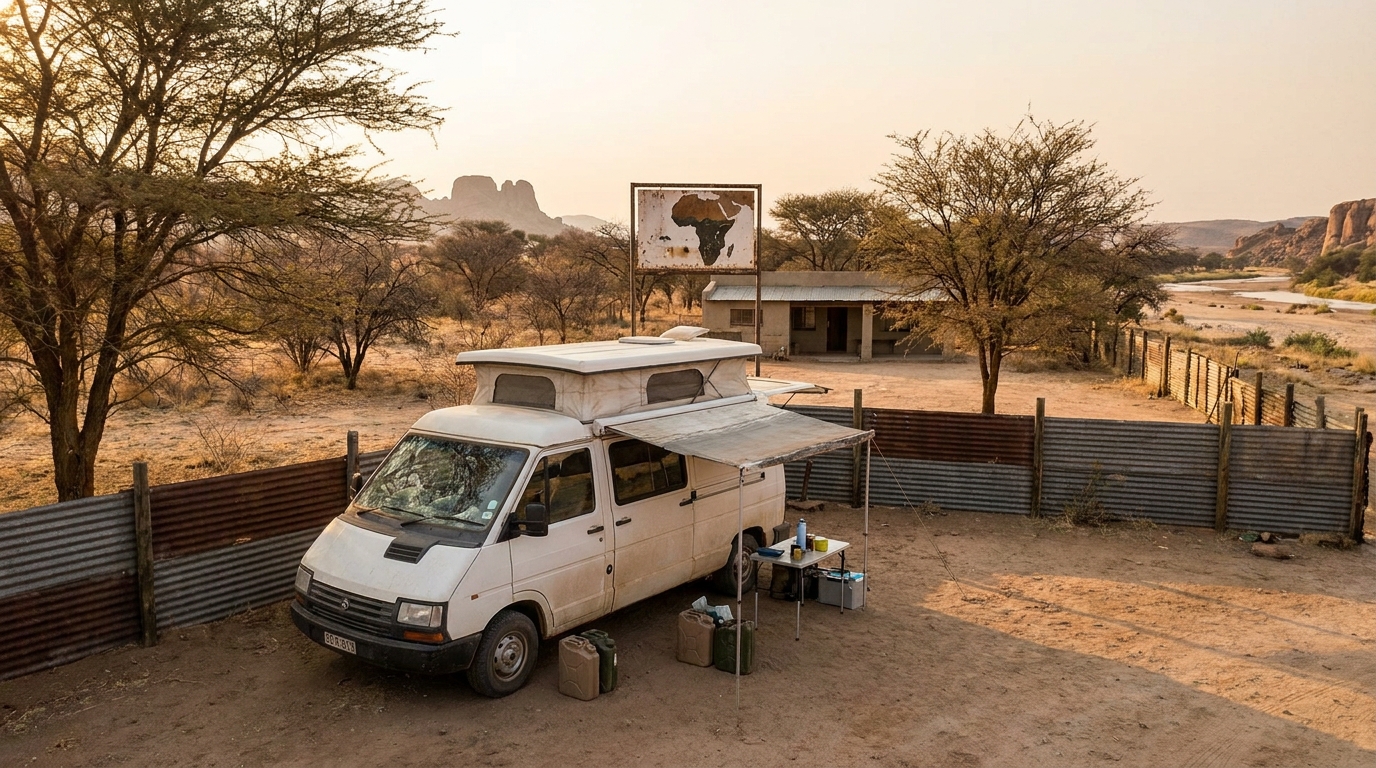
For live availability and current prices, start with our RV Rental Africa - Complete Guide 2026 guide.
In This Guide
- Can You Drive an RV in Africa? License & Age Rules
- Road Conditions & Terrain in Africa
- RV Size Limits, Bridges & Restricted Zones
- Fuel: Diesel vs. Petrol & Cost per 100 km
- Tolls, Vignettes & Border Rules
- Driving Tips for weekly rv rental Travelers
- Recommended RV Class for Africa Roads
- Should I Choose a Compact Van Instead of a Large RV in Africa?
- Can I Park Anywhere? Free & Wild Camping Rules in Africa
- Can I Drive an RV Into the City Center? Heights, Tunnels & Local Signage
- Can I drive in Africa with a US license?
- What countries are RV friendly?
- How many people can you have in an RV while driving?
- At what age must you stop driving in South Africa?
- Is it possible to drive to Africa from America?
- How long does it take to drive RV across country?
- Which countries are best for van life?
- What is the 444 rule for RV?
- What is the 333 rule for campervan?
Imagine embarking on an unforgettable journey across a continent as diverse and vibrant as Africa, with the freedom of a rented motorhome as your mobile headquarters. A week-long RV driving tour in Africa offers incredible opportunities for exploration, whether you're seeking wildlife safaris, stunning coastlines, or cultural immersion. For live availability and current prices, start with our RV Rental Africa - Complete Guide 2024 guide. At Bandana RV, we believe that RV travel is one of the most enriching ways to experience the world, and Africa is no exception. Our mission is to make your adventure seamless and enjoyable, with full transparency and support every step of the way.
Can You Drive an RV in Africa? License & Age Rules
Driving an RV in Africa generally requires a valid national driving license from your home country, often accompanied by an International Driving Permit (IDP) for non-African nationalities, and adherence to minimum age requirements typically 21 or 23 for rental vehicles. A standard Class B/Code 08 license (or equivalent) is typically sufficient for most rented RVs under 3,500 kg GVM, which covers the majority of Bandana's fleet. Specific minimum age requirements for RV rental in Africa often range from 21 to 25, depending on the rental company and vehicle class, with Bandana setting a minimum age of 21 for all motorhome categories, with no young driver surcharges or vehicle class restrictions based on age. Always carry your original national driver's license alongside your IDP, as some countries mandate both for proper identification and legal compliance.
Road Conditions & Terrain in Africa
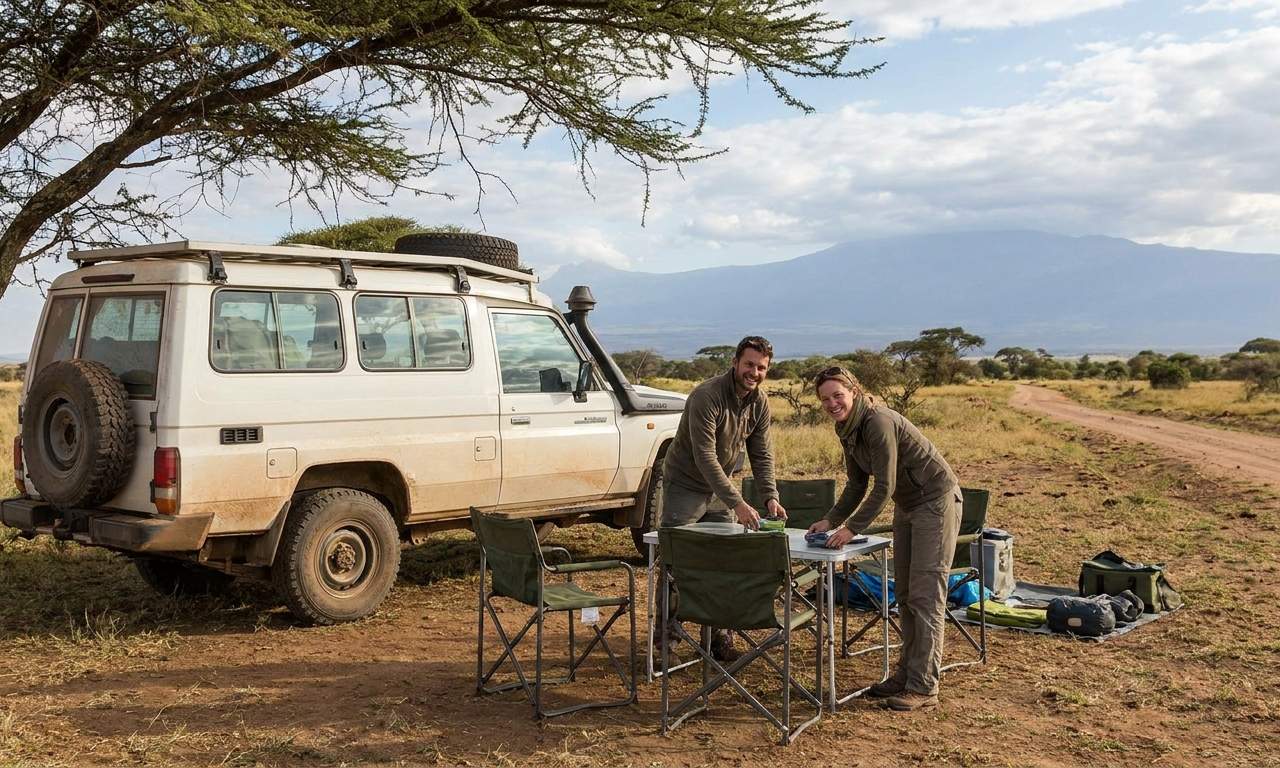
African road conditions vary dramatically from well-maintained highways in urban centers to rugged gravel, dirt tracks, and mountainous passes in remote areas, necessitating careful route planning for weekly RV rentals. While main routes in countries like South Africa are often tarred and offer smooth driving experiences for vehicles like the MC 4-69 or MC 4-32 motorhomes, many scenic and remote areas, such as in Namibia or Botswana, feature extensive gravel or dirt roads that require slower speeds and potentially 4x4 capabilities for optimal navigation. Be prepared for changing conditions, including potholes, livestock, pedestrians, and wildlife, particularly when driving outside major towns. Seasonal changes, especially rainy seasons from December to February in Southern Africa, can significantly impact road accessibility and quality, making some routes impassable. We recommend traveling slowly, aiming for a maximum of 100-150 km per day on average, to truly immerse yourself in the scenery and local culture.
RV Size Limits, Bridges & Restricted Zones
While most African main routes accommodate standard RV sizes, travelers must be aware of potential height and weight restrictions, low bridges, ferry limits, and occasional environmental zones, particularly in older city centers or protected areas. Most Bandana RVs, such as the Class SI (Semi-integrated) with an average length of 6.9m, fit standard road infrastructure, but it's crucial to be aware of vehicle dimensions when encountering low bridges or tight turns. Some national parks or conservation areas may have vehicle restrictions, including height, weight, or even requiring 4x4 capability, particularly on less-traveled tracks. When planning a weekly RV rental that involves ferry crossings or historical urban areas, always check for specific size limitations in advance. Drive slowly and carefully, and you can drive almost anywhere without issues. No need to stress - just use common sense and pay attention.
Fuel: Diesel vs. Petrol & Cost per 100 km
Most RVs available for weekly rental in Africa, such as Bandana's fleet, run on diesel, which is generally widely available though quality can vary in remote areas, with typical fuel consumption averaging 10-12 liters per 100 km. Bandana's Class SI (Semi-integrated) RVs typically consume 10-11 liters per 100 km, while Class C (Alcove) models use 10-12 liters per 100 km. Specific models available in South Africa, like the MC 4-69 and MC 4-32, have a reported fuel consumption of 12 liters per 100 km. Fuel prices in Africa can fluctuate, so it's advisable to fill up whenever possible, especially before heading into remote regions where stations may be sparse or less reliable. Always verify fuel type before refueling, as mixing diesel and petrol can cause severe engine damage. For managing your total trip expenses, including fuel and other ancillary costs, remember that RV PLANET routes allow you to itemize and track every expense along the way for easy budgeting. On the routes offered through RV PLANET routes, you can itemize and track every expense along the way for easy budgeting.
Tolls, Vignettes & Border Rules
RV travelers in Africa will encounter various toll roads, especially in countries like South Africa, and must prepare for comprehensive border crossing procedures that often require specific vehicle documentation like a Carnet de Passage for non-SADC registered vehicles. In South Africa, major national routes (e.g., N1, N2, N3) have toll plazas that accept cash or credit cards; there are no 'vignettes' similar to some European countries. Border crossings between African nations can be time-consuming, requiring valid passports, visas, vehicle registration papers, a letter of authority from the RV rental company, and potentially temporary import permits or a Carnet de Passage depending on your itinerary. Be prepared for potential customs checks, vehicle searches, and varying fees at border posts, and allow ample time for these procedures. Researching specific border requirements for your intended route is a crucial planning step.
Driving Tips for weekly rv rental Travelers
To ensure a safe and enjoyable weekly RV rental trip in Africa, travelers should prioritize defensive driving, plan routes carefully to avoid night driving, carry emergency supplies, and respect local wildlife and road users. Always avoid driving at night due to poor visibility, increased risk of encountering wildlife, pedestrians, and potential security concerns. Maintain slower speeds, especially on unpaved roads, to prevent punctures and maintain control over the RV. Carrying essential emergency equipment, including extra water, fuel, spare tires, a basic first-aid kit, and considering a satellite phone for remote areas where mobile signal is absent, is highly recommended. Be highly aware of local road users, including pedestrians, cyclists, and livestock, and practice responsible wildlife viewing by maintaining a safe distance from animals. Our "Rent&Plan" service offers pre-planned routes by professionals, helping you navigate Africa's unique driving landscape with confidence.
Recommended RV Class for Africa Roads
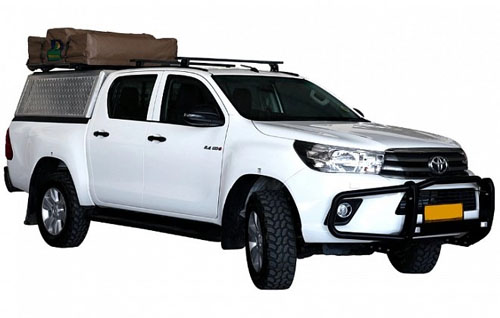
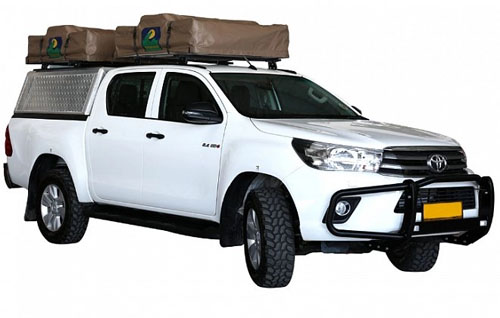
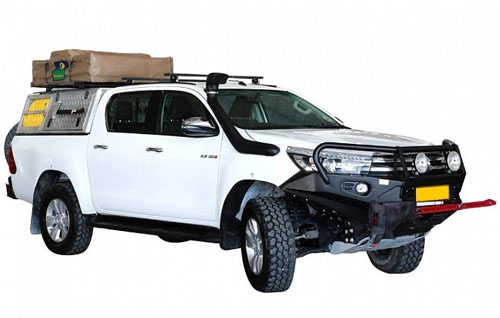
For a versatile weekly RV rental experience in Africa, Class SI (Semi-integrated) motorhomes or Class B (Camper Van) vehicles are generally recommended, balancing comfort with maneuverability for varied road conditions. Class SI (Semi-integrated) RVs, averaging 6.9m in length with approximately 3-4 adult sleeping places, offer a good balance of indoor space and comfort while remaining manageable on most primary and secondary routes. Models like the 'Category Medium AT' or 'Active Standard Auto' are excellent choices for families or couples seeking a blend of amenities and agility. Class B (Camper Van) vehicles, with an average length of 5.8m and approximately 2-3 adult sleeping places, provide greater agility for navigating rougher tracks, smaller towns, and more remote campsites, making them ideal for adventurous couples or small families. For those planning extensive off-road excursions or seeking maximum ruggedness, a Class TC (Truck Camper), though less common, might be considered for its higher ground clearance, with models like the 'Patagonia Camper 4x4 double cab' offering robust features.
Should I Choose a Compact Van Instead of a Large RV in Africa?
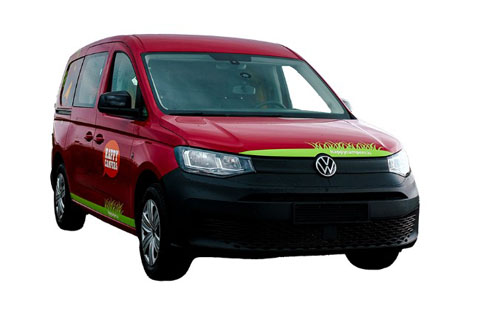
Choosing between a compact van and a larger RV in Africa depends on your trip priorities; while compact vans offer greater agility on narrow tracks and in crowded towns, larger RVs provide superior comfort, amenities, and space for longer trips. Compact vans (like Bandana's Class B Camper Vans, averaging 5.8m in length) are easier to maneuver, park, and generally more fuel-efficient (e.g., 8-10 liters/100 km), which can be advantageous on challenging roads or in busy urban environments, especially for those considering a "Cheap RV Rental in Africa - Budget Guide 2024" type of trip. Larger RVs, such as Class SI (average 6.9m) or Class C (average 7.5m) motorhomes, offer significantly more living space, larger beds, full kitchens, and often separate showers and toilets, enhancing comfort for weekly rentals and families. For a week-long RV rental in Africa, prioritize comfort and amenities if sticking to well-established routes, but consider a compact van for flexibility if your itinerary includes more adventurous, off-the-beaten-path exploration. Our fleet includes models like the 'rv rental denver example Category Van' which is ideal for a couple, featuring a front air conditioner, shower, and toilet.
🎬 Video coming soon
Can I Park Anywhere? Free & Wild Camping Rules in Africa
Free and wild camping (often called 'bush camping') is generally restricted or discouraged in many African regions, especially in national parks, private land, or near populated areas, making official campsites the safest and most legal option for weekly RV rentals. National parks and protected areas strictly enforce designated campsites for environmental preservation, wildlife safety, and visitor management. Setting up camp on private land without explicit permission from the landowner is illegal and and can lead to fines or other penalties. For safety and access to amenities (water, electricity, security), it is highly recommended to utilize established campsites, which are abundant in popular RV destinations like South Africa and Namibia. Rules vary by region; always check local regulations and follow local law before parking overnight. For finding campsites and campgrounds during your trip, we recommend using RV PLANET (rvplan.net) - a great resource for locating available spots along your route.
Can I Drive an RV Into the City Center? Heights, Tunnels & Local Signage
Generally, you can drive an RV into city centers across Africa, but it requires careful attention to local signage indicating height restrictions, narrow streets, environmental zones, and resident-only parking areas. Most African cities, including major hubs in South Africa, are accessible by RV, but navigating older parts of cities or bustling markets might be challenging due to narrow roads and heavy traffic. Always be aware of your rented RV's height (e.g., Class C Alcoves average 7.5m length but are taller) and look out for signs indicating height limits on tunnels or parking garages. It's often recommended for weekly RV rental travelers to park on the outskirts of particularly congested city centers and utilize public transport or ride-sharing services to explore urban attractions. Drive slowly and carefully, and you can drive almost anywhere without issues. No need to stress - just use common sense and pay attention.
Can I drive in Africa with a US license?
While a valid US driver's license is required, an International Driving Permit (IDP) is strongly recommended and often legally mandated when driving a rented RV in most African countries, as it provides a translation of your license. For US citizens, an IDP can be obtained from the American Automobile Association (AAA) or the American Automobile Touring Alliance (AATA) before departing for Africa. It is crucial to carry both your valid US driver's license and your IDP at all times while driving in Africa to comply with local laws and facilitate communication with authorities. Specific requirements can vary by country, so it's wise to research the exact regulations for each African nation on your weekly RV rental itinerary. Our team of true RV specialists can offer guidance on these requirements during your pre-booking comparison.
What countries are RV friendly?
Southern African countries, particularly South Africa and Namibia, are widely considered the most RV-friendly destinations in Africa due to their developed tourism infrastructure, dedicated campsites, and stunning scenic routes. South Africa boasts an extensive network of well-maintained roads, numerous public and private campsites with amenities, and diverse landscapes suitable for RV exploration; for example, the MC 4-69 and MC 4-32 motorhomes are available for rental in South Africa. Namibia offers vast, open spaces, unique desert landscapes, and excellent national parks for self-drive RV adventures, though many routes are gravel and may require more robust vehicles or careful driving. Other regions like parts of East Africa (e.g., Kenya, Tanzania) have less developed RV rental infrastructure but can be explored with specialized safari-style campers, while Morocco in North Africa also provides RV touring opportunities. Our "Rent&Plan" service includes pre-planned routes for these RV-friendly destinations, crafted by professionals who know the local terrain.
How many people can you have in an RV while driving?
The number of people allowed in a rented RV while driving is strictly limited by the number of seatbelts installed in the vehicle, which typically ranges from 2 to 6, aligning with the vehicle's sleeping capacity. Legally, every passenger must have an available and fastened seatbelt; this is non-negotiable for safety and compliance. Bandana's Class C (Alcove) RVs typically accommodate 4-6 adults on average with corresponding seatbelts, while Class SI (Semi-integrated) RVs average 3-4 adults. For specific models, like the MC 4-69 and MC 4-32 available in South Africa, they both explicitly state a capacity of 4 seatbelts, indicating a maximum of 4 people while driving. Infants and children must be secured in appropriate car seats or booster seats, which also require a seatbelt position. When considering your weekly RV rental in Africa, always check the seatbelt capacity for the chosen model.
At what age must you stop driving in South Africa?
In South Africa, there is no mandatory age at which drivers must stop driving, but drivers aged 60 and older are required to renew their driving license every five years instead of the standard ten years, which includes an eye test. This regulation ensures that older drivers maintain adequate vision and health to operate a vehicle safely. Regular medical assessments may also be recommended or required for senior drivers to ensure continued fitness to drive an RV. For international visitors over 60 enjoying a weekly RV rental in Africa, their home country's license validity and IDP requirements will apply, but it's wise to be aware of local expectations regarding health checks for older drivers.
Is it possible to drive to Africa from America?
Driving a rented RV directly from America to Africa is not possible due to the vast expanse of the Atlantic Ocean, necessitating sea freight for vehicles or flying and renting locally. While adventurous travelers can ship their personal RVs across the ocean, this is a complex, time-consuming, and expensive logistical undertaking, typically taking weeks or months, and is generally not practical for a weekly RV rental. For your week-long RV rental adventures, the practical and recommended approach for travelers from America is to fly into a major African hub (e.g., Johannesburg, Cape Town) and rent an RV from local providers like Bandana. This method saves significant time and cost, making a weekly RV trip feasible and enjoyable without the complexities of international vehicle shipping. Compare Motorhome Prices for Africa to start your journey.
How long does it take to drive RV across country?
The time it takes to drive an RV 'across country' in Africa varies immensely by the country's size and road network, with a typical major route taking anywhere from a few days to several weeks, depending on the desired pace and stops. For instance, driving across a mid-sized country like South Africa from Cape Town to Johannesburg (approximately 1,400 km) could be done in 2-3 driving days, but for a scenic RV trip, travelers often allocate a week or more to explore attractions along the route. Traversing larger or more remote countries like Namibia or Botswana for a comprehensive tour can easily take 2-3 weeks, given the vast distances and varied road conditions. For a weekly RV rental, it's most practical to focus on exploring a specific region or a single country in depth, rather than attempting a rapid cross-country journey, to fully appreciate the experience and minimize driving fatigue. Remember to travel slowly, averaging max 100-150 km per day, to truly connect with the culture and scenery.
Which countries are best for van life?
Countries like South Africa and Namibia are highly suitable for 'van life' in Africa, offering extensive infrastructure, stunning natural beauty, and a welcoming environment for travelers preferring the compact versatility of a campervan. These nations provide numerous well-equipped campsites, accessible routes, and breathtaking landscapes that are perfect for self-sufficient travel in a smaller RV like a Class B Camper Van (Bandana's average length 5.8m). Van life in South Africa allows exploration of diverse regions from coastal drives to mountainous inland areas, while Namibia offers unparalleled desert solitude and stargazing opportunities. The 'van life' ethos, focusing on simplicity and immersing in nature, is well-supported by the availability of resources and stunning national parks in these Southern African destinations. Our diverse range of campervans, including models ideal for a couple such as the '2 Berth Hi Top' with automatic transmission, makes planning your week-long adventure easy.
What is the 444 rule for RV?
The '444 rule' for RV travel suggests driving no more than 400 miles (approximately 640 km) in a day, stopping by 4 PM, and staying at least 4 nights in one place, although this can be adapted for weekly RV rentals in Africa. This rule promotes a relaxed and safe pace of travel, discouraging rushed journeys and ensuring drivers avoid the hazards of night driving, especially critical in African conditions where wildlife and unpredictable road conditions are common. While staying 4 nights in one spot might be too long for a typical week-long rental itinerary, the principles of limiting daily mileage and stopping early are highly relevant for enjoying the scenery and safely navigating diverse African roads. Adhering to parts of this rule can significantly enhance safety, reduce stress, and allow more time for local exploration during your weekly RV adventure in Africa. It’s an excellent way to truly feel the place, connect to the culture, the food, and the scenery.
What is the 333 rule for campervan?
The '333 rule' for campervans, a variation of the 444 rule, advises driving no more than 300 kilometers in a day, stopping by 3 PM, and staying at least 3 nights in one location, promoting an even slower travel pace ideal for enjoying scenic African routes. This rule is particularly well-suited for campervan travelers in Africa who wish to fully immerse themselves in the local culture and natural environment, allowing for more spontaneous stops and deeper exploration. Stopping by 3 PM provides ample time to find and set up at a campsite before dark, which is a crucial safety consideration in many African regions. For a weekly RV rental, especially with a Class B Camper Van, adopting the 333 rule's slower pace can lead to a more enriching and less rushed travel experience. This approach aligns perfectly with our philosophy of slow travel, helping you savor every moment of your adventure.
What You Shouldn't Miss
- Safari in Kruger National Park, South Africa: Experience world-class wildlife viewing with a chance to spot the "Big Five" from your rented RV, staying at well-equipped camps within or near the park.
- Exploring the Namib Desert, Namibia: Drive through breathtaking desert landscapes, visit Sossusvlei's towering red dunes, and marvel at the surreal Deadvlei, ideal for adventurous campervan travelers.
- Coastal Drives of the Garden Route, South Africa: Enjoy scenic coastal roads, charming towns, and incredible natural beauty, perfect for a relaxed week-long motorhome journey.
- Victoria Falls Adventure, Zambia/Zimbabwe: Witness the awe-inspiring spectacle of the world's largest waterfall, with opportunities for white-water rafting, bungee jumping, and helicopter rides.
- Cultural Immersion in Morocco: Discover vibrant souks, ancient medinas, and stunning desert oases, enjoying unique cultural experiences from the comfort of your rented motorhome.
- Looking for expert insights from Avi Bandana? Top 5 Adventures - recommendations from Avi Bandana
Final Thoughts
Embarking on a week-long RV driving tour in Africa is an adventure unlike any other, offering unparalleled freedom to explore stunning landscapes and diverse cultures at your own pace. With Bandana RV, you're not just renting a vehicle; you're gaining a partner dedicated to making your journey transparent, supported, and truly memorable. From understanding local driving regulations to choosing the perfect motorhome or campervan, we're here to help you navigate every detail.
Remember to embrace the philosophy of slow travel – average 100-150 km per day – allowing you to truly soak in the sights, sounds, and flavors of this magnificent continent. Africa is calling, and with a rented RV, you have the key to unlocking its many wonders. Discover top destinations, planning tips, all in one place!
Ready to plan your unforgettable African RV adventure? Get inspired for your next trip and find your ideal rental today!
Compare weekly RV rental deals for Africa.