For live availability and current prices, start with our RV Rental Austria - Complete Guide 2026 guide.
In This Guide
- Top 5 Tips for RV Rental in Austria for Seniors
- Before You Book — Class, Dates, Insurance
- Pre-Trip Prep — Packing Checklist for Austria
- On the Road — Driving, Fueling, Navigation
- At the Campground — Setup, Hookups & Etiquette
- RV Rental for Seniors-Specific Tips for Austria
- Common Mistakes to Avoid in Austria
- What are the specific RV driving laws and wild camping rules in Austria?
- How much does an RV rental trip to Austria typically cost?
- What RV size and safety equipment are recommended for Austria's terrain?
- Where are the off-the-beaten-path RV destinations in Austria?
- What is the best time of year for an RV trip to Austria for seniors?
- How can RVers experience local Austrian culture and etiquette?
- How can I practice eco-friendly RVing in Austria?
Top 5 Tips for RV Rental in Austria for Seniors
Choosing the right RV class, focusing on comfort and ease of driving, is crucial for senior travelers in Austria.
Prioritize booking well in advance, especially for popular seasons, to secure preferred RV models and campground spots. Opt for comprehensive insurance coverage for peace of mind, understanding that basic insurance is typically included. Plan a flexible itinerary with realistic daily distances, allowing ample time for relaxation and spontaneous stops. Research RV-friendly campgrounds with accessible facilities and services before your trip.
For tips tailored to your specific trip, talk to Bandana RV.
Before You Book — Class, Dates, Insurance
Selecting an appropriate RV class is essential for senior comfort and maneuverability on Austrian roads.
Smaller integrated campervans or partially integrated RVs (Class C/B equivalents) often provide easier handling and parking, making them ideal for seniors navigating narrower roads and mountain passes. When choosing an RV, consider models like the "B 2/3 - Classic" or "Active Compact Select," which are known for their user-friendliness and comfort features. These often include essential amenities like a shower, toilet, and a comfortable sleeping space, ensuring a pleasant travel experience. Many suppliers also offer newer models with updated features for added convenience.
Booking your RV rental and preferred dates well in advance, particularly for peak seasons like summer and Christmas markets, ensures better availability and potentially more favorable rates. Expect to pay between €80-€150 per day for a compact campervan during the off-season, rising to €200-€350+ for larger, more luxurious motorhomes during peak summer months.
Basic insurance is always included with your rental. To see prices including the most comprehensive coverage, select that option during your search—all relevant insurance options will be shown. Consider additional coverage options such as roadside assistance or reduction of deductible for enhanced security during your trip. For tips tailored to your specific trip, talk to Bandana RV.
Pre-Trip Prep — Packing Checklist for Austria
A well-organized packing checklist tailored to Austria's diverse climate and terrain can enhance your RV experience.
Clothing: Pack layered clothing, including a waterproof jacket, fleece, and t-shirts, suitable for varying temperatures. Comfortable walking shoes and sturdy hiking boots are essential for exploring. Don't forget sleepwear and a swimsuit if you plan to visit lakes or spas.
Kitchen & Comfort: Reusable water bottles and coffee cups are practical for minimizing waste. Pack basic cooking supplies like salt, pepper, and oil, though check what's provided with your rental. A comprehensive medications and first-aid kit is crucial, as is a European power outlet adapter for charging your devices.
Safety & Navigation: Reflective safety vests for all passengers are mandatory in Austria. A warning triangle and first-aid kit are also legally required. Utilize a reliable GPS device or navigation app with offline maps, and carry physical maps as a backup.
Documents: Ensure you have a valid driver's license; an International Driving Permit is often recommended for non-EU residents. Pack your passport or ID, RV rental agreement, and insurance documents, along with your travel insurance details.
For tips tailored to your specific trip, talk to Bandana RV.
On the Road — Driving, Fueling, Navigation
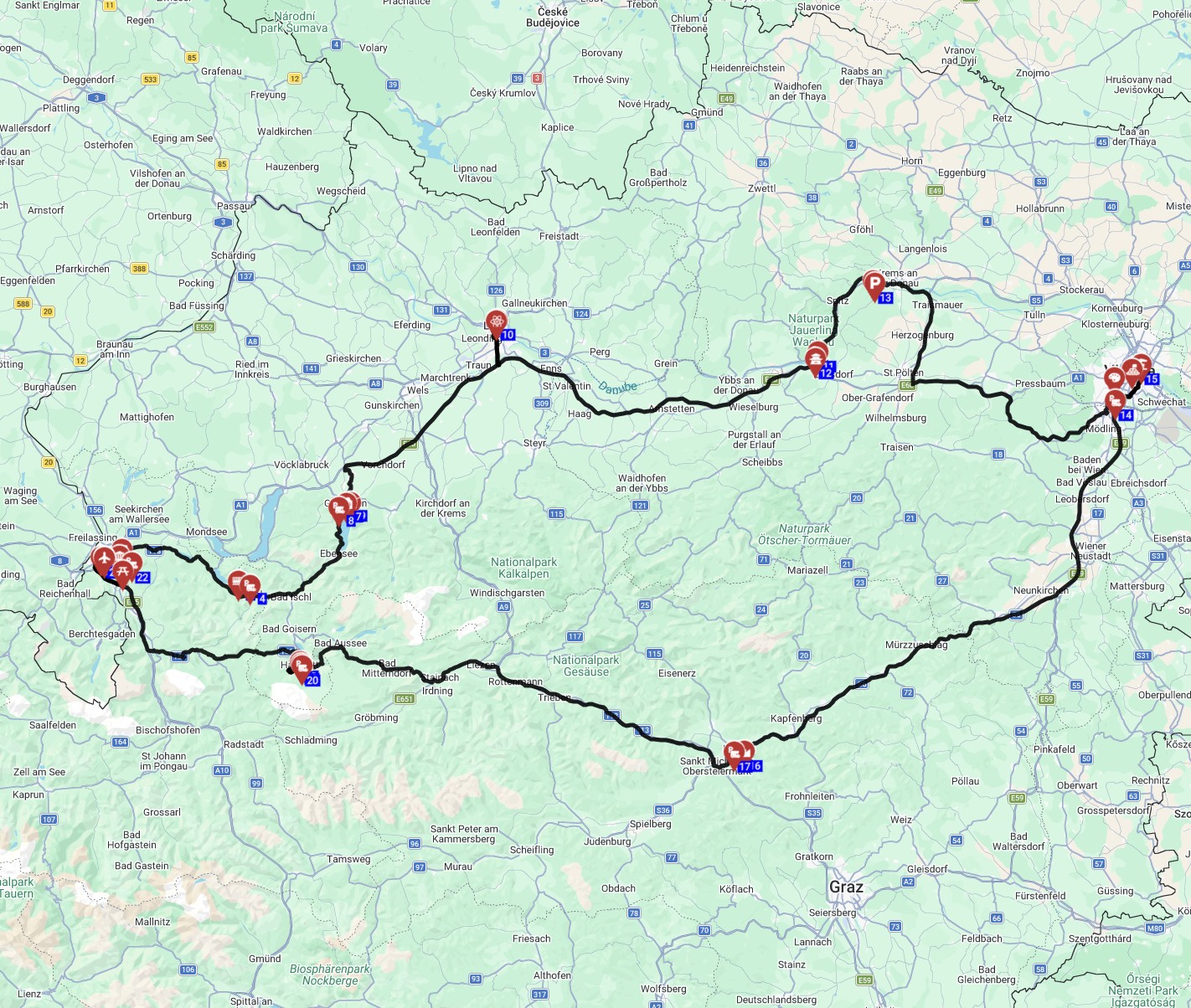
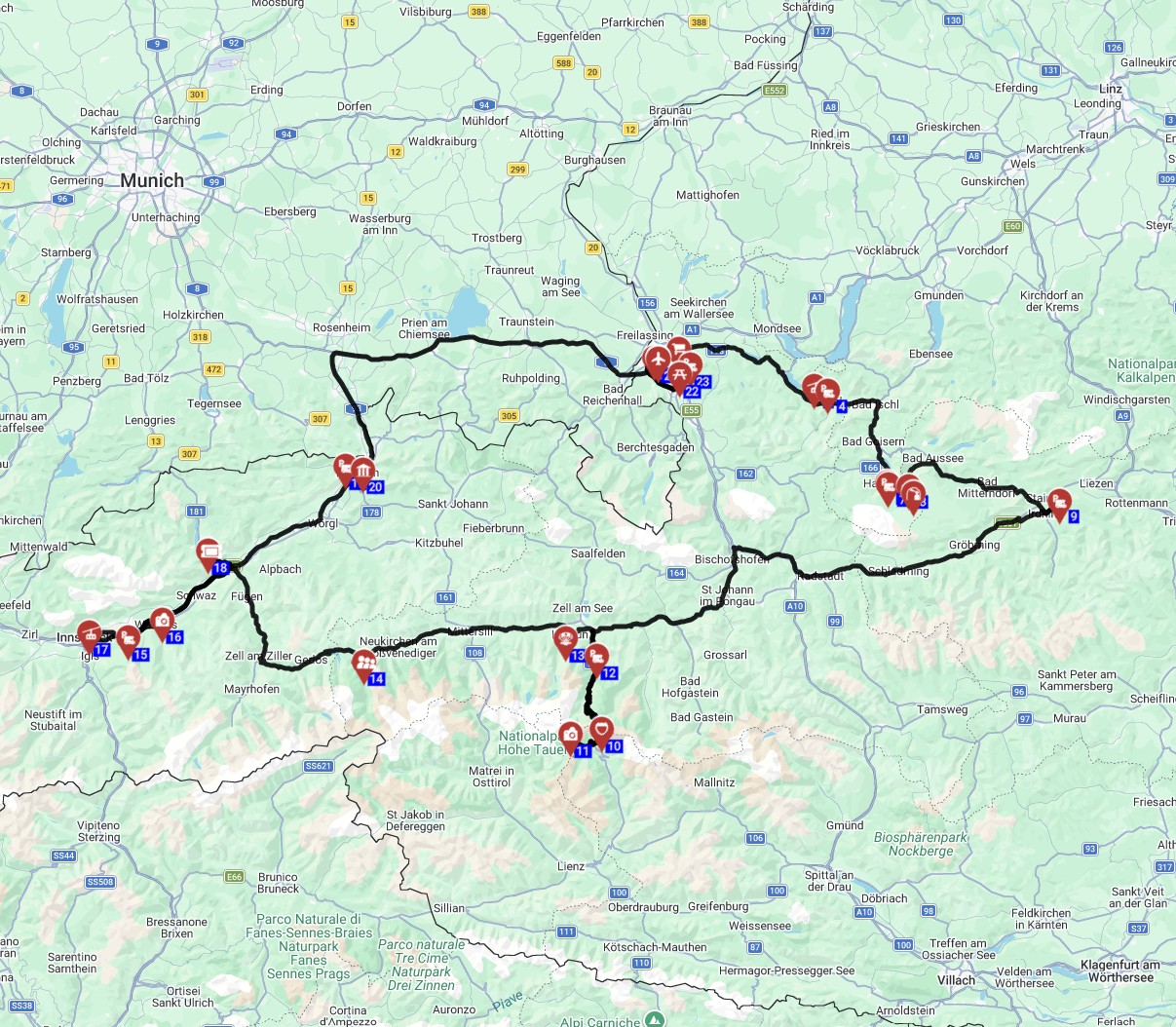
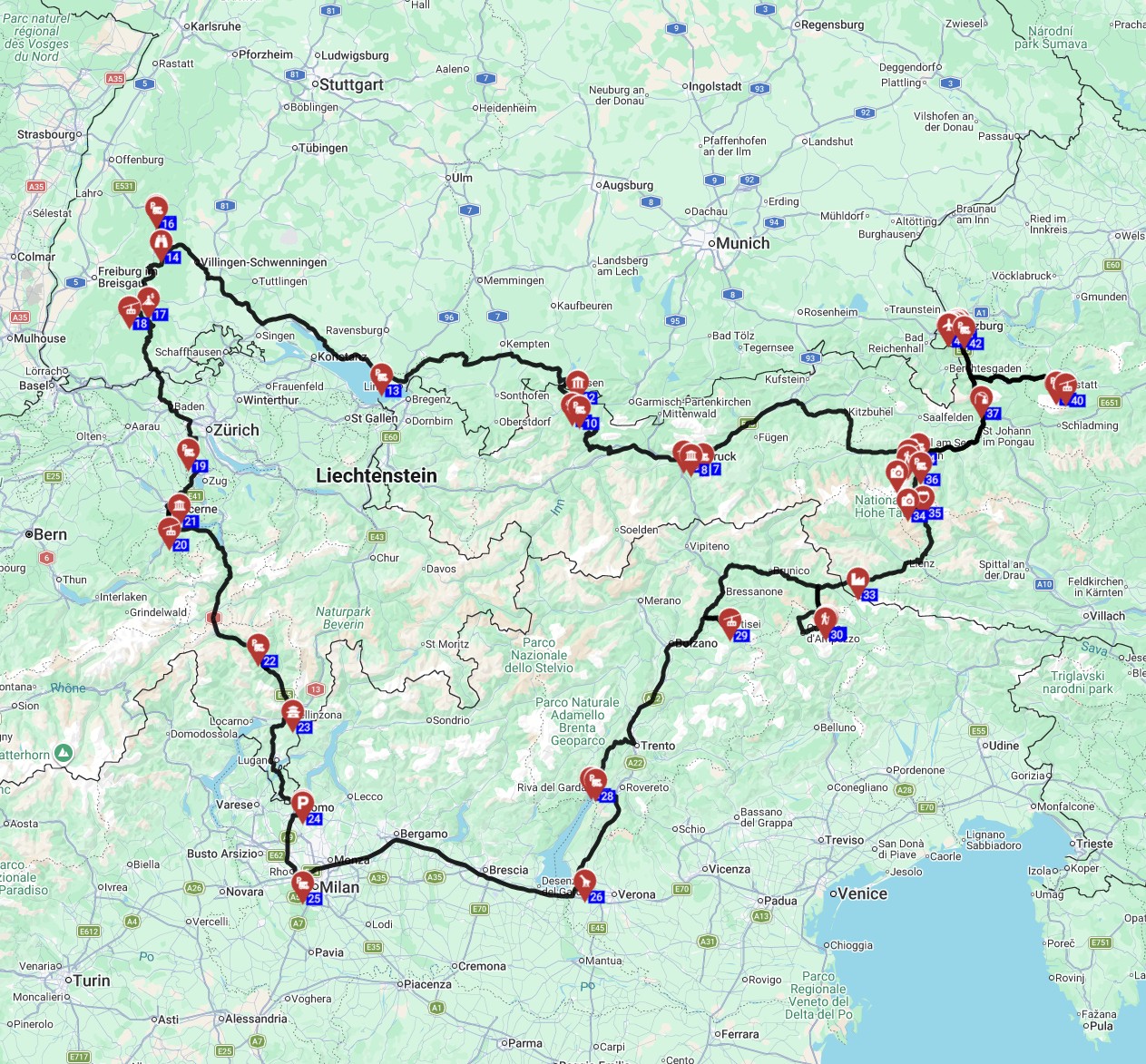
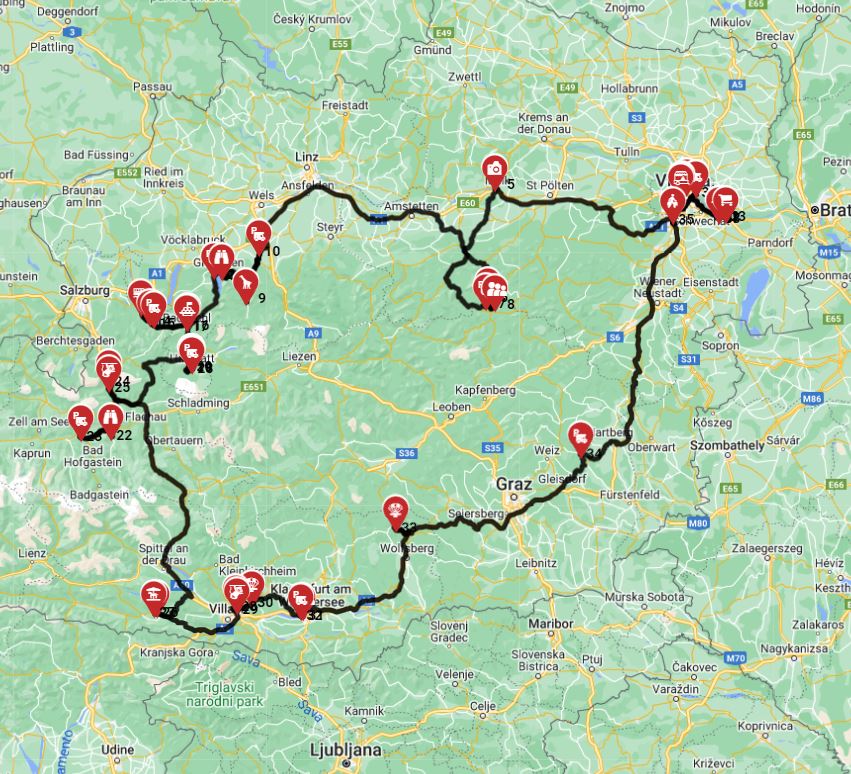
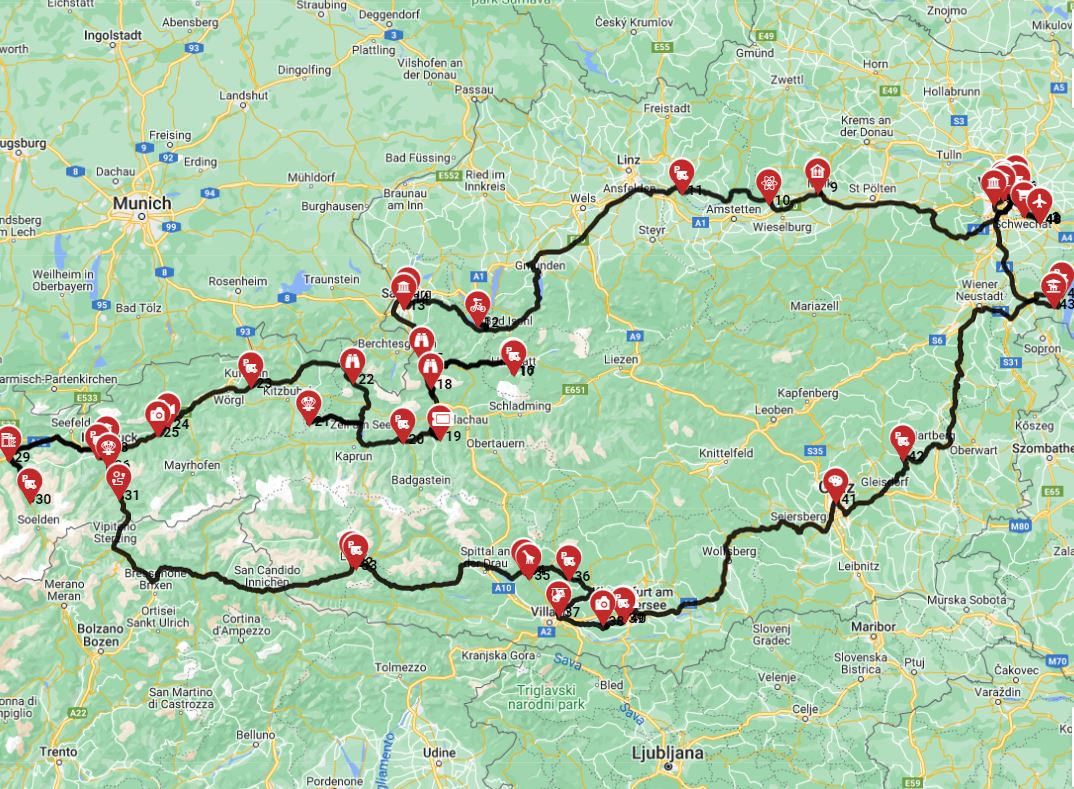
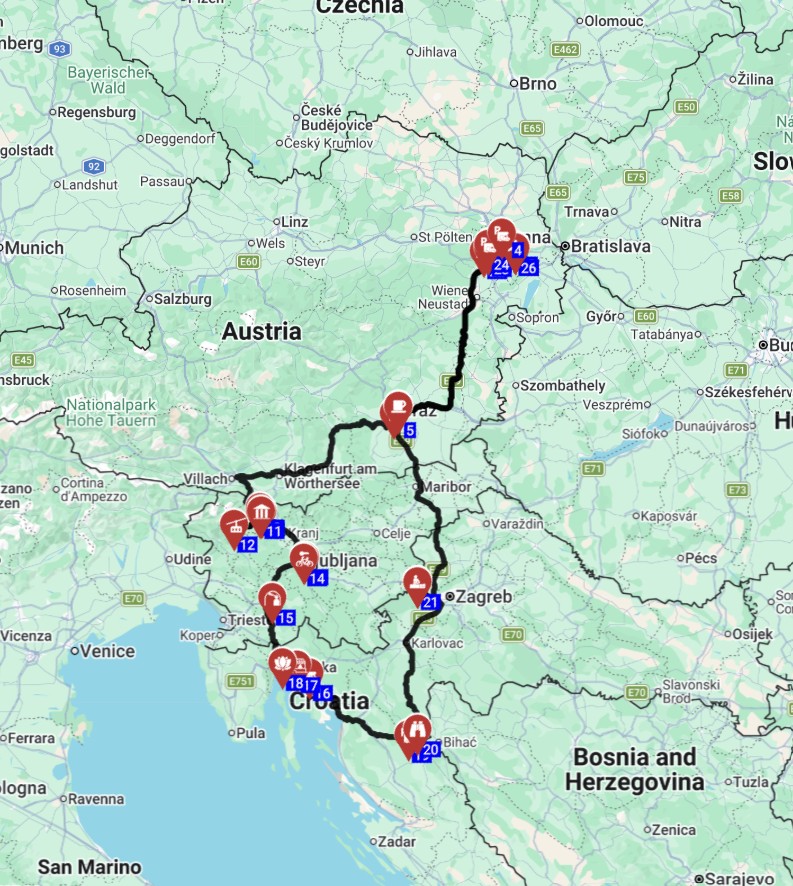
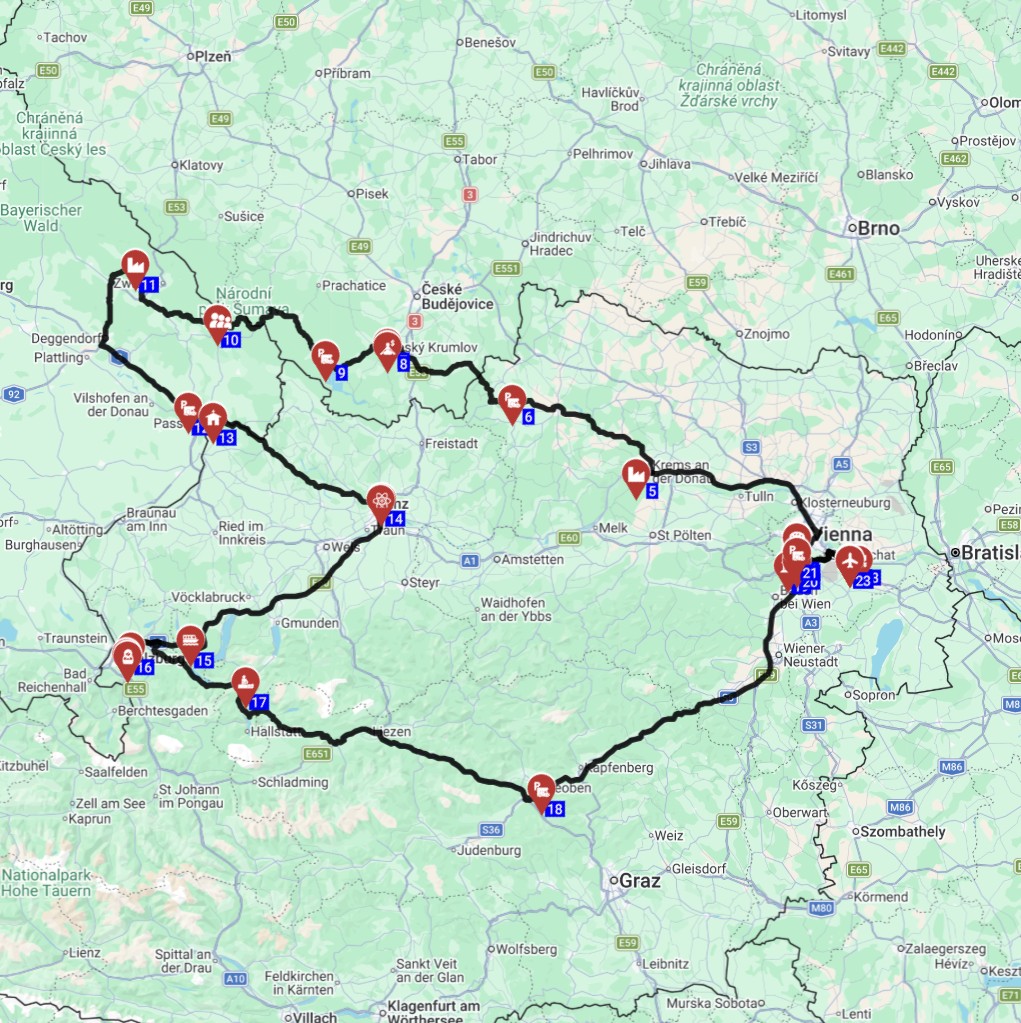
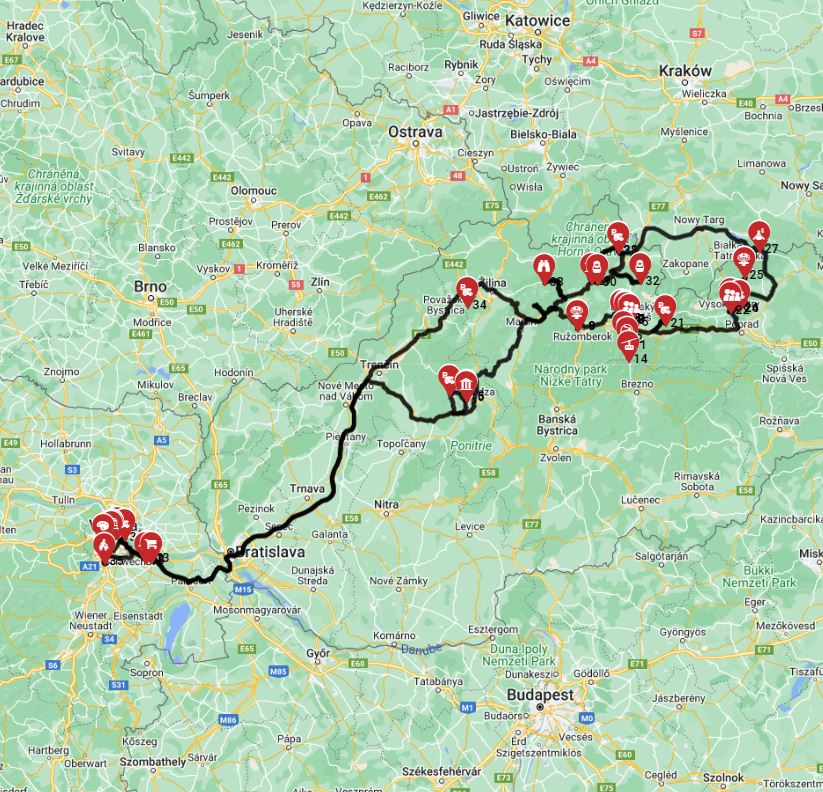
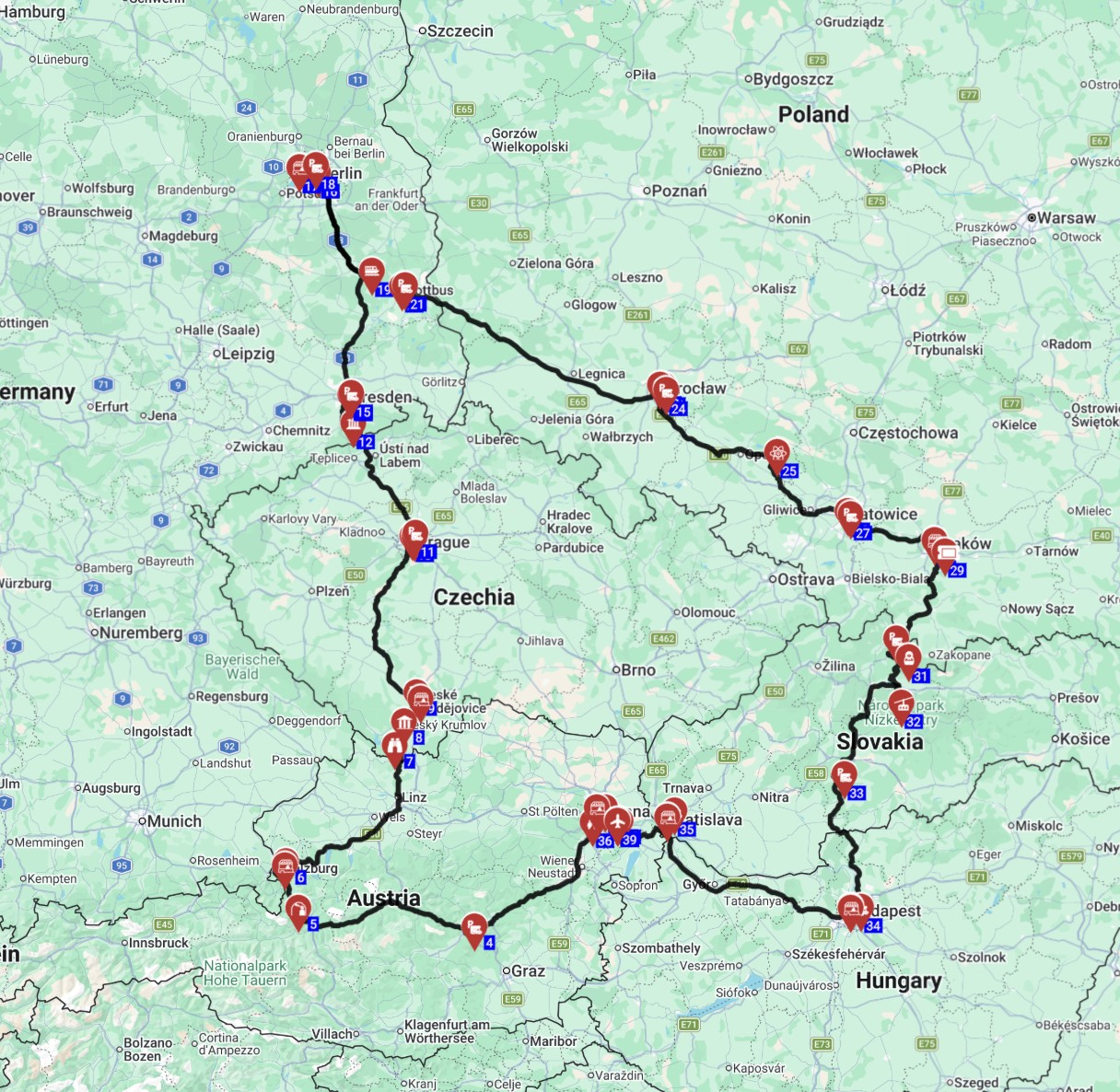
Navigating Austria's roads requires familiarity with its unique traffic rules, toll systems, and terrain. On the routes offered through RV PLANET routes, you can itemize and track every expense along the way for easy budgeting.
Ensure you have a valid road toll sticker (Vignette) for motorways and expressways, or a GO-Box for RVs over 3.5 tonnes, before entering toll roads to avoid fines. Be prepared for mountain passes, which may require lower gears and careful braking; some passes might also have seasonal closures or specific vehicle restrictions.
Understand Austrian speed limits: generally 100 km/h on expressways, 130 km/h on motorways, and 50 km/h in urban areas, with specific limits for RVs. Fuel stations are widely available, typically offering diesel and petrol (Benzin); plan your fuel stops, especially in mountainous or remote areas, as availability can decrease.
Utilize a reliable GPS system or navigation app that can account for RV dimensions and provide real-time traffic updates. For tips tailored to your specific trip, talk to Bandana RV.
At the Campground — Setup, Hookups & Etiquette
Successfully setting up your RV at an Austrian campground involves a systematic approach to hookups and adherence to local etiquette.
Upon arrival, select your pitch and park carefully, ensuring enough space for awnings and outdoor living. Connect to shore power first to ensure immediate electricity, then attach the fresh water hose, and finally, connect the waste water hose. Familiarize yourself with the campground’s facilities, rules, and emergency procedures.
Respect quiet hours, typically from 10 PM to 7 AM, keeping noise levels low and being mindful of your neighbors. Dispose of waste properly in designated bins and utilize gray and black water disposal points responsibly. For tips tailored to your specific trip, talk to Bandana RV.
RV Rental for Seniors-Specific Tips for Austria
Planning an RV trip in Austria as a senior traveler can be enhanced by focusing on comfort, accessibility, and a relaxed pace.
Choose an RV class with easy entry/exit, comfortable beds, and a functional bathroom, such as a compact or medium-sized integrated RV. For example, the "Active Bunk Auto" or "Campervan for 2 - Automatic" offer a good balance of comfort and ease of use. Prioritize campgrounds known for accessibility, offering paved paths, level pitches, and accessible restroom facilities.
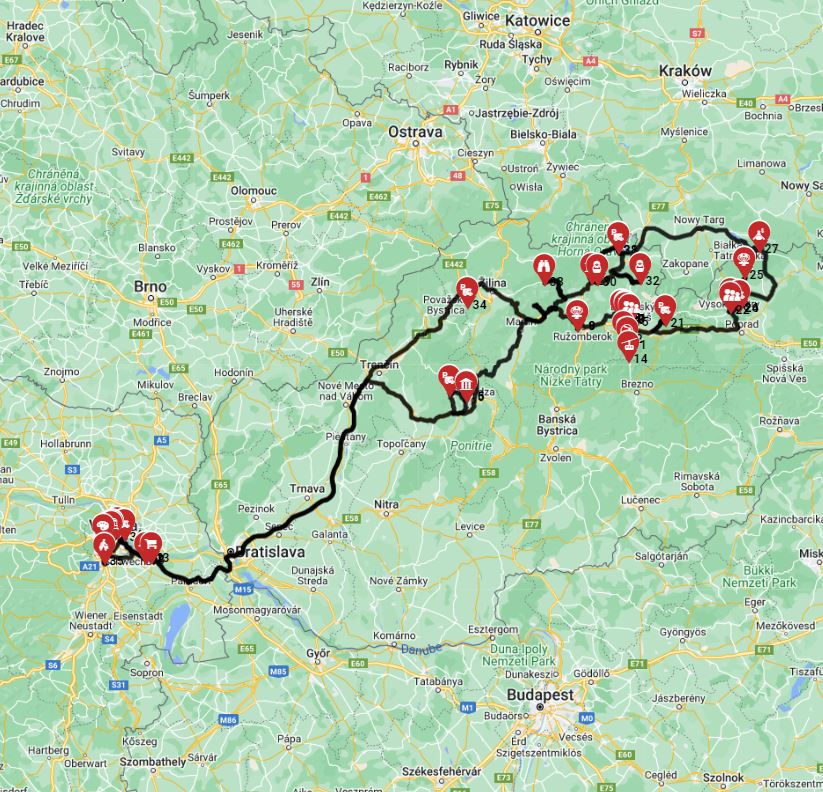
Plan a slower-paced itinerary, allowing for shorter driving days and more time to explore each destination, reducing travel fatigue. Consider our "
Carry essential medications in a clearly labeled, easily accessible place, along with copies of prescriptions and relevant medical information. Keep emergency contact numbers readily available, including local Austrian emergency services (112) and your rental company's support. For tips tailored to your specific trip, talk to Bandana RV.
Common Mistakes to Avoid in Austria
Avoiding common pitfalls can significantly contribute to a smoother and more enjoyable RV adventure in Austria.
- Not purchasing a Vignette (toll sticker) or GO-Box: Ensure your RV has the correct toll payment system for Austrian motorways and expressways *before* entering them to avoid fines. Remember, the GO-Box is mandatory for RVs over 3.5 tonnes.
- Underestimating driving times and mountain terrain: Allocate extra time for travel, especially on winding mountain roads, and be prepared for varying weather conditions. Some routes, like the Grossglockner High Alpine Road, have specific opening hours and fees.
- Ignoring environmental zones (Umweltzonen): Research environmental zone requirements for specific cities like Vienna and ensure your RV meets the necessary emission standards or plan alternative routes.
- Expecting widespread wild camping: Rely on designated campgrounds or official Stellplätze (motorhome parking areas), as wild camping is generally prohibited and can result in significant fines.
- Overpacking: Pack efficiently, bringing only essentials, to avoid exceeding weight limits and to ensure comfortable living space within the RV.
- Not having specific winter equipment during winter months: Ensure your RV is equipped with mandatory snow chains and winter tires if traveling during the colder season (typically November to April).
For tips tailored to your specific trip, talk to Bandana RV.
What are the specific RV driving laws and wild camping rules in Austria?
Driving an RV in Austria requires adherence to specific traffic laws, including mandatory safety equipment and environmental regulations, while wild camping is largely restricted.
Road Tolls: All vehicles on motorways and expressways require a Vignette (for vehicles up to 3.5t) or a GO-Box (for vehicles over 3.5t), which must be purchased and displayed correctly. The GO-Box is crucial for RVs weighing over 3.5 tonnes, as it tracks usage per kilometer. Standard vignettes do not apply to these heavier vehicles.
Mandatory Equipment: RVs must carry a reflective safety vest for each occupant, a warning triangle, and a first-aid kit. During winter (Nov 1 to Apr 15), winter tires are mandatory, and snow chains may be required in designated areas, especially on mountain passes.
Environmental Zones (Umweltzonen): Some Austrian cities, particularly Vienna, have low emission zones. Check if your RV's emission class requires a specific badge or if you need to plan alternative routes to avoid these zones.
Wild Camping: Generally, wild camping and overnight parking outside designated campsites or Stellplätze are illegal in Austria and can lead to fines. While rules can vary slightly by federal state (Bundesland), it's best to stick to official campgrounds or designated motorhome parking areas.
Parking: Always park in designated areas and observe local parking signs, especially in towns and near tourist attractions, as large RVs may have specific restrictions. For instance, in historic city centers, finding suitable parking for larger RVs can be challenging.
For tips tailored to your specific trip, talk to Bandana RV.
How much does an RV rental trip to Austria typically cost?
The typical cost of an RV rental trip to Austria can range from €100 to €300+ per day, influenced by RV size, season, rental duration, and additional expenses like fuel, tolls, and camping fees.
Rental Costs: Expect daily rental prices from €80-€150 for smaller campervans in the off-season, up to €200-€350+ for larger, luxury RVs during peak summer. Booking further in advance can often secure better rates, potentially saving you up to 25% on peak season bookings.
Fuel: Fuel costs vary but factor in around €1.70-€2.00 per liter for diesel/petrol. RV consumption typically ranges from 8-15 liters per 100 km, depending on vehicle size, terrain, and driving style.
Tolls & Vignette: A 10-day Vignette costs around €10 for vehicles under 3.5t. For heavier RVs (over 3.5t), a GO-Box is necessary, calculating tolls based on kilometers driven, axles, and emission class. Special tunnel or mountain road tolls can add an extra €10-€30 per passage, such as the Grossglockner High Alpine Road.
Campground Fees: Nightly campground fees typically range from €25-€50, depending on location, facilities, and season. Some premium sites with extensive amenities might cost more.
Food & Activities: Budget for groceries (€30-€60/day for self-catering) or dining out, plus costs for attractions, which can significantly vary based on your preferences. For finding campsites and campgrounds during your trip, we recommend using RV PLANET (rvplan.net)—a great resource for locating available spots along your route.
For tips tailored to your specific trip, talk to Bandana RV.
What RV size and safety equipment are recommended for Austria's terrain?
For navigating Austria's diverse terrain, especially its mountainous regions, a compact to medium-sized RV (under 7 meters) is generally recommended, coupled with essential safety equipment for all seasons.
Ideal RV Size: Smaller, more agile campervans or partially integrated RVs (around 6-7 meters) are highly suitable for Austria. They offer easier maneuverability on narrow mountain roads, in historic villages, and for parking. Consider models like the "Active Compact Select" or "Camper Van" which are compact yet well-equipped.
Weight and Power: Ensure your chosen RV has sufficient engine power for ascending steep mountain passes, especially if traveling with a full load. Vehicles over 3.5 tonnes are subject to additional toll and speed restrictions, so factor this into your choice.
Mandatory Safety Equipment: Always carry a reflective safety vest for every passenger, a warning triangle, and a first-aid kit; these are legally required in all vehicles. For winter travel, appropriate winter tires and snow chains are essential.
Heating and Insulation: For shoulder seasons or winter, an RV with efficient heating and good insulation is crucial for comfort, particularly at higher altitudes. Models featuring a robust heating system, like the "Comfort Family," would be ideal.
For tips tailored to your specific trip, talk to Bandana RV.
Where are the best off-the-beaten-path RV destinations in Austria?
To discover unique local experiences beyond typical tourist hotspots, RVers in Austria can explore regions like the Salzkammergut lakes, Carinthia's southern Alps, or the Weinviertel wine region.
Salzkammergut Lakes: Beyond the popular Hallstatt, explore smaller lakes like Attersee or Mondsee. These offer picturesque lakeside campgrounds, opportunities for hiking, and water sports, all while avoiding the largest crowds. Many regional campgrounds here are well-maintained and offer excellent facilities.
Carinthia (Kärnten): Head to the southern Alps for stunning mountain scenery and pristine lakes like the Weissensee. This region is perfect for hiking, cycling, and enjoying authentic local cuisine in charming villages.
Weinviertel (Lower Austria): This renowned wine region, north of Vienna, features rolling hills, vineyards, and traditional 'Kellergassen' (wine cellar lanes). Many wineries offer Stellplätze or small private campgrounds, providing an authentic experience.
Gesäuse National Park (Styria): Ideal for nature lovers seeking dramatic limestone peaks, deep gorges, and crystal-clear rivers. You'll find accessible RV parking near hiking trails and climbing routes.
Bregenzerwald (Vorarlberg): Discover innovative wooden architecture, traditional crafts, and serene alpine meadows in this western Austrian region. The area features welcoming farm-stay campgrounds perfect for a peaceful retreat.
For tips tailored to your specific trip, talk to Bandana RV.
What is the best time of year for an RV trip to Austria for seniors?
The shoulder seasons of late spring (May-June) and early autumn (September-early October) are often considered ideal for senior RV travelers in Austria, offering pleasant weather, fewer crowds, and generally lower prices.
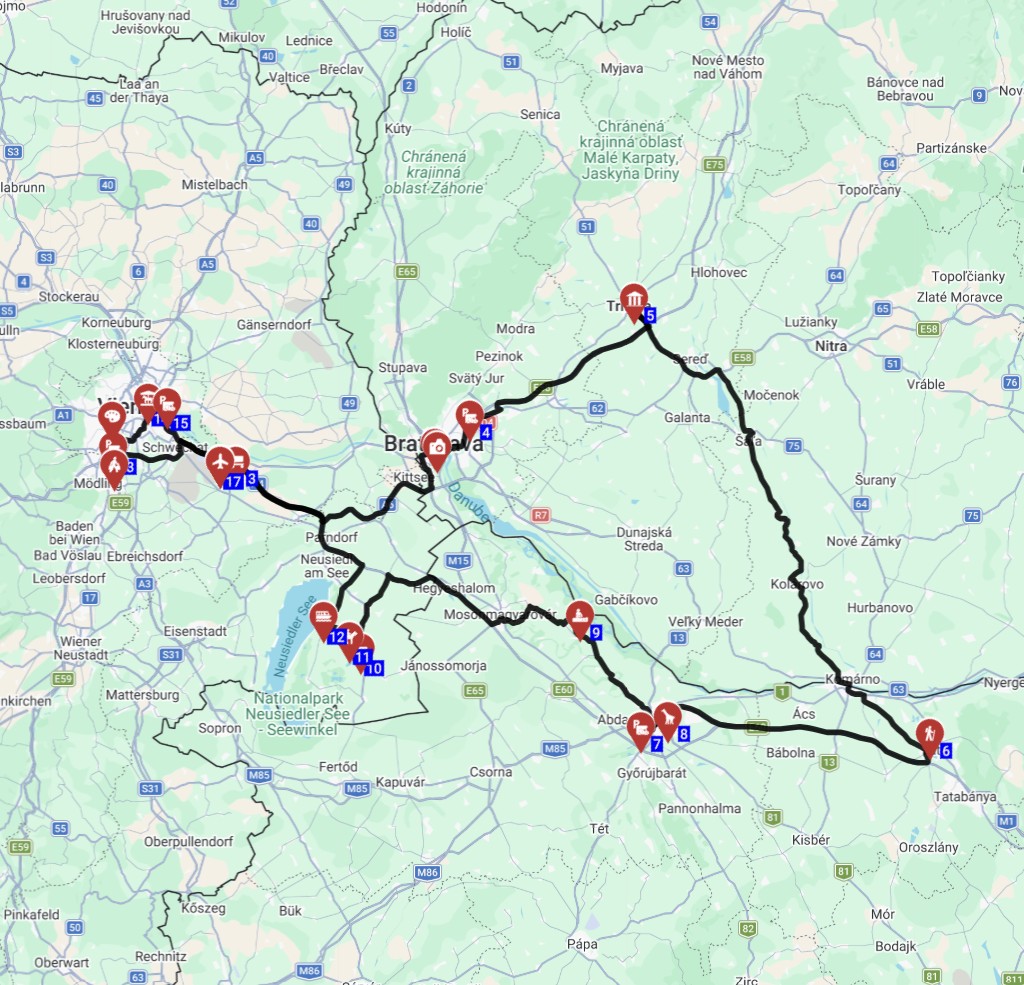
Spring (May-June): This period offers blooming landscapes and mild temperatures perfect for gentle hikes and sightseeing. With fewer tourists than peak summer, you can enjoy a more relaxed pace and find easier campground bookings. Many of the "Vienna Roundtrip" route's attractions are at their best during this time.
Autumn (September-early October): Characterized by stunning fall foliage and comfortable temperatures, this season is also ideal for visiting wine regions during the grape harvest. Most attractions and campgrounds remain open, but with significantly reduced crowds compared to summer.
Summer (July-August): While popular, summer brings higher temperatures, larger crowds, and peak prices. It's suitable for seniors who prefer warmer weather and don't mind a more bustling atmosphere.
Winter (November-April): RVing in winter, especially in mountainous regions, presents specific challenges like mandatory winter tires/chains and colder temperatures. It suits seniors interested in winter sports or festive Christmas markets but requires careful preparation.
Considering personal preferences for weather, activity levels, and budget is key to choosing the optimal time for a senior RV trip to Austria.
How can RVers experience local Austrian culture and etiquette?
RVers can deeply engage with Austrian culture by participating in local traditions, respecting social norms, and seeking authentic food and community interactions.
Engage with Locals: Be open to friendly greetings like "Grüß Gott" (especially in rural areas) and "Servus." A polite demeanor and attempts at basic German phrases are always appreciated. Small gestures of politeness go a long way in fostering positive interactions.
Respect Quiet Hours: Adhere strictly to campground quiet hours and general noise restrictions, particularly in residential areas. This demonstrates respect for local peace and consideration for fellow campers.
Local Markets and Festivals: Visit weekly farmers' markets ('Wochenmärkte') for fresh produce and local specialties. Seek out village festivals ('Dorffeste') for authentic cultural experiences, often featuring traditional music and crafts.
Dining Etiquette: Tipping is customary (around 5-10%), and it's polite to wait to be seated in restaurants. Enjoy traditional dishes like Wiener Schnitzel, Kaiserschmarrn, and Sachertorte for an authentic taste of Austria.
Nature and Environment: Show respect for Austria's pristine natural environment by sticking to marked paths, disposing of waste properly, and minimizing your ecological footprint. This aligns with Austria's strong commitment to environmental preservation.
Authentic Food Experiences: Look for 'Buschenschanken' (seasonal wine taverns) in wine regions or traditional 'Gasthäuser' in villages for genuine regional cuisine and hospitality. These local establishments offer a true taste of Austrian culinary traditions.
For tips tailored to your specific trip, talk to Bandana RV.
How can I practice eco-friendly RVing in Austria?
Practicing eco-friendly RVing in Austria involves conscious choices regarding waste, resource consumption, and respecting the natural environment, aligning with the country's strong green initiatives.
Minimize Waste: Reduce plastic use by bringing reusable bags, water bottles, and coffee cups. Separate and dispose of waste responsibly in designated recycling bins at campgrounds. Many Austrian campgrounds have excellent recycling facilities.
Conserve Resources: Use water sparingly, especially when showering or washing dishes, and be mindful of electricity consumption by unplugging unused devices. This helps reduce the strain on campground resources and your own expenses.
Drive Efficiently: Maintain a steady speed, avoid rapid acceleration and braking, and ensure proper tire pressure to reduce fuel consumption and emissions. This not only benefits the environment but also saves on fuel costs.
Respect Nature: Stay on marked paths when hiking, avoid disturbing wildlife, and never leave litter behind, especially when visiting national parks or natural protected areas. Austria's commitment to preserving its natural beauty is evident everywhere you go.
Choose Eco-friendly Campgrounds: Prioritize campgrounds that demonstrate a commitment to sustainability, such as those with eco-labels, solar panels, or advanced waste management systems. Supporting these businesses reinforces responsible tourism.
Support Local: Purchase local produce and goods from farmers' markets or small businesses. This reduces transport emissions and supports the local economy, providing a more authentic experience.
For tips tailored to your specific trip, talk to Bandana RV.
What You Shouldn't Miss
- Drive the Grossglockner High Alpine Road: Experience Austria's most iconic scenic drive with breathtaking mountain vistas. Remember to check seasonal opening times and factor in the toll fee.
- Explore the Salzkammergut Lake District: Beyond the popular Hallstatt, visit less crowded gems like Attersee or Wolfgangsee for stunning lakeside views and accessible campgrounds.
- Wander through historic Austrian cities: Dedicate time to explore charming city centers like Salzburg, Innsbruck, or Graz, perhaps using your RV to reach them and then exploring on foot or via public transport.
- Indulge in Austrian 'Slow Food': Seek out local 'Buschenschanken' in the Weinviertel or traditional 'Gasthäuser' in villages for authentic regional cuisine and wine tasting experiences.
- Discover the Dolomites (Italy): If your route permits, a slight detour into the Italian Dolomites offers spectacular alpine scenery easily accessible with an RV.
- Visit a Traditional Market: Immerse yourself in local life by visiting a weekly farmers' market ('Wochenmarkt') for fresh produce and regional specialties.
Final Thoughts
Embarking on an RV adventure in Austria offers an unparalleled way to experience its stunning landscapes and rich culture at your own pace. By choosing the right vehicle and planning thoughtfully, senior travelers can ensure a comfortable and memorable journey.
Remember that flexibility and a spirit of adventure are your greatest assets when RVing. Embrace the freedom of the open road, connect with the local way of life, and savor every moment of your Austrian exploration. Happy travels!
Get inspired for your next trip! Discover top destinations, planning tips, all in one place!
For ideas you can prep on the road, watch our RV-friendly recipes playlist on YouTube.