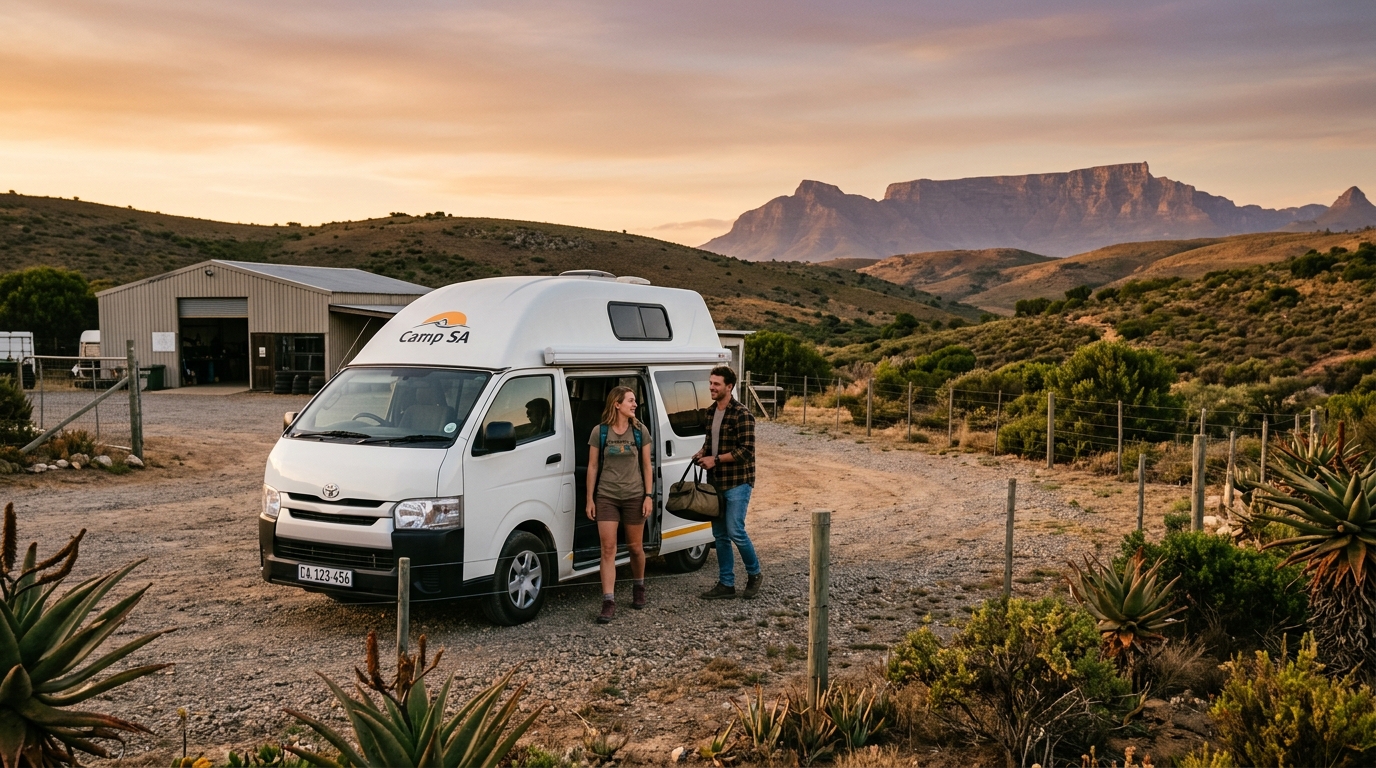
For live availability and current prices, start with our RV Rental South Africa - Complete Guide 2026 guide.
In This Guide
- Top 5 Tips for RV Rental in South Africa
- Before You Book - Class, Dates, Insurance
- Pre-Trip Prep - Packing Checklist for South Africa
- On the Road - Driving, Fueling, Navigation
- At the Campground - Setup, Hookups & Etiquette
- RV Rental-Specific Tips for South Africa
- Common Mistakes to Avoid in South Africa
- What are the real driving conditions and specifics for RVs in South Africa?
- How can I ensure safety and security while RVing in South Africa?
- What are the local laws and cultural etiquette for RV travelers in South Africa?
- What are the RV-specific logistics and infrastructure like in South Africa?
- How can I find authentic cultural and community experiences while RVing in South Africa?
- What should I know about encountering wildlife outside game reserves in South Africa?
- What is the cell phone reception and Wi-Fi availability like for RV travel in South Africa?
- How do I plan a detailed RV itinerary for specific trip lengths in South Africa?
- What You Shouldn't Miss
Exploring South Africa by rented RV offers an unparalleled adventure, giving you the freedom to discover its breathtaking landscapes, vibrant cities, and diverse wildlife at your own pace. Imagine waking up to the sound of crashing waves on a pristine coastline or the distant roar of a lion from your comfortable mobile home. With a rented motorhome or campervan, South Africa transforms into your personal playground. For live availability and current prices, start with our RV Rental South Africa - Complete Guide 2024 guide, your ultimate resource for planning your journey.
At Bandana Caravan, we believe in full transparency: what you see is what you pay, with no hidden fees or surprises at pickup. Our commitment to transparent pricing ensures you can confidently plan your budget from the very beginning. We also offer 24/7 support from real people, meaning we're always here to assist you before and after your booking, making your South African RV adventure as smooth as possible.
Top 5 Tips for RV Rental in South Africa
Prioritizing safety by researching routes and secure overnight stops is crucial for any RV rental in South Africa. We always recommend choosing well-established caravan parks and campsites for your stays, many of which offer excellent security features and amenities. Booking your RV and campsites well in advance, especially for peak season months like December-January or Easter holidays, will help you secure availability and often better rates, with savings of up to 25% for bookings made 90+ days ahead. Familiarize yourself with South African road rules and driving conditions; understanding local customs like 'robots' (traffic lights) and 'Stop-and-Go' sections is vital. Acquiring a local SIM card for reliable navigation and communication is also a smart move, as cell signal can be intermittent in remote areas. Lastly, maintaining a flexible itinerary allows you to accommodate unexpected discoveries and local advice, truly embracing the spirit of slow travel. Aim for an average of 100-150 km per day to truly immerse yourself in the culture, food, and scenery.
Before You Book - Class, Dates, Insurance
Selecting the right RV class for your South African adventure depends significantly on your group size, budget, and comfort preferences, ranging from compact campervans like the 'Category Van' to larger motorhomes such as a `Euro Deluxe`. For couples, a campervan or a smaller Class C motorhome is usually ideal, offering easy maneuverability and comfortable amenities. Families with 2+2 children might prefer a spacious Class C motorhome like an `rv rentals example Comfort Class`, providing multiple sleeping areas and a more expansive living space. Each type, from Class B campervans with 80L refrigerators to Class C models with 150L fresh water tanks, offers a different experience. Lock in your rental dates as early as possible, particularly for trips during South Africa's peak seasons (December-January, Easter, July) to ensure availability and better rates, as prices are dynamic and change daily based on demand. Basic insurance is always included with your RV rental; however, for the most comprehensive coverage and extra peace of mind, you can upgrade to a top-level deductible reimbursement option during your booking. Also, consider additional coverage for tire and windscreen damage, which are often not included in basic plans, and always understand the excess (deductible) amount on your chosen insurance policy.
Pre-Trip Prep - Packing Checklist for South Africa
A smart packing checklist is essential for a successful RV rental journey in South Africa. Pack versatile clothing layers suitable for varied climates and temperatures across different regions, as weather can change quickly from coastal humidity to arid Karoo heat. Include essential kitchen items like a small cooler, reusable containers, and basic cooking staples to enjoy local produce and prepare your meals, enhancing your self-catering experience. If you're looking for inspiration for delicious meals on the road, check out our RV-friendly recipes playlist. Prepare a safety kit with a first-aid kit, reflective vest, and emergency contact numbers, including local roadside assistance. Crucially, organize all necessary documents, including your standard car driver's license (which is sufficient for all motorhome classes), an International Driving Permit (IDP) if your license is not in English, your passport, visa, and multiple copies of your rental agreement and insurance details.
On the Road - Driving, Fueling, Navigation
Driving in South Africa occurs on the left side of the road, which will require adjustment for international drivers accustomed to right-hand driving. You'll quickly get the hang of it by driving slowly and carefully. When in cities or navigating tight spots, remember to drive slowly and carefully, and you can drive almost anywhere without issues. No need to stress - just use common sense and pay attention. Fueling is typically done by friendly attendants at petrol stations, who can also assist with checking oil and water, and most now accept card payments; a small tip (around R5-R10) is customary. Utilize offline maps or reliable GPS devices as cell signal can be intermittent in remote areas, particularly in national parks or mountainous regions. Adhere strictly to posted speed limits, which are typically 120 km/h on national highways, 100 km/h on provincial roads, and 60 km/h in urban areas. Be aware of diverse road conditions, which can range from well-maintained national highways to unpaved gravel paths or roads with unexpected potholes, especially in rural zones. Plan your fuel stops in advance, particularly when traveling through less populated regions like the Karoo, where petrol stations are sparse and distances between towns can be significant. Be vigilant for roaming animals, including livestock and wildlife, which can appear unexpectedly on roads outside of fenced reserves.
🎬 Video coming soon
At the Campground - Setup, Hookups & Etiquette
Upon arrival at a campsite in South Africa, typically the first step is to level your rented RV for comfort and proper appliance function, using leveling blocks if necessary. Connect electrical hookups using a Type M adapter if needed (South Africa uses 220-240V, 50Hz electricity), followed by fresh water, and finally, managing waste disposal (grey and black water) at designated dump stations. You can easily find campsites and campgrounds along your route using RV PLANET (rvplan.net), a great resource for locating available spots. Observe quiet hours, usually between 10 PM and 7 AM, to ensure a peaceful environment for all campers, as many enjoy the tranquility of nature. Respect communal facilities such as ablution blocks (bathrooms) and braai (BBQ) areas by keeping them clean and tidy, a key aspect of local camping etiquette. Properly dispose of all waste in designated bins, and always follow local guidelines for campfires, especially during dry seasons when fire restrictions may be in place. On the routes offered through RV PLANET routes, you can itemize and track every expense along the way for easy budgeting.
RV Rental-Specific Tips for South Africa
Choosing the right rented motorhome or campervan in South Africa depends on your travel style and group. For families, selecting an RV like a `6 Berth Derwent` or `Euro Deluxe` with sufficient sleeping arrangements and a kitchen (which usually includes a gas stove and a refrigerator) is crucial, and consider child-friendly routes with frequent stops at playgrounds or attractions. Seniors may prefer an RV rental with easy access, automatic transmission (like the `hire campervan example Paradise S/T`), and comfortable amenities, prioritizing shorter driving days averaging 100-150 km and well-equipped campsites. Budget travelers can save by opting for smaller campervans such as a `Category Van`, utilizing self-catering facilities (don't forget to check our RV-friendly recipes playlist), and seeking out low-cost overnight parking spots where permitted. Luxury travelers might consider premium RVs with added amenities, booking private campsites with exclusive facilities, or even hiring a local guide for personalized tours. Always ensure your chosen RV rental accommodates any specific accessibility needs if applicable, and remember that our service promises to compare final prices across suppliers, ensuring what you see is what you pay.
Common Mistakes to Avoid in South Africa
To ensure a smooth RV rental experience in South Africa, avoid common pitfalls. Instead of failing to book campsites in advance, particularly during peak season or for popular national parks, ensure you have reservations to avoid disappointment and secure your preferred spot. Rather than underestimating driving times between destinations, factor in extra time for fuel stops, photo opportunities, and potential road hazards or the ubiquitous 'Stop-and-Go' roadworks. A good rule of thumb is to travel slowly, averaging no more than 100-150 km per day. Instead of ignoring local road signs and warnings, always pay attention to signage regarding wildlife, speed limits, and changing road conditions, especially on gravel roads. Avoid departing with inadequate insurance; ensure your policy comprehensively covers potential damages and provides peace of mind, and consider upgrading to a top-level deductible reimbursement option. Instead of overpacking, pack efficiently with versatile clothing and essential items, remembering that laundry facilities are often available at many campsites. Finally, avoid leaving valuables visible in your RV; always secure belongings and close windows and doors, even for short stops, to prevent opportunistic theft.
What are the real driving conditions and specifics for RVs in South Africa?
South Africa's road conditions for RVs can vary significantly, ranging from well-maintained national highways like the N1 or N2 to less predictable regional and gravel roads that may feature potholes or unexpected debris, especially after heavy rains. Foreign drivers should be prepared for left-hand driving, which requires careful attention, especially at intersections and roundabouts, often referred to as 'robots.' You'll quickly adapt, especially if you drive slowly and carefully. Drivers should remain vigilant for roaming animals, particularly in rural areas or near nature reserves, which can include livestock, baboons, or even larger wildlife crossing roads unexpectedly. Navigation challenges can arise due to varied road quality and signage in less populated areas; using a reliable offline GPS or detailed physical maps in conjunction with your phone is advisable. Local driving etiquette includes understanding 'robots' (traffic lights) and common practices like flashing headlights, which can signal an intention to overtake or warn oncoming traffic of hazards ahead.
How can I ensure safety and security while RVing in South Africa?
Ensuring safety and security while RVing in South Africa involves proactive measures like securing your vehicle and choosing appropriate overnight stops. Always keep your RV rental doors and windows locked, especially when parked or during nighttime, and avoid leaving valuables in plain sight to deter theft. Prioritize parking in designated, well-lit campsites or secure caravan parks rather than isolated, unauthorized spots, as these facilities often have fences, gates, and security personnel. Research your planned routes and destinations in advance to identify safer areas and be aware of any regions with higher crime rates, and adjust your itinerary accordingly. In emergency situations, have local emergency contact numbers (Police: 10111, Ambulance: 10177) readily available and know the location of nearby police stations or medical facilities along your route. Our 24/7 support is also available for pre-booking comparison, booking support, and post-booking coordination.
What are the local laws and cultural etiquette for RV travelers in South Africa?
Understanding local laws and cultural etiquette is crucial for a respectful RV rental journey through South Africa. While wild camping is generally illegal or highly restricted across the country, designated campsites and private land (with explicit permission) offer legal and safe overnight options. Alcohol consumption laws prohibit open containers in public places and driving under the influence (the legal limit is 0.05g per 100ml of blood); responsible consumption is expected strictly at campsites. Tipping culture is prevalent in South Africa, extending beyond waitstaff (10-15% is standard) to include informal services like parking attendants ('car guards'), petrol station pump attendants, and even bag packers at grocery stores; a small token of appreciation (a few Rands) is customary for these services. Interacting respectfully with local communities involves greeting people politely (e.g., 'Sawubona' in Zulu), asking for permission before taking photos, and being mindful of local customs and social cues, particularly in rural or traditional areas. Remember to travel slowly, allowing yourself time to connect to the culture, food, and scenery.
What are the RV-specific logistics and infrastructure like in South Africa?
RV-specific logistics and infrastructure in South Africa include access to water, waste disposal, electrical hookups, and fuel, primarily found at established campsites and larger towns. Most caravan parks and some petrol stations offer water refill points, but it's advisable to carry extra water, especially when venturing into remote areas where supply can be unreliable. Waste disposal facilities for grey and black water (dump stations) are commonly available at formal campsites; always inquire about these when booking your spot. Electrical hookups typically use a Type M plug (three large round pins), and it's wise to carry an adapter and extension cord, with a voltage of 220-240V. Fuel availability can be sparse in very remote regions, necessitating careful route planning and ensuring a full tank before long stretches; emergency vehicle repair services are more concentrated in urban centers like Johannesburg or Cape Town. For budgeting ancillary trip costs like fuel, campground fees, and groceries, remember that on RV PLANET routes, travelers can itemize and track every expense along the way for easy budgeting.
How can I find authentic cultural and community experiences while RVing in South Africa?
To find authentic cultural and community experiences while RVing in South Africa, move beyond mainstream tourist routes and intentionally engage with local life. Explore lesser-known towns and villages like those along the Cape Route 62, visiting local craft markets, community centers, or attending small local events advertised regionally. Engage with local communities by supporting small businesses, trying local eateries, and respectfully interacting with residents, perhaps by sharing a 'braai' (barbecue) at a campsite. Seek out opportunities for genuine cultural immersion, such as guided township tours led by local residents (e.g., in Langa or Soweto) or visits to traditional healing centers (with prior arrangement and respect). Experience local food traditions beyond major cities by exploring farmer's markets for fresh produce, small family-run restaurants for authentic dishes, or even participating in a cooking class focusing on South African cuisine. Our Rent&Plan service includes pre-planned routes by professionals, which can guide you to these less-traveled, more authentic experiences.
What should I know about encountering wildlife outside game reserves in South Africa?
Encountering wildlife outside formal game reserves in South Africa is common and requires awareness and respect to ensure safety for both humans and animals. You may encounter baboons, monkeys, various bird species, and smaller mammals near coastal roads (like the Garden Route), agricultural areas, or even directly at campsites. Always maintain a safe distance from all wildlife; never feed animals, as this can lead to aggressive behavior and dependency on humans, which is detrimental to their well-being. Secure your RV's food and belongings, especially from inquisitive primates like baboons, who are known to approach vehicles and attempt to open doors or windows in search of food. Observe wildlife respectfully from a distance and avoid sudden movements or loud noises that could startle them. Remember, you are a visitor in their natural habitat, and their safety and your own depend on your responsible behavior.
What is the cell phone reception and Wi-Fi availability like for RV travel in South Africa?
Cell phone reception and Wi-Fi availability for RV travel in South Africa can vary significantly, with strong coverage in urban areas and along major highways, but often limited or non-existent service in remote regions, national parks, and mountainous terrain. For reliable connectivity, acquiring a local SIM card from major providers like Vodacom, MTN, or Telkom upon arrival is highly recommended, offering better rates for calls and data packages (often with prepaid options starting from R50 for several GBs). While many formal campgrounds and caravan parks offer Wi-Fi, it may be paid, limited in bandwidth, or only accessible in communal areas. Download offline maps and essential information (like campsite details or emergency contacts) before venturing into areas with known poor signal to ensure continuous navigation and access to details. Consider bringing a portable Wi-Fi hotspot (using a local SIM) or preparing for periods of being unplugged, which can be a refreshing part of your adventure through Africa.
How do I plan a detailed RV itinerary for specific trip lengths in South Africa?
Planning a detailed RV itinerary for specific trip lengths in South Africa involves balancing desired activities with realistic driving times and budget considerations. For common durations like a two-week trip, focus on a specific region (e.g., the Garden Route, Panorama Route, or KwaZulu-Natal coastline) rather than attempting to cover the entire country to avoid feeling rushed and to truly experience each destination. Our Rent&Plan service offers pre-planned route itineraries developed by professionals, which can be a huge time-saver. Suggested activities should include a mix of scenic drives, cultural experiences (like visiting local markets in towns mentioned in "How can I find authentic cultural and community experiences while RVing in South Africa?"), wildlife viewing (both in and out of reserves), and relaxation at campsites. Calculate realistic driving times, adding buffer for stops, refuels, and unexpected road conditions, aiming for no more than 4-5 hours of driving per day, ensuring you adhere to our slow travel philosophy of 100-150 km per day on average. Incorporate a budget breakdown that accounts for fuel (diesel is common for RVs), campsite fees (ranging from R150-R500 per night), activity entrance costs, groceries for self-catering, and any desired restaurant meals; RV PLANET routes allow you to track every expense easily.
What You Shouldn't Miss
- Garden Route Exploration: Drive the iconic Garden Route (N2), from Mossel Bay to Storms River, experiencing indigenous forests, pristine beaches, and charming towns like Knysna and Plettenberg Bay.
- Kruger National Park Wildlife Safari: Experience world-class wildlife viewing in Kruger National Park, booking campsites inside the park for an immersive bush experience (book well in advance!).
- Cape Winelands Tour: Indulge in wine tasting along the historic Cape Winelands, visiting picturesque towns like Stellenbosch, Franschhoek, and Paarl.
- Table Mountain & Cape Town: Take the cable car up Table Mountain for panoramic views of Cape Town, then explore the city's vibrant culture, Bo-Kaap's colorful houses, and V&A Waterfront.
- Drakensberg Mountains Hiking: Trek through the dramatic landscapes of the Drakensberg Mountains, a UNESCO World Heritage site, offering stunning vistas and ancient rock art.
- Boulders Beach Penguin Colony: Visit the charming African Penguin colony at Boulders Beach near Simon's Town, an unforgettable experience easily accessible from nearby RV parks.
Looking for expert insights from Avi Bandana? Top 5 Adventures - recommendations from Avi Bandana
Final Thoughts
A motorhome rental in South Africa offers an unparalleled journey of discovery, blending the thrill of adventure with the comforts of home. From the stunning coastlines to the majestic mountains and vibrant cities, the freedom of an RV allows you to truly immerse yourself in this incredible country. By following these essential tips, you're well on your way to a seamless and unforgettable road trip. Embrace the flexibility, savor the moments, and let the magic of South Africa unfold around you.
Ready to start your South African RV adventure? Compare Motorhome Prices for South Africa today and embark on the trip of a lifetime!