In This Guide
- The 4 RV Families Compared for Botswana
- Class A (Integrated) - Best For
- Price Comparison by RV Class in Botswana
- Class SI (Semi-Integrated) - Best For
- Class C (Alcove) - Best For
- Class B (Campervan) - Best For
- Side-by-Side Comparison Table
- Our Recommendation for rv rental deals Travelers in Botswana
- What are the key considerations for choosing an RV rental in Botswana, particularly for off-road travel?
- How do fuel costs and availability impact RV travel budgets in Botswana?
- What are the essential documents and permits needed for self-drive RV tours across Botswana's borders?
- Can you recommend RV-friendly campsites and less-traveled routes in Botswana?
- What safety precautions should RV travelers take for wildlife encounters and remote area communication in Botswana?
- How do you manage water, fuel, and grocery supplies when RV camping in remote Botswana?
- What are the biggest challenges of self-driving an RV in Botswana, and how can one prepare?
- What are the best practices for waste management and environmental responsibility for RVs in Botswana's national parks?
- How reliable is mobile connectivity and internet access for RV travelers in Botswana's wilderness areas?
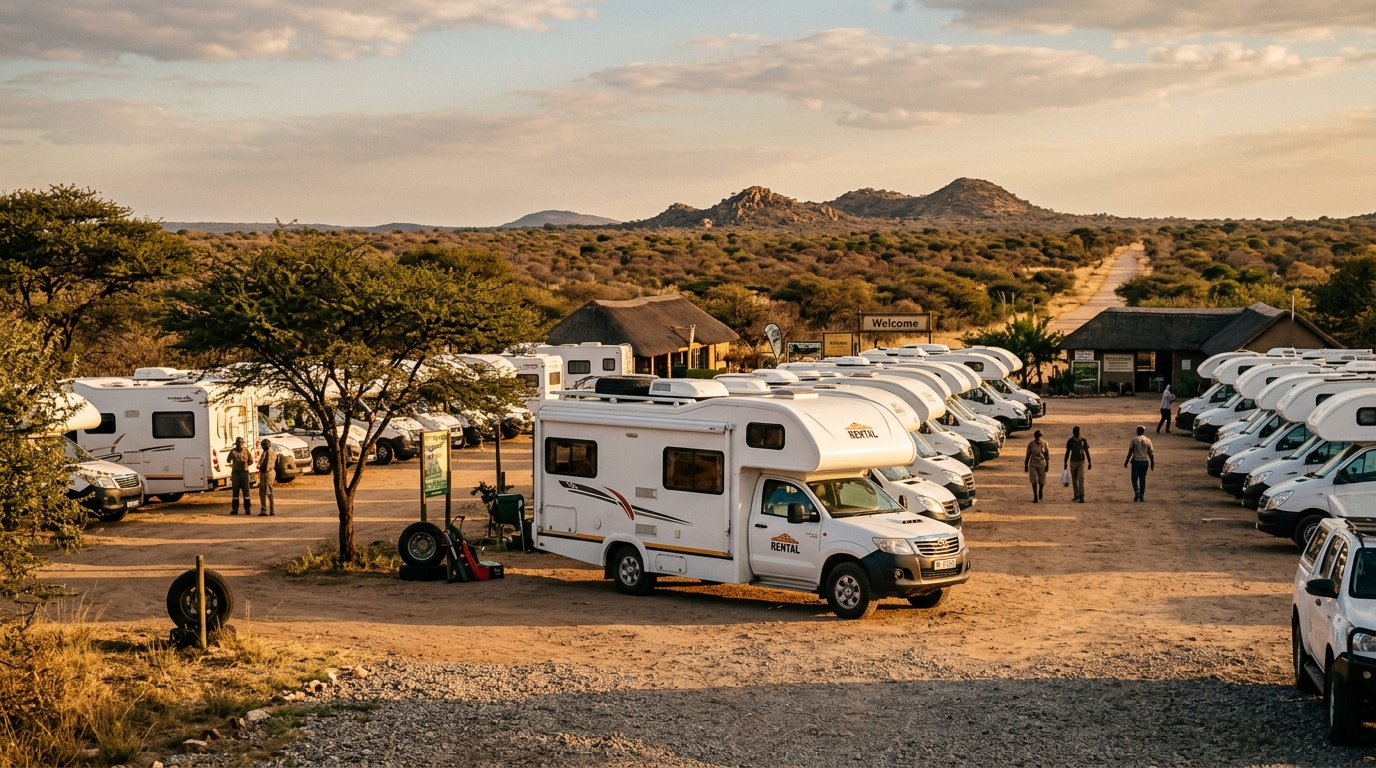
Botswana, a land of unparalleled wilderness and diverse ecosystems, offers an extraordinary adventure for those who choose to explore it with a rented RV. Finding the best RV rental deals in Botswana can transform your journey into an affordable and unforgettable experience, providing the freedom to discover vast salt pans, winding deltas, and abundant wildlife at your own pace. At Bandana Caravan, we've been helping tens of thousands of travelers explore the world by RV since 2001, making us true RV specialists who understand what you need for an epic trip.
For live availability and current prices, start with our RV Rental Botswana - Complete Guide 2026 guide, which provides a thorough overview of everything you need to know about RV travel in this incredible country.
The 4 RV Families Compared for Botswana
Choosing the right RV family for your adventure in Botswana is crucial, as the vehicle type dictates its suitability for diverse terrain, from paved highways to deep sand tracks, and influences your overall comfort and access. Climate resilience and vehicle capability directly impact your comfort and safety, especially during Botswana's distinct wet or dry seasons. Furthermore, your trip length and group size significantly influence the required sleeping capacity, load capacity for supplies, and overall living space you'll need. Each RV class also directly affects the rental cost, fuel efficiency, and access to specific national parks or remote areas, making an informed decision vital for maximizing your RV rental deal in Botswana.
Class A (Integrated) - Best For
Class A integrated motorhomes, averaging 7.5 meters in length, are best suited for luxury-oriented travelers or larger groups (sleeping an average of 4.4 people, 4 adults) seeking maximum comfort on Botswana's more developed routes. These vehicles offer generous living space, extensive amenities, and a panoramic driving experience, making them a great choice for those who prioritize comfort. With an average load capacity of 209.5 kg, they can easily carry substantial luggage and supplies, suitable for extended journeys or families needing more storage. Bandana's fleet typically reports fuel consumption of 8-12 Liters/100 km, which is moderate for their size, providing a reasonable balance of space and operational cost. However, their large size can limit access to certain remote or off-road areas and maneuverability in tight spots, making them less ideal for adventurous bush tracks where smaller vehicles excel.
Price Comparison by RV Class in Botswana
Pricing for RV rentals in Botswana is dynamic and flex-rate, meaning rates can change daily based on demand, season, and availability, similar to airline tickets. The table below provides an overview of example pricing for different RV classes over various rental durations, helping you identify potential RV rental deals. For the most current rates and specific offers, we encourage you to use the live search box at the top of the page, as prices are set at the actual booking time and are not fixed. This transparency ensures you always see the latest offers without any hidden fees or surprises.
Live April Price Comparison — RV Class × Trip Length
| Trip length | Class A | Class B | Class C | Class SI | Class TC |
|---|---|---|---|---|---|
| 1 week 15/04 → 22/04 | Check prices | 731.21 $ US | 560.13 $ US | 4,594.95 $ US | 996.50 $ US |
| 2 weeks 15/04 → 29/04 | Check prices | 1,147.75 $ US | 820.47 $ US | 7,753.98 $ US | 1,655.27 $ US |
| 1 month 01/04 → 30/04 | Check prices | 1,980.12 $ US | 1,340.70 $ US | 15,507.97 $ US | 2,971.68 $ US |
Estimates only — flex-rate prices change daily based on availability and season.
These prices are estimates and can change daily based on demand, season, and availability; for the most current rates, please use the live search box at the top of the page. You might find better options in our "Weekly RV Rental in Botswana - Pricing 2026" guide or the "One-Way RV Rental in Botswana - Price Guide 2026" if your plans are flexible.
Class SI (Semi-Integrated) - Best For
Class SI semi-integrated motorhomes, typically 6.9 meters long, offer a balanced blend of comfort and maneuverability, making them ideal for couples or small families (averaging 3.8 sleeping places, 3.4 adults) exploring Botswana's main road networks. These RVs provide a comfortable living space with good fuel economy, with Bandana's fleet typically consuming 10-11 Liters/100 km, offering a practical choice for those seeking efficient travel. Their average load capacity of 72.2 kg is sufficient for essential gear and supplies for a week-long trip or longer. Semi-integrated RVs often outperform larger Class A vehicles in terms of accessibility and fuel efficiency, while offering more amenities and comfort than a basic campervan, making them a popular choice for diverse travel styles in Botswana. For families planning an adventure, consider reviewing our "Family RV Rental in Botswana - Pricing Guide 2026" for more tailored options.
Class C (Alcove) - Best For
Class C alcove motorhomes, averaging 7.5 meters in length, are highly suitable for families or larger groups (sleeping an average of 5.8 people, 4.4 adults) due to their distinctive over-cab sleeping area, making them a cost-efficient choice for RV rental deals in Botswana. These vehicles offer ample space and comfort, balancing family needs with practical travel considerations for extended road trips. Bandana's fleet typically consumes 10-12 Liters/100 km, aligning with reasonable budget considerations for larger groups traveling through Botswana. With an average load capacity of 42.4 kg, they can comfortably accommodate family luggage and provisions. Their robust build is generally well-suited for Botswana's varied road conditions, including many gravel roads, making them a versatile option for family adventures, particularly when sticking to main routes and well-maintained park roads. Drive slowly and carefully, and you can drive almost anywhere without issues. No need to stress - just use common sense and pay attention.
Class B (Campervan) - Best For
Class B campervans, averaging 5.8 meters in length, are best suited for couples or solo travelers (averaging 3.2 sleeping places, 2.7 adults) prioritizing maneuverability, fuel economy, and ease of driving in Botswana. These compact RVs offer excellent fuel efficiency, with Bandana's fleet typically consuming 8-10 Liters/100 km, making them a smart choice for budget-conscious RV rental deals. Their smaller size allows for easier navigation on narrower tracks and parking in various locations, providing greater flexibility. While offering fewer amenities than larger RVs, they provide essential comforts for adventurers who spend more time outside the vehicle, engaging with nature. Campervans are ideal for accessing more conventional campsites and for those looking for a nimble vehicle to explore Botswana's national parks accessible by 2WD routes or light gravel roads.
Side-by-Side Comparison Table
This table provides a concise overview to help you compare the key features and ideal use cases for each RV family available for rent in Botswana, guiding your decision for the best RV rental deal.
| Family | Avg Length (m) | Sleeps (Avg) | Fuel Use (L/100km) | Best Use Case in Botswana |
|---|---|---|---|---|
| Class A (Integrated) | 7.5 | 4.4 | 8-12 | Luxury, larger groups, paved/well-maintained routes, comfort-focused. |
| Class SI (Semi-Integrated) | 6.9 | 3.8 | 10-11 | Couples/small families, balanced comfort & maneuverability, diverse roads. |
| Class C (Alcove) | 7.5 | 5.8 | 10-12 | Families, cost-efficient, ample sleeping space, good for varied road conditions. |
| Class B (Campervan) | 5.8 | 3.2 | 8-10 | Couples/solo, fuel-efficient, maneuverable, accessible routes, budget-friendly. |
Our Recommendation for rv rental deals Travelers in Botswana
For RV rental deals travelers in Botswana, the **Class B (Campervan)** stands out as the primary recommendation due to its superior fuel efficiency (8-10 L/100 km), excellent maneuverability, and lower rental cost, making it accessible for a wider range of budgets. Its compact size (5.8m) makes it easy to navigate Botswana's varied road conditions, including gravel, and generally ensures easier access to most popular campsites without sacrificing comfort for couples or solo adventurers. The RV-friendly recipes playlist on YouTube can help you make the most of your compact kitchen. The **Class C (Alcove)** is our runner-up recommendation, particularly for families or small groups seeking a good deal on space and sleeping capacity without incurring the highest fuel consumption. Offering an average of 5.8 sleeping places and reasonable fuel economy (10-12 L/100 km), it provides a comfortable base for exploring Botswana's well-traveled routes and is a cost-effective alternative to larger luxury RVs. Remember to travel slowly, max 100-150 km per day on average, to fully immerse yourself in the scenery and culture.
What are the key considerations for choosing an RV rental in Botswana, particularly for off-road travel?
Choosing an RV for Botswana hinges on balancing comfort, budget, and especially vehicle suitability for the terrain, with 4x4 capability often paramount for off-road routes. For instance, while Class A, SI, and C motorhomes are well-suited for main roads, accessing remote national parks like the Central Kalahari Game Reserve typically requires a robust 4x4-equipped campervan, which many suppliers offer. Essential modifications for off-road travel in Botswana include enhanced suspension and all-terrain tires, especially for sandy or muddy conditions. Seasonality plays a significant role: the wet season (November-April) brings potential mud and water crossings, whereas the dry season (May-October) means deep sand tracks are more prevalent, both impacting vehicle performance. Balance your group size and comfort needs with the vehicle's ability to handle challenging tracks. Remember, the minimum driver age for RV rentals is 21, and a standard driver's license is sufficient for all motorhome classes.
How do fuel costs and availability impact RV travel budgets in Botswana?
Fuel costs significantly impact RV travel budgets in Botswana due to generally higher prices compared to neighboring countries, and limited availability in remote areas requiring careful planning for refills. Expect to pay more for fuel in Botswana, directly increasing the overall cost of a self-drive RV trip. Fuel stations are sparse outside major towns like Gaborone, Maun, and Kasane; therefore, travelers often must carry extra fuel in jerry cans for extended periods in wilderness areas. Larger RVs like Class C motorhomes (10-12 L/100 km) will consume more fuel than smaller Class B campervans (8-10 L/100 km), directly influencing your daily expenses. You should allocate a substantial portion of your travel budget to fuel, considering the long distances between destinations and the need for frequent detours to refuel. For comprehensive budgeting and expense tracking on your RV PLANET routes, you can itemize every cost along the way. On the routes offered through RV PLANET routes, you can itemize and track every expense along the way for easy budgeting.
What are the essential documents and permits needed for self-drive RV tours across Botswana's borders?
Self-drive RV tours across Botswana's borders require a valid national driver's license (an International Driving Permit or IDP is highly recommended for visitors from non-English speaking countries but not mandatory), the vehicle's original registration papers, and a **Letter of Authority** from your RV rental company explicitly permitting the vehicle to cross borders. While a Carnet de Passage is typically not required for Southern African Development Community (SADC) countries when renting, it's crucial to confirm with your rental provider, especially if you plan to venture into non-SADC nations. Be prepared for various border fees, including road access fees and third-party insurance, which are typically paid at the border posts. Additionally, ensure all travelers possess valid passports with sufficient validity and any necessary visas for Botswana and all transit countries, as these are critical for smooth cross-border travel.
Can you recommend RV-friendly campsites and less-traveled routes in Botswana?
RV-friendly campsites in Botswana often feature basic amenities within national parks and reserves, while less-traveled routes offer unique cultural or scenic experiences beyond popular hubs like the Okavango Delta and Chobe National Park. Popular RV-friendly options include Ihaha and Savuti campsites in Chobe National Park, and Third Bridge or Xakanaxa in Moremi Game Reserve, though these can be unfenced and facilities are often basic (long-drop toilets, bucket showers). For off-the-beaten-path destinations, consider the Makgadikgadi Pans, particularly Kubu Island (Lekhubu Island), which offers a unique RV experience on an ancient salt pan, though it might require a 4x4 campervan. The Mabuasehube wilderness camps on the Botswana side of the Kgalagadi Transfrontier Park also provide a remote desert RV experience. Always book national park campsites well in advance as they have limited availability, with many offering only 25-30% for pre-booking, leaving the rest for first-come, first-served visitors. For finding campsites and campgrounds during your trip, we recommend using RV PLANET (rvplan.net) - a great resource for locating available spots along your route.
What safety precautions should RV travelers take for wildlife encounters and remote area communication in Botswana?
RV travelers in Botswana must prioritize safety by maintaining respectful distance from wildlife, remaining inside their vehicle during encounters, securing campsites diligently, and carrying reliable satellite communication devices for remote areas. At unfenced campsites common in national parks, never approach wild animals; keep all food securely stored inside your RV and doors/windows closed, especially at night. Always use a powerful flashlight to scan your surroundings after dark. When viewing large animals like elephants or lions, always stay inside your rented RV with windows closed to prevent any opportunistic interactions. For critical communication and emergencies in areas without mobile signal, a satellite phone or a personal locator beacon/satellite messenger (like Garmin InReach) is crucial, as standard mobile networks are unreliable in the vast wilderness. Keep local emergency numbers and your RV rental company's roadside assistance contact readily accessible, and carry a comprehensive first aid kit.
How do you manage water, fuel, and grocery supplies when RV camping in remote Botswana?
Managing water, fuel, and grocery supplies when RV camping in remote Botswana involves meticulous pre-planning, carrying sufficient reserves for self-sufficiency, and understanding the very limited resupply points. Always carry ample potable water for drinking, cooking, and washing, as clean water sources are extremely scarce in the wilderness; consider a high-quality water filter for boreholes, but prioritize bottled water for reliability. For fuel, always fill your RV's tank and carry multiple jerry cans (e.g., 20-40+ liters extra) when leaving major towns like Maun or Kasane, as distances between fuel stations can extend hundreds of kilometers. Purchase all necessary groceries, especially fresh produce and perishables, in larger towns before heading into remote areas, as local village shops have very limited selections. Always have enough supplies for at least an extra 2-3 days in case of unexpected breakdowns or delays, ensuring your RV's refrigerator operates optimally to preserve perishables in high temperatures.
What are the biggest challenges of self-driving an RV in Botswana, and how can one prepare?
The biggest challenges of self-driving an RV in Botswana include navigating deep sand, seasonal water crossings, avoiding wildlife and livestock, and mitigating vehicle breakdowns, all of which require specific preparation and driving skills. For deep sand driving, practice 4x4 driving techniques (if applicable to your rented RV), learn to lower tire pressure for better traction, and maintain momentum; a robust campervan or a semi-integrated motorhome can manage many tracks. During the wet season, seasonal water crossings, especially in the Okavango Delta region, demand careful assessment of water depth; avoid crossings if uncertain. Wildlife and livestock frequently cross roads; drive defensively, particularly at dawn and dusk, and maintain vigilance. Expect long stretches of corrugated dirt roads, which can cause significant vibration and driver fatigue; maintain appropriate speeds to manage these conditions. Be prepared for potential mechanical issues by knowing basic troubleshooting, carrying a tool kit, and ensuring your rental RV is well-serviced. Rely on reliable GPS with offline maps (e.g., Tracks4Africa) and physical maps, as mobile connectivity is often absent.
What are the best practices for waste management and environmental responsibility for RVs in Botswana's national parks?
Best practices for RV waste management and environmental responsibility in Botswana's national parks center on strict adherence to Leave No Trace principles, which includes carrying out all waste, properly disposing of grey and black water, and minimizing your overall environmental footprint. Absolutely all trash, including food scraps and packaging, must be removed from national parks and reserves; never bury or burn waste, as this attracts wildlife and contaminates the fragile ecosystem. Utilize designated RV dump stations outside of protected areas whenever possible; never discharge grey or black water directly into the environment, especially near water sources or campsites. In wilderness camping areas lacking facilities, human waste should be buried in 'cat holes' at least 60 meters (200 feet) away from water, trails, and campsites, and covered completely. Always stay on established tracks, avoid disturbing wildlife or vegetation, and use biodegradable soaps sparingly and away from water sources. Only make fires in designated fire pits or portable braais (barbecues), ensuring they are completely extinguished with water before leaving, and do not collect firewood in protected areas to preserve natural habitats.
How reliable is mobile connectivity and internet access for RV travelers in Botswana's wilderness areas?
Mobile connectivity and internet access for RV travelers in Botswana's wilderness areas are generally unreliable or entirely non-existent, making satellite communication devices essential for safety and emergency contact. While major towns like Gaborone, Maun, and Kasane offer decent 3G/4G coverage, mobile signal rapidly diminishes and often disappears completely once you venture into national parks and remote reserves. Expect extensive periods without any mobile or internet signal in areas like the Okavango Delta, Central Kalahari, and Chobe National Park. For critical communication and emergencies, invest in a satellite phone or a satellite messenger device (e.g., Garmin InReach, Spot), as these provide reliable two-way communication anywhere, even in the most isolated regions of Africa. Portable Wi-Fi devices with local SIM cards will only function where there is existing mobile network coverage, offering no solution for true wilderness areas. Download all essential maps (e.g., Tracks4Africa), guidebooks, and entertainment content onto your devices before entering remote areas, as online access will not be available.
What You Shouldn't Miss
- **A Mokoro Ride in the Okavango Delta:** Glide silently through the Delta's waterways in a traditional dugout canoe, experiencing the intricate ecosystem and spotting small wildlife up close.
- **Sunset Game Drive in Chobe National Park:** Witness hundreds of elephants gathering along the Chobe River at dusk, a truly spectacular and iconic African wildlife experience.
- **Stargazing on the Makgadikgadi Pans:** Spend a night on the vast salt pans, far from any light pollution, and experience a cosmic display unlike anywhere else on Earth.
- **Visit Nxai Pan National Park:** Home to Baines' Baobabs, these ancient, majestic trees stand alone on a grassland island, offering stunning photographic opportunities and a sense of timelessness.
- **Explore the Moremi Game Reserve:** As a protected area within the Okavango Delta, Moremi offers incredible wildlife diversity and a chance to see all of the "Big Five" in a pristine wilderness setting.
Final Thoughts
Exploring Botswana with a rented motorhome or campervan offers an unparalleled sense of freedom, allowing you to immerse yourself in Africa's magnificent wildlife and breathtaking landscapes at your own pace. While the adventure requires careful planning, especially concerning fuel and remote camping, the rewards are immense. Imagine waking up to the sounds of the bush, preparing breakfast in your mobile home, and setting off on a new safari each day – it's truly an experience like no other.
At Bandana Caravan, we are here to support you every step of the way, from comparing the best RV rental deals in Botswana to ensuring your booking is seamless. Our commitment to full transparency and our deep expertise in RV travel mean you can embark on your Botswanan adventure with confidence. Take time to feel the place, connect to the culture, the food, and the scenery. Travel slowly, max 100-150 km per day on average, and let the magic of Botswana unfold before you.
🎬 Video coming soon
Ready to find your perfect RV? Discover top destinations, planning tips, all in one place! Find RV rental deals in Botswana now.