
In This Guide
- The 4 RV Families Compared for Quebec
- Class A (Integrated) — Best For
- Price Comparison by RV Class in Quebec
- Class SI (Semi-Integrated) — Best For
- Class C (Alcove) — Best For
- Class B (Campervan) — Best For
- Side-by-Side Comparison Table
- Our Recommendation for rv rental Travelers in Quebec
- How much does it cost to rent an RV in Quebec
- What do I need to rent an RV in Quebec
- Is it hard to speak English in Quebec
- Is it easy to drive an RV in Quebec
- Can you boondock in Quebec
- Can I bring my dog to Quebec
- What are cultural nuances in Quebec
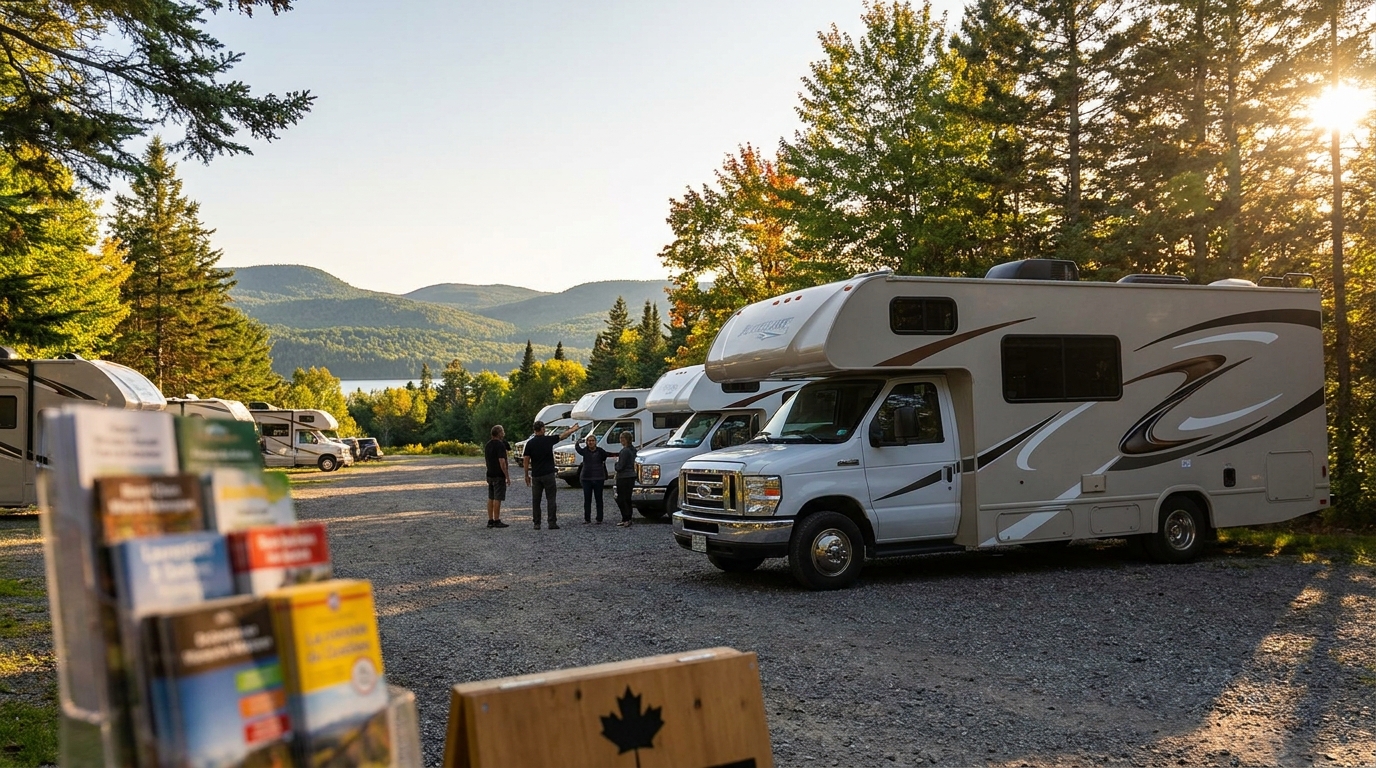
Quebec, with its unique blend of European charm and North American wilderness, offers an unparalleled canvas for an RV rental adventure. Deciding on the perfect motorhome for your journey through this vast province is key to unlocking the full experience, whether you dream of exploring historic Quebec City, hiking in the Gaspésie, or cruising along the St. Lawrence River. Our RV Rental Quebec - Complete Guide 2026 offers a comprehensive overview to help you compare final prices across suppliers and choose the ideal vehicle for your memorable trip.
The 4 RV Families Compared for Quebec
Choosing the right RV family for your Quebec adventure is crucial, impacting comfort, cost, and maneuverability through diverse terrains. Consider Quebec's varied landscapes, from bustling city streets near Old Quebec to narrow historic village roads in Charlevoix and the expansive national parks in Saguenay-Lac-Saint-Jean, as well as your typical trip length and group size. Each motorhome class offers distinct advantages for different travel styles, ensuring a perfect match for your rental needs. For live availability and current prices, compare Motorhome Prices for Quebec using our platform.
Class A (Integrated) — Best For
Class A integrated motorhomes are ideal for luxurious, long-distance travel across Quebec, especially for larger groups seeking maximum comfort and amenities. Bandana's global fleet typically features Class A units with an average length of 7.5 meters (approximately 25 feet), comfortably sleeping 4-6 people, and offering a generous load capacity. These rented RVs are known for their spacious interiors, offering features similar to a small apartment, with amenities like a well-equipped kitchen and a large bathroom, making them perfect for preparing meals using our RV-friendly recipes playlist. While offering unparalleled comfort, their size can be a trade-off in Quebec's narrower rural roads or older town centers, such as those found around Île d'Orléans, requiring confident driving. A large Class A motorhome like the "Class A - Thor ACE 30" can sleep 6-7 people, features a gas stove, microwave, refrigerator, and measures 9.37 meters in length. We recommend planning your parking carefully in advance in urban areas.
Price Comparison by RV Class in Quebec
RV rental prices in Quebec are dynamic, similar to flight tickets, changing daily based on availability, seasonality, and supplier marketing decisions. Because pricing is flex-rate, the table below pulls real example prices from Bandana's live search for various RV classes and rental durations in Quebec. These prices are estimates and can fluctuate; check the search box at the top of the page for the most current live numbers to compare Motorhome Prices for Quebec. Remember that the final price is set at actual booking time, offering full transparency with no hidden fees or surprises.
Live April Price Comparison — RV Class × Trip Length
| Trip length | Class A | Class B | Class C | Class SI | Class TC |
|---|---|---|---|---|---|
| 1 week 15/04 → 22/04 | [Price_ClassType-A_PickupID-503_DropoffID-503_PickupDate-15/04_DropoffDate-22/04] | [Price_ClassType-B_PickupID-503_DropoffID-503_PickupDate-15/04_DropoffDate-22/04] | [Price_ClassType-C_PickupID-503_DropoffID-503_PickupDate-15/04_DropoffDate-22/04] | [Price_ClassType-SI_PickupID-503_DropoffID-503_PickupDate-15/04_DropoffDate-22/04] | [Price_ClassType-TC_PickupID-503_DropoffID-503_PickupDate-15/04_DropoffDate-22/04] |
| 2 weeks 15/04 → 29/04 | [Price_ClassType-A_PickupID-503_DropoffID-503_PickupDate-15/04_DropoffDate-29/04] | [Price_ClassType-B_PickupID-503_DropoffID-503_PickupDate-15/04_DropoffDate-29/04] | [Price_ClassType-C_PickupID-503_DropoffID-503_PickupDate-15/04_DropoffDate-29/04] | [Price_ClassType-SI_PickupID-503_DropoffID-503_PickupDate-15/04_DropoffDate-29/04] | [Price_ClassType-TC_PickupID-503_DropoffID-503_PickupDate-15/04_DropoffDate-29/04] |
| 1 month 01/04 → 30/04 | [Price_ClassType-A_PickupID-503_DropoffID-503_PickupDate-01/04_DropoffDate-30/04] | [Price_ClassType-B_PickupID-503_DropoffID-503_PickupDate-01/04_DropoffDate-30/04] | [Price_ClassType-C_PickupID-503_DropoffID-503_PickupDate-01/04_DropoffDate-30/04] | [Price_ClassType-SI_PickupID-503_DropoffID-503_PickupDate-01/04_DropoffDate-30/04] | [Price_ClassType-TC_PickupID-503_DropoffID-503_PickupDate-01/04_DropoffDate-30/04] |
Estimates only — flex-rate prices change daily based on availability and season.
Class SI (Semi-Integrated) — Best For
Class SI semi-integrated motorhomes are a balanced choice for RV rentals in Quebec, offering a blend of comfort and maneuverability suitable for couples or small families of 2-4. Bandana's global fleet averages 6.9 meters in length (around 23 feet), sleeps approximately 3-4 people, and provides an average load capacity of 72.2 kg. These units are more agile than Class A RVs, making them easier to navigate through Quebec's diverse landscapes and small towns like Tadoussac, with typical fuel consumption around 10-11 liters per 100 km. They outperform Class A in handling and often offer better aerodynamics than Class C, making them a versatile option for week-long trips focused on touring scenic routes like the Whale Route. An example of a semi-integrated motorhome is the "Class I SG", which is pet-friendly and features a TV.
Class C (Alcove) — Best For
Class C alcove motorhomes are a top choice for families and larger groups (4-7 people) seeking a cost-effective and spacious RV rental in Quebec. Bandana's global fleet typically features Class C RVs averaging 7.5 meters in length (around 25 feet), sleeping 5-7 people, and offering an average load capacity of 42.4 kg, thanks to the characteristic sleeping area over the cab. They combine generous living space with relatively straightforward driving characteristics suitable for Quebec's main highways and provincial parks like Parc National de la Jacques-Cartier, consuming about 10-12 liters per 100 km. Their robust build and extra sleeping capacity make them ideal for extended family trips where comfort and budget are key priorities. For instance, the "24' Class C Motorhome" sleeps 5 people and has a fresh water tank of 166 liters, providing ample resources for your adventure.
Class B (Campervan) — Best For
Class B campervans are perfectly suited for adventurous couples or solo travelers exploring Quebec who prioritize maneuverability, fuel economy, and spontaneous stops. Bandana's global fleet averages 5.8 meters in length (around 19 feet), sleeps 2-3 people, and has a load capacity of approximately 37 kg, making them the most compact motorhome option. Their car-like handling and excellent fuel efficiency (around 8-10 liters per 100 km) make navigating Quebec's narrow city streets, scenic routes, and even some unpaved paths much easier than with larger RVs. For those focused on exploring urban centers like Montreal, spontaneous stops at charming roadside attractions, and experiencing Quebec's charm without the bulk of a large RV, a campervan offers unmatched freedom. The "Class I Van" is a great example of a campervan, offering a comfortable double bed and a fresh water tank of 80 liters.
Side-by-Side Comparison Table
This table provides a quick comparison of the key characteristics for each RV family available for rent in Quebec, helping you make an informed decision for your vacation. Considering a range of aspects, from average length to fuel efficiency and suggested use cases, helps in choosing the best rented motorhome for your travel style in Quebec.
| Family | Avg Length (m) | Sleeps (people) | Fuel Use (L/100km) | Best Use Case in Quebec |
|---|---|---|---|---|
| Class A (Integrated) | 7.5 | 4-6 | 11-12 | Luxury, long-distance, large groups, maximum comfort |
| Class SI (Semi-integrated) | 6.9 | 3-4 | 10-11 | Balanced comfort, moderate groups, versatile touring |
| Class C (Alcove) | 7.5 | 5-7 | 10-12 | Families, cost-efficient, ample sleeping space |
| Class B (Campervan) | 5.8 | 2-3 | 8-10 | Couples/solo, maneuverability, fuel-efficient, urban & scenic routes |
Our Recommendation for rv rental Travelers in Quebec
For most RV rental travelers exploring Quebec, the **Class C (Alcove)** offers the best overall value, combining spaciousness for families (averaging 5-7 sleepers) and cost-efficiency, making it well-suited for Quebec's provincial parks and family-friendly attractions like the Village Vacances Valcartier. A strong runner-up is the **Class SI (Semi-integrated)**, which provides a comfortable experience for smaller groups (3-4 sleepers) with better maneuverability (average 6.9m length) than a Class A, ideal for navigating Quebec's varied landscapes and charming towns without feeling oversized. Both options balance interior comfort with practical driving considerations for Quebec's roads, providing ample storage and amenities for memorable trips.
🎬 Video coming soon
How much does it cost to rent an RV in Quebec
The cost to rent an RV in Quebec varies significantly based on RV class, rental duration, season, and additional services, typically ranging from $150 to $350 CAD per day for a Class C motorhome during peak season. Beyond the base rental fee, a comprehensive budget for an RV trip in Quebec should account for fuel, which can be 8-17 liters per 100 km depending on the RV class, campground fees (ranging from provincial parks like those in Mont-Tremblant National Park to private sites or ZECs), groceries, and activity admissions. For example, a week-long Class B campervan rental might cost less than a week in a Class C, but smaller units may offer less cooking space, potentially increasing dining-out expenses in places like Montreal's Plateau Mont-Royal. Unexpected costs can include propane refills, dumping fees at local service stations, or tolls on major routes like Autoroute 20. For easy budgeting and tracking every expense along the way, we recommend checking RV PLANET routes. On the routes offered through RV PLANET routes, you can itemize and track every expense along the way for easy budgeting.
What do I need to rent an RV in Quebec
To rent an RV in Quebec, you typically need a valid driver's license, often a standard Class 5 license (for most RVs under 4,500 kg), be at least 21 years old, and possess a major credit card for security deposits. For Canadian residents, a provincial driver's license is sufficient. International travelers from outside Canada may require an International Driving Permit (IDP) in conjunction with their home country's license, especially if their license is not in English or French. While a standard car driver's license is sufficient for all motorhome classes (Class A, Class B, and Class C), some suppliers may have a minimum age of 25 for larger Class A motorhomes. It is crucial to confirm the specific Gross Vehicle Weight Rating (GVWR) of your chosen rented RV and ensure your license covers it, as legal requirements can vary. Vehicle inspections are handled by the rental company prior to pickup. For cross-border travelers, specific legal requirements include proper vehicle registration documents and proof of insurance.
Is it hard to speak English in Quebec
While French is the official language of Quebec, English is widely spoken in major tourist areas, cities like Montreal and Quebec City, and by most people working in the tourism industry. In rural areas and smaller towns, such as those in the Eastern Townships, French is more prevalent, and navigating day-to-day interactions might require a few basic French phrases. Learning common greetings like 'Bonjour' (hello), 'S'il vous plaît' (please), and 'Merci' (thank you), along with 'Parlez-vous anglais?' (do you speak English?), can greatly enhance your experience. Many restaurants in tourist-heavy zones offer English menus, but having a translation app or a small phrasebook can be helpful for ordering food or asking for directions in less-trafficked areas, for instance, finding a dump station near the Jean-Lesage International Airport (YQB). Locals generally appreciate any effort to speak French, even if imperfect, as it shows respect for the local culture. For emergencies, most emergency service personnel are bilingual.
Is it easy to drive an RV in Quebec
Driving an RV in Quebec is generally manageable on major highways like Autoroute 40, but can present unique challenges in specific regions like narrow historic town streets or mountain passes such as those found in the Gaspésie peninsula. Quebec uses the metric system for speed limits and distances, and road signs are primarily in French, often featuring 'Arrêt' instead of 'STOP' for stop signs. Familiarizing yourself with these distinct signs is crucial for safety. Drive slowly and carefully, and you can drive almost anywhere without issues. No need to stress - just use common sense and pay attention. Be aware of potential tolls, especially on some bridges and highways, and plan routes accordingly. Many scenic routes, particularly parts of the 'Route Verte' (a cycling network), share roads with vehicles, requiring extra vigilance for cyclists. Navigating historic centers, like those in Old Quebec City near Château Frontenac or downtown Montreal, with larger RVs (Class A or C) can be difficult due to tight turns and restricted parking, making smaller Class B campervans or Class SI motorhomes more suitable for urban exploration. Always check road clearances and width restrictions before entering unknown areas, especially near older underpasses.
Can you boondock in Quebec
Boondocking or dispersed camping in Quebec is possible, but it requires a clear understanding of regulations, as random camping on private land without permission or in prohibited public areas, such as city parks like Parc La Fontaine, is illegal. Legal options for free or low-cost dispersed camping primarily include some ZECs (Zones d'Exploitation Contrôlée) and certain Crown lands, though specific rules and permits may apply, and amenities are typically non-existent. Many provincial parks (SEPAQ) offer rustic or semi-serviced sites at a fee, which can be an alternative to full boondocking; these sites often cost around $30 CAD per night. Always check with local municipalities or the Ministère des Forêts, de la Faune et des Parcs for specific regulations regarding Crown land camping in your desired area. Using apps like iOverlander or asking locals at visitor centers, such as those along Boulevard Laurier, can help identify permitted boondocking spots, but be prepared for self-sufficiency and always practice Leave No Trace principles to preserve Quebec's natural beauty. For an easy way to compare Cheap RV Rental in Quebec - Budget Guide 2026 and find suitable campsites, consider using rvplan.net.
Can I bring my dog to Quebec
Yes, you can bring your dog to Quebec when renting an RV, but it requires adherence to specific guidelines for pet travel, especially when crossing international borders from the US. For international travelers, dogs must have up-to-date rabies vaccinations (administered at least 21 days prior to entry), a health certificate from a licensed veterinarian, and sometimes microchip identification. Within Quebec, many campgrounds, including some SEPAQ provincial parks such as Parc National du Mont-Orford, are pet-friendly, though often with designated loops or restrictions (e.g., dogs on leash, not allowed in buildings or on beaches). Always confirm pet policies directly with individual campgrounds or attractions before arrival, especially in popular tourist areas. It's advisable to research pet-friendly attractions in advance, and always have a plan for emergency vet access, particularly in rural areas like the Laurentians. Never leave pets unattended in a hot RV, especially during Quebec's warm summer months.
What are cultural nuances in Quebec
Navigating cultural nuances in Quebec involves understanding the importance of the French language and unique Quebecois customs, particularly in rural settings, to enhance your travel experience. Quebecers are generally very welcoming, but demonstrating an effort to speak French, even a few words, is highly appreciated and can open doors to more authentic interactions. In more traditional or rural areas, like the Côte-Nord, starting a conversation in French is a significant sign of respect. Tipping is customary in Quebec, similar to the rest of North America, with 15-20% being standard for restaurant service. Also, be aware that many shops and businesses close earlier on Sundays or in the evenings, especially outside of major cities like Montreal and Quebec City. For authentic local experiences, seek out 'sucreries' (sugar shacks) in spring, visit local 'marchés publics' (public markets) like Marché Jean-Talon in Montreal, or attend community festivals. Travelers interested in local routes can also find valuable resources in our RV Travel Guide to Quebec - Tips and Top Spots 2026. Locals value politeness and a relaxed pace; avoid rushing or being overly direct in conversations. For a truly immersive experience, travel slowly, perhaps 100-150 km per day on average, to take time to feel the place, connect to the culture, the food, and the scenery.
What You Shouldn't Miss
- **Explore Old Quebec City:** Wander through the cobblestone streets, visit the Château Frontenac, and immerse yourself in North America's only walled city. Parking an RV might require finding spots outside the city walls, perhaps near the Old Port or the Expocité area.
- **Gaspésie Peninsula Road Trip:** Drive the scenic coastal loop of the Gaspésie, a route offering breathtaking ocean views, charming fishing villages like Percé, and dramatic landscapes. This is an ideal route for a two-week adventure in a rented motorhome.
- **Whale Watching in Tadoussac:** Take a boat tour from Tadoussac, where the Saguenay Fjord meets the St. Lawrence River, offering some of the best whale watching opportunities in the world, including belugas and humpbacks.
- **Mont-Tremblant National Park:** Hike, canoe, and enjoy the stunning Laurentian mountains. The park offers numerous campgrounds with RV-friendly sites, perfect for families seeking nature.
- **Taste Poutine:** Sample Quebec's iconic dish from a traditional 'casse-croûte' (snack bar) or a gourmet restaurant in Montreal or Quebec City. Every region boasts its own variations.
- **A Bit of History in Montreal:** Explore Old Montreal, visit Notre-Dame Basilica, and stroll along Rue Sainte-Catherine. For Family RV Rental in Quebec - Pricing Guide 2026, consider larger Class C motorhomes for groups.
Looking for expert insights from Avi Bandana? Top 5 Adventures - recommendations from Avi Bandana
Final Thoughts
Embarking on an RV rental adventure in Quebec promises an unforgettable blend of natural beauty, vibrant culture, and the freedom of the open road. Whether you opt for a compact campervan to navigate Montreal's historic streets or a spacious Class C motorhome for a family expedition to Parc National de la Gaspésie, selecting the right vehicle is the first step toward an incredible journey. With Bandana Caravan, you get the benefit of full transparency, competitive pricing, and dedicated support, ensuring your trip planning is as smooth as Quebec's scenic highways. Remember to travel slowly, averaging 100-150 km per day, allowing yourself to truly soak in the unique charm of every stop, from local markets to breathtaking fjords.
Don't let the details overwhelm you; we are here to support you in finding the perfect rented mobile home for your Quebec getaway. Get inspired for your next trip and discover top destinations and planning tips, all in one place!
Find Motorhome Rentals in Quebec