In This Guide
- Best Latvia RV Itinerary for RV Rental — Overview
- 7-Day Classic Route in Latvia
- 14-Day Extended Journey in Latvia
- Recommended RVPlan Trip for Latvia
- Must-See Stops Along the Way (Avi Bandana Picks)
- Daily Driving Distances & Drive Times in Latvia
- Best RV Class for This Itinerary — Couple & Family Picks
- How much does it cost to rent an RV in Latvia
- What is the best time of year to RV in Latvia
- Do I need a special license to drive an RV in Latvia
- What are the road conditions like in Latvia
- What are common road tolls for RVs in Latvia
- Can you wild camp in Latvia
- What are the rules for RV parking in Latvia
- Are there RV parks in Latvia
- How do you dispose of RV waste in Latvia
- Where can I refill water in an RV in Latvia
- What is the fuel consumption for an RV in Latvia
- Is it safe to RV in Latvia
- Can you travel to other Baltic countries by RV from Latvia
- How long does it take to drive across Latvia
- What are the most scenic RV routes in Latvia
Best Latvia RV Itinerary for RV Rental — Overview
A memorable RV trip through Latvia typically spans a minimum of 7 days, ideally extended to 10-14 days, covering approximately 1,200-2,500 kilometers. The optimal season for RV travel in Latvia is from late May to early September, offering the best weather and full accessibility to attractions and campsites. This guide provides comprehensive routes to explore Latvia's diverse landscapes, from its bustling capital Riga to serene coastal towns and lush national parks. For live availability and current prices, start with our RV Rental Latvia - Complete Guide 2026 guide.
7-Day Classic Route in Latvia
This 7-day classic RV itinerary focuses on Western and Central Latvia, offering a balanced mix of culture, history, and nature, adhering to a maximum daily drive of 100 miles (150 km). Travel slowly and carefully, and you can drive almost anywhere without issues. No need to stress — just use common sense and pay attention.
Day 1: Riga → Sigulda (50 km / 31 miles): Explore Riga's Old Town before heading to the 'Switzerland of Latvia.' Highlights include Turaida Museum Reserve and Gutman's Cave. Sleep: Campsite near Sigulda.
Day 2: Sigulda → Cēsis (40 km / 25 miles): Discover the medieval charm of Cēsis, its ancient castle ruins, and picturesque town center. Sleep: Campsite near Cēsis.
Day 3: Cēsis → Limbaži → Saulkrasti (80 km / 50 miles): Journey through rural Vidzeme, perhaps stopping at Lake Ungurs, before reaching the coastal town of Saulkrasti, famous for its White Dune. Sleep: Campsite near Saulkrasti.
Day 4: Saulkrasti → Jūrmala (60 km / 37 miles): Enjoy the Baltic Sea coast, with its endless beaches and unique wooden architecture in the resort city of Jūrmala. Sleep: Campsite near Jūrmala.
Day 5: Jūrmala → Kuldīga (150 km / 93 miles): Head west to Kuldīga, a charming town with the widest natural waterfall in Europe, Ventas Rumba, and a well-preserved historic center. Sleep: Campsite near Kuldīga.
Day 6: Kuldīga → Liepāja (80 km / 50 miles): Continue to Liepāja, known for its extensive beach, Karosta military port, and vibrant music scene. Sleep: Campsite in Liepāja.
Day 7: Liepāja → Riga (220 km / 137 miles): Begin your journey back to Riga, with optional stops at smaller towns or viewpoints along the way, concluding your RV adventure. For RV rental deals in Latvia - Latest Offers, explore our curated selection.
14-Day Extended Journey in Latvia
This extended 14-day itinerary provides a deeper immersion into Latvia's diverse regions, maintaining a leisurely pace with daily driving distances capped at 100 miles (150 km). Travel slowly, max 100-150 km per day. Take time to feel the place, connect to the culture, the food, and the scenery.
Days 1-4: Western Latvia (Kurzeme Coast & Culture): Riga → Kuldīga → Liepāja → Ventspils. Experience the charming Ventas Rumba waterfall, the historic Karosta district, and the bustling port city of Ventspils with its Blue Flag beaches. Consider a week-long RV driving tour in Latvia to make the most of this region.
Days 5-8: Northern Latvia (Vidzeme Forests & Castles): Ventspils → Jūrmala → Sigulda → Cēsis. Transition from coastal beauty to the lush landscapes of Gauja National Park, exploring ancient castles and engaging in outdoor activities.
Days 9-11: Eastern Latvia (Latgale's Lakes & Traditions): Cēsis → Valmiera → Rēzekne. Venture into the 'Land of Blue Lakes,' Latgale, discovering unique eastern Latvian culture, traditional crafts, and serene natural beauty.
Days 12-14: Southern Latvia & Return (Palaces & History): Rēzekne → Daugavpils → Bauska → Riga. Explore Daugavpils Fortress and the magnificent Rundāle Palace before returning to Riga, concluding a comprehensive tour of Latvia. One-way RV driving in Latvia - Route Planner can offer flexible return options.
Recommended RVPlan Trip for Latvia
While specific pre-designed RVPlan trips focused solely on Latvia may vary, we highly recommend exploring the comprehensive collection of itineraries available directly on the RVPlan website (rvplan.net) for inspiration and detailed planning resources. RVPlan offers expertly crafted itineraries that can be adapted to your preferences, helping remove the headache of planning by providing optimized routes, campsite suggestions, and points of interest.
Must-See Stops Along the Way (Avi Bandana Picks)
Avi Bandana’s personal picks for an authentic Latvian RV experience go beyond conventional tourist spots, focusing on immersive local encounters. Seek out vibrant traditional markets in regional towns like Cēsis or Kuldīga to stock up on fresh local produce, artisan cheeses, and smoked fish. Explore small, family-run traditional restaurants or roadside cafes (kafejnīca) offering authentic Latvian cuisine, such as gray peas with bacon (pelēkie zirņi ar speķi) or a hearty potato pancake (kartupeļu pankūkas). Discover local industries by visiting a small amber workshop along the coast, a pottery studio in Latgale, or a craft brewery to sample regional flavors. Discover less-known manor houses, nature trails in regional parks, or charming fishing villages that offer a glimpse into local life away from the crowds.
Daily Driving Distances & Drive Times in Latvia
Avi Bandana recommends a maximum of 100 miles or 150 km per day on average to fully enjoy the Latvian landscape and avoid rushing between destinations. This slower pace allows ample time for spontaneous stops at scenic viewpoints, charming villages, and local eateries, transforming the journey into part of the adventure. For instance, Riga to Sigulda is approximately 50 km (31 miles) and takes about 1 hour, while Riga to Liepāja is around 200 km (124 miles) and requires about 2.5 to 3 hours of driving.
Best RV Class for This Itinerary — Couple & Family Picks
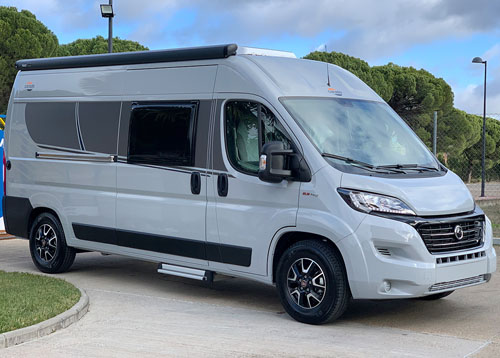
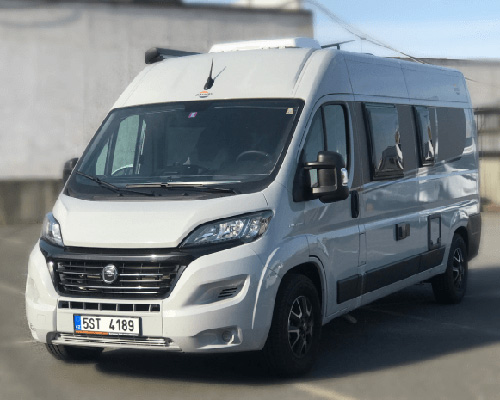
Choosing the right RV class significantly enhances your Latvian adventure, with Bandana's global fleet offering ideal options for both couples and families. For couples, a Class B camper van is an excellent choice, typically featuring an average length of 5.8 meters and sleeping places for 3.2 individuals, with an average capacity for 2.7 adults. These compact camper vans, with common fuel consumption around 8-10 liters per 100 km, offer nimble maneuverability on smaller Latvian roads and easy parking in towns, perfect for intimate exploration.
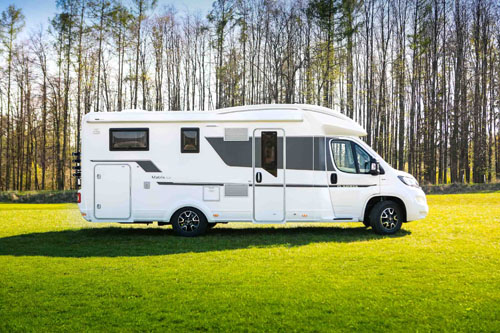
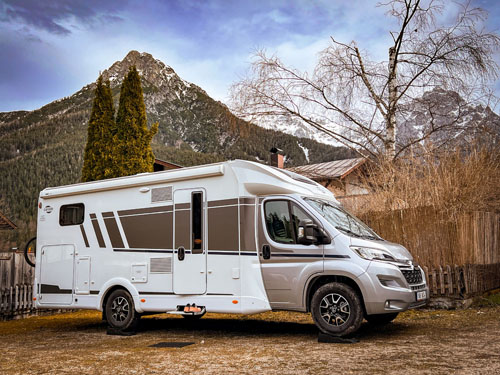
For families, an alcove RV (Class C) provides ample space and comfort, with Bandana's fleet averaging 7.5 meters in length and capacity for 4.4 adults. Alcove RVs, consuming around 10-12 liters per 100 km, offer dedicated sleeping areas and more living space, making them ideal for families or groups who need extra room. Consider Bandana's range of RV rentals in Latvia - Prices and Best Deals for your family's needs.
How much does it cost to rent an RV in Latvia
RV rental costs in Latvia typically range from €70 to €180+ per day, depending on the RV class, season, and rental duration, but the total trip expense must also factor in fuel, campsites, food, and potential tolls. Rental rates are highest in peak summer (July-August) and lower in spring/autumn; longer rental periods often yield better daily rates. Expect average fuel consumption for a semi-integrated RV to be 10-11 liters per 100 km, and for an alcove RV around 10-12 liters per 100 km; current diesel prices in Latvia usually hover around €1.60-€1.80 per liter. Basic campsite pitches without hookups can start from €15-€25 per night, while full-service sites generally cost €25-€40 per night. Stocking up at local markets and cooking in your RV is significantly cheaper than dining out daily, allowing for a mix of experiences. For ideas you can prep on the road, watch our RV-friendly recipes playlist on YouTube. On the routes offered through RV PLANET routes, you can itemize and track every expense along the way for easy budgeting.
No specific RV permits are required for standard vehicles, and road tolls are minimal, primarily limited to a seasonal entry fee for the resort city of Jūrmala. For a more precise budget, explore cheap RV rental in Latvia - Budget Guide options and use tools like RV PLANET routes to itemize and track every expense along the way for easy budgeting.
What is the best time of year to RV in Latvia
The best time to RV in Latvia is from late May to early September, offering the most favorable weather, longest daylight hours, and full accessibility to campsites and attractions. Summer (June-August) offers the warmest temperatures (average 20-25°C), abundant sunshine, and all campsites fully operational; however, this is also the busiest period, requiring advance booking for popular sites, and rental prices are at their peak. Spring (May) is characterized by blooming nature and fewer crowds, with pleasant temperatures (10-18°C); some smaller campsites might still be opening for the season, and road conditions are generally good. Autumn (September) provides beautiful fall foliage, cooler temperatures (10-15°C), and significantly fewer tourists; while most campsites are still open, some seasonal attractions may begin to close towards the end of the month, and road conditions remain favorable. Winter (October-April) RV travel is challenging due to cold temperatures, snow, and ice; many campsites close, and driving requires winter tires and caution on potentially icy roads, making it less ideal for first-time RVers in Latvia.
Do I need a special license to drive an RV in Latvia
Most standard RVs rented in Latvia can be driven with a regular B-category driving license, provided the vehicle's maximum authorized mass (MAM) does not exceed 3,500 kg. This covers the vast majority of camper vans (Class B), semi-integrated (Class SI), and alcove (Class C) motorhomes available for rental. For RVs with a MAM between 3,500 kg and 7,500 kg, a C1 category license is typically required; it's crucial to verify the MAM of your chosen RV on the rental agreement. Non-EU citizens should obtain an International Driving Permit (IDP) in addition to their national license, as it's a recognized translation and can simplify interactions with local authorities.
What are the road conditions like in Latvia
Latvian road conditions generally vary from well-maintained main highways to smaller, sometimes unpaved, country roads, requiring careful driving, especially for larger RVs to ensure safety and comfort. Main Roads (A-class) are generally in good to excellent condition, well-paved, and connect major cities like Riga, Liepāja, and Daugavpils. Secondary Roads (P-class) conditions can vary more, with some sections having potholes or being less smoothly paved, particularly outside major urban areas. Gravel roads are common in rural areas and national parks; while navigable by RVs, they require slower speeds and can be dusty in dry weather or muddy after rain, which is a key safety consideration for RVers. From November to March, roads can be covered in snow and ice; winter tires are mandatory, and drivers should be prepared for slippery conditions and reduced visibility.
What are common road tolls for RVs in Latvia
For RVs in Latvia, specific widespread road tolls are minimal; the most notable charge is the seasonal entry fee for the popular resort city of Jūrmala. This fee can be paid online or at designated entry points and is critical for RV travelers planning to visit the city. Unlike some Western European countries, Latvia does not have a system of widespread highway tolls for light vehicles or standard RVs (under 3.5 tons), which simplifies budgeting for most RV trips. Always check for any specific environmental charges or ferry fees if planning to visit remote islands, though these are not common for a typical mainland Latvian RV itinerary. Planning your RV trip can be simplified by using tools that itemize all expenses, including potential tolls, through RV PLANET routes.
Can you wild camp in Latvia
While strictly legal wild camping with an RV is generally restricted to designated areas or private land with permission, Latvia offers numerous well-equipped campsites and specific parking spots where overnight stays are permitted, aligning with sustainable RVing practices. Camping outside designated areas in Latvia is generally not permitted, particularly on private land without explicit consent, within protected natural areas, or in urban environments. Many nature parks and coastal areas offer official, often free or low-cost, overnight parking spots specifically for RVs, which are a safer and more legal alternative to true 'wild camping'. Regardless of where you park, it is imperative to adhere to 'Leave No Trace' principles: pack out all trash, dispose of waste properly, and respect the natural environment and local communities. If you wish to stay on private land, always seek permission from the landowner beforehand; many farmsteads might welcome RVers for a small fee or even for free. For finding campsites and campgrounds during your trip, check out RV PLANET (rvplan.net) — a great resource for locating available spots along your route.
What are the rules for RV parking in Latvia
RV parking in Latvia generally follows standard parking regulations for vehicles, with specific restrictions for extended overnight stays typically limited to designated campsites, official RV parking areas, or private land with owner consent. Follow standard road signs regarding parking duration, payment, and prohibited areas; RVs must not obstruct traffic or pedestrian pathways. Overnight stays in urban centers or public parking lots are generally discouraged and often prohibited, unless explicitly marked as RV-friendly or part of a campsite. Look for signs indicating 'Camper Van Parking' or similar, especially near tourist attractions or larger towns, which may allow daytime parking or short-term overnight stays. Parking rules are often tied to responsible waste management; illegal overnight parking can lead to fines, especially if associated with improper waste disposal. Specific RV regulations and laws regarding waste management are crucial for a smooth trip.
Are there RV parks in Latvia
Yes, Latvia has a well-developed network of RV parks and campsites, especially concentrated around popular tourist destinations, national parks, and along the picturesque Baltic coast, providing essential connectivity and utilities for RVers. Latvian RV parks range from basic pitches in serene natural settings to full-service campsites offering electricity hookups, fresh water refill stations, grey and black water dump stations, showers, toilets, and sometimes even Wi-Fi. You'll find a good selection of sites in Gauja National Park, near the major cities of Riga and Liepāja, and scattered along the Kurzeme and Vidzeme coasts. During the peak summer months (July-August), it is highly recommended to book your RV pitch in advance, particularly for popular coastal or national park locations, as availability can be limited. Mobile data coverage in Latvia is generally excellent, ensuring you stay connected throughout your journey.
How do you dispose of RV waste in Latvia
RV waste in Latvia, including both greywater (from sinks/showers) and blackwater (from toilets), should always be disposed of at designated dump stations found at official campsites, some larger petrol stations, and occasionally at municipal service points, adhering to environmental regulations. These facilities are specifically designed to handle RV waste safely and responsibly, preventing environmental contamination. The most reliable places to find dump stations are official RV campsites, which typically include this service as part of your pitch fee or for a small charge. Some larger, modern petrol stations, particularly those catering to trucks and long-distance travelers, may also have designated RV service points for waste disposal. It is illegal and environmentally damaging to dispose of RV waste into natural environments, drains, or public toilets; practicing 'Leave No Trace' is crucial for sustainable RVing. Understanding specific RV regulations and laws regarding waste management is key.
Where can I refill water in an RV in Latvia
RV water refills in Latvia are primarily available at official campsites, which typically offer fresh water hookups or filling stations as part of their services, ensuring convenient access to essential utilities. Almost all official RV campsites in Latvia provide access to potable water for refilling your fresh water tank; this is usually included in your overnight stay fee. Some larger petrol stations might have water taps suitable for refilling, especially those with truck facilities, but it's advisable to verify if the water is potable before filling. Planning your route to include regular stops at campsites or designated service areas to avoid running low on fresh water is advisable, especially when venturing into more remote regions. Connectivity and utilities are readily available at most Latvian campsites.
What is the fuel consumption for an RV in Latvia
The typical fuel consumption for an RV in Latvia depends on its class, engine size, and driving conditions, with Bandana's semi-integrated RVs often averaging 10-11 liters per 100 km and alcove models around 10-12 liters per 100 km. Class B camper vans typically offer the best fuel efficiency, averaging 8-10 liters per 100 km. Maintaining a steady speed, avoiding rapid acceleration, and minimizing heavy loads can significantly impact actual fuel efficiency; hilly terrain or strong headwinds will also increase consumption, which is a key part of a detailed cost breakdown. Always consider the specific RV specifications when budgeting for your trip.
Is it safe to RV in Latvia
RV travel in Latvia is generally considered safe, with a low crime rate and hospitable locals, though standard precautions against theft and awareness of specific road hazards are always advised for RVers. Main roads are well-maintained, but rural areas may have narrower, unpaved roads and potential animal crossings (deer, elk); drive cautiously, especially at dusk or dawn. Always lock your RV doors, close windows when leaving, and keep valuables out of sight; consider parking in well-lit, populated areas or official campsites overnight to deter opportunistic theft. Latvia has a low violent crime rate, but petty theft can occur in crowded tourist areas; be mindful of your belongings. The general emergency number in Latvia is 112 for police, ambulance, or fire services; it's wise to have this readily accessible for overall safety and security for RVers.
Can you travel to other Baltic countries by RV from Latvia
Yes, traveling to other Baltic countries like Estonia and Lithuania by RV from Latvia is straightforward, as all three are part of the Schengen Area, allowing for seamless border crossings without passport control, greatly facilitating multi-country RV trip planning. The absence of internal border checks means you can drive directly between Latvia, Lithuania, and Estonia without stopping for immigration, offering a continuous travel experience. It is crucial to inform your RV rental company about your intention to travel internationally; they may require specific insurance documentation (e.g., a Green Card) or charge a cross-border fee. While borders are open, remember that each country has its own specific road rules, parking regulations, and waste disposal guidelines that you should be aware of. Many RVers plan multi-country trips that combine the best of all three Baltic states, creating comprehensive itineraries that highlight their distinct cultures and natural beauty.
How long does it take to drive across Latvia
Driving across Latvia from east to west (e.g., from Rēzekne to Liepāja) or north to south (e.g., from Valmiera to Bauska) can typically be accomplished in approximately 3 to 4 hours of continuous driving, though an RV trip is best enjoyed at a much slower pace with frequent stops. Latvia is a relatively compact country, making it feasible to cover significant ground in a single day if necessary. However, for an optimal RV experience, it's recommended to follow Avi Bandana's advice of a maximum of 100 miles (150 km) per day, allowing time to explore sites and enjoy the journey without rushing. For instance, the longest stretch, from the eastern border to the western coast, would be around 400-450 km (250-280 miles), which an RV traveler would ideally break into two or three leisurely days.
What are the most scenic RV routes in Latvia
Latvia offers several incredibly scenic RV routes, showcasing its diverse natural beauty, including the winding roads through Gauja National Park, the expansive Baltic Sea coastline, and the tranquil lake districts of Latgale, often leading to off-the-beaten-path experiences. The Gauja National Park Route, encompassing Sigulda, Cēsis, and Valmiera, is renowned for its river valleys, sandstone cliffs, ancient castles, and dense forests, providing countless opportunities for hiking and enjoying nature. The Kurzeme Coastal Route, stretching along the western coast from Jūrmala down to Liepāja and beyond, features vast sandy beaches, charming fishing villages like Pāvilosta, and the unique architecture of Ventspils and Kuldīga. Venturing into eastern Latvia reveals a landscape dotted with thousands of lakes, untouched forests, and a distinct cultural heritage; routes here offer serenity and a glimpse into traditional Latvian rural life. The southern Zemgale Plain offers scenic drives to architectural marvels like Rundāle Palace and Bauska Castle, set amidst fertile agricultural lands. Consider checking out Bandana's RV rental deals in Latvia - Latest Offers for inspiration on your scenic journey.
What You Shouldn't Miss
- Explore the UNESCO World Heritage Old Town of Riga, a UNESCO World Heritage site, with its Art Nouveau architecture and vibrant atmosphere.
- Drive through Gauja National Park, visiting Sigulda Castle, Turaida Castle, and the Gutman's Cave for a dose of history and natural beauty.
- Witness Ventas Rumba in Kuldīga, Europe's widest natural waterfall, and explore the charming cobblestone streets of this historic town.
- Relax on the wide, sandy beaches of Jūrmala, a popular seaside resort town known for its unique wooden architecture.
- Discover the maritime heritage of Ventspils, including its picturesque harbor and the unique Ventspils House of the Brotherhood of the Holy Cross.
- Visit Liepāja's Karosta Prison, offering a unique and intense historical experience within a former military fortress.
Final Thoughts
Embarking on an RV adventure through Latvia offers a unique opportunity to explore its diverse landscapes and rich culture at your own pace. From the vibrant streets of Riga to the serene coastal towns and lush national parks, a rented RV provides the perfect mobile base for your journey. Remember to embrace the slower pace of travel, allowing yourself time to connect with the local culture, savor the regional cuisine, and truly appreciate the scenic beauty.
With Bandana Caravan, planning your Latvian RV itinerary is made simple and transparent. Take advantage of our expert-curated routes on RV PLANET (rvplan.net) and our commitment to no hidden fees, ensuring a stress-free and memorable experience. Get inspired for your next trip and discover the freedom of the open road!
Plan a trip itinerary in advance with minimal effort and maximum enjoyment. Discover top destinations, planning tips, all in one place! Find RV rentals in Latvia and compare prices now to start your unforgettable Latvian adventure.