In This Guide
- Can You Drive an RV in Vancouver? License & Age Rules
- Road Conditions & Terrain in Vancouver
- RV Size Limits, Bridges & Restricted Zones
- Fuel: Diesel vs. Petrol & Cost per 100 km
- Tolls, Vignettes & Border Rules
- Driving Tips for RV Rental for Seniors Travelers
- Recommended RV Class for Vancouver Roads
- Should I Choose a Compact Van Instead of a Large RV in Vancouver?
- Can I Park Anywhere? Free & Wild Camping Rules in Vancouver
- Can I Drive an RV Into the City Center? Heights, Tunnels & Local Signage
- Can you rent an RV to drive across Canada?
- Do you need a different license to drive an RV in Canada?
- What do you need to rent an RV in Canada?
- How much does RV rental insurance cost?
- How much is RV insurance in BC?
Can You Drive an RV in Vancouver? License & Age Rules
Most RVs in British Columbia, including the majority of Class B, Class C, and Semi-integrated RVs (Class SI) available for rent in Vancouver, can be driven with a standard Class 5 driver's license. This license typically covers recreational vehicles up to 11,000 kg (24,250 lbs) Gross Vehicle Weight (GVW). For foreign drivers, a valid driver's license from their home country is required; an International Driving Permit (IDP) is highly recommended for non-English licenses, particularly for trips exceeding six months. Rental companies generally enforce a minimum driver age of 21, though some may require 25 for larger Class A motorhomes, and a valid credit card is necessary for booking and a security deposit.
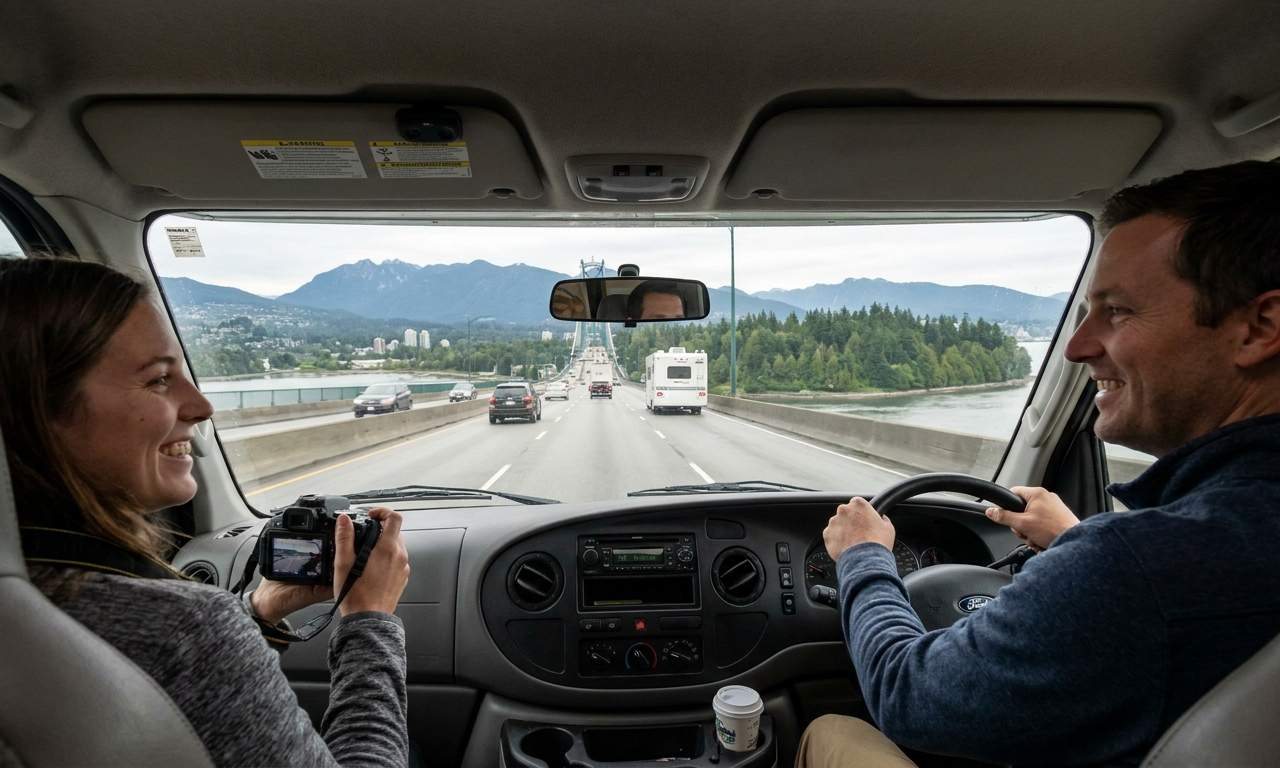
Road Conditions & Terrain in Vancouver
Vancouver's primary roads and highways are well-maintained, offering comfortable driving conditions suitable for RV travel, whether you're navigating urban streets or exploring scenic coastal routes. The terrain around Vancouver is diverse, featuring flat cityscapes, rolling hills, and mountainous regions further afield, such as the Sea-to-Sky Highway. Seniors may find it more comfortable and safer to plan routes that prioritize well-paved roads and avoid overly steep or winding mountain passes. While most popular attractions are accessible via paved roads, be prepared for the possibility of gravel or unpaved sections when venturing to more rustic campgrounds or wilderness areas.
RV Size Limits, Bridges & Restricted Zones
While Vancouver doesn't impose specific blanket RV size limits, drivers must be mindful of general road rules, bridge clearances, and any specific ferry requirements. Most city tunnels and overpasses in Vancouver comfortably accommodate standard RV heights, typically up to 4.15 meters (13.5 feet), but it's always wise to observe posted height restrictions on individual routes. When planning travel with BC Ferries, it's crucial to measure your rented RV's exact length and height, as these dimensions directly impact booking categories and costs; reservations are highly recommended. Unlike some European cities, Vancouver and British Columbia do not have widespread environmental or low-emission zones that restrict RV access based on vehicle emissions.
Fuel: Diesel vs. Petrol & Cost per 100 km
The majority of rental RVs in Bandana's fleet, including Class SI (Semi-integrated), Class C (Alcove), and Class B (Camper Vans), typically operate on diesel fuel. Diesel is readily available at service stations throughout Vancouver and British Columbia. For instance, a Class SI RV generally consumes around 10-11 Liters/100 km, while a Class B Camper Van typically uses 8-10 Liters/100 km. Budgeting for fuel costs should factor in these consumption rates and current local diesel prices, which can fluctuate, often representing a significant portion of the overall trip budget. Some rental companies may offer loyalty programs or fuel discount cards, providing minor savings on fuel expenses during your trip. On the routes offered through RV PLANET routes, you can itemize and track every expense along the way for easy budgeting.
Tolls, Vignettes & Border Rules
British Columbia does not utilize vignettes for road use. While historically there were toll bridges like the Golden Ears Bridge and Port Mann Bridge, they are now toll-free. Drivers should always verify current toll road status before travel, though Vancouver's immediate metropolitan area currently has no active toll roads, simplifying local navigation for RV renters. For seniors planning cross-border RV travel to the United States, all occupants must possess valid passports, and RVs are subject to customs inspection. Be aware of specific rules regarding food items and pets when crossing the border. While not common for Vancouver, some RV rental companies may offer advice or options for pre-purchasing toll passes if traveling to other regions with active toll systems, helping to avoid fines.
Driving Tips for RV Rental for Seniors Travelers
Prioritizing comfort and pacing is key for seniors enjoying RV travel. Plan for shorter driving days with frequent stops (every 2-3 hours) to prevent fatigue and allow for stretching. Most modern rental RVs feature automatic transmissions, simplifying operation and making driving less strenuous on varied terrain and in traffic. Pre-booking campsites is highly recommended, especially for popular destinations or during peak season, to ensure you secure sites with amenities suitable for seniors. Before hitting the road, take time to practice wide turns, backing up, and familiarize yourself with the RV's dimensions, including its height and length, in a safe, open area. When using BC Ferries for routes like Vancouver Island, book well in advance, arrive early, and be aware of specific RV procedures and measurement requirements.
Recommended RV Class for Vancouver Roads
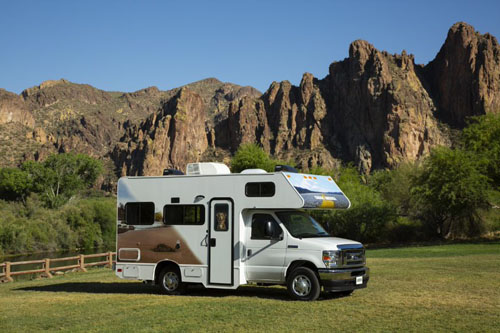
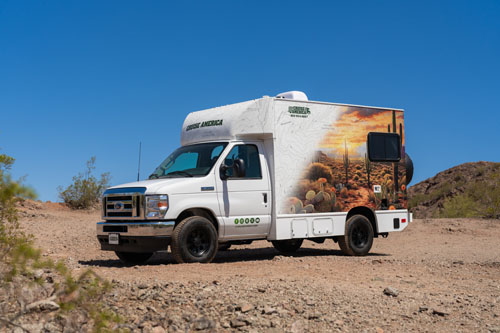
For seniors renting an RV in Vancouver, a Class B Camper Van or a Class SI Semi-integrated RV offers an excellent balance of maneuverability, comfort, and ease of driving on local roads and highways. Class B Camper Vans, averaging around 5.8 meters in length, are highly recommended for their car-like handling, ease of parking in urban areas, and suitability for smaller provincial park campsites. Class SI Semi-integrated RVs, averaging about 6.9 meters in length, provide more spacious living areas, larger kitchens, and often separate sleeping quarters, while still being manageable for experienced drivers on BC's main routes. Both classes generally offer ample ground clearance for typical road conditions and provide a comfortable travel experience for seniors exploring the Vancouver region.
Should I Choose a Compact Van Instead of a Large RV in Vancouver?
While a larger RV provides expansive living space and amenities, opting for a compact van, such as a Class B Camper Van, for travel in and around Vancouver often proves more practical for seniors prioritizing ease of navigation and parking. A compact van simplifies driving on busy city streets, maneuvering through tight spaces, and finding parking in popular areas, which can be a significant benefit. However, if your trip involves longer durations, requires more personal space, a larger kitchen, or accommodates additional family members, a larger Class SI or Class C RV might offer a better overall comfort trade-off. Ultimately, the choice hinges on your comfort level with vehicle size, the desired level of onboard amenities, and how much time you anticipate spending in urban environments versus dedicated campgrounds. For ideas you can prep on the road, watch our RV-friendly recipes playlist on YouTube.
Can I Park Anywhere? Free & Wild Camping Rules in Vancouver
No, you generally cannot park an RV anywhere overnight in Vancouver. Municipal bylaws strictly prohibit sleeping or camping in vehicles on most city streets, public parking lots, and residential areas. Legal overnight RV parking options in and around Vancouver primarily include designated RV parks and private campgrounds, many of which are located in neighboring municipalities like Burnaby, Delta, or Langley. While 'wild camping' or dispersed camping is permitted on certain Crown land in British Columbia, it is not applicable within Vancouver's city limits or within developed provincial or national parks without specific permits. Always research and book official campgrounds in advance for a legal, safe, and amenity-rich overnight stay, and adhere to all posted local regulations.
Can I Drive an RV Into the City Center? Heights, Tunnels & Local Signage
Yes, you can almost always drive an RV into Vancouver's city center, but the primary challenges will be finding suitable parking and being vigilant for specific local signage. Drivers should pay close attention to posted height limits for tunnels and underpasses, though most major routes accommodate standard RVs; underground parking garages are almost always too low for RVs. Navigating downtown streets with an RV is manageable, but parking for larger vehicles is very limited, making public transit from peripheral RV parks often a more convenient option for city exploration. Always watch for signs indicating residents-only parking, no-parking zones, and temporary restrictions to avoid fines or towing.
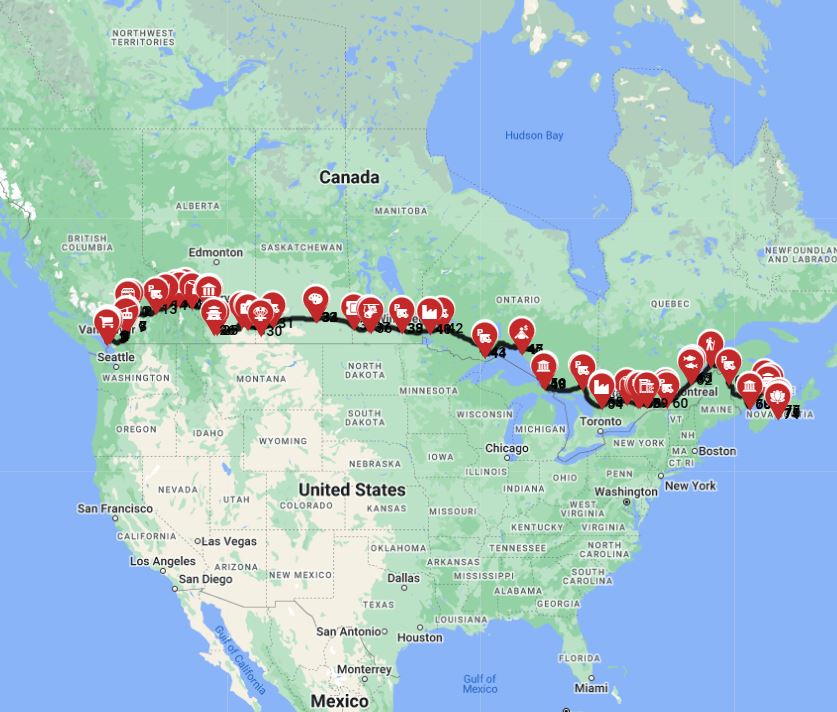
Can you rent an RV to drive across Canada?
Yes, it is possible to rent an RV in Vancouver and drive it across Canada. However, one-way rentals typically incur significant additional fees due to the logistical challenges for rental companies. Booking well in advance is crucial for cross-Canada one-way rentals, especially during peak seasons, as availability can be limited for specific drop-off locations. Budgeting for such a trip must include not only the base rental cost and one-way fees but also substantial fuel expenses (e.g., a Class C RV consumes 10-12 Liters/100 km), campsite fees across provinces, and potential ferry costs. It's essential to confirm with your chosen rental provider their specific policies on mileage limits, regional travel restrictions, and comprehensive insurance coverage for an extended cross-country journey.
Do you need a different license to drive an RV in Canada?
Generally, for most rental RVs in Canada, you do not need a different license than your standard Class 5 (or equivalent) driver's license from your home province or country. In British Columbia, a regular Class 5 license permits the operation of recreational vehicles with a Gross Vehicle Weight (GVW) up to 11,000 kg, which encompasses the vast majority of Class B, Class C, and Semi-integrated RVs. Special commercial licenses or air brake endorsements are typically only required for very large commercial vehicles or combination units that exceed these weight limits, not standard rental RVs. International visitors must possess a valid driver's license, and if it's not in English, an International Driving Permit (IDP) is highly recommended for ease of identification and communication.
What do you need to rent an RV in Canada?
To rent an RV in Canada, you generally need a valid driver's license (Class 5 or equivalent), a major credit card for payment and a security deposit, and you must meet the rental company's minimum age requirement, typically 21 or 25 years old. For first-time RVers, it's advisable to dedicate time during pickup for a thorough walkthrough of the RV's systems, including operating hookups (water, electricity, sewer), managing propane, and understanding basic vehicle controls. Beyond the vehicle, ensure you have comprehensive travel insurance and review the rental company's RV-specific insurance options, including collision damage waivers. Preparation also includes understanding driving challenges specific to BC's varied terrain, from urban areas to mountainous routes, and basic wilderness safety, such as bear awareness for remote areas.
How much does RV rental insurance cost?
RV rental insurance costs vary, with basic liability coverage often included in the rental price. However, optional collision damage waivers (CDW) or more comprehensive policies typically cost an additional CAD 20-60+ per day. Many rental companies offer different tiers of protection, allowing renters to choose their deductible level; a lower deductible usually corresponds to a higher daily premium. Seniors should thoroughly review their personal auto insurance or travel insurance policies, as some may offer extended coverage for rental RVs, potentially reducing the need for additional rental company insurance. Investing in adequate insurance is highly recommended, especially for first-time RVers or those unfamiliar with BC's terrain, as RV repairs can be very expensive.
How much is RV insurance in BC?
For rental RVs in BC, the cost of insurance is integrated into the rental agreement. Options for collision damage waivers (CDW) typically add CAD 20-60+ per day to the rental rate, as previously discussed. This differs from personal RV ownership insurance for privately owned vehicles, which is managed by ICBC (Insurance Corporation of British Columbia) and varies based on factors such as vehicle type and driver's history. When renting an RV, your focus should be on understanding the specific insurance plans offered by the rental company and ensuring you have sufficient coverage for the duration of your trip. It's always wise to check if your personal car insurance policy or travel insurance provides any supplemental coverage for RV rentals to avoid unnecessary overlap or gaps in protection.
What You Shouldn't Miss
-
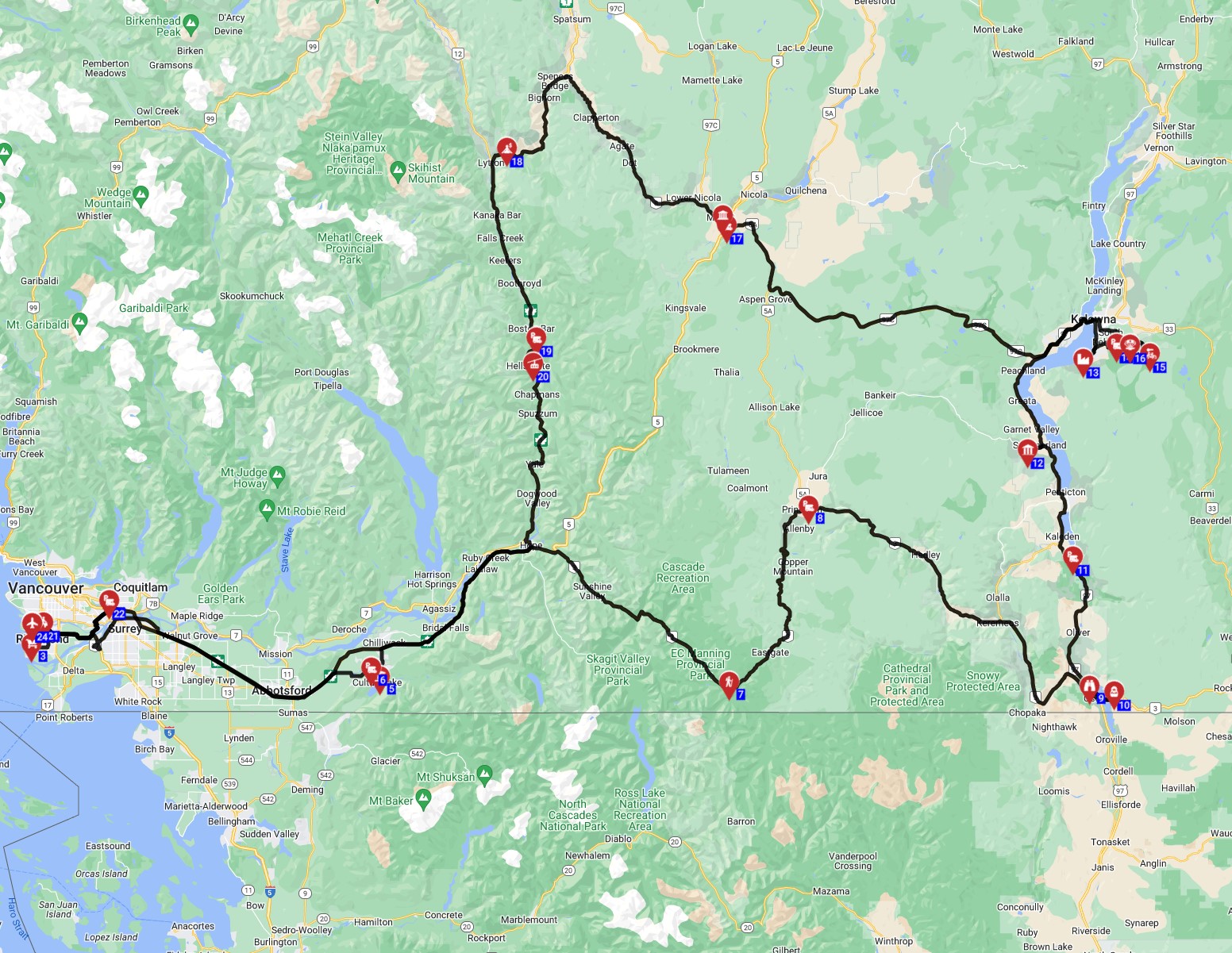
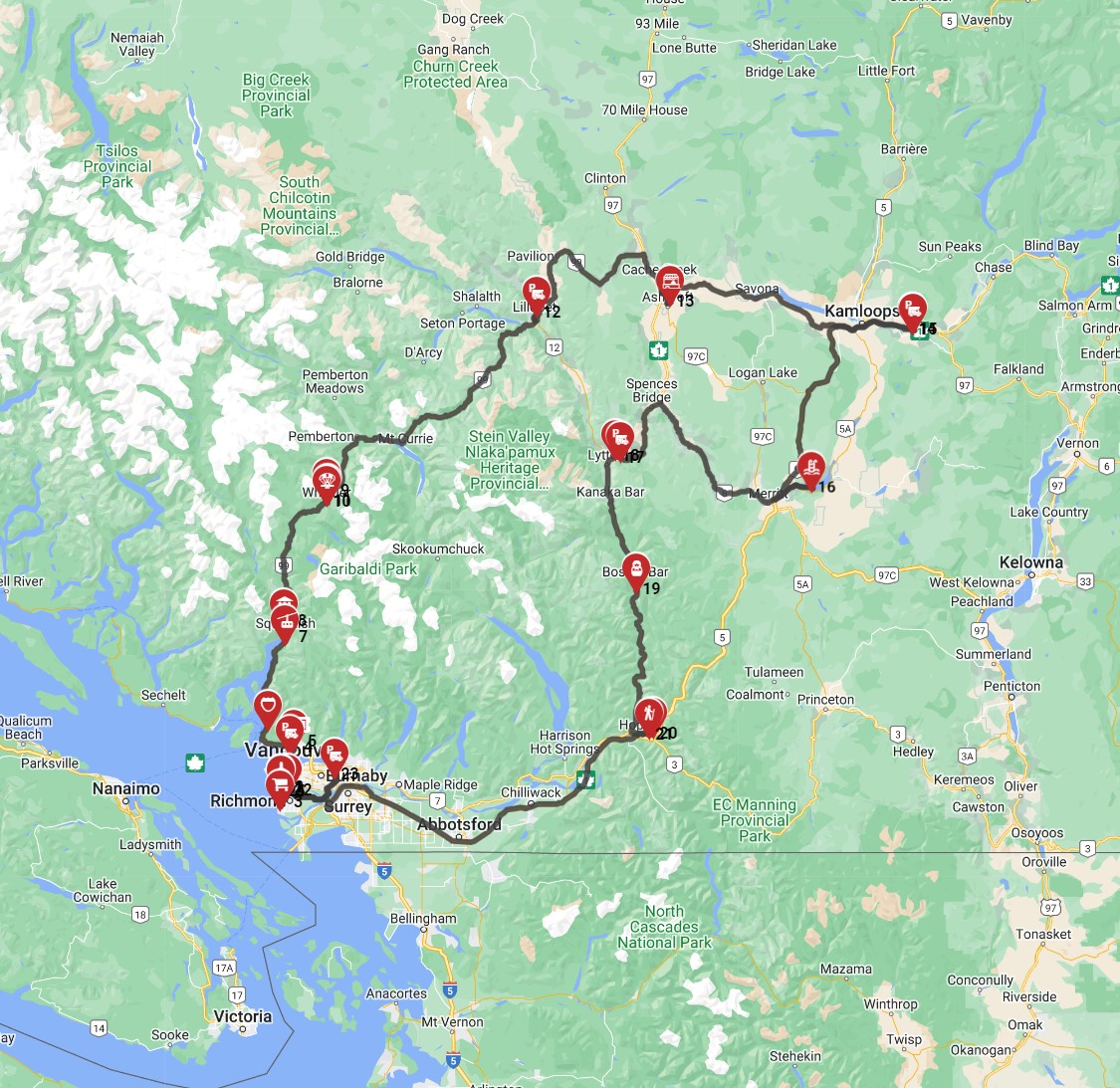
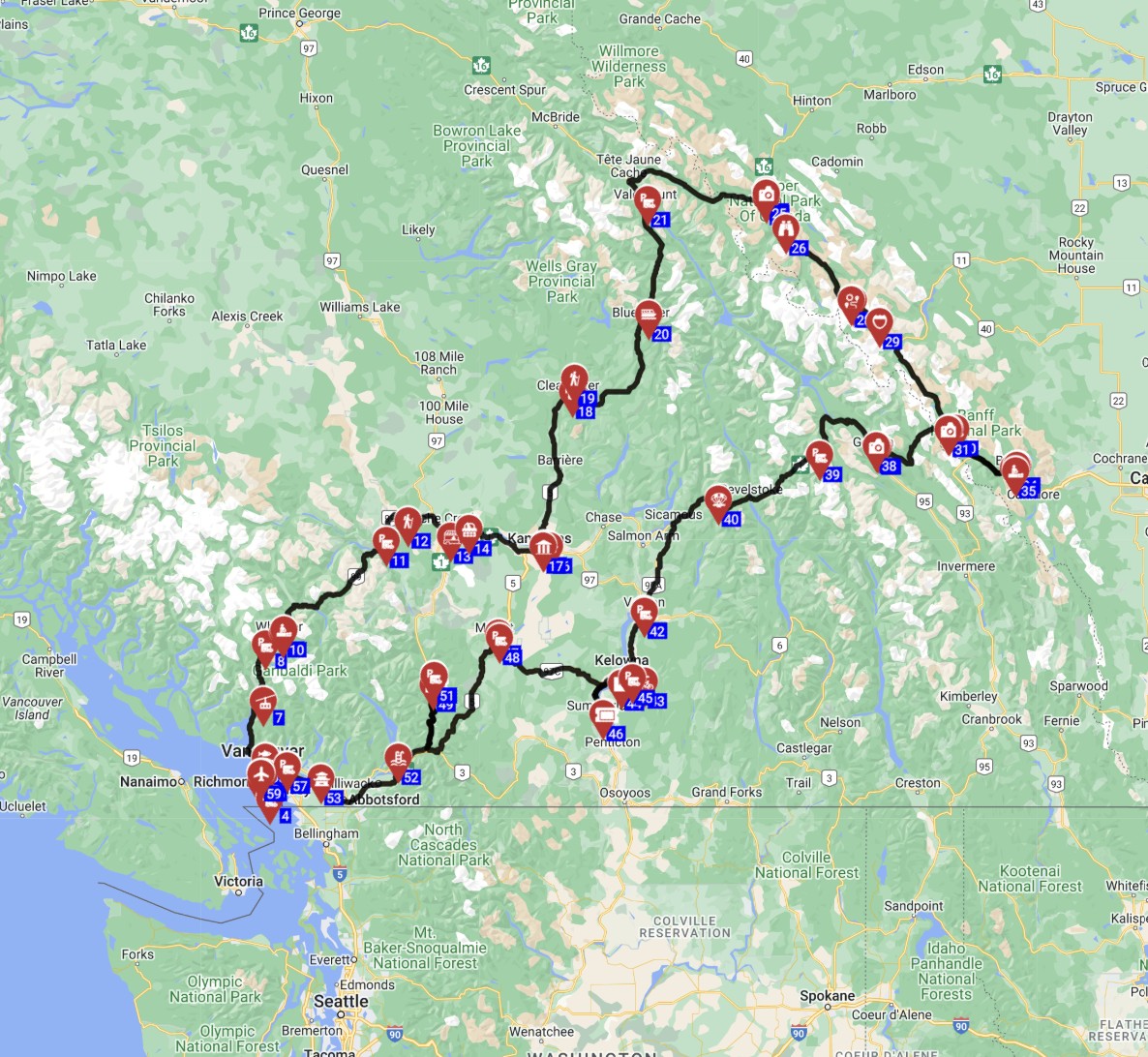
(19 days, 2659 km): Explore the stunning coastal and mountain scenery of British Columbia with this comprehensive route that includes an aquarium, multiple bike rental opportunities, scenic drives, and numerous hiking areas. It’s a fantastic way to experience the diverse landscapes.
 Vancouver Round Trip - West Canada Cycling Adventure
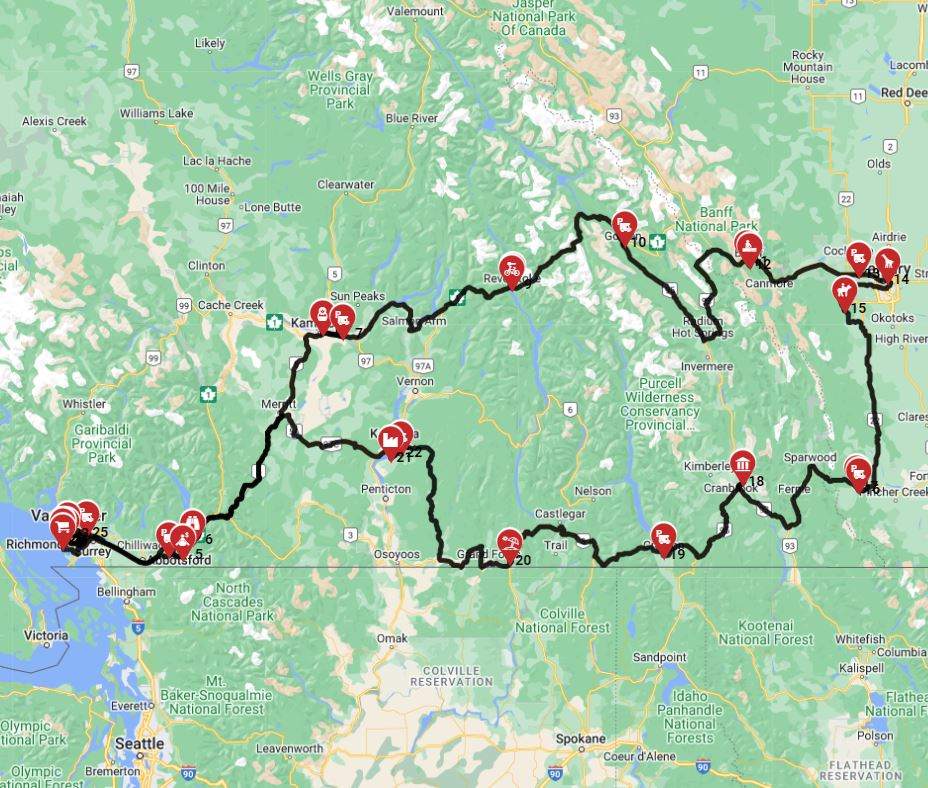
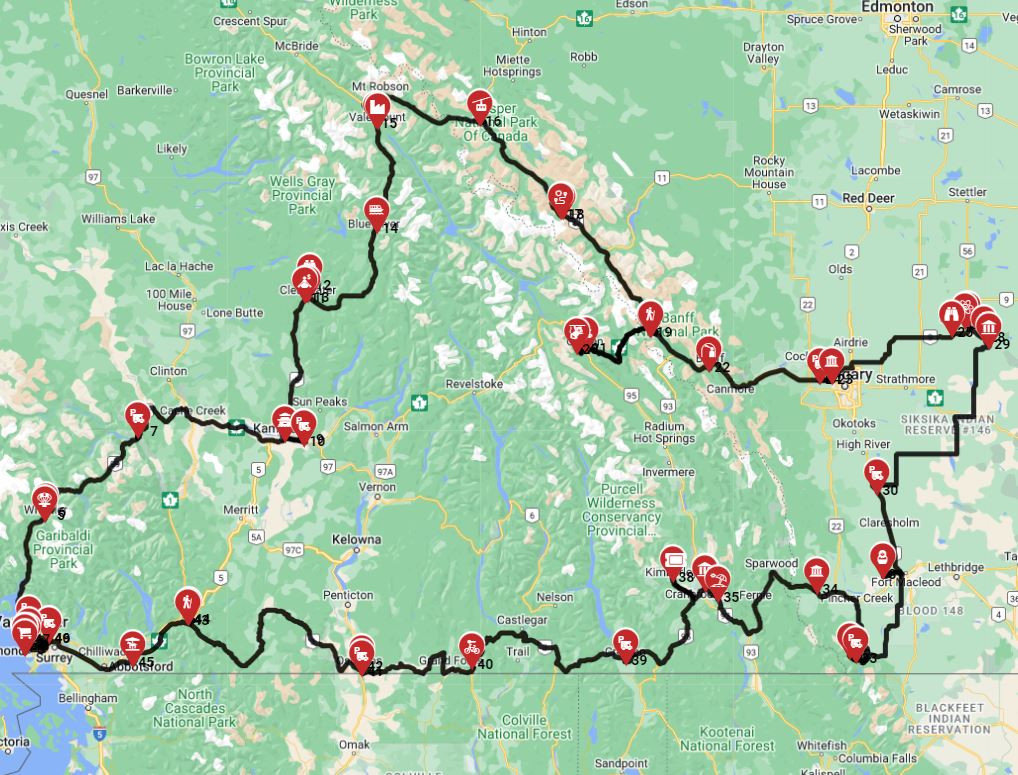
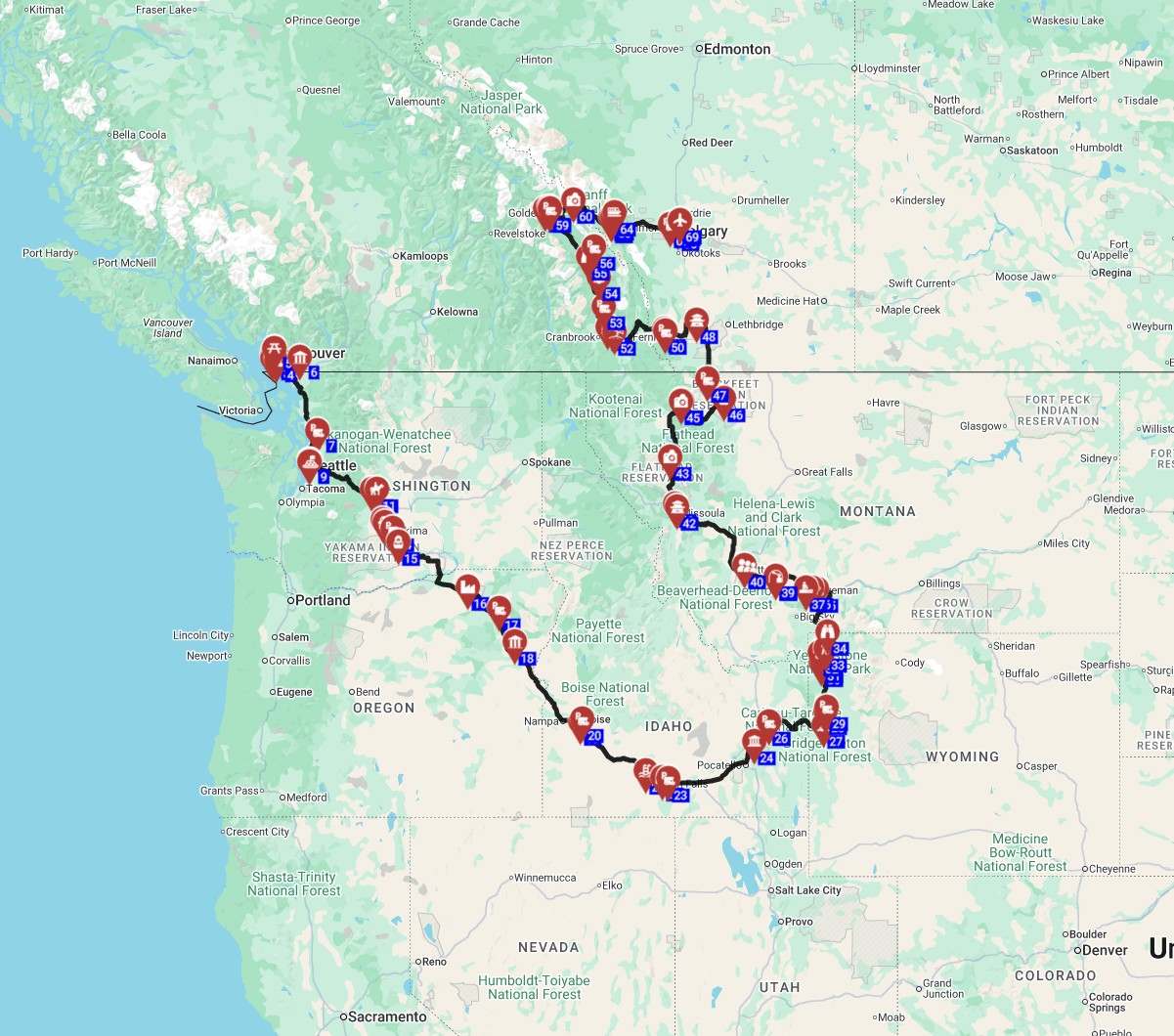
 - Edmonton to Vancouver - Canadian Rockies & BC (15 days, 2212 km): This itinerary is perfect for RVing seniors who want to experience the majesty of the Canadian Rockies before heading west. It includes a mix of family-friendly activities, historical sites, and natural wonders, with opportunities for wildlife viewing.
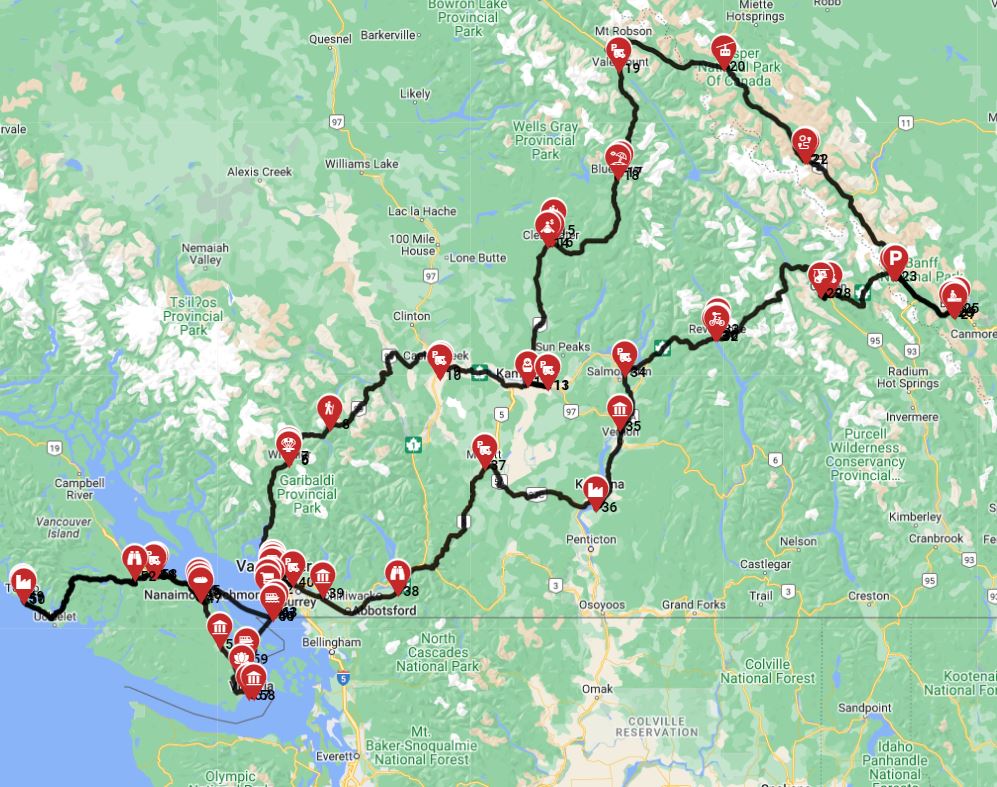
- Calgary to Vancouver - Grizzlies, Geysers & Gondolas (20 days, 4118 km): For an extended adventure, this route covers a vast amount of ground, incorporating amusement parks, wildlife encounters, numerous historical and natural sites, and a wide array of activities. It’s an immersive journey through the heart of Western Canada.
- Stanley Park: A must-visit urban oasis easily accessible by RV, offering miles of scenic driving and walking paths. It's perfect for a leisurely day of exploring natural beauty within the city.
- Granville Island Market: Accessible with a Class B or C RV, this vibrant market offers a taste of local culture, artisan crafts, and delicious food, making it a pleasant day trip.
- Grouse Mountain: A short drive from Vancouver, this attraction offers stunning panoramic views of the city and surrounding landscape, accessible even with larger RVs.
Final Thoughts
Renting an RV in Vancouver offers seniors a comfortable and flexible way to explore British Columbia's stunning landscapes at their own pace. By choosing the right vehicle and planning your route with ease in mind, you can enjoy a memorable and stress-free adventure.
Remember to book in advance, especially during peak seasons, and take advantage of the resources available through RV PLANET (rvplan.net) to discover curated itineraries tailored to your interests. We're here to ensure your RV rental experience is exceptional from start to finish.
Find Motorhome Rentals in Vancouver