In This Guide
- Can You Drive an RV in Toronto? License & Age Rules
- Road Conditions & Terrain in Toronto
- RV Size Limits, Bridges & Restricted Zones
- Fuel: Diesel vs. Petrol & Cost per 100 km
- Tolls, Vignettes & Border Rules
- Driving Tips for RV Travelers in Toronto
- Recommended RV Class for Toronto Roads
- Should I Choose a Compact Van Instead of a Large RV in Toronto?
- Can I Park Anywhere? Free & Wild Camping Rules in Toronto
- Can I Drive an RV Into the City Center? Heights, Tunnels & Local Signage
- Can you rent an RV to drive across Canada?
- What licence do I need to drive an RV in Canada?
- What do you need to rent an RV in Canada?
- Can you park an RV on the street in Toronto?
- Can I rent an RV with a driver's license?
- How much is an RV rental in Toronto?
- How much is RV trailer insurance in Ontario?
Exploring Toronto and the stunning landscapes of Ontario in a rented motorhome offers unparalleled freedom, especially for senior travelers seeking comfort and flexibility. At Bandana RV, we understand that planning an RV adventure, particularly in a bustling city like Toronto, requires careful consideration and reliable information. For live availability and current prices, start with our RV Rental Toronto - Complete Guide 2026 guide. We are true RV specialists, dedicated to helping you find the perfect mobile home for your journey, ensuring a smooth experience from planning to return.
Can You Drive an RV in Toronto? License & Age Rules
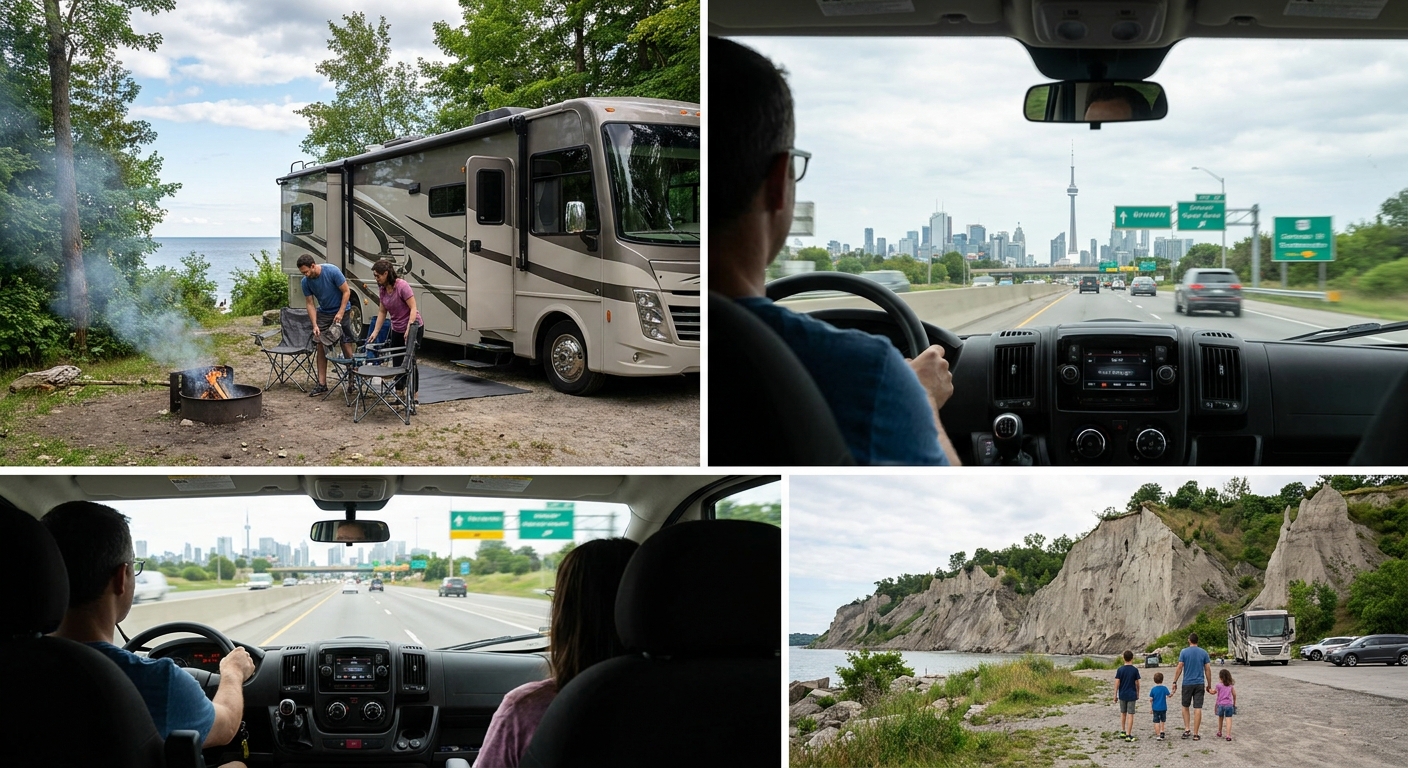
Most rental RVs under 11,000 kg (24,250 lbs) can be driven in Ontario, including Toronto, with a standard G-class driver's license, which is the equivalent of a regular car license in other provinces or countries. This means no special license or additional permits are typically required for the majority of motorhomes and campervans available for rent. The minimum age required by most rental companies for an RV rental in Toronto is 21, and thankfully, there are no young driver surcharges or vehicle class restrictions based on age through Bandana's network of suppliers. If your home country driver's license is not in English or French, an International Driving Permit (IDP) is recommended to accompany your valid license, although it's not strictly mandatory in all cases. Our full transparency policy means you'll know all requirements upfront, with no hidden fees or surprises.
Road Conditions & Terrain in Toronto
Toronto's main roads and highways, such as Highway 401 and the Gardiner Expressway, are generally well-maintained, providing a smooth driving experience for rented motorhomes and campervans. However, urban areas within the city can feature heavy traffic, particularly during rush hours on major arteries like Lakeshore Boulevard or Yonge Street. Drivers should anticipate construction zones and variable street quality, which is common in any large metropolis.
The terrain in Toronto and the surrounding Greater Toronto Area is largely flat, making driving less strenuous than in mountainous regions and ideal for senior travelers seeking a relaxed journey. Planning your routes in advance, especially to avoid peak rush hour traffic (typically 7-9 AM and 4-6 PM on weekdays), will contribute significantly to a stress-free trip. Consider taking slower, scenic routes, such as along the waterfront or through local communities, for a more enjoyable pace when navigating outside the immediate city core. For longer trips beyond Toronto, our RV Rental Ontario - Complete Guide 2026 offers broader regional advice.
RV Size Limits, Bridges & Restricted Zones
While there are no blanket RV size limits imposed on general roads in Toronto, drivers of rented motorhomes and campervans must be keenly aware of specific height and weight restrictions on individual bridges or underpasses, especially around the downtown core and major expressways. Most rental RVs are designed to navigate standard road infrastructure without issue, but you should always confirm your specific vehicle's height and length and pay close attention to posted signage. Parking garages are a particular concern for RV height. Toronto does not enforce environmental zones that restrict RV access, giving you more freedom to explore. However, for precise navigation and to avoid unexpected obstacles like low overheads, always utilize up-to-date GPS navigation with RV-specific settings that account for your vehicle's dimensions.
Fuel: Diesel vs. Petrol & Cost per 100 km
Most motorhomes and campervans available for rental in Toronto typically run on petrol, particularly Class C Alcove models like the 'rent rv example D1' and Class B Camper Vans such as the '2 Berth Hi Top'. However, some larger Class B Camper Vans or certain smaller Class A units might utilize diesel fuel. Based on Bandana's extensive local fleet data, Class B Camper Vans usually consume approximately 11-15 Liters/100 km, while larger Class C Alcove and Class SI Semi-integrated models average around 25 Liters/100 km or more, depending on the model and driving conditions.
Fuel prices in Toronto fluctuate, so budgeting for approximately CAD $1.70 - $2.00 per liter (as of 2026) is a practical approach for your trip planning. This means a 100 km journey could cost between CAD $18 to $60, significantly varying based on your chosen RV class and its fuel efficiency. Always confirm the exact fuel type with your chosen rental provider. For managing all your ancillary trip costs, including fuel, tolls, and campground fees, remember that RV PLANET routes allow you to itemize and track every expense for easy budgeting. On the routes offered through RV PLANET routes, you can itemize and track every expense along the way for easy budgeting.
Tolls, Vignettes & Border Rules
Ontario features electronic tolls, most notably on Highway 407 ETR, which is entirely electronic and operates on a license plate recognition system. There are no vignette systems in Canada, so tolls are typically pay-per-use on specific highways or bridges. RV renters should proactively discuss toll payment options with their RV provider; many Bandana partner suppliers offer optional transponders or toll passes that can be pre-purchased or added to your rental agreement, preventing unexpected post-trip fines and administrative fees.
For those considering cross-border travel from Toronto into the USA, thorough preparation is crucial. Ensure all necessary documentation is in order, including passports, your vehicle rental agreement proof, and any required border crossing forms. Be aware of varying customs regulations regarding food items, alcohol, and other goods. Always declare anything questionable to avoid complications. A trip from
Driving Tips for RV Travelers in Toronto
For senior RV travelers navigating Toronto, planning your route meticulously using a GPS with RV-specific settings is paramount to avoid low bridges, narrow streets, and heavy traffic zones. Toronto's extensive public transit network, including the TTC and GO Train, provides excellent options for exploring downtown after parking your RV at an accessible campground or park-and-ride. Remember to travel slowly, aiming for a maximum of 100-150 km per day on average, allowing ample time to enjoy the journey and absorb the scenery and local culture. We compare final prices across 50+ suppliers, making it easier to choose a rental RV that suits your travel style.
Taking frequent breaks every 2-3 hours for longer journeys across Canada is essential for maintaining focus, stretching, and staying hydrated. Most rental RVs, like the popular 'cruise america rv rental example Explorer' or 'rv rentals utah example Sunrise Escape', come with automatic transmission, which significantly simplifies driving and reduces fatigue, especially when dealing with Toronto's urban traffic. Before heading into busy areas, practice maneuvering and parking your rented motorhome in a quiet lot to build confidence. Scheduling your city driving during off-peak hours can also greatly minimize stress and congestion, allowing for a more relaxed pace. For more specific local driving insights, consult our RV Travel Guide to Toronto - Tips and Top Spots 2026.
🎬 Video coming soon
Recommended RV Class for Toronto Roads
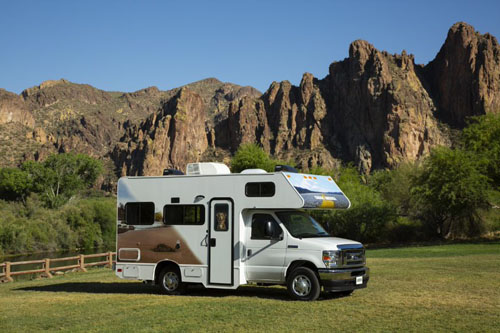
For senior travelers navigating Toronto's roads and accessing nearby attractions, a Class B Camper Van or a Class TC Truck Camper is generally recommended due to their superior maneuverability. Class B Camper Vans, averaging 6.3 meters in length and often featuring a compact design, offer easier parking and navigation in urban settings compared to larger models. They still provide essential amenities for 2-3 adults, such as front air conditioning and a toilet, as seen in models like the "2 Berth Hi Top".
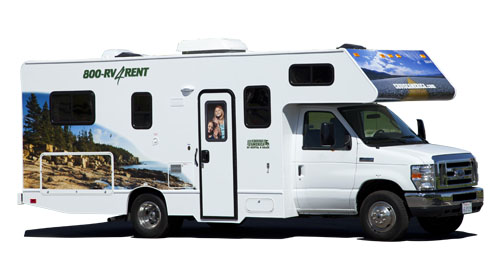
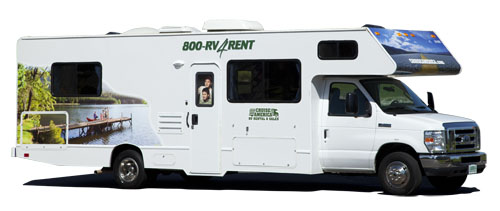
Similarly, Class TC Truck Campers, at an average length of 6 meters, are excellent choices, offering a compact footprint with decent ground clearance, suitable for 2 adults looking for a balance of comfort and agility. An example is the "Patagonia Camper 4x4 double cab" with 4 Wheel Drive and a small RV size. While larger Class C Alcove models (averaging 8.2m) or Class SI Semi-integrated models (averaging 7.6m) offer more expansive living space and amenities, their increased length can indeed make urban parking and tight turns more challenging for less experienced or cautious drivers.
Should I Choose a Compact Van Instead of a Large RV in Toronto?
Choosing between a compact campervan and a larger motorhome for your Toronto adventure largely depends on your travel priorities. A compact Class B Camper Van, like the 'hire campervan example Paradise S/T', offers superior maneuverability and easier parking in Toronto's bustling urban core, genuinely helping in tight historic centers or navigating narrow city streets where a large RV might struggle. These smaller vehicles are ideal if your primary goal is to spend days exploring downtown Toronto, perhaps staying at a peripheral campground and commuting in.
However, for senior travelers planning longer trips from Toronto, or those prioritizing comfort with an indoor kitchen, a full bathroom, and more expansive living quarters, a larger RV like a Class C can be a better trade-off. Models such as the 'rv rentals example Comfort Class' or 'campervan hire new zealand example Euro Deluxe' provide ample space for cooking meals on board (check our RV-friendly recipes playlist for inspiration!) and relaxing, especially if you plan to camp at sites outside the immediate downtown area. Consider your itinerary: if primarily exploring downtown Toronto, a compact van is advantageous; if venturing into Ontario's provincial parks or across Canada for an extended road trip, the extra space of a larger RV might be preferred.
Can I Park Anywhere? Free & Wild Camping Rules in Toronto
Free or 'wild' camping is generally not permitted within Toronto's city limits or on urban streets, as city bylaws strictly prohibit overnight parking for RVs and trailers. This includes areas like the waterfront, residential streets, and commercial parking lots without explicit permission. Parking an RV on residential streets is often restricted by length and duration, and is subject to specific city bylaws which can lead to tickets or towing.
For legal and safe overnight stays, provincial parks and designated private campgrounds near Toronto are the recommended and often only option for RVers. These sites, such as Bronte Creek Provincial Park to the west or Darlington Provincial Park to the east, offer paid overnight camping with varying amenities, typically costing CAD $40-$70 per night. Always check local regulations before parking overnight, particularly concerning private property or undesignated areas. RV PLANET (rvplan.net) is a great resource for locating available spots along your route and for finding campsites and campgrounds during your trip.
Can I Drive an RV Into the City Center? Heights, Tunnels & Local Signage
Yes, you can generally drive a rented RV into Toronto's city center, but it requires careful attention to specific signage, height restrictions, and local traffic patterns. There are no blanket bans on RVs in downtown Toronto, but drivers must be mindful of low bridges, tunnels, and restricted parking zones. Always pay close attention to local signage, especially for height limits on bridges or underpasses (like the Gardiner Expressway ramps) and any 'residents-only' parking restrictions on smaller streets.
Navigating Toronto's downtown core during peak hours can be quite challenging due to congestion and narrow streets, making off-peak driving (mid-morning or early afternoon) advisable for RVs to ensure a more relaxed experience. Once you've arrived, utilizing public transit from an RV-friendly parking spot or nearby campground is the most practical way to explore attractions like the CN Tower, Rogers Centre, or the historic Distillery District without the stress of urban RV parking.
Can you rent an RV to drive across Canada?
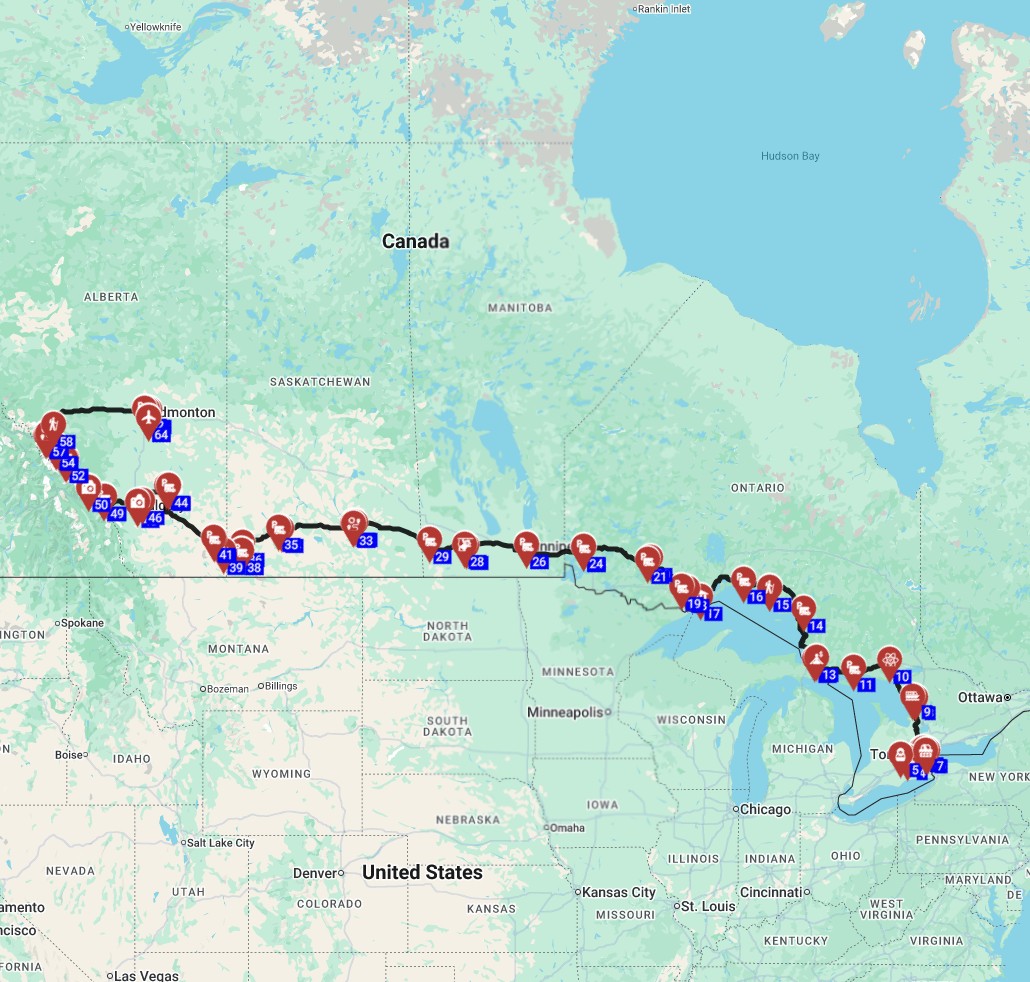
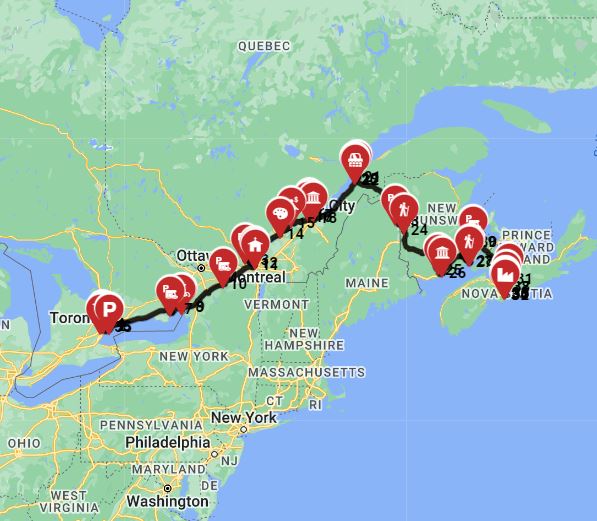
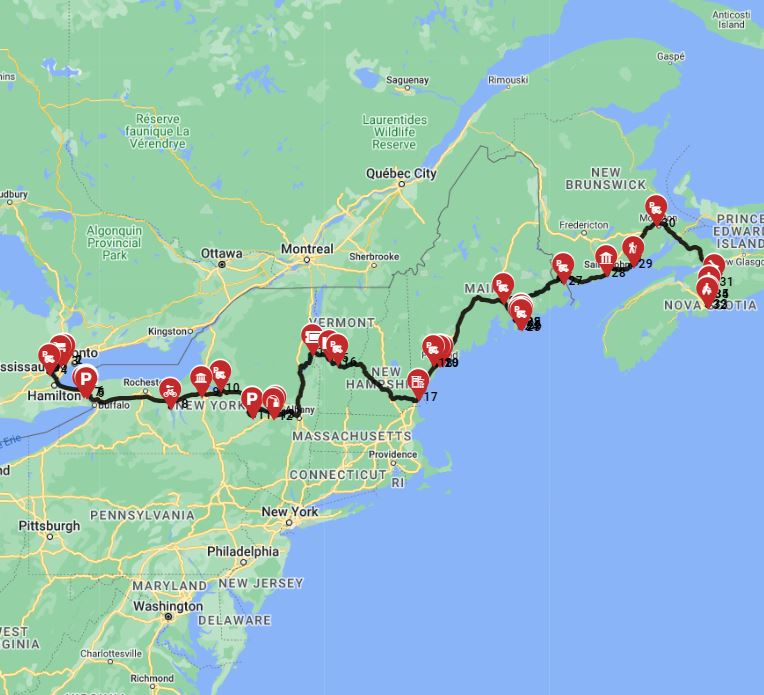
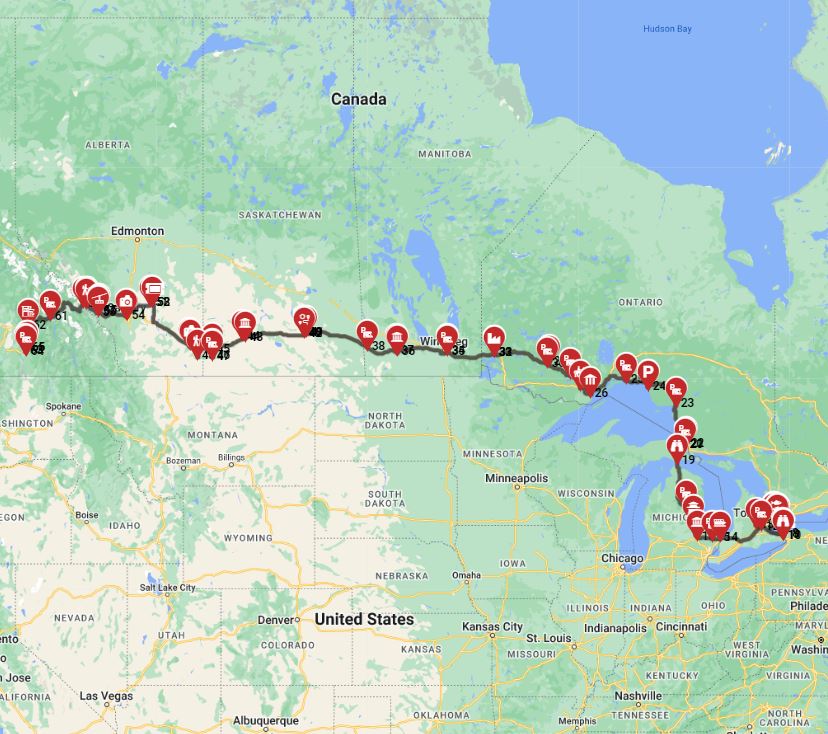
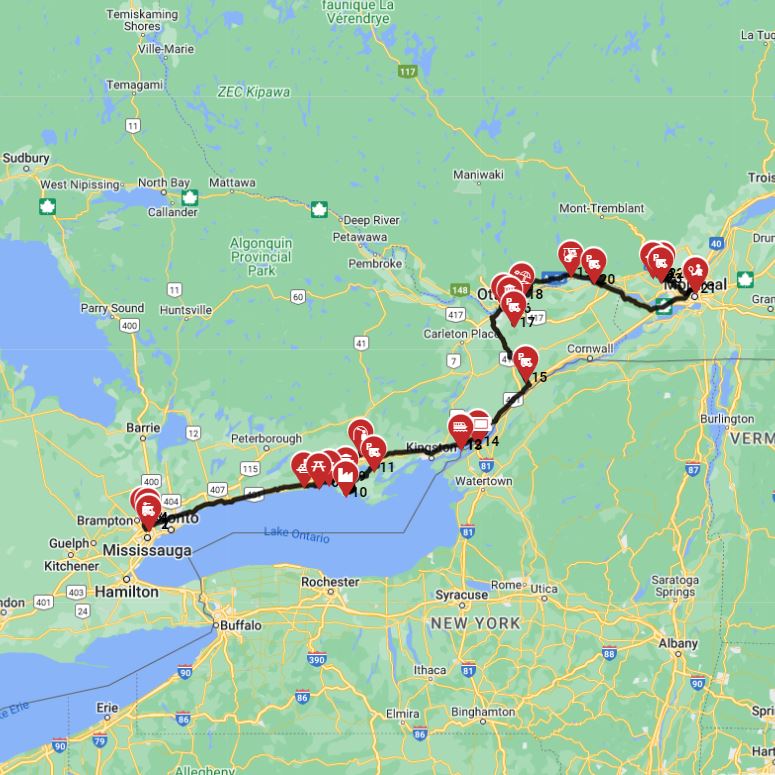
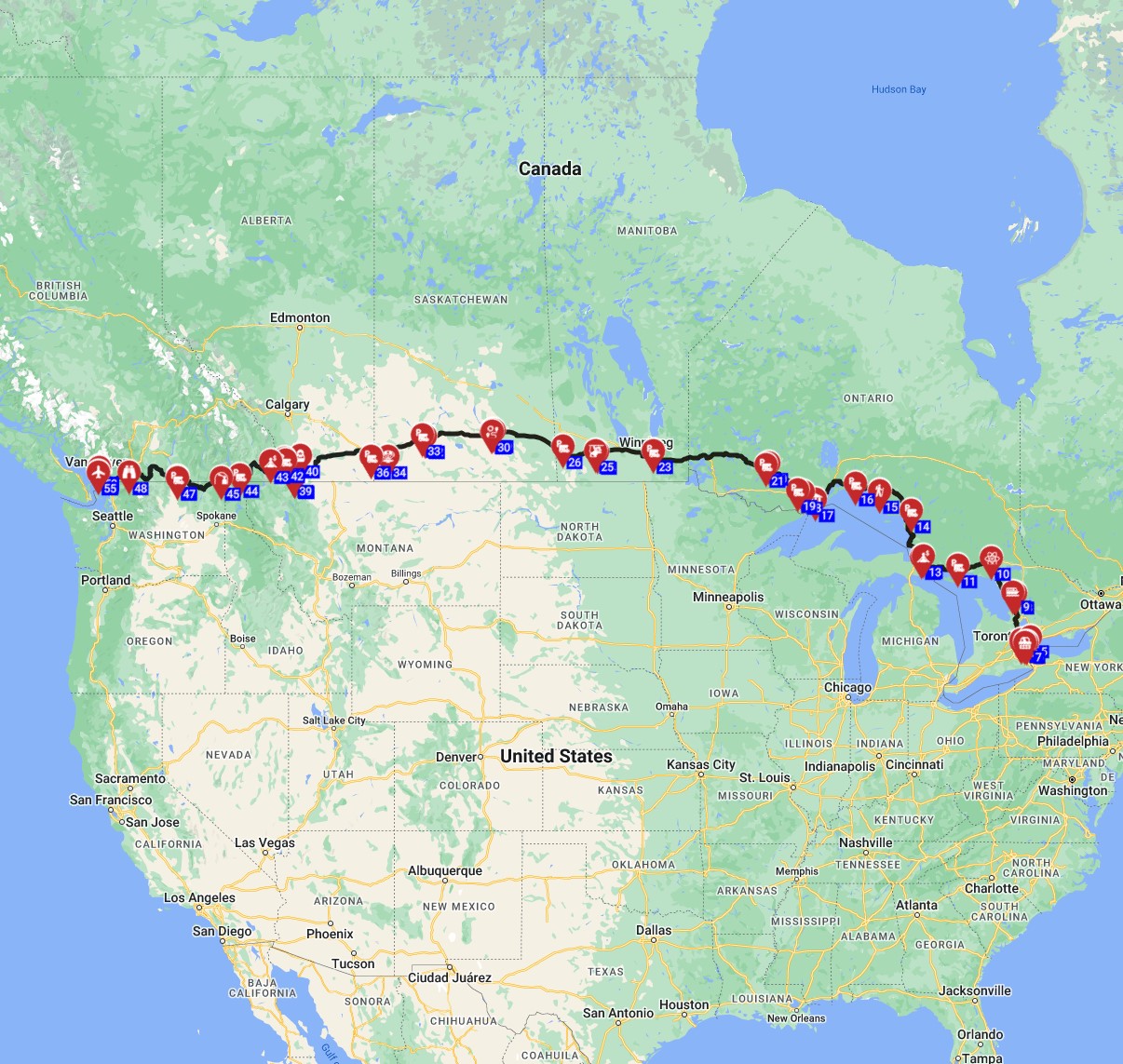
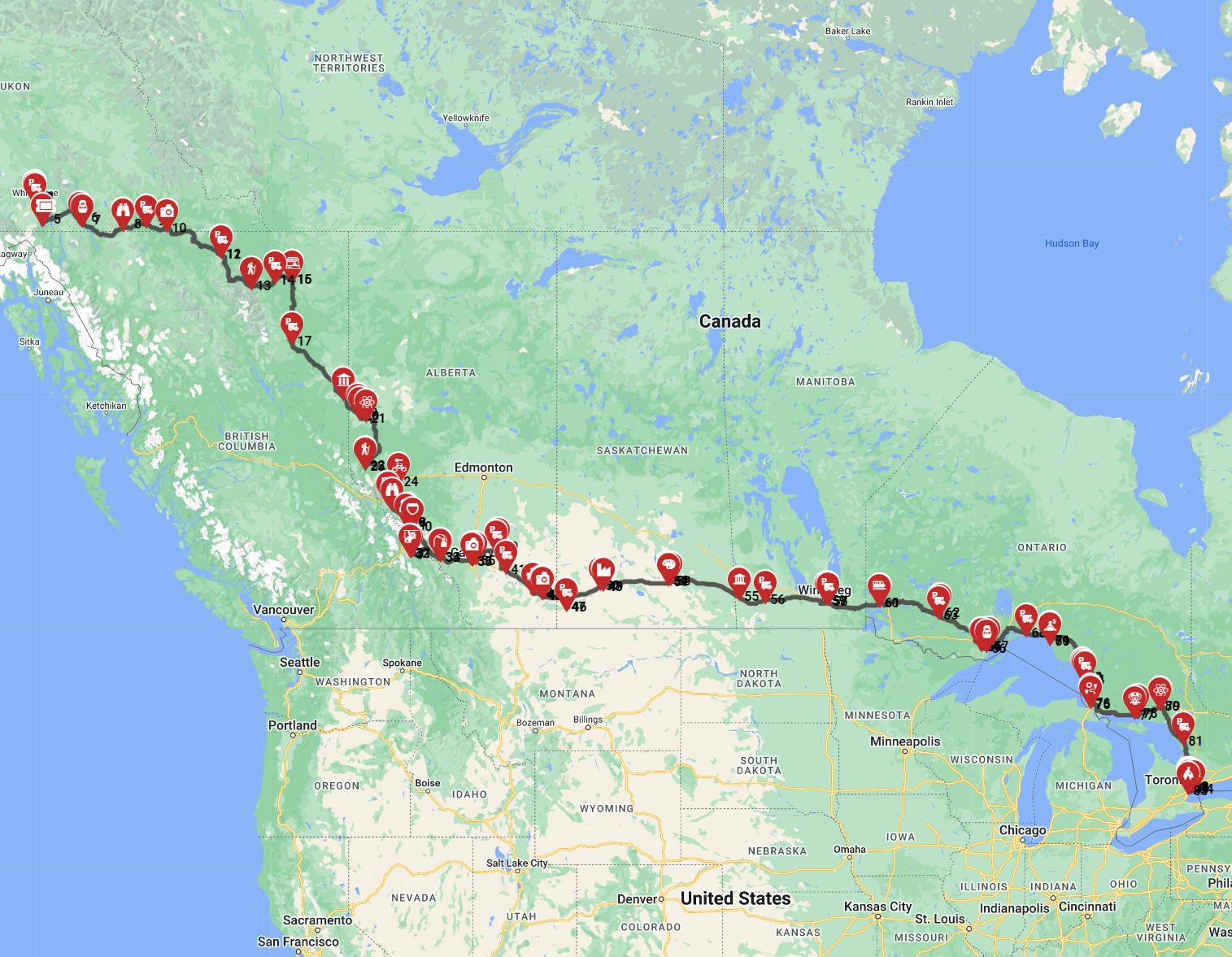
Yes, you can absolutely rent an RV in Toronto and embark on an unforgettable journey across Canada, as most rental companies, including Bandana's trusted partners like El Monte, Cruise America, Apollo, and Britz, permit long-distance, one-way trips. This allows for incredible adventures such as the Montreal to Toronto route plan (11 days, 1326.6 km) which includes 1 Amusement Park, 1 Aquarium, and 3 Traditional Markets. Or perhaps a more ambitious Whitehorse to Toronto - The Great Canadian RV Adventure (32 days, 6633.5999999999985 km), encompassing 5 Natural Features and 4 hiking areas.
Careful planning is essential for cross-Canada journeys, including mapping out routes, booking provincial park campgrounds in advance, and understanding any varying provincial regulations. While one-way rentals are common, they usually incur an associated one-way fee, which will be transparently outlined during the booking process on Bandana. Confirm any mileage restrictions or additional costs directly with your chosen rental provider to ensure a stress-free cross-country adventure.
What licence do I need to drive an RV in Canada?
In Canada, a standard provincial Class G (or equivalent from your home country) driver's license is sufficient for driving the vast majority of rental RVs, provided the vehicle's gross vehicle weight rating (GVWR) does not exceed 11,000 kg (24,250 lbs). This includes all Class B Camper Vans (like the '2 Berth Hi Top'), Class C Alcoves (e.g., '24' Class C Motorhome'), and Class SI Semi-integrated models that Bandana offers. You won't need a special license, CDL, or any additional permits for these standard rental motorhomes.
For international visitors, your valid home country driver's license is typically accepted. However, if your license is not in English or French, an International Driving Permit (IDP) is strongly recommended as a translation, although it is not legally mandatory in most cases in Ontario. Always verify the GVWR of your specific rental and consult the Ontario Ministry of Transportation guidelines if you have any unique concerns, though rest assured, most vacation RV rentals fall well within standard licensing requirements.
What do you need to rent an RV in Canada?
To rent an RV in Canada, you typically need a valid driver's license, a major credit card for the deposit and payment, and you must meet the rental company's minimum age requirement. The minimum driver age for rv rental in Toronto is usually 21 years old across most Bandana suppliers, regardless of the RV class. You'll need a Class G (or equivalent) driver's license. For international visitors, a valid home country driver's license is required, and an International Driving Permit (IDP) is recommended if your license is not in English or French.
Proof of insurance is also mandatory. This can often be an extension of your personal auto insurance policy, purchased directly from the rental company, or sometimes included with certain credit card benefits – always check your options carefully. Many suppliers also require a clean driving record. Bandana prides itself on full transparency, ensuring there are no hidden fees or surprises throughout the booking process for your Toronto RV rental, and our expert team is available for pre-booking comparison and support.
Can you park an RV on the street in Toronto?
Parking a rented RV on the street in Toronto for extended periods or overnight is generally not permitted due to strict city bylaws regarding vehicle size and duration of parking. While you might find short-term daytime street parking in some areas depending on local signage and restrictions, attempting overnight parking will likely result in a ticket or even towing, especially in popular tourist areas or residential neighborhoods. Toronto's bylaws are designed to manage urban traffic flow and residential access, making long-term RV street parking impractical and often illegal.
For overnight stays, it is highly recommended to utilize designated RV campgrounds or private RV parks located within a reasonable commuting distance from Toronto. Options include Glen Rouge Campground within the city's eastern edge, or provincial parks a short drive away like Bronte Creek Provincial Park. These locations offer proper hook-ups and facilities, ensuring a comfortable and legal overnight experience. For further details on local regulations, refer to the "Can I Park Anywhere? Free & Wild Camping Rules in Toronto" section.
Can I rent an RV with a driver's license?
Yes, you can absolutely rent an RV in Toronto with a standard driver's license, provided it is a valid provincial Class G license (or its equivalent from another Canadian province or your home country) and the RV's gross vehicle weight does not exceed 11,000 kg (24,250 lbs). This covers all common rental motorhome classes, including Class A, Class B, and Class C vehicles.
Rental companies typically enforce a minimum age requirement, which is 21 years old across most of Bandana's suppliers for renting any motorhome. For international drivers, your valid home country driver's license is required, and an International Driving Permit (IDP) is a sensible addition if your license is not primarily in English or French. There are no special vehicle class restrictions based on age, nor are there young driver surcharges for those 21 and over when booking through Bandana.
How much is an RV rental in Toronto?
The cost of a rented RV in Toronto is dynamic, much like flight tickets, varying significantly based on the RV class, rental duration, season, and specific amenities, typically ranging from CAD $150 to $400+ per night. A compact Class B Camper Van, ideal for couples, might be on the lower end, while a larger Class C Alcove like the 'Adventure Camper' offering space for families will be higher, especially during peak summer months or major events. Our "RV Rental in Toronto - Prices and Best Deals 2026" guide provides more detailed pricing insights.
Beyond the base rental fee, travelers should budget for ancillary costs such as insurance (which you can upgrade to a top-level deductible for extra peace of mind), mileage charges (if not unlimited), fuel (estimated CAD $1.70-$2.00/L), provincial park camping fees (CAD $40-$70/night), potential toll fees (e.g., Highway 407 ETR), and groceries. Booking your RV rental in Toronto in advance, particularly outside the high-demand summer season, can often help secure more favorable rates and better availability. For those seeking luxury, our Luxury RV Rental in Toronto - Premium Prices 2026 provides details on high-end options.
How much is RV trailer insurance in Ontario?
RV insurance in Ontario for a rental motorhome or campervan varies widely based on factors such as the vehicle's value, the coverage limits chosen, your driving record, and the specific insurer. Most rental companies include basic liability coverage in their standard rental rates, which is legally mandated but often comes with a high deductible, typically ranging from CAD $1,500 to $3,000, and may offer limited collision protection.
For added peace of mind, renters invariably have the option to purchase supplementary insurance from the rental company to significantly reduce this deductible and enhance overall coverage. This optional upgrade typically costs an additional CAD $20 - $50 per day, depending on the level of protection. It is always wise to consult with your personal auto insurance provider or credit card company prior to your trip, as some personal policies or credit card benefits may extend coverage to RV rentals, potentially negating the need for additional purchase. Remember, you can upgrade to a top-level deductible through many of our partners for extra peace of mind during your Toronto adventure.
What You Shouldn't Miss
Looking for expert insights from Avi Bandana? Top 5 Adventures - recommendations from Avi Bandana
- **Niagara Falls Day Trip:** Just a 90-minute drive from Toronto, witness the magnificent Horseshoe Falls. Combine it with a visit to Niagara-on-the-Lake for charming wine country experiences.
- **Rouge National Urban Park:** Explore North America's largest urban national park on Toronto's eastern edge. Enjoy hiking, canoeing, and wildlife viewing surprisingly close to the city center.
- **Muskoka Lakes & Algonquin Provincial Park:** Head north for stunning lake country, perfect for a several-day RV adventure. Algonquin offers over 2,400 km of canoe routes and 1,200 campsites (many first-come-first-serve).
- **Prince Edward County Wine Route:** Drive east to this picturesque island region known for its wineries, artisanal foods, and Sandbanks Provincial Park with its beautiful beaches and RV-friendly campgrounds.
- **Bruce Peninsula & Tobermory:** Venture northwest to explore the crystal-clear waters, Grotto at Bruce Peninsula National Park, and charming Tobermory with its Flowerpot Island boat tours. Just be sure to reserve campgrounds in advance during peak summer.
Final Thoughts
Embarking on a rented RV adventure in Toronto and across Ontario is an incredibly rewarding experience, offering comfort, flexibility, and the chance to truly immerse yourself in Canada's diverse landscapes and vibrant culture. We at Bandana RV are here to ensure that your journey is as smooth and enjoyable as possible, providing you with all the essential information and support you need every step of the way. Remember to travel slowly, savor each moment, and connect with the unique places you discover. Our commitment to full transparency and genuine RV expertise means you're in capable hands.
Whether you dream of a week-long trip exploring provincial parks or a more extended road trip across Canada, a rented motorhome or campervan is your ideal companion. Don't let urban navigation or planning details deter you; with the right preparation and a reliable partner like Bandana, your Toronto RV adventure will be filled with cherished memories. Discover top destinations and planning tips, all in one place, and let us help you plan a trip itinerary in advance with minimal effort and maximum enjoyment.
Find Motorhome Rentals in Toronto