In This Guide
- Can You Drive an RV in South America? License & Age Rules
- Road Conditions & Terrain in South America
- RV Size Limits, Bridges & Restricted Zones
- Fuel: Diesel vs. Petrol & Cost per 100 km
- Tolls, Vignettes & Border Rules
- Driving Tips for Rv rental Travelers
- Recommended RV Class for South America Roads
- Should I Choose a Compact Van Instead of a Large RV in South America?
- Can I Park Anywhere? Free & Wild Camping Rules in South America
- Can I Drive an RV Into the City Center? Heights, Tunnels & Local Signage
- What is the 3-3-3 rule for RV travel?
- Can you RV in South America?
- What countries are RV friendly?
- Can I rent an RV to drive across country?
- How much does an RV rental trip cost in South America?
- Finding the Cheapest RV Rental in South America
- Last-Minute RV Rental Deals in South America
- What You Shouldn't Miss
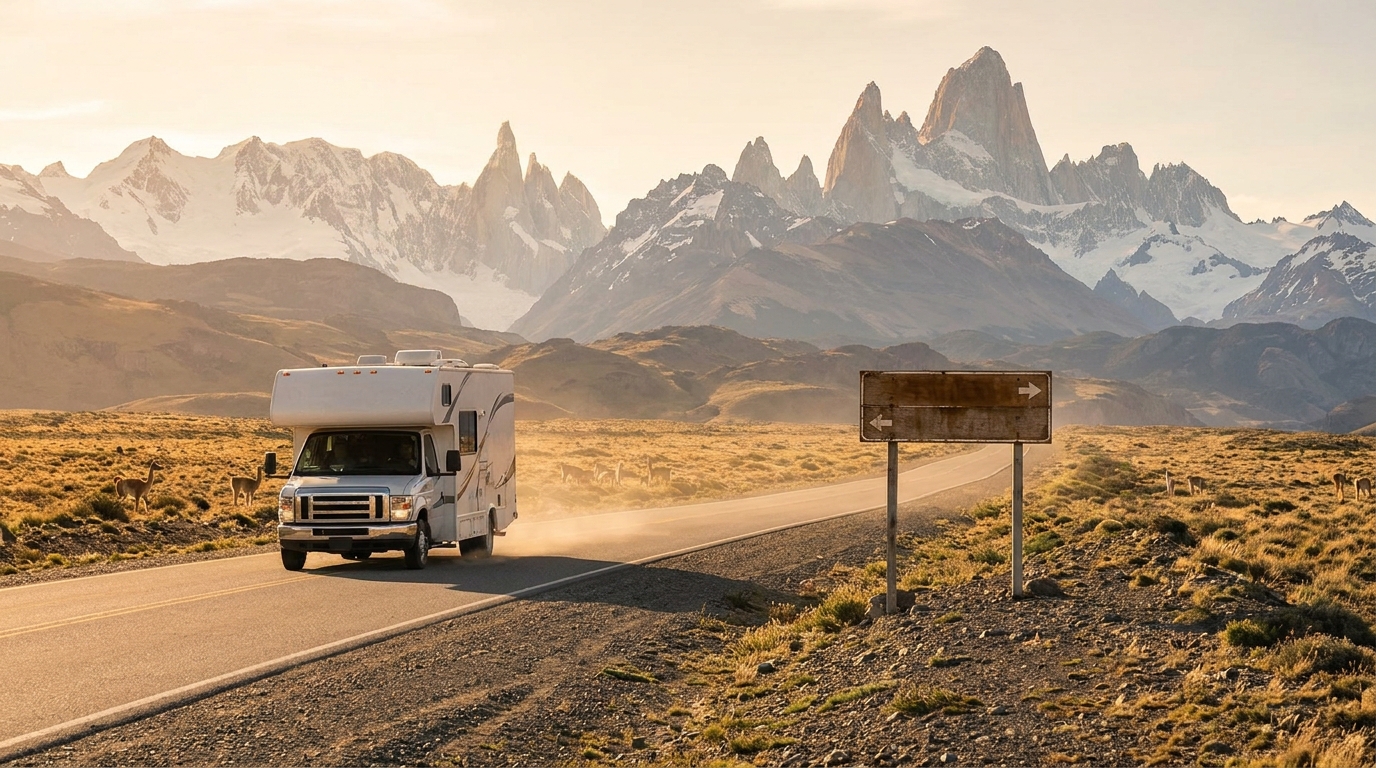
Imagine yourself traversing the awe-inspiring landscapes of South America, from the rugged Andes to the lush Amazon, all from the comfort of your own rented motorhome. An RV adventure here promises unparalleled freedom and immersion, allowing you to truly connect with the diverse cultures, incredible food, and breathtaking scenery. For live availability and current prices, start with our RV Rental South America - Complete Guide 2026.
🎬 Video coming soon
Can You Drive an RV in South America? License & Age Rules
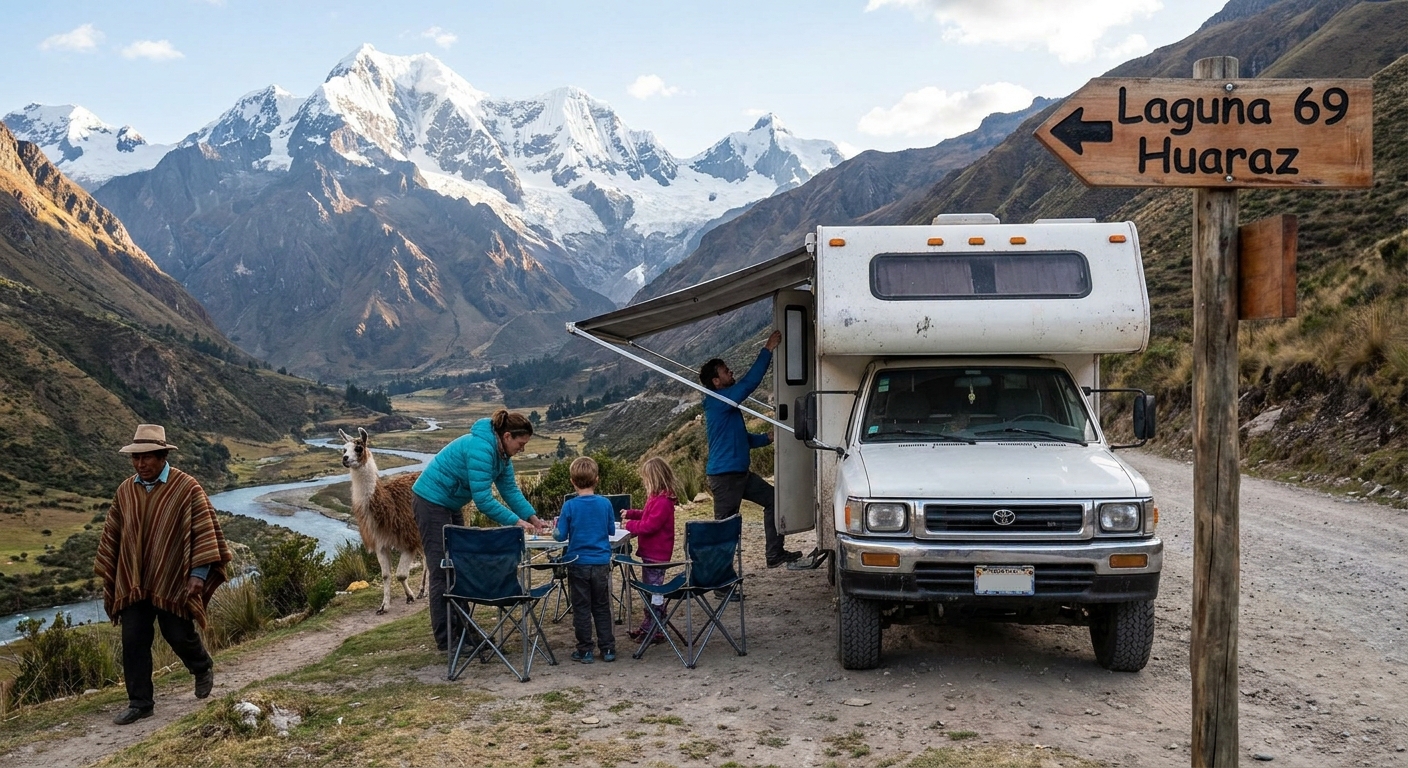
Yes, most standard rented RVs and campervans in South America can be driven with a Class B (or equivalent) driver's license, provided the vehicle's Gross Vehicle Weight Rating (GVWR) does not exceed 3,500 kg.
An International Driving Permit (IDP) is highly recommended, and often legally required, in conjunction with your valid national driver's license for renting and driving an RV in many South American countries. While not always strictly enforced for casual stops, an IDP can be invaluable for smooth border crossings and interactions with local authorities. The minimum driver age for RV rentals in South America is typically 21 years old across most suppliers, with Bandana Caravan having no additional young driver surcharges or vehicle class restrictions for renters aged 21 and above.
Road Conditions & Terrain in South America
Road conditions in South America vary significantly, ranging from well-maintained paved highways in and around major cities to gravel, dirt, and challenging mountain passes in more remote regions.
Traveling by a rented RV or motorhome encourages a slower pace, which is ideal for navigating the diverse terrain and truly enjoying scenic routes, especially when encountering unpaved sections or high-altitude roads in the Andes. Be prepared for changing road quality, potential potholes, and varying signage standards; a robust RV with good ground clearance can be advantageous for certain routes, particularly if you venture off main arteries. We always recommend slow travel, averaging a maximum of 100-150 km per day, to fully experience each location and safely navigate varied roads.
RV Size Limits, Bridges & Restricted Zones
While specific height and weight restrictions for RVs are less common in South American cities compared to some European counterparts, drivers of rented motorhomes should remain vigilant for low bridges, tunnels, and narrow urban streets, particularly in older towns.
Ferry services, especially for crossing water bodies like those in Patagonia or the Chilean fjords, will have length and weight limits, and booking in advance is often essential for larger RVs. Some cities may implement environmental zones or traffic restrictions based on vehicle size or emissions, particularly during peak hours, so checking local regulations before entering urban centers is advisable.
Fuel: Diesel vs. Petrol & Cost per 100 km
Diesel is the predominant fuel type for rented RVs and campervans in South America, and it is generally widely available, though quality can vary, especially in remote areas.
Bandana's global fleet averages indicate that Class SI - Semi-integrated RVs typically consume 10-11 Liters/100 km, while Class C - Alcove RVs average 10-12 Liters/100 km. Fuel costs fluctuate significantly across South American countries; budgeting approximately USD 10-20 per 100 km for fuel, in addition to rental fees, is a reasonable starting point for planning your trip. For a clear breakdown of all potential ancillary costs, RV PLANET routes allow travelers to itemize and track every expense along the way for easy budgeting. On the routes offered through RV PLANET routes, you can itemize and track every expense along the way for easy budgeting.
Tolls, Vignettes & Border Rules
Tolls are common on major highways across South America, and payment methods can range from cash in local currency to electronic systems; some rental providers may offer pre-paid toll passes to simplify your journey.
Detailed planning for international border crossings is crucial, requiring all vehicle registration documents, proof of ownership (your rental agreement), valid passports, an International Driving Permit, and often a temporary import permit for the rented RV. Expect varying procedures, potential informal fees, and differing customs requirements at each border; researching specific country-to-country requirements well in advance will ensure smoother passage. Our 24/7 support team is here to help you navigate these details before you depart, providing peace of mind as true RV specialists who understand the nuances of cross-country travel.
Driving Tips for Rv rental Travelers
Prioritize safety by researching current local security advisories, keeping valuables out of sight, and utilizing secure camping options in your rented motorhome across South America.
Embrace a relaxed pace to account for variable road conditions and allow for spontaneous stops, making the most of the scenic routes and cultural immersion. Remember to travel slowly, max 100-150 km per day on average, to truly feel the place. Ensure reliable connectivity and navigation with offline maps and a local SIM card, as GPS signals and cell service can be intermittent in remote regions. Learning basic Spanish or Portuguese phrases will significantly enhance interactions, facilitate daily transactions, and help in emergency situations. Finally, be prepared for potential vehicle breakdowns by knowing emergency procedures and having contact information for roadside assistance, as finding mechanics in remote areas can be challenging. Our top-level deductible reimbursement option is available for purchase, offering you extra peace of mind should unexpected events occur.
Recommended RV Class for South America Roads
For diverse South American roads, Class SI - Semi-integrated RVs (averaging 6.9m in length) or Class C - Alcove RVs (averaging 7.5m in length) offer a good balance of comfort and maneuverability.
These types of rented motorhomes provide sufficient interior space and amenities for extended travel, typically featuring full kitchen facilities and sleeping for up to four or six people, while generally remaining manageable for varying road conditions and access to most destinations. For example, a vehicle like the "cruise america rv rental example Explorer" (7.1m long, sleeps 4) offers practical features for a couple or small family, including a gas stove and refrigerator. Consider a rented RV with good ground clearance, which is a proxy often found in these categories, to better handle unpaved roads and minor obstacles common in certain South American regions. For ideas you can prep on the road, watch our RV-friendly recipes playlist on YouTube.
Should I Choose a Compact Van Instead of a Large RV in South America?
For most major South American routes and destinations, there is generally no significant issue driving a standard-sized RV like a Class C motorhome, with comfort and indoor living space often being a greater priority than extreme maneuverability.
A compact Class B - Camper Van, averaging 5.8m in length, such as a "Category Van," can offer advantages in extremely tight historic city centers or exceptionally narrow mountain passes, making parking and navigation simpler. However, the trade-off with smaller campervans is less storage, restricted amenities, and reduced living space, which can be a consideration for longer trips or multiple travelers. The decision ultimately depends on your group size and desired comfort level, but remember, driving slowly and carefully allows you to navigate almost anywhere without issues.
Can I Park Anywhere? Free & Wild Camping Rules in South America
Free or wild camping in South America varies by country and specific region; while tolerated in some remote areas, it is often restricted or illegal in national parks, private land, or urban zones.
Seeking out designated campgrounds, 'estacionamientos' (secure parking lots, some of which allow overnight stays), or 'parqueaderos' in towns is generally the safest and most legal option for your rented motorhome. Always prioritize personal safety and the security of your vehicle, especially when considering remote or unsupervised overnight parking spots; look for places with other RVs or local presence. Rules vary by region, so always check local regulations and follow local law before parking overnight. For finding campsites and campgrounds during your trip, we recommend using RV PLANET (rvplan.net) - a great resource for locating available spots along your route.
Can I Drive an RV Into the City Center? Heights, Tunnels & Local Signage
Yes, you can almost always drive a rented RV or campervan into city centers in South America, but it requires careful attention to local signage, especially concerning height limits, tunnel restrictions, and narrow streets.
Be particularly mindful of low bridges and underpasses, often marked with clear height indicators; always know your rented RV's exact height. Look out for local environmental zones or residents-only streets that might restrict larger vehicles or those without specific permits, especially in historic districts. No need to stress - just use common sense and pay attention, drive slowly and carefully, and you can drive almost anywhere without issues. It's often advisable to park your RV on the outskirts of major cities and use public transport or taxis to explore the central areas, easing navigation and parking concerns.
What is the 3-3-3 rule for RV travel?
The 3-3-3 rule for RV travel is a widely adopted guideline for pacing your journey, suggesting you should aim to drive no more than 300 miles (approximately 500 km) a day, arrive at your destination by 3 PM, and stay for at least 3 days.
This rule is especially relevant for RV travel in South America, promoting a safer, more enjoyable, and immersive experience by preventing driver fatigue, allowing ample time for setup and relaxation, and encouraging deeper exploration of each location. Adhering to the 3-3-3 rule helps mitigate challenges like unpredictable road conditions, varying fuel availability, and security considerations by ensuring you settle into a safe spot before dark. Remember, slowing down to 100-150 km per day on average allows you to truly connect to the culture, the food, and the scenery.
Can you RV in South America?
Yes, RV travel in South America is not only possible but offers an incredible opportunity to explore the continent's diverse landscapes, vibrant cultures, and unique attractions at your own pace with a rented motorhome.
While requiring thorough planning for logistics like International Driving Permits, border crossings, and understanding local road conditions, the rewards of an RV adventure often outweigh the complexities. Many popular routes, such as the Carretera Austral in Chile or parts of Patagonia, are well-trodden by RVers, demonstrating the feasibility and growing popularity of this travel style. As true RV specialists, Bandana Caravan, founded in 2001, has over two decades of experience helping tens of thousands of travelers discover the world by rented RV, offering the expertise you need for a successful South American journey.
What countries are RV friendly?
Argentina and Chile are widely considered among the most RV-friendly countries in South America, offering extensive national parks, diverse landscapes, and a relatively developed infrastructure for camping and fuel for your rented motorhome.
Uruguay also presents an excellent RV experience with well-maintained roads and numerous coastal camping options, making it ideal for shorter trips or first-time South American RVers. Other countries like Peru and Ecuador offer incredible scenic routes and cultural experiences for RVers, but often require more robust vehicles and greater preparedness for challenging road conditions and higher altitudes. While less common for international RV rentals, Brazil has a vast network of roads and natural beauty, but may present language barriers and specific traffic regulations to consider. For more detailed information, explore our country-specific guides, such as RV Rental Argentina - Prices, Routes & Deals 2026 and RV Rental Chile - Prices, Routes & Deals 2026.
Can I rent an RV to drive across country?
Yes, you can rent an RV with the intention of driving across countries within South America, provided the rental agreement explicitly permits international travel, and all necessary documentation for border crossings is secured.
This type of cross-country RV rental typically involves careful planning for vehicle insurance that covers multiple nations, specific border permits, and potentially different licensing requirements for each destination. Many rental companies, direct partners with Bandana Caravan like Apollo and Britz, specialize in longer, multi-country RV journeys and can provide guidance and assist with the required paperwork for a seamless adventure across South America. Our 24/7 support team is available to assist with pre-booking comparison and post-booking coordination for these complex itineraries.
How much does an RV rental trip cost in South America?
The cost of a rented RV trip in South America is dynamic, similar to flight tickets, changing daily based on availability, seasonality, and supplier marketing decisions.
For a one-week RV trip in South America, a compact campervan like a "hire campervan example Paradise S/T" (ideal for a couple, approx. 5.6m length) might start from $120-180 USD per day in off-peak season, while a larger Class C motorhome like a "29′ Class C Motorhome" (ideal for a family of 2+2) could range from $200-350 USD per day. A two-week adventure or a month-long journey would typically see lower daily rates, but total costs increase. For families with kids, a Class C motorhome with sleeping capacity for 4-6 people, such as the "Euro Deluxe" (features 3 double beds), provides necessary space and amenities, increasing the daily rental price but offering comfort. Couples might opt for a more economical Class B campervan, reducing fuel and camping costs. Remember to factor in ancillary costs like fuel (budget $10-20 per 100km), campground fees ($15-50/night), propane, tolls, and groceries. On RV PLANET routes, you can itemize and track every expense along the way for easy budgeting.
Finding the Cheapest RV Rental in South America
To find the cheapest RV rental in South America, flexibility with your travel dates and booking well in advance are key strategies.
Prices for renting a motorhome are dynamic, much like airline tickets, and can change based on current availability and demand. Traveling during the shoulder seasons (e.g., spring or autumn in Patagonia) often yields lower daily rates compared to peak summer months (December-February). Utilizing a comparison platform like Bandana Caravan, which partners directly with over 50 leading RV suppliers worldwide including El Monte and Apollo, allows you to compare final prices across a wide range of vehicles and ensure full transparency with no hidden fees. Consider opting for a smaller Class B campervan or an older model RV for a more budget-friendly option. Planning a trip itinerary in advance with minimal effort and maximum enjoyment can be facilitated through rvplan.net, where you can also receive a 25% planning discount for using their pre-planned routes.
Last-Minute RV Rental Deals in South America
Yes, you can often find last-minute RV rental deals in South America, though availability and vehicle choice may be more limited compared to booking months in advance.
Prices are dynamic and can fluctuate daily; sometimes, suppliers offer special discounts on unbooked vehicles closer to the departure date. While many national and state parks reserve only 25-30% of spots for advance bookings, the rest are often first-come-first-serve, which benefits spontaneous travelers. Don't stress, you'll find a spot. If not at the first campground, then the next one; just remember to call ahead before driving. Bandana Caravan's system helps you compare final prices across suppliers, ensuring transparency even for last-minute bookings. For the adventurous traveler, checking for last-minute availability can sometimes unlock surprising savings on an unforgettable South American motorhome adventure.
What You Shouldn't Miss
- **Patagonia's Scenic Routes:** Drive a rented motorhome through Argentina's Ruta 40 or Chile's Carretera Austral, experiencing glaciers, mountains, and pristine lakes.
- **The Inca Trail by RV (indirectly):** Explore the Sacred Valley in Peru by RV, parking at Ollantaytambo or Aguas Calientes before taking a train to Machu Picchu.
- **Amazon Basin Exploration:** Head to Ecuadorian Amazon gateways like Tena, park your campervan securely, and join guided tours into the rainforest.
- **Coastal Cruising in Uruguay:** Enjoy a relaxed drive along Uruguay's beautiful coastline with your rented RV, stopping at charming beach towns like Punta del Este and Colonia del Sacramento.
- **The Atacama Desert in Chile:** Witness the otherworldly landscapes of the driest desert on Earth, including geysers, salt flats, and star-gazing opportunities.
Looking for expert insights from Avi Bandana? Top 5 Adventures - recommendations from Avi Bandana.
Final Thoughts
Exploring South America by a rented RV or campervan offers an unparalleled sense of adventure and freedom. It's an opportunity to truly immerse yourself in the continent's stunning natural beauty and vibrant cultures, creating memories that will last a lifetime. With proper planning and the right vehicle, you can navigate its diverse terrains and bustling cities with confidence, uncovering hidden gems at your own pace.
At Bandana Caravan, we're dedicated to making your South American RV dream a reality. We handle the details, so you can live the journey, ensuring you have all the support and transparency needed from your initial comparison to the moment your booking is confirmed. So, pack your bags, prepare your route, and get ready for the adventure of a lifetime!
Discover top destinations, planning tips, all in one place! Plan a trip itinerary in advance with minimal effort and maximum enjoyment. Start comparing now!
Check South America RV Rental Prices Now