For live availability and current prices, start with our RV Rental Seville - Complete Guide 2026 guide.
In This Guide
- Can You Drive an RV in Seville? License & Age Rules
- Road Conditions & Terrain in Seville
- RV Size Limits, Bridges & Restricted Zones
- Fuel: Diesel vs. Petrol & Cost per 100 km
- Tolls, Vignettes & Border Rules
- Driving Tips for Rv rental deals Travelers
- Recommended RV Class for Seville Roads
- Should I Choose a Compact Van Instead of a Large RV in Seville?
- Can I Park Anywhere? Free & Wild Camping Rules in Seville
- Can I Drive an RV Into the City Center? Heights, Tunnels & Local Signage
- What do I need to drive my motorhome in Spain?
- What are the new motorhome rules in Spain?
- What do you need to drive a campervan in France?
- Do I need to rent a car in Seville?
- Do you have to get a license for renting an RV?
- How much does it cost to insure a rental RV?
- What insurance should I get when renting a car in Spain?
Can You Drive an RV in Seville? License & Age Rules
Driving an RV in Seville, and indeed across Spain, is straightforward with the correct documentation and understanding of the rules. Most rental RVs with a Maximum Authorized Mass (MAM) up to 3,500 kg can be driven with a standard B-category driving license, the same one you'd use for a car. This covers most campervans and smaller motorhomes, making them accessible to a wide range of travelers. For those considering larger motorhomes, typically those exceeding 3,500 kg but not over 7,500 kg MAM, a C1 license is required. It's crucial to check the specific MAM of the RV you intend to rent. Additionally, if your national driving license is not from an EU or EEA country, you'll need to carry an International Driving Permit (IDP) in addition to your national license when driving in Spain. Rental companies also have specific age and experience requirements, often stipulating a minimum driver age of 21 or 25, and requiring that you have held your license for at least two years. Always confirm these details with your chosen rental provider when booking your Seville RV rental deals.
Road Conditions & Terrain in Seville
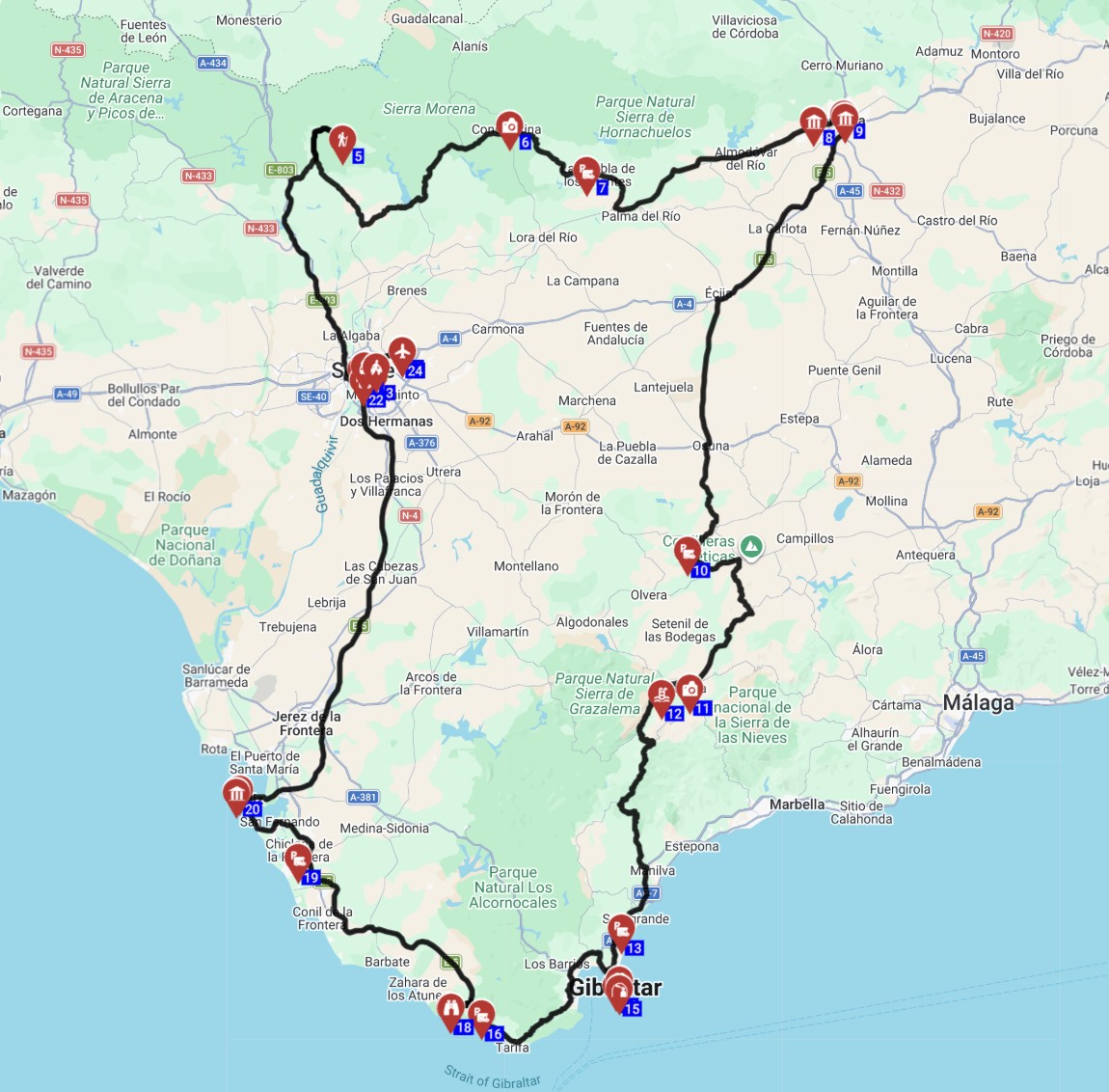
The road quality in Seville and throughout the wider Andalusia region is generally excellent, featuring well-maintained highways (autovías) and pleasant regional roads, perfect for exploring with a rented RV. The immediate terrain surrounding Seville is largely flat, offering an easy driving experience. For those looking for scenic routes, gently rolling hills and more mountainous landscapes, such as the Sierra Norte de Sevilla, are accessible within a short drive. However, it's worth noting that urban areas, particularly Seville's historic center, present narrow, winding streets that can be challenging for larger RVs. Planning your route and considering the size of your chosen vehicle is key. The region strongly encourages slow, scenic driving, allowing ample time to truly savor the diverse landscapes, from the vibrant city to the tranquil countryside, making the most of your RV rental deals.
RV Size Limits, Bridges & Restricted Zones
When planning your RV rental in Seville, be aware of local regulations, especially concerning urban access. Seville operates a Low Emission Zone (Zona de Bajas Emisiones - ZBE) in its city center, so drivers should check current 2026 regulations for vehicle access requirements based on their RV's emissions classification, typically indicated by a DGT environmental sticker. While main routes are generally accommodating for most RV sizes, it's crucial to be vigilant for local signage indicating height restrictions, which are common in tunnels or for underground parking entrances, and width limits, especially in historic or older urban areas. Most standard rental RVs fit within Spain's general road infrastructure, but knowing your specific vehicle's dimensions is paramount to avoiding issues. For mainland travel originating from Seville, there are no specific RV-related ferry limits or unique bridge restrictions beyond standard vehicle dimensions.
Fuel: Diesel vs. Petrol & Cost per 100 km
The vast majority of rental RVs available through Bandana in Seville and across Spain operate on diesel fuel, which is readily available at service stations nationwide. This is a key factor to consider when budgeting for your trip. As of 2026, the average diesel price in Spain typically fluctuates around €1.70 per liter, though this can vary based on location and time of year. Based on Bandana's local fleet data for Seville, here are estimated average fuel costs per 100 km for different RV classes: a Class B - Camper Van (averaging 6.3 L/100 Km) would cost approximately €10.71 per 100 km. For a semi-integrated Class SI (averaging 10-11 L/100 km), expect costs around €17.00 - €18.70 per 100 km. Larger Class C - Alcove RVs (averaging 10-12 L/100 km) will incur slightly higher fuel costs, around €17.00 - €20.40 per 100 km. Some RV rental deals may also offer fuel discount cards or options for pre-paid fuel, which can be a helpful way to manage your travel expenses. On the routes offered through RV PLANET routes, you can itemize and track every expense along the way for easy budgeting.
Tolls, Vignettes & Border Rules
Navigating Spain's road network with your rented RV is generally straightforward regarding tolls. Spain does not utilize a vignette system; instead, tolls are paid per-use on specific 'Autopistas' (marked as AP-x roads). It’s worth noting that many previously tolled routes have since been made free, offering more cost-effective travel. When traveling to neighboring Portugal, be aware that it predominantly uses an electronic toll system, which usually requires a transponder or advance registration to avoid potential issues. For journeys into France, traditional barrier-based toll roads are common, with payments typically accepted by card or cash. To simplify toll payments on your journeys, some rent-motorhome RVs offer the option to pre-purchase toll passes, such as the Via-T for Spain and Portugal, which can streamline your travel and help avoid potential fines on electronic toll routes.
Driving Tips for Rv rental deals Travelers
To ensure a smooth and enjoyable journey with your rented RV in Seville, keep a few key driving tips in mind. For families, it's advisable to plan frequent stops, perhaps every 2-3 hours, to allow for stretching, snacks, and restroom breaks, especially on longer routes. Always be conscious of your RV's dimensions – its exact height, length, and width – particularly when approaching tunnels, low bridges, or navigating tight urban areas. Given Seville's intense summer heat, prioritizing functional air conditioning is essential; plan to drive during cooler morning or evening hours whenever possible. Utilizing navigation apps or devices that allow for vehicle size input can significantly help you avoid roads unsuitable for larger motorhomes. When planning to explore Seville's historic center, it's often more practical to park your RV on the city outskirts and utilize the efficient public transport network (bus, tram) to commute into the heart of the city.
Recommended RV Class for Seville Roads
When selecting an RV for your trip in Seville and the surrounding Andalusian region, **Class B - Camper Van** and **Class SI - Semi-integrated** RVs are generally the most recommended classes from Bandana's fleet. A Class B camper van, typically around 5.5 meters in length and suitable for 3-4 people, offers superior maneuverability, making it ideal for navigating Seville's city streets, finding parking, and exploring smaller villages or winding country roads with ease. The Class SI semi-integrated RV, usually around 6.9 meters long and accommodating 4-5 people, strikes an excellent balance. It provides more interior comfort and amenities than a camper van while remaining manageable on Spain's main roads and reasonably agile for regional exploration. While larger Class C - Alcove RVs offer more sleeping capacity, their increased length can be less convenient for tight city streets and crowded parking areas.
Should I Choose a Compact Van Instead of a Large RV in Seville?
The choice between a compact van and a larger RV in Seville ultimately hinges on your travel priorities and planned itinerary. Generally speaking, larger RVs can navigate Spain's main roads without significant issues. However, compact vans, like the Class B camper vans, offer superior maneuverability, making them ideal for navigating Seville's narrow historic streets, finding urban parking more easily, and accessing tighter spots in smaller towns. Conversely, larger RVs, such as Class SI or Class C models, provide significantly more living space, comfort, and amenities like spacious kitchens and dedicated bathrooms, which are advantageous for longer trips or larger groups. For exploring Seville's urban core, a compact van is often the most practical choice, but if your focus is on comfort and interior space for the majority of your journey, parking a larger RV on the city's periphery and utilizing the excellent public transport network is a viable and stress-free solution.
Can I Park Anywhere? Free & Wild Camping Rules in Seville
Understanding Spain's regulations regarding RV parking and wild camping is crucial for a hassle-free trip. In Spain, wild camping (pernocta) is generally prohibited, but RVs are legally permitted to *park* in locations where regular vehicles can, provided they strictly adhere to parking rules – meaning no external elements like awnings or chairs are deployed. Seville, like many other Spanish cities, rigorously enforces these distinctions, especially in urban areas and designated natural parks. For overnight stays and access to necessary amenities, it is strongly recommended to utilize designated campsites ('campings') or specific motorhome parking areas ('áreas de autocaravanas'). Rules can vary significantly by region within Andalusia and even by municipality, so it's always wise to check local regulations and follow local law before parking overnight, particularly concerning any specific prohibitions or permitted areas in Seville or nearby.
Can I Drive an RV Into the City Center? Heights, Tunnels & Local Signage
While technically possible to drive an RV into certain parts of Seville's city center, it presents considerable challenges. These include navigating very narrow streets, pedestrian-only zones, and severely limited, often expensive, parking options. Drivers must pay extremely close attention to local signage indicating height limits, especially in underground parking facilities or historic archways, as well as width restrictions and Seville's Low Emission Zone (ZBE) regulations for permitted vehicle types in 2026. Seville's historic districts are particularly unsuitable for larger vehicles. Therefore, the most practical and stress-free approach for exploring the city's core is to park your RV at an approved facility on the city's outskirts and utilize the efficient public transport network (buses, trams) to access the center.
What do I need to drive my motorhome in Spain?
To legally drive a motorhome in Spain, you'll generally need a valid B-category driving license for vehicles with a Maximum Authorized Mass (MAM) of 3,500 kg or less, which covers the majority of rental RVs. For heavier motorhomes, specifically those with a MAM between 3,501 kg and 7,500 kg, a C1 license is mandatory. Non-EU/EEA license holders are required to carry an International Driving Permit (IDP) alongside their national driver's license. Rental companies also typically enforce additional requirements, such as a minimum driver age, commonly 21 or 25 years old, and a minimum period for which you've held your license, often 2-3 years. Ensure you have proof of valid vehicle registration and insurance, which are usually provided by the rental company.
What are the new motorhome rules in Spain?
Recent motorhome rules in Spain have focused on clarifying and enforcing parking and wild camping regulations more consistently across the country, though they haven't fundamentally altered driving license requirements. A key distinction is the enforcement of rules between 'parking' (which is allowed where cars can park, with no external elements deployed) and 'camping' (which is prohibited outside designated areas). Furthermore, Low Emission Zones (ZBEs) are being progressively implemented in more Spanish cities, including Seville. Travelers must check specific city rules for 2026 regarding access for higher-emission vehicles. There's also an increased emphasis on respecting natural environments, reinforcing the prohibition of wild camping in protected areas.
What do you need to drive a campervan in France?
To legally drive a campervan in France, similar to Spain, you typically require a B-category driving license for vehicles under 3,500 kg Maximum Authorized Mass (MAM). This is the standard license that covers most rental campervans. Drivers from outside the EU/EEA must carry an International Driving Permit (IDP) in addition to their national driver's license. Mandatory safety equipment within the campervan includes a reflective safety vest for each occupant and a warning triangle. Proof of valid vehicle insurance and registration documents are also required and are usually provided by the rental company. France features an extensive network of toll roads, known as 'autoroutes,' which can be paid for using cash, card, or an electronic toll badge, often referred to as a 'Télépéage' device.
Do I need to rent a car in Seville?
You do not necessarily need to rent a separate car in Seville if you already have an RV, as your motorhome can serve as your primary mode of transportation. However, it's important to recognize that driving a large RV within Seville's historic center is often impractical due to the narrow streets and very limited, expensive parking, making public buses and trams more efficient for city sightseeing. It's generally recommended to park your RV at an approved campsite or motorhome parking area on the outskirts of Seville and then utilize the city's excellent public transport system to access the center. A separate car rental would only be truly beneficial if your itinerary includes extensive excursions to very remote locations that are both challenging for an RV to access and not well-served by public transport.
Do you have to get a license for renting an RV?
Yes, you are legally required to possess a valid driving license that corresponds to the specific class and weight of the RV you intend to rent. For the majority of rental motorhomes, which typically have a Maximum Authorized Mass (MAM) of 3,500 kg or less, a standard B-category driving license is sufficient. For larger RVs with a MAM between 3,501 kg and 7,500 kg, a C1 license is mandatory. Rental companies also enforce additional requirements, such as a minimum driver age (e.g., 21 or 25 years old) and a minimum duration for which you've held your license (commonly 2-3 years). It's essential to verify these requirements with your rental provider before booking.
How much does it cost to insure a rental RV?
The base insurance for a rental RV, which typically includes Third-Party Liability and a Collision Damage Waiver (CDW) with a high deductible (excess), is usually factored into the overall rental price. This provides a foundational level of protection. To significantly reduce your out-of-pocket financial liability in case of damage, you can opt for additional insurance packages, often termed 'deductible reduction' or 'Super CDW'. These are available for an extra daily fee and are highly recommended for peace of mind. These optional insurance add-ons typically range from €20 to €50 per day, depending on the rental provider, the specific RV class, and the level of coverage chosen (which might include protection for tires, windows, and the roof). Factors influencing the final cost include the rental duration, the specific RV model, driver age, and any additional coverages you might select, such as roadside assistance or personal effects insurance.
What insurance should I get when renting a car in Spain?
When renting an RV in Spain, it's crucial to ensure you have adequate insurance coverage for peace of mind. Start with the legally mandated Third-Party Liability (TPL) insurance, which covers damages to other vehicles or property, a standard inclusion. It is highly advisable to also obtain a Collision Damage Waiver (CDW) with a reduced excess, or ideally a Super Collision Damage Waiver (SCDW), to minimize your financial responsibility for any damages to the rental RV itself. Consider adding Personal Accident Insurance (PAI) to cover medical expenses for you and your passengers, and Supplemental Liability Insurance (SLI) for increased protection against third-party claims, especially in unfamiliar territory. Always thoroughly review the rental agreement to understand what is included in the base insurance and what additional coverages are recommended for your specific travel plans in Seville.
What You Shouldn't Miss
- Wander through the historic Santa Cruz neighborhood, with its narrow, winding streets and charming patios.
- Experience the magic of a traditional Flamenco show – Seville is a true heartland of this passionate art form.
- Visit the Alcázar of Seville, a stunning royal palace with breathtaking Moorish architecture and lush gardens.
- Explore the Plaza de España, a magnificent semi-circular plaza renowned for its beautiful tile work and canals.
- Take a leisurely stroll along the Guadalquivir River, perhaps enjoying a sunset cruise for a different perspective of the city.
- Indulge in authentic tapas culture; Seville is famous for its incredible variety of small dishes, best enjoyed while hopping between local bars.
Final Thoughts
Renting an RV for your Seville adventure offers unparalleled freedom and a unique way to experience the region's charm and beauty. From navigating the historic streets (responsibly, of course!) to exploring the wider Andalusian landscape, your motorhome will be your home base for an unforgettable journey.
Remember to plan ahead, especially regarding your vehicle choice and any specific city access rules. By considering the recommendations for RV classes and driving tips, you're well on your way to a fantastic RV rental experience in Seville.
Find Motorhome Rentals in Seville