
In This Guide
- Where to Camp in Russia - Top Options
- Campground Types in Russia (National, Private, Wild)
- Featured RV Park or Campground in Russia
- Hookups & Amenities - What to Expect
- Booking Windows & Reservations in Russia
- Nearby Supermarkets & Resupply Points
- Best RV Class for Camping in Russia
- How to Save on Campgrounds in Russia
- What are the visa and vehicle permit requirements for RV rental in Russia?
- What vehicle logistics and insurance are needed for RVing in Russia?
- How do you navigate border crossings with an RV in Russia?
- What are the road conditions like for RVs in Russia?
- How can I stay connected while RVing in Russia?
- What is 'Dikiy Kemping' (wild camping) in Russia?
- What are the key safety protocols for RV travel in Russia?
- How much does an RV trip to Russia cost?
- What are the best RV routes in Russia?
- How to navigate cultural nuances and language barriers in Russia?
Embarking on an RV adventure in Russia offers an unparalleled opportunity to explore one of the world's most vast and diverse countries at your own pace. With a rented motorhome, you're not just booking a vehicle; you're securing a mobile home base for an unforgettable journey, whether you dream of ancient cities, majestic mountains, or remote wilderness. For live availability and current prices, start with our RV Rental Russia - Complete Guide 2026 guide. We at Bandana RV are your true RV specialists, with over 25 years of experience helping tens of thousands of travelers discover the world, ensuring you receive honest, transparent, and supportive service from the moment you begin planning your trip to Russia.
Where to Camp in Russia - Top Options
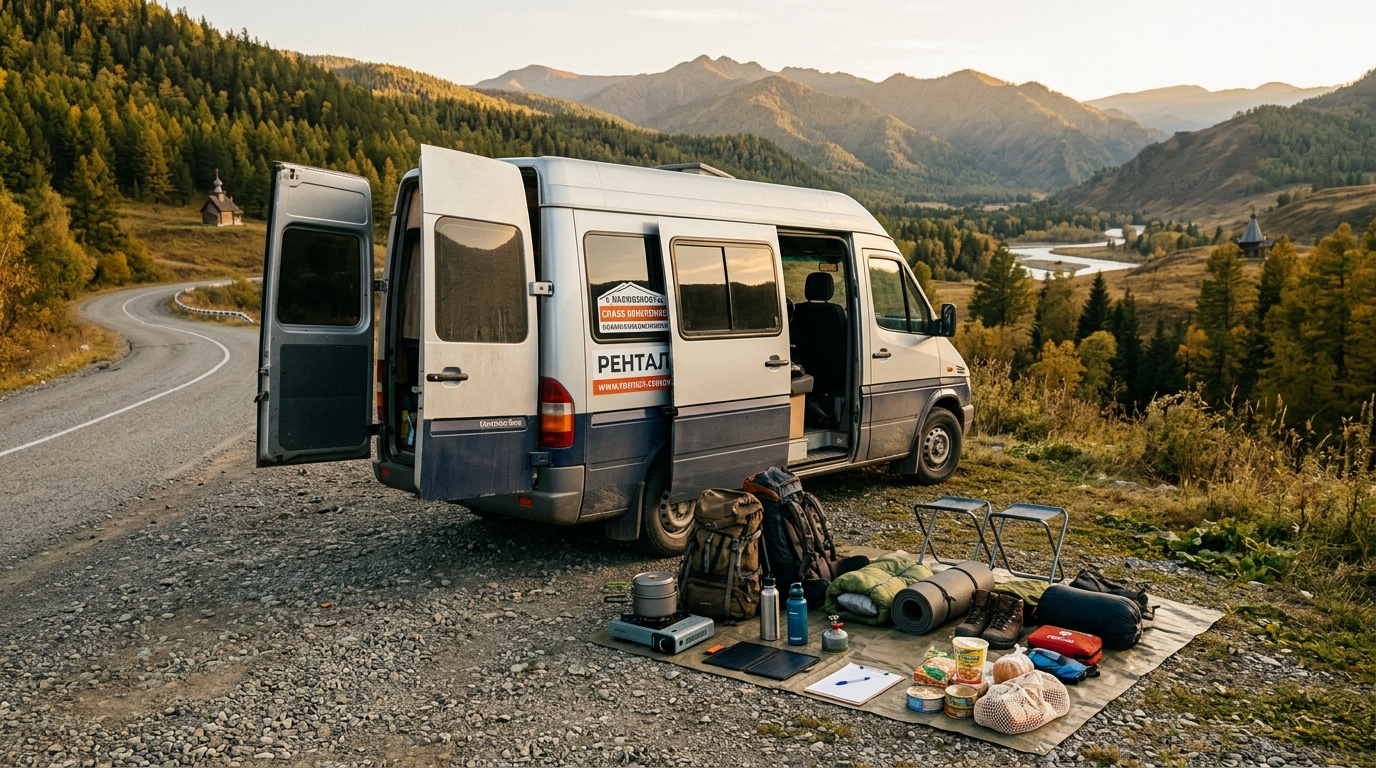
RV camping in Russia focuses on diverse regions such as the Golden Ring, Altai Mountains, or areas near major cities like Moscow and St. Petersburg, as extensive dedicated RV park infrastructure is less developed compared to Western countries. Imagine parking your rented campervan near the historic onion-domed churches of Suzdal, or waking up to the crisp air of the Altai Mountains with your family. These regions offer incredible natural beauty and cultural richness. While finding a full-service RV park with all the bells and whistles might be a challenge, Russia's vast landscapes provide countless opportunities for more rustic, local sites or 'Dikiy Kemping' (wild camping) that offer unique, authentic experiences.
When searching for locations, look for smaller, locally-run recreational bases or even quiet spots near guesthouses that might welcome RVs. Cities like Moscow, Saint Petersburg, Ekaterinburg, and Rostov na Donu often have options closer to their outskirts. The key is to embrace flexibility and enjoy the journey. Remember, you can drive almost anywhere without issues – just drive slowly and carefully, use common sense, and pay attention, especially in urban areas.
Campground Types in Russia (National, Private, Wild)
Russia offers a mix of official campgrounds, which are less common compared to Western countries, private sites, and widespread 'Dikiy Kemping' (wild camping), each requiring an understanding of local customs and legalities. Official campgrounds may be found near national parks or popular tourist destinations, often offering basic facilities like a fire pit and perhaps a shared outhouse. These are fewer in number but provide a structured camping experience. Private campgrounds, while still not abundant, can provide more amenities like electric hookups (220-240V) or basic showers, and are typically concentrated around major cities or popular resort areas.
'Dikiy Kemping', or wild camping, is widely practiced in Russia and allows for incredible freedom to explore its vast wilderness. It's generally tolerated outside of protected national parks, nature reserves, and private land. When engaging in wild camping, it's crucial to adhere to "Leave No Trace" principles, packing out all your waste and respecting the environment. For finding campsites and campgrounds during your trip, we recommend using RV PLANET (rvplan.net) - a great resource for locating available spots along your route, whether official or informal.
Featured RV Park or Campground in Russia
While specific data on a universally "featured" RV park in Russia is unavailable due to the decentralized nature of its camping infrastructure, an ideal facility would offer secure parking, essential hookups (electricity, water), and convenient access to natural attractions or cultural sites. Travelers should look for campgrounds that prioritize security and provide clear information on available amenities and services, as many existing 'camping' sites might be simpler recreational bases or fishing resorts rather than full-service RV parks. For example, a popular area for adventurers is Lake Baikal, where informal camping spots along its shores offer breathtaking views and a true wilderness experience. These may not have traditional hookups but provide an unmatched connection with nature.
Hookups & Amenities - What to Expect
RV amenities in Russia can be basic, with limited full hookup options, especially outside of major tourist areas; expect to primarily find electric hookups (220-240V, Type F/C sockets) and water, with dump stations being less common. Electrical hookups typically provide 220-240V power, requiring European Type F (Schuko) or Type C adapters. Water access may be from shared spigots, and dedicated grey/black water dump stations are infrequent, necessitating careful waste management strategies. Wi-Fi, laundry facilities, and hot showers are luxuries often found only in larger, more established private campgrounds or city hotels. Be prepared for self-sufficiency, ensuring your rented campervan or motorhome has sufficient fresh water and waste tank capacity, and consider portable power solutions for longer stays off the grid. For cooking delicious meals in your RV, check out our RV-friendly recipes playlist. On the routes offered through RV PLANET routes, you can itemize and track every expense along the way for easy budgeting.
Booking Windows & Reservations in Russia
For RV camping in Russia, booking ahead for established campgrounds is advisable, especially during peak season, although many informal or smaller sites may accommodate spontaneous arrivals; always call ahead to confirm availability. Pre-planners should aim to book several weeks or months in advance for any formal campgrounds, particularly near popular destinations like the Golden Ring or major cities. However, many national and state parks reserve only 25-30% of spots for reservations, with the rest available on a first-come, first-served basis, offering flexibility for spontaneous travelers. You'll find a spot; if not at the first campground, then the next one. Always call ahead before driving a long distance, as online reservation systems might be less prevalent. During shoulder seasons (spring and fall), you'll often find more availability and fewer crowds.
Nearby Supermarkets & Resupply Points
Resupplying groceries and essentials for an RV trip in Russia is generally easy in towns and cities, with common supermarket chains like Pyaterochka, Magnit, and Lenta widely available. Major cities and larger towns offer a full range of supermarkets for fresh produce, meats, and pantry staples, making it convenient to stock your rented motorhome's kitchen. In more rural or remote areas, smaller local shops and markets will be the primary resupply points, potentially with limited selection. It’s always a good idea to stock up extensively before venturing into truly remote regions like the Altai Mountains or the Far East, as options will dwindle rapidly. Planning your resupply stops strategically is key to a smooth journey. Remember, when planning your budget for these ancillary costs, RV PLANET routes allow travelers to itemize and track every expense along the way for easy budgeting.
Best RV Class for Camping in Russia
For camping in Russia, Class B Camper Vans or Class SI Semi-integrated RVs are often ideal due to their maneuverability on varying road conditions and suitability for both basic hookup and wild camping scenarios. With a smaller footprint, these vehicles are easier to navigate on narrower or less-maintained roads, as well as in city environments. A Class B Camper Van, like the "Active Bunk Auto," offers excellent maneuverability and fuel efficiency (typically 8-10 Liters/100 km), sleeping for about 3.2 people, and is perfect for rougher roads and remote 'Dikiy Kemping.' A Class SI Semi-integrated model, such as the "2 Berth Rover," strikes a balance between comfort and agility, averaging 6.9 meters in length, sleeping for 3.8 people, and consuming around 10-11 Liters/100 km, suitable for diverse Russian travel. Larger Class C Alcove (7.5m, 10-12 L/100km) or Class A Integrated (7.5m, 8-12 L/100km) motorhomes offer more space but may be less practical on some Russian roads. Consider your route carefully; for rugged terrain, a compact campervan like the "Patagonia Camper 4x4 double cab" could be a strong option, offering 4-wheel drive capabilities.
How to Save on Campgrounds in Russia
To save on RV campgrounds in Russia, consider opting for 'Dikiy Kemping' where legal, traveling during shoulder seasons, and choosing municipal or regional sites over private resorts. Embracing 'Dikiy Kemping' (wild camping) responsibly where permitted is the most cost-effective lodging option, as it incurs no direct fees. Traveling during shoulder seasons (spring and fall) provides lower rates and fewer crowds compared to the peak summer months. Inquire with your RV rental provider, like Bandana RV, about any affiliated campground discount programs or cards that might be valid in Russia, as some may offer special deals. Finally, always look for weekly rates or longer-stay discounts at established campgrounds, as many offer better value for stays of three nights or more. Our guide to Cheap RV Rental in Russia - Budget Guide 2026 provides even more tips on keeping your costs down.
What are the visa and vehicle permit requirements for RV rental in Russia?
Foreign travelers renting an RV in Russia must navigate a comprehensive system of personal visa requirements and potential temporary import permits for the vehicle, which are critical for legal entry and travel. Individual travelers require a valid Russian visa (e.g., tourist visa), obtained in advance from a Russian embassy or consulate in their home country, often requiring an invitation letter from a registered Russian entity. For the RV itself, if it is a foreign-registered vehicle (though most rentals within Russia will be locally registered), a temporary import permit (TIP) would be mandatory, requiring customs declarations upon entry and exit. Key documents always include an International Driving Permit (IDP) for visitors from non-English-speaking countries (though not strictly mandatory, it is highly recommended), your standard car driver's license, vehicle registration documents, proof of ownership or rental agreement from Bandana, and specific customs forms that must be accurately completed. Always double-check current regulations before your trip for any updates. Our guide to One-Way RV Rental in Russia - Price Guide 2026 also touches upon vehicle logistics for cross-country journeys.
What vehicle logistics and insurance are needed for RVing in Russia?
Essential vehicle logistics for RVing in Russia include securing appropriate insurance, ensuring access to reliable fuel (especially in remote areas), and preparing for potential maintenance challenges with spare parts. International drivers typically need a Green Card for vehicle insurance, which provides third-party liability coverage in Russia, or must purchase local OSAGO (compulsory motor liability insurance) upon arrival. Bandana RV offers options for top-level deductible reimbursement, an optional upgrade you can purchase for extra peace of mind. Fuel quality is generally good in major cities (AI-92, AI-95 are common for petrol; diesel is also widely available), but availability and quality can degrade significantly in remote regions; carry extra fuel if venturing off main routes. Specific maintenance challenges can include extreme temperatures (both hot and cold), poor road conditions, and the difficulty of accessing specific spare parts for non-Russian vehicle models. Always perform a thorough check of your rented motorhome before departing, ensuring all fluids are topped up and tires are in good condition.
How do you navigate border crossings with an RV in Russia?
Navigating Russian border crossings with an RV involves specific procedures, meticulous documentation checks, and variable wait times, requiring patience and thorough preparation. Expect detailed scrutiny of all personal and vehicle documentation, including your visa, passport, International Driving Permit, vehicle registration, and any temporary import permits if applicable. Procedures typically involve customs declarations for both individuals and the vehicle, multiple passport controls, and sometimes vehicle inspections. Wait times can range from a few hours to a full day, particularly at busy crossings or during peak travel seasons; always allocate ample time and avoid crossing late at night. Maintain a polite and cooperative demeanor with border officials, ensuring all your documents are organized and easily accessible. We handle the details from day one until your booking for your Russia adventure is confirmed, but border procedures are the traveler's responsibility.
What are the road conditions like for RVs in Russia?
Road conditions for RVs in Russia vary significantly, ranging from well-maintained major federal highways to challenging unpaved or seasonally affected routes, demanding careful planning and a robust vehicle. Major federal highways connecting large cities like Moscow, Saint Petersburg, and Ekaterinburg are generally in good to fair condition, though quality can fluctuate unexpectedly. Secondary roads, especially in rural or remote regions such as parts of the Golden Ring or routes leading to the Altai Mountains, are often unpaved, prone to potholes, or susceptible to seasonal challenges like mud, snow, and ice. Travelers in regions like Siberia and the Far East must consider permafrost degradation affecting road surfaces, leading to uneven terrain. Choosing a capable rented RV, like a Class B Camper Van with a high clearance, is crucial. Remember to always drive slowly and carefully, paying close attention to road signs and conditions. No need to stress - just use common sense and pay attention. Our "RV Preparedness for Russian Roads" unique fact highlights the importance of being ready for diverse conditions.
How can I stay connected while RVing in Russia?
Staying connected while RVing in Russia requires a strategy combining local SIM cards for reliable mobile networks in populated areas and considering satellite phones or offline maps for remote regions where coverage is sparse. Major mobile network operators like MTS, Beeline, and MegaFon offer good coverage in cities and along main transport routes, but service drops off rapidly in wilderness areas. Purchasing a local SIM card (available at airports, mobile stores) provides affordable data and calls, requiring passport registration. For truly remote expeditions, a satellite phone (e.g., Iridium, Inmarsat) is recommended for emergency communication. Offline mapping apps (e.g., Maps.me, OsmAnd) are essential for navigation without internet, ensuring you don't get lost even when off-grid. Consider carrying a portable power bank or solar charger to keep devices charged, especially if relying on 'Dikiy Kemping' without electrical hookups.
What is 'Dikiy Kemping' (wild camping) in Russia?
'Dikiy Kemping' refers to wild camping in Russia, a common practice that involves finding suitable spots outside designated campgrounds, but requires awareness of legalities, environmental impact, and safety protocols. Wild camping is generally tolerated in many undeveloped natural areas, such as vast forest clearings or riverbanks, but it is strictly prohibited in national parks, protected reserves, and private property without explicit permission. Adhering to 'Leave No Trace' principles is crucial, ensuring minimal environmental impact by packing out all waste, avoiding open fires where restricted, and respecting local flora and fauna. Safety precautions include choosing discreet and elevated spots, being aware of local wildlife (especially bears in certain regions), and informing someone of your itinerary, especially in remote areas. Interacting respectfully with locals is key, and asking for permission on private land is always recommended. This unofficial guide to wild camping in Russia can truly unlock unique experiences for rented motorhome travelers.
What are the key safety protocols for RV travel in Russia?
Ensuring safety during RV travel in Russia involves comprehensive preparedness, including protocols for breakdowns in remote areas, understanding interactions with local authorities, and having emergency contacts and medical supplies readily available. In case of a breakdown in a remote area, having a satellite phone or robust offline communication strategy is vital, along with basic repair knowledge and spare parts for your rented motorhome. When interacting with traffic police (DPS), remain polite, present requested documents calmly (including your driver's license and International Driving Permit), and consider using a dashcam for transparency, as highlighted in one of our fun facts about Russia. Always have emergency contact information readily accessible, including local police (112), ambulance, and your country's embassy or consulate. A well-stocked medical kit and travel insurance covering medical evacuation are also essential. Travel slowly, max 100-150 km per day on average, to reduce risks and truly connect with the scenery.
How much does an RV trip to Russia cost?
The cost of an RV trip to Russia varies significantly based on factors like fuel, permits, insurance, food, and potential tolls, making careful budgeting essential for a realistic financial plan. Fuel will be a major expense, with an average rented RV like Bandana’s Class SI Semi-integrated consuming 10-11 Liters/100 km, while a Class C Alcove uses 10-12 Liters/100 km; prices fluctuate but are generally lower than in Western Europe. Permits include visa application fees and any costs associated with a temporary import permit for your vehicle (if applicable). Insurance (e.g., Green Card or local OSAGO) is a mandatory cost, varying based on coverage and vehicle type. Budget for food (groceries can be affordable, eating out more expensive), occasional campground fees, and potential tolls on major expressways around cities like Moscow. For a detailed breakdown of costs, check out our RV Rental in Russia - Prices and Best Deals 2026 guide. Remember to compare final prices across suppliers, because what you see is what you pay, with no surprise fees at pickup.
What are the best RV routes in Russia?
Beyond the iconic Trans-Siberian route, Russia offers diverse and captivating RV routes such as the historic Golden Ring, the majestic Altai Mountains, the scenic Caucasus region, and the remote beauty of the Far East. The Golden Ring, a loop through ancient cities northeast of Moscow, offers rich history and architecture (e.g., Suzdal, Vladimir) and is ideal for a week-long trip. The Altai Mountains, a stunning natural region in Southern Siberia, is perfect for adventurous RVers seeking hiking, lakes, and dramatic landscapes, suitable for an extended road trip with a rugged campervan. Explore the mountainous landscapes, diverse cultures, and mineral springs of republics like Adygea or Karachay-Cherkessia in the Caucasus Region. For the truly intrepid, routes around Vladivostok and Lake Baikal in the Russian Far East offer unparalleled wilderness experiences, albeit with more challenging infrastructure. Many national/state parks also have first-come-first-serve spots, allowing for spontaneous exploration. We have 1,300+ pre-planned routes across 5 continents via RV PLANET (rvplan.net), our sister company, to help you get inspired!
Top Cities for RV Rental in Russia
- Moscow: The capital city, offering a starting point for the Golden Ring and major transportation hubs.
- Saint Petersburg: A European-influenced city, ideal for exploring the Baltic region and nearby natural areas.
- Ekaterinburg: A gateway to the Ural Mountains and the start of many Trans-Siberian adventures.
- Gorno Altaisk: The heart of the Altai Mountains, perfect for nature lovers seeking pristine wilderness.
- Rostov na Donu: A vibrant southern city, offering access to the Black Sea coast and Caucasus region.
- Tyumen: A Siberian city known for its hot springs and proximity to vast forests.
- Ural: The broader Ural region provides diverse landscapes, from forests to industrial cities.
For more specific local information, check out our city-specific guides like RV Rental in Ekaterinburg 2026 or RV Rental in Moscow 2026.
How to navigate cultural nuances and language barriers in Russia?
Successfully navigating cultural nuances and language barriers in Russia involves learning essential Russian phrases, utilizing translation apps, and engaging respectfully with locals to enrich the travel experience. Learning basic Russian phrases for greetings, directions, shopping, and emergencies is highly recommended, as English proficiency is not widespread outside major tourist hubs like Moscow and Saint Petersburg. Utilize translation apps like Google Translate or Yandex Translate (which often performs better for Russian) with offline dictionaries downloaded prior to travel. Tips for interacting with locals include being polite and direct, avoiding overly casual behavior, and appreciating their hospitality. A basic understanding of Cyrillic will also aid significantly in reading signs and menus. Russians are generally warm and hospitable once initial formalities are observed, and making an effort with the language will be greatly appreciated. With a rented motorhome, you're set for an authentic cultural immersion.
What You Shouldn't Miss
- The Golden Ring Journey: Drive your rented campervan through the ancient cities northeast of Moscow, like Suzdal and Vladimir, to explore stunning monasteries and historic kremlins, feeling centuries of Russian history.
- Lake Baikal Immersion: Experience the sheer scale and beauty of the world's deepest lake. Find a wild camping spot along its shores for breathtaking sunrises and unparalleled stargazing.
- Altai Mountains Adventure: Head to Southern Siberia for dramatic mountain landscapes, turquoise lakes, and remote hiking trails. This region is perfect for a rugged motorhome adventure.
- Trans-Siberian RV Segment: While the full route is immense, consider driving a segment, perhaps around Tyumen or Ekaterinburg, to experience the vastness and diverse beauty of Siberia.
- Local Banya Experience: Seek out a traditional Russian banya (sauna) in a local village or town during your RV trip for a truly invigorating cultural experience.
- Explore the Caucasus: Discover the unique cultures and stunning mountain vistas of the North Caucasus region, a less-traveled but incredibly rewarding destination for adventurous RVers.
Looking for expert insights from Avi Bandana? Top 5 Adventures - recommendations from Avi Bandana will be coming soon!
Final Thoughts
Renting a motorhome in Russia is an adventure waiting to happen, offering unparalleled freedom to explore its vast landscapes and rich cultural heritage. From the historic Golden Ring to the wild beauty of Lake Baikal, a rented RV provides the ultimate flexibility to create your own unique itinerary. While the infrastructure might be different from what you expect in Western countries, the rewards of discovery and authentic experiences are immense.
Remember to prepare diligently for visas, vehicle requirements, and road conditions, and embrace the spirit of spontaneous exploration. With Bandana RV, you have a trusted partner committed to full transparency and support every step of the way. We want you to travel slowly, average 100-150 km per day, and take time to feel the place, connect to the culture, the food, and the scenery.
So, get inspired for your next trip! Discover top destinations, planning tips, all in one place, and prepare for an incredible RV journey through Russia. Plan a trip itinerary in advance with minimal effort and maximum enjoyment by starting your search with Bandana RV.
🎬 Video coming soon
