
In This Guide
- Where to Camp in India - Top Options
- Campground Types in India (National, Private, Wild)
- Featured RV Park or Campground in India
- Hookups & Amenities - What to Expect
- Booking Windows & Reservations in India
- Nearby Supermarkets & Resupply Points
- Best RV Class for Camping in India
- How to Save on Campgrounds in India
- What are the legal and regulatory requirements for RV rentals and camping in India?
- What are the hidden costs and a realistic budget for RV travel in India?
- Which RV types are suitable for India's road conditions?
- What are the safety and security measures for RV camping in India?
- How to handle breakdowns and access local assistance for RVs in India?
- What are the best RV itineraries and seasonal advice for India?
- How can RV travelers ensure cultural immersion and responsible travel in India?
- What practical logistics are involved in long-term RVing in India?
Embarking on an RV adventure in India offers an unparalleled way to explore its vibrant landscapes, rich culture, and historical wonders at your own pace. Imagine waking up to the majestic Himalayas, the serene backwaters of Kerala, or the colorful deserts of Rajasthan, all from the comfort of your own mobile home. With a rented motorhome, the open road truly becomes your oyster, allowing for deep cultural immersion and unforgettable experiences. For live availability and current prices, start with our RV Rental India - Complete Guide 2026 guide, providing everything you need to know about navigating this incredible country by RV.
Where to Camp in India - Top Options
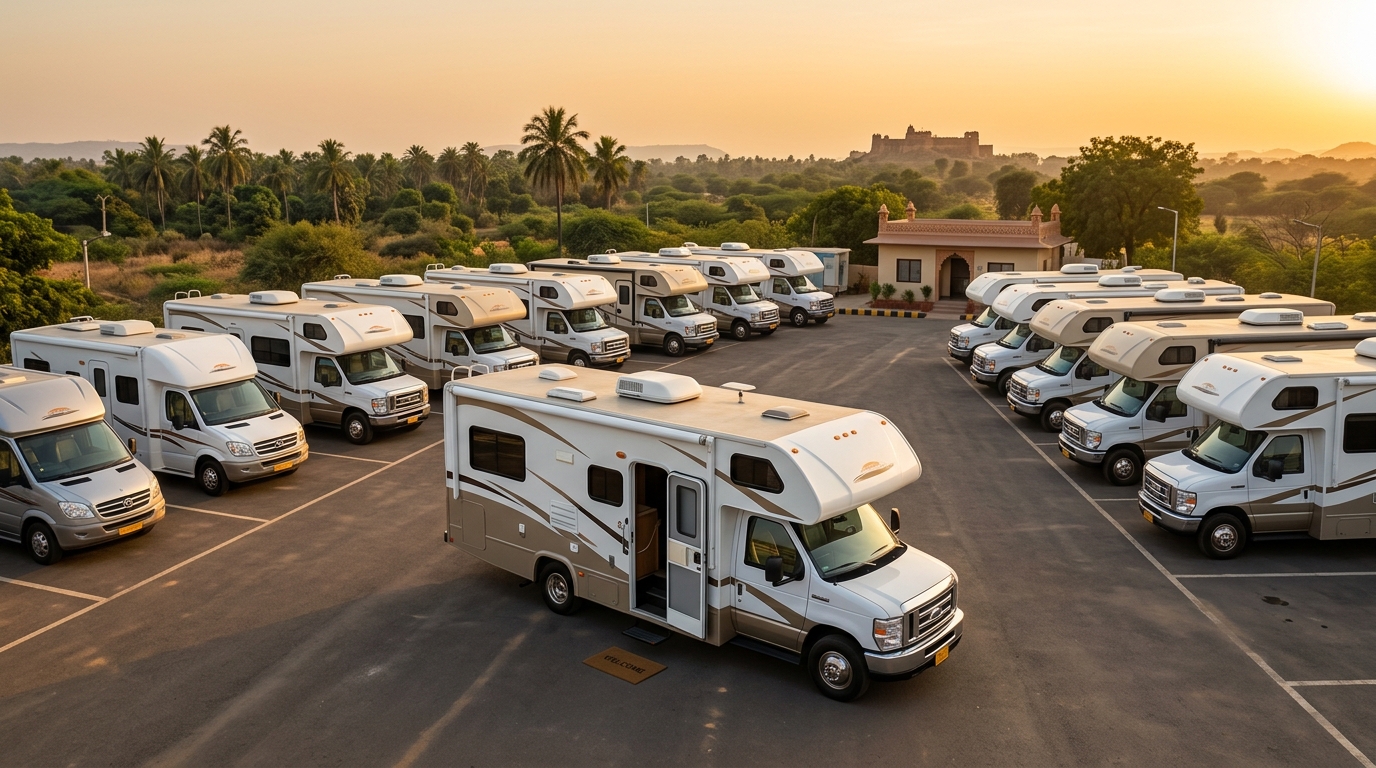
India offers diverse camping experiences for RV travelers, ranging from established national park sites to emerging private resorts and opportunities for wild camping, particularly in picturesque regions like Himachal Pradesh, Uttarakhand, and Rajasthan. While dedicated RV parks are a growing trend, many popular destinations for rented RVs include scenic spots near popular hill stations or within wildlife sanctuary buffer zones that permit overnight stays. Regions such as the Western Ghats provide lush, green landscapes perfect for nature lovers, the Himalayan foothills offer thrilling adventures, and the desert areas of Rajasthan present unique cultural backdrops for RV camping.
Exploring India by motorhome allows you to truly connect with the country’s diverse geography and warm hospitality. You might find a quiet spot overlooking a valley in Manali, or a secure parking area near a temple town in South India. For more specific routes and destinations, consider checking out the pre-planned routes available through RV PLANET (rvplan.net), which can help you discover ideal camping locations across the country.
Campground Types in India (National, Private, Wild)
RV campers in India can find accommodations in three primary types of settings: national park sites, private campgrounds, and various opportunities for wild camping. National park sites, while often providing only basic facilities, are governed by strict regulations to protect wildlife, typically requiring prior permits for overnight stays and offering a more rustic, nature-focused experience. Private campgrounds and a growing number of specialized RV parks, especially found near major tourist hubs and cities like Delhi, Mumbai, and Bengaluru, often boast more amenities like electrical hookups, fresh water access, security, and sometimes recreational activities, catering to a more comfortable stay.
Wild camping, often referred to as freedom camping, is largely unregulated in India and frequently tolerated in remote, non-restricted areas. However, it is paramount for travelers to practice strict leave-no-trace principles, respect local communities, and adhere to local laws and customs to ensure a positive experience and minimize environmental impact. Always seek local advice or permission if attempting wild camping.
Featured RV Park or Campground in India
When planning a rented RV trip in India, you should look for campgrounds that offer essential amenities, good security, and convenient access to local attractions. A featured RV park or campground would ideally provide designated parking spots, waste disposal facilities, and a secure environment, which is especially important given India's varied terrain and community dynamics. It's best to focus on establishments with clear signage, accessible roads suitable for larger vehicles, and those that potentially offer local assistance or guide services to enhance your travel experience. While dedicated RV infrastructure is still developing, you can find a growing number of resorts and farm stays that are RV-friendly, particularly in states like Maharashtra, Goa, and Himachal Pradesh, with some offering 230V electrical hookups and fresh water. Many will have facilities for RV-friendly recipes playlist in their kitchenettes.
Hookups & Amenities - What to Expect
RV campers in India can expect varying levels of hookups and amenities depending on the campground type, ranging from very basic to comprehensive. Established private RV parks, such as those near tourist destinations or major cities, are more likely to offer essential services like electrical hookups (typically 230V, compatible with Type D/M/C sockets), fresh water access, and grey/black water dump stations. Less developed or national park sites, however, may provide only very basic facilities, meaning you'll need to be quite self-sufficient with your water supply, power (relying on solar panels or vehicle battery), and waste management. On the routes offered through RV PLANET routes, you can itemize and track every expense along the way for easy budgeting.
While amenities such as Wi-Fi and laundry facilities are becoming more common in modern private campgrounds, showers are often basic, and it's always advisable to verify the specific amenities offered before booking, especially when traveling outside of major metropolitan areas. Packing a universal adapter and being prepared for intermittent connectivity will help ensure a smooth journey. We at Bandana are committed to full transparency, so you'll always know what to expect with your rented motorhome's features before you even pick up the keys.
Booking Windows & Reservations in India
For RV camping in India, travelers planning to visit popular campgrounds, particularly those located in national parks or prime tourist locations during peak seasons (October-March), should aim to book several weeks or even months in advance. Many national park campgrounds operate on a system where only 25-30% of spots are available for advance reservations, with the remaining majority typically allocated on a first-come, first-served basis, providing flexibility for more spontaneous travelers. While spontaneous travelers can often secure a spot, it is highly recommended to call ahead before driving long distances to a campground to confirm availability, especially in remote areas or if you anticipate arriving late.
Don't stress if your first choice is fully booked; you will almost certainly find a place, if not at the initial campground, then at the next one, as alternative options often exist within a reasonable driving distance. Flexibility with your travel dates and destinations can also open up more availability and potentially better rates. For those who like everything organized, our Rent&Plan service can help create pre-planned routes by professionals, making your trip seamless from start to finish. We even offer a 25% planning discount when you utilize rvplan.net for your route.
Nearby Supermarkets & Resupply Points
When embarking on an RV adventure in India, travelers will find it relatively easy to locate resupply points for groceries and essential items in towns and cities across the country. In urban and semi-urban areas, you can look for major supermarket chains like Reliance Fresh, Big Bazaar, or More Retail, which offer a wide range of provisions, including fresh produce, packaged goods, and household necessities. Local markets, known as 'mandis,' are also excellent sources for fresh fruits, vegetables, spices, and regional specialties, providing a vibrant cultural experience alongside your shopping.
In more remote regions, small general stores or 'kirana' shops will be your primary resupply points, though their selection might be more limited to basic necessities. It's always a good idea to stock up when you pass through larger towns. Planning your meals and knowing where your next resupply point is can significantly enhance your comfort on the road. For tracking all your expenses including groceries, fuel, and campground fees, remember that RV PLANET routes allow you to itemize and track every cost for easy budgeting.
Best RV Class for Camping in India
For RV camping in India, Class B Camper Vans and Class SI Semi-integrated vehicles are often the most suitable due to India's diverse road conditions and often narrower access ways. Class B Camper Vans, typically averaging 5.8 meters in length and designed to sleep around 3.2 people, offer excellent maneuverability and fuel efficiency (often achieving 8-10 Liters/100 Km), making them ideal for navigating both national highways and smaller, winding roads while allowing for easier boondocking.
Class SI Semi-integrated RVs, with an average length of 6.9 meters and accommodating about 3.8 sleepers, strike a good balance between comfort and practicality. These motorhomes provide more living space than a Class B while remaining relatively manageable on varied terrains, typically consuming 10-11 Liters/100 km. Larger RVs, such as Class C Alcoves (averaging 7.5 meters, 5.8 sleepers) or Class A Integrated units (averaging 7.5 meters, 4.4 sleepers), offer ample amenities but can pose challenges on India's winding mountain roads, through dense city traffic, or when parking, potentially limiting your camping options to larger, more established parks. Drive slowly and carefully, and you can drive almost anywhere without issues. No need to stress - just use common sense and pay attention.
How to Save on Campgrounds in India
To save on campground fees during your RV trip in India, leveraging discount cards or memberships, which are sometimes offered by rental providers or local tourism boards, can significantly reduce costs. Booking your stay during the shoulder season, just before or after the peak tourist times (typically October to March), often yields lower rates and results in fewer crowds, providing a more relaxed and budget-friendly camping experience. Choosing municipal or regional campgrounds over private luxury RV resorts can lead to substantial savings, as they typically offer more basic facilities at a lower price point.
Furthermore, consider extending your stay at a single location for 3 or more nights, as many campgrounds may offer weekly rates that are more economical than booking nightly. When traveling in a group, look for opportunities to share hookup costs at sites that charge per vehicle rather than per person. Planning ahead with tools like rvplan.net can help you discover affordable camping options and manage your overall budget, avoiding any hidden fees or surprises.
What are the legal and regulatory requirements for RV rentals and camping in India?
Navigating the legal and regulatory requirements for RV travel in India involves understanding vehicle registration, driving licenses, and potential regional permits. Foreigners typically need an International Driving Permit (IDP) along with their home country license to legally drive a rented RV in India; it's always wise to verify specific state requirements, as regulations can vary. For those renting motorhomes, the rental company will ensure the vehicle is properly registered, eliminating concerns about self-converted vans.
While wild camping is often tolerated in remote, non-restricted areas, it is not explicitly legalized across all states, so it's crucial to always seek local permission or choose designated campgrounds to avoid any potential issues. Certain regions, especially protected wildlife zones or sensitive border areas, may require special permits or have restricted access, which must be secured in advance. A standard car driver's license is sufficient for all motorhome classes (Class A, Class B, and Class C) in India, so no special license or CDL is required.
What are the hidden costs and a realistic budget for RV travel in India?
A realistic budget for RV travel in India extends beyond the initial rental fees to include several significant ancillary costs, such as dynamic fuel prices, numerous tolls, and potential maintenance expenses. Fuel costs fluctuate considerably by state; budget for diesel, which Bandana's Class B Camper Vans typically consume at 8-10 Liters/100 Km, and account for the many road tolls encountered on national highways. Other often-overlooked expenses include parking fees in popular tourist areas, specific permits required for certain regions, and the potential cost of unexpected minor repairs or local assistance for navigation.
Factor in provisioning for food and water, access to laundry services (especially in remote areas), and potential small fees for waste disposal or water sourcing at informal points, to ensure a comprehensive financial plan. Bandana prides itself on full transparency with no hidden fees, but understanding these on-the-road expenses is key. For comprehensive budgeting, RV PLANET routes allow you to itemize and track every expense for your Indian adventure.
Which RV types are suitable for India's road conditions?
For India's diverse and often challenging road network, smaller, more agile RV types with good ground clearance are generally most suitable, prioritizing maneuverability over sheer size. Class B Camper Vans, typically measuring around 5.8 meters in length, and Class SI Semi-integrated units, averaging 6.9 meters, from Bandana's global fleet are ideal choices, offering the agility needed for navigating narrow roads, dense city traffic, and winding mountain passes. Vehicles with higher ground clearance are crucial for handling unpaved sections, unmarked speed bumps, and potentially uneven rural roads, ensuring a smoother journey.
While 2WD RVs suffice for well-maintained highways, be prepared for rougher patches; larger motorhomes like Class C Alcoves or Class A Integrated units may struggle with tight turns, low overhead clearances, and finding suitable parking in many Indian towns and tourist spots. Drive slowly and carefully, and you can drive almost anywhere without issues. No need to stress - just use common sense and pay attention. Opting for a compact yet fully-equipped campervan ensures maximum flexibility and access to more remote, authentic locations.
What are the safety and security measures for RV camping in India?
Ensuring safety and security during RV camping in India involves proactive planning, respecting local customs, and having a robust emergency strategy. Prioritize staying in established campgrounds, private RV parks, or well-lit, populated areas overnight for peace of mind and enhanced security. If you opt for wild camping, always seek permission from local authorities or landowners, and ensure your chosen spot is visible enough to deter unwanted attention yet secluded for privacy.
Always keep emergency contacts readily accessible, including local police (dial 100), medical services, and your rental provider's 24/7 assistance line for any pre-booking and post-booking coordination. Consider carrying a local SIM card for reliable communication and internet access. Be aware of cultural nuances, secure your rented vehicle properly when leaving it unattended, avoid displaying valuables, and trust your instincts-if a location feels unsafe, move to an alternative. The majority of RV travelers experience safe and welcoming journeys across India, especially when adhering to these common-sense precautions.
🎬 Video coming soon
How to handle breakdowns and access local assistance for RVs in India?
Handling RV breakdowns in India involves leveraging the country's extensive, informal network of roadside mechanics and understanding how to access formal repair services. In the event of a breakdown with your rented motorhome, your first step should be to contact your RV rental company for immediate guidance and assistance, as they typically have partnerships for roadside support. India boasts a highly effective, though informal, network of local mechanics, often found at 'dhabas' (roadside eateries) or small garages even in semi-rural areas, who are surprisingly skilled in quick fixes for common vehicle issues.
For more complex repairs, major cities offer authorized service centers, though you might need to coordinate transport to one. Be prepared for potential language barriers and always agree on a price for any repair work before it begins to avoid misunderstandings. Carrying a basic toolkit and knowing simple troubleshooting steps can also be helpful. With Bandana, you have our supportive team with you before, during, and after your booking process to ensure you feel confident and prepared.
What are the best RV itineraries and seasonal advice for India?
The best RV itineraries in India vary significantly by region and season, offering diverse experiences from mountain escapes to desert adventures and coastal drives. For mountainous regions like Himachal Pradesh and Uttarakhand, the summer months (April-June) and post-monsoon period (September-October) are ideal, providing pleasant weather for routes such as the challenging Manali-Leh highway. Rajasthan's vibrant desert circuits are best explored in the cooler winter months (October-March), completely avoiding the extreme summer heat, which can exceed 40°C.
Coastal routes in Goa or Kerala are most enjoyable during the dry season (November-February), offering sunny days perfect for beach activities. Avoid RV travel during the monsoon season (June-September) in many parts of India, as heavy rains can cause landslides, flash flooding, and significantly degrade road conditions, making driving hazardous. Our Rent&Plan service includes pre-planned routes by professionals that take seasonal conditions into account, helping you choose the perfect time and place for your adventure. Remember to travel slowly, averaging a maximum of 100-150 km per day, to truly feel the place, connect to the culture, the food, and the scenery.
How can RV travelers ensure cultural immersion and responsible travel in India?
RV travelers can significantly enhance their cultural immersion and practice responsible travel in India by engaging respectfully with local communities, actively supporting local economies, and minimizing their environmental footprint. Seek opportunities to stay at local homestays or private campgrounds run by families, which directly injects money into the community rather than large chains. Purchase fresh produce, handicrafts, and goods from local markets ('mandis') and dine at small, family-owned restaurants ('dhabas') to experience authentic regional cuisine and support local livelihoods.
Learning basic Hindi phrases, such as greetings and polite expressions, and understanding local customs, especially regarding dress codes and public behavior, demonstrates respect and fosters positive interactions. Minimize your environmental impact by properly disposing of all waste, conserving precious water and electricity, avoiding single-use plastics, and adhering strictly to 'leave no trace' principles, especially when exploring remote areas. Bandana, as true RV specialists, believes in fostering authentic and respectful travel experiences for all.
What practical logistics are involved in long-term RVing in India?
Long-term RVing in India requires meticulous planning for waste management, water sourcing, power solutions, and consistent access to essential services. Efficient waste management is critical; plan for regular disposal of grey and black water at designated dump stations, which are primarily found in larger private RV parks, or at agreed-upon points, as universal facilities are not widely available. Water sourcing can be achieved through refilling at campgrounds, petrol stations, or purchasing bottled water; consider investing in a good portable water purification system for sustainability and safety.
For power, rely on robust battery banks charged via the engine alternator while driving, supplemental solar panels, or shore power at campgrounds, as continuous hookups might be scarce in remote areas. Ensure reliable internet connectivity by acquiring local SIM cards and portable Wi-Fi devices, as public Wi-Fi can be inconsistent. Planning your laundry needs in towns and having a solid navigation system, such as offline maps, are also vital for an extended road trip across India. Bandana offers 24/7 support for your booking process, but these on-the-road logistics are part of your exciting adventure.
What You Shouldn't Miss
- **The Golden Triangle by RV**: Explore the iconic circuit of Delhi, Agra, and Jaipur in a Class B Campervan, experiencing the historical grandeur of the Taj Mahal and vibrant Rajasthani culture. Drive slowly and carefully in cities, and you can navigate without issues.
- **Himalayan Foothills Adventure**: Drive your rented motorhome through Himachal Pradesh's scenic valleys like Kullu and Manali, or Uttarakhand's spiritual towns, best experienced during the pleasant months of April-June or September-October.
- **Kerala Backwaters & Beaches**: Discover the tranquil backwaters and coconut-fringed beaches of Kerala, ideally in a compact Class SI Semi-integrated RV, during the dry season from November to February for optimal weather.
- **Rajasthan Desert Trails**: Venture into the colorful desert landscapes of Rajasthan, visiting cities like Jodhpur and Udaipur, a perfect winter (October-March) route for a cultural and visual feast.
- **Goa's Coastal Charms**: Enjoy Goa's relaxed vibe and beautiful coastline by campervan, with numerous beachside shacks and smaller roads best navigated by smaller RVs during the peak season from November to February.
- **Wildlife Sanctuaries**: Explore the buffer zones of India's renowned wildlife sanctuaries (e.g., Ranthambore, Jim Corbett), seeking out RV-friendly accommodations that offer proximity to nature.
Looking for expert insights from Avi Bandana? Top 5 Adventures - recommendations from Avi Bandana
Final Thoughts
Exploring India by a rented RV is an adventure unlike any other, offering the freedom to chart your own course and immerse yourself deeply in its incredible diversity. While it requires careful planning and a spirit of adaptability, the rewards - from breathtaking landscapes to genuine cultural encounters - are immeasurable. With the right preparation and a reliable campervan, you're set for an unforgettable journey.
Remember to travel slowly, averaging no more than 100-150 km per day, allowing yourself ample time to soak in every moment and truly connect with the heart of India. We are here to support you in finding the perfect motorhome for your Indian odyssey, ensuring transparency and peace of mind from the very first click to the moment you return your keys.
Get inspired for your next trip! Discover top destinations, planning tips, all in one place! Plan a trip itinerary in advance with minimal effort and maximum enjoyment. Find Airport RV Rentals in India Now and begin your adventure today!
