
In This Guide
- Where to Camp in Zimbabwe - Top Options
- Campground Types in Zimbabwe (National, Private, Wild)
- Featured RV Park or Campground in Zimbabwe
- Hookups & Amenities - What to Expect
- Booking Windows & Reservations in Zimbabwe
- Nearby Supermarkets & Resupply Points
- Best RV Class for Camping in Zimbabwe
- How to Save on Campgrounds in Zimbabwe
- Where can I rent an RV in Zimbabwe?
- How much does it cost to rent an RV in Zimbabwe?
- What kind of fuel consumption can I expect from an RV in Zimbabwe?
- Is it safe to RV in Zimbabwe?
- What do I need to know before driving an RV in Zimbabwe?
- Are there specific RV regulations for national parks in Zimbabwe?
- Can I cross borders with a rented RV from Zimbabwe?
- What are the best routes for RV travel in Zimbabwe?
- What amenities are typically available at RV campsites in Zimbabwe?
- What cultural experiences can RVers find in Zimbabwe?
- What emergency services are available for RVers in Zimbabwe?
Imagine yourself waking up to the sounds of the African bush, a hot coffee in hand, with the freedom of your own rented motorhome. Zimbabwe, a land of spectacular natural beauty and rich cultural heritage, offers an extraordinary adventure for RV travelers. From the thundering Victoria Falls to the vast plains of Hwange National Park and the serene Eastern Highlands, a rented campervan or motorhome provides the ultimate flexibility to explore this incredible country at your own pace. For live availability and current prices, start with our RV Rental Zimbabwe - Complete Guide 2026 guide.
Where to Camp in Zimbabwe - Top Options
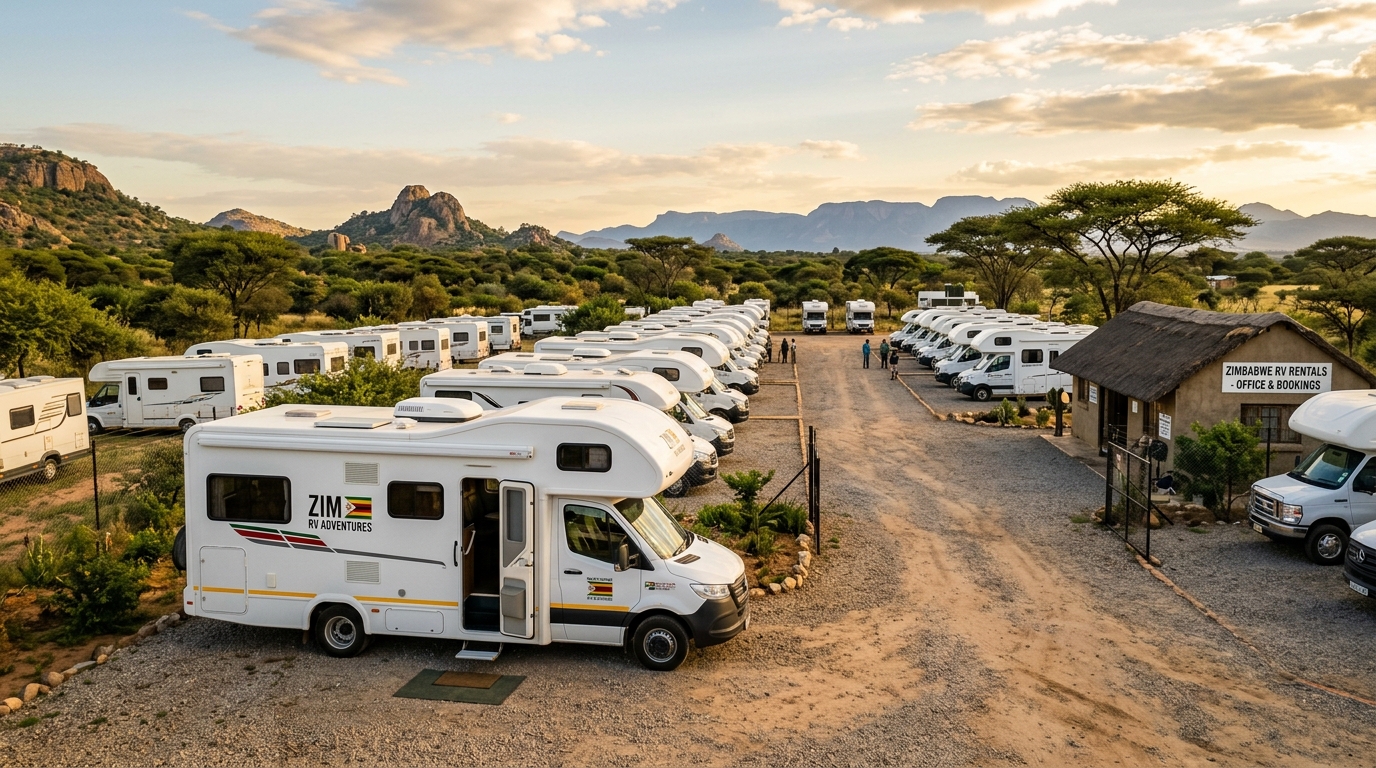
Zimbabwe offers diverse RV camping experiences, from iconic national parks to scenic private reserves, catering to every adventurer's preference. Popular regions for a rented RV camping adventure include the majestic Victoria Falls area, the wildlife-rich Hwange National Park, and the cooler, mountainous Eastern Highlands.
The Victoria Falls area is a must-visit, providing numerous designated campsites with varying amenities that serve as a fantastic base for exploring the falls and engaging in thrilling Zambezi River activities. Further south, Hwange National Park, Zimbabwe's largest game reserve, offers more rustic wilderness camping, perfect for unparalleled wildlife viewing and immersion in nature, though be prepared for basic or no hookups in many sites. For those seeking cooler climates, hiking, and exploring lush, scenic landscapes, the Eastern Highlands (including Nyanga and Chimanimani) boast several private campgrounds and resort parks.
Whether you dream of a safari adventure with your mobile home or a tranquil retreat in the mountains, Zimbabwe's camping options allow you to connect deeply with the country's breathtaking environment. When planning your route, be sure to research each campground's facilities and accessibility to match your rented RV type and desired comfort level. You might find some excellent choices by checking our guide on Weekly RV Rental in Zimbabwe - Pricing 2026 for extended stays.
Campground Types in Zimbabwe (National, Private, Wild)
Zimbabwe primarily offers national park campsites and private campgrounds for motorhome travelers, with wild camping generally restricted and not officially permitted due to safety and conservation efforts. National park campsites, managed by the Zimbabwe Parks and Wildlife Management Authority (ZimParks), are often more rustic, integrated directly into nature, and provide a true, immersive safari experience. These sites, such as those within Mana Pools National Park, often feature basic amenities like communal water taps and braai areas, offering a genuine bush experience for your rented camper.
Private campgrounds, on the other hand, are typically found near major tourist hubs like Victoria Falls or larger towns like Harare, and tend to offer more comprehensive amenities. These can include full hookups (electricity, water, waste disposal), restaurants, swimming pools, and enhanced security, catering to a wider range of RV needs and comforts. While the allure of 'wild camping' or 'freedom camping' outside designated areas might be strong, it is not legally permitted for crucial safety and conservation reasons. However, some private concessions or rural lodges might offer isolated, self-sufficient camping spots by prior arrangement, which is always worth inquiring about directly if you seek a more secluded experience with your rented caravan.
Featured RV Park or Campground in Zimbabwe
When planning a RV trip in Zimbabwe, look for campgrounds that seamlessly balance proximity to key attractions with essential amenities and a secure environment. An ideal RV park in Zimbabwe would offer spacious, level pitches, often with a mix of shaded and sunny spots, comfortably accommodating various rented RV sizes. Key features to seek out include clean ablution blocks (showers and toilets with hot water), a reliable water supply, and robust security measures such as fencing or on-site guards, providing peace of mind during your adventure.
Additional comforts at top-tier sites might include a communal braai (barbecue) area perfect for enjoying evening meals, a small shop for basic supplies, and sometimes even a swimming pool or bar for relaxation after a day of exploration. Prioritize locations that are easily accessible via well-maintained roads, such as Victoria Falls Rest Camp & Lodges, which offers a great balance of facilities and location, providing a sense of wilderness without compromising on safety or convenience for your rented motorhome. Don't forget to consider destinations like Harare, or its airport, Harare - Airport, as potential starting points for your rented RV journey.
Hookups & Amenities - What to Expect
RV hookups and amenities in Zimbabwe vary significantly between national parks and private campsites, directly influencing your packing and planning for your rented RV adventure. In national parks like Gonarezhou National Park, expect more rustic facilities. Electricity (220-240V, with Type G or D plugs being common) might be limited or rely on generators, water hookups could be communal taps, and waste dump stations are less frequent or nonexistent. This true wilderness experience often means self-sufficiency is key for your campervan. On the routes offered through RV PLANET routes, you can itemize and track every expense along the way for easy budgeting.
Private campgrounds, particularly those catering to international tourists near places like Victoria Falls or Bulawayo, generally offer more reliable electricity connections (always carry appropriate adapters for Type G or D outlets), individual water taps at your pitch, and designated waste disposal points for both grey and black water. While Wi-Fi is typically available only in larger private camps or lodges, often for an additional fee, laundry facilities and hot showers are common in most mid-to-high range private sites. Always confirm available hookups and amenities directly with the specific campground prior to your arrival to ensure your rented motorhome and travel style are adequately accommodated. This transparency will prevent any surprises when you pull up to your spot.
Booking Windows & Reservations in Zimbabwe
For RV camping in Zimbabwe, especially during the popular peak seasons from June to October, it is highly advisable for planners to book national park campsites and popular private sites well in advance. Many national park campgrounds, managed by ZimParks, typically release only a portion (often 25%-30%) of their spots for advance reservations, leaving the majority available on a first-come, first-served basis. This system can work well for flexible travelers, but booking ahead secures your preferred spot.
Spontaneous travelers can often find a place to stay, especially outside peak season or in less frequented areas, but it's always recommended to call ahead to your intended campground on the same day or the day before arrival to confirm availability. Reassure yourself: you'll find a spot. If not at the first campground, then the next one down the road. Calling ahead before driving can save you time and ensure a smooth arrival. Prioritizing advance reservations is particularly crucial when traveling with a rented RV that requires specific amenities, as popular spots fill up quickly.
Nearby Supermarkets & Resupply Points
Resupplying your rented RV in Zimbabwe is generally manageable in major towns, though options become sparser and more basic in remote safari areas. Major cities like Harare and Bulawayo host large supermarket chains such as Pick n Pay, OK Zimbabwe, and Spar, where you can find a comprehensive range of groceries, fresh produce, and other household essentials for your mobile home. These larger stores are ideal for stocking up for several days, allowing you to prepare delicious meals in your rented camper's kitchen.
🎬 Video coming soon
Smaller towns along popular tourist routes, including those leading to Victoria Falls, will have local stores and markets for basic provisions, but variety may be limited. It is strongly recommended to stock up on non-perishable items, ample bottled water, and ensure your fuel tank is full whenever possible in larger towns, as specialized RV supplies or specific brands may not be available elsewhere. Always carry sufficient local currency (Zimbabwe uses a multi-currency system, primarily USD) for purchases in smaller, rural areas where card machines may not be available or reliable. Remember that with RV PLANET routes, travelers can itemize and track every expense along the way for easy budgeting, which is incredibly helpful when managing varying costs across different regions.
Best RV Class for Camping in Zimbabwe
The ideal RV class for camping in Zimbabwe depends heavily on your planned routes and desired level of comfort, with maneuverability and fuel efficiency being key considerations for exploring diverse terrains. Class B - Camper Vans, averaging 5.8m in length and consuming around 10 Liters/100 Km, are excellent for navigating diverse Zimbabwean roads, including gravel and dirt tracks, offering superior fuel economy and easier parking in smaller campsites. A vehicle like the "Active Bunk Auto" or "hire campervan example Paradise S/T" would be a flexible choice.
Class SI - Semi-integrated RVs, with an average length of 6.9m and fuel consumption typically 10-11 Liter/100 km, offer a great balance of comfort and manageability. These motorhomes, similar to a "2 Berth Tamar" or "Active Long Select," are suitable for those seeking more amenities like a full shower and toilet, while still being relatively agile for varied roads. Larger RVs like Class A - Integrated or Class C - Alcove, while offering more spacious interiors and amenities (average length around 7.5m), might be less suitable for the more challenging or narrower roads found in some national parks and rural areas, impacting their versatility for exploring off the main routes. Considering the varied road conditions and potential for boondocking in certain areas, a smaller, more robust rented RV from Bandana's fleet (such as a Class B Campervan or a Class SI Semi-integrated model) is generally recommended for an optimal Zimbabwe camping experience. Drive slowly and carefully, and you can drive almost anywhere without issues. No need to stress - just use common sense and pay attention.
How to Save on Campgrounds in Zimbabwe
Saving on RV campgrounds in Zimbabwe involves strategic planning and leveraging available discounts to maximize your budget for your rented motorhome. Exploring campground discount cards, if offered by your rental provider or local tourism associations, can provide significant savings on various participating sites across your journey. These cards, often available for a small fee, can quickly pay for themselves over a week-long trip or longer adventure.
Consider traveling during the shoulder season (e.g., April-May or November) when rates are typically lower than the peak dry season, and campgrounds are less crowded, offering a more serene experience. Choosing municipal or regional campgrounds over more luxurious private resorts can often lead to substantial cost savings while still providing essential facilities for your caravan. Many campgrounds offer weekly or long-stay rates; booking for 3+ nights at one location can often be more economical than single-night stays, aligning with our recommendation for slow travel. If traveling in a group with multiple RVs, sharing hookups or splitting larger, more expensive sites can also effectively reduce individual costs. For more budget-friendly options, refer to our Cheap RV Rental in Zimbabwe - Budget Guide 2026.
Where can I rent an RV in Zimbabwe?
RV rentals in Zimbabwe are primarily available through specialized safari rental companies or local tour operators, particularly in major cities like Harare and Victoria Falls. International booking platforms, such as Bandana, offer a curated selection of RVs from reputable local providers, streamlining the rental process and providing options for various RV classes, including Class B campervans and Class C motorhomes. This comparison service ensures you find the best value and vehicle for your needs.
It's highly advisable to book your rented motorhome well in advance, especially for popular travel seasons like the dry winter months, as the RV fleet in Zimbabwe may be smaller compared to other regions. When renting, always confirm what is included in the rental package, such as insurance, mileage limits, and any specific equipment required for self-drive safaris, ensuring full transparency with no hidden fees. Always check reviews and verify the reputation of the rental company to ensure vehicle reliability and good customer support for your Zimbabwean adventure. Bandana's direct partnerships with 50+ leading RV suppliers worldwide mean you're in capable hands.
How much does it cost to rent an RV in Zimbabwe?
The cost of renting an RV in Zimbabwe varies significantly based on the RV class, rental duration, season, and included features, with daily prices typically ranging from $150 to $400 USD. Smaller Camper Vans (Class B), such as a "Category Van" averaging 5.8m, will generally be on the lower end, offering better fuel economy and suitability for diverse road conditions. Larger Class C - Alcove or Class SI - Semi-integrated models, like a "cruise america rv rental example Explorer" at 7.1m, which offer more space and amenities, will incur higher daily rental fees. Prices are dynamic, similar to flight tickets, changing daily based on availability and seasonality.
Peak season (June to October) sees higher demand and prices, while the shoulder or low season might offer more competitive rates. Factor in additional costs such as insurance (often mandatory, though you can upgrade to a top-level deductible for extra peace of mind), mileage charges, one-way fees (if applicable for a "One-Way RV Rental in Zimbabwe - Price Guide 2026" trip), camping permits for national parks, and fuel consumption (e.g., Bandana's Class SI typically consume 10-11 Liter/100 km). A comprehensive budget should also account for park entry fees, which can be substantial for international visitors and often include separate vehicle charges for RVs. For a premium experience, our Luxury RV Rental in Zimbabwe - Premium Prices 2026 provides higher-end options.
What kind of fuel consumption can I expect from an RV in Zimbabwe?
Fuel consumption for a rented RV in Zimbabwe varies by vehicle class, terrain, and driving style, but generally ranges from 8 to 17 Liters per 100 kilometers. Class B - Camper Vans, known for their efficiency and maneuverability, typically consume around 8-10 Liters/100 Km, making them a cost-effective choice for extensive travel across the country's varied landscape. A compact "Category Van" falls into this efficient category.
Class SI - Semi-integrated and Class C - Alcove RVs, which are larger and offer more amenities, generally have a fuel consumption of 10-12 Liters/100 km. For example, a mid-sized "Explorer" motorhome, ideal for families, might use about 11 Liters/100 Km. Driving on unpaved roads, through varied terrain, or with a heavily loaded rented RV will naturally increase fuel usage, so budget accordingly and plan fuel stops in advance, especially in remote areas like those near Victoria Falls or Hwange. Keeping an eye on your consumption will help manage your overall travel expenses, which can be tracked on RV PLANET routes.
Is it safe to RV in Zimbabwe?
RV travel in Zimbabwe can be a safe and incredibly rewarding experience with proper planning, adherence to local advice, and vigilance, though certain precautions are essential for a smooth journey. Road conditions vary significantly; while major highways connecting cities like Harare and Bulawayo are generally paved, many routes to national parks and remote areas involve gravel or dirt roads with potential potholes, requiring slower driving and a suitable vehicle choice like a Class B or SI motorhome. Drive slowly and carefully, and you can drive almost anywhere without issues. No need to stress - just use common sense and pay attention.
Wildlife encounters on roads are common, especially in rural and park areas; always drive cautiously, particularly at dawn, dusk, and night, and be prepared to stop for animals. Personal safety involves securing your rented RV, avoiding driving at night outside of major towns, and being aware of your surroundings, especially in urban areas. For emergency communication, carry a local SIM card for mobile network coverage in populated areas, and consider a satellite phone or emergency beacon for remote regions where cell service is unreliable. Always inform someone of your itinerary, stay updated on local news, and follow guidance from park officials or reputable local tour operators regarding specific areas. Bandana is with you before and after your booking to assist with these vital preparations.
What do I need to know before driving an RV in Zimbabwe?
Before driving a rented RV in Zimbabwe, it's crucial to be aware of local road conditions, driving regulations, and essential preparedness measures to ensure a smooth and enjoyable trip. Road conditions range from well-maintained tarred roads between major cities to gravel, dirt, and sometimes poorly maintained tracks leading to national parks and remote areas, necessitating a suitable RV like a Class B or SI motorhome and cautious driving. Zimbabwe drives on the left side of the road, mirroring the UK and other Southern African countries.
Speed limits are generally 120 km/h on highways, 100 km/h on secondary roads, and 60 km/h in urban areas, with strict enforcement. Always carry essential documents, including your valid domestic driver's license (a standard car license is sufficient for all motorhome classes), your rented vehicle's registration, the rental agreement, and proof of insurance at all times. An International Driving Permit (IDP) is highly recommended for visitors from non-English-speaking countries, though not always mandatory. Be prepared for potential road hazards such as livestock, pedestrians, poorly lit vehicles, and large potholes, especially outside urban centers; night driving should be avoided if possible. Practical advice includes carrying extra fuel, water, spare tires, basic tools, a first-aid kit, and reliable offline mapping apps (e.g., Maps.me, Gaia GPS), as mobile network coverage can be sporadic in remote areas.
Are there specific RV regulations for national parks in Zimbabwe?
Yes, Zimbabwe's national parks have specific regulations for rented RVs, primarily managed by the Zimbabwe Parks and Wildlife Management Authority (ZimParks), which visitors must adhere to. RV entry into national parks requires payment of park fees, typically covering both the occupants and the vehicle, with different rates for international visitors and often specific charges for larger vehicles like motorhomes. These fees directly contribute to conservation efforts, which is important for the country's incredible wildlife.
Campsites within national parks are designated, and wild camping outside these areas is strictly prohibited for safety, conservation, and regulatory reasons. Some national parks or specific routes within them might have restrictions on larger vehicles or require 4x4 capabilities (for which Bandana offers specialized Class TC - Truck Campers), making smaller RVs like Class B or SI motorhomes more versatile for exploration. Adhere to all park rules regarding speed limits, waste disposal, wildlife interaction (never feed animals, maintain a safe distance), and noise levels, especially at night. It is crucial to book national park campsites well in advance, particularly during peak seasons, as spots can be limited. Always confirm any specific RV-related rules for the park you plan to visit before your arrival.
Can I cross borders with a rented RV from Zimbabwe?
Crossing international borders with a rented RV from Zimbabwe is generally possible but requires specific documentation and prior arrangements with your rental company. You will typically need a Letter of Authority from the rental company, such as El Monte or Apollo, granting explicit permission to take the RV across borders, which must be obtained well in advance of your departure. This ensures that you have all the necessary legal backing for your extended road trip.
Necessary vehicle documentation for border crossings includes the rented motorhome's registration papers, proof of insurance valid for the countries you intend to visit (e.g., Botswana, South Africa), and potentially a Temporary Import Permit (TIP) for the RV in each country. A Carnet de Passage, while sometimes required for certain vehicles or regions, is often not strictly necessary for neighboring SADC countries if the Letter of Authority and TIPs suffice. Be prepared for potential customs checks and fees at each border post, and ensure all driver and passenger passports and visas are in order. Confirm all requirements with your RV rental company and the respective border authorities well before your trip to avoid delays or entry denials, aligning with our commitment to full transparency and no surprises.
What are the best routes for RV travel in Zimbabwe?
The best RV routes in Zimbabwe offer a captivating mix of cultural sites, unparalleled wildlife viewing, and stunning natural beauty, catering to adventurous travelers with a rented motorhome. A highly popular route includes starting your adventure in Harare, heading west to the iconic Victoria Falls, with an essential detour to Hwange National Park for unparalleled wildlife safaris. This classic itinerary can easily be enjoyed over a two-week adventure, allowing ample time to soak in each destination.
Another excellent option for your rented campervan is the Eastern Highlands route, exploring Nyanga, Mutare, and Chimanimani for stunning mountain scenery, invigorating hiking trails, and cooler climates. For a more off-the-beaten-path experience, consider traveling south from Harare towards the Great Zimbabwe Ruins, then potentially looping through Gonarezhou National Park (which typically requires a more robust RV and advanced planning due to challenging roads) and the Lowveld. Main roads connecting major cities are generally paved and well-maintained, but be prepared for gravel and dirt tracks when accessing national parks and remote areas. Planning your route involves assessing road conditions suitable for your RV class and ensuring sufficient fuel stops and resupply points along the way. Remember our advice: travel slowly, max 100-150 km per day on average. Take time to feel the place, connect to the culture, the food, and the scenery. RV PLANET (rvplan.net) offers fantastic pre-planned routes for Zimbabwe, ensuring you don't miss anything.
What amenities are typically available at RV campsites in Zimbabwe?
RV campsites in Zimbabwe offer a range of amenities, from basic facilities in national parks to more comprehensive services in private establishments, significantly shaping the overall camping experience for your rented RV. Common amenities typically include designated camping pitches, often equipped with a braai (barbecue) stand and a picnic table, alongside shared ablution blocks providing clean toilets and showers (the availability of hot water can vary, especially in more rustic sites). Imagine preparing a meal outdoors on your braai after a day of safari-ing! For more cooking ideas, check out our RV-friendly recipes playlist.
Many private campsites, such as those found near Victoria Falls or Victoria Falls - Airport, feature additional comforts, including refreshing swimming pools, on-site restaurants or bars, laundry facilities, communal kitchens, and sometimes small shops for essential provisions. Electricity hookups, typically 220-240V, are more reliably found in private camps, while national park sites might have limited or generator-powered electricity, and water points could be communal taps. While Wi-Fi is rarely free and often limited to central reception areas in private camps, mobile network coverage can be intermittent, particularly in remote park locations, so don't rely solely on digital connectivity. Security measures, including fencing and guards, are common in private campsites, offering peace of mind, whereas national park camps focus more on the natural, unfenced wilderness experience, bringing you closer to nature.
What cultural experiences can RVers find in Zimbabwe?
RV travel in Zimbabwe offers unique opportunities for local and cultural immersion, allowing you to go beyond standard safari tours and connect authentically with communities and traditions. Visiting bustling local markets in towns like Harare, Bulawayo, or Victoria Falls allows RVers to interact with friendly vendors, sample delicious traditional foods (such as sadza, a staple maize meal, or mupunga unedovi, a tasty peanut butter rice dish), and purchase local crafts directly from talented artisans. This direct engagement provides a deeper insight into daily Zimbabwean life.
The freedom of a rented RV enables spontaneous stops at rural villages, fostering respectful engagement with local communities, learning about their way of life, and potentially participating in cultural activities or performances arranged through community tourism initiatives. Exploring profound historical sites such as the Great Zimbabwe Ruins, a UNESCO World Heritage Site, provides incredible insights into the country's rich pre-colonial history and architectural ingenuity. RV travelers can also seek out opportunities to visit art galleries, cultural centers, or attend vibrant local festivals, particularly in larger urban centers like Harare, for a deeper understanding of Zimbabwean arts and customs. Embrace the chance to engage with locals at campsites or in smaller towns, as Zimbabweans are widely known for their warm hospitality and willingness to share their rich culture.
What emergency services are available for RVers in Zimbabwe?
RVers in Zimbabwe should be aware of the available emergency services, which vary in accessibility and responsiveness depending on location, to ensure a prepared and safe rented RV trip. For medical emergencies, private clinics and hospitals found in major cities like Harare and Bulawayo offer higher standards of care than public facilities; comprehensive travel insurance with medical evacuation coverage is highly recommended. It's always wise to have a plan for unexpected health needs.
Roadside assistance can be limited, especially in remote areas like national parks, so ensure your RV rental includes comprehensive breakdown cover or consider joining a local motoring association for assistance. In case of a vehicle breakdown or accident with your motorhome, contact your RV rental company immediately, as they often have specific protocols and local contacts for support; our teams at Bandana provide pre-booking comparison, booking support, and post-booking coordination. For serious incidents requiring police intervention, the Zimbabwe Republic Police (ZRP) can be contacted (emergency number: 995), though response times may vary. Essential communication tools for remote areas include a local SIM card (for better coverage in populated zones), reliable offline maps, and considering a satellite phone or personal locator beacon for true wilderness travel where mobile networks are non-existent. Being well-informed is your best defense against unforeseen challenges.
What You Shouldn't Miss
- Witness the Majesty of Victoria Falls: Stand in awe of "Mosi-oa-Tunya" - The Smoke That Thunders. Park your rented RV at a nearby camp and spend days exploring the rainforest, taking a Zambezi River cruise, or even microlighting over the falls.
- Safari in Hwange National Park: Drive your rented campervan through this incredible park, home to one of Africa's largest elephant populations, lions, giraffes, and countless bird species. Camping directly inside the park offers an unmatched wildlife experience.
- Explore the Ancient Great Zimbabwe Ruins: Step back in time by visiting this UNESCO World Heritage Site. You can even camp within the park itself, making for an unforgettable overnight stay steeped in history.
- Hike in the Eastern Highlands: Escape to the cooler climates of Nyanga National Park and Chimanimani Mountains. These regions offer breathtaking scenery, waterfalls, and superb hiking trails, perfect for outdoor enthusiasts with a rented motorhome.
- Experience Lake Kariba: Enjoy the serene beauty of one of the world's largest man-made lakes. While land-based RVing is an option, consider combining it with a houseboat rental for a unique water-based "camping" experience.
- Visit Local Markets: Immerse yourself in Zimbabwean culture by visiting local markets in Harare, Bulawayo, or Victoria Falls. Sample local foods, interact with artisans, and discover unique souvenirs.
Looking for expert insights from Avi Bandana? Top 5 Adventures - recommendations from Avi Bandana
Final Thoughts
Embarking on a rented RV adventure in Zimbabwe is an experience like no other. It's an opportunity to connect with nature, witness incredible wildlife up close, and immerse yourself in a vibrant culture, all from the comfort and flexibility of your own mobile home. From the misty grandeur of Victoria Falls to the vast wilderness of Hwange, a rented motorhome gives you the freedom to explore at your own pace, creating memories that will last a lifetime.
Remember to plan your route carefully, familiarize yourself with local regulations, and prepare for varied road conditions. With Bandana Caravan, you have a partner committed to full transparency and comprehensive support, ensuring your RV rental experience in Zimbabwe is seamless and truly unforgettable. So, pack your bags, choose your ideal campervan, and get ready to discover the magic of this remarkable African destination. Your Zimbabwean adventure awaits!
Discover top destinations and planning tips, all in one place! Find rv Rentals in Zimbabwe today!
